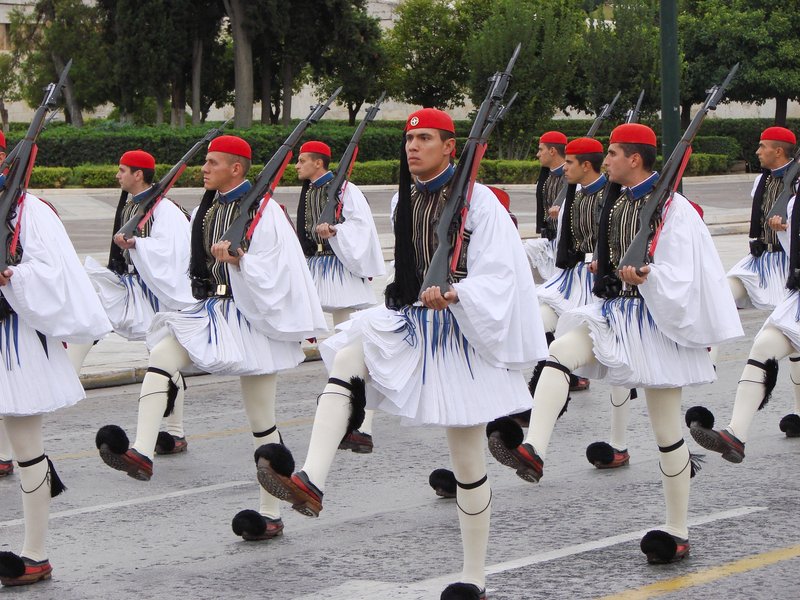
Athens' central square, fronting the Hellenic Parliament and the Tomb of the Unknown Soldier. The marble cenotaph is guarded around the clock by Evzones in traditional kilted uniform; their changing-of-the-guard ceremony runs hourly, with a grand version Sunday at 11:00am.
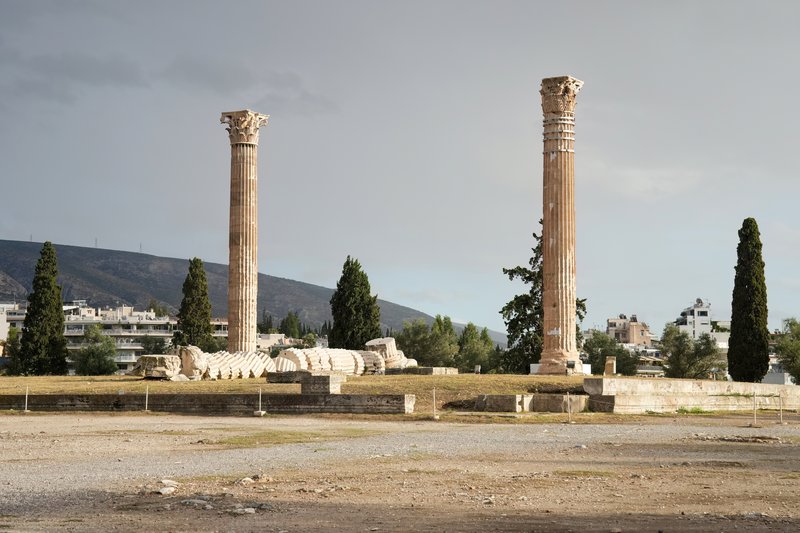
A colossal temple to Zeus begun in the 6th century BC and finished by Emperor Hadrian in 131 AD — some 638 years later. Once Greece's largest temple with 104 Corinthian columns, fifteen still stand. The adjacent Arch of Hadrian marked the line between the old and Roman city.
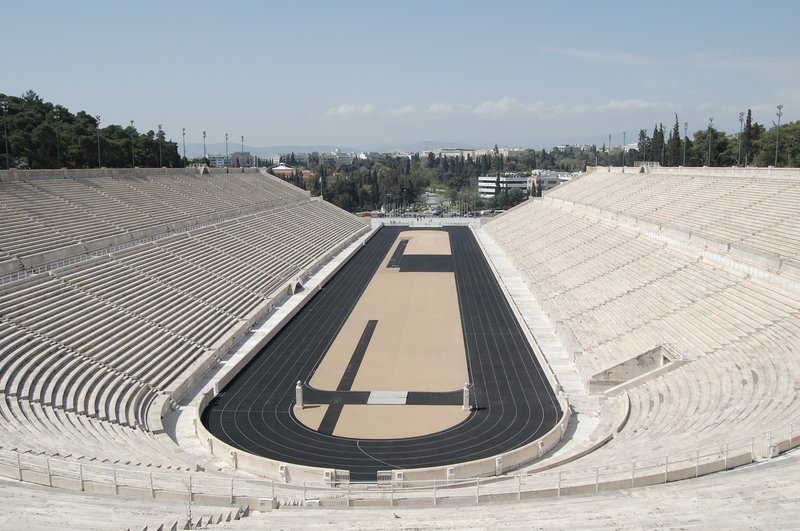
The only stadium in the world built entirely of marble. Reconstructed on an ancient site for the first modern Olympic Games in 1896, the horseshoe of white Pentelic marble seats around 45,000 and still serves as the finish of the Athens Marathon.
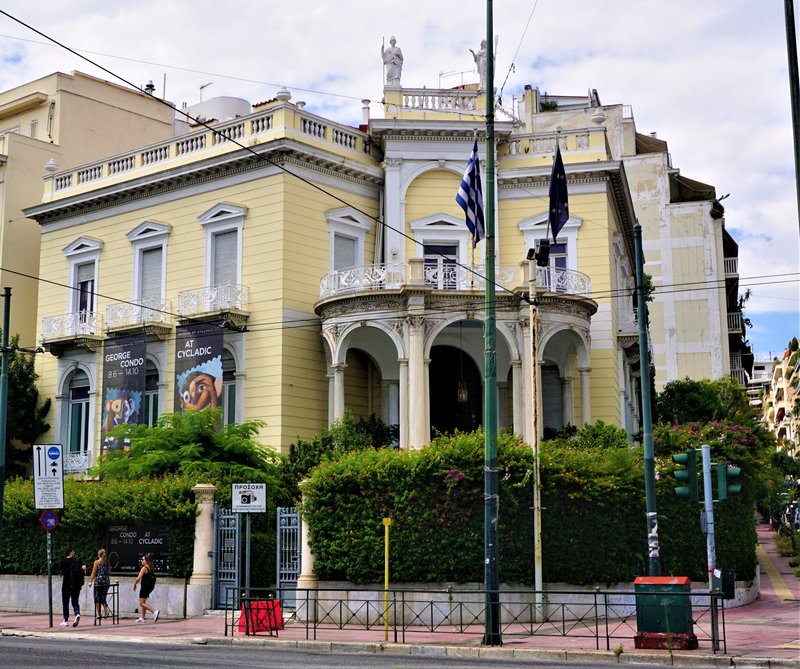
The world's premier collection of Cycladic art, housing over 3,000 objects including the canonical marble figurines from the Aegean islands that inspired Brancusi and Picasso. Set across two connected neoclassical buildings in Kolonaki, the museum also covers ancient Greek and Cypriot art.
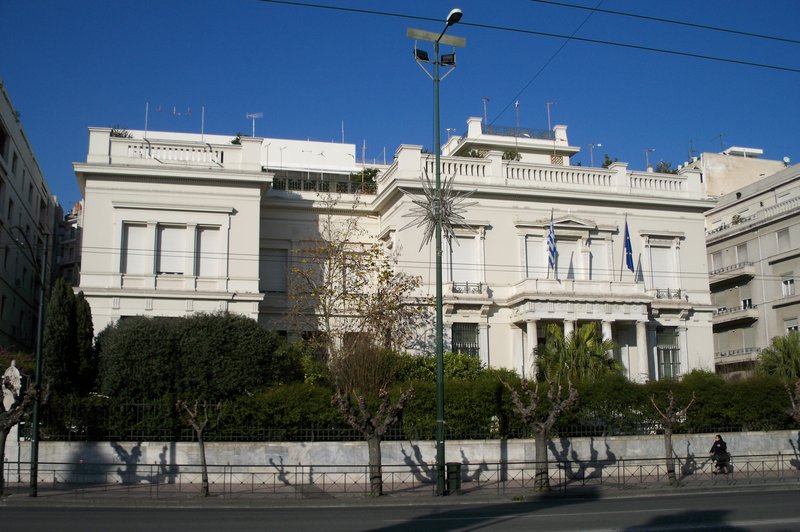
Greece's foremost cultural museum, spanning 5,000 years in a neoclassical Kolonaki mansion. Permanent galleries cover Mycenaean gold jewelry, Byzantine icons, folk costumes, and Greek independence memorabilia — one of Athens's richest and least-crowded collections.
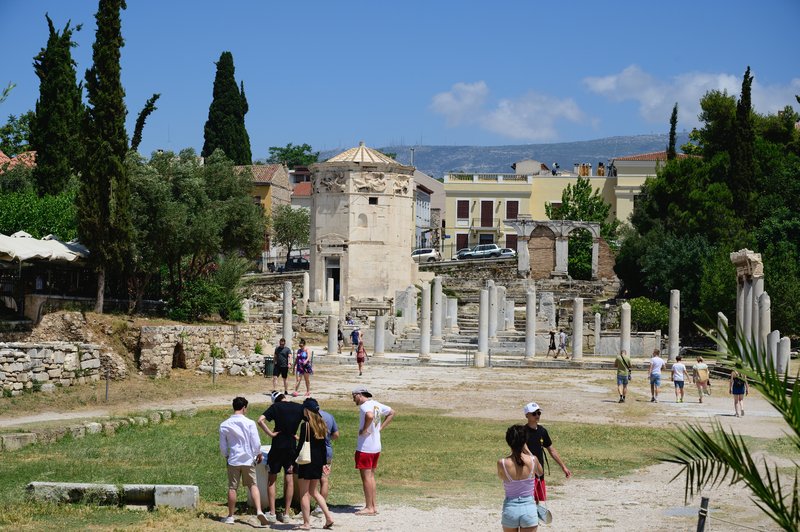
The Roman-era marketplace of Athens, built under Julius Caesar and Augustus. Its centerpiece is the Tower of the Winds, a 1st-century BC octagonal marble structure that combined a sundial, water clock, and weather vane — often called the world's first meteorological station.
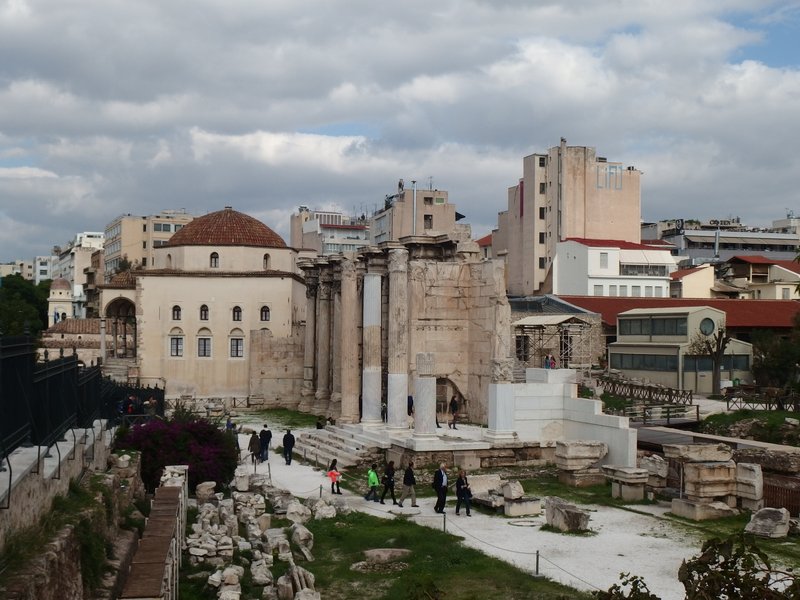
A grand complex built by Emperor Hadrian in 132 AD, holding papyrus-scroll libraries, reading rooms, lecture halls, and a courtyard with a central pool. Its surviving Corinthian-columned west facade faces Monastiraki Square.
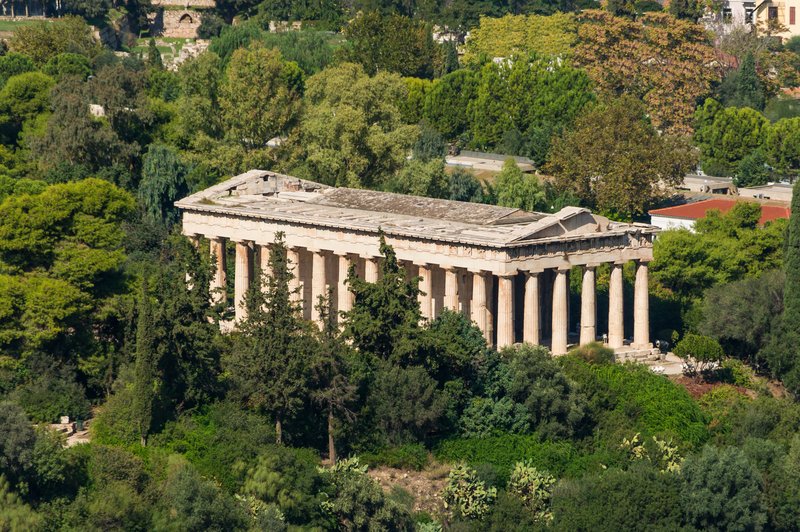
The civic and commercial heart of ancient Athens, where Socrates argued and democracy took shape. The grounds hold the Temple of Hephaestus — the best-preserved ancient Greek temple anywhere — and the reconstructed Stoa of Attalos, now the Agora Museum.
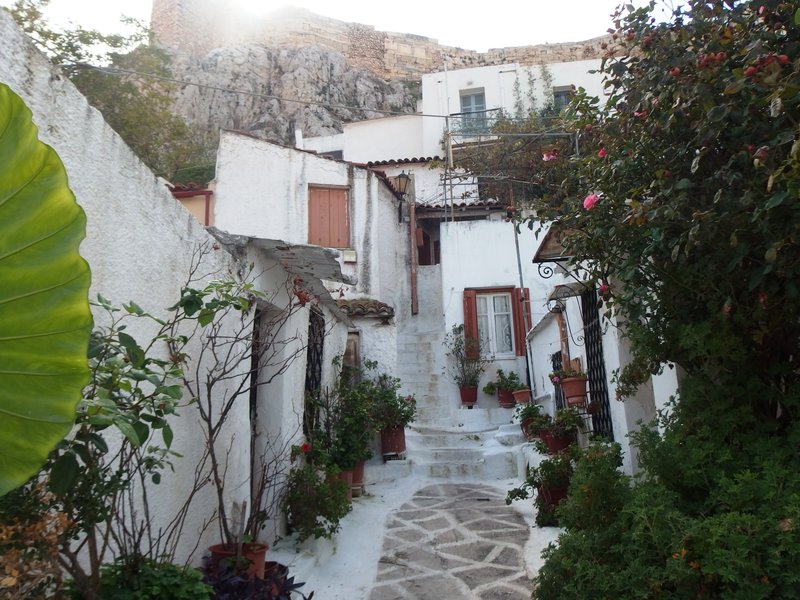
A tiny Cycladic-style enclave built into the north slope of the Acropolis in the mid-19th century by stoneworkers from the island of Anafi. Its whitewashed cube houses, stepped lanes, and bougainvillea feel like a remote Aegean village dropped into central Athens.
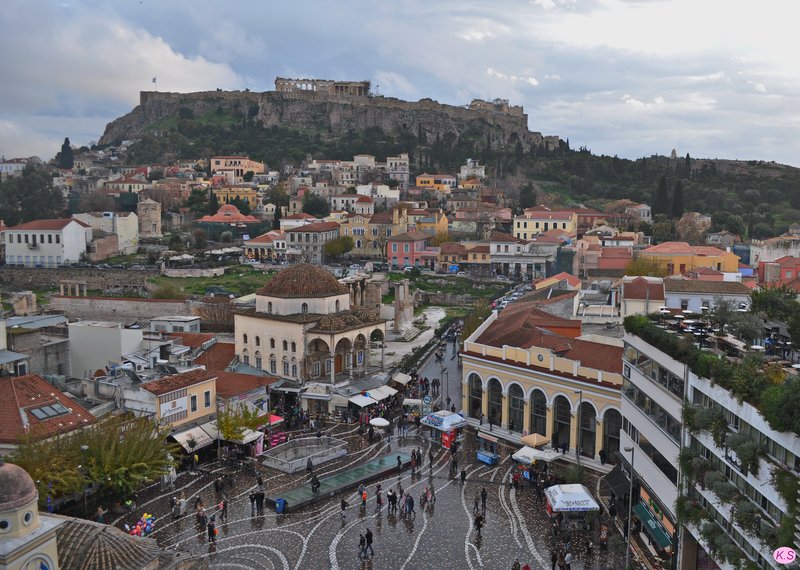
A lively square and flea-market district at the foot of the Acropolis, named after the little Pantanassa church at its center. It blends the Ottoman Tzistarakis Mosque, Hadrian's Library, the metro station, and wide-open views up to the Parthenon.
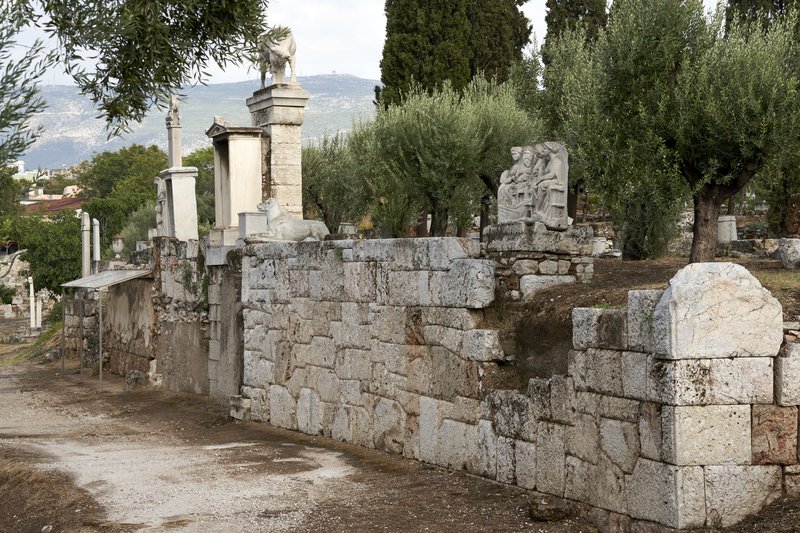
The ancient burial ground of Athens, stretching along the Sacred Way and the Street of Tombs. Stelae, marble lekythoi, and Attic sculpture mark graves of citizens and warriors dating from the 12th century BC through the Roman period. The onsite museum holds original grave monuments.
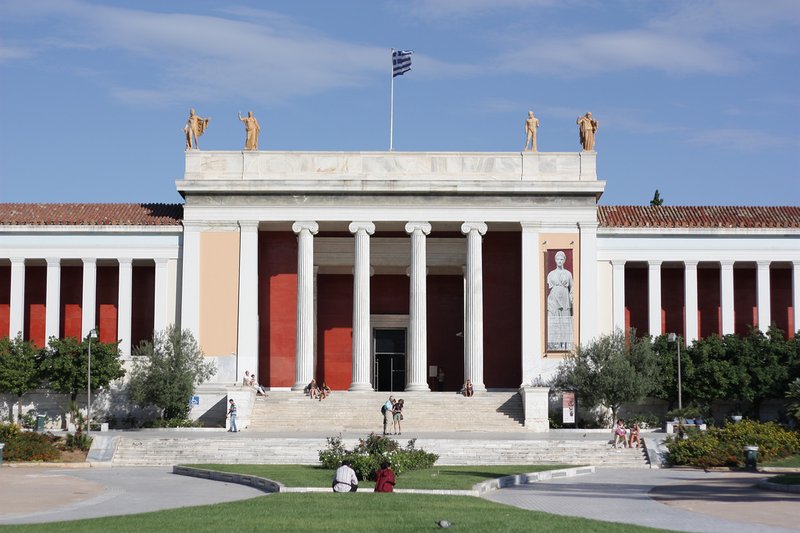
The largest museum in Greece and one of the world's great collections of ancient Greek art, spanning prehistory to late antiquity. Highlights include the gold Mask of Agamemnon, the bronze Artemision Zeus, the Antikythera Mechanism, and the Jockey of Artemision.
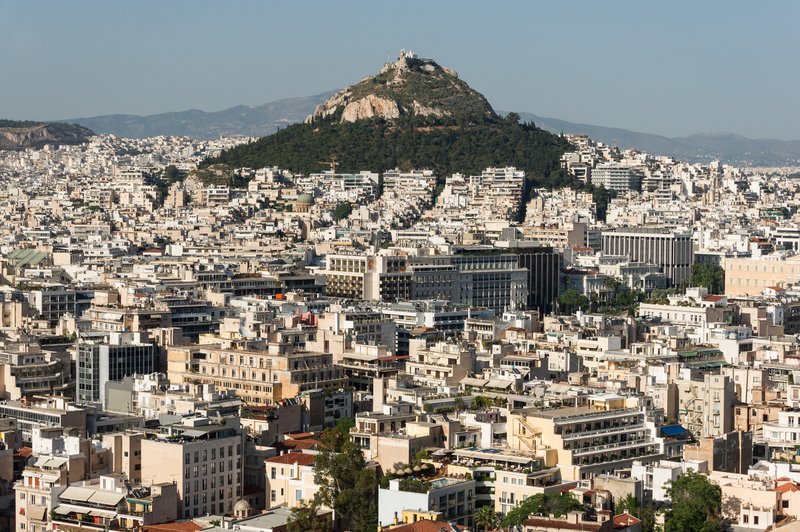
At 277m, the highest point in central Athens, a limestone hill crowned by the whitewashed 19th-century Chapel of St. George. The summit gives the city's widest view — over the Acropolis, the Saronic Gulf, and the full sprawl of Athens — reached on foot or by the hillside funicular.
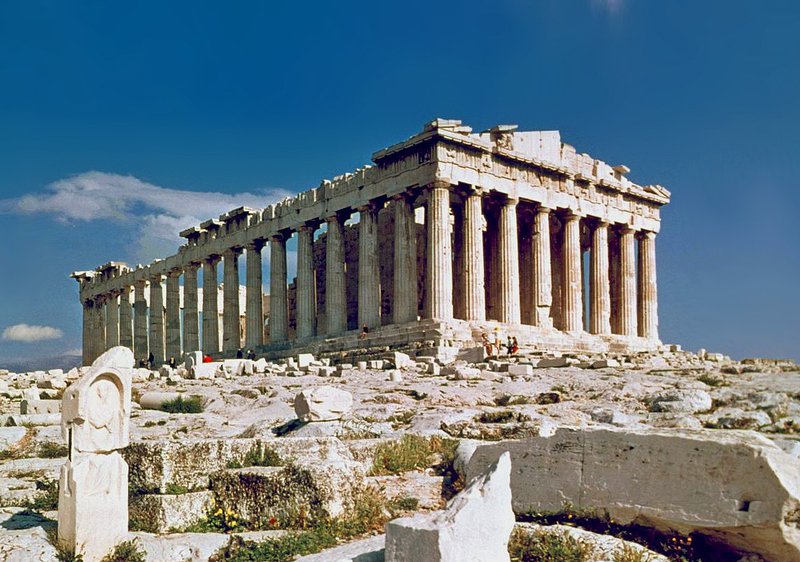
The ancient citadel crowning Athens, topped by the 5th-century BC Parthenon temple to Athena. The most important surviving monument of Classical Greece, it also holds the Erechtheion, the Propylaea gateway, and the small Temple of Athena Nike.
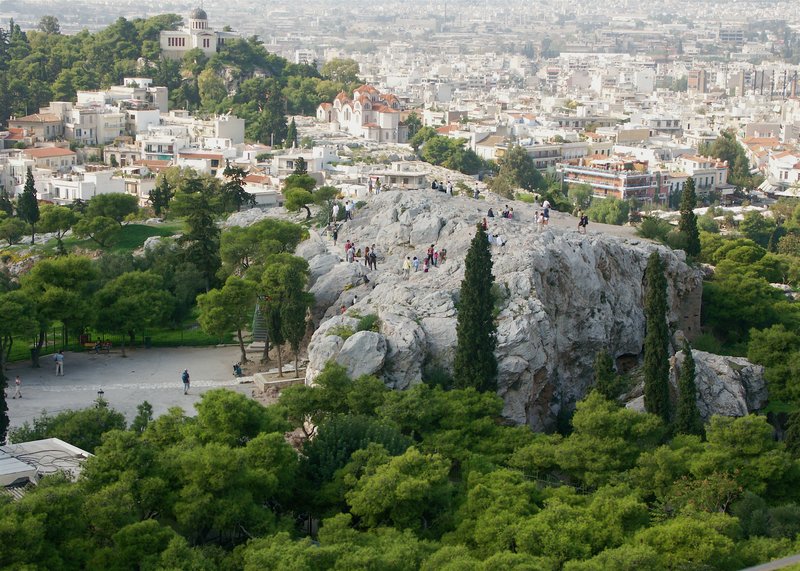
A bare marble outcrop just below the Acropolis that served as the high court of ancient Athens. It is famous as the spot where the Apostle Paul preached to the Athenians, and today gives a free panorama over the Ancient Agora and the city rooftops.
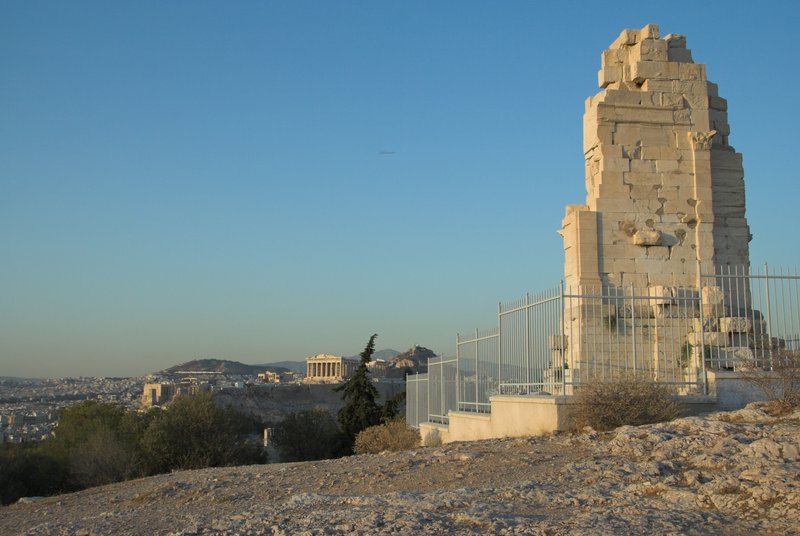
A 2nd-century AD Roman marble mausoleum crowning the pine-covered Hill of the Muses, built for the exiled Commagene prince Philopappos. The bare summit gives Athens' finest free view — the Parthenon face-to-face across a shallow valley, with the ancient Pnyx alongside.
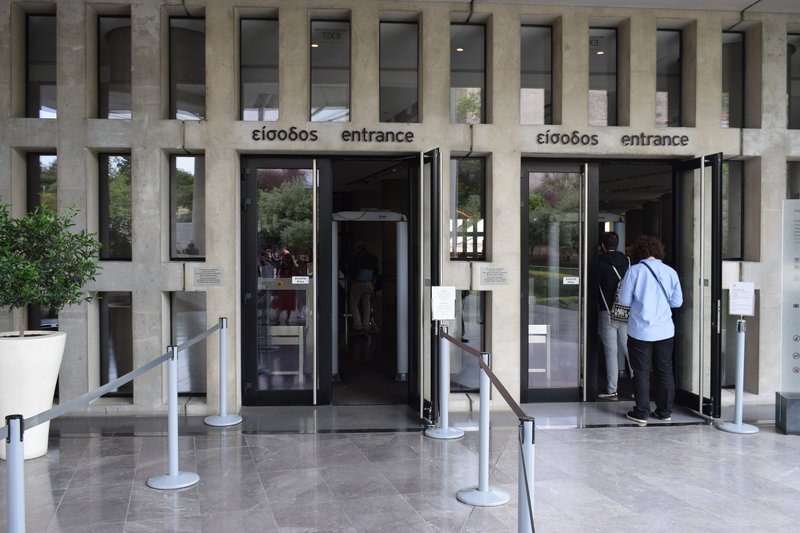
Bernard Tschumi's glass-and-concrete museum, opened in 2009, holds every major find from the Acropolis. Its top-floor Parthenon Gallery displays the surviving frieze at the temple's exact dimensions and orientation, with the real Parthenon framed through the windows.
ARRIVE Corinth: 15 min → Ancient Corinth Archaeological Site
1.Ancient Corinth Archaeological Site~2 hr 30 min
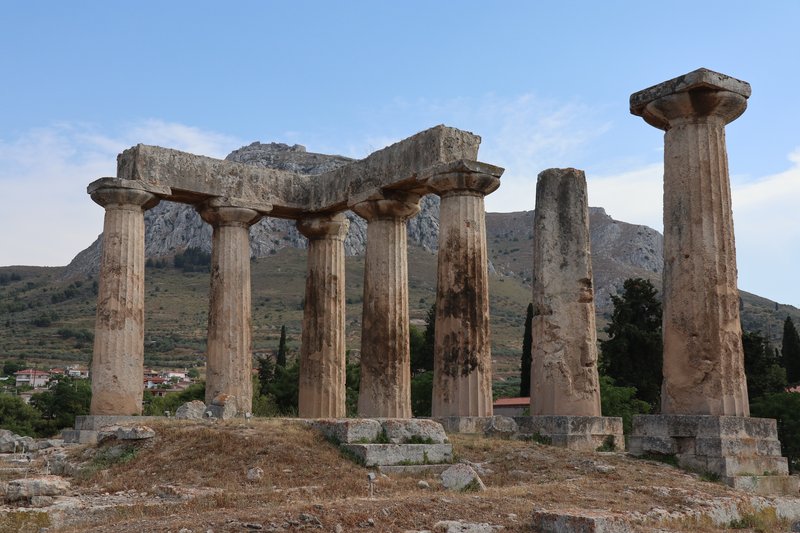
The excavated heart of one of ancient Greece's richest city-states. Its centrepiece is the 6th-century BC Temple of Apollo — seven monolithic Doric columns still standing over the ruined Roman forum, the Bema where the Apostle Paul was tried, and the Peirene Fountain. An on-site museum holds the finds.
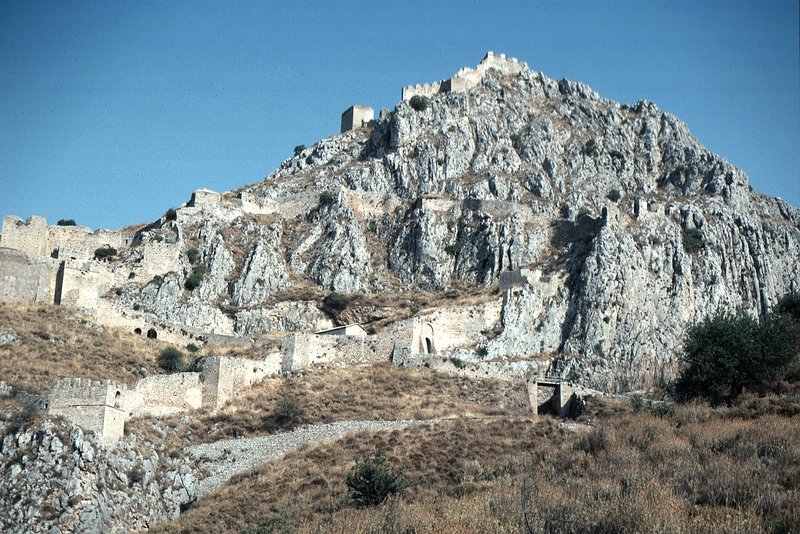
The towering acropolis of Corinth — a sheer limestone monolith rising 575m above the plain, crowned by one of Greece's largest castles. Walls and gates raised by Byzantines, Franks, Venetians, and Ottomans climb the rock, enclosing ruined mosques and chapels, with sweeping views across the isthmus to two seas.
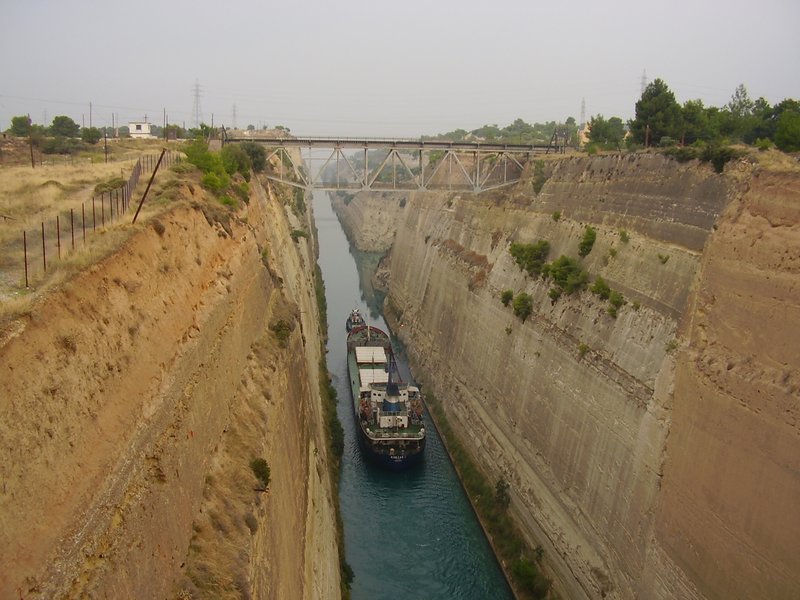
A channel barely 25m wide slicing clean through the Isthmus of Corinth, its sheer walls dropping nearly 90m to the water. First attempted by Emperor Nero in 67 AD, it was finally cut in 1893 to join the Ionian and Aegean seas. The old road bridge gives the classic vertiginous view straight down the gorge.
Graze through local markets and hidden food spots for 20-plus tastings — cheese, cured meats, olives, sweets, wine, and a sit-down meal with the locals.
A coastal drive along the Athenian Riviera to the cliff-top Temple of Poseidon at Cape Sounion, timed for the Aegean sunset with photo stops along the way.
A full day to the UNESCO-listed Sanctuary of Apollo at Delphi and its museum, crossing the mountains of central Greece with a guide who brings the oracle to life.
A small-group walk through traditional shops and the central-market area, tasting street food, pastries, cheese, mezze, and wine — a full meal's worth of bites.
A small-group walking food tour through non-touristy neighborhoods — taste and shop for cheese, cured meats, sweets, spices, and olives in colorful local markets.
Greece's signature street food — grilled skewered pork or shaved gyros wrapped in pita with tomato, onion, and tzatziki. The pork souvlaki is the Athenian classic.
Honey-drenched fried dough balls dusted with cinnamon and sometimes walnuts — crisp outside, fluffy inside, served hot. Greece's take on the ancient honey-cake.
Finely ground coffee simmered in a briki and served unfiltered with the grounds and a glass of water. Sip it slowly and leave the sludge at the bottom.
Foreign number: not accepted. — registration is tied to a Greek number and the verification SMS follows it, so a foreign SIM never receives a code.
Greece's largest delivery platform and the one Athenian restaurants join first — much the deepest list across Kolonaki, Exarchia, Koukaki and Psyrri, and the only one that reliably reaches the outer neighbourhoods. A Greek number is the price of entry.
Foreign number: not required. — sign-up runs on Google, Apple, Facebook or email with no phone field at all, so no verification code is sent.
The visitor's option in Athens — a shorter restaurant list than efood, but weighted toward the central neighbourhoods most people stay in, with tighter delivery estimates and an interface that stays in English throughout.
Foreign number: not accepted. — registration is tied to a Greek number and the verification SMS follows it, so a foreign SIM never receives a code.
The smallest of the three Greek platforms in Athens, leaning toward chains and late-night souvlaki rather than the independents efood carries. Useful mainly as a fallback when the other two show your restaurant as closed.
Foreign number: accepted. — the code comes by SMS to any international number, and "Call me with code" reads it out if the SMS is blocked.
In Greece this is Uber Taxi, not UberX — the app dispatches a licensed yellow Athens taxi on the regulated meter, so the fare matches a street hail. What you gain is card payment, GPS tracking and an English receipt, not a cheaper ride.
Foreign number: accepted. — sign-in takes a phone number or an email address, and the code can be re-sent by email if the SMS never lands.
The largest driver network of the three in Athens, so a taxi usually turns up within a few minutes anywhere central. Like the others it dispatches licensed yellow taxis on the regulated meter — what you are buying here is the shorter wait, not a cheaper fare.
Foreign number: accepted. — the country-prefix list covers the whole world and the code is texted to whatever number you enter.
Also dispatches licensed yellow taxis on the meter, and it runs first-ride promotions more often than the other two. The driver pool is smaller, so waits stretch once you are away from the centre — worth having alongside FREENOW rather than instead of it.
Southern terminus of the Athens suburban railway on the Gulf of Corinth — a quiet seaside town with a fishing harbour and a pebble beach that makes a relaxed half-day escape; the Corinth Isthmus canal is 20 minutes further by local connection.
Capital of Euboea, joined to the mainland by a short bridge over the Euripus Strait — a narrow channel whose tidal currents reverse direction several times a day. Aristotle studied the shifting water here; today the seafront promenade above it is lined with fish tavernas.
Ancient Thebes, birthplace of Pindar and Oedipus, with an archaeological museum holding Mycenaean-era armour and Linear B tablets found nowhere else in continental Greece — a compact visit with far less competition than Athens or Delphi.
Central Greek market town below the Othrys mountains, with a Catalan-built medieval castle above the old quarter and a small but well-labelled archaeological museum — a low-key contrast to the tourist circuit and rarely visited by foreign travellers.
Port city at the foot of Mount Pelion and the legendary home of the Argonauts, with a lively waterfront lined with tsipouradika — ouzo-and-meze taverns unique to the region — and a strong archaeological museum covering the prehistoric Dimini and Sesklo sites.
Six Orthodox monasteries perched on sheer sandstone pillars in Thessaly, UNESCO-listed and home to a handful of monks — the cliffside setting used in For Your Eyes Only. The Athens-Kalambaka line is under storm repair; trains run to Paleofarsalos with a connecting coach onward, one Hellenic Train ticket door to door.
Athens rewards a slow eye for time stacked on time. The Temple of Olympian Zeus took 638 years to finish — begun by a tyrant in the 6th century BC and only completed by a Roman emperor — so the columns you stand under were already "ancient history" to the Romans who topped them off. A few streets over, the Tower of the Winds in the Roman Agora quietly claims a different superlative: built in the 1st century BC with a sundial, a water clock, and a wind vane, it is often called the world's first weather station.
The city also keeps surprising villages inside itself. Anafiotika, the cluster of whitewashed cube houses on the Acropolis' north slope, was built in the 1800s by stonemasons from the island of Anafi who were homesick enough to rebuild a piece of the Cyclades under the Parthenon. And the Panathenaic Stadium — all gleaming Pentelic marble — is the same quarry-stone the ancient Athenians used; the 1896 Olympic organizers simply re-dug the old running track and re-clad it.
One practical thread worth pulling: a single combined ticket covers the Acropolis plus the Ancient Agora, Roman Agora, Hadrian's Library, and the Temple of Olympian Zeus — five of this guide's stops — valid across several days. If you go early, the Acropolis at 8:00am opening is a genuinely different, near-empty place than it is by mid-morning.