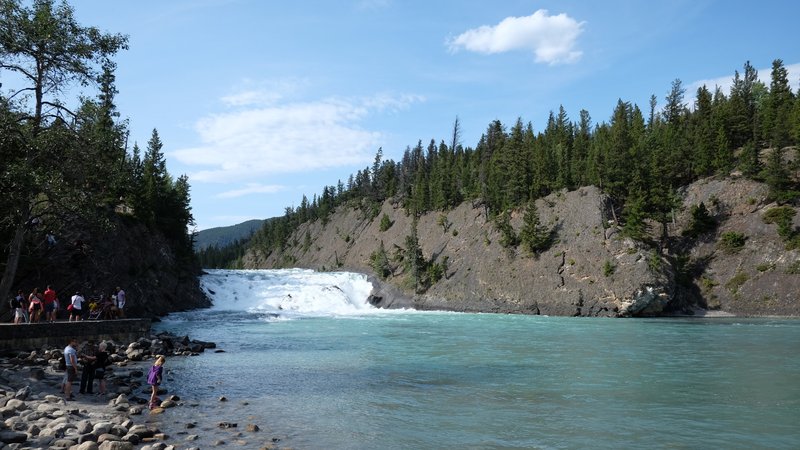
A powerful natural waterfall where the Bow River surges through a narrow bedrock canyon, with views of the Fairmont Banff Springs framing the horizon above the gorge.
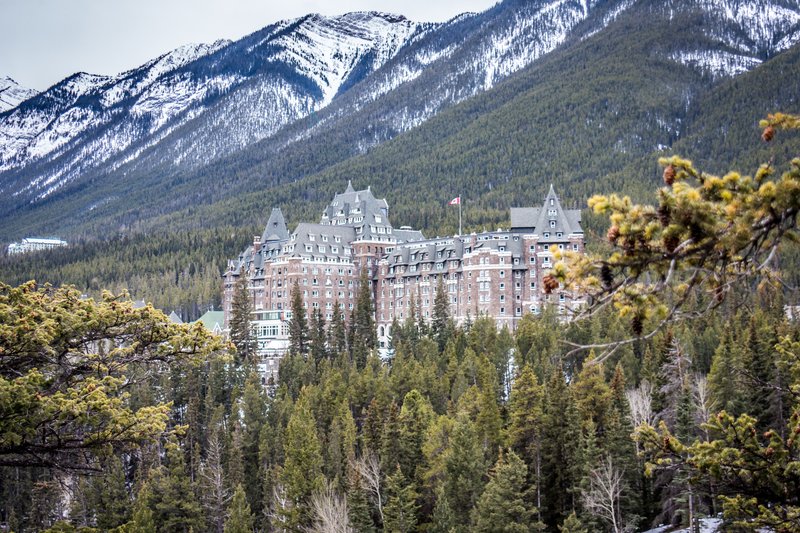
A promontory viewpoint above the Bow River where visitors turn a corner on the trail to discover an unobstructed panorama of the castle-like Fairmont hotel and mountain peaks.
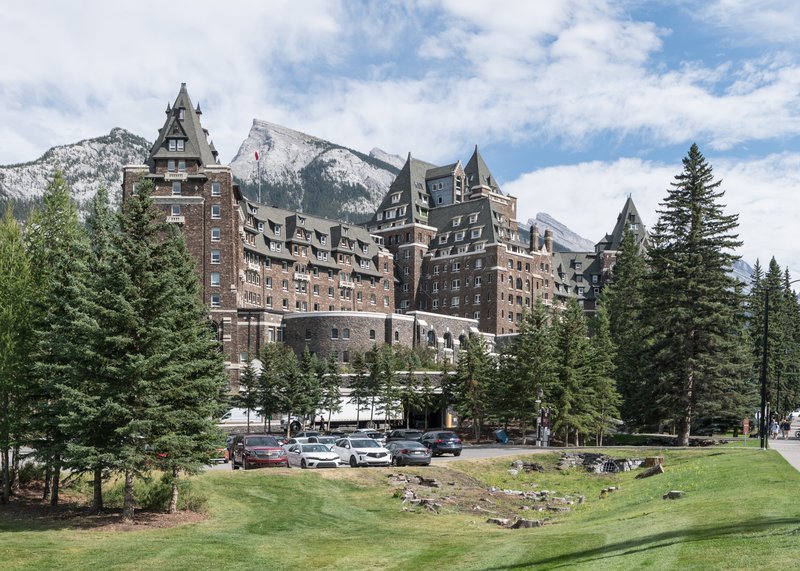
Canada's most iconic railway hotel, a sandstone baronial castle completed in 1888, set at the confluence of the Bow and Spray Rivers with commanding views of three mountain ranges.
37 min · 5 min → Cave and Basin National Historic Site
4.Cave and Basin National Historic Site~1 hr 30 min
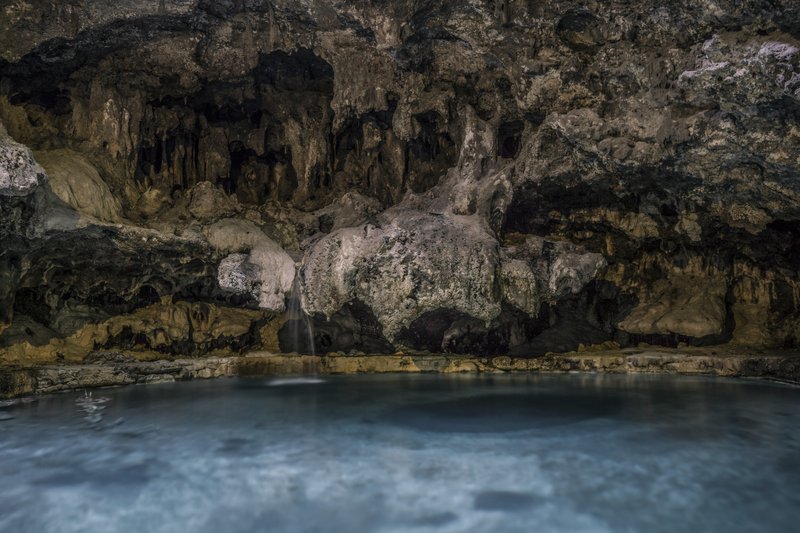
The discovery site of hot sulphur springs in 1883 that sparked the creation of Canada's national parks system; the cave pool and boardwalk marshes are home to the endangered Banff Springs snail.
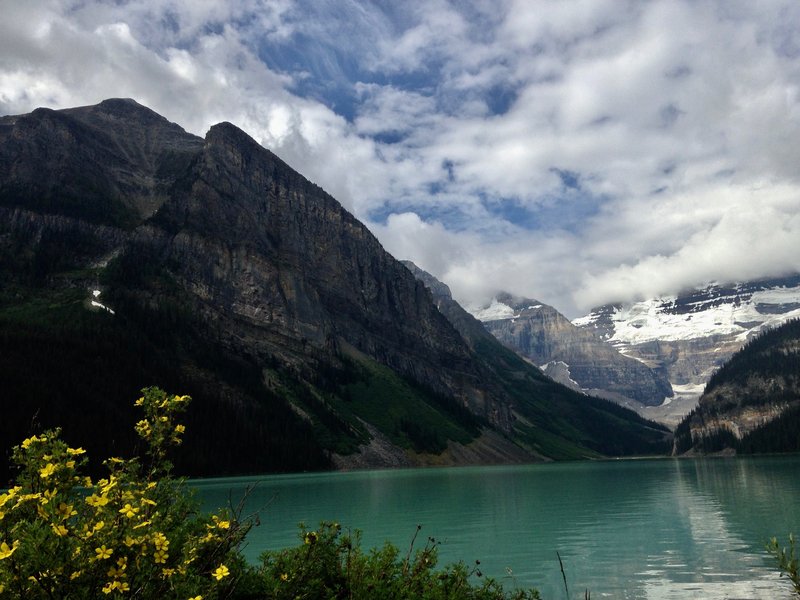
A glacier-fed emerald lake framed by the Victoria Glacier and Mount Victoria, with the historic Chateau Lake Louise on its shores and shoreline trails leading to tea houses above.
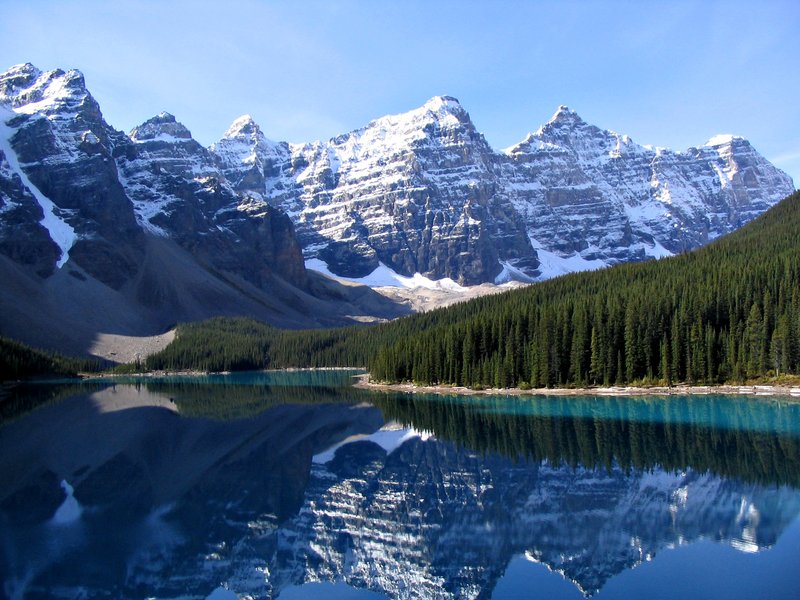
A vivid turquoise glacial lake ringed by the Valley of the Ten Peaks; the viewpoint from the rockpile at the lake's outlet is among the most photographed scenes in Canada. Parks Canada shuttle reservation required.
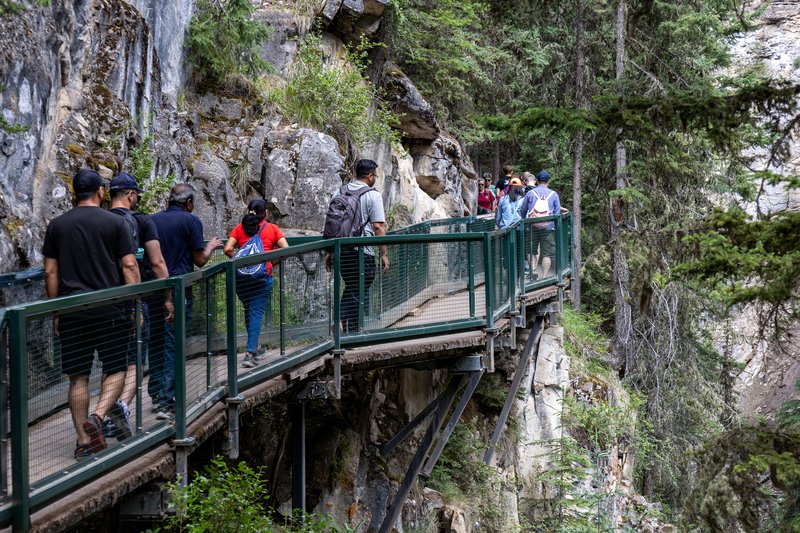
A narrow carved limestone canyon on the Bow Valley Parkway, where a steel catwalk bolted into the canyon walls leads past pools and spray to the Lower Falls at 1.1 km and the Upper Falls at 2.7 km.
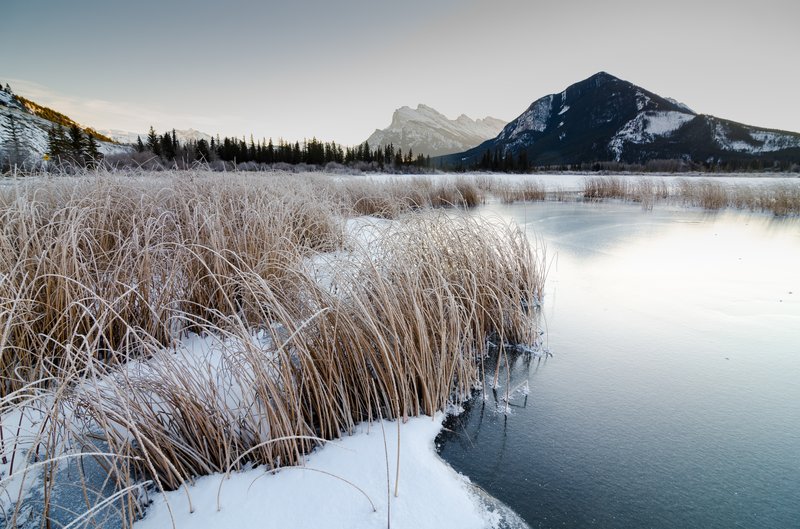
Three shallow interconnected lakes formed by beaver dams in a broad valley just outside Banff townsite, famous for sunrise and sunset reflections of Mount Rundle and as one of the park's best wildlife corridors.
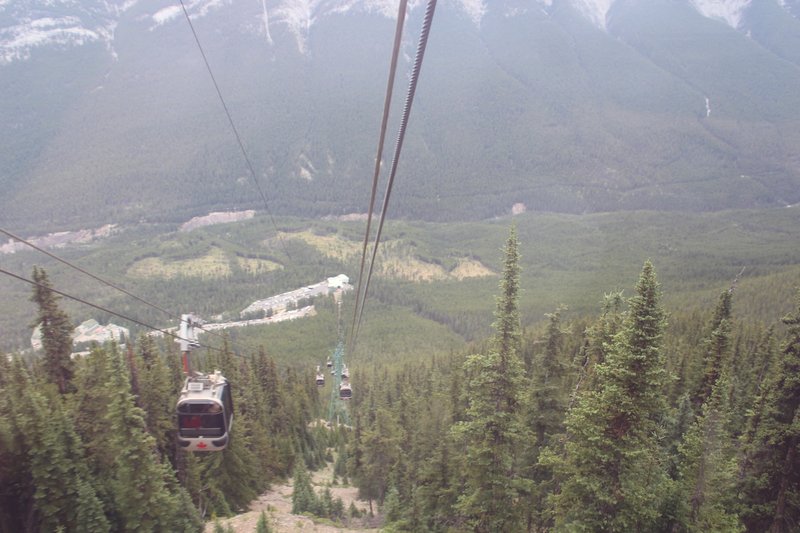
A gondola ascending 698 m to the 2,281-metre summit of Sulphur Mountain, where a ridge boardwalk connects to the original 1903 cosmic ray station and summit-level views span six mountain ranges.
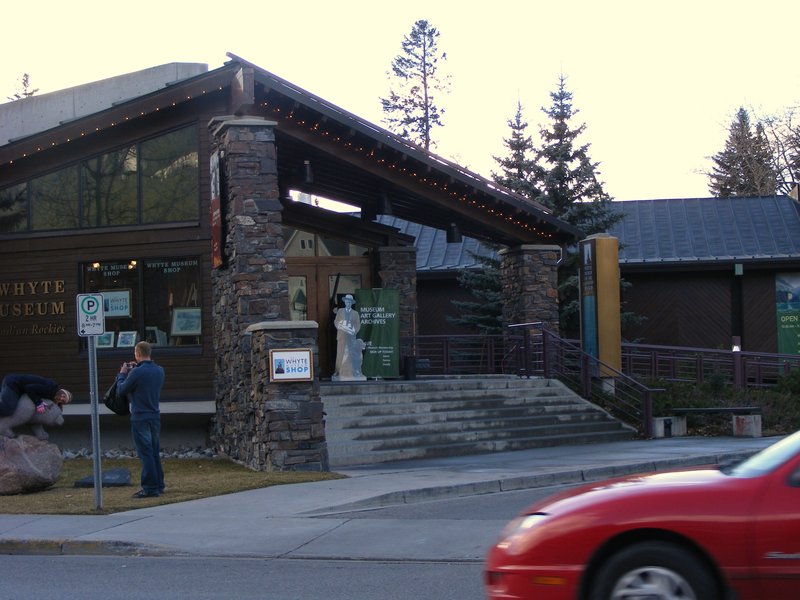
A cultural institution preserving the visual art, literature, and human history of the Canadian Rockies, with rotating gallery exhibitions and the preserved heritage homes of pioneer artists Peter and Catharine Whyte.
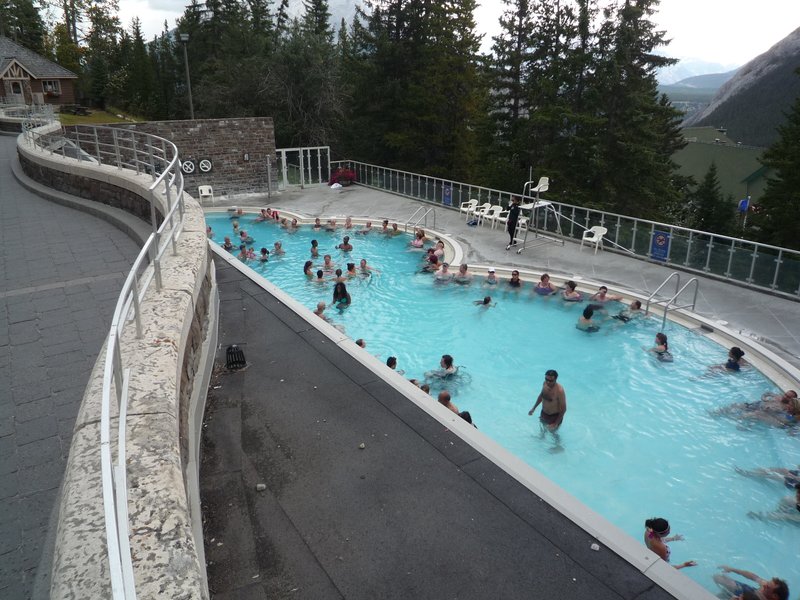
Canada's highest commercially operated hot springs pool, fed by natural sulphurous water from Sulphur Mountain, with a panoramic mountain outlook from the outdoor pool deck.
A large glacially-fed lake at the headwaters of the Bow River, lying at 1,920 metres beneath the toe of Crowfoot Glacier — one of the most photogenic stopping points on the Icefields Parkway.
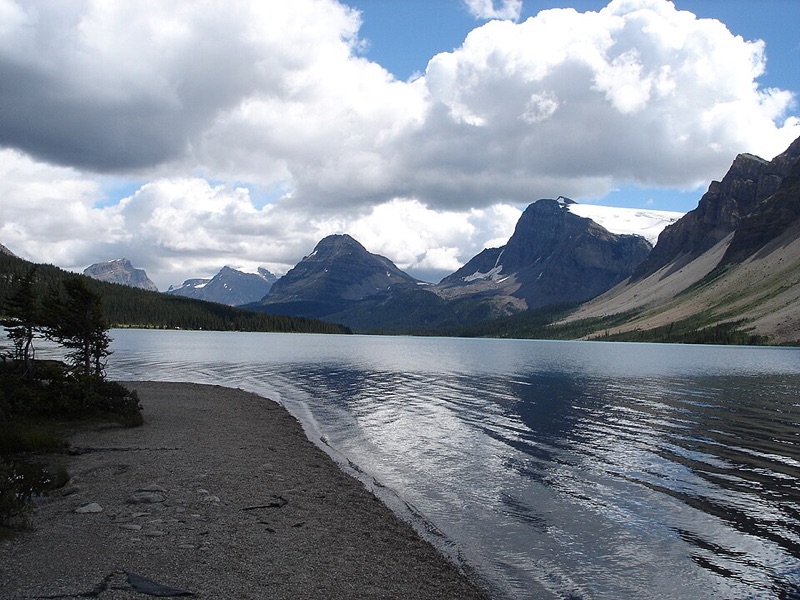
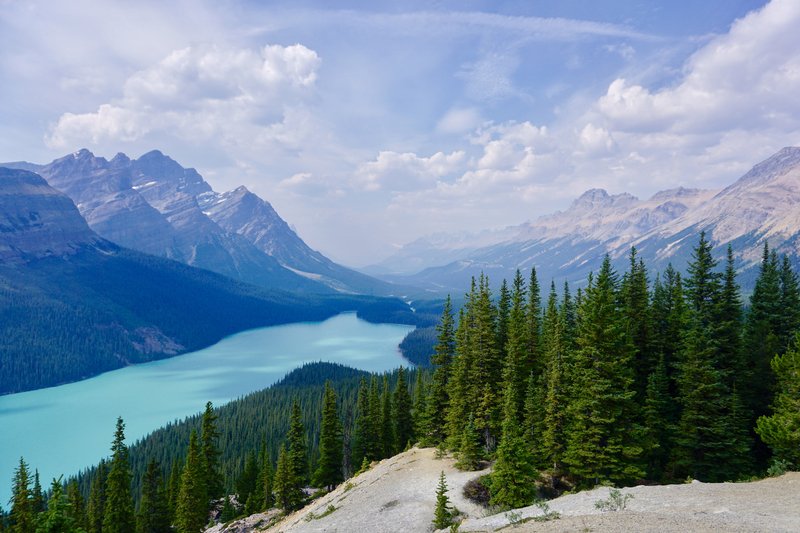
A glacier-fed lake at the base of Bow Summit whose vivid turquoise water and distinctive wolf-head outline — visible from the Bow Summit viewpoint at 2,069 metres — make it one of the most reproduced images in the Canadian Rockies.
A narrow limestone gorge carved by the Mistaya River where centuries of water erosion have sculpted potholes, arches, and sheer walls reaching 40 metres, reached by a 700-metre trail through lodgepole pine forest from the highway.
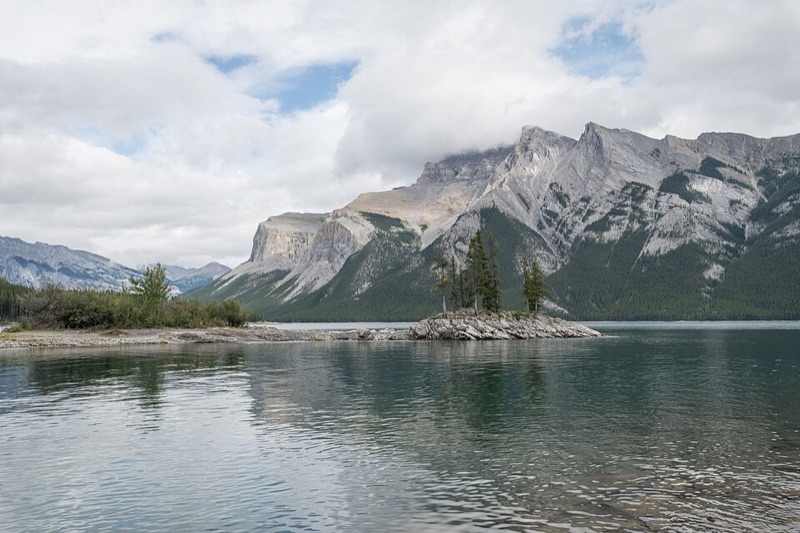
The largest body of water in Banff National Park — a 21-kilometre reservoir backed by the sheer face of Mount Inglismaldie — offering a two-hour boat tour along glacially-carved walls to the mouth of Ghost Canyon.
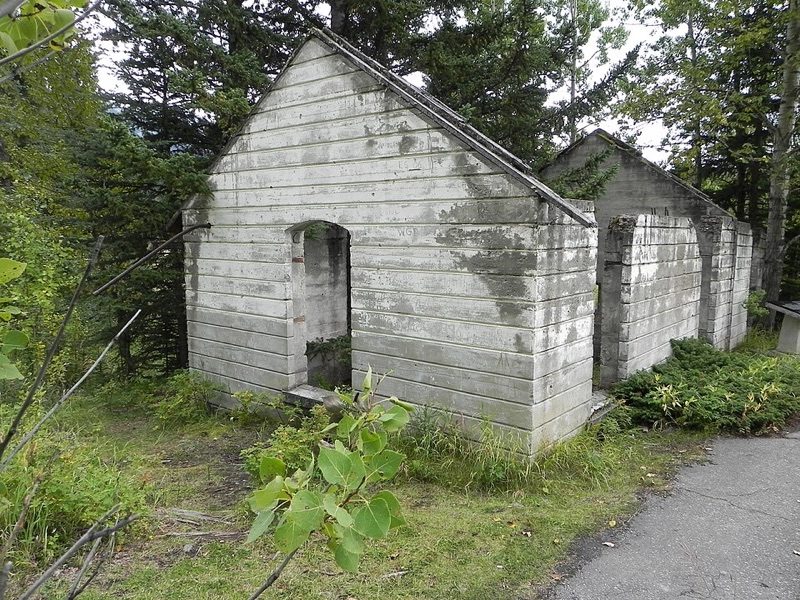
A coal-mining company town that operated from 1903 to 1922 and was then demolished when the CPR closed the mine — concrete foundations, the original lamp house, and interpretive panels marking where 1,000 workers once lived along the Minnewanka Loop Road.
A mountain 8 kilometres north of Banff townsite whose Sky Chair sightseeing chairlift ascends to 2,133 metres, where a ridge trail offers 360-degree panoramas over the Bow Valley, Cascade Mountain, and the Banff townsite below — one of the fastest elevated viewpoints to reach from the town centre.
A guided 2-hour nighttime walking tour through Banff townsite combining a sunset photography stop with dark-sky stargazing, led by a certified naturalist who identifies constellations and explains mountain astronomy.
An award-winning small-group tour exploring Banff's most iconic wildlife corridors and scenic viewpoints including Vermilion Lakes and the Bow River Valley, with expert naturalist narration.
A year-round wildlife-watching and scenic tour of Banff National Park covering meadows, river valleys, and mountain viewpoints in a small van with local naturalist commentary and guaranteed small-group sizes.
A full-day tour from Banff visiting Lake Louise, Moraine Lake, and the Icefields Parkway, with stops at the Valley of the Ten Peaks viewpoint in a comfortable small vehicle.
A premium small-group day trip through Banff National Park in a luxury vehicle, covering Moraine Lake, Lake Louise, Johnston Canyon, and Icefields Parkway viewpoints with a professional guide.
An intimate evening walking tour through Banff at sunset transitioning to dark-sky stargazing with telescope use, constellation identification, and Milky Way photography guidance by a certified naturalist.
A full-day guided adventure covering a high alpine meadow at 2,400 m above Banff, Johnston Canyon's lower and upper falls, and a Banff Gondola ascent for panoramic summit views, all connected by comfortable bus transport.
An all-day guided tour covering the four most iconic natural landmarks in Banff National Park, with time at each lake and canyon for photographs and short walks led by an expert local guide.
A full-day shuttle tour from Banff to Lake Louise, Moraine Lake, and Peyto Lake that eliminates the need to book Parks Canada shuttle passes or navigate limited parking, with a knowledgeable guide on board.
A guided 2.5-hour or 4-hour via ferrata climb on Mount Norquay's limestone ridgeline above Banff, with all technical gear provided and experienced guides managing safety on the exposed cliffside route.
A 2-hour guided nighttime walking tour that starts at dusk with sunset views over the Bow River and transitions into constellation identification and Milky Way photography in Banff's certified dark-sky corridor.
An award-winning 4-hour small-group guided tour of Banff's wildlife corridors and iconic viewpoints including Vermilion Lakes, Bow River, and Tunnel Mountain Drive with expert naturalist narration.
A premium 4-hour small-van tour hitting Banff's eight must-see viewpoints in reverse-traffic order, with an expert naturalist guide and guaranteed window views from all twelve reclining seats.
A scenic 1-hour boat cruise on Lake Minnewanka, Banff's largest lake, with naturalist narration about the submerged ghost town of Minnewanka Landing and the mountain geology visible along the shoreline.
A 2.5-hour express highlights tour covering Banff's top viewpoints, wildlife corridors, and iconic spots in a small comfortable vehicle, ideal for travelers with limited time who want a curated local experience.
Grass-fed and grain-finished cattle raised on Alberta's open ranges produce some of Canada's most sought-after beef, available as premium steaks and burgers across every level of Banff's dining scene.
A traditional flatbread adopted across First Nations communities after Scottish fur traders introduced it; served warm with butter or alongside stews in pan-fried or baked form.
Wild-harvested and ranch-raised bison and elk are staples of Rocky Mountain cuisine; lower in fat than beef and richer in iron, they appear in Banff menus as steaks, tartare, and burgers from Alberta ranches within driving distance.
Canada's most iconic unbaked dessert — layers of chocolate-graham crumb, custard buttercream, and ganache chocolate top — named after Nanaimo, British Columbia, found at bakeries nationwide.
Canadian maple syrup and maple butter from eastern sugar bushes are widely available in Banff gift shops and restaurants; dark amber grades from Quebec and Ontario are richer than commercial imitations.
Historic 1910 CPR station that once served transcontinental passenger trains; regular VIA Rail service ended in 1990 and the building now serves the Rocky Mountaineer luxury tourist rail only.
From the Research Notes — Banff sits within one of the largest certified International Dark Sky Preserves in the world, covering 6,600 square kilometres of Banff and Jasper National Parks. The designation means light pollution is actively managed across the entire park boundary. On a clear night away from the Banff townsite, the Milky Way is visible to the naked eye for roughly 250 nights per year. The stargazing tours in the Tours section all exploit this — their meeting times shift nightly to match astronomical twilight, the window after sunset when the sky darkens but the horizon still holds enough glow for foreground photography. What most visitors miss is that the town's own lighting policy contributes to the preserve: all commercial and street lighting in Banff is downward-directed and amber-tinted to reduce scatter. Standing at the edge of Vermilion Lakes around 11pm, with the beaver-dammed wetlands quiet and Mount Rundle silhouetted against the Milky Way's core, is the version of Banff that takes an hour of patience to access but belongs on a different level from the standard viewpoints.
There is also a lesser-told founding story at Cave and Basin. The hot springs were claimed by three CPR railway workers in November 1883, who fenced off the cave and attempted to develop it as a private bathing resort. The Canadian government refused to recognize their claim, expropriated the site two years later, and set aside 26 square kilometres as the "Banff Hot Springs Reserve" in 1885 — the act of Parliament that would expand in 1887 into Canada's first national park. Cave and Basin is, in the most literal sense, the place where Canada decided that natural heritage should belong to everyone. The endangered Banff Springs snail, endemic only to the outflow stream of these specific hot springs, has survived in that water for thousands of years and still lives there today.