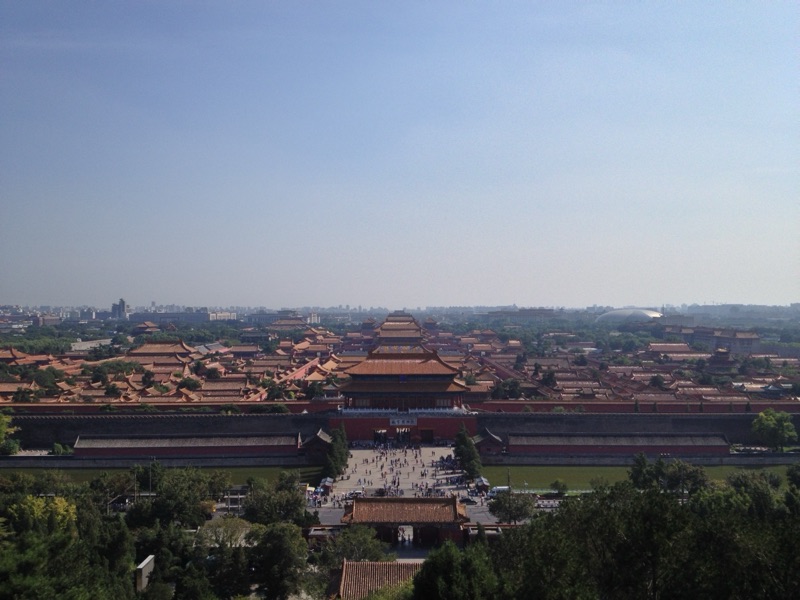
Imperial palace of 24 Ming and Qing emperors built in 1420 — 72 hectares, 980 buildings, nearly a million artefacts. The world's largest palace museum. The ceremonial axis from Tiananmen to the Imperial Garden is one of architecture's supreme processions. UNESCO World Heritage.
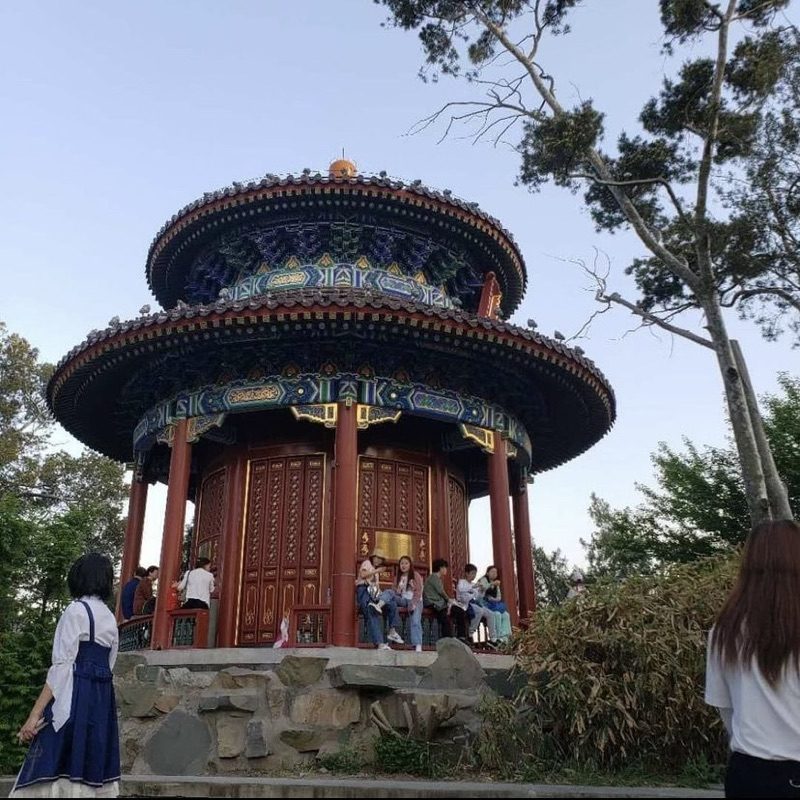
The imperial garden directly north of the Forbidden City on Beijing's historic axis — the artificial hill was piled from earth excavated when digging the palace moat. Wanchun Pavilion offers the finest aerial view of the Forbidden City's sea of yellow-roofed courtyards.
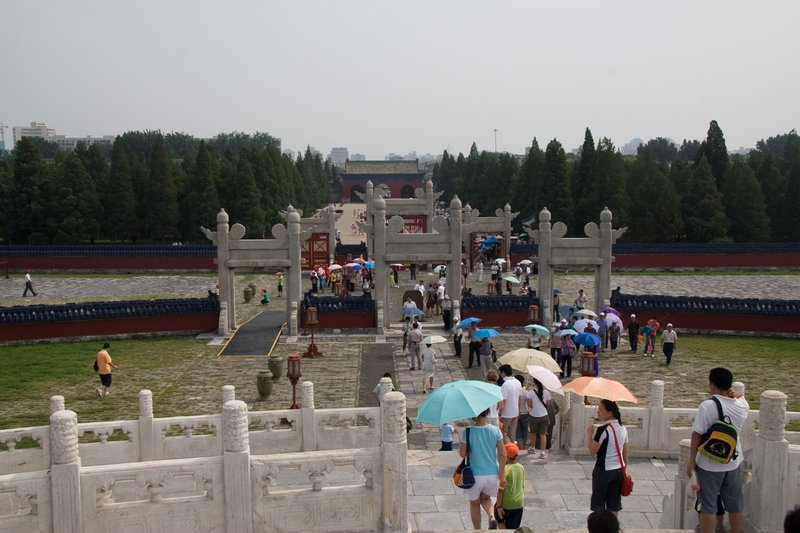
The 15th-century imperial complex where emperors prayed for good harvests. The triple-tiered Hall of Prayer for Good Harvests — built in 1420 without nails — is one of China's most iconic silhouettes. The surrounding park hosts morning tai chi, calligraphy, and opera sessions daily. UNESCO World Heritage.
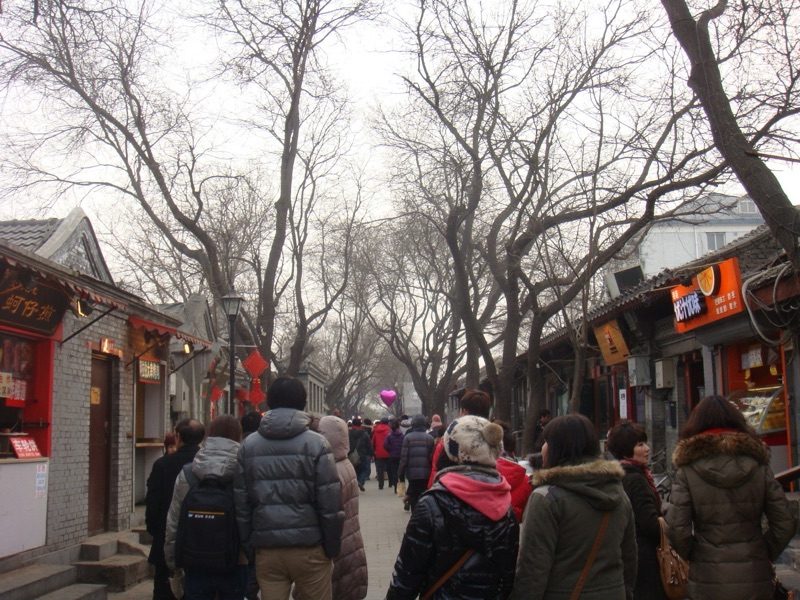
The most celebrated hutong in the city — an 800-metre Yuan-dynasty lane flanked by eight courtyard cross-lanes. Craft shops, breweries, cafes, and baijiu bars fill the alley. Wander Mao'er or Banchang Hutong for original courtyard gatehouses away from the main crowd.
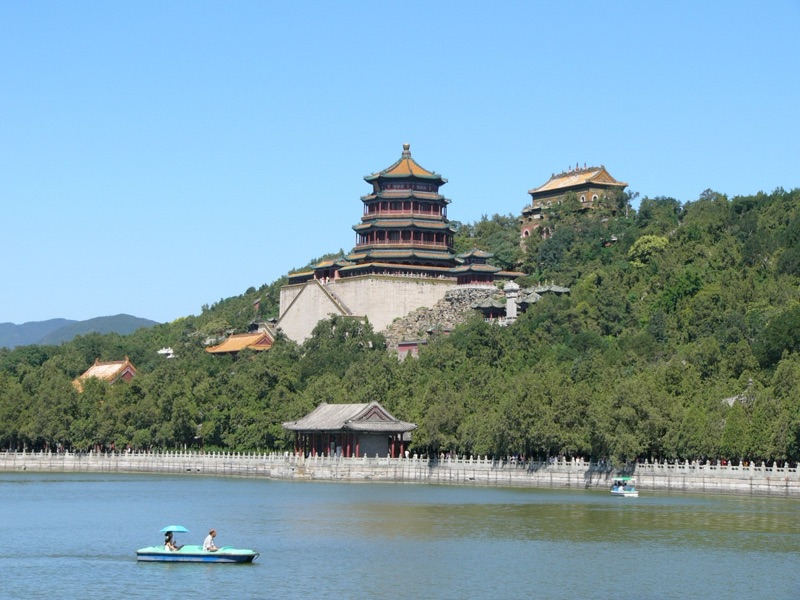
The Qing imperial retreat — 2.9 sq km centred on Kunming Lake. The 728-metre Long Corridor whose ceilings depict 14,000 painted scenes is the longest painted gallery in the world. The Marble Boat, 17-Arch Bridge, and Garden of Harmonious Interest are among its landmarks. UNESCO World Heritage.
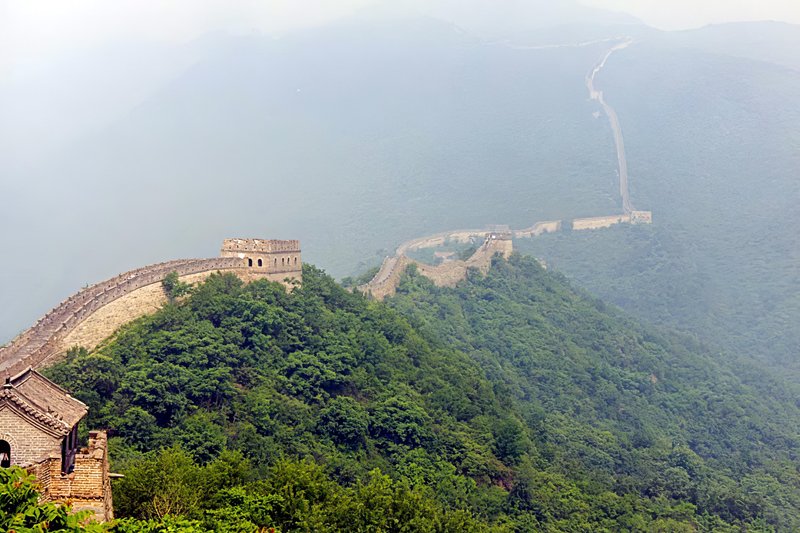
The finest restored section of the Great Wall accessible from Beijing — 2.25km of Ming-dynasty fortifications across forested ridgelines with 22 watchtowers. Built 1368, reinforced 1570s. Far less crowded than Badaling. Cable car ascent, toboggan slide descent.
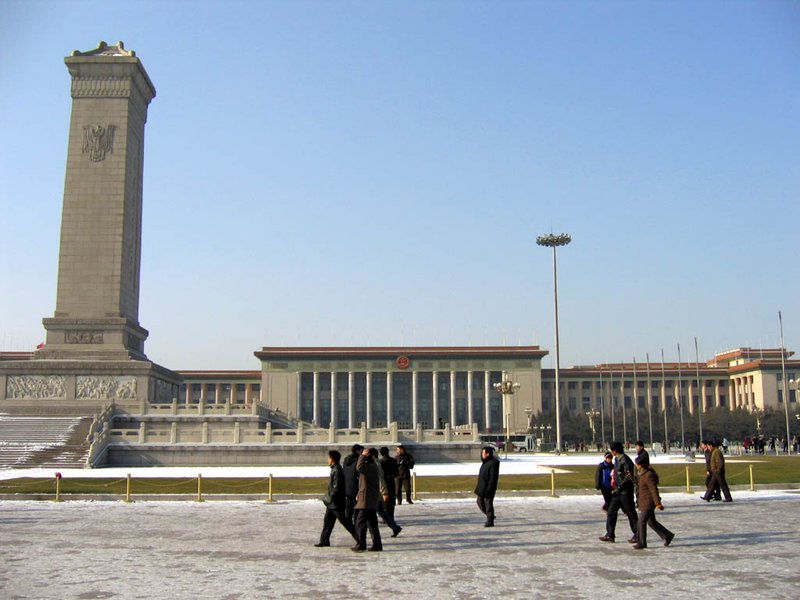
The vast ceremonial plaza at the heart of Beijing — 44 hectares, the largest public square in the world. The Monument to the People's Heroes rises at its centre, flanked by the Great Hall of the People and the National Museum of China. The Tiananmen gate along its northern edge opens onto the Forbidden City.
Free timed reservation required — book 1–7 days ahead through the official channel and bring your passport. Airport-style security screening at every entrance.
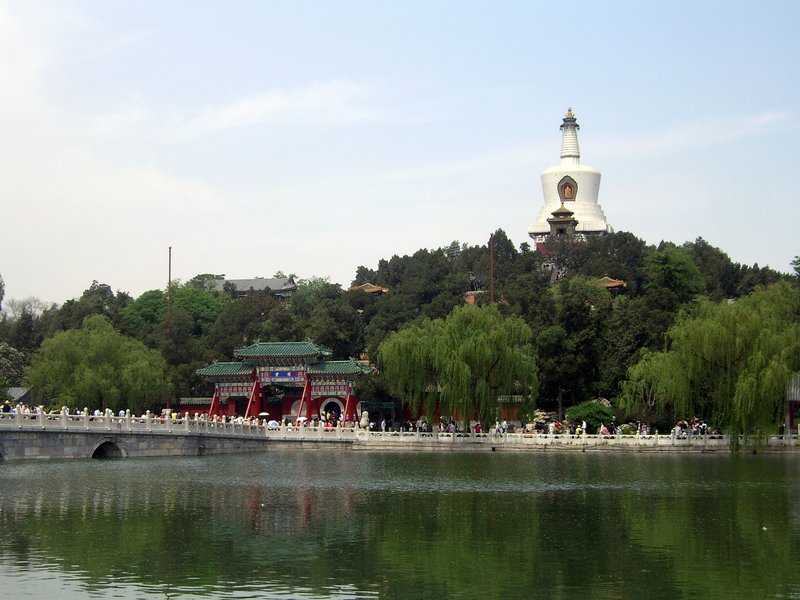
One of the oldest and best-preserved imperial gardens in China, laid out over a broad lake more than eight centuries ago. Qionghua Island rises from the water crowned by the 36-metre White Dagoba, a Tibetan-style stupa of 1651. Marble bridges, the glazed Nine-Dragon Wall, and lakeside willows fill the grounds.
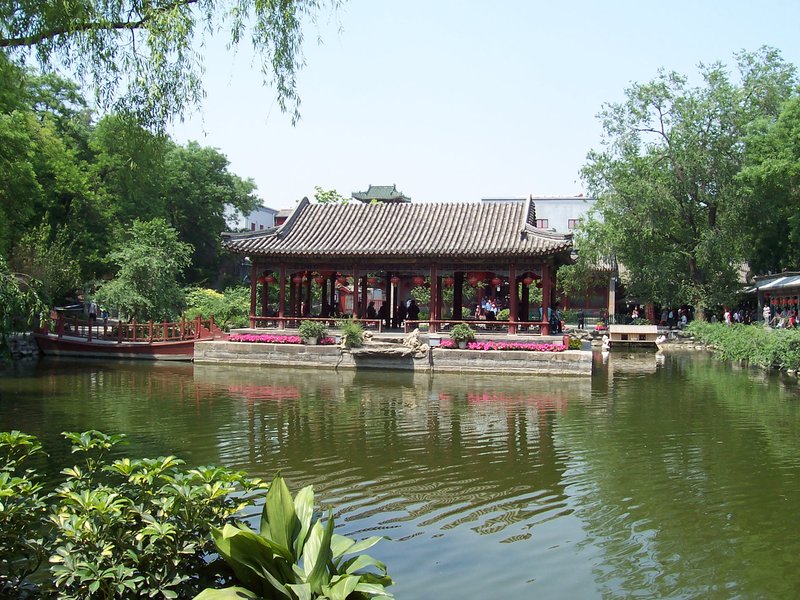
The grandest surviving aristocratic residence in Beijing — built in 1777 for the imperial favourite Heshen, later home to Prince Gong. Its 60,000-square-metre complex pairs formal courtyard halls with an elaborate classical garden of ponds, rockeries, a covered opera house, and winding walkways.
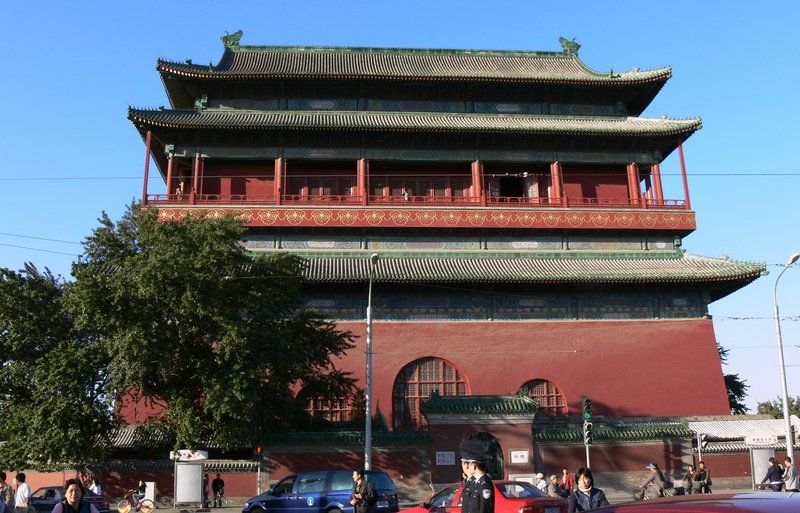
The twin timekeeping towers at the north end of the historic axis, which set the rhythm of imperial Beijing. Great drums and a bronze bell marked the watches of the night for centuries. Climb the steep stair of the Ming-dynasty Drum Tower for a live drumming performance and rooftop views over the hutong roofs.
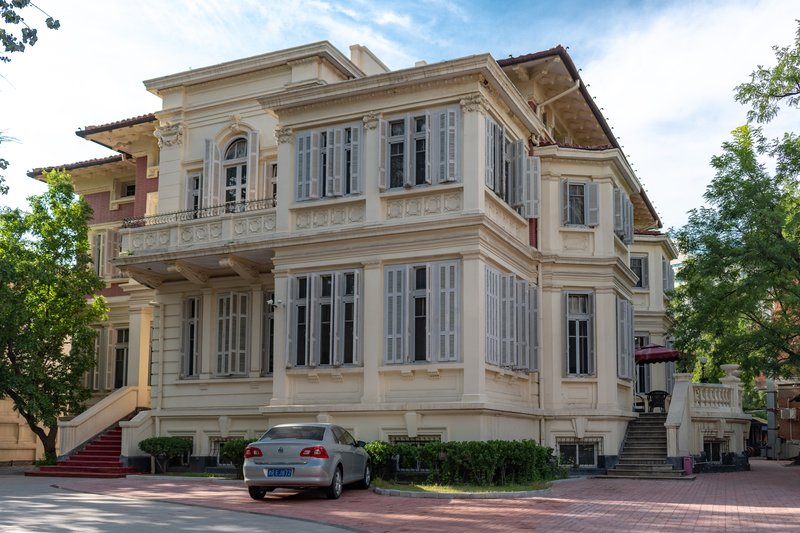
A grid of five leafy avenues lined with more than 230 mansions from Tianjin's concession era — British, French, Italian, German, and Spanish villas built in the early 1900s. Nicknamed the "World Architecture Exposition," it is the finest concentration of European residential architecture in China.
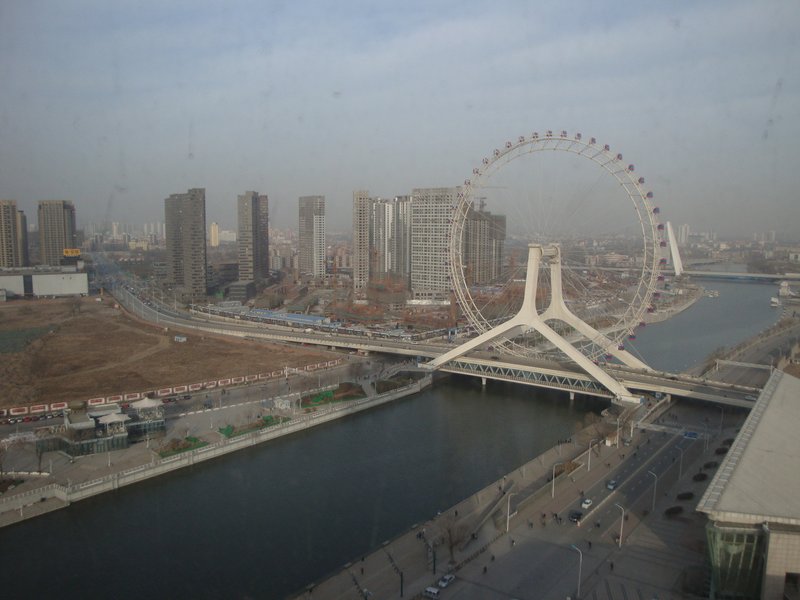
The only Ferris wheel in the world built across a bridge — a 120-metre wheel mounted on the Yongle Bridge over the Hai River. A single rotation of the glass cabins lasts 30 minutes and lifts riders over the river and the Tianjin skyline. Opened 2008.
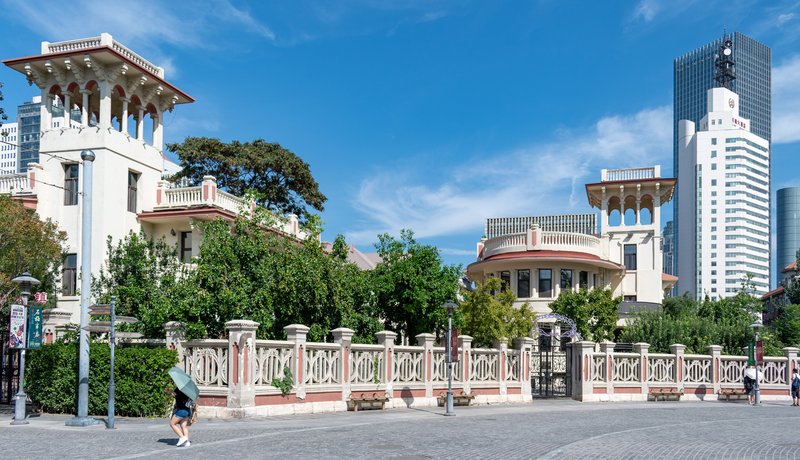
The former Italian concession — the only district of its kind in Asia. Marco Polo Square and its surrounding lanes hold 137 Italian-designed buildings from the early 1900s: consulate, church, villas, and cafes in Renaissance and Baroque styles, now a restored pedestrian quarter along the Hai River.
Six dishes and three drinks across five hole-in-the-wall hutong restaurants — mung bean jelly, deep-fried dough twists, soy-braised pork, local craft beer. The most authentic food walk in the city.
A licensed guide walks the full south–north imperial axis — Meridian Gate, Supreme Harmony Hall, the imperial living quarters, the imperial garden — with skip-the-line entry tickets included.
Mutianyu Great Wall with cable car, Summer Palace grounds, and the Olympic Bird's Nest and Water Cube — three great spectacles in a single day. Lunch included.
Dedicated full-day Great Wall experience — cable car to the Mutianyu section, free walk along the watchtowers, toboggan descent, local lunch near the base. Highest-rated Great Wall group tour.
2.5-hour walk through the oldest hutong lanes — 500-year-old courtyard houses, a functioning Buddhist stupa, a Ming-era imperial granary — with a local guide who grew up in the neighbourhood.
Air-conditioned coach to Mutianyu, cable car and entrance ticket included, English-speaking guide, optional Summer Palace add-on for a full-day itinerary.
Tiananmen Square, the full Forbidden City imperial axis, and Temple of Heaven in one 6-hour day — English-speaking licensed guide, skip-the-line entry tickets included, group capped at 15.
Afternoon tour combining the Yonghe Lama Temple — China's most visited Tibetan Buddhist temple — and a stroll through Wudaoying Hutong with its courtyard cafes and boutique shops. Small group with English guide.
Full-day Mutianyu trip with pre-booked cable car ticket, licensed English guide for an expert 30-minute Wall introduction, then 5 hours free time to explore watchtowers and take the toboggan descent. Optional lunch.
2-hour walk through Mao'er Hutong — Empress Wanrong's former courtyard mansion, the Qianhai–Houhai canal, Smoke Pipe Street — ending at the Drum Tower. Guide Roy Li has a near-perfect record across hundreds of reviews.
Skip-the-line entry, a licensed guide through the full imperial axis — Meridian Gate to the Imperial Garden — with rich historical context on each hall. Group capped at 15.
Cable car up Mutianyu, Summer Palace lakeside walk, Bird's Nest and Water Cube from Olympic Park — modern and imperial landmarks in a single well-paced group day. Lunch included.
4.5-hour guided circuit of Tiananmen Square and the full Forbidden City imperial axis — English and Spanish-speaking guide, skip-the-line admission included, group capped at 15. One of the highest-reviewed Forbidden City tours on the platform.
The definitive dish of the capital — whole duck roasted over fruit wood until the skin lacquers to a mahogany crunch. Served with thin pancakes, scallion, cucumber, and hoisin. Open- and closed-oven methods yield different results.
The most beloved noodle dish in the capital — thick hand-pulled wheat noodles with a slow-reduced fermented black bean and minced pork sauce, topped with julienned cucumber and radish. Unchanged for centuries.
The street breakfast of the capital — a crispy mung-bean crêpe spread with hoisin and chilli, wrapped around a fried wonton and spring onion. Cooked in two minutes on a flat iron griddle. Every hutong corner before 10am.
Foreign number: not accepted. — a Chinese number is required for verification.
China's largest delivery platform and the one Beijing actually uses, with listings running from chains to single-shop noodle kitchens across every hutong district. The app is Chinese-only and settles through WeChat Pay or Alipay, so it needs a working local payment setup.
Foreign number: not accepted. — a Chinese number is required for verification.
Alibaba's delivery arm and the main alternative to Meituan, with comparable coverage across central Beijing and often better promotions. Like Meituan it is Chinese-only and pays through Alipay, so it is realistic only once you have a local payment method running.
Foreign number: accepted. — the DiDi International build takes foreign numbers and runs in English, unlike the mainland app.
The only ride app that matters in mainland China. Drivers rarely speak English, so the in-app translated chat and the pinned pickup point do the work for you. Cash is not an option — the fare settles inside the app, which needs a card or a linked local wallet.
The Qing summer capital — China's largest imperial garden complex ringed by eight extraordinary Tibetan-style temples. UNESCO World Heritage. Far less visited than the equivalent sites in the capital.
The Terracotta Army of Emperor Qin Shi Huang — 8000 life-size warrior figures in three excavation pits. The walled Tang-dynasty capital, Shaanxi History Museum, and Muslim Quarter food street complete the picture.
China's financial capital and one of the world's great Art Deco cities. The Bund's colonial waterfront facing Pudong's skyline is one of the great urban views. The French Concession, Yu Garden, and Shanghai Museum anchor the cultural itinerary.
Beijing does not hide its weight. Every axis is deliberate — the 8km line from Yongding Gate through Tiananmen, through the Forbidden City's southern and northern gates, through Jingshan's pavilion, all the way to the Bell and Drum Towers. Stand at Wanchun Pavilion and you are standing on that axis, looking south at nine centuries of deliberate urban geometry. No city on earth has maintained an idea of itself with quite this degree of spatial insistence.
What is easy to miss, in all the grandeur, is how intimate the hutongs become. The city's entire imperial story plays out on a colossal scale — yet fifty metres off any of those grand axes, it becomes a village. Old men in doorways. Children on bicycles. A dumpling shop with two tables and a hand-painted sign. The hutong is what the palace was built to protect: ordinary life in courtyard houses arranged around the axis of a family rather than an emperor. Both Beijings are real, and you need both to understand the place.