From Hotel: 8 min · 4 min → Art Institute of Chicago
1.Art Institute of Chicago~2 hr
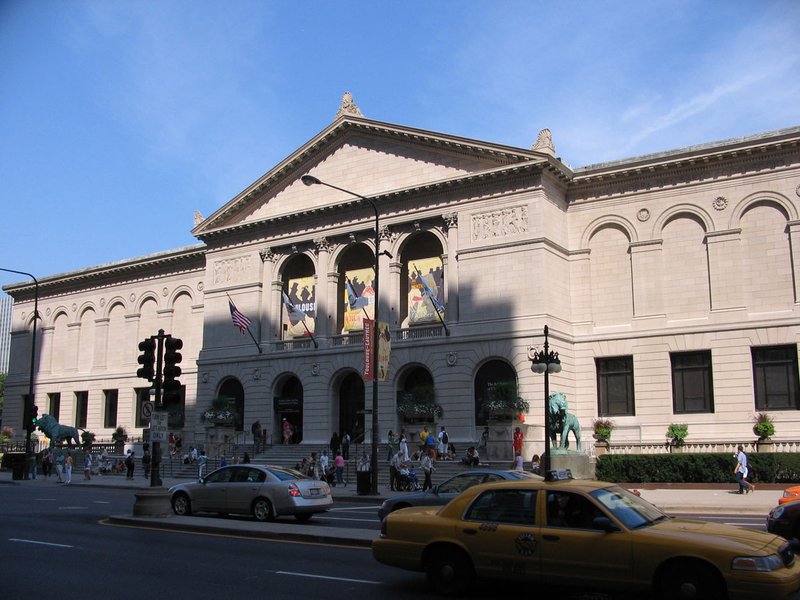
One of the world's great art museums, housed in a Beaux-Arts landmark on Michigan Avenue. The collection spans 5,000 years — Seurat's A Sunday on La Grande Jatte, Grant Wood's American Gothic, and Picasso's The Old Guitarist are here, alongside a world-class Impressionist collection.
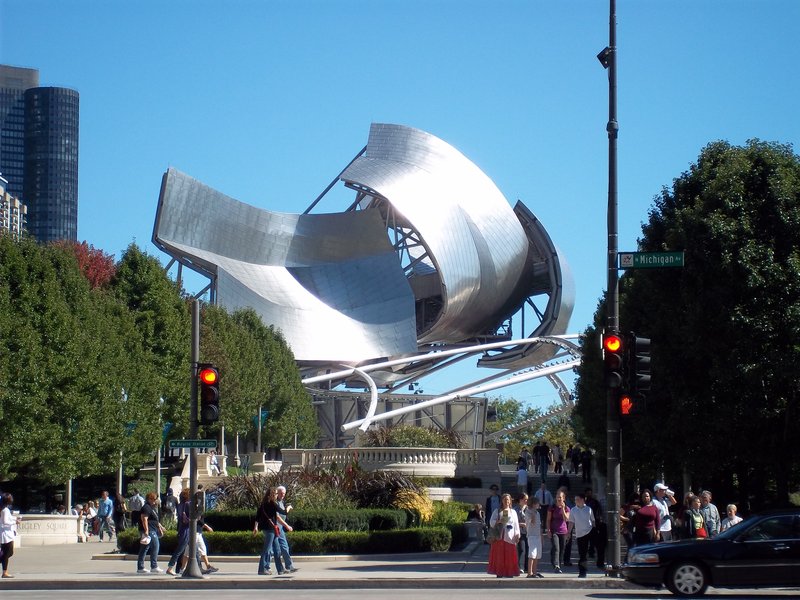
The Loop's great outdoor living room — 24.5 acres where Anish Kapoor's Cloud Gate reflects the skyline in a liquid silver arc, the Crown Fountain shoots water from two 50-foot glass towers, and Frank Gehry's Jay Pritzker Pavilion hosts free summer concerts beneath a steel headdress of interconnected ribs.
10 min · 5 min → Chicago Architecture Center River Cruise
3.Chicago Architecture Center River Cruise~1 hr 30 min
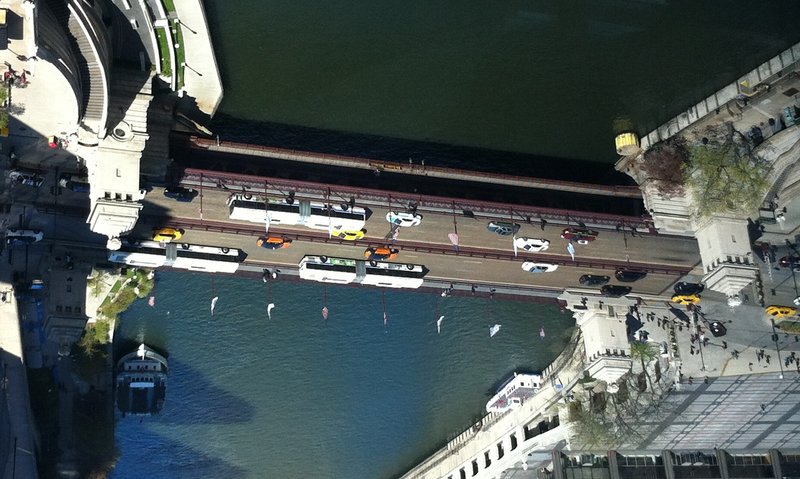
Ninety minutes on the Chicago River below the most concentrated collection of significant architecture in North America. Chicago Architecture Center docents call out 50+ buildings — from the 1889 Rookery to Trump Tower — as the boat passes through the main stem and South Branch.
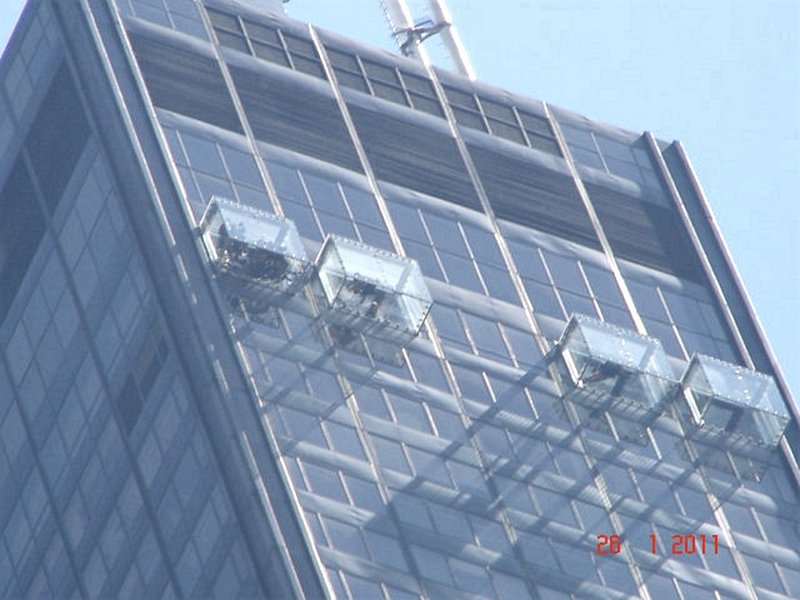
The Ledge — four glass balconies jutting four feet out from the 103rd floor — offers an unobstructed drop view 1,353 feet straight down to the street. On clear days you can see Illinois, Indiana, Wisconsin, and Michigan from what was once the world's tallest building.
From Hotel: 9 min · 4 min → Chicago Cultural Center
1.Chicago Cultural Center~1 hr
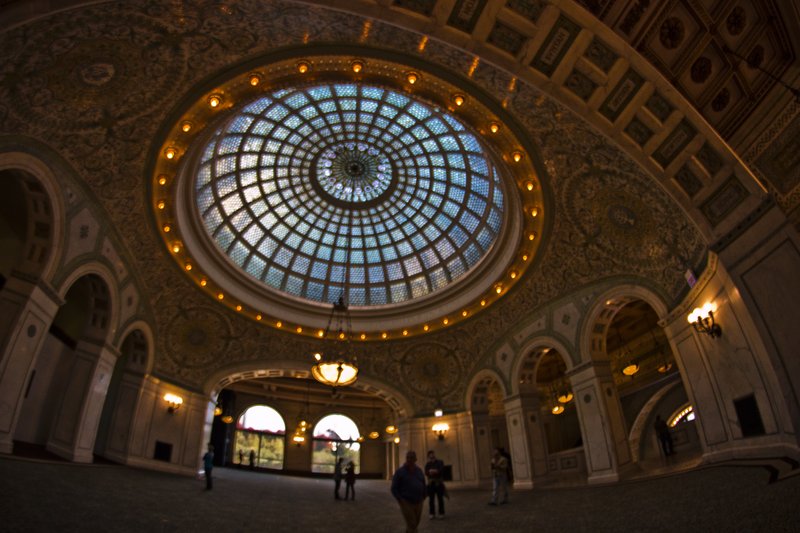
A Beaux-Arts landmark that opened in 1897 as Chicago's central library, now the city's flagship free arts venue. Preston Bradley Hall houses the world's largest Tiffany stained-glass dome — 38 feet across, built from 30,000 pieces of glass.
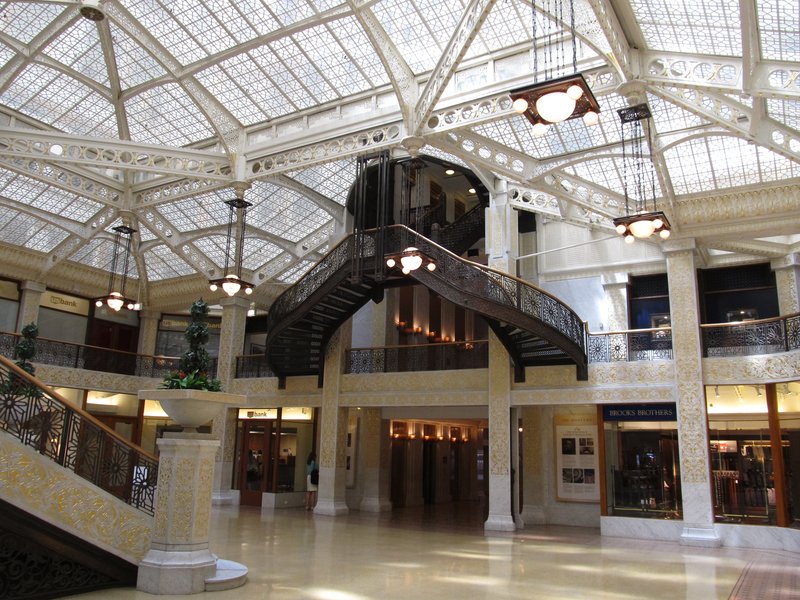
Chicago's oldest standing steel-skeleton skyscraper, completed in 1888 by Burnham and Root. The lobby is free to enter. Frank Lloyd Wright remodeled the light court in 1905, adding white marble and organic ironwork — two of America's greatest architects in the same room.
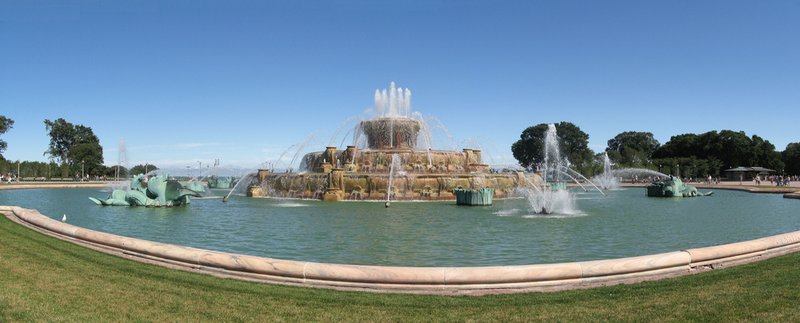
One of the world's largest fountains, built in 1927 and modeled on the Latona Fountain at Versailles at three times the scale. Water shoots 150 feet into the air hourly from mid-April through mid-October, with an evening light show at dusk.
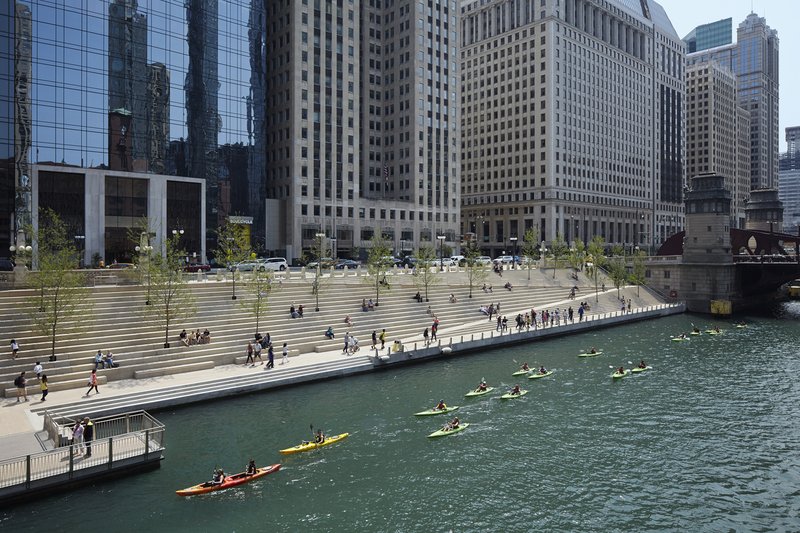
A mile-long promenade along the main stem of the Chicago River — kayak launches, outdoor restaurants, jet-boat docks, and river views framed by skyscrapers on both banks. One of the most spectacular urban river panoramas in the country.
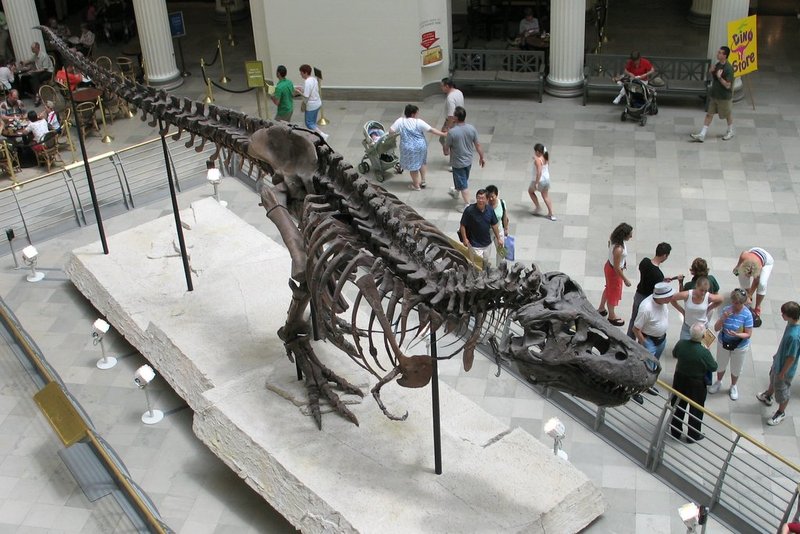
One of the largest natural history museums on earth, built for the 1893 World's Columbian Exposition and housing 40 million specimens across four floors. The main hall is anchored by Sue, the largest and most complete T. rex skeleton ever found, with gems, Egypt, and ancient Americas filling the wings.
The John G. Shedd Aquarium holds more than 32,000 animals across 5 million gallons of water, including beluga whales, Pacific white-sided dolphins, and a 90,000-gallon Wild Reef exhibit recreating a Philippine coral reef. The Art Deco building opened in 1930 and remains the most-visited aquarium in the world.
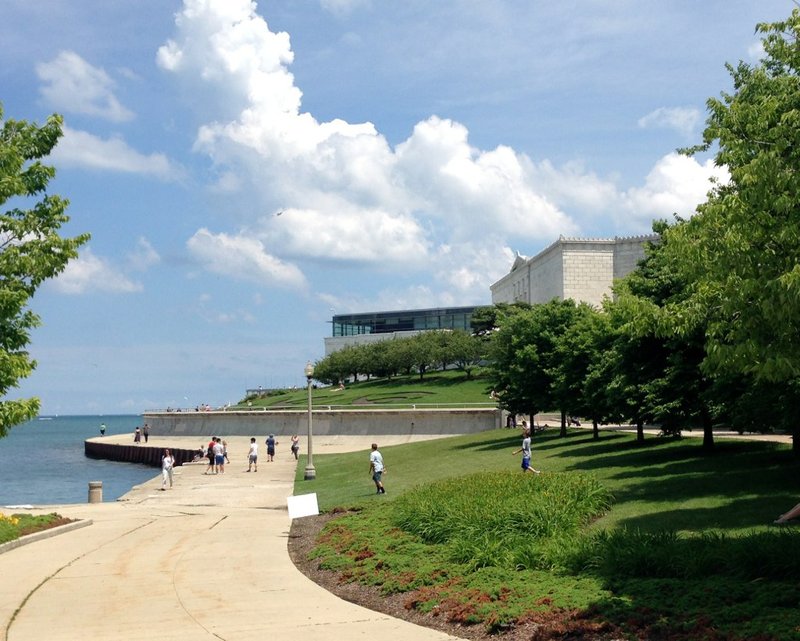
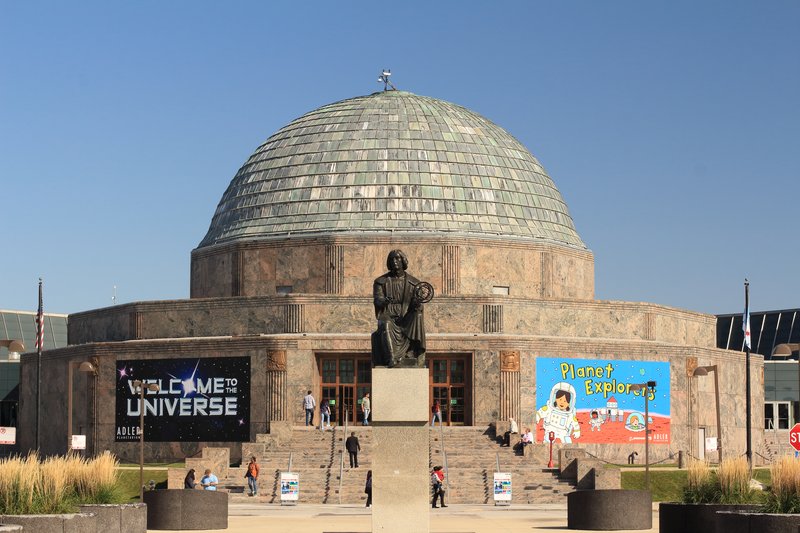
The first planetarium built in the Western Hemisphere, opened in 1930 on a peninsula in Lake Michigan with unobstructed views of the Chicago skyline. The Doane Observatory houses a 20-inch telescope open to the public, and the theater runs live narrated sky shows on the 68-foot dome.
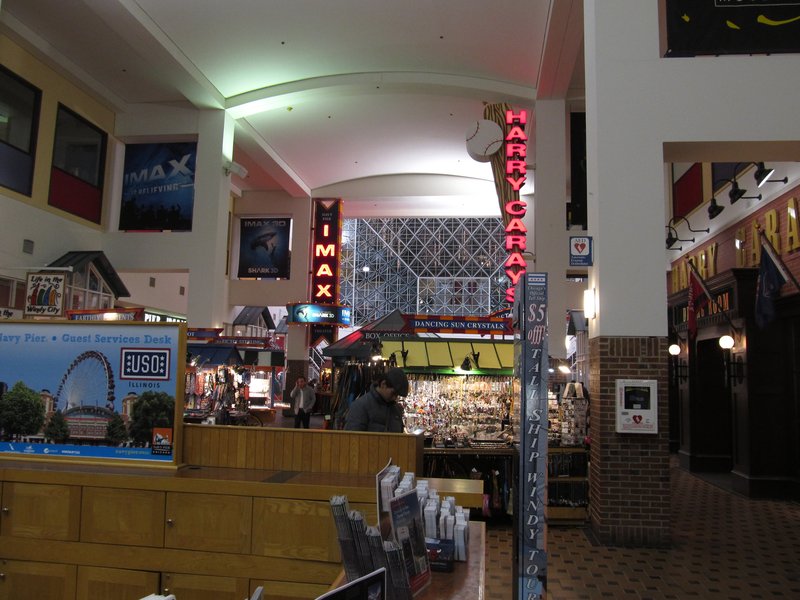
A 3,300-foot pier jutting into Lake Michigan, originally built in 1916 as a freight and passenger terminal and now Chicago's most-visited attraction. The Centennial Wheel rises 196 feet above the lake, and the outdoor gardens, restaurants, and beer garden line the south dock with views back across the skyline.
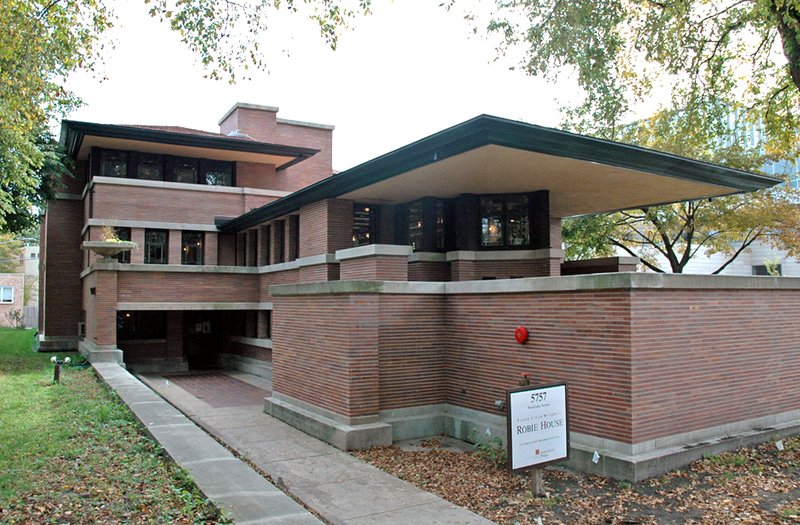
Frank Lloyd Wright's masterpiece of Prairie Style, built in 1910 on the University of Chicago campus. Cantilevered eaves extend 20 feet without visible support, the Roman-brick banding reduces the house to pure horizontal geometry, and the art-glass windows dissolve the wall plane. UNESCO World Heritage Site.
12 min · 4 min → Griffin Museum of Science and Industry
2.Griffin Museum of Science and Industry~2 hr
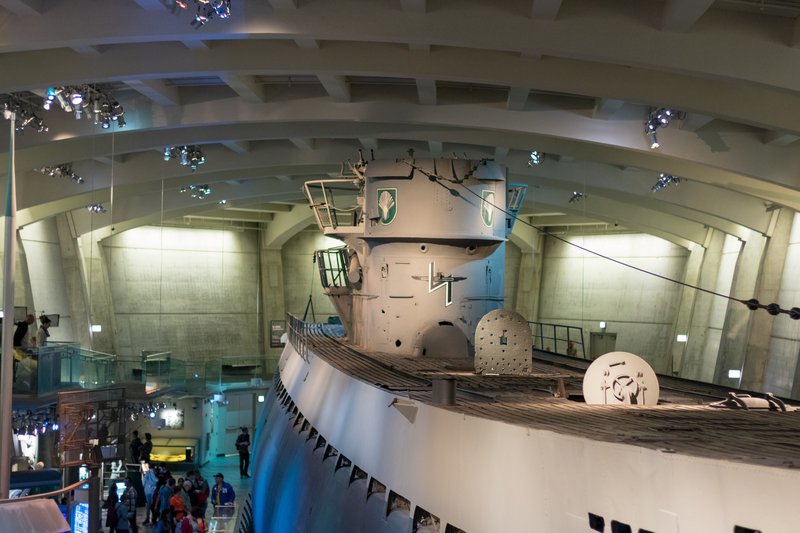
The largest science museum in the Western Hemisphere, housed in the 1893 World's Columbian Exposition Palace of Fine Arts on the Hyde Park lakefront. The U-505 is the only German submarine captured by the US Navy in World War II; a working coal mine descends below the main floor.
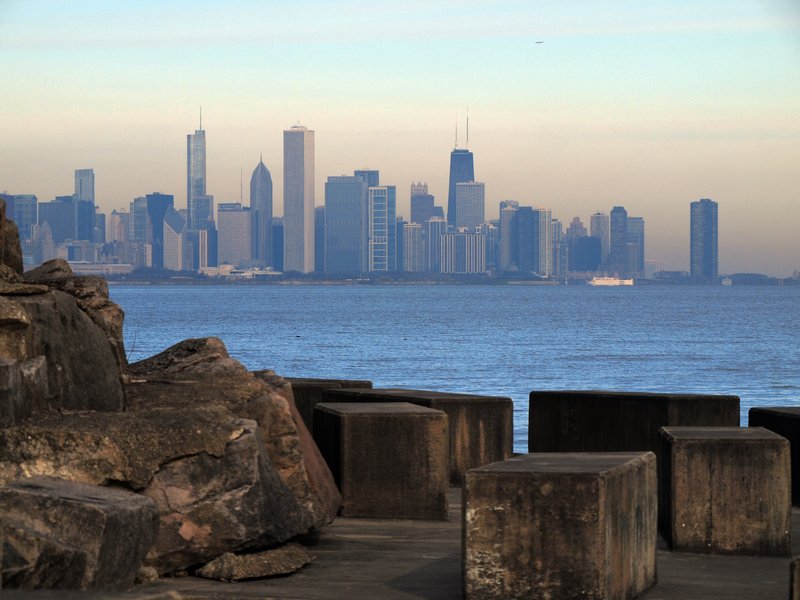
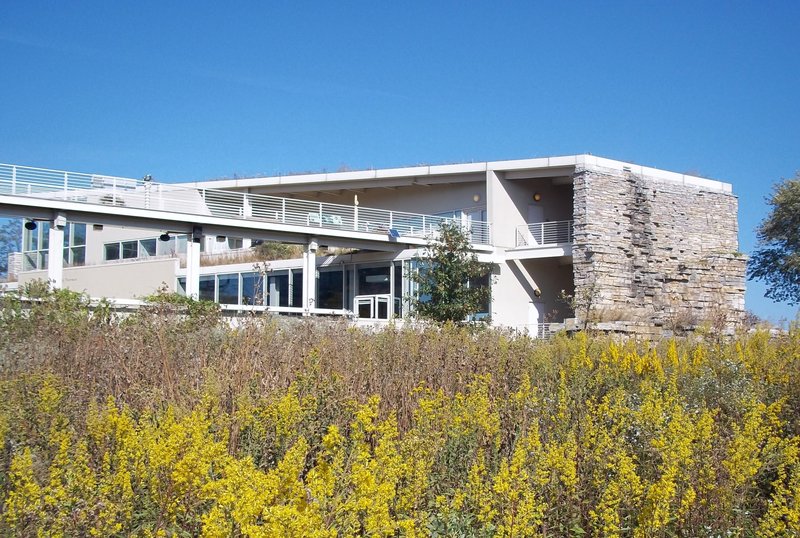
A promontory jutting into Lake Michigan, offering the widest unobstructed panorama of the Chicago skyline from any point in the city. Alfred Caldwell's 1937 Prairie-style park puts five miles of skyline on the northern horizon — the whole downtown visible at once from the lakeshore.
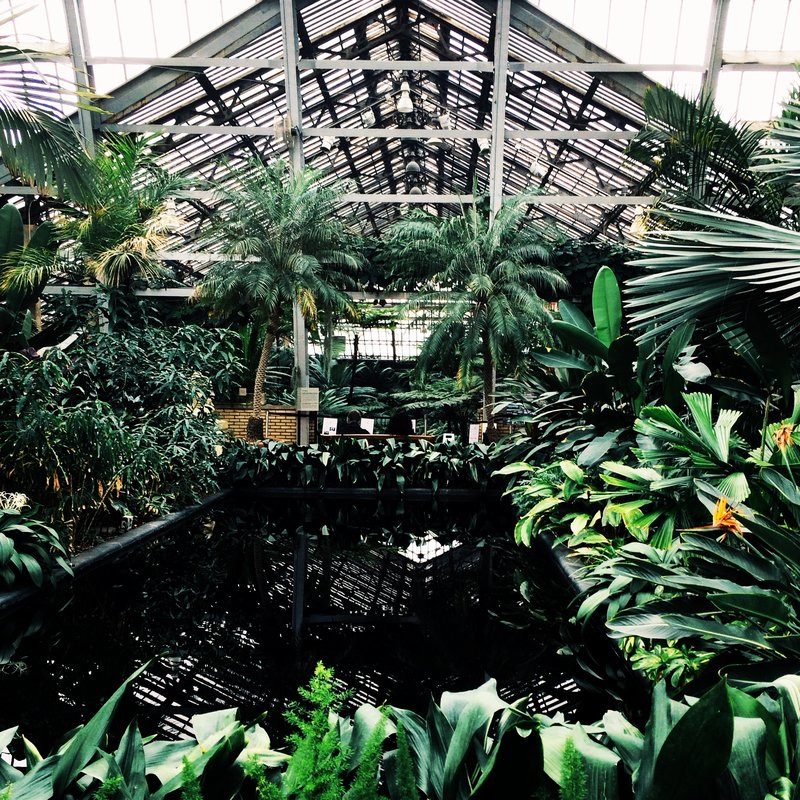
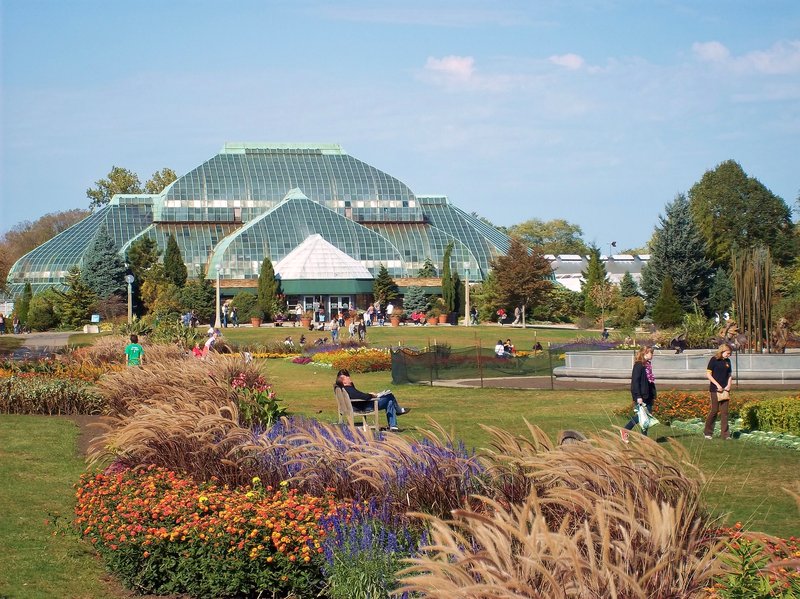
One of the largest and most architecturally significant conservatories in the United States, designed by Jens Jensen in 1908 as "landscape art under glass." Eight glasshouses shelter 2,700 plant varieties — cycads over 200 years old fill the Palm House and ferns from five continents carpet the Fern Room.
Natural history museum in Lincoln Park focused on the ecology of the Illinois region. The Judy Istock Butterfly Haven fills a glass-roofed greenhouse with more than 200 species of free-flying native and exotic butterflies — a lush walk-through habitat with caterpillars, pupae, and adult butterflies at every stage.
A Victorian cast-iron and glass conservatory completed in 1895, housing four exhibition halls under a soaring palm canopy. The Palm House shelters specimens over a century old, the Fernery recreates a tropical forest floor under glass, and the Orchid House cycles rotating flowering displays.
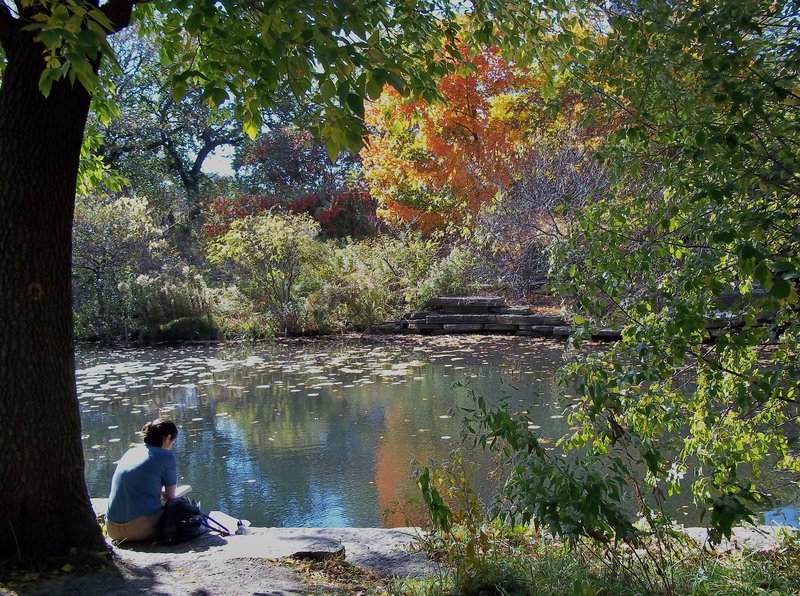
A 3-acre Prairie School landscape by Alfred Caldwell, completed 1938 and declared a National Historic Landmark. Caldwell transformed a derelict Victorian lily pond into a naturalistic meadow of native plantings, a fieldstone council ring, and a waterfall evoking what he called the "river country of the Middle West."
From Hotel: 25 min → Frank Lloyd Wright Home and Studio
1.Frank Lloyd Wright Home and Studio~1 hr 30 min
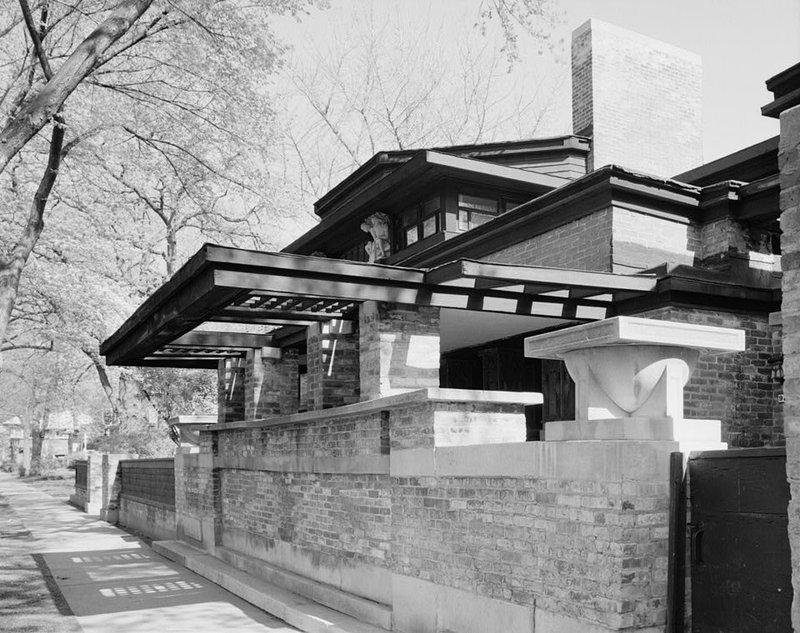
Wright's personal home and studio from 1889 to 1909 — where he developed the Prairie Style and designed more than 150 buildings. The shingled house grew from a modest Queen Anne cottage into a sprawling laboratory with an octagonal library, a barrel-vaulted playroom, and a studio with chain-hung balcony.
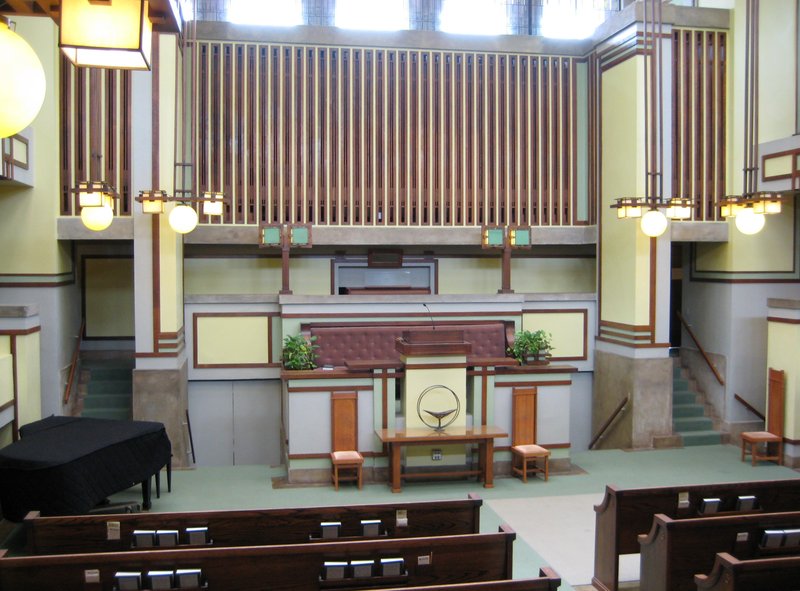
Wright's first major public commission, built in 1906 from poured concrete when the congregation could not afford stone or brick. The result was radical — a building using the material's mass as ornament, with amber art-glass skylights flooding the worship hall. Designated a UNESCO World Heritage Site in 2019.
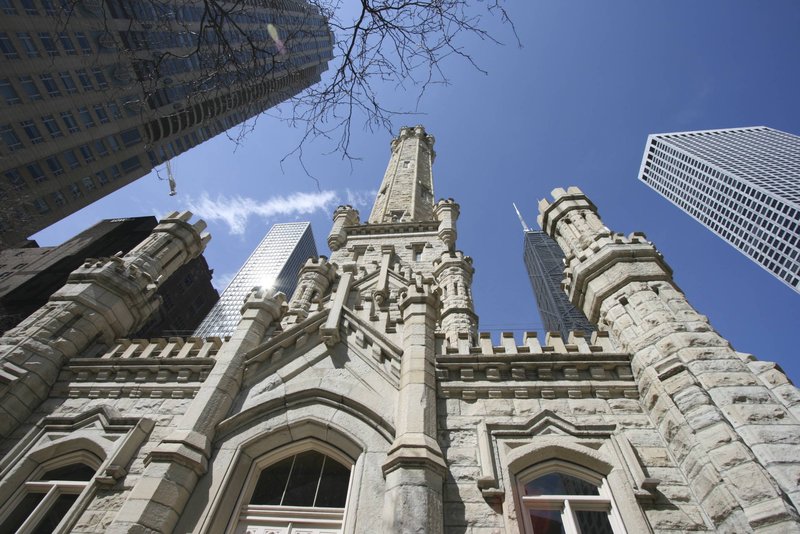
A 154-foot Gothic Revival limestone tower built in 1869, one of the few masonry structures to survive the 1871 Great Chicago Fire. It disguises a 138-foot iron standpipe inside and has become one of Chicago's most recognized civic symbols. The City Gallery inside mounts rotating exhibitions of Chicago photography.
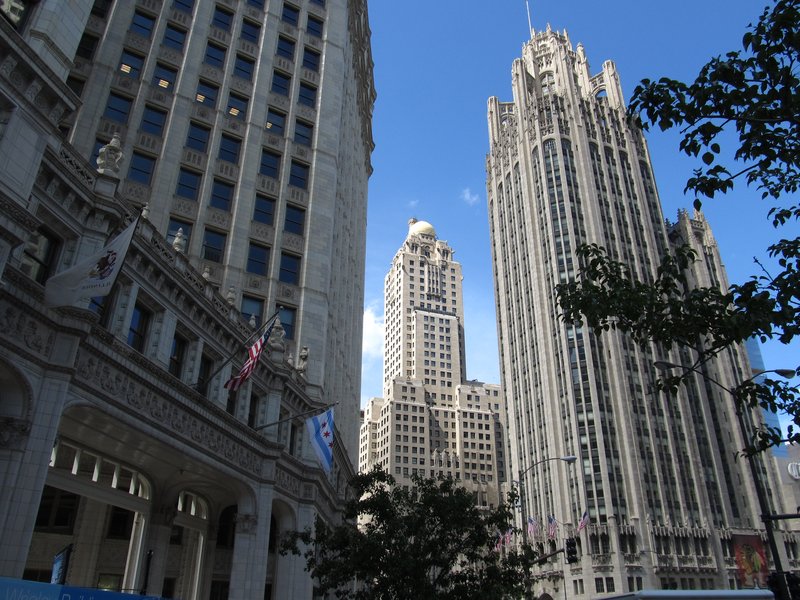
A 36-story neo-Gothic skyscraper built in 1925 following the Chicago Tribune's design competition, which drew 263 entries from 23 countries. At street level, 149 fragments from famous structures — the Colosseum, the Taj Mahal, Notre-Dame, the Berlin Wall — are embedded in the limestone base by Tribune correspondents.
8:25am Chicago Union Station → 9:55am Milwaukee Intermodal Station
10:25am Chicago Union Station → 11:55am Milwaukee Intermodal Station
12:25pm Chicago Union Station → 1:55pm Milwaukee Intermodal Station
ARRIVE Milwaukee Intermodal Station: 10 min · 3 min → Historic Third Ward
1.Historic Third Ward~1 hr
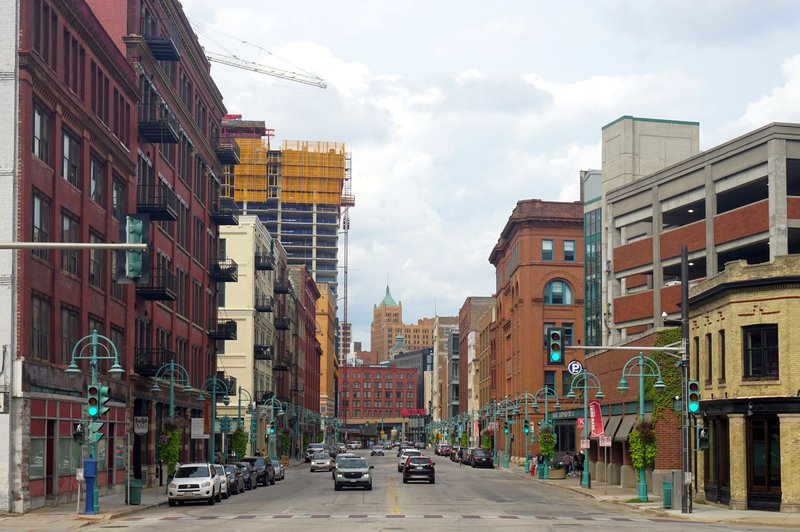
Milwaukee's 19th-century warehouse district, rebuilt after an 1892 fire into Romanesque cast-iron facades now housing the city's best restaurants, galleries, and studios. The Milwaukee Public Market anchors the center; the riverwalk runs the eastern edge past warehouses converted to loft apartments.
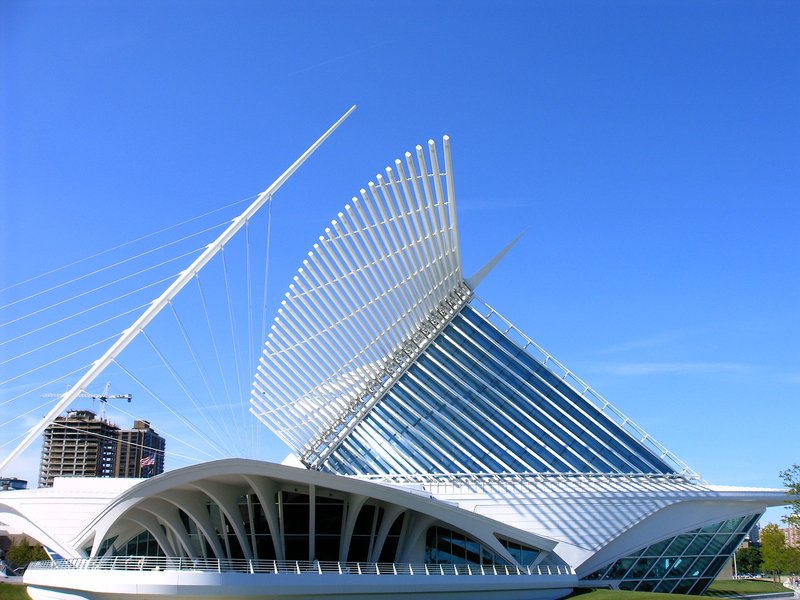
One of the most architecturally dramatic museums in America — Santiago Calatrava's Quadracci Pavilion opens and closes a 72-fin brise-soleil wingspan twice daily. The collection includes the largest Georgia O'Keeffe holdings outside New Mexico and a strong American decorative arts floor.
A 130,000-square-foot campus holding 450+ motorcycles spanning every era of Harley production from 1903 to present — the 1915 Serial Number One, Elvis Presley's custom 1956 KH, and Evel Knievel's XR-750. The Archives hold one million artifacts and every historical record the company produced.
A two-hour guided walk through the heart of the Loop, tracing Chicago's rise through its landmark buildings — the Rookery, the Marquette Building, and the streets shaped by the 1871 Fire.
An immersive 4.5-hour loop through the city's architectural landmarks and Prohibition history, with tastings of deep-dish pizza and Chicago-style hot dogs woven into the walk through the Loop and Millennium Park.
Three hours and six stops through what built Chicago's food identity: deep-dish pizza, craft beer, brownies, and Vienna Beef hot dogs — guided by a local through the Loop and Riverfront.
An hour and a half on the Chicago River with a narrated guide calling out 50+ buildings spanning every major American architectural style — an alternative departure for a second cruise.
A 105-minute narrated coach bus tour of Chicago's most infamous mob landmarks — Al Capone's haunts, the St. Valentine's Day Massacre site, and the Prohibition-era streets that defined American organized crime, with Untouchable Tours through the North Side.
A two-hour deep dive into the hidden interiors of the Loop's greatest buildings — the light court of the Rookery, the Tiffany domes of the Cultural Center, and the mosaic ceilings of the Marquette Building, most never seen by independent visitors.
90 minutes on the Chicago River aboard the First Lady with Chicago Architecture Center docents calling out 50+ landmark buildings — from the 1889 Rookery to Trump Tower — departing from the Riverwalk at Wacker Drive.
A 3.5-hour evening bus tour of four authentic neighborhood speakeasies — Gold Coast, Lincoln Park, Wicker Park, and River North — tracing the full history of Chicago Prohibition and the gangs that ran it. Select the bus tour option at checkout · 21+.
A climate-controlled coach tour through the city's most notorious crime landmarks — the St. Valentine's Day Massacre site, Al Capone's former haunts, and the neighborhood streets that built Chicago's gangland legend, narrated by Chicago Crime Tours experts.
A 3-hour evening bus tour of Chicago's most haunted sites — Congress Plaza Hotel, Lincoln Park Zoo built on Civil War graves, and the Eastland disaster site — guided by the team of paranormal author Ursula Bielski, Chicago's ghostlorist since 1994.
90-minute narrated cruise on the Chicago River calling out 50+ landmark buildings spanning every major American architectural style — departing from River East on Ogden Slip with multiple daily times.
The definitive Chicago River architecture cruise — CAC volunteer docents call out 50+ buildings as the First Lady passes through the main stem and South Branch, covering every major American architectural style from Burnham and Root to the modern skyline.
A climate-controlled coach tour through Chicago's most notorious crime landmarks — the St. Valentine's Day Massacre site, Al Capone's former hideouts, and the neighborhood streets that built the gangland legend, with Chicago Crime Tours expert guides.
Chicago's original 3-hour paranormal bus tour — Congress Plaza Hotel, Lincoln Park Zoo on Civil War-era graves, the Eastland disaster site, and the St. Valentine's Day Massacre location, led by the team of ghostlorist Ursula Bielski.
An evening coach bus tour through the darkest chapters of Chicago crime history — gangland shootings, notorious murders, and the Prohibition underworld that built the city's lawless reputation, departing after dark from the Magnificent Mile.
A pie unlike any other — thick buttery crust pressed up the sides of a pan, layered with cheese, fillings, then chunky crushed-tomato sauce on top. Invented at Pizzeria Uno in 1943.
A Vienna Beef frank on a poppy-seed bun, dragged through the garden: yellow mustard, white onion, neon relish, a dill pickle spear, two sport peppers, tomato wedges, and celery salt. Never ketchup.
Thin-sliced seasoned roast beef on Turano Italian bread, dipped fully in the cooking jus and topped with giardiniera or sweet peppers. Born on the South Side in the 1930s, now a Chicago signature in every neighbourhood.
Garrett's Chicago Mix blends CaramelCrisp and CheeseCorn in the same bag — the combination that has had locals and tourists lined up on Michigan Avenue since 1949.
Chicago's notoriously bitter wormwood spirit — a Swedish-origin liqueur that became a uniquely local phenomenon. The face people make on the first sip has become a Chicago rite of passage and a social-media institution.
Foreign number: accepted. — works internationally; no US number needed.
Excellent Chicago coverage across all neighborhoods; strong on local deep-dish pizza spots, Chicago-style hot dog joints, and upscale restaurant delivery in River North and the Gold Coast.
Foreign number: accepted. — no US number needed; download and sign in with an email address.
Wide coverage across the Loop, Lincoln Park, Wicker Park, and beyond; good selection from local Chicago staples to national chains; generally comparable to DoorDash — check both for the best delivery time.
Foreign number: not accepted. — a US mobile number is required to sign up.
Deep Chicago restaurant roster including many independent spots not on DoorDash or Uber Eats; worth using if you have a US number — particularly strong for neighborhood restaurants in Logan Square and Pilsen.
Foreign number: accepted. — sign in with email; a non-US number works fine.
Excellent availability citywide; reliable for moving between neighborhoods, museums, and evening dining areas; surge pricing is common during Cubs and Bears games and weekend nights in River North.
Foreign number: not accepted. — Lyft's own help says the number must be a US, Canadian or Puerto Rican one, and the code is texted only to that number.
Comparable coverage to Uber; check both apps for the better fare — the L train is faster for most downtown-to-neighborhood trips during rush hour but Lyft is useful for areas with poor transit access.
Illinois's capital city and the heart of Abraham Lincoln's biography — his home, law office, and Presidential Library, and the only Capitol building Lincoln himself worked in.
The Great Chicago Fire of 1871 burned for two days and destroyed a third of the city. Within 20 years, the rubble had been replaced by the world's first skyscrapers — the Rookery in 1888, the Monadnock in 1891, the Reliance in 1895. The disaster, by forcing the complete reinvention of an entire city center in a single generation, accidentally created modern architecture. Every skyscraper on earth today is a direct descendant of what was built in these 16 blocks of the Loop between 1871 and 1900.
The Rookery Building holds a detail most visitors miss: in 1905, a young Frank Lloyd Wright was commissioned to renovate the light court of a building completed 17 years before he became famous. He added white marble and ornamental ironwork in his emerging Prairie style — which means the Rookery contains, in the same atrium, both the 19th-century industrial aesthetic of Burnham and Root and the 20th-century organic vision of Wright. Stand in the center and you're standing in both architectural centuries simultaneously.
Buckingham Fountain — modeled on the Latona Fountain at Versailles — was built three times larger than its source. The French original is elegant. The Chicago version is operatic. It feels like the city couldn't help itself.