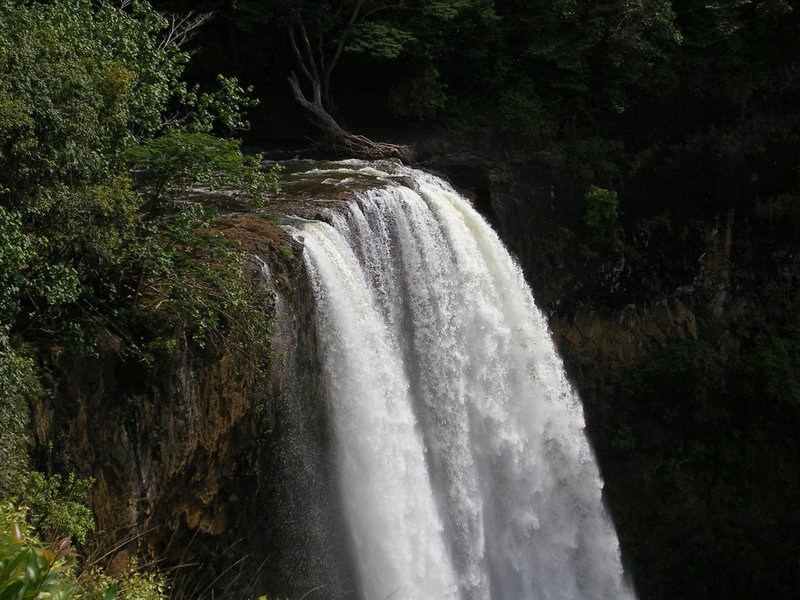
Twin cascades of 80 feet plunging into a jungle pool at the edge of Kauai's east-side cane fields. One of Kauai's most recognised landmarks — the opening scene of the original Fantasy Island series was filmed here. The falls are fed by the wet slopes of Mt. Waialeale, one of the wettest places on Earth.
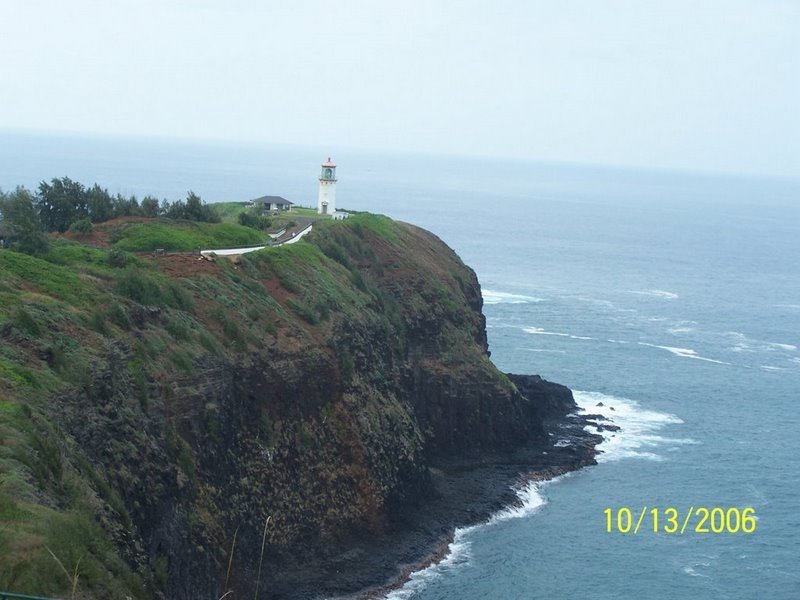
A basalt headland on the island's northernmost point, topped by a 1913 lighthouse and protected as a federal wildlife refuge. Frigatebirds, red-footed boobies, Laysan albatross, and Hawaiian monk seals use the cliffs; on clear days the ocean view from the lighthouse extends across the channel toward Oahu.
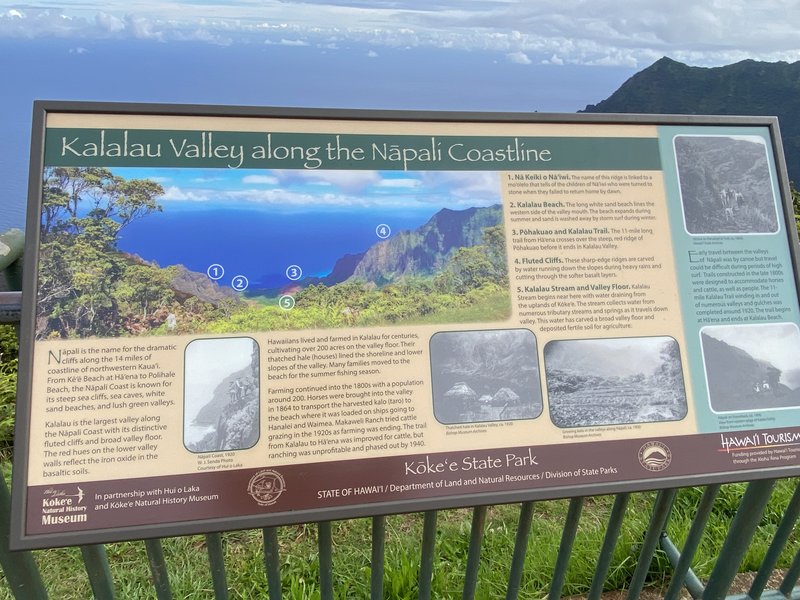
The most dramatic viewpoint on Kauai: a 4,000-foot cliff edge over the Kalalau Valley and the Nā Pali Coast. Kōkeʻe State Park surrounds the lookout with 4,345 acres of mountain forest — a cooler, quieter Kauai of native trees, wild plum groves, and trails.
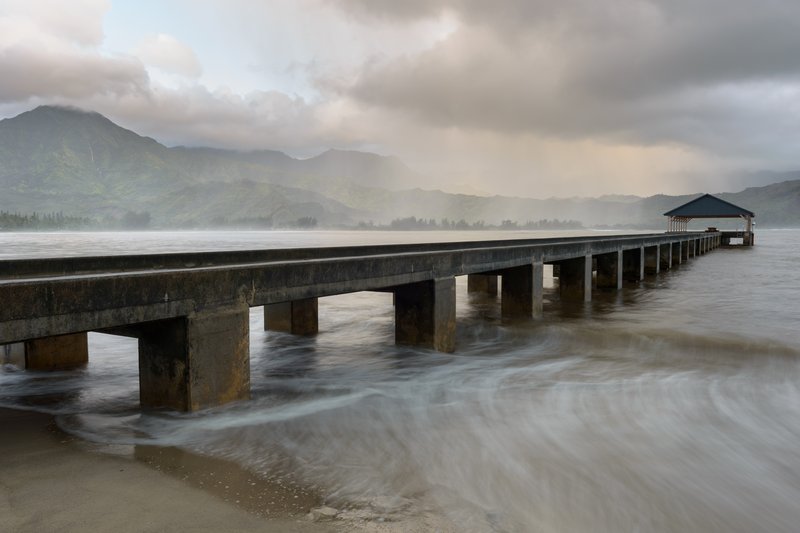
A two-mile crescent of sand backed by the fluted ridgelines of the Nā Pali — the quintessential Kauai image. The bay's depth and fetch make it one of the premier stand-up paddleboarding and windsurfing spots in Hawaii; in summer the water is calm enough for swimming from Black Pot Beach at the pier.
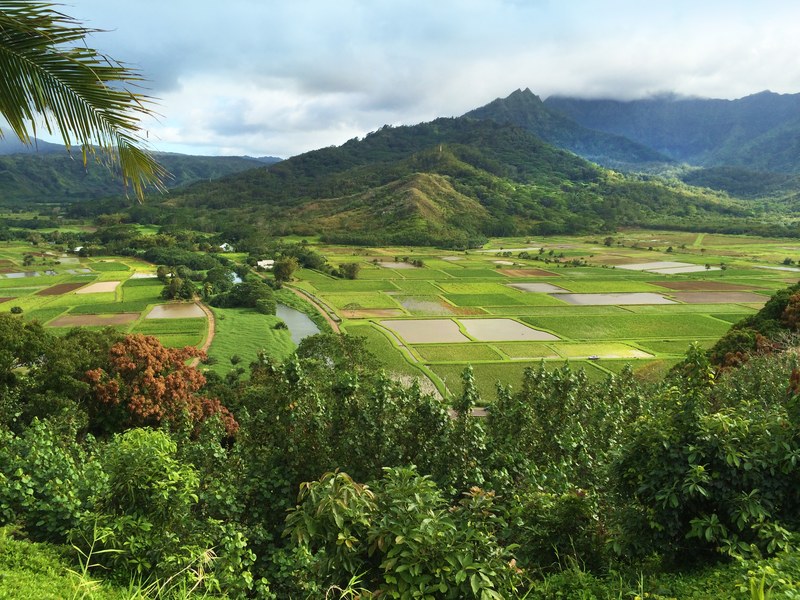
A roadside pullout on the rim above the Hanalei Valley — taro paddies threading the Hanalei River between thousand-foot fluted ridges. One of the oldest taro-growing areas in Hawaii, now a working farm and federal wildlife refuge for endangered Hawaiian waterbirds including the nēnē and the Hawaiian stilt.
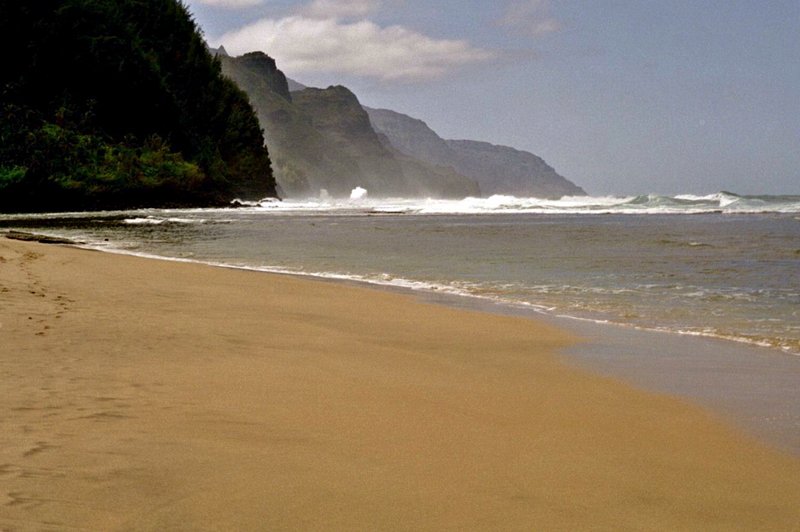
A pocket beach at the end of the north shore road — the last sand before the Nā Pali Coast makes the island impassable. The reef just offshore is the best snorkelling on the north shore; the Kalalau Trail, an 11-mile Na Pali cliff path, begins at the beach's west end above the lava shelf.
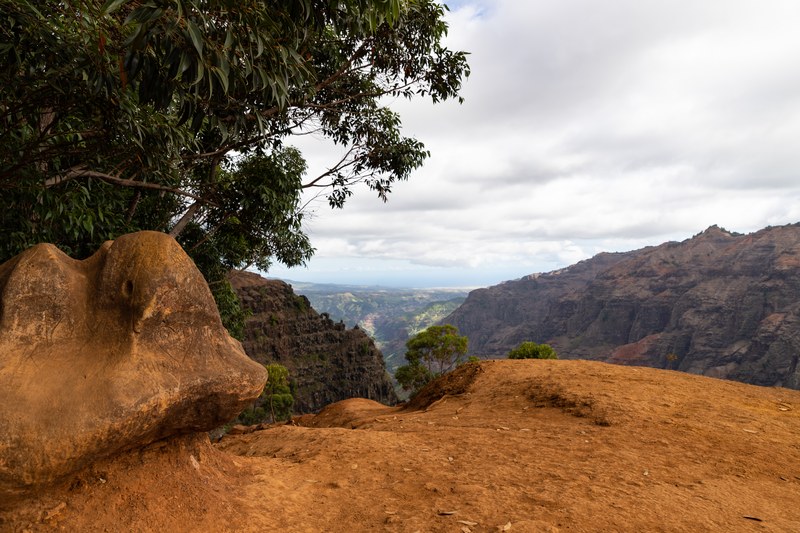
The "Grand Canyon of the Pacific" — ten miles long and 3,000 feet deep. Iron-red and ochre rock walls, silver waterfalls threading green ridges. Mark Twain's comparison stuck: nothing on the island prepares you for the first overlook.
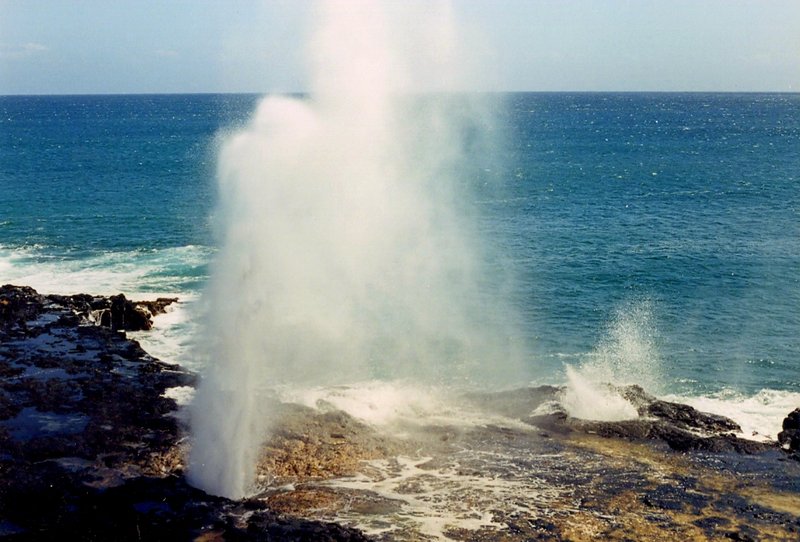
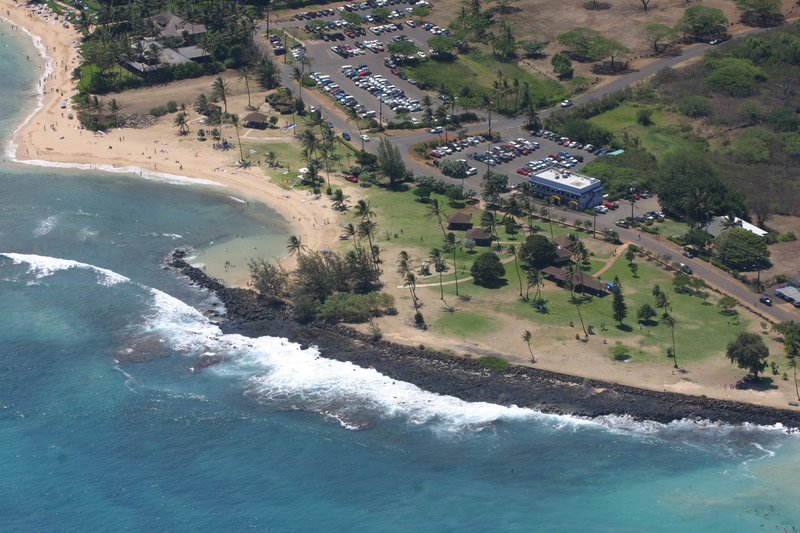
Ocean swells force seawater through a lava tube at the Poipu shoreline, shooting it 50 feet into the air with a thunderous hiss. A second tube produces Spouting Horn's signature moan — audible before you see the water. Local artisan stands line the path.
5 min · 2 min → Allerton Garden — National Tropical Botanical Garden
3.Allerton Garden — National Tropical Botanical Garden~2 hr 30 min
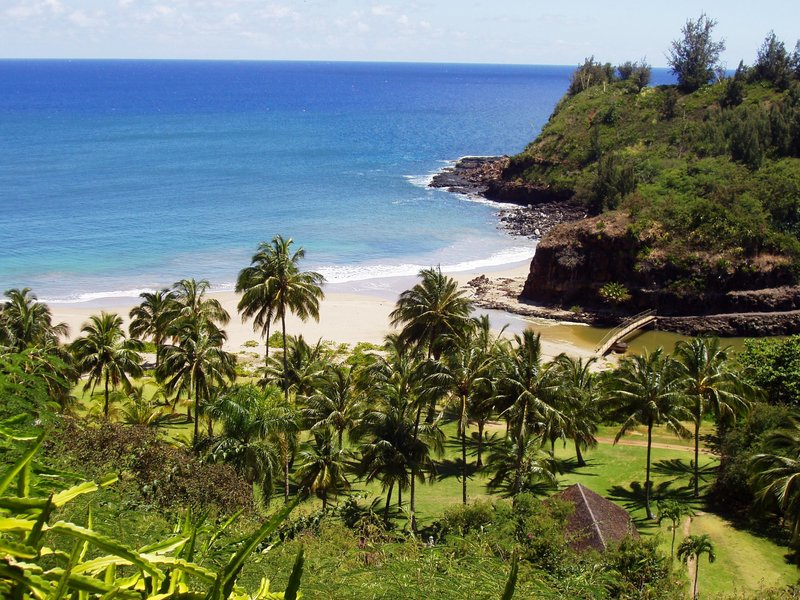
80 acres of a Hawaiian valley carved by Lāwaʻi Stream, shaped into garden rooms by Robert and John Gregg Allerton over four decades. Giant Moreton Bay fig trees form a cathedral canopy; the valley opens onto a private beach at the bay. The Jurassic Park Brachiosaurus scene was filmed among these trees.
Kauai's most celebrated south-shore beach — a twin-cove crescent divided by a sandy tombolo, with a protected swimming lagoon on one side and a livelier surf break on the other. Named Best Beach in America in 2001. Hawaiian monk seals and green sea turtles haul out on the sand most afternoons.
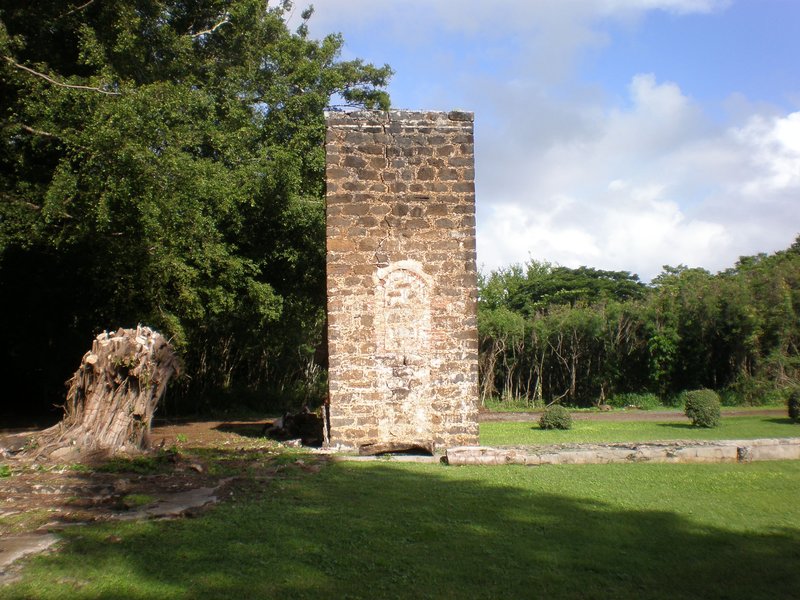
Hawaii's first plantation town — the 1835 Ladd & Company sugar mill launched what became Hawaii's dominant industry for 150 years. The stone chimney is a National Historic Landmark. A sculpture beside it honors the multi-ethnic plantation workforce from China, Japan, Portugal, Korea, and Puerto Rico.
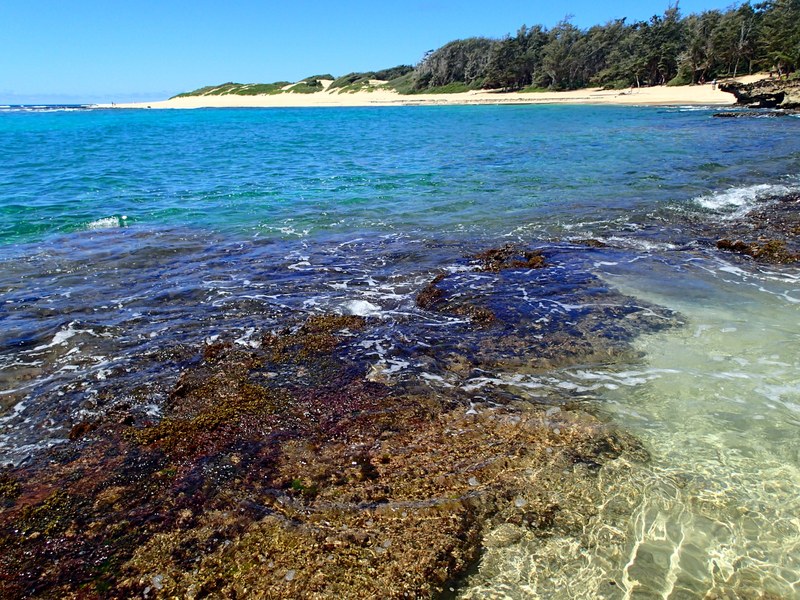
Kauai's most dramatic undeveloped coastline — a 2.5-mile trail from Shipwreck Beach east along sea cliffs, fossil dune formations, and an ancient Hawaiian fishpond. Tide pools and exposed headlands with unobstructed ocean views toward the Haupu Ridge. No shade, no facilities, raw Pacific exposure the entire way.
The most sheltered beach on Kauai — a half-moon crescent at Nawiliwili Harbor, protected from open-ocean swell by the harbor's geometry. The Haupu Ridge rises directly behind the beach. Calm conditions year-round make this Kauai's most reliable swimming beach; Duke's Kauai restaurant sits at the sand's edge.
2.Fern Grotto — Smith's Kauai River Boat Tour~1 hr 30 min
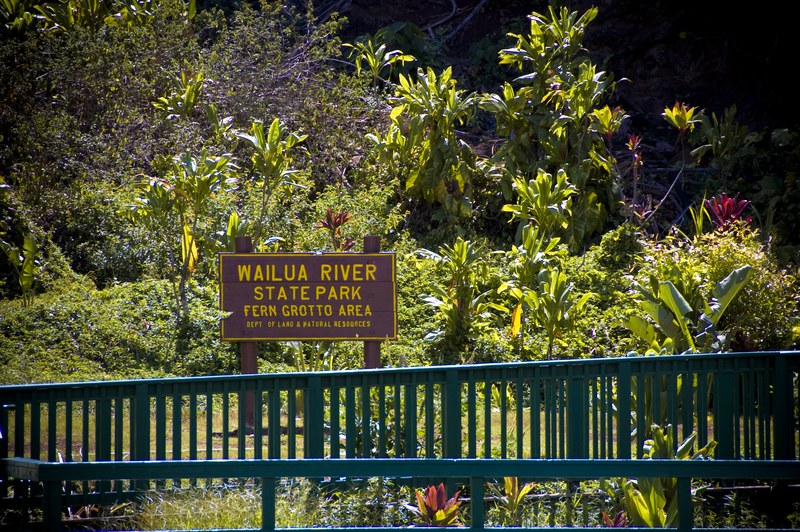
A fern-draped lava rock grotto on the Wailua River, reachable only by flat-bottomed boat. Smith's Kauai has run this river tour since the 1940s. The passage ends at a natural amphitheatre of hanging maidenhair and sword ferns — Kauai's most popular outdoor wedding venue for decades.
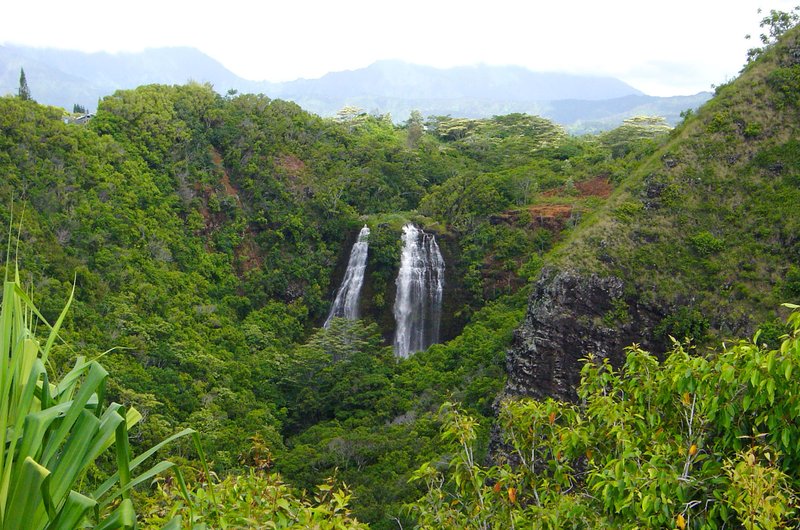
A 151-foot double-cascade on ʻŌpaekaʻa Stream — one of Kauai's most photogenic and most accessible viewpoints. The roadside lookout on Kuamoʻo Road faces the falls directly, framed by jungle walls. The name means rolling shrimp — freshwater opae shrimp once tumbled down these falls in numbers.
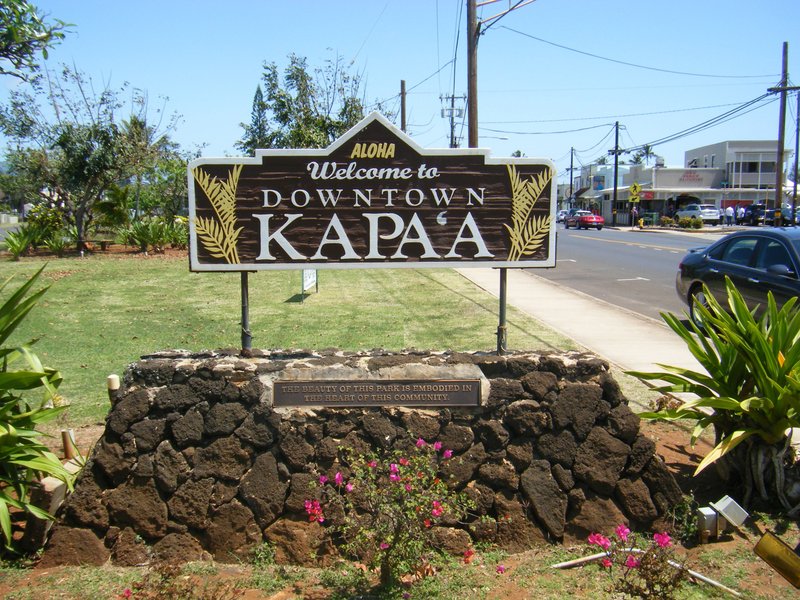
Kauai's most walkable town and the Coconut Coast's cultural center — a main street of colorful plantation-era storefronts with local restaurants, boutiques, and galleries. The Ke Ala Hele Makalae coastal path runs through town along the waterfront. The plantation-era scale is intact; nothing here is resort-packaged.
Family-owned small-group power catamaran along the Nā Pali Coast — sea caves, towering cliffs, and the wild north shore. Zero single-use plastics; reef-safe sunscreen provided.
Veteran-operated 30-foot Zodiac raft along the Nā Pali cliffs — sea caves, waterfalls, sheer ridges plunging to the sea. Snorkeling included; Hawaiian history and legends narrated throughout by the captain.
Rappel two waterfalls — the 30-ft Bamboo Falls and the 60-ft Papakolea Falls — in the protected Hule'ia National Wildlife Refuge. Safety briefing and practice session before the first rappel; snacks and views overlooking the Ha'upu Mountain range at the end.
A 55-minute helicopter circuit over 100+ miles of Kauai — the Nā Pali cliffs, Waimea Canyon, hidden waterfalls, and the ridge-tops Hollywood directors return to again and again. Max 6 passengers for an intimate flight; check-in 30 min before departure.
Full-island sightseeing aboard a GA8 Airvan — every passenger gets a window seat. Covers the Nā Pali Coast, Waimea Canyon, Wailua Falls, and the interior valleys in one 65-minute circuit. The only Kauai air tour fitting 12 guests simultaneously; pilots average 20+ years experience.
A 5-hour small-group power catamaran along the Nā Pali Coast from Port Allen — sea caves, waterfall views, spinner dolphin encounters and a snorkel stop in the marine reserve. Deli lunch and snorkeling gear included.
A full-day guided bus tour to Waimea Canyon — the "Grand Canyon of the Pacific" — and Koke'e State Park, with stops at the canyon lookouts, Waimea town and a local lunch break.
A Zodiac raft expedition along the Nā Pali cliffs from Waimea — entering the sea caves, snorkeling in the marine reserve and watching for spinner dolphins; the most immersive water-level perspective on the coast.
The everyday meal of Hawaii: white rice, macaroni salad, and a protein — kalua pig, chicken katsu, or loco moco. Descended from the bento boxes that plantation workers of multiple ethnicities shared; Kauai's most honest culinary expression.
Finely shaved ice packed into a cone and drenched in flavoured syrup. At its best: azuki beans at the bottom, ice cream underneath, and li hing mui powder over the top. Descended from Japanese kakigori brought by plantation workers.
Hawaii's local noodle soup — thin wheat-egg noodles in dashi broth with fish cake, char siu, and wontons. Not ramen; saimin developed in the plantation camps from multiple Asian noodle traditions and is eaten here and nowhere else.
White rice topped with a hamburger patty, a fried egg, and brown gravy — invented in Hilo and now a staple throughout Hawaii. Simple, filling, and entirely its own thing. Available at every plate lunch counter and diner on the island.
Foreign number: not accepted. — Lyft's own help says the number must be a US, Canadian or Puerto Rican one, and the code is texted only to that number.
Operates alongside Uber on Kauai, but only with a US, Canadian or Puerto Rican number — visitors from elsewhere use Uber. Compare fares in both apps — prices can vary, especially during peak morning hours around Lihue.
Mt. Waialeale, the volcano that created Kauai, sits in the middle of the island and receives close to 460 inches of rain per year — placing it in serious contention for the wettest spot on Earth. The summit is almost perpetually wrapped in clouds. But the south shore, where the Grand Hyatt sits, is in the rain shadow of that same mountain and averages 300 sunny days a year. A half-hour drive separates two of the most extreme weather environments in the United States. The canyon you visited today exists precisely because of this hydrological paradox: Waialeale's rain floods the Waimea River, and the Waimea River spent four million years carving the canyon.
Kauai is geologically the oldest of the main Hawaiian Islands — roughly five million years compared to the Big Island's half-million. By the time the Big Island is even as old as Kauai is now, Kauai itself may be largely submerged. The Hawaiian Islands are moving northwest over a stationary volcanic hotspot; the ones you see today are the current expression of that process, and older islands to the northwest including Niihau and the string of tiny atolls extending toward Midway mark the path the chain has already travelled. Wailua Falls, where the day started, flows directly off the flanks of that ancient five-million-year-old shield.
The name "Kauai" is often translated as "place around the neck" or "season" depending on the source — the exact meaning is debated. But in Hawaiian oral tradition, Kauai appears in the creation chant Kumulipo as one of the first islands named. It was also the only major Hawaiian island that Kamehameha I never conquered militarily — two invasion fleets were turned back, one by a storm, one by a disease outbreak among his troops. Kauai eventually joined the Hawaiian Kingdom through negotiation rather than battle, which makes it, by a certain reading, the one island that agreed to join.