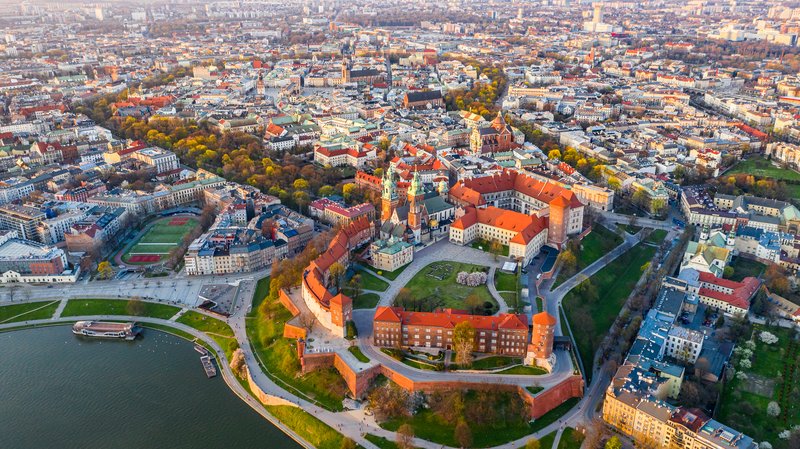
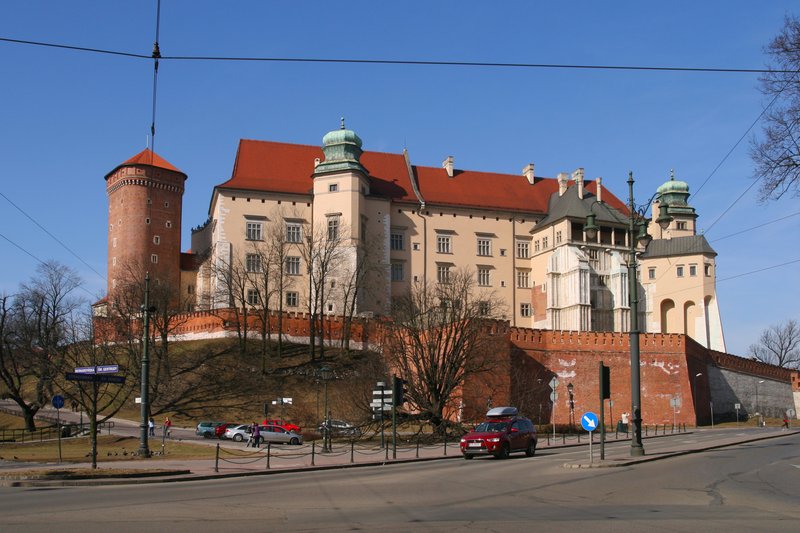
Royal seat of Polish kings for five centuries, commanding a limestone hill above the Vistula with Gothic, Renaissance, and Baroque architecture. The Royal Apartments display Flemish tapestries; the Crown Treasury holds the Szczerbiec coronation sword and historic regalia.
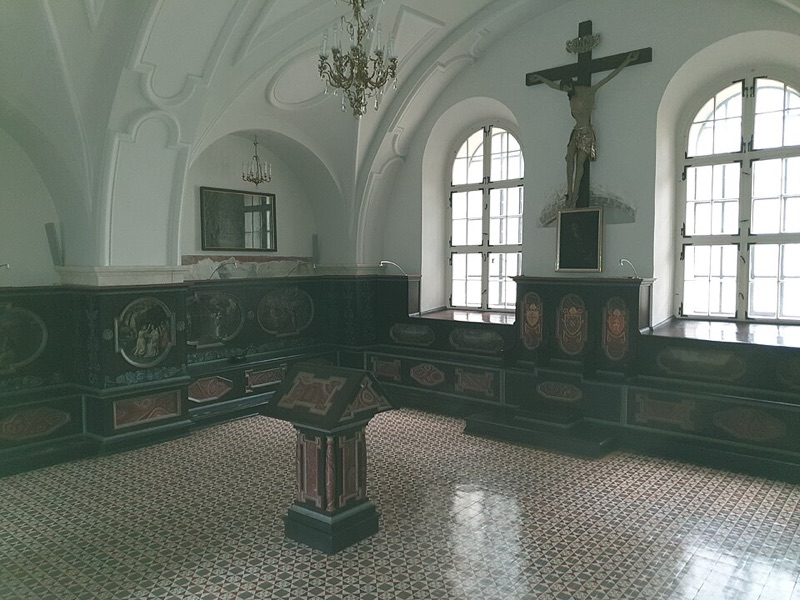
Poland's national sanctuary and coronation church, holding the tombs of kings, queens, and national heroes in 19 chapels. The Sigismund Chapel with its gilded dome is considered the greatest Polish Renaissance monument; the bell tower offers panoramic views of the Vistula valley.
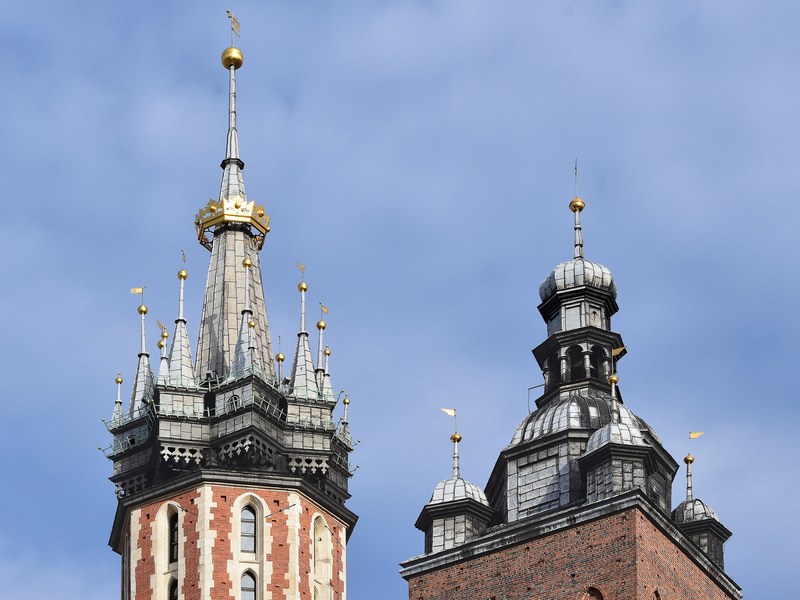
Gothic twin-towered basilica at the Market Square, famous for the 15th-century Veit Stoss altarpiece — the greatest Gothic sculpture in Europe at 13 meters, blazing with painted saints and gilt. Every hour, a bugler plays the Hejnał Mariacki trumpet call from the taller tower, a tradition since the 13th century.
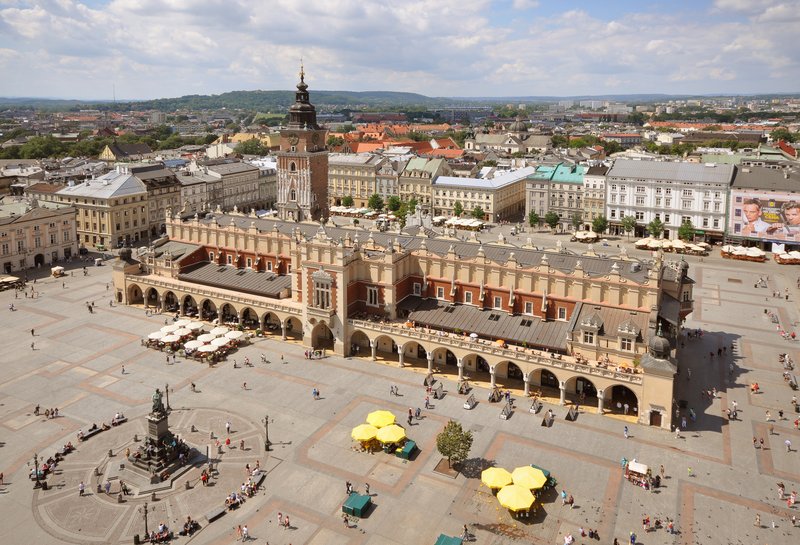
The largest medieval market square in Europe at 40 000 sq m, ringed by townhouses, palaces, and church towers. The Renaissance Cloth Hall at its center still houses craft stalls and a gallery above. Street musicians, flower stalls, and café terraces fill it day and night.
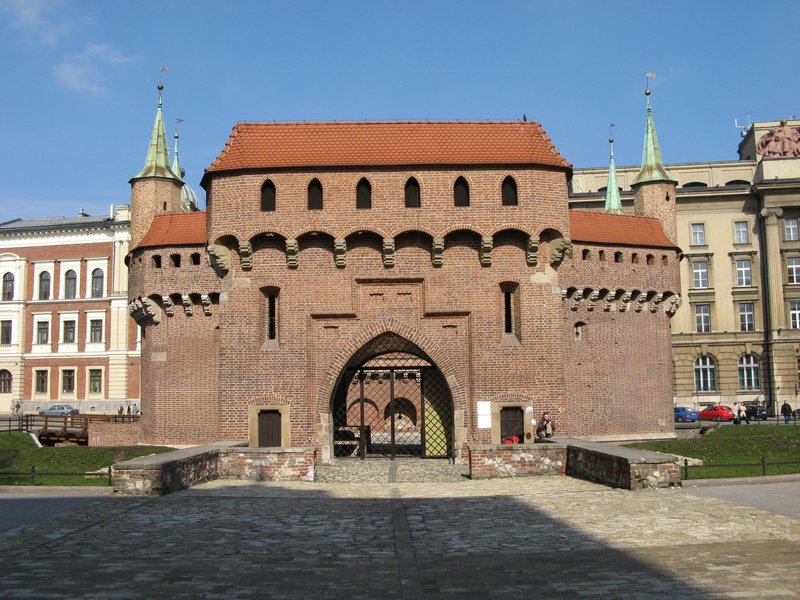
One of Europe's best-preserved medieval barbicans, this circular Gothic fortress was built in the 1490s as an advance outpost for the Florian Gate. Three-meter-thick walls, seven turrets, and 130 arrow slits guarded the city's northern entrance. Summer brings medieval reenactments to the courtyard.
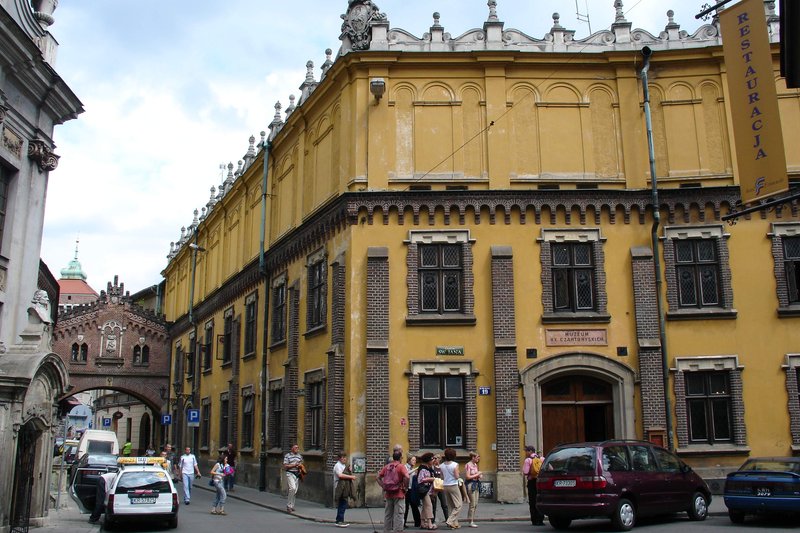
Poland's oldest public museum anchored by Leonardo da Vinci's Lady with an Ermine — one of only four Leonardo paintings in the world. The 19th-century Czartoryski collection also includes Rembrandt's Landscape Before a Storm, Greek and Etruscan antiquities, and an extraordinary treasury of decorative arts.
From Hotel: 22 min · 10 min → Galicia Jewish Museum
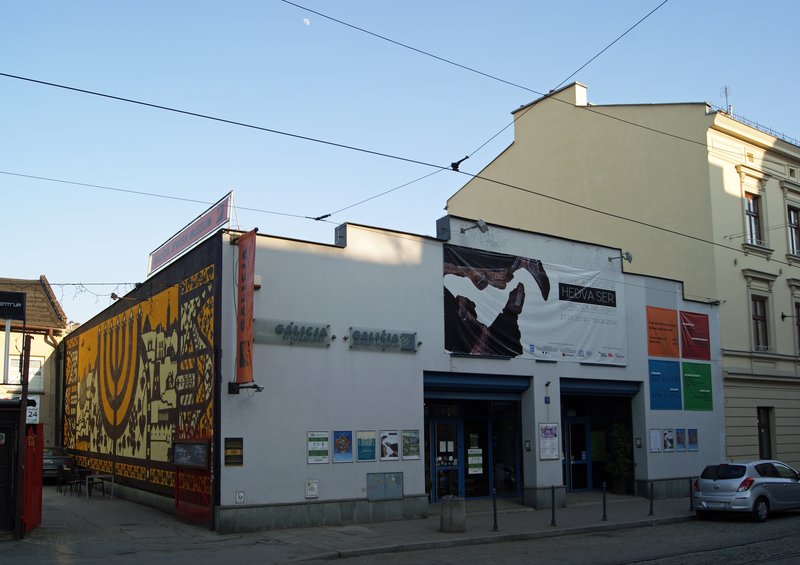
1.Galicia Jewish Museum~1.5 hr
The permanent exhibition Traces of Memory presents large-format photographs of surviving Jewish traces across former Galicia — crumbling cemeteries, hidden synagogues, memorial sites — with contemporary testimony. The museum focuses on living Jewish heritage, not only destruction.
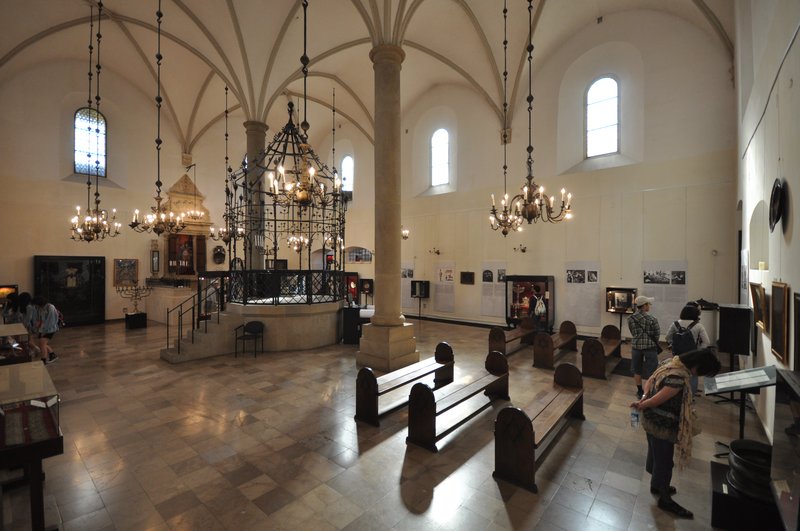
The oldest surviving Jewish religious building in Poland, dating to the 15th century and now serving as a museum of Kazimierz Jewish history. The Renaissance hall houses Torah scrolls, religious objects, documents, and photographs chronicling centuries of Jewish life and the tragedy of the Holocaust.
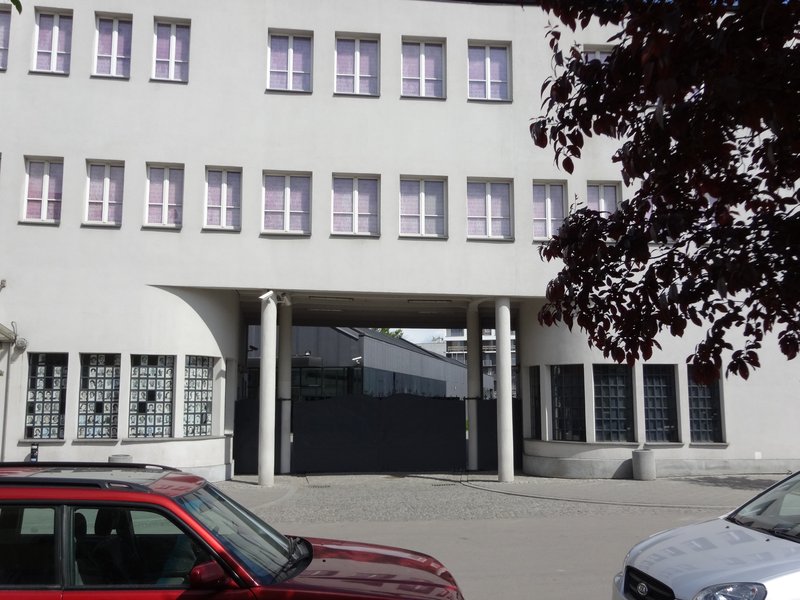
Schindler's factory in Podgórze now houses Kraków Under Nazi Occupation 1939–1945, documenting life from invasion through the ghetto's liquidation with original objects, multimedia, and reconstructed spaces. Considered among the finest Holocaust memorial museums in the world — pre-book well in advance.
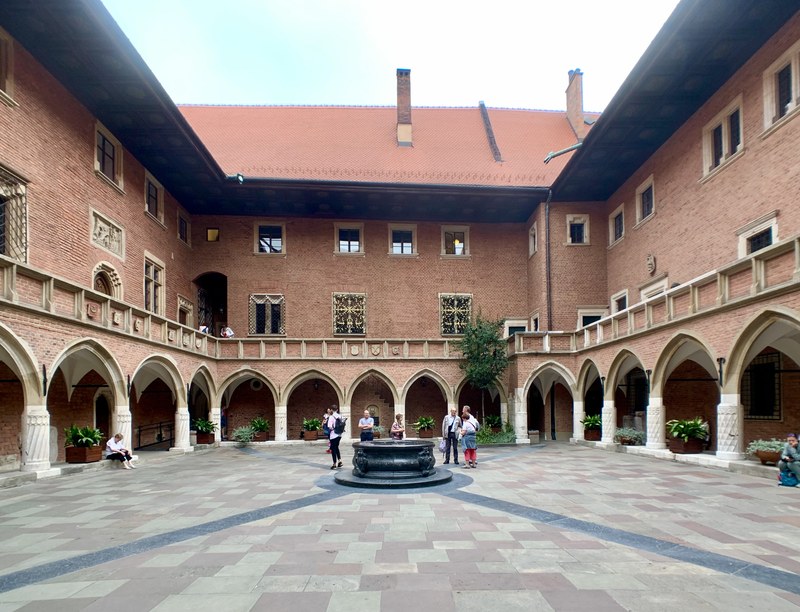
Oldest university building in Poland — the 1364 Jagiellonian University's core. The late-Gothic arcaded courtyard is among the finest in Central Europe. The museum displays instruments that Copernicus may have used here, medieval astronomical tools, and ceremonial regalia. Guided visit required.
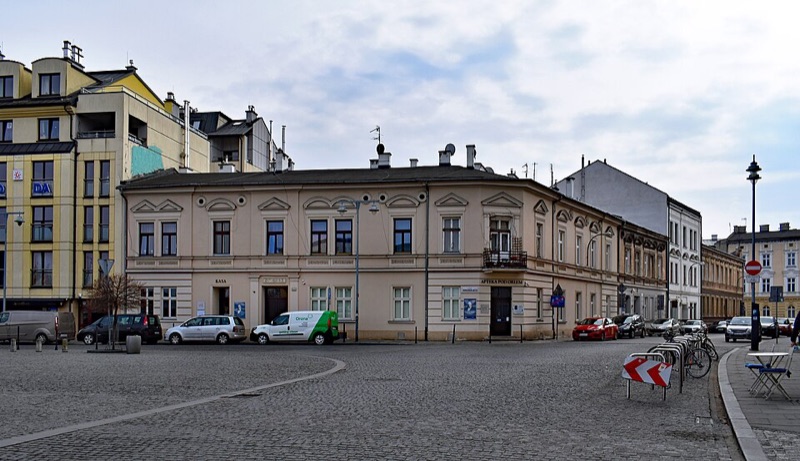
The only pharmacy to remain open inside the Nazi-occupied Kraków Ghetto, run by Tadeusz Pankiewicz, who used it as a hiding place and aid point for Jewish residents. The building now holds a permanent exhibition documenting the Ghetto and the pharmacy's role in the resistance.
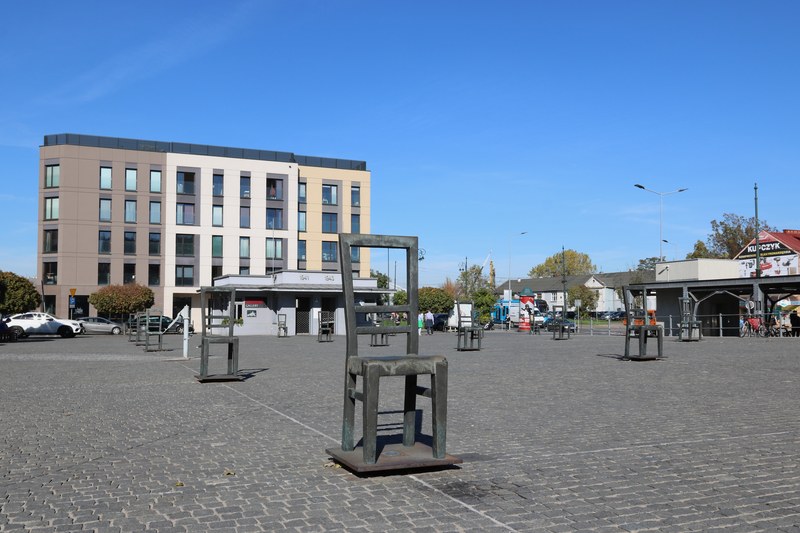
Ghetto Heroes Square — the site of the Kraków Ghetto deportations, now marked by 70 empty bronze chairs representing the Jews who were taken to the camps. One of the most affecting public memorials in Europe: scale, silence, and specificity in equal measure.
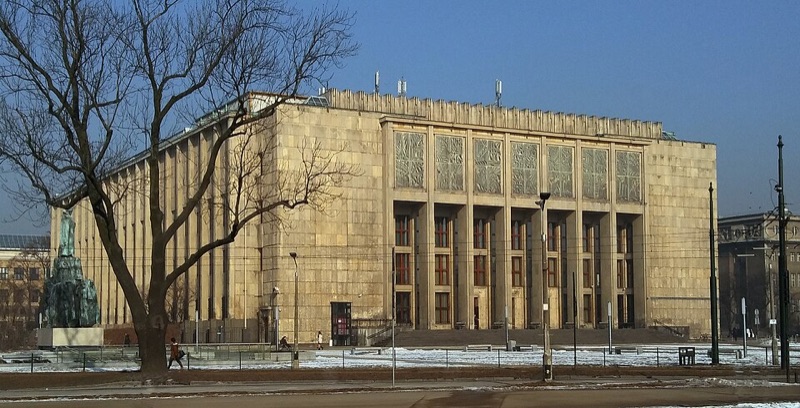
Poland's largest museum, spanning 800 years of Polish painting, sculpture, and applied craft. The Gallery of 20th-Century Polish Painting is the centrepiece; the arms and armour collection and medieval silver treasury are equally strong. The main building alone takes a full morning.
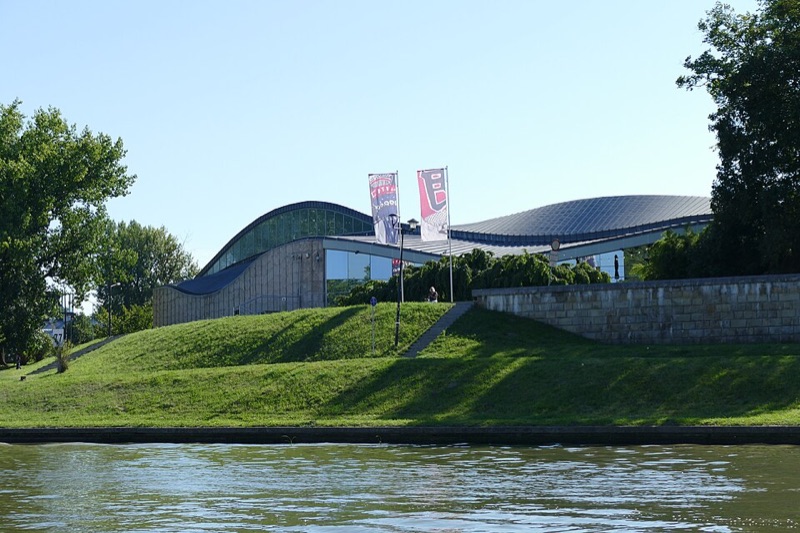
Andrzej Wajda donated his Kyoto Prize proceeds to build this museum of Japanese art on the Vistula. The Arata Isozaki building holds the Feliks Jasieński collection — Japanese woodblock prints, screens, ceramics, lacquerware, and swords — the finest such collection in Central Europe.
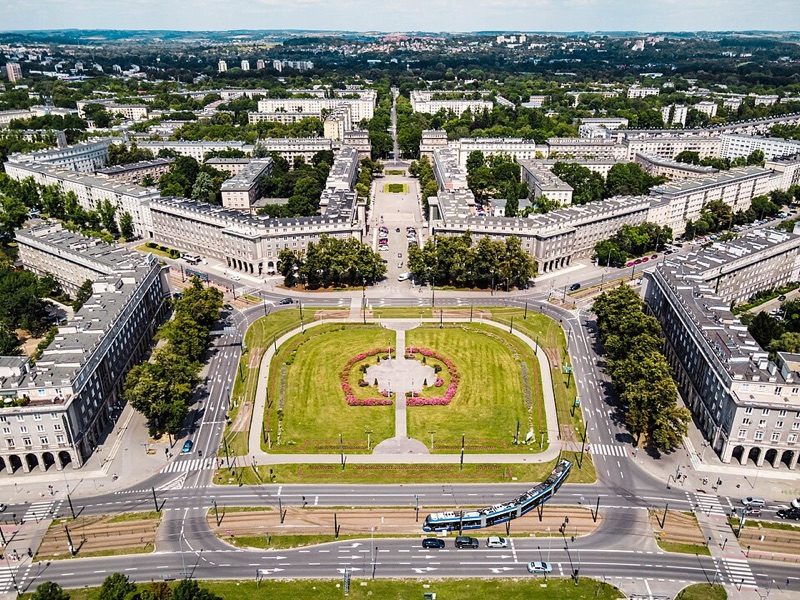
The central square of Nowa Huta — the model Communist city built adjacent to Kraków in the 1950s as a counterweight to the bourgeois Old Town. Grand axial avenues and symmetrical blocks make it the most complete example of Socialist Realist urban design in Poland. Now named Ronald Reagan Square.
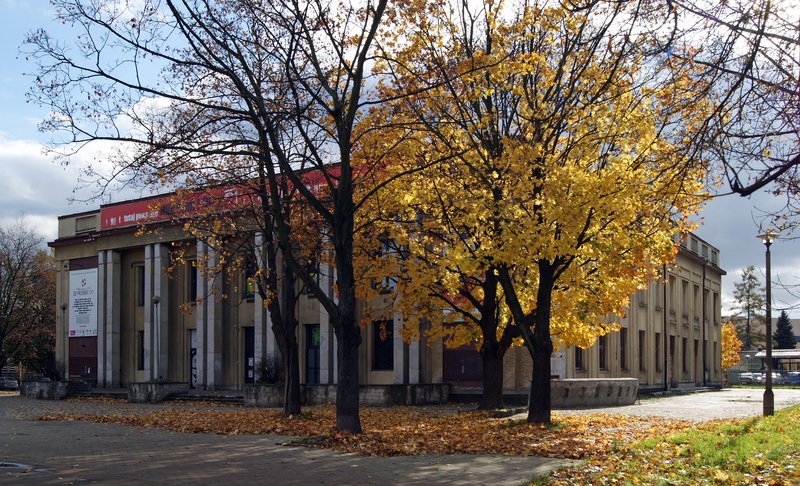
In the former Światowid cinema on Centrum E — a branch of the Historical Museum of Kraków covering Nowa Huta's construction, daily Communist-era life, and the 1980s steelworkers' strikes. Propaganda posters, original furnishings, and archive footage. One of Poland's most vivid PRL museums.
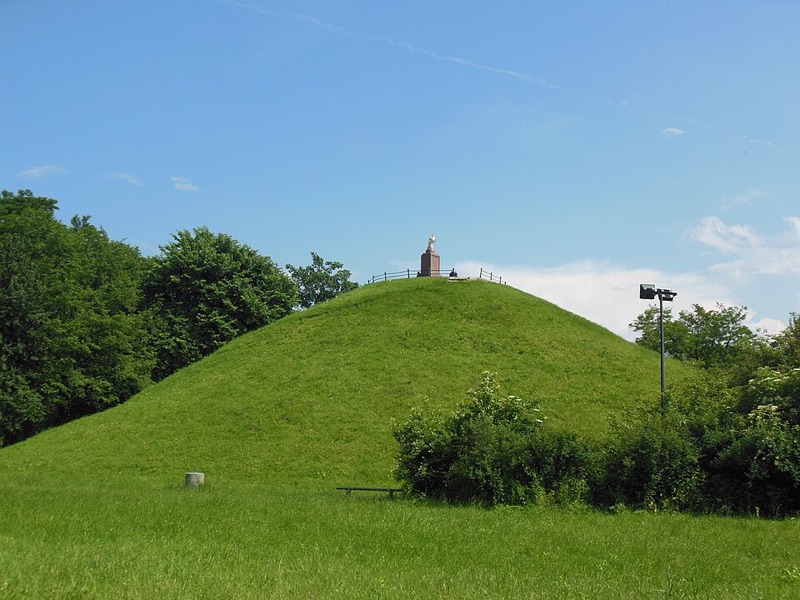
A prehistoric burial mound on the Vistula's east bank, said to mark the tomb of Princess Wanda, daughter of Kraków's legendary founder. The mound rises 14 metres from the Vistula floodplain, with open Tatra views on clear days. Free to visit; the climb takes under five minutes.
A Cistercian monastery founded in 1222 — the oldest institution in Nowa Huta by seven centuries. The Gothic church holds medieval frescoes and an 11th-century icon of the Black Madonna. The cloister garden is calm even when the church is busy, a striking juxtaposition with the Socialist Realist city around it.
Zakopane's pedestrian high street, lined with wooden górale architecture, food stalls, and artisan craft shops. The town comes to life along this strip year-round — busiest in winter ski season and summer hiking months. The starting point for the funicular up to Gubałówka ridge.
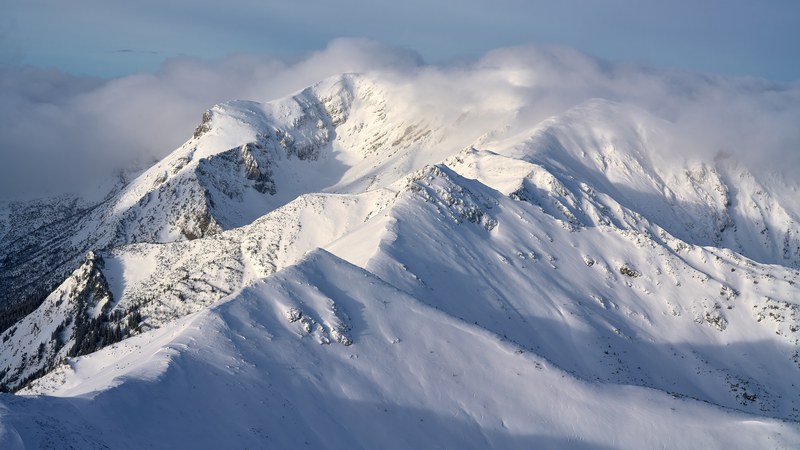
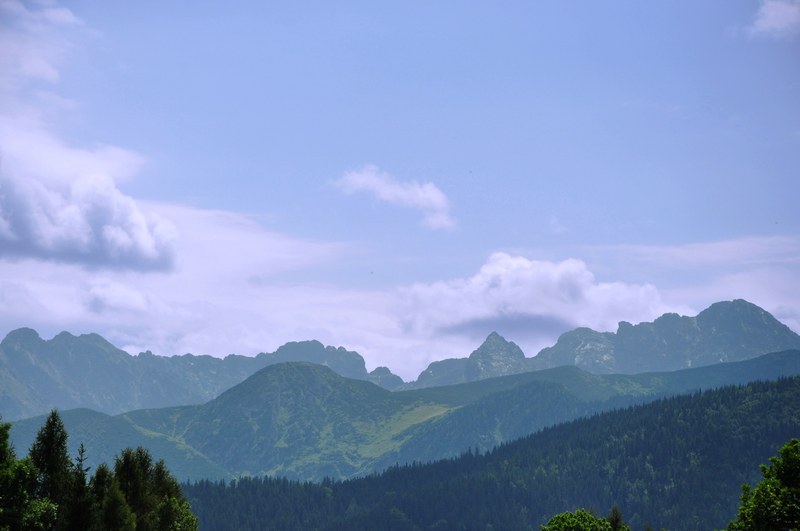
A 1,123-metre ridge above Zakopane reached by a 4-minute funicular from the top of Krupówki. The terrace at the summit gives the best unobstructed panorama of the High Tatras — the full arc from Kasprowy Wierch to Giewont. Restaurants and trail access along the ridge crest.
Filled dumplings — boiled or pan-fried, stuffed with potato and cheese, meat, sauerkraut and mushroom, or sweet cheese and blueberries. Milk bars and pierogi specialists offer the broadest variety.
Sour rye soup — fermented rye starter base with hard-boiled egg, white sausage, and often served in a hollowed bread bowl. Tangy and filling; a staple of Polish winter cooking.
Poland's national hunter's stew of sauerkraut, fresh cabbage, various meats, mushrooms, and spices, slow-cooked over days until deeply savory. Every cook has their own version; traditionally improves with each reheating.
Polish smoked sausage made from pork, veal, or a blend, seasoned with garlic and marjoram. Grilled kiełbasa is a street food staple — look for it at outdoor stalls around the Market Square and Kazimierz.
Smoked sheep's milk cheese from the Tatra region with PDO status. Carved into a decorative spindle shape and cold-smoked over spruce wood; sold by highland vendors on the Market Square — try it grilled with cranberry jam.
Ring-shaped braided bread roll unique to Kraków, sold from street carts since the 14th century. Sprinkled with sesame, poppy seeds, or salt; best eaten fresh and warm. A protected regional product.
Foreign number: not required. — it signs in with Google, Facebook or email, and a phone sign-up takes any prefix with the code by SMS or WhatsApp.
Wide coverage across Kraków's Old Town, Kazimierz and the surrounding areas. Good selection of restaurants and grocery options for delivery to the hotel.
Foreign number: not required. — sign-up runs on Google, Apple, Facebook or email with no phone field at all, so no verification code is sent.
Strong restaurant coverage in Kraków, particularly in Kazimierz and the Market Square area. A reliable alternative to Glovo with a well-designed English-language interface.
Foreign number: accepted. — pick your country code and the SMS code arrives abroad; Bolt offers a voice-call code from the same screen if it does not.
The most popular ride-hailing app in Kraków, with strong driver supply across the Old Town, Kazimierz and Nowa Huta. Generally lower fares than Uber and foreign numbers are accepted.
The UNESCO-listed Wieliczka Salt Mine has been excavated since the 13th century and descends to 135 meters through a labyrinth of chambers, lakes, and chapels carved in salt — including the stunning St. Kinga's Chapel. One of the most visited sites in Poland.
Jasna Góra Monastery — Poland's most sacred site and the heart of the nation's Catholic identity. The Black Madonna icon, venerated for over six centuries, is housed in a gilded chapel inside the monastery fortress that withstood the 1655 Swedish Siege. PKP TLK direct trains run several times daily.
The largest Nazi concentration and extermination camp complex, Auschwitz I and Birkenau are a UNESCO World Heritage Site and essential memorial. Allow a full day; advance reservation is required for most visiting periods.
Poland's capital by high-speed Pendolino train contrasts Kraków's medieval preservation with Warsaw's dramatic story of destruction and rebuilding. The rebuilt Old Town, POLIN Jewish history museum, and Palace of Culture are the highlights.
Silesia's capital built on 12 islands in the Oder river, with a spectacular Market Square, Gothic cathedral island at Ostrów Tumski, and the Panorama of the Battle of Racławice. Direct PKP trains run several times daily.
Kraków is one of Europe's great fortunate cities — spared from wartime destruction in a region that lost almost everything. Walking its streets feels less like visiting a reconstructed past and more like slipping inside a living medieval city: the cobblestones, the market square trumpet call, the layered architecture of five centuries under Polish kings. The Royal Route from Wawel down to the Market Square is one of the finest urban sequences on the continent, and the city earns its place among them without the tourist inflation that dims older fame.
What sets Kraków apart is the weight of what Kazimierz carries alongside the beauty of the Old Town. The Jewish quarter's survival — battered, repurposed, but still recognizable — and the unflinching documentation at Schindler's Factory and the Galicia Jewish Museum make a visit here something more than sightseeing. The distance between the light of the Market Square and the gravity of Podgórze is about twenty minutes by foot. Both belong to the same city, and the same trip.