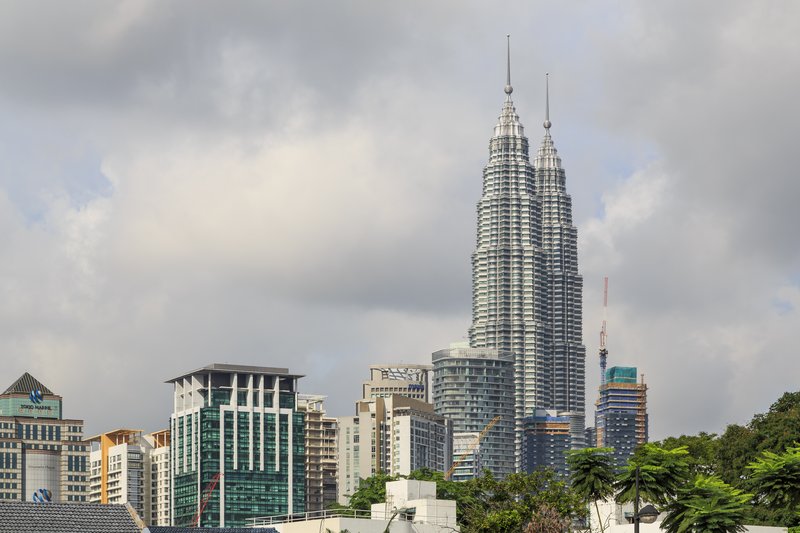
The twin towers that defined KL's skyline — the world's tallest from 1998 to 2004 — with a double-deck skybridge linking floors 41 and 42 and an observation deck at the 86th floor giving a 360° view across the city's sprawl.
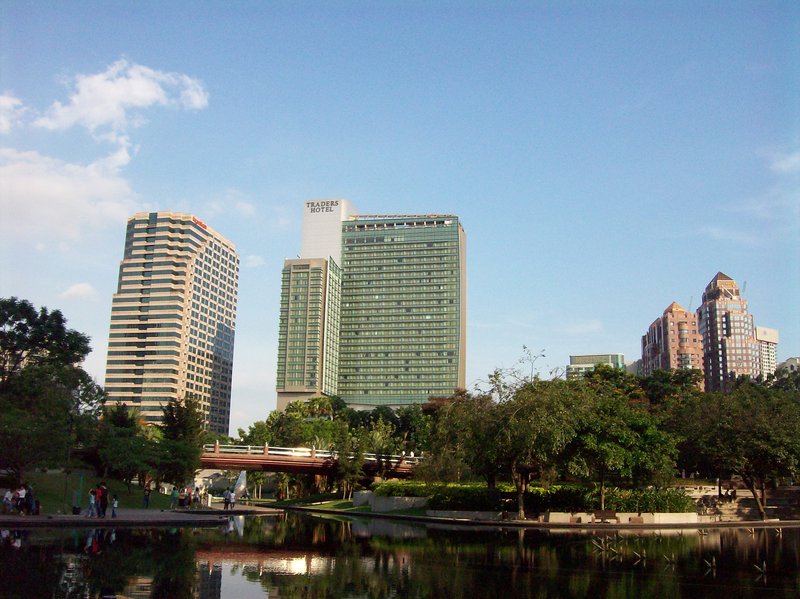
A 50-acre landscaped park designed by Roberto Burle Marx between 1992 and 1998, with a wading pool fed by a waterfall, Symphony Lake with nightly fountain shows, and the definitive ground-level view of the twin towers reflected in the water.
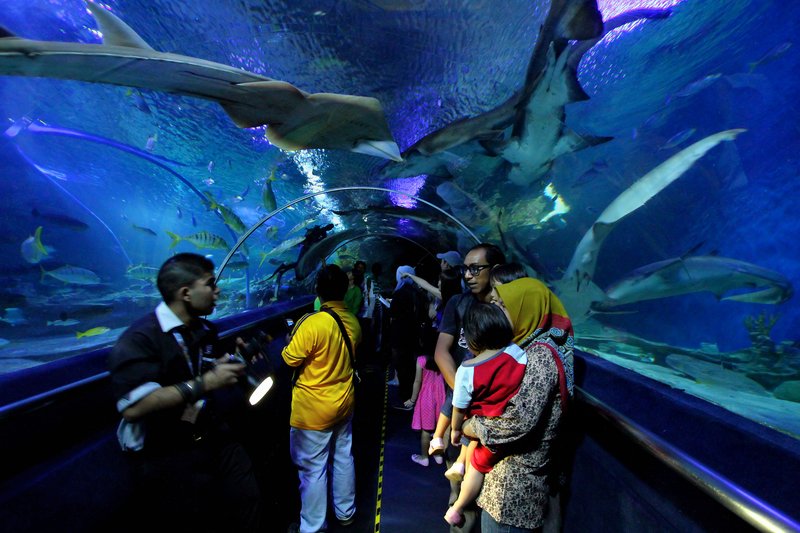
A 60-metre walk-through ocean tunnel is the centrepiece of this aquarium beneath the Kuala Lumpur Convention Centre, housing sharks, rays, and over 5,000 other animals.
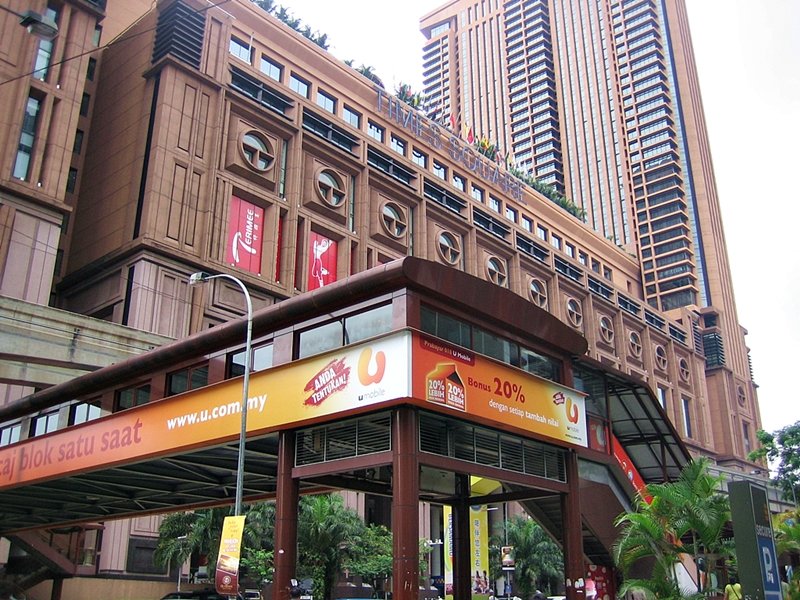
Kuala Lumpur's Golden Triangle entertainment district — the Pavilion mall anchors the strip while Jalan Alor's open-air hawker tables spill onto the street from 5pm to midnight.
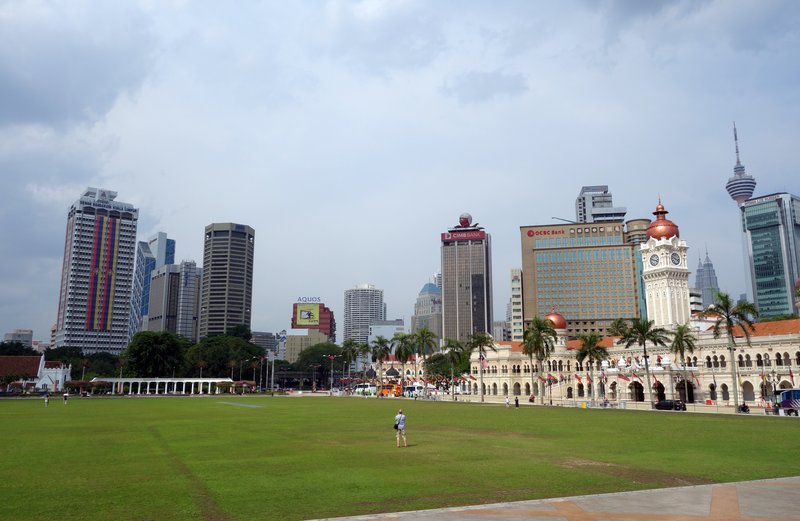
The flagpole at this 1957 independence square — the world's tallest at the time — stands at 100 metres; the Moorish-Gothic Sultan Abdul Samad Building on its east side was built by the British in 1897.
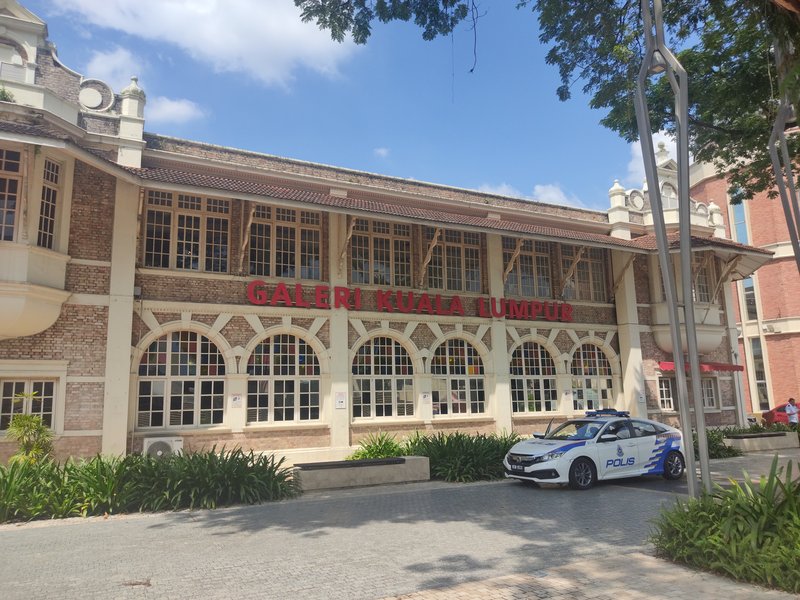
An interactive heritage gallery inside a colonial building flanking Dataran Merdeka — the centrepiece is a 1:2,000 scale model of KL's development master plan, and a permanent exhibition traces the city from tin-mining outpost to ASEAN capital.
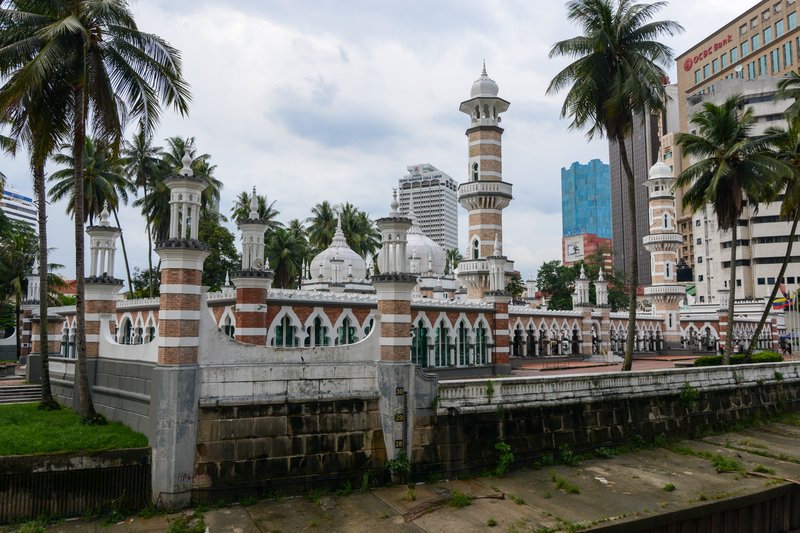
Designed by Arthur Benison Hubback in 1909 and modelled on Mughal mosques in India, this pink-domed mosque stands at the confluence of the Klang and Gombak rivers — the very spot where Kuala Lumpur was founded.
The 421-metre Kuala Lumpur Tower gives an unobstructed 360-degree view of the city from its observation deck at 276 metres — the Petronas Towers are a kilometre to the east.
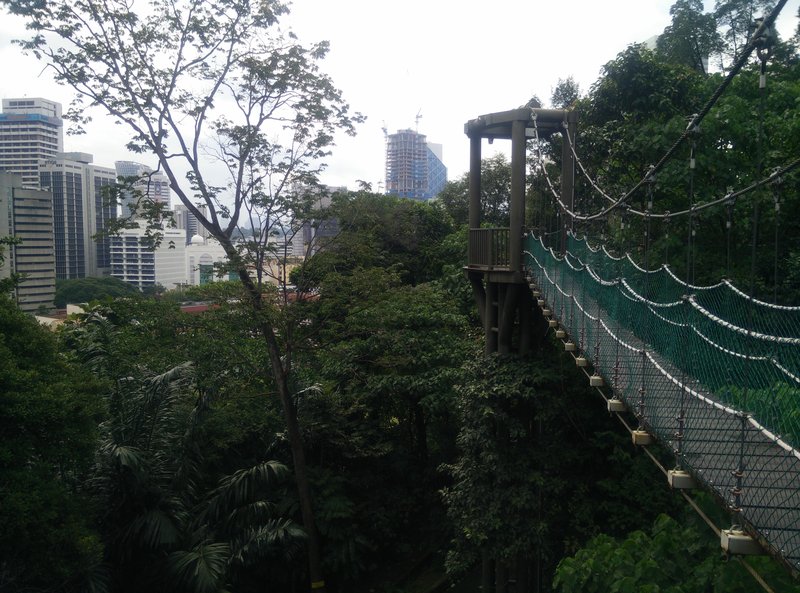
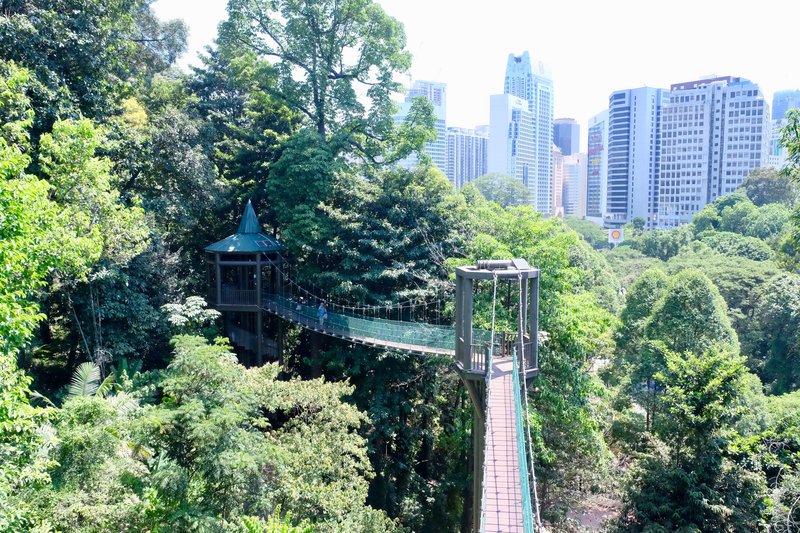
A patch of primary lowland dipterocarp rainforest — one of the oldest in the world — preserved since 1906 on Bukit Nanas hilltop inside the city boundary, with a canopy walkway, waterfall, and trail loop.
From Hotel: 29 min · 9 min → Sri Mahamariamman Temple
1.Sri Mahamariamman Temple~30 min
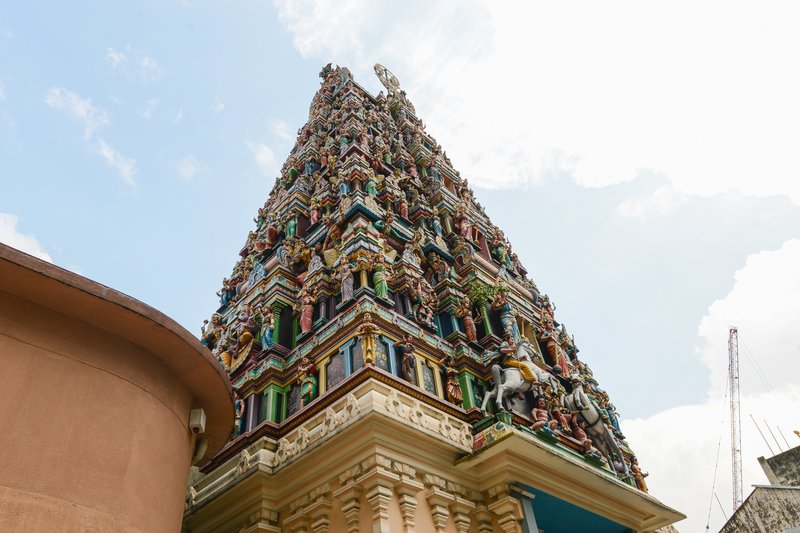
The oldest Hindu temple in Kuala Lumpur, founded in 1873 and rebuilt with a South Indian gopuram tower covered in hand-painted sculptures of deities, flowers, and mythological scenes.
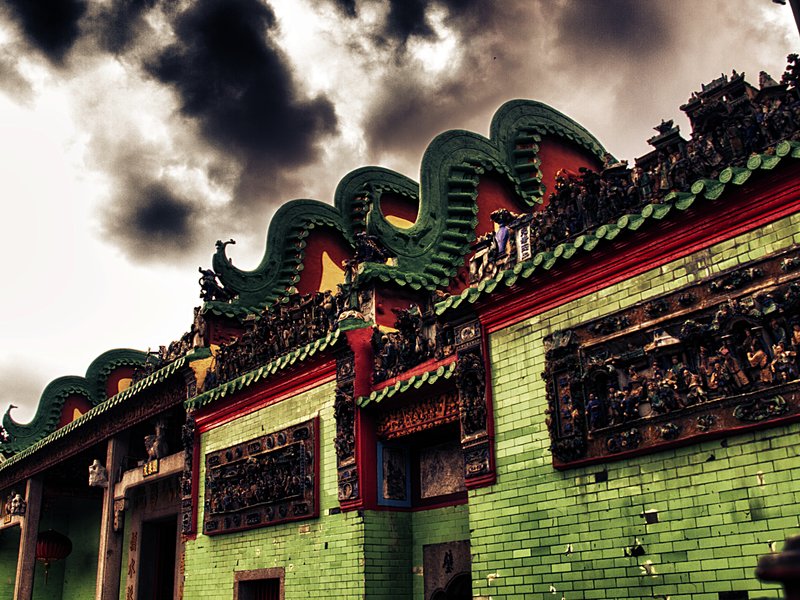
One of the finest examples of southern Chinese temple architecture in Southeast Asia — the 1906 Cantonese clan association hall features elaborate hand-painted roof ceramics, carved granite pillars, and painted timber panels depicting legends from the Chan clan's history.
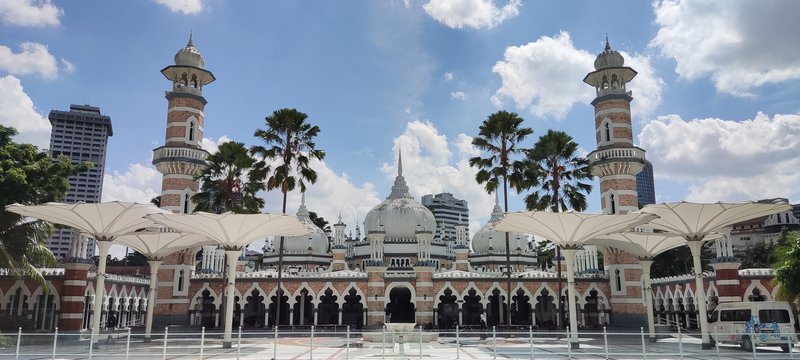
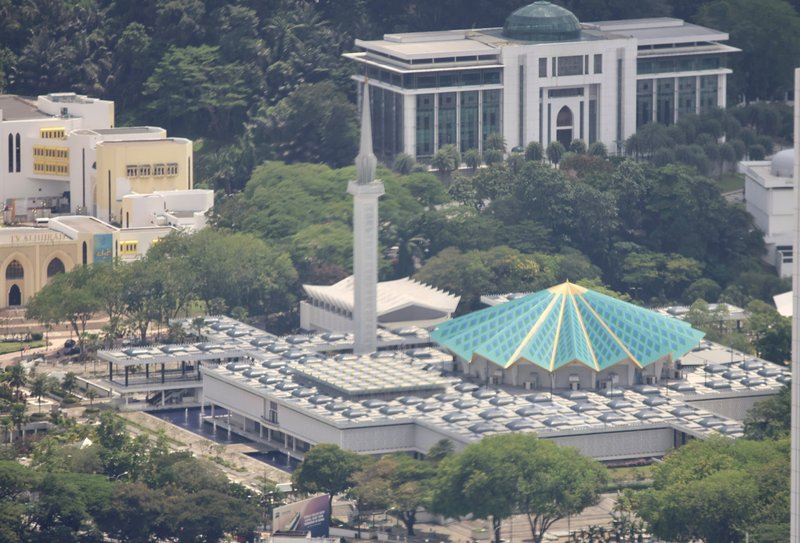
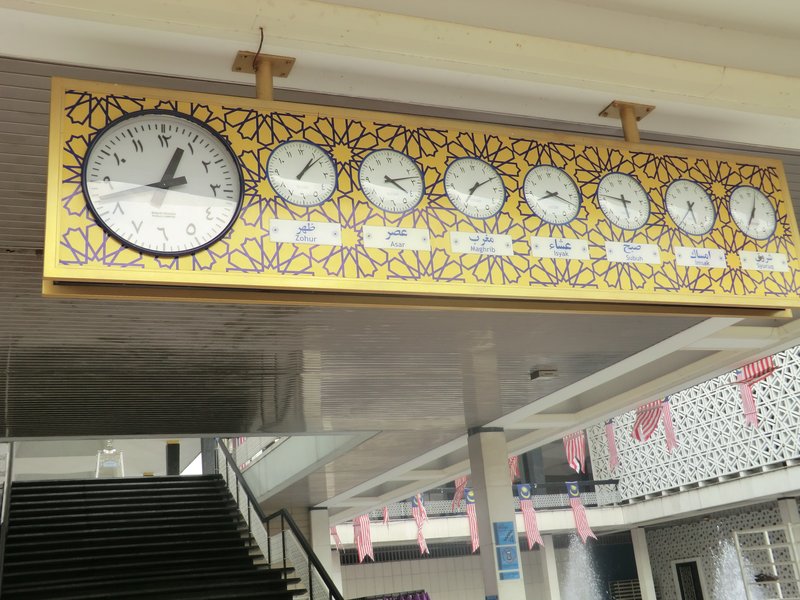
Malaysia's National Mosque, opened in 1965 with an 18-pointed-star folded concrete roof representing Islam's five pillars and 13 states — the minaret stands 73 metres and its courtyard holds 15,000 worshippers.
A 92-hectare public garden encircled by Lake Gardens, with a free-roaming deer park, the KL Bird Park — the world's largest free-flight aviary — an orchid garden, and a hibiscus garden along the lake shore.
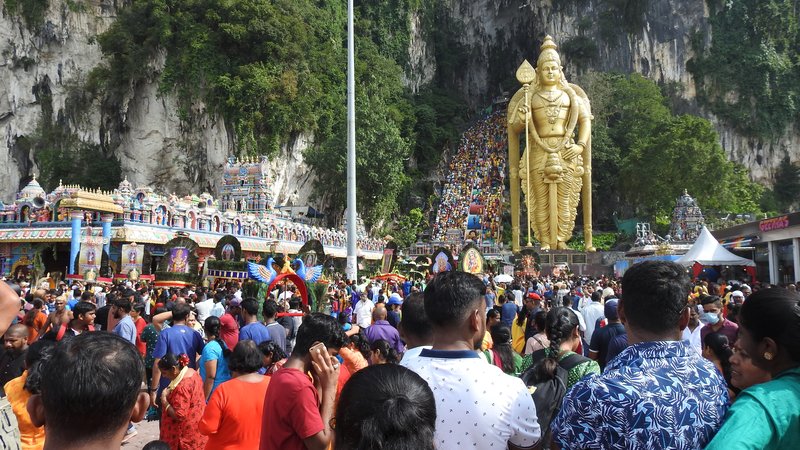
A series of limestone caves housing a major Hindu temple complex, dominated by a 42.7-metre gold-painted statue of Murugan at the foot of 272 rainbow-coloured steps leading to the Cathedral Cave.
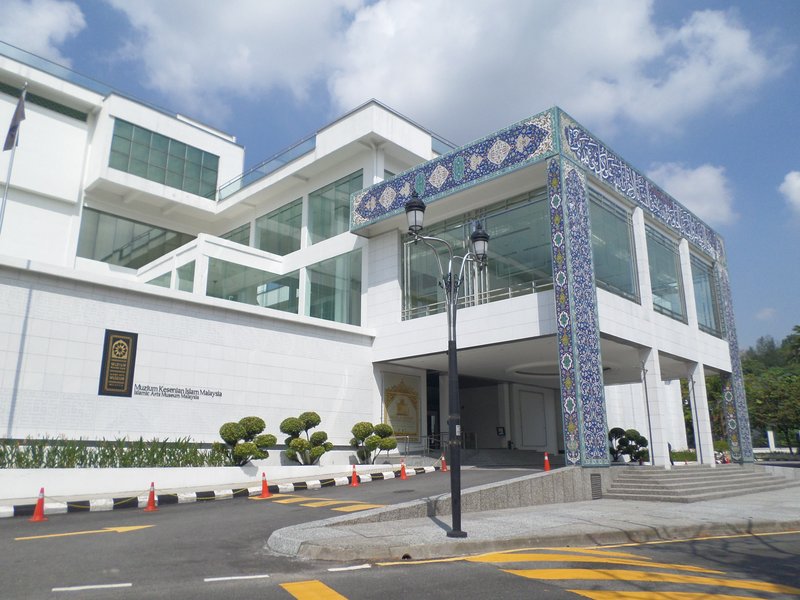
Southeast Asia's largest Islamic arts museum holds 12,000 artefacts across 12 galleries — Qur'anic manuscripts, jewellery, textiles, armour, and a scale model of the Masjid al-Haram — in a building with Ottoman-tiled interiors.
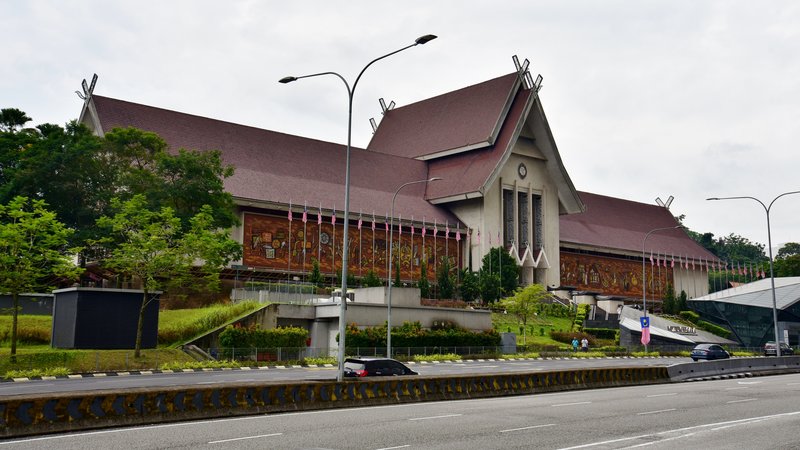
The Muzium Negara was purpose-built in 1963 and covers Malaysia's history across four galleries — Malay kingdoms, natural history, colonial-era trade, and the road to independence — in a building with a sweeping Minangkabau roof.
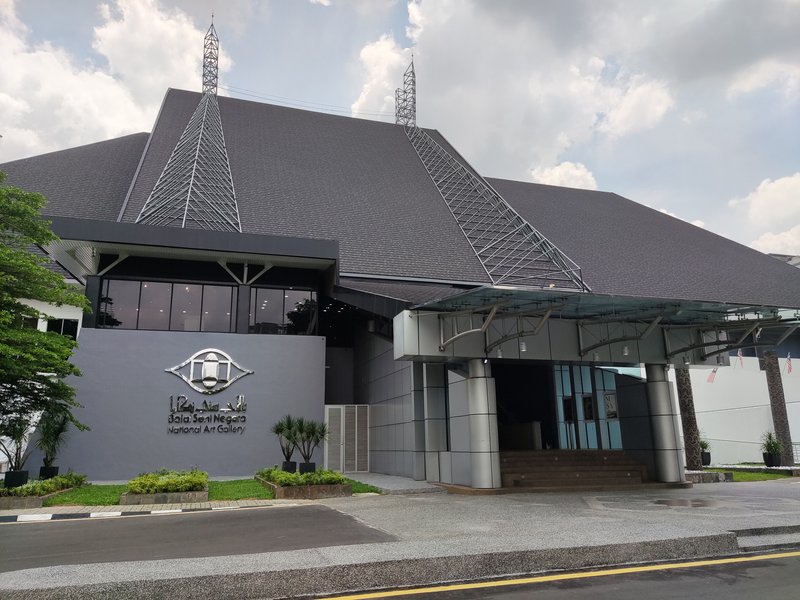
Malaysia's premier public art institution — Balai Seni Lukis Negara — holds the national collection from pre-colonial craft to postwar abstraction to contemporary installation across eight permanent galleries, with rotating exhibitions occupying the full top floor.
Kuala Lumpur's South Asian quarter centres on a three-block stretch of textile merchants, gold jewellers, and Indian sweet shops — Ramadan bazaars here are among the city's most colourful, and the weekend pasar malam is the largest in the area.
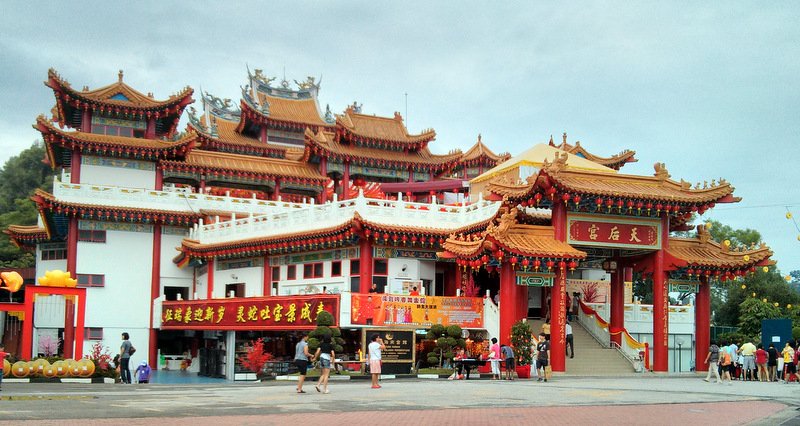
One of the largest Chinese temples in Southeast Asia, built across six tiers on Robson Hill with red-lacquered pillars, moon-gate terraces, and an open viewing gallery taking in the whole KL skyline.
An upscale residential neighbourhood whose Jalan Telawi strip concentrates the city's best independent coffee shops, rooftop bars, and a few hawker stalls that sit within walking distance of Michelin Bib Gourmand restaurants.
Small-group half-day tour past Petronas Towers, the National Mosque, Merdeka Square and the colonial core, with door-to-door transport included from central KL.
Private air-conditioned transport door-to-door to Batu Caves with time to see the Lord Murugan statue, climb the 272 steps, and explore the Hindu shrine inside the Temple Cave.
Evening guided tasting of charcoal satay, Penang-style char kway teow, steamed buns and local fruit drinks at hawker stalls across the city after dark.
Private 4.5-hour sightseeing tour tracing KL from tin-mining outpost to modern metropolis, with a transfer out to Batu Caves and complimentary door-to-door transport.
Four-hour culinary trail through Chow Kit's wet market and surrounding food stalls, tasting 10 or more varieties of local and heritage Malaysian dishes.
Malaysia's national dish — coconut rice, peanuts, dried anchovies, half-boiled egg, and sambal wrapped in a banana leaf — from street-stall to sit-down versions.
Flat rice noodles wok-fried over charcoal at high heat with soy sauce, shrimp, cockles, bean sprouts, and Chinese sausage — a smoky wok breath marks the best versions.
Flaky flatbread cooked on a griddle and served with dhal, curry, or sweetened condensed milk — the standard Malaysian breakfast, available around the clock at any mamak stall.
KL's dominant laksa style — rice noodles in a rich coconut broth with tofu puffs, shrimp, bean sprouts, and a dollop of sambal; less tart than Penang's tamarind-based version.
Season runs June to August, with Musang King, D24, and Black Thorn the varieties locals seek out — sold by weight, best from a seller who splits the fruit to order.
Foreign number: accepted. — the SMS code reaches +1, +44, +61 and most other international numbers through the app's country-code selector.
GrabFood dominates KL delivery, covering every neighbourhood and most hawker stalls with typical delivery times of 20 to 35 minutes downtown; it shares one account with Grab's ride-hailing service.
Foreign number: accepted. — SMS verification reaches international numbers registered with a supported country code.
The second-largest platform in KL, with strong coverage in Bangsar, Petaling Jaya, and the city centre; it carries more international chains and its own cloud-kitchen brands than Grab.
Foreign number: not accepted. — registration requires a Malaysian mobile number, and Shopee accounts from other markets do not carry over.
Shopee Food runs competitive pricing on popular chains across KL, but only works for travellers who already hold a Malaysian SIM and a local Shopee account.
Foreign number: accepted. — the SMS verification code reaches +1, +44, +61 and most other international numbers through the app's country-code selector.
Grab is the dominant ride-hailing app in Malaysia, with fixed fares agreed before booking that remove the haggling street taxis are known for; surge pricing applies during rush hour and after major events, and most city-centre trips run MYR 15 to 35.
KTM Komuter to a compact Negeri Sembilan capital with Minangkabau-roofed buildings, the Pasar Besar market, and a buffalo-meat cuisine found nowhere else on the peninsula. Easy half-day return.
The former tin-mining capital 200 km north — KTM ETS deposits visitors opposite the colonial Railway Station, 10 minutes' walk into the Old Town's white-walled shophouses, murals, and famous white coffee cafes. A day return is comfortable.
KTM ETS to Butterworth then a 20-minute ferry crossing to Georgetown. Plan 3-plus hours in the UNESCO street-art district — the round trip totals 8 hours minimum, so an early departure is essential.
Kuala Lumpur is louder, cheaper, and more immediately generous with its food than almost any Southeast Asian capital.
The Touch 'n Go card covers every train line, bus, and most tolls — buy one at KL Sentral or any 7-Eleven for RM10 — RM5 card plus RM5 credit — and reload at station machines. It is cheaper and faster than paying cash on the Kelana Jaya LRT or the Monorail.
Mosque visits require covered shoulders and ankles; most mosques provide wraps at the entrance but a lightweight scarf in a bag is faster. Masjid Jamek and Masjid Negara are both tourist-open between prayer times — check the schedule on the day, as Friday hours are shorter than weekday hours.
Street taxis in KL negotiate fares and frequently decline to use the meter — Grab almost always works out cheaper and removes the negotiation entirely. The exception is metered airport taxis from KLIA, with a fixed fare by zone printed at the taxi counter inside the terminal.
The weather follows a two-season pattern — a drier season November–February and a wetter one March–October — but tropical downpours occur year-round and last 30–90 minutes. Carry a compact umbrella; the covered walkways linking LRT stations to malls mean you can often wait a storm out without getting wet.
Halal and non-halal food sit on the same street but not in the same kitchen: Indian-Muslim mamak stalls are open 24 hours and halal; Chinese-run hawker stalls are typically not. The Berjaya Times Square food court in Bukit Bintang has both under one roof, labelled separately.