A pocket beach framed by golden cliffs and reached by a much-photographed wooden staircase of around 200 steps. The descent opens onto turquoise water and a rock tunnel through to a second cove — the most striking small beach within walking reach of town.
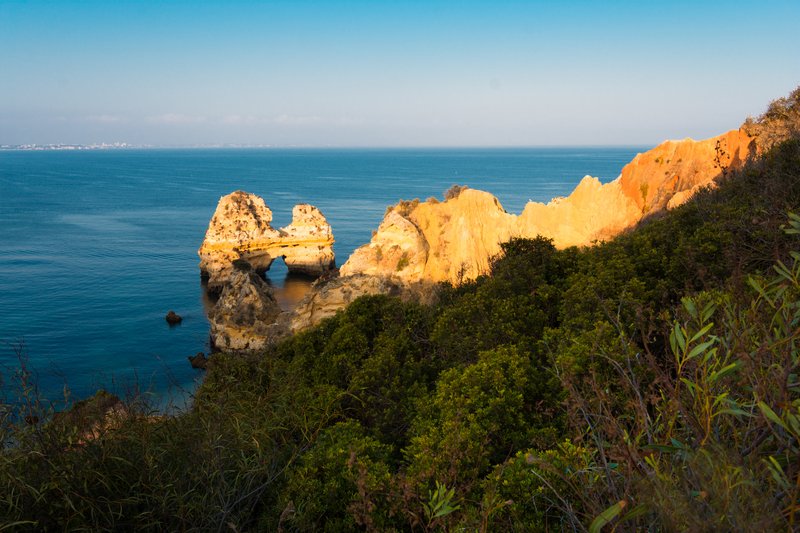
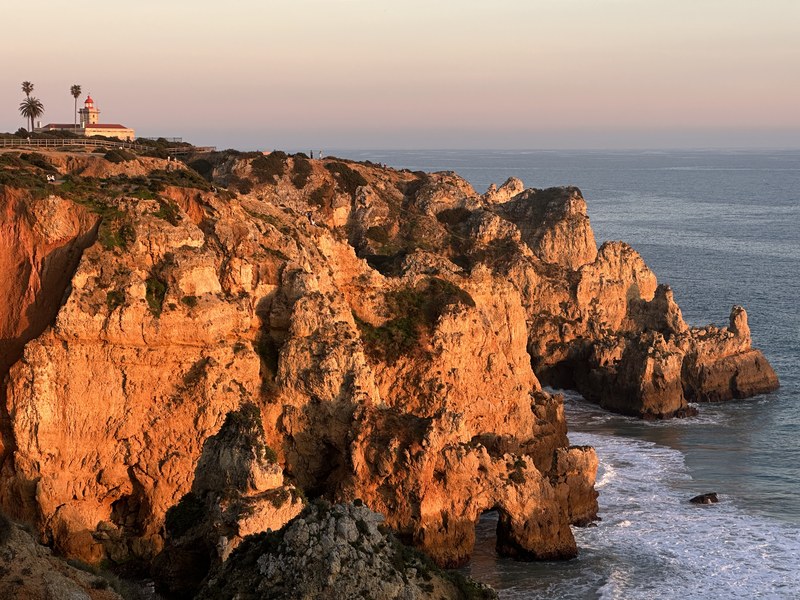
Lagos's signature headland: ochre cliffs, sea stacks and arches dropping into clear water, with a 1913 lighthouse and a flat boardwalk along the rim. Railed platforms hang over the coves; a boat through the grottoes below is the classic way to see the formations up close.
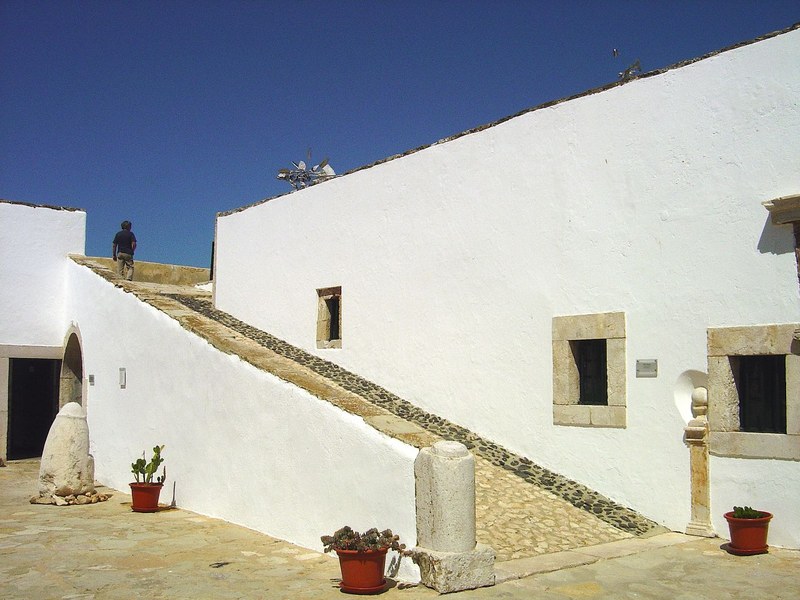
A compact 17th-century sea fort guarding the mouth of the harbour, reached by a short bridge over the water. Its ramparts open clean views back over the bay and the old town walls, and inside is a small exhibition on the Portuguese age of discovery.
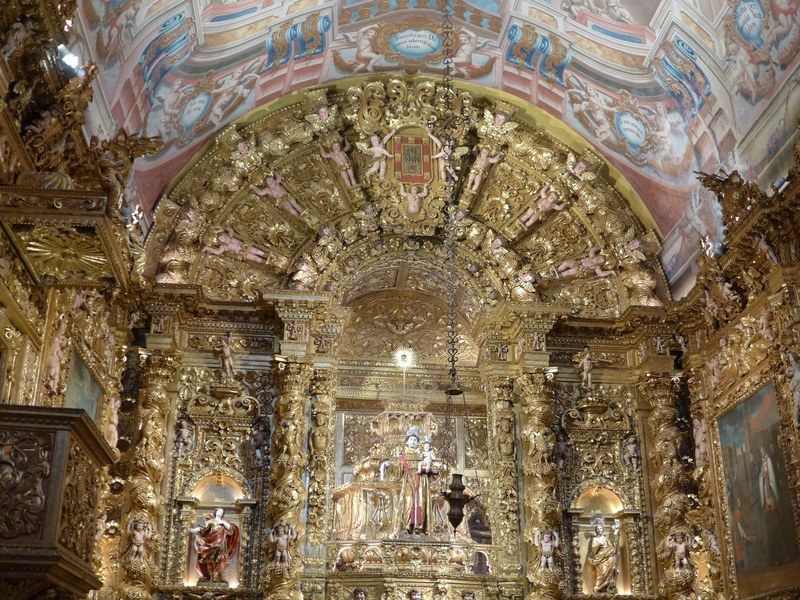
A small 18th-century church with an interior of breathtaking talha dourada — gilded carved woodwork over every surface, a painted barrel vault and blue-and-white azulejos. Entered through the municipal museum, it ranks among the finest baroque interiors in Portugal and is a national monument.
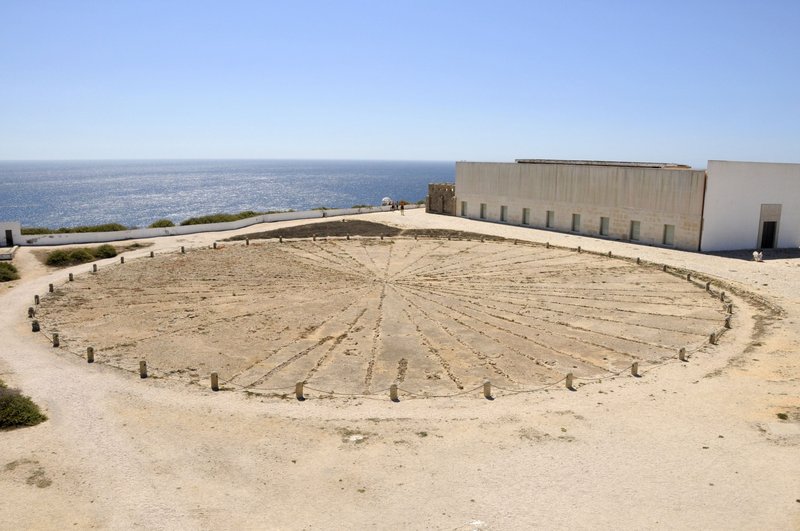
A windswept clifftop fortress on Henry the Navigator's promontory, where Portugal planned its 15th-century voyages of discovery. Inside the walls lie the giant pebble compass rose and a lone chapel, with the Atlantic crashing on three sides.
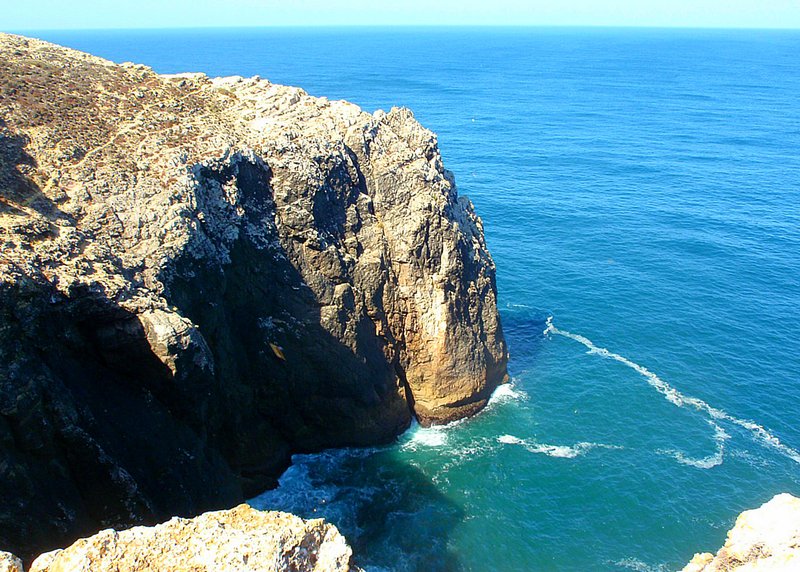
The southwesternmost point of mainland Europe — sheer 75-metre cliffs the Romans called the Sacred Promontory, capped by a powerful lighthouse. Sunset here, where the land simply ends at the Atlantic, is among the most dramatic on the continent.
A wooden boardwalk threading through the salt marshes and tidal channels of the Ria de Alvor nature reserve, one of the Algarve's richest wetlands for wading birds — flamingos, storks and plovers move through the mudflats depending on the season. The loop runs between the old town and the river mouth with the Alvor hills as a backdrop.
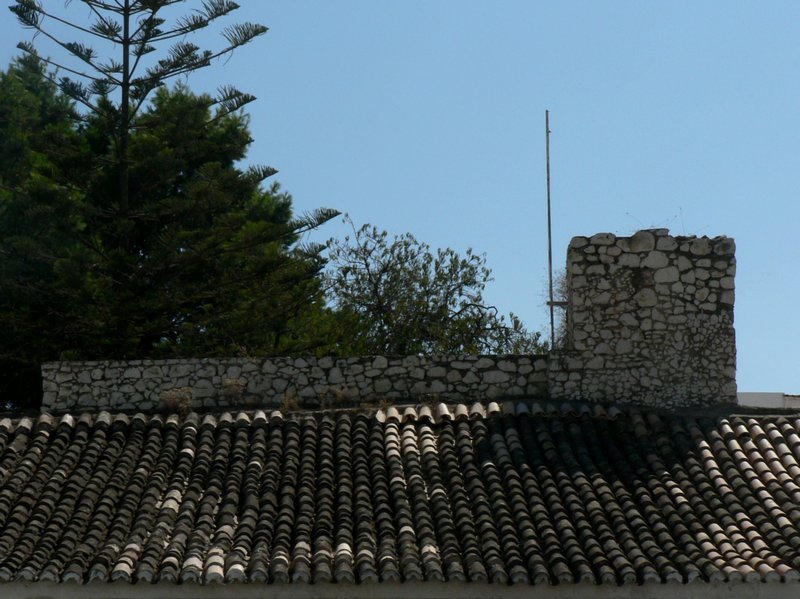
A ruined medieval castle above Alvor's old town, raised by the Moors and rebuilt after the Christian conquest of 1189 — part of the same coastal defence line as the greater fortress at Silves. Little survives beyond a stretch of curtain wall and a watchtower, but the platform looks clean over the whitewashed rooftops to the Ria de Alvor beyond.
The most dramatic beach in Alvor's parish — golden coves divided by sea arches and rock stacks carved from the same soft limestone as Ponta da Piedade, reached down a staircase cut into the cliff face. Caves and tunnels link several of the coves at low tide.
Lagos's own beach: four kilometres of open golden sand running east from the marina to the mouth of the Alvor estuary — the widest stretch of coastline in the western Algarve, backed by dunes rather than cliffs. The size keeps it uncrowded even in August, and kiosks along the promenade rent kayaks, paddleboards and windsurf gear.
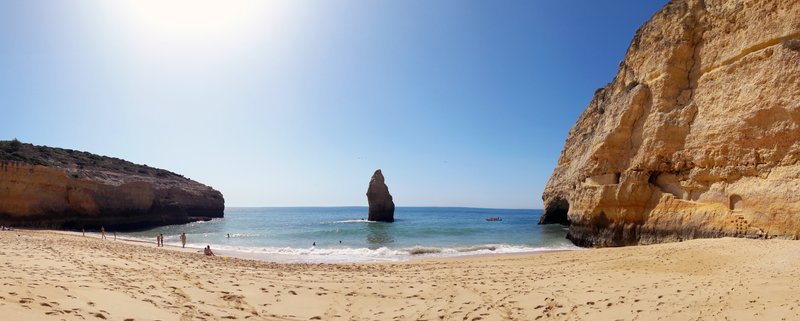
A former fishing village turned resort town wrapped around a small cove beach, with a cliffside boardwalk linking a run of coves and the sinkhole rock formations of Algar Seco just west of the harbour. Praia do Carvalho, reached through a tunnel cut into the rock, is the prettiest of the coves — and boats leave the beach for the Benagil cave system and Praia da Marinha's arches.
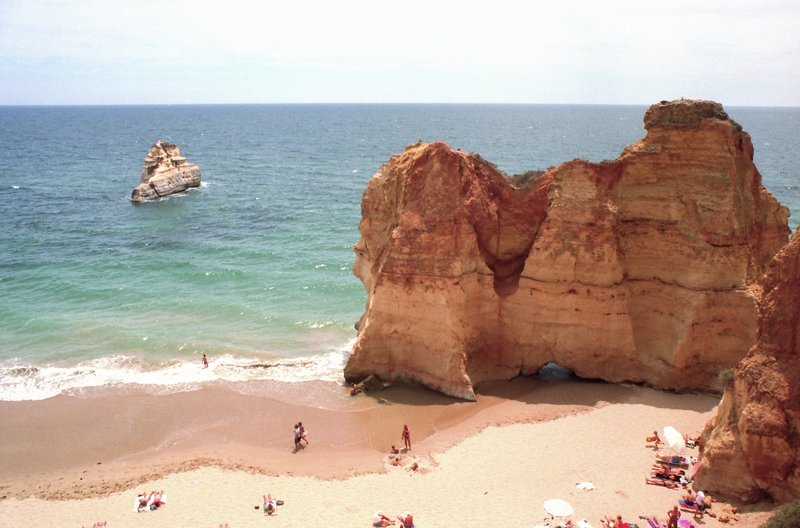
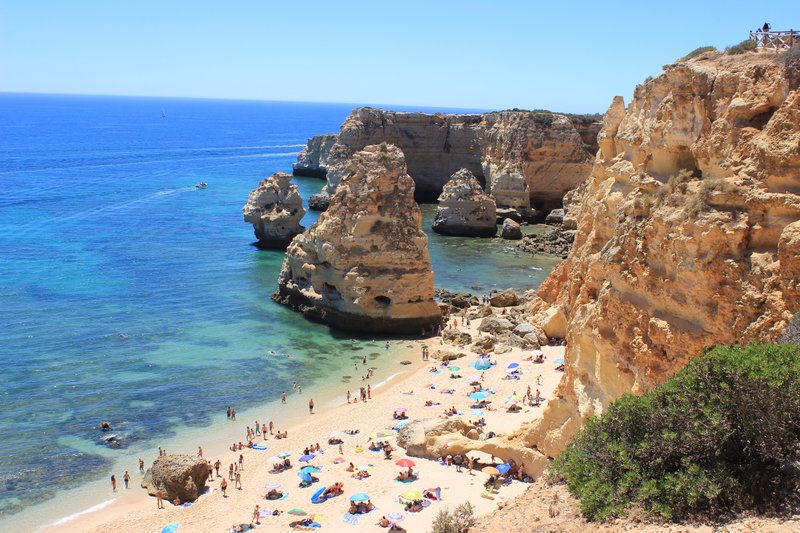
Rated among the most beautiful beaches in Europe by National Geographic and the Michelin Guide — a small cove of pale sand walled in by two soaring limestone headlands riddled with arches, caves and sea stacks. A steep staircase down the cliff face is the only way in, and the view from the clifftop platform above is as celebrated as the beach itself.
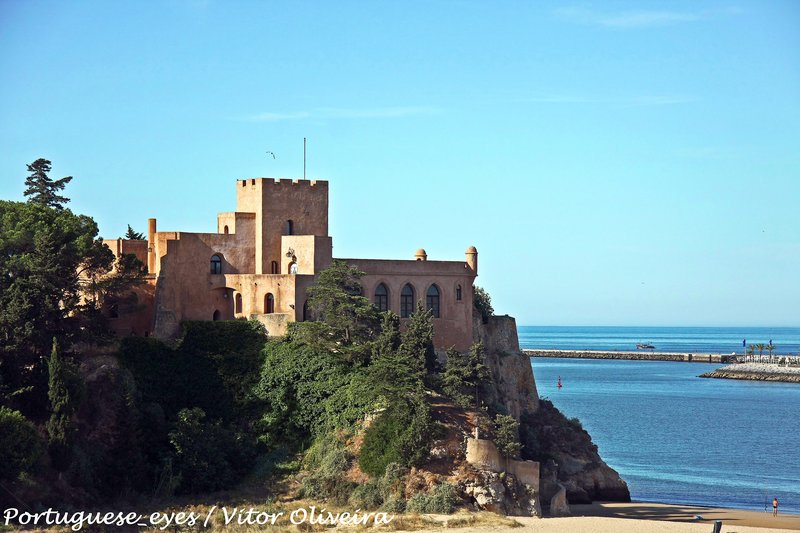
A 16th-century fort guarding the mouth of the Arade river, its ochre walls rising straight out of the water opposite Portimão — one of the most photographed views on this stretch of coast. Privately owned and closed to visitors, it is seen from the quiet fishing village of Ferragudo, whose whitewashed lanes climb the hill behind it.
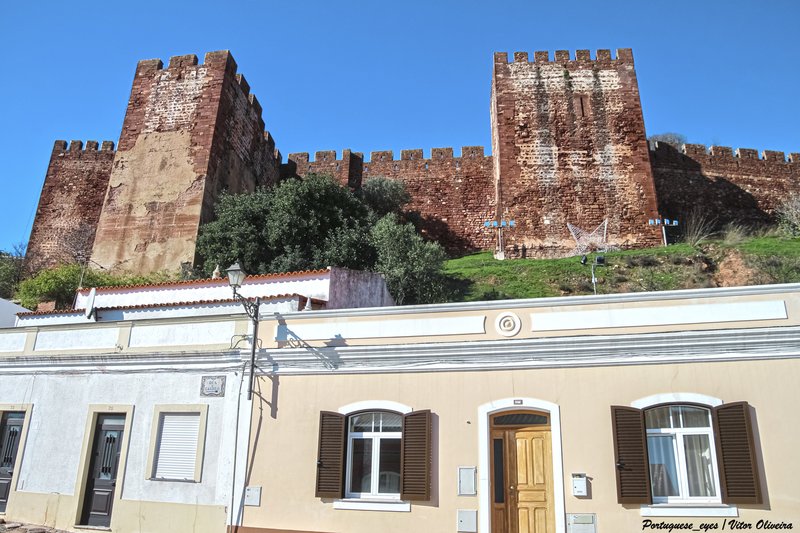
The red-sandstone citadel of the former Moorish capital of the Algarve — one of the best-preserved Arab fortifications in Portugal, its walls enclosing a hilltop of excavated cisterns and archaeological digs above a tangle of old streets. Silves fell to Christian forces in 1189 after a bloody siege, then again in 1249 for good.
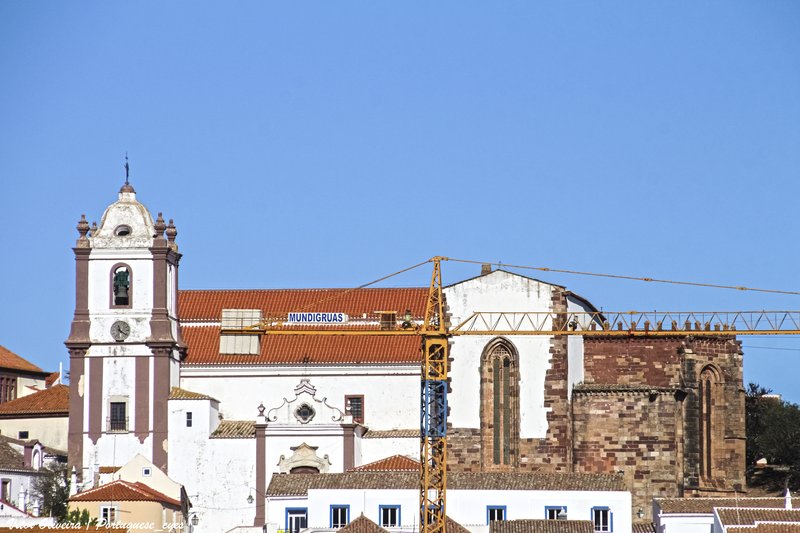
Considered the main Gothic monument of the Algarve, built from 1268 on the site of the city's great mosque after the Christian reconquest. King John II lay buried at the high altar until his remains were moved to the Monastery of Batalha; the nave was only finished in the early 16th century.
A grotto cruise from the marina along the Ponta da Piedade cliffs, weaving into the sea caves, arches and hidden coves at water level beneath the lighthouse.
A coastal cruise east from Lagos to the famous Benagil sea cave with its collapsed roof and sandy floor, passing a string of cathedral-like grottoes and golden cliffs along the way.
A guided half-day run to Europe's southwest corner — the clifftop Fortress of Sagres with its giant compass rose, and the lighthouse at Cape St. Vincent where the land drops away into the Atlantic.
Full-day immersion inside the Costa Vicentina Natural Park — the village of Aljezur, wild surf beaches at Montes Clérigos and Carrapateira, the Sagres fortress, and Cape St. Vincent at the continent's southwestern tip.
A 75-minute guided boat tour of Ponta da Piedade's sea caves, natural arches and golden grottos at water level — the definitive way to see the Algarve's most iconic coastal formations up close.
The most-reviewed Lagos boat tour on GYG — a 75-minute grotto cruise in a traditional Portuguese-design vessel weaving into the smallest sea caves and arches at Ponta da Piedade, with local guide commentary.
An 8-hour guided day trip from Lagos along the wild Algarve coast — coastal villages of Luz, Burgau and Salema, the clifftop Fortress of Sagres and maritime history, then the Cape of São Vicente lighthouse and Atlantic panorama.
A minivan day tour through the Costa Vicentina Natural Park — pristine cliff beaches, the historic Sagres Fortress, and Cape St. Vincent at Europe's southwest corner.
The top-rated Lagos boat tour on TripAdvisor — a 75-minute grotto cruise departing from the Lagos Marina, weaving into Ponta da Piedade's sea caves and golden rock arches at water level. Max 10 per boat.
A 75-minute boat trip to the sea caves and rock formations at Ponta da Piedade, departing from the BlueFleet office at Lagos Train Station — hourly departures from 10am; max 10 per boat.
A 2-hour coastal cruise east from the Lagos Marina to the Benagil Cave — the famous collapsed sea dome with a sandy floor — passing a chain of cathedral-like grottoes and ochre cliffs along the way.
A 2-hour 15-minute small-group kayak tour into the sea caves, arches and hidden grottos of Ponta da Piedade — reaching formations that boats cannot enter, with a guide in yellow/green from Lagos Adventure at Marina de Lagos.
The Algarve's signature stew, slow-cooked and served in the hinged copper pan it is named for — clams, fish or seafood with peppers, and sometimes pork, steamed in their own juices.
Foreign number: accepted. — the SMS code reaches international numbers; signing in with Google or Apple skips the code entirely.
Wide delivery coverage across the historic center and marina area. Restaurant selection includes seafood restaurants, casual beach joints and international options near the old town.
Foreign number: not required. — it signs in with Google, Facebook or email, and a phone sign-up takes any prefix with the code by SMS or WhatsApp.
Broad restaurant network in the Algarve including bakeries and local seafood places not always found on Uber Eats. Delivery zones cover the historic center and marina.
Foreign number: accepted. — Bolt sends the sign-up code to international numbers; signing in with Google skips the verification step.
The ride app's delivery arm with reasonable coverage of Lagos. Smaller restaurant selection than Uber Eats or Glovo but useful as a backup when the others show longer wait times.
Foreign number: accepted. — Bolt sends the six-digit sign-up code to international numbers; signing in with Google skips the code entirely.
Reliable and affordable ride option throughout the Algarve. Well-established in Lagos with drivers covering the historic center, marina and outlying beach areas.
Foreign number: accepted. — Uber's SMS code reaches foreign carriers; signing in with Google or Apple skips the verification step.
Available in the Algarve with decent driver supply during tourist season. Useful for reaching beaches outside walking distance and for evening returns from restaurants.
A working riverfront city just up the line and the gateway to Praia da Rocha, where a boardwalk runs beneath honey-coloured cliffs and rock stacks. The old sardine-canning quay is now lined with grills.
The Algarve's most visited resort town, with a cliff-backed Old Town of whitewashed lanes above a beach, a lively marina, sea-cave boat trips and the famous Falesia beach to the east. The station at Ferreiras sits 6 km north of the centre; local buses and taxis connect in minutes.
The Algarve capital, with a walled old town of cobbled lanes, a cathedral you can climb, a macabre bone chapel, and boats out into the Ria Formosa lagoon and its islands.
A graceful eastern-Algarve town of whitewashed churches straddling a river crossed by a Roman-era bridge, with a castle viewpoint and a ferry out to the sandbar beaches of Ilha de Tavira.
The end of the line, a grid-planned 18th-century border town on the Guadiana river facing Spain across the water — a five-minute ferry crosses to Ayamonte. Manueline-style riverside gardens and a regular, walkable street plan make it unlike any other Algarve town.
The first two days of this trip trace a single thread without meaning to. The caravels that opened the Age of Discovery were rigged and crewed out of Lagos; the school of navigation that plotted their routes sat on the Sagres promontory of Day 2; and Cape St. Vincent was, for centuries, the literal edge of the known world — the last cliff before the blank part of the chart. Day 1 is the harbour the ships left from, Day 2 is the headland they aimed past.
It also rewards a little timing. The cliffs of Ponta da Piedade glow warmest in late-afternoon light, and Cape St. Vincent is the classic sunset cliff — so if Day 2's drive runs long, that is the cape working in your favour, not against it. Arrive at the lighthouse for the last hour of light and the wind, the cliffs and the falling sun do the rest.
Days 3 and 4 read the same coastline at two different scales. Alvor and Meia Praia on Day 3 are the version of the Algarve Lagos itself belongs to — wide sand, a tidal estuary, a modest ruin — all within ten minutes of the marina. Day 4 drives east into Lagoa municipality for the version tour buses queue up for: Praia da Marinha and the Carvoeiro coast are the postcard the whole region is sold on, and they earn it.
Day 5 is the one day this trip leaves the coast. Silves was the Moorish capital of the Algarve before Faro ever was — its red-sandstone castle is older and better preserved than anything built after the Reconquest, and the cathedral standing on its former mosque is the same layering of conquest and reconquest seen at Sagres, just built in stone instead of stood on a cliff. The direct train line means the whole day trip costs less than a tank of petrol and returns to the marina by nightfall.