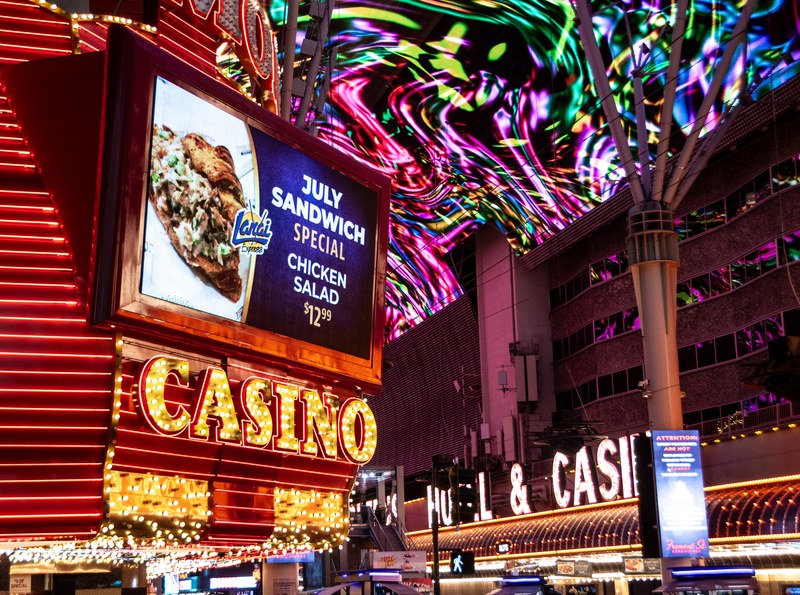
The Fremont Street Experience covers five blocks of downtown Las Vegas under a 90-foot-high LED canopy carrying 49 million lights — the world's largest video screen display. Free live music plays on three stages nightly, and the Viva Vision light show runs on the hour after dark.
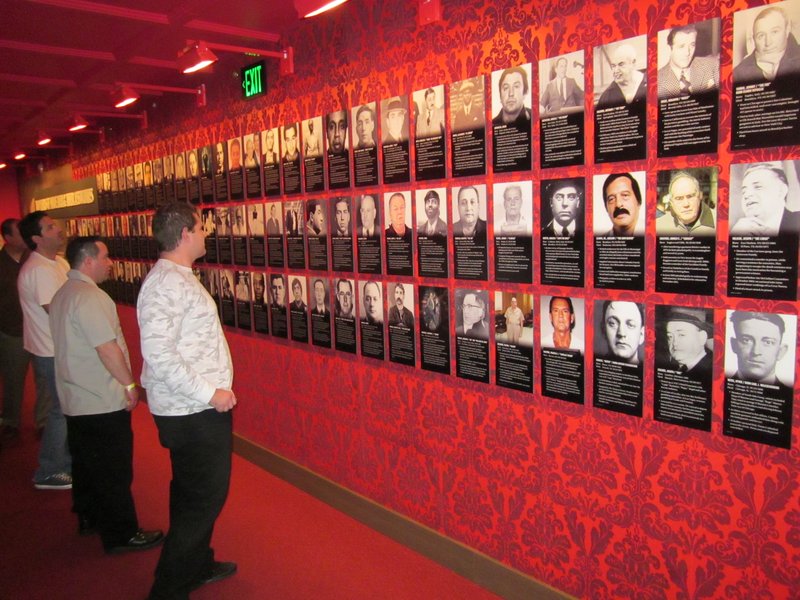
The Mob Museum occupies the former federal courthouse where the 1950 Kefauver Senate hearing on organized crime was held. Four floors trace organized crime from Prohibition through the mob-connected construction of the city, with FBI wiretap equipment and the St. Valentine's Day Massacre wall panel.
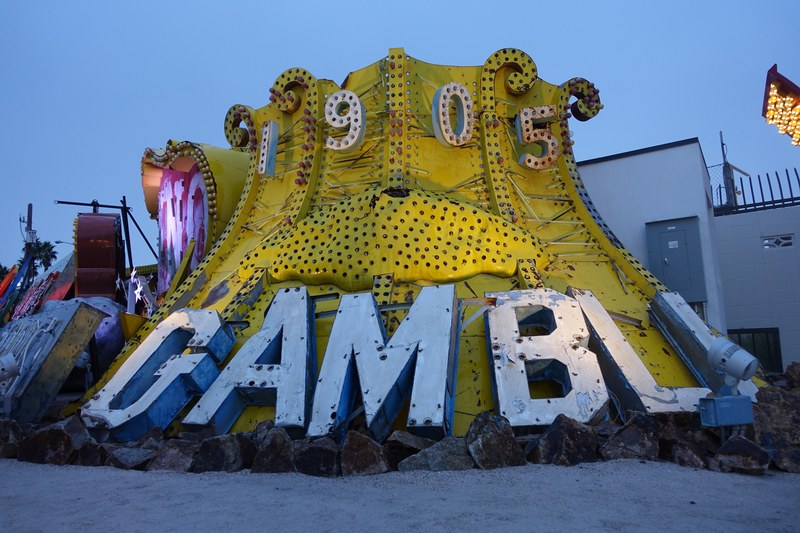
The Neon Museum preserves over 200 retired neon signs from casinos and hotels in an outdoor collection called the Neon Boneyard. Signs span the 1930s through the early 2000s and trace the city's visual identity as a pioneer of large-scale electric advertising.
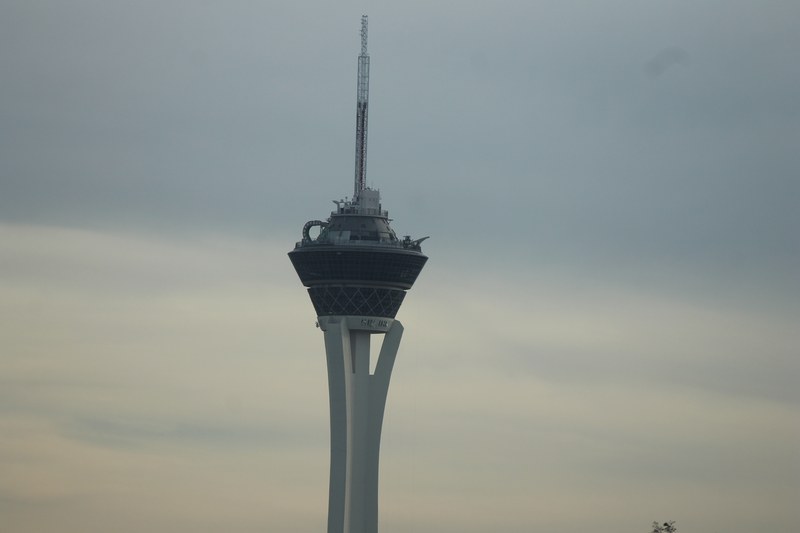
The STRAT tower stands 1,149 feet on the north Strip, the tallest freestanding observation structure west of the Mississippi. The SkyPod deck at 869 feet offers 360-degree views across the Strip and the Mojave Desert.
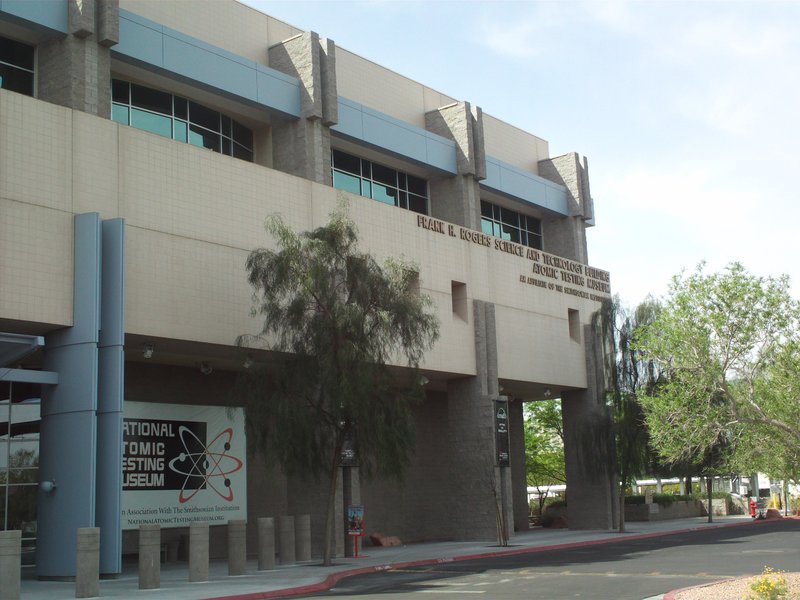
From Hotel: 14 min · 4 min → National Atomic Testing Museum
1.National Atomic Testing Museum~1 hr 30 min
A Smithsonian Institution affiliate since opening in 2005, the museum traces 70 years of nuclear testing at the Nevada Test Site through original equipment, a Ground Zero Theater simulating an above-ground blast, and a section on Cold War-era atomic pop culture.
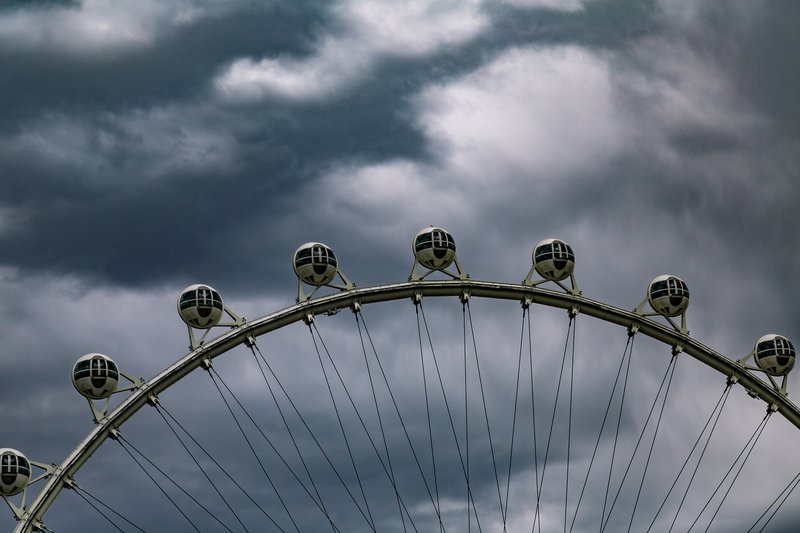
The High Roller stands 550 feet tall at the rear of the LINQ Promenade, the tallest observation wheel in North America. A single rotation takes 30 minutes in an air-conditioned cabin, with views stretching across the Strip to the surrounding desert.
24 min · 8 min → Bellagio Conservatory & Botanical Gardens
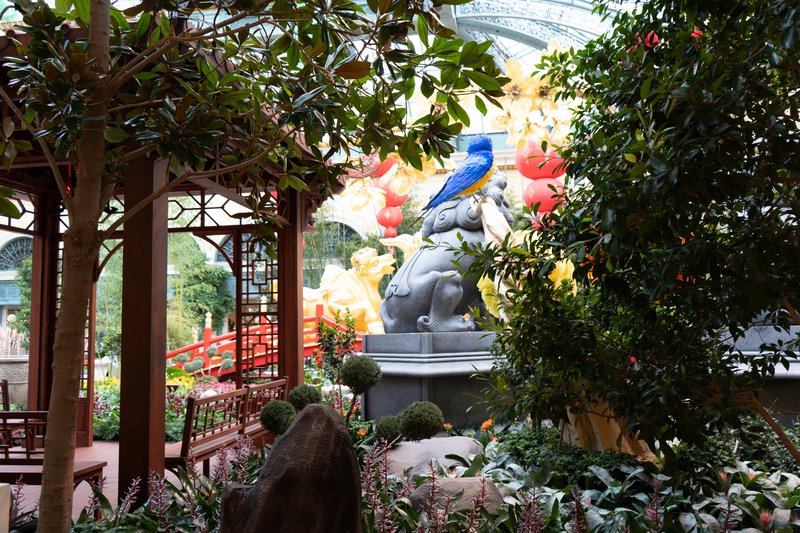
3.Bellagio Conservatory & Botanical Gardens~30 min
The Bellagio's 14,000-square-foot conservatory sits just off the hotel lobby and rotates through five seasonal displays a year — spring, summer, fall, winter, and Lunar New Year — built from thousands of live plants and hand-crafted sculptural elements.
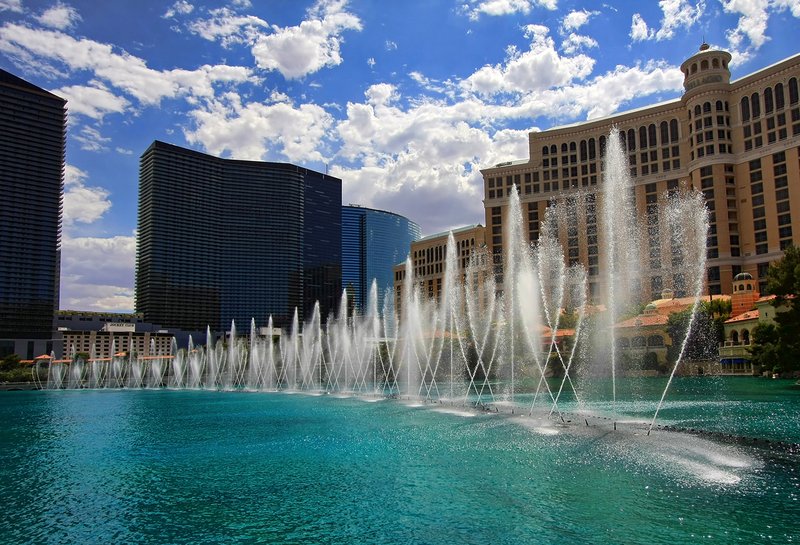
The Fountains of Bellagio choreograph water, light, and music across an 8.5-acre lake on the Strip. Shows run every half hour in the afternoon and every 15 minutes after 8:00pm, each lasting the length of one song.
From Hotel: 35 min → Red Rock Canyon National Conservation Area
1.Red Rock Canyon National Conservation Area~3 hr
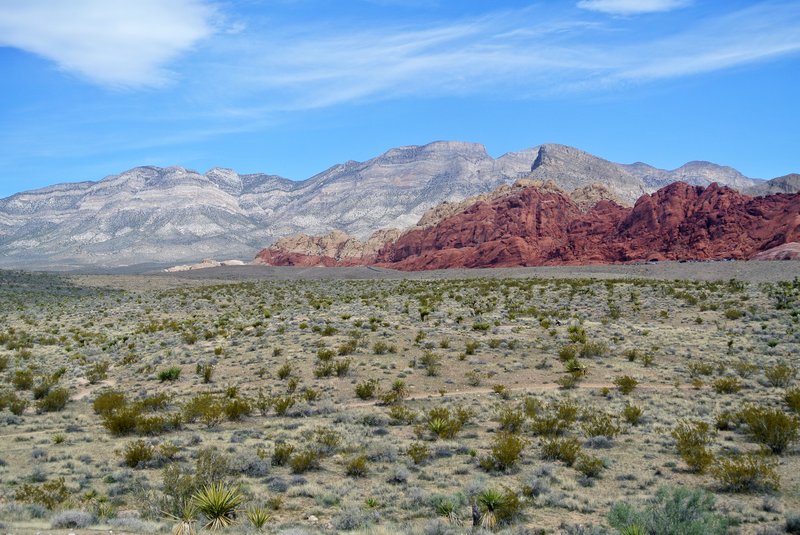
Red Rock Canyon protects 197,349 acres of red and grey sandstone escarpments 17 miles west of the Strip. The 13-mile scenic drive loops past trailheads, overlooks, and the striated Calico Hills, with the Keystone Thrust fault visible where grey limestone sits atop younger red sandstone.
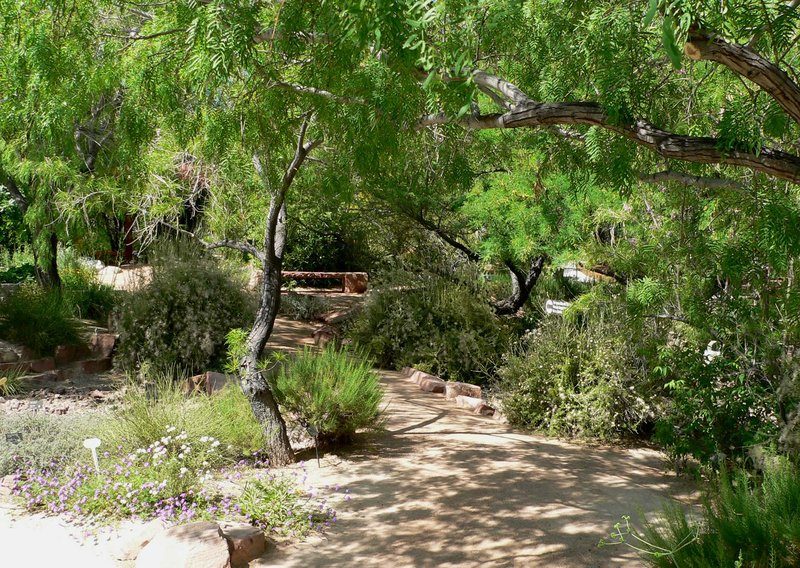
Springs Preserve marks the site of the original Las Vegas Springs, the desert water source that drew the city's first settlement. The 180-acre grounds include botanical gardens, desert wildlife habitats, and a museum tracing the natural and human history of the valley.
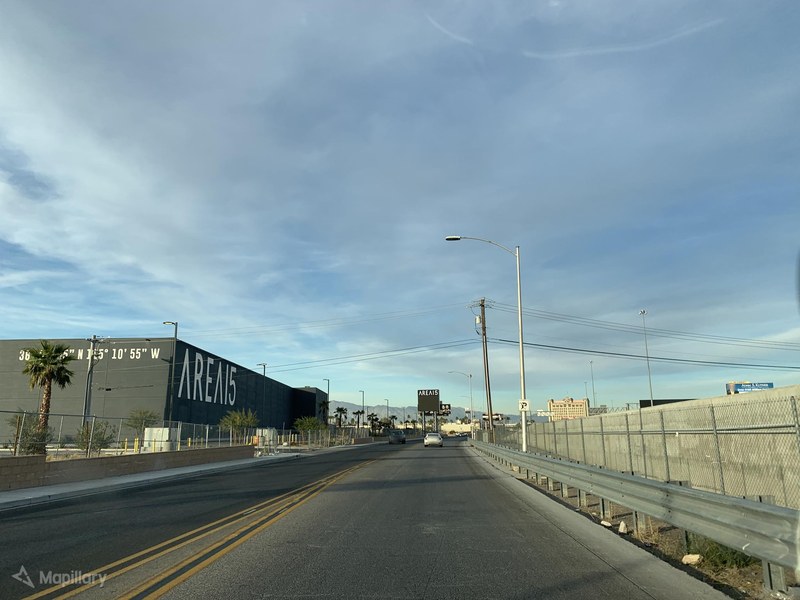
AREA15 is an experiential entertainment complex built around large-scale interactive art. Its anchor attraction, Meow Wolf's Omega Mart, disguises a surreal alternate-reality installation behind the front of a fictional grocery store, with hidden portals leading to room after room of immersive art.
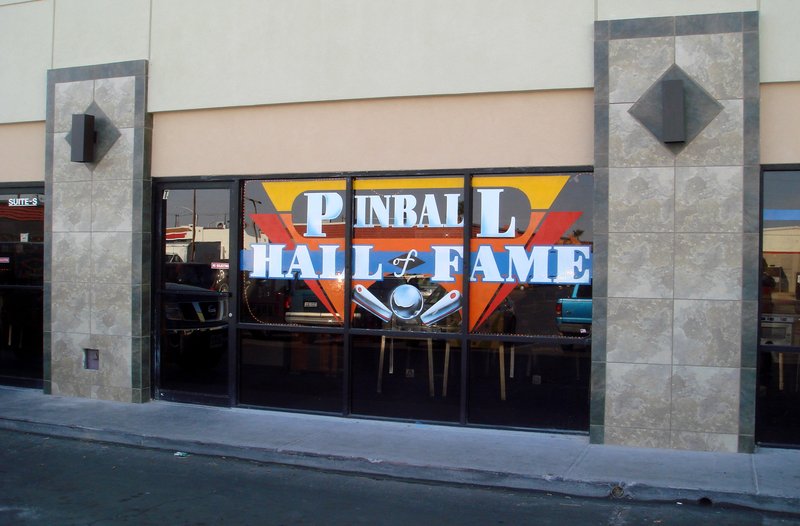
Volunteers restore and operate roughly 700 pinball and arcade machines spanning the 1950s through today, with proceeds from play going to the Salvation Army. Machines are set to a coin's original cost or close to it, and nearly every unit stays in working order on the floor.
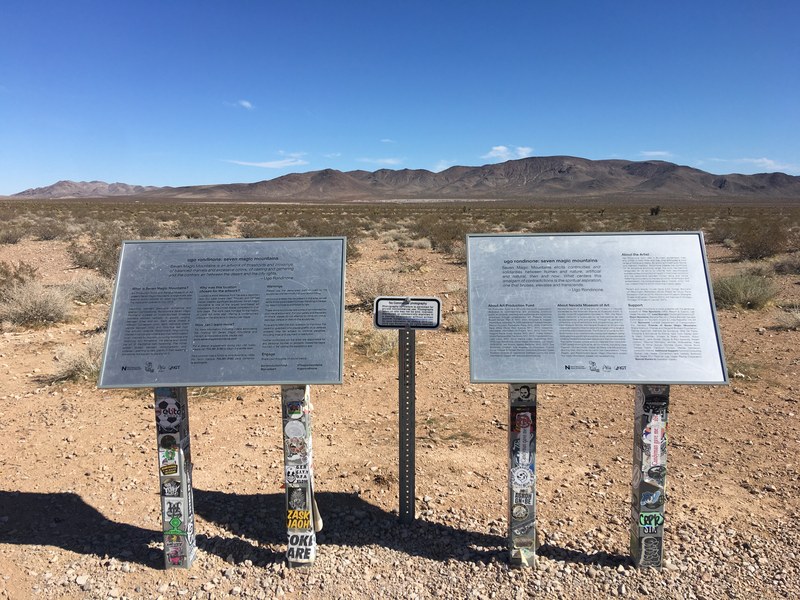
Swiss artist Ugo Rondinone stacked locally sourced boulders into seven towers over 30 feet tall, each painted in fluorescent colors that stand out against the Mojave Desert backdrop. Installed in 2016 near Jean Dry Lake, the piece has stayed on view well past its original two-year run.
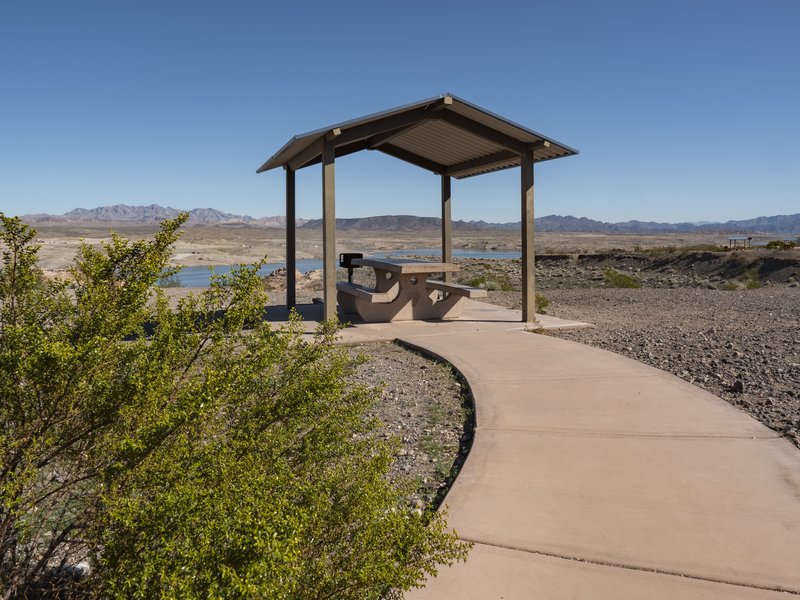
Lake Mead formed behind Hoover Dam as the Colorado River backed up into the desert, and remains the largest reservoir by volume in the United States. Overlooks along the shoreline show the "bathtub ring" of mineral deposits marking decades of historic high-water lines against the surrounding desert mountains.
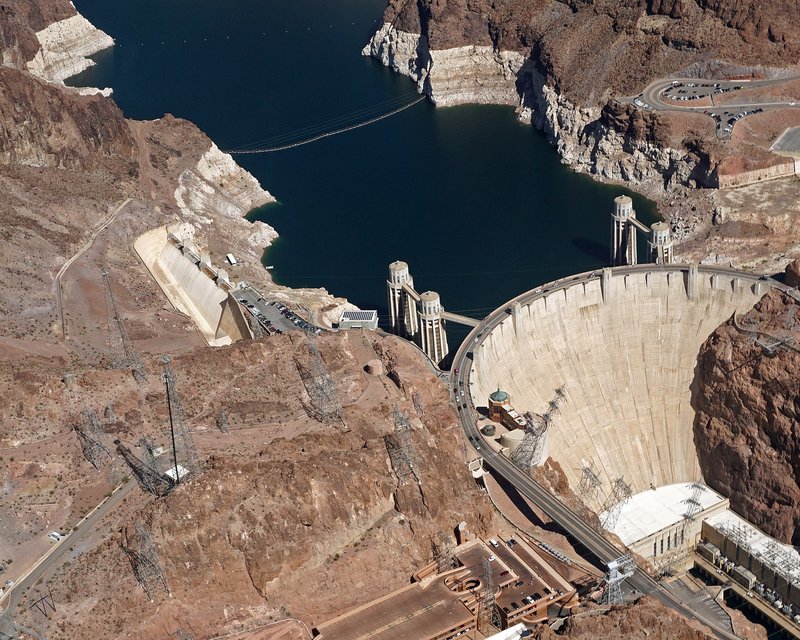
Hoover Dam rises 726 feet over the Colorado River, built between 1931 and 1936 to control flooding and generate hydroelectric power for the Southwest. The visitor center's observation deck looks straight down the dam face to the river and across to the Mike O'Callaghan–Pat Tillman Memorial Bridge.
From Hotel: 32 min · 8 min → The Venetian Gondola Rides
1.The Venetian Gondola Rides~45 min
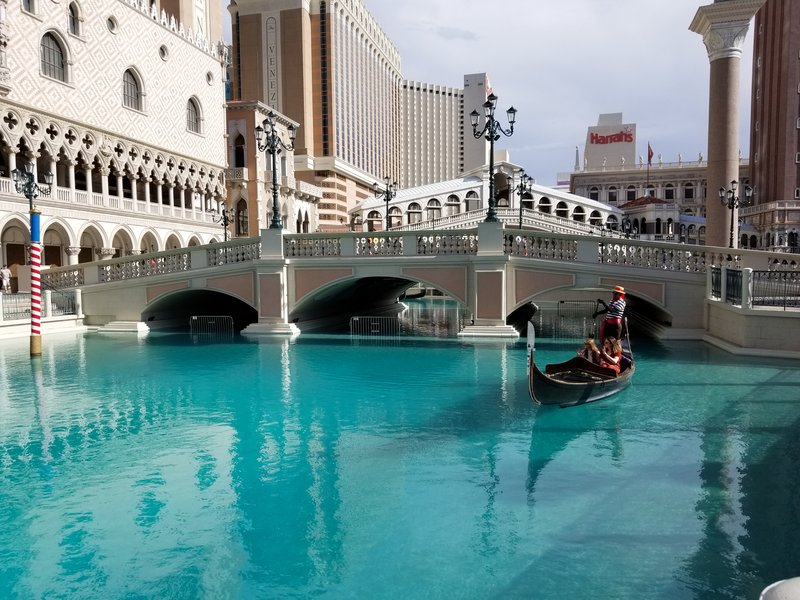
The Venetian recreated Venice's Grand Canal across the casino floor, lined with hand-painted bridges and a sky-painted ceiling simulating an outdoor piazza. Gondoliers in striped shirts pole the boats while singing Italian opera through the Grand Canal Shoppes.
20 min · 5 min → Paris Las Vegas Eiffel Tower Experience
2.Paris Las Vegas Eiffel Tower Experience~1 hr
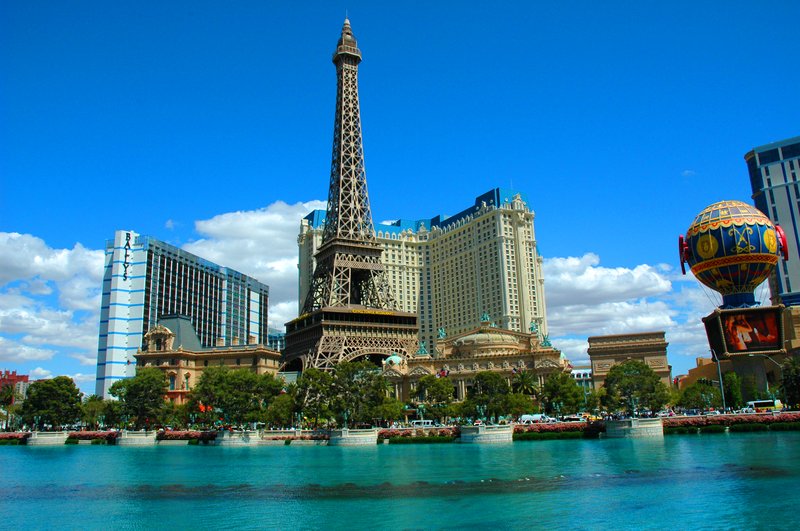
The half-scale Eiffel Tower rises 541 feet over the Paris Las Vegas casino floor, built from the original Gustave Eiffel blueprints. Elevators reach the 46-story observation deck at 460 feet, where views look directly across to the Bellagio Fountains and along the full Strip in both directions.
20 min · 7 min → Big Apple Coaster at New York-New York
3.Big Apple Coaster at New York-New York~30 min
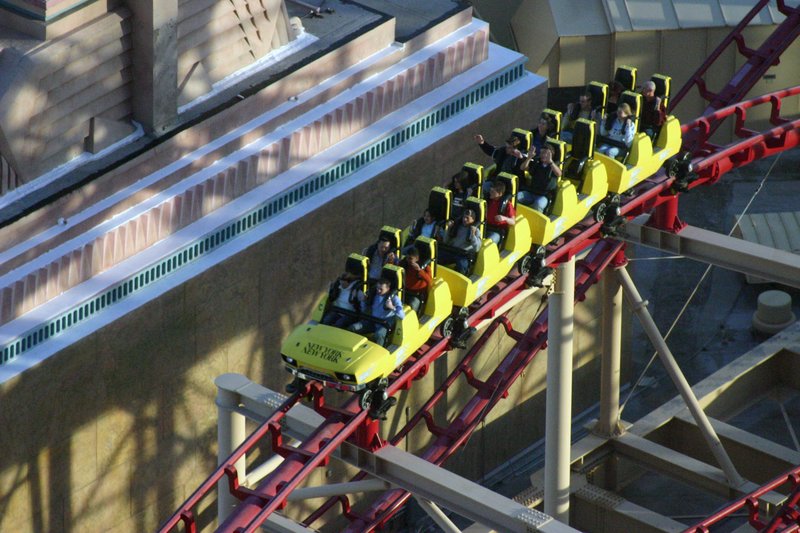
The roller coaster wraps the New York-New York exterior, threading through scaled-down replicas of the Empire State Building, Chrysler Building, and Statue of Liberty. The coaster reaches 67 mph, includes a 203-foot drop, two vertical loops, and a 540-degree spiral.
Half-day guided tour to Hoover Dam with a stop at the bypass bridge overlook and the visitor center. The guide covers construction history and the engineering of the 17-turbine power plant.
Guided Strip walk covering the Bellagio fountains, Caesars Palace, the Venetian, and lesser-known architectural curiosities with narration on the casino construction era.
Guided walk through downtown mob history covering Binion's Gambling Hall, historic crime sites, and Fremont Street landmarks, ending at The Mob Museum.
The Golden Gate Hotel introduced the shrimp cocktail in 1959 and it became the most-ordered appetizer in the US through the 1970s. Still served at the original bar.
The prime rib carving station was a casino loss-leader from the 1950s. The Golden Steer has served large cuts at modest prices since 1958, rooted in that era.
The Strip location is among the busiest in the chain, open until 1:30am on weekends. The Double-Double Animal Style with grilled onions is the standard after-hours order.
The casino buffet was invented in 1946 at the El Rancho to keep players from leaving the floor. The breakfast buffet with prime cuts and made-to-order eggs is a Strip institution.
World's largest spherical venue; 160,000 sq ft of 16K LED wraps the audience. Rotating concert residencies and original immersive cinematic productions.
Cirque du Soleil's aquatic production — acrobatics, synchronized swimming, and aerial acts over a 1.5-million-gallon pool at the Bellagio, running since 1998.
20,000-seat arena behind the Park MGM — home of the Vegas Golden Knights and the flagship concert venue for major touring acts and boxing events year-round.
Foreign number: not accepted. — Lyft's own help says the number must be a US, Canadian or Puerto Rican one, and the code is texted only to that number.
Runs at comparable density to Uber on the Strip and in downtown; shared rides available across the resort zone and in central Las Vegas.
A Black Architect's Curved Lobby, and a Myth Set in Concrete
The swooping visitor center you walk through at the Neon Museum wasn't built for that purpose — it's the relocated 1961 lobby of the old La Concha Motel, and it was designed by Paul Revere Williams, one of the most accomplished architects of his era working in a profession that offered him almost no acceptance because he was Black. Williams built extensively in Las Vegas even as segregation shaped what venues would actually let people of color through the front door, and this shell-shaped Googie-style lobby he designed for a Strip motel now anchors a museum dedicated to the same city's neon history — moved intact, in pieces, to its current site decades after he built it.
Everyone's heard the story that workers who fell into the wet concrete during Hoover Dam's construction are still entombed inside it. It isn't true, and the engineering explains why: crews poured the dam in five-foot blocks and only inches at a time, with men stationed right at the pour watching every bucket go in — there was never a volume of wet concrete large enough for a body to disappear into unnoticed. The dam's construction did kill 96 workers officially, from falls, blasts, and accidents, which is likely where the myth took root and simply refused to let go.