From Hotel: 21 min · 7 min → Barranco Arts District
1.Barranco Arts District~2 hr
Lima's bohemian quarter, known for large-scale murals, independent galleries, and the 19th-century ravine path Bajada de los Baños descending toward the Pacific. Plaza Municipal de Barranco anchors the neighbourhood, ringed by pisco bars, cafes, and bookshops.
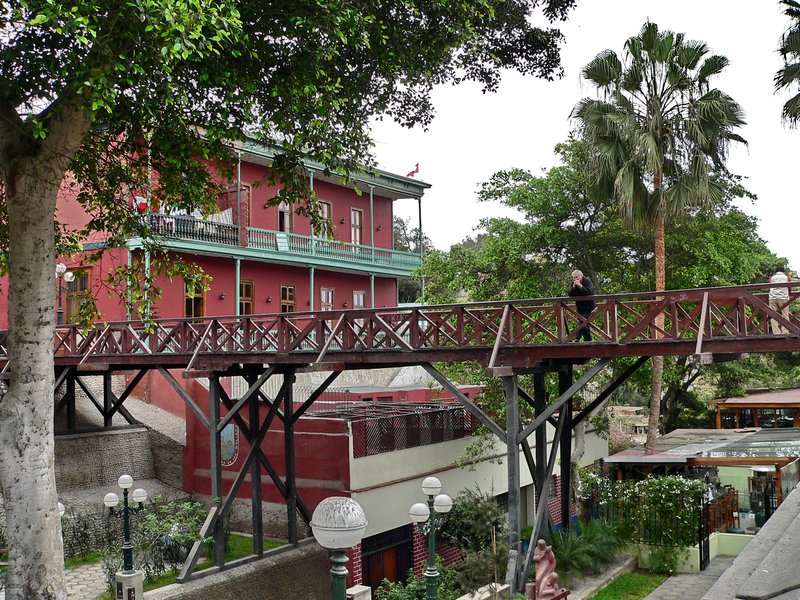
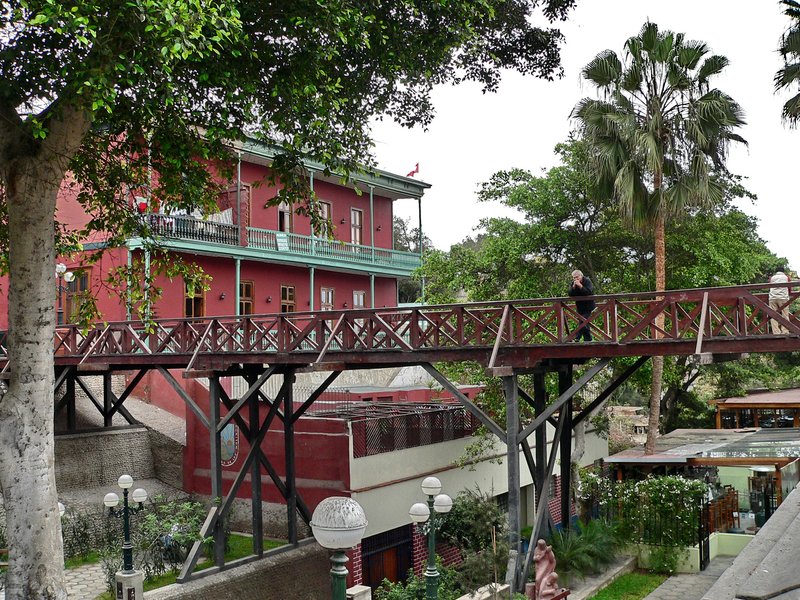
Barranco's wooden Bridge of Sighs, dating from 1876, spanning a ravine above the Pacific path. Local legend promises a wish to anyone who crosses holding their breath. Surrounding lanes have colonial houses, murals, pisco bars, and galleries defining Lima's most romantic neighbourhood.
Photography and contemporary art museum dedicated to Lima-born Mario Testino, housed in a restored 19th-century Barranco mansion. Testino's fashion portraits sit alongside rotating Peruvian and Latin American art. The garden courtyard café is one of Barranco's most pleasant spots.
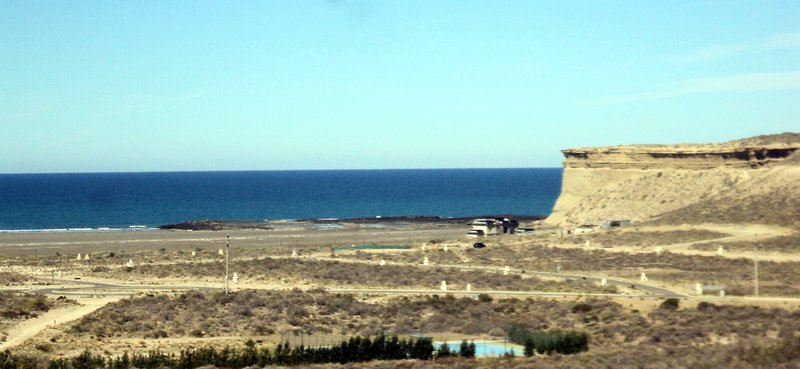
A crescent-shaped bay cut into the Chorrillos cliffs, with dark volcanic sand and some of Lima's most consistent Pacific surf. The enclosed bay traps long, well-shaped waves that have drawn surfers since the 1960s. The cliffs above frame a clear horizon at sunset.
From Hotel: 15 min · 11 min → Malecón de Miraflores & Parque del Amor
1.Malecón de Miraflores & Parque del Amor~1 hr 30 min
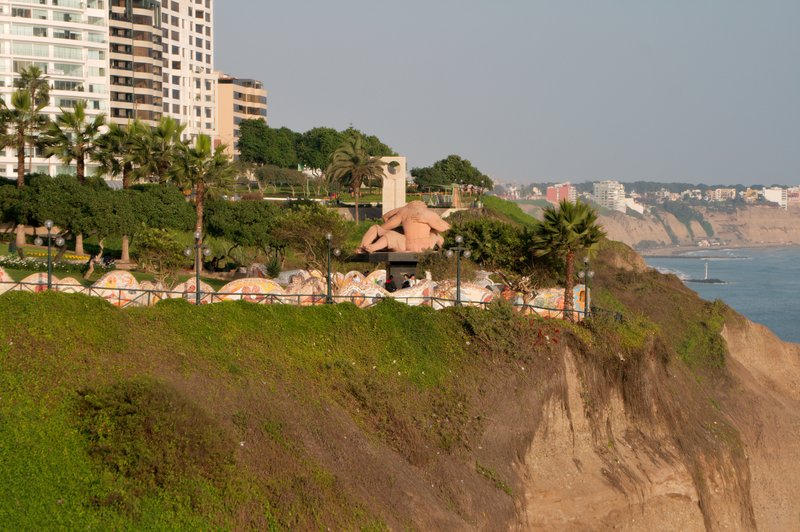
A 4-km clifftop promenade above the Pacific. Parque del Amor is centred on Victor Delfín's monumental "El Beso" sculpture and mosaic benches above the surf. At Parque Raimondi, tandem paragliding operators launch from the cliffs — hovering over the Pacific with the city skyline behind.
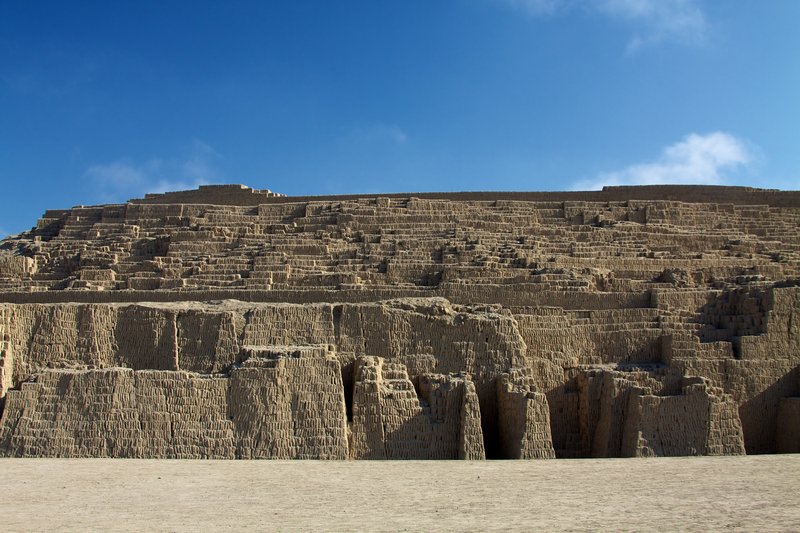
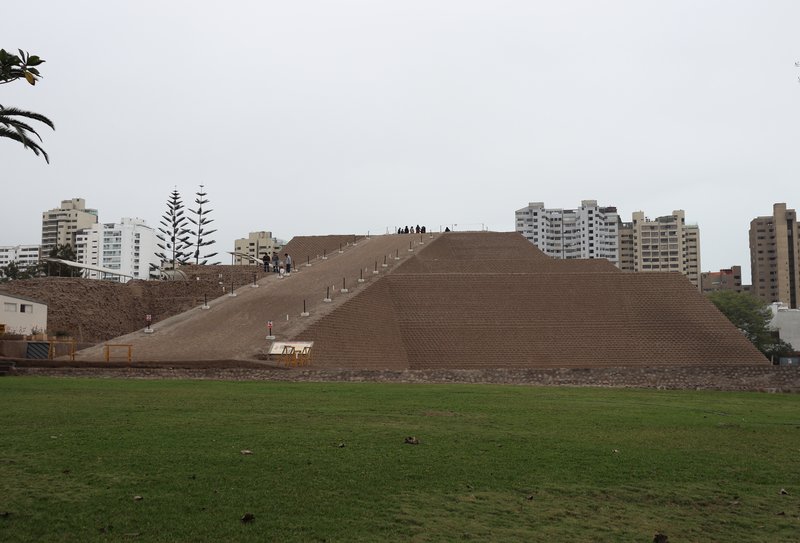
A 5th-century adobe pyramid rising from residential Miraflores, built by the Lima culture and later used by the Wari. Guided tours walk the active excavation site with archaeologists still digging. A museum holds recovered artefacts; the on-site restaurant with night views is exceptional.
A pre-Inca adobe pyramid built by the Lima culture between 200 BCE and 600 CE, later used by the Ychsma and Inca. Partially excavated burial sites are visible on the terraced platforms. It sits in the heart of San Isidro's financial district and includes a small museum with recovered mummies and ceramics.
A 16-hectare public park in San Isidro with over 1,600 ancient olive trees planted in 1560, making it one of the oldest surviving olive groves in the Americas. Declared a National Monument in 1959. A colonial olive press is displayed near the interior plaza.
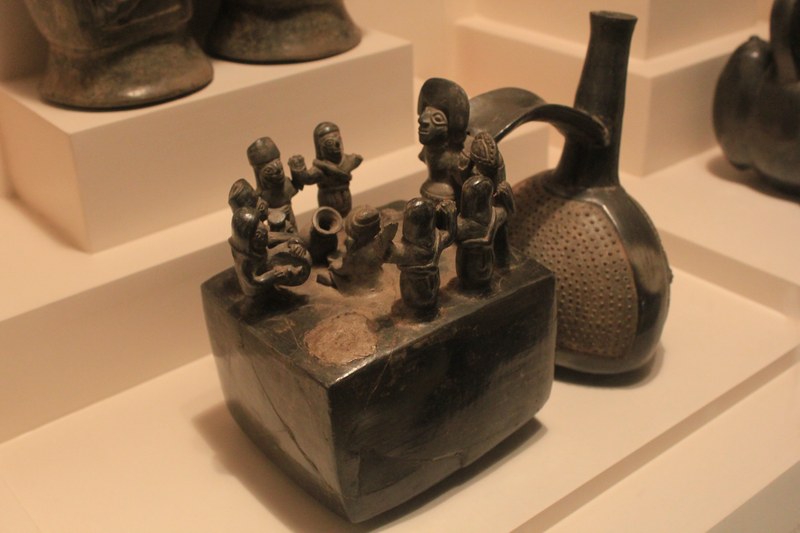
Peru's finest pre-Columbian collection in an 18th-century colonial mansion atop a 7th-century pyramid. Over 45,000 objects span 5,000 years of culture — gold and silver masterworks, textiles, and ceramics including the celebrated erotic pottery gallery. The garden café is a perfect midday stop.
Peru's leading fine arts museum, housed in the 1872 Palacio de la Exposición in Parque de la Exposición, Lima Centro. The permanent collection spans 3,000 years of Peruvian art — from pre-Columbian ceramics through colonial painting to contemporary works — across 19,000+ objects.
The grand 16th-century colonial square at the heart of Lima's UNESCO World Heritage Historic Center, framed by the Government Palace, Cathedral, and Municipal Palace. Spain's Viceroyalty of Peru was administered from here for nearly 300 years — political capital of all South America.
6 min · 15 min → Convento San Francisco & Catacombs
4.Convento San Francisco & Catacombs~1 hr
A 17th-century Spanish baroque convent and basilica, its ornate facade one of Lima's most recognizable landmarks. Beneath lie the catacombs — a vast burial complex holding remains of 70,000 people, one of the largest in the Americas. Guided tours descend into the crypts with eerie ossuary arrangements.
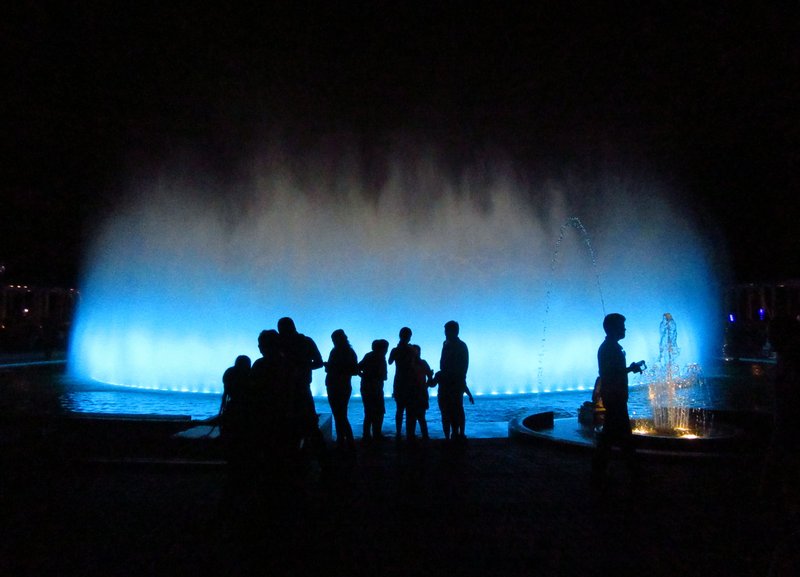
A public park containing 13 illuminated fountains — the Guinness World Records holder for largest illuminated fountain complex. Evening light-and-music shows with coloured jets choreographed to music. Three shows run nightly; arrive for the 7:15pm first show.
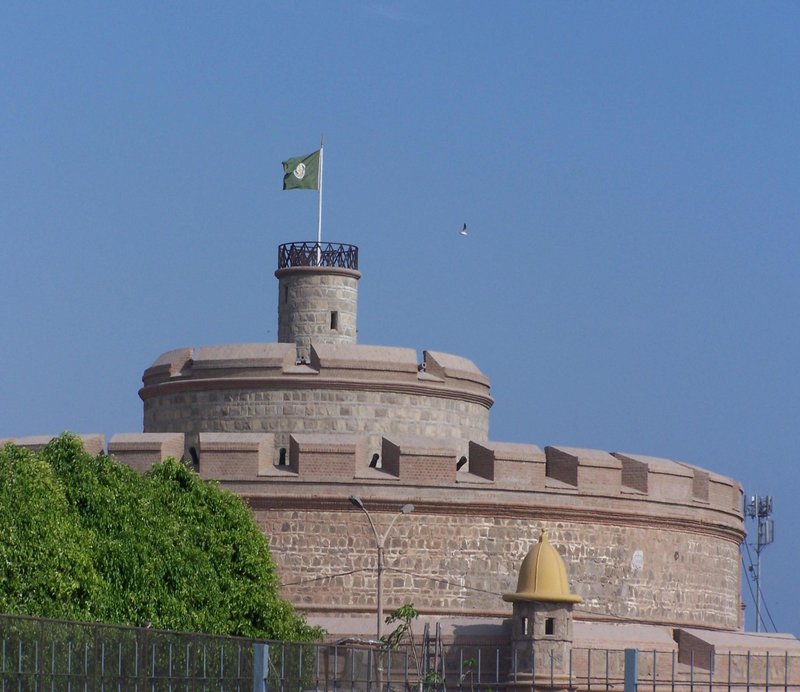
An 18th-century Spanish fortress built 1747–1774, one of the largest in the Americas, defending Callao's port. Later a detention site during independence wars. Now the Army Museum of Peru, with colonial-era cannons, uniforms, and weapons in its original ramparts.
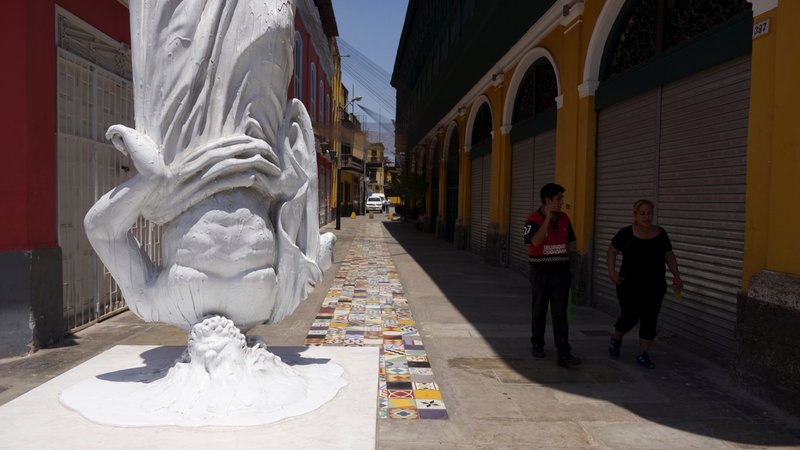
An urban regeneration project launched around 2015 in Callao's port center, transforming a neglected neighbourhood into an open-air art district. Large-scale murals cover entire blocks along Jirón Constitución; Casa Fugaz anchors it with galleries and studios. Walkable from Real Felipe.
A narrow peninsula extending into the Pacific at the tip of Callao, lined with 19th-century colonial mansions and a quiet seafront promenade. Once Lima's most fashionable seaside resort, it retains its genteel atmosphere — almost no traffic, old fishing boats at the pier, and unobstructed Pacific views at sunset.
From Hotel: 42 min → Pachacamac Archaeological Site
1.Pachacamac Archaeological Site~3 hr
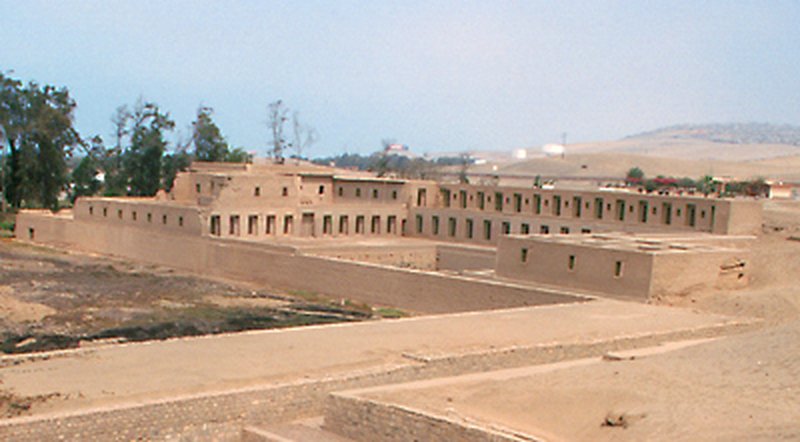
A 465-hectare pre-Columbian sacred city occupied from 200 CE through the Inca period, with 16 stepped pyramids including the Temple of the Sun and Painted Temple. Peru's largest coastal archaeological complex. On Peru's UNESCO World Heritage Tentative List since 2000.
A 263-hectare coastal wetland sanctuary within Lima city limits, recognized as a Ramsar site in 1997. More than 210 bird species migrate and nest here — herons, flamingos, spoonbills, and Peruvian pelicans. Raised walkways and guided circuits wind through reed beds and lagoons.
30 min → Gold Museum of Peru and Arms of the World
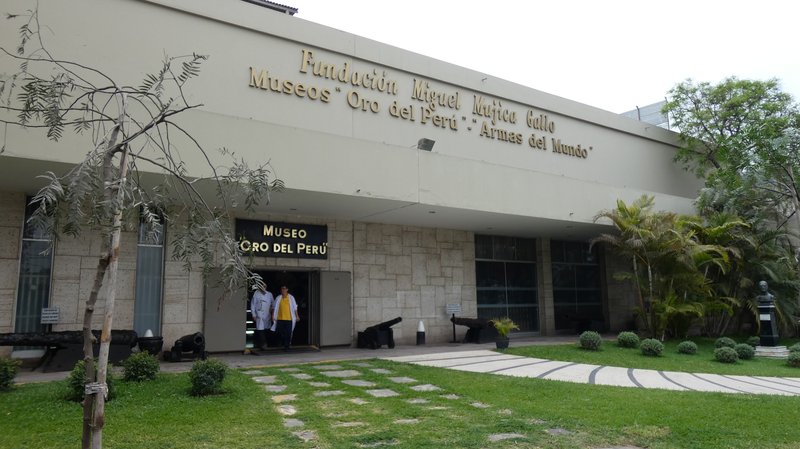
3.Gold Museum of Peru and Arms of the World~1 hr 30 min
A private collection of more than 7,000 pre-Columbian gold artifacts from the Vicús, Moche, Sicán, and Chimú cultures, assembled by diplomat Miguel Mujica Gallo. A lower floor holds an arms collection spanning five centuries of weapons from across the world.
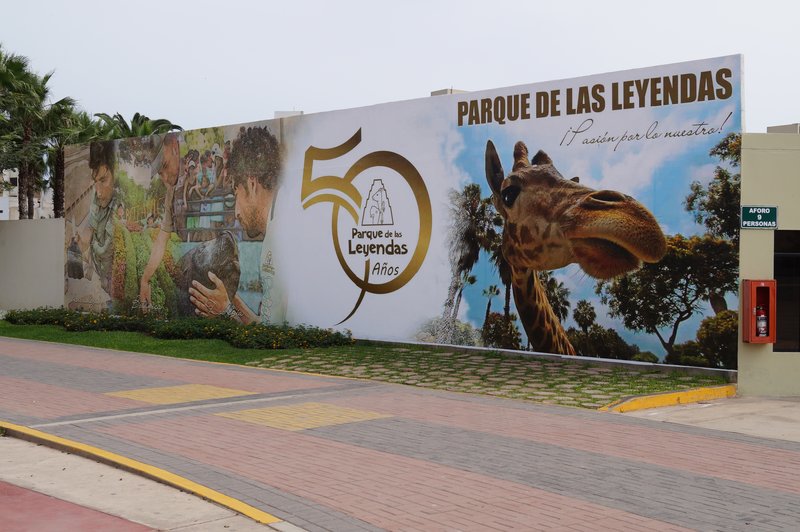
Lima's main zoo and one of the few in Latin America affiliated with the World Association of Zoos and Aquariums. The 26-hectare site divides into three ecological zones — coast, highlands, and jungle — and overlays a pre-Columbian residential complex with several intact huacas.
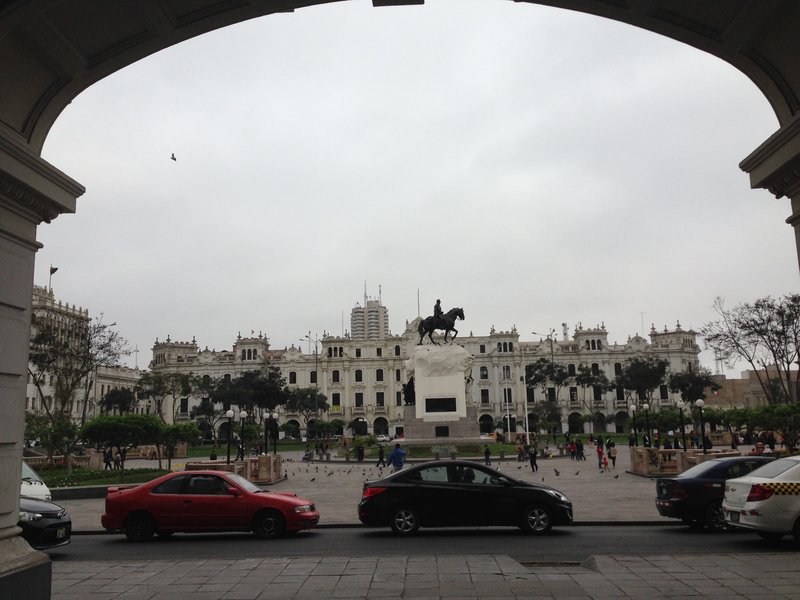
Lima's second major historic square, inaugurated in 1921 on the centenary of Peruvian independence. The neo-Hispanic facades of the Gran Hotel Bolívar and Hotel Maury ring the equestrian statue of Liberator José de San Martín. It anchors the pedestrian axis of the historic centre.
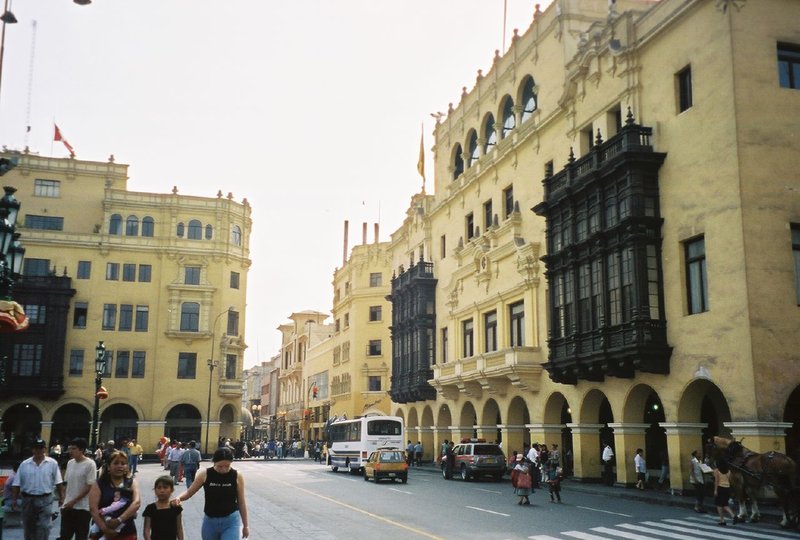
A pedestrian promenade cutting through the heart of Lima's historic centre between Plaza San Martín and Plaza Mayor. The eight-block street is lined with colonial arcades, 19th-century storefronts, and street performers. Lima's main civic processions have traced this route since the city's founding.
The oldest and largest Chinatown in Latin America, established in the 1850s by Chinese indentured laborers who arrived to work Peru's guano islands and railways. The red ceremonial arch on Jirón Ucayali marks the entrance to a dense grid of chifas — Lima's unique Chinese-Peruvian restaurants.
A full-day bus tour covering Miraflores, Barranco, Chorrillos, and the Historic Center with a local guide — the broadest overview of Lima in a single day, all-inclusive.
A top-rated full-day guided tour of Lima's key sites with all admissions, transport, and a meal included — an effortless way to cover both the Historic Center and Miraflores.
A half-day walking and driving tour through Lima's most stylish neighbourhoods — the cliffside parks of Miraflores, the art and pisco bars of Barranco, and the financial elegance of San Isidro.
A walking tour of the UNESCO Historic Center — Plaza Mayor, the Government Palace, Lima Cathedral, and a guided descent into the San Francisco Catacombs with a licensed guide.
Peru Hop's flagship day trip — Ballestas Islands boat tour · sea lions, penguins, a pisco vineyard tasting, dune buggy and sandboarding in Huacachina desert, all timed for a sunset toast over the oasis. Luxury bus, Wi-Fi, onboard host.
Full-day escape south of Lima — Ballestas Islands wildlife boat, pisco vineyard tasting, then dune buggy and sandboarding at Huacachina oasis at sunset. Luxury bus with Wi-Fi.
Four-hour walk through Miraflores' culinary scene — specialty coffee, ceviche, tropical fruits, market visit, and desserts with a local food guide. Starts and ends at Terrua Cafeteria.
Peru's national dish: raw fish cured in leche de tigre — lime juice, ají amarillo, ginger, garlic — with red onion, choclo, and sweet potato. The acid cooks the fish; the heat is a slow burn. For the city's benchmark, head to La Mar.
Ceviche's Japanese-influenced sibling: raw fish sliced thin like sashimi and dressed in leche de tigre, no onion. The Nikkei immigrants who shaped Lima's food scene created it — a dish that exists nowhere else.
Chifa — Chinese-Peruvian cooking: beef stir-fried in a wok with tomatoes, yellow peppers, soy sauce, and oyster sauce, over rice and fries. The meeting of the Andes and China in one pan.
A cold layered terrine of yellow potato kneaded with lime juice and ají amarillo, filled with chicken or tuna salad and topped with avocado and a Peruvian olive. It looks architectural. It tastes like Lima on a plate.
Peru's national cocktail: pisco — grape brandy distilled in the Ica desert — with lime juice, simple syrup, and egg white foam, topped with Angostura bitters. Every Lima bar has its own version.
Foreign number: accepted — it uses the same Uber account and number as the ride app.
The dominant delivery platform in Lima with widespread coverage across Miraflores, Barranco, San Isidro and most residential districts; one of the fastest options in the city.
Foreign number: not accepted — only a mobile number from a Latin American country where Rappi operates works.
Peru's most-used delivery super-app with deep coverage of Lima's main neighborhoods; strong in Miraflores and San Isidro, useful for groceries as well as restaurant meals.
Foreign number: accepted — any mobile number that can receive an SMS code works.
Good coverage across Lima's central districts with a solid selection of mid-range local restaurants; less dominant than Uber Eats or Rappi but reliable for most orders.
Lima is the city where the food world's axis quietly shifted. Maido — a Nikkei restaurant on a Miraflores side street — claimed the #1 spot on the World's 50 Best Restaurants list. Central and Astrid y Gastón have held top-ten positions for years. This is not a coincidence: Lima is arguably the most extraordinary food city on earth right now, built on a foundation that took five centuries to assemble.
The reason starts with geography. Peru is one of very few countries with three radically different ecosystems — Pacific coast, Andean highlands, and Amazon basin — each with ingredients found nowhere else. Then came the people: Spanish colonists, enslaved Africans, Japanese Meiji-era migrants, Chinese indentured labourers after abolition, Italian settlers. Each wave left a kitchen behind. Ceviche is Indigenous Andean technique meeting Spanish lime. Lomo saltado is an Andean stir-fry cooked in a Chinese wok with soy sauce. Tiradito is Peruvian fish prepared like Japanese sashimi. The food is the history.
One practical note worth knowing: Lima sits at sea level but the leche de tigre in your ceviche will contain ají amarillo — a yellow chilli that looks mild and tastes bright. It has a slow heat. The first bowl is usually fine. The third bowl in one afternoon is when most visitors notice something has changed.