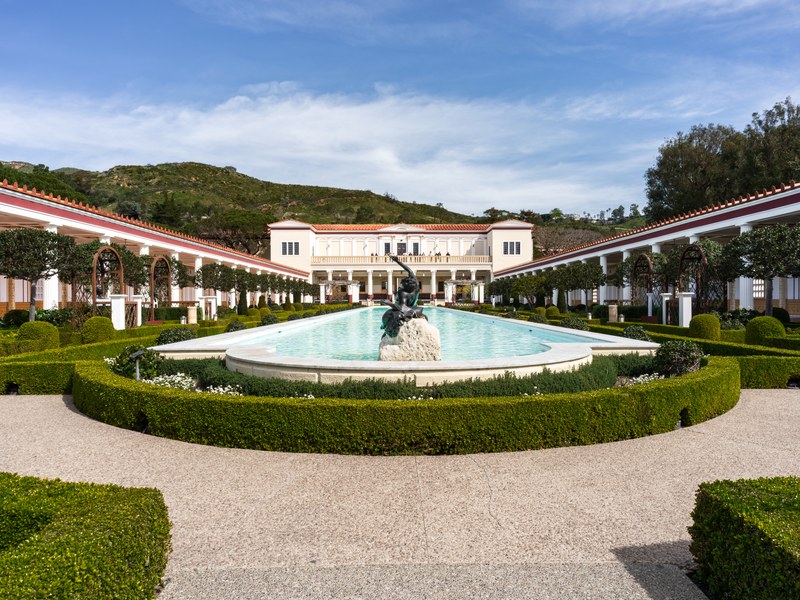
A museum dedicated to the arts and cultures of ancient Greece, Rome, and Etruria, housed in a recreated 1st-century Roman villa. The collection spans 44,000 objects — sculptures, mosaics, decorative arts, and manuscripts — acquired by J. Paul Getty beginning in 1945.
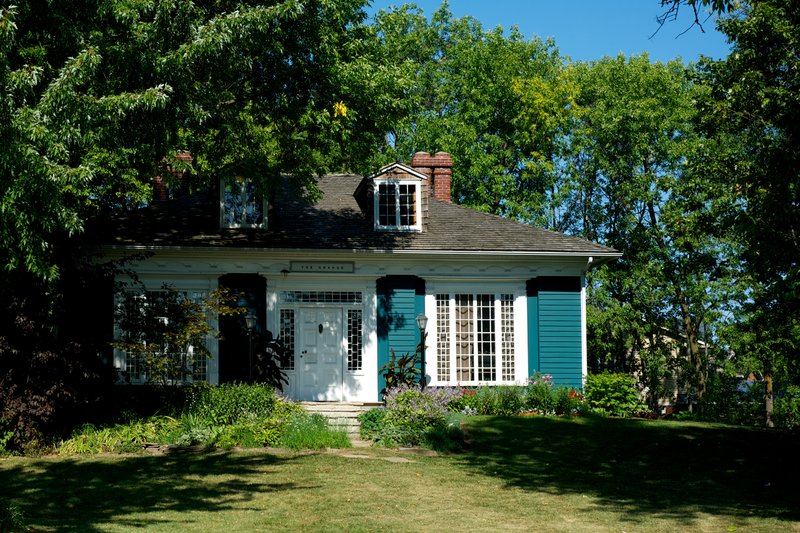
A 1929 Moorish Spanish Colonial Revival residence designed by Stiles O. Clements for the Rindge family. Notable for its Malibu Potteries tile on floors, walls, fountains, and facades — the last major production run of the manufacturer founded by May K. Rindge. Designated a National Historic Landmark in 1977.
A California State Park where Malibu Creek meets the Pacific, encompassing a protected coastal lagoon and a beach recognized as one of the premier longboard surf breaks in the world. Three surf points generate long right-hand waves that established the international surfing reputation of this coastline.
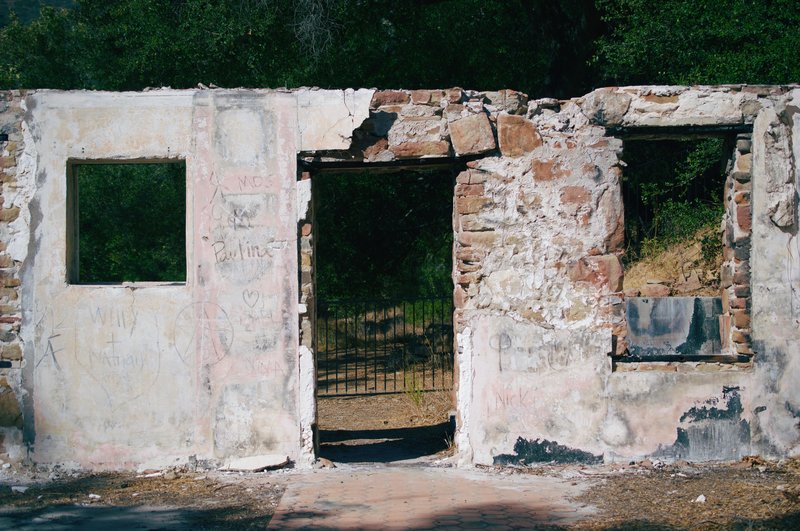
A hiking area preserving Roberts Ranch, owned by supermarket chain founders Fred and Florence Roberts from 1932. Architect Paul Williams designed the family's ranch house around the canyon's creek and a waterfall in 1952; a 1982 wildfire left only its foundation, reached today by an easy trail.
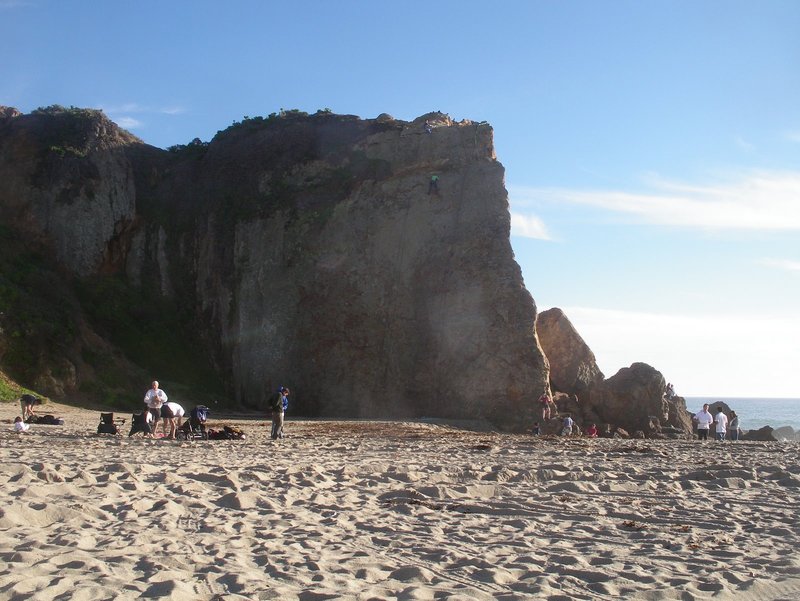
A 34-acre California state preserve on a volcanic headland rising 200 feet above the Pacific. A trail leads to the clifftop, a documented observation point for gray whale migration in winter and California sea lion haul-outs on the rocks below. The beach includes tide pools accessible via stairs.
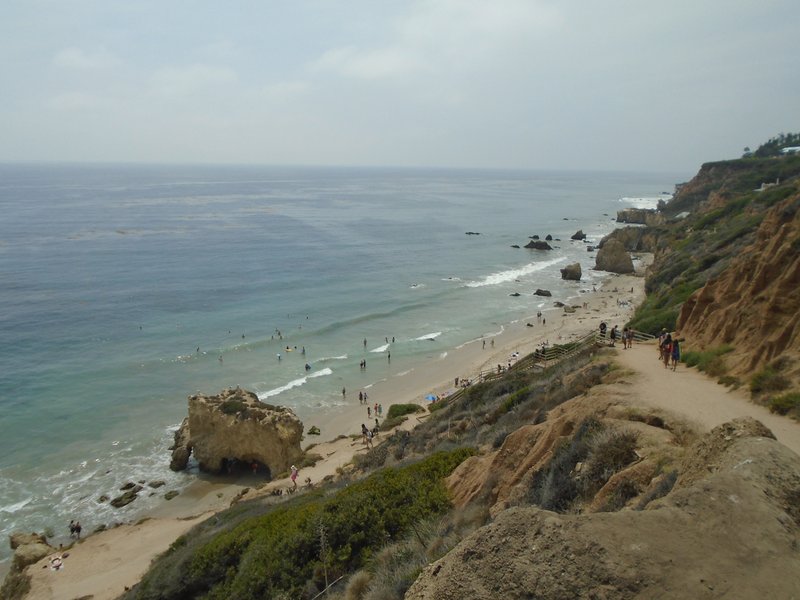
The most photographed of the three pocket beaches making up Robert H. Meyer Memorial State Beach, reached by a steep bluff-top staircase. Sea stacks and collapsed sea caves rise directly from the sand, casting shifting shadows through the day and drawing photographers at sunset.
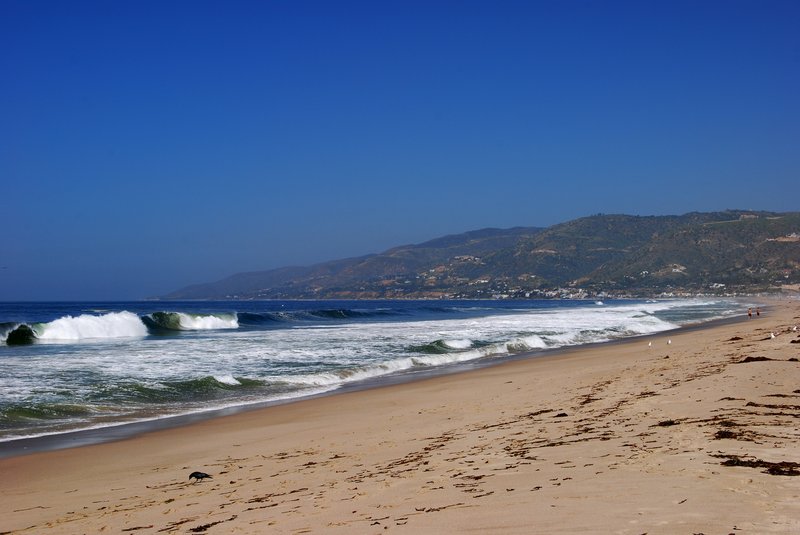
The largest county-run beach in Los Angeles County, with 1.8 miles of wide sand acquired by the county in 1941 after tax foreclosure on the Marblehead Land Company. The 1959 film Gidget drew crowds of surfers here through the 1960s, and the beach remains one of the region's cleanest stretches of coastline.
A 2,513-acre park named for actor and conservationist Leo Carrillo, who served on the California State Parks Commission. Sea caves, tide pools, and reef formations line 1.5 miles of beach at the Los Angeles-Ventura county line; the Woolsey Fire burned through nearly the entire park in November 2018.
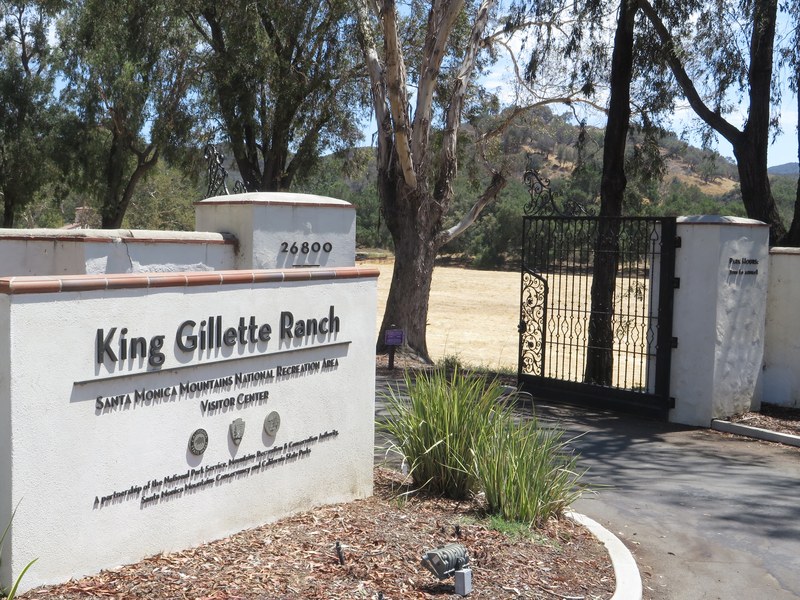
A 588-acre former estate built in the 1920s for razor magnate King C. Gillette, its buildings designed by architect Wallace Neff. Later a Catholic seminary for a quarter-century, the property opened to the public in 2007 and now serves as the main visitor center for the Santa Monica Mountains.
An 8,215-acre park preserving the Malibu Creek canyon, home to the Chumash for millennia before Twentieth Century Fox used its rock formations and meadows as filming locations for M*A*S*H, Planet of the Apes, and more than 100 other productions. Trails lead to the Rock Pool and Century Lake.
At 11,000 acres, the largest state park within the boundaries of a major American city, reaching from Topanga Canyon to within a few miles of the Pacific. Trails from the Trippet Ranch entrance climb to viewpoints including Eagle Rock and Parker Mesa Overlook, with sightlines to the ocean and the San Fernando Valley.
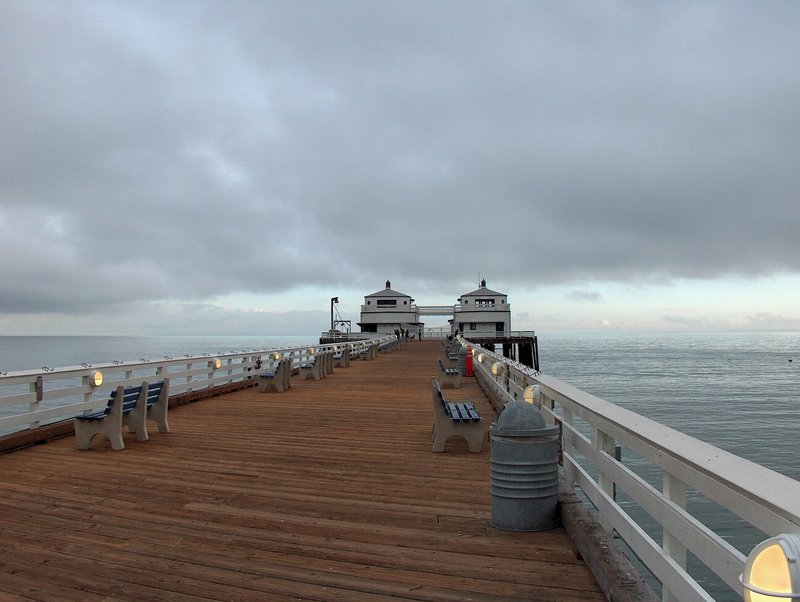
A 5.5-hour guided van tour covering celebrity home neighborhoods, beaches along Pacific Coast Highway, the Malibu Pier, and the Malibu Colony. Includes stops at Surfrider Beach and Point Dume with a local guide narrating history and resident lore.
A 2 to 3-hour guided hike through the vineyards of Saddlerock Ranch, with photo stops, ranch-animal encounters, and wine tastings along a beginner-friendly loop.
A roadside seafood counter on PCH at the Ventura County line since 1956 — fresh fish and chips, steamed clams, and crab at outdoor picnic tables overlooking the Pacific.
The Santa Monica Mountains AVA produces estate Cabernet Sauvignon, Syrah, and Sauvignon Blanc from vineyards in the hills above PCH. Malibu Family Wines and Cornell Winery are the primary producers with tastings by reservation.
Health food culture centered on acai bowls, green juices, and raw food — a diet popularized by the surf community in the 1990s. SunLife Organics and Malibu Smoothie are the principal local venues.
Foreign number: accepted. — DoorDash accepts any phone number; the verification code is sent by SMS to the number provided during sign-up.
The strongest delivery option in Malibu, with broad coverage of PCH-side restaurants and a few inland spots; useful when the beach towns are busy and walk-in waits are long.
Foreign number: accepted. — Uber Eats uses the same Uber account; any number Uber accepts works here too.
Solid coverage along the Malibu coast with a good selection of local restaurants and the same chain options as the app's US-wide catalogue; delivery windows run 30–50 min from more remote parts of the beach corridor.
Foreign number: accepted. — Uber accepts any phone number; the verification code arrives by SMS or by email link.
The most reliable option along the PCH corridor; wait times are longer than in LA proper due to Malibu's spread-out geography, so booking a few minutes ahead is advisable for timed activities.
Foreign number: not accepted. — Lyft requires a US, Canadian or Puerto Rican phone number; the SMS verification code is sent only to that number.
Good alternative to Uber with comparable coverage across the beach corridor and the canyon communities; prices are similar and having both apps open improves availability during busy summer weekends.
A small coastal city with a historic downtown, Mission San Buenaventura founded in 1782, a walkable Main Street, and access to Channel Islands National Park boat tours.
Known for Spanish Colonial Revival architecture, the Santa Barbara County Courthouse, Mission Santa Barbara, and the State Street arts and restaurant corridor.
Malibu is not a city in the conventional sense — it is 27 miles of Pacific coastline incorporated in 1991 primarily to give residents control over development. That tension between private land and public beach runs through everything here. The Rindge family spent decades trying to keep the public off what they believed was their private coast; their legal battles produced the estate system, the celebrity enclave, and eventually the Adamson House and its tile collection, which survived only because Rhoda Rindge built on the lagoon rather than the bluff.
The Getty Villa is a separate provenance entirely — an oil fortune translated into a replica Roman villa stuffed with antiquities — but it sits on the same coast for the same reason: the light, the views, the feeling that wealth and the Pacific belong together. Point Dume is what was here before any of that.