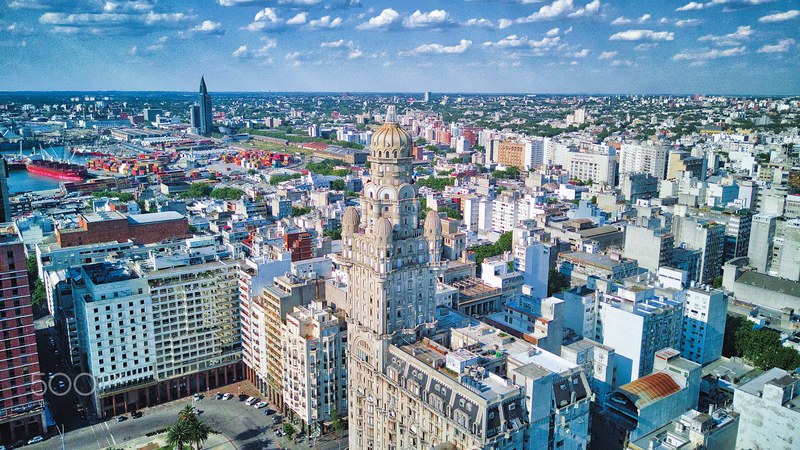
Designed by Mario Palanti, this Art Deco tower held the title of tallest building in South America for over a decade after it was built. Its 26 floors fuse neo-Gothic ornament and Palladian massing in a way that defies category — the building's silhouette remains the most recognizable in all of Uruguay.
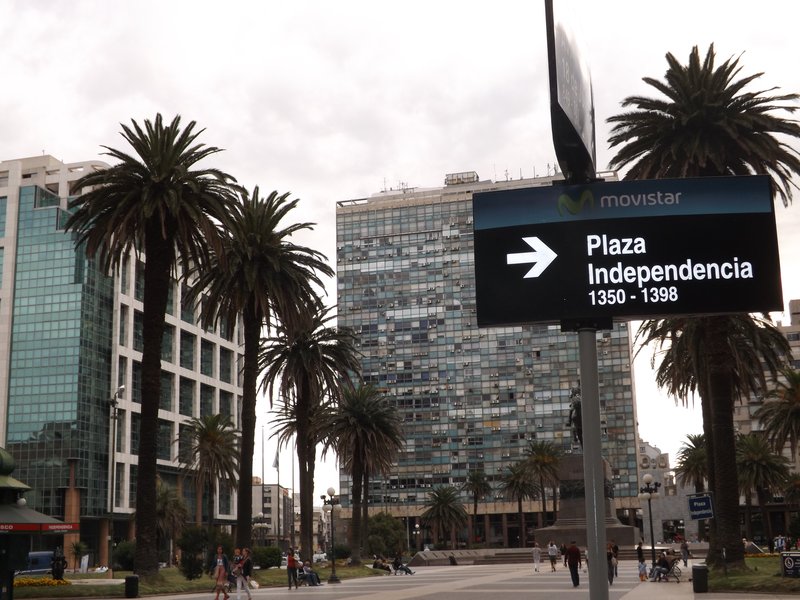
Gateway between the 18th-century Ciudad Vieja grid and the modern city center, anchored by the equestrian José Artigas monument above his mausoleum. Surrounded by Palacio Salvo, Teatro Solís, and Palacio Estévez — Montevideo's symbolic threshold between colonial and modern Uruguay.
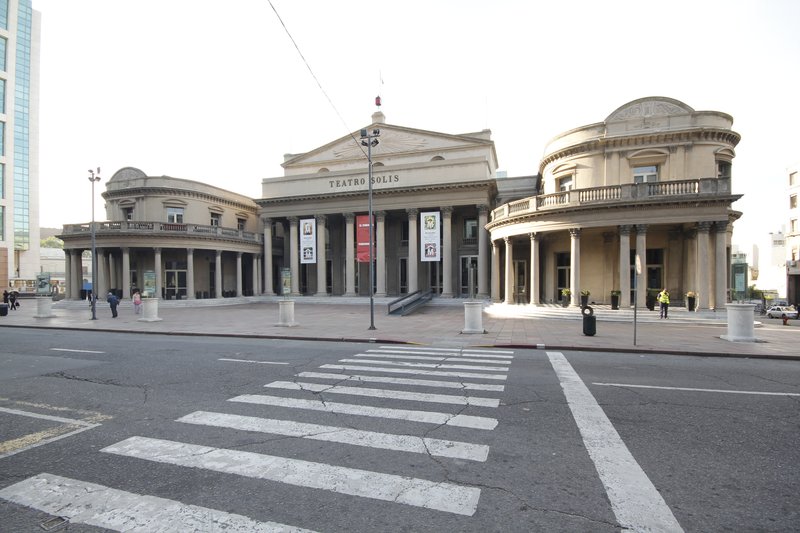
Montevideo's flagship opera house has been the cultural nerve center of the Río de la Plata for more than a century. The neoclassical facade conceals a 1,200-seat horseshoe hall where Caruso, Pavlova, and Piazzolla have all performed — and where a full season of opera, ballet, and orchestral concerts runs year-round.
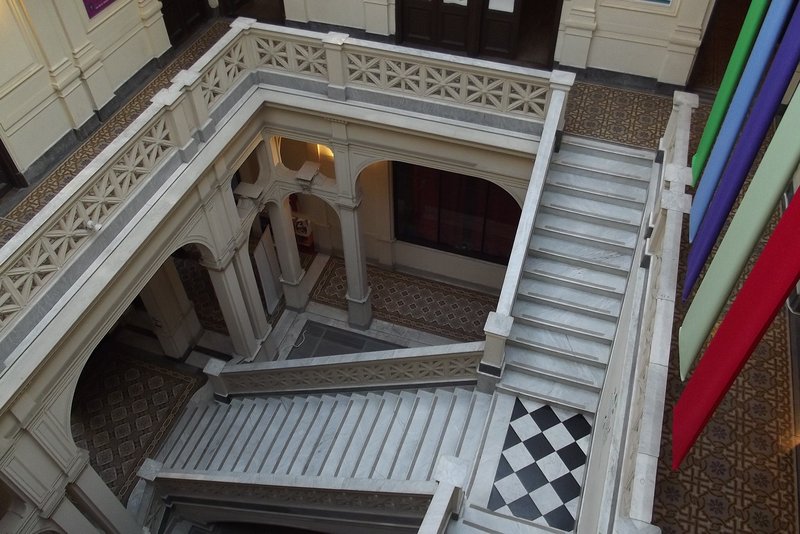
The only museum in Uruguay dedicated entirely to pre-Columbian and indigenous art, spread across three floors of a restored colonial palace. Andean ceramics, Amazonian weaving, and Patagonian rock-art casts ground the colonial story of the region in the millennia that preceded it.
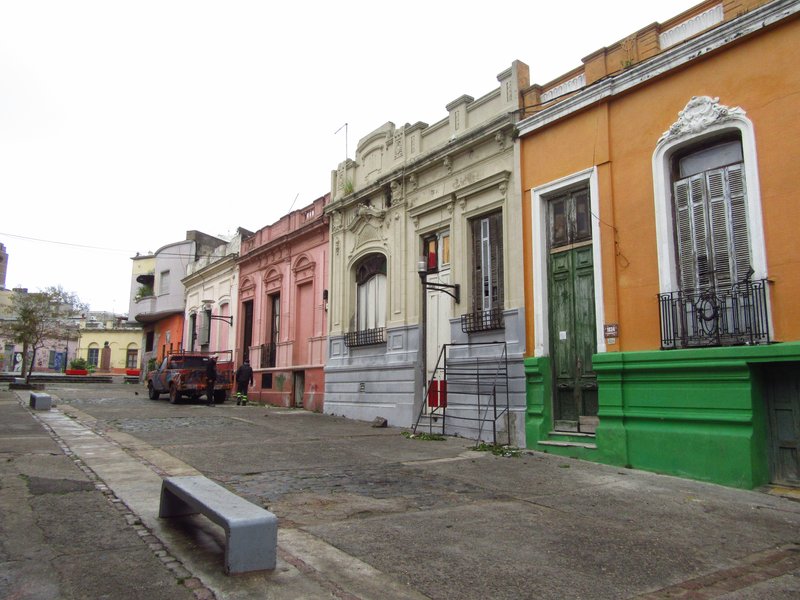
Historic enclave south of Ciudad Vieja where candombe drumming took root in the colonial era. The barrio hosts comparsa rehearsals, pasajes painted with Afro-Uruguayan murals, and the living cultural memory that makes Montevideo's Carnival the longest in the world.
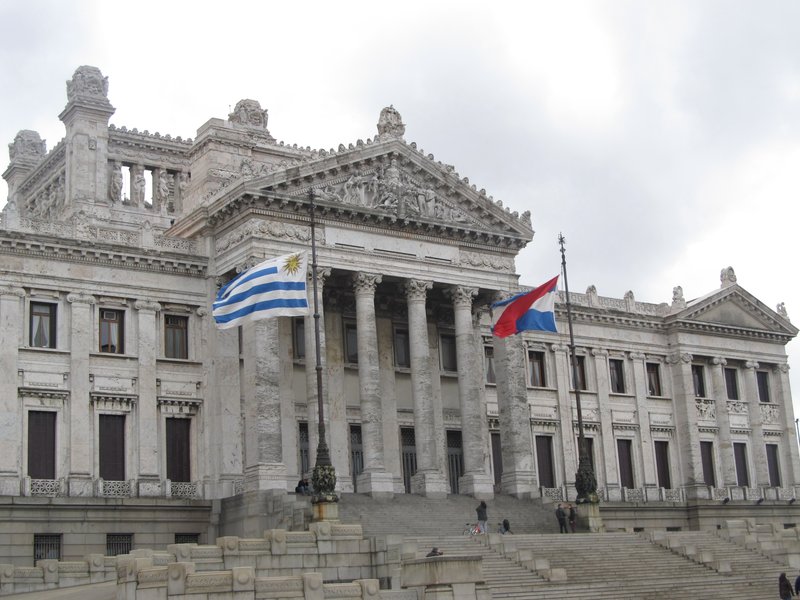
This neoclassical granite palace is clad in 12 types of Uruguayan marble and anchors the western edge of the city's legislative district. Free guided tours run on weekdays through the ceremonial chambers, the Senate hall, and the soaring Hall of Lost Steps.
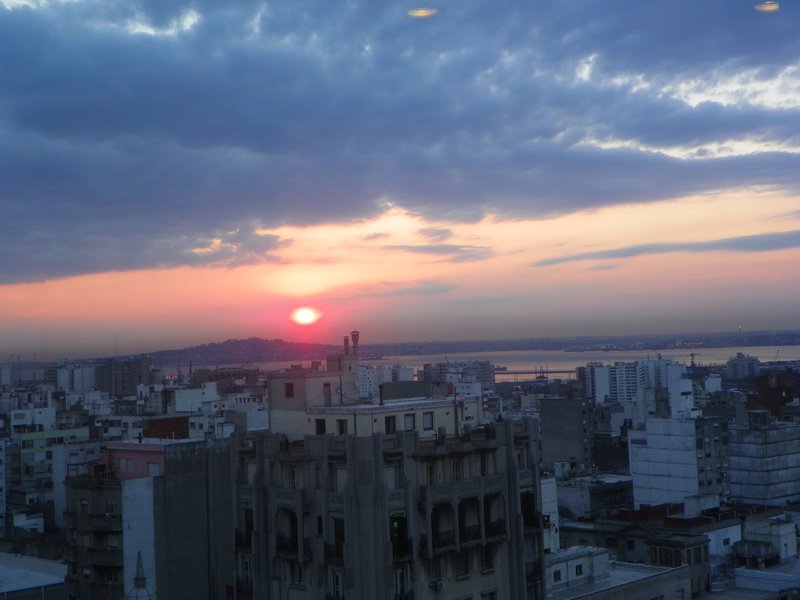
A hilltop fortress built to guard Montevideo Bay from Portuguese encroachment, sitting atop the city's highest natural point with 360° panoramic views of the harbor, the Río de la Plata, and the city skyline. The taxi ride up Cerro hill is the most dramatic vantage point in the entire city.
Uruguay's national botanical garden spans 60 hectares around a cast-iron Art Nouveau greenhouse, a French formal garden, and an arboretum with native and exotic trees. Entry is free, and early-morning walks before the heat arrives catch the garden at its quiet, photogenic best.
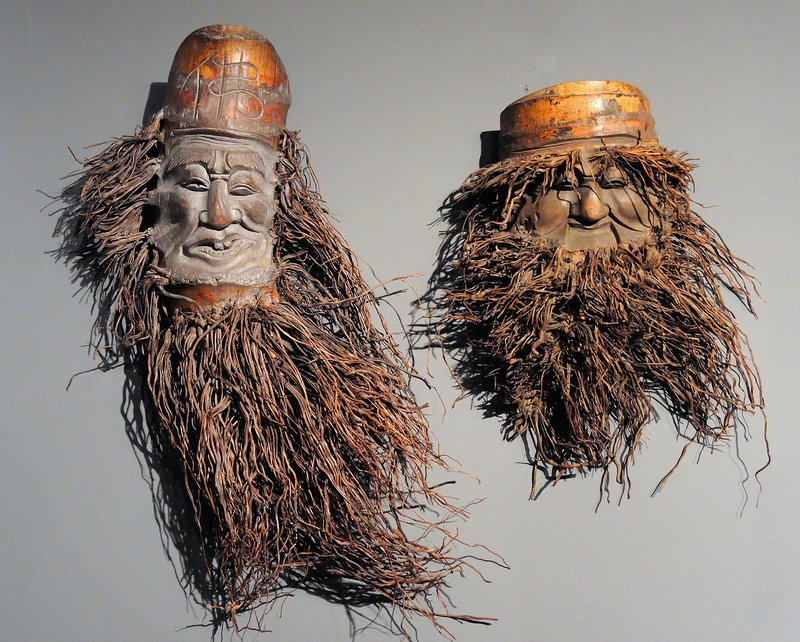
Uruguay's Carnival runs over 40 days — the world's longest — and this museum tells the story of Afro-Uruguayan roots, murga traditions, and drumming comparsas that fill the streets each February. Feathered headdresses, masks, and vintage photographs pack the galleries.
A 22-kilometer continuous promenade hugging the Río de la Plata, La Rambla is where Montevideo exhales. Locals jog, fish, sip mate, and watch the sunset from the same concrete balustrades that face Buenos Aires across the water — unreachable but always visible on a clear afternoon.
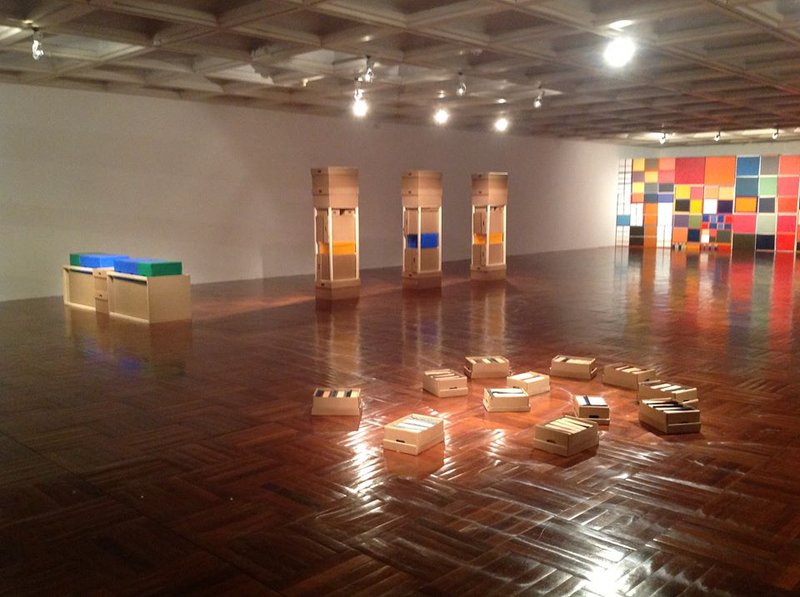
Uruguay's national art museum occupies a purpose-built pavilion inside Parque Rodó. The permanent collection centers on Joaquín Torres García — whose universal constructivist grids hang here in original scale — alongside Pedro Figari's candombe scenes and rotating international exhibitions. Entry is always free.
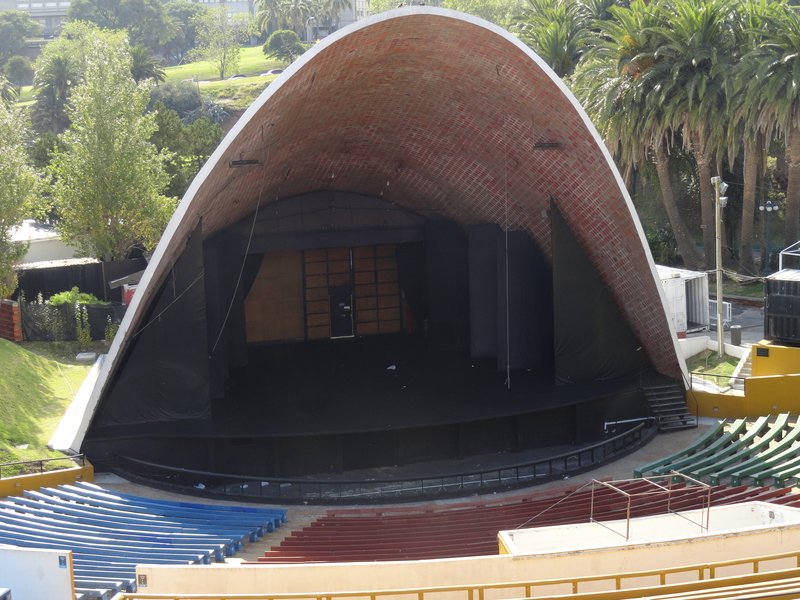
Named for writer José Enrique Rodó, this 26-hectare park offers rowboats on a lake, an open-air Teatro de Verano stage, and a weekly craft fair under century-old trees. On weekends it fills with families, musicians, and mate circles — a living counterpoint to the formal plazas of Ciudad Vieja.
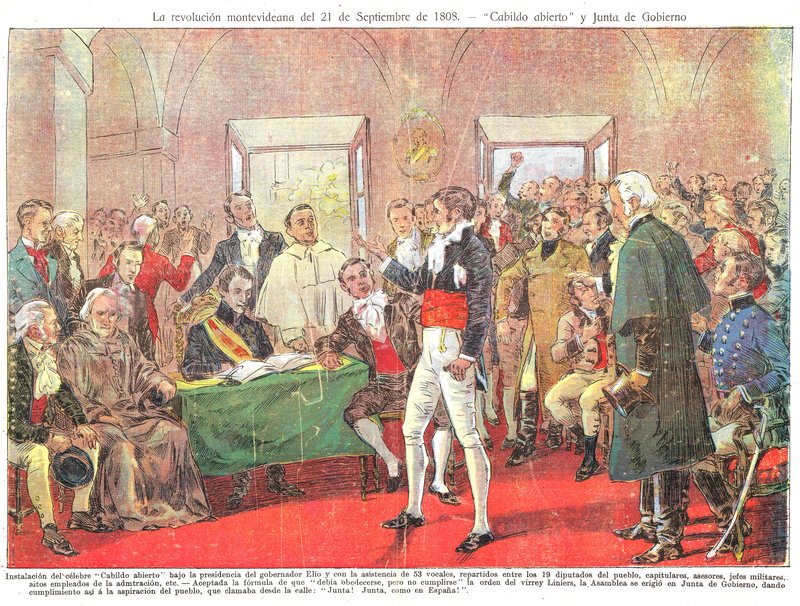
This Italianate colonial hall served as the seat of Montevideo's first civic government and the birthplace of Uruguay's first Constitution. Renovated and reopened as a museum, it now exhibits silver altar pieces, colonial documents, and portraits that trace the transition from Spanish colony to independent republic.
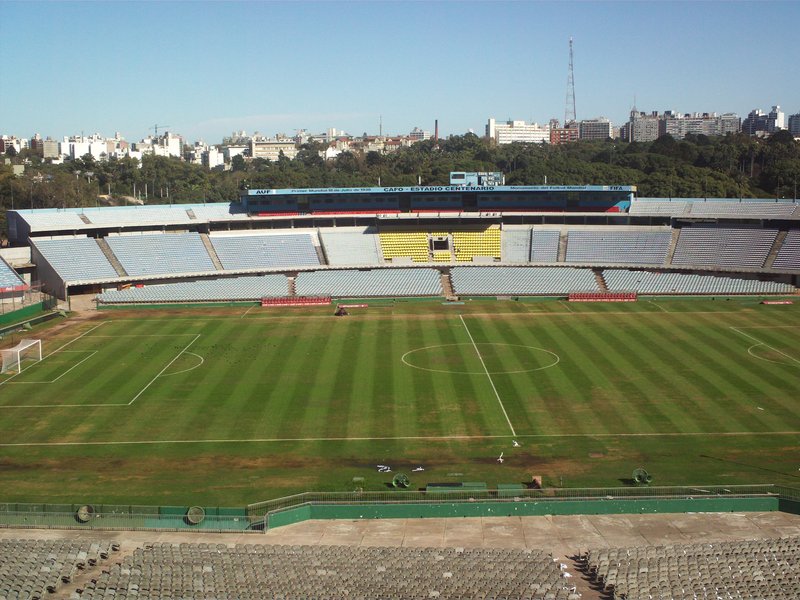
Built in record time for the inaugural FIFA World Cup, the Centenario hosted all 18 matches of the first tournament — including Uruguay's final victory over Argentina. The Museo del Fútbol inside traces the full arc of Uruguayan football, from Olympic gold through the legendary Maracanazo.
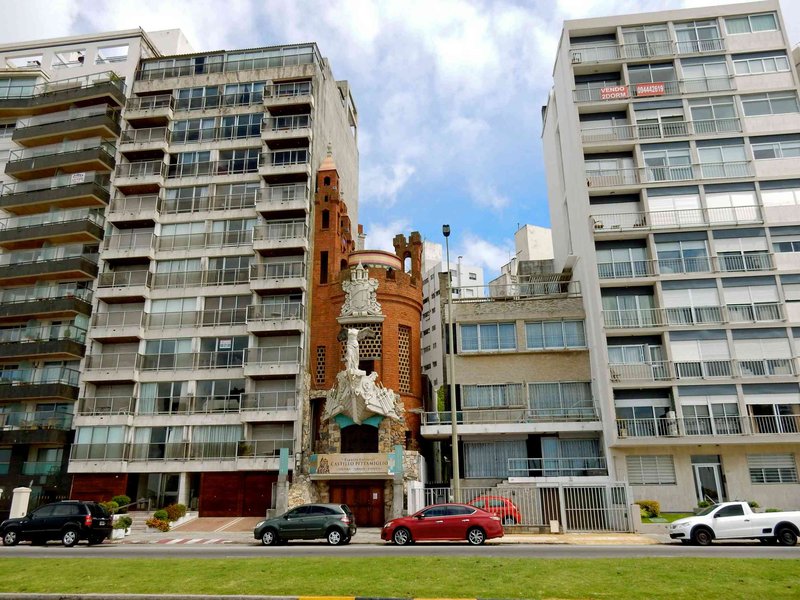
Humberto Pittamiglio was an alchemist, architect, and self-described devotee of Hermes who spent over 50 years constructing this Rambla castle as a personal monument to esoteric thought. Every corbel, column, and window encodes a symbol — the castle is equal parts home, laboratory, and lifelong obsession.
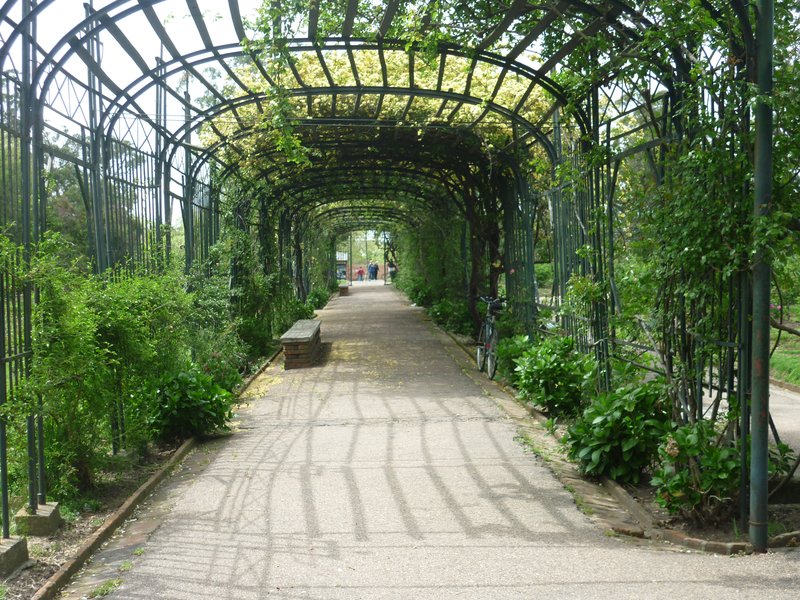
Montevideo's oldest park follows a European landscape plan with canopy-covered avenues, ponds, and over 800 rose varieties in the celebrated Rosedal. The rose garden remains the most serene corner of the city — a place to slow down before the stadium energy of the afternoon.
Terminal Tres Cruces · Multiple daily departures from 7:00am
Terminal Colonia del Sacramento
5 min · 2 min → Barrio Histórico
1.Barrio Histórico~1 hr
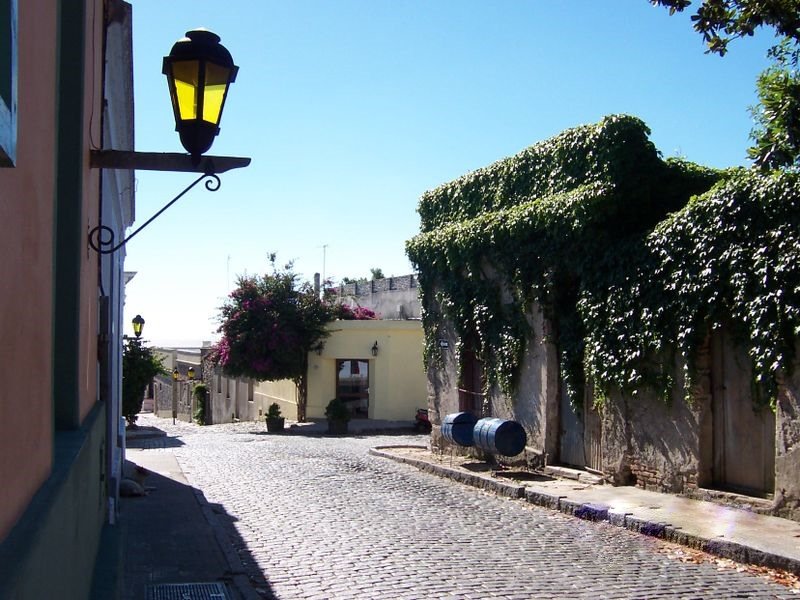
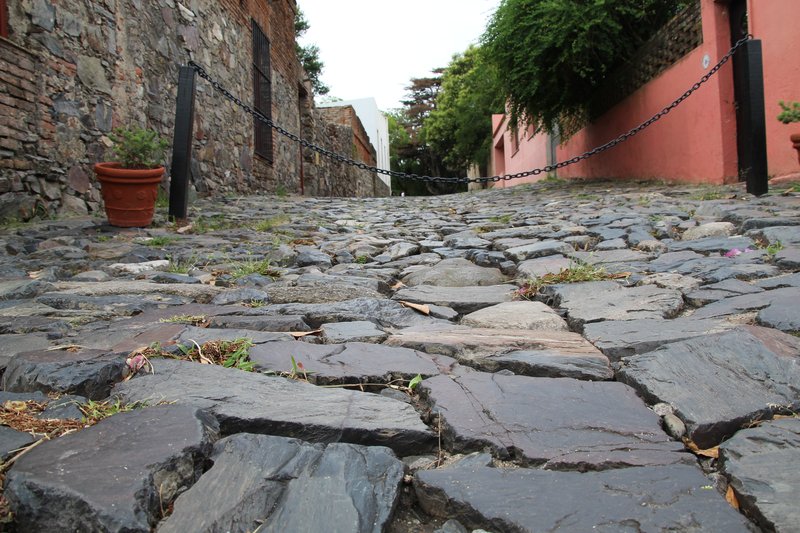
Colonia's compact grid of cobblestone streets, whitewashed colonial walls, and ruins is a UNESCO World Heritage Site. The entire quarter can be walked in a morning, but the layers of Portuguese and Spanish heritage reward lingering — this is one of the most intact colonial townscapes in South America.
Colonia's most photographed street runs one block between the harbor and the convent ruins, lined with low colonial houses whose window boxes brush the original cobblestones. The "Street of Sighs" earns its name — the atmosphere delivers fully.
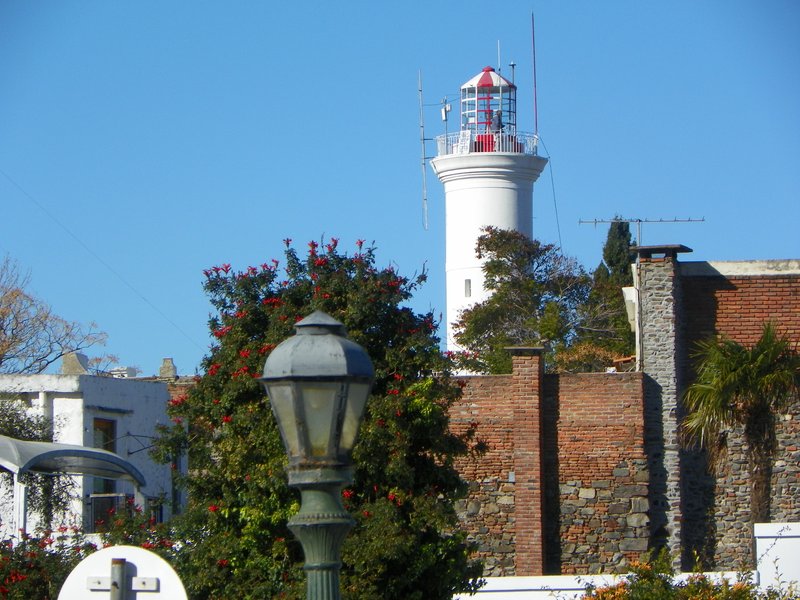
Built on the foundations of a demolished convent, the lighthouse rises from the highest point of the Barrio Histórico and offers sweeping panoramic views over the Río de la Plata and the terracotta rooftops below. A small fee buys the climb and the widest view in Colonia.
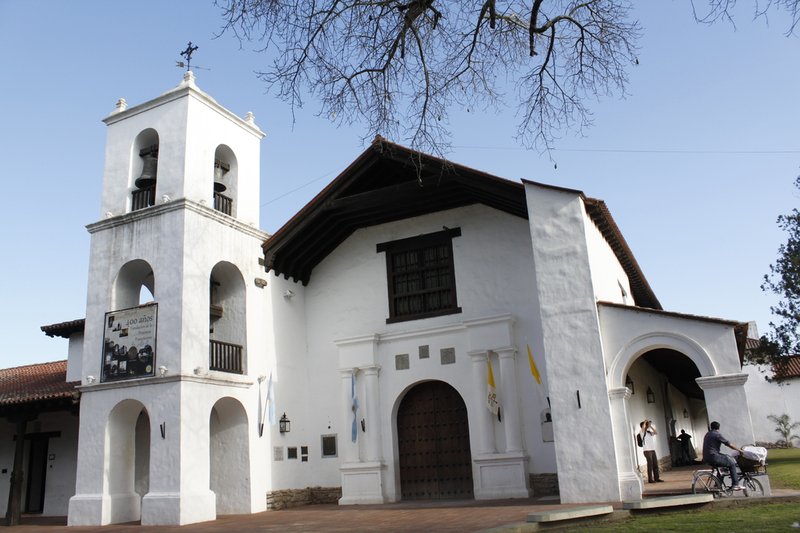
The ruined walls of a Franciscan convent, destroyed in war and never rebuilt. The remaining stone foundations and tower walls frame a quiet open plaza — among the oldest surviving European structures anywhere in Uruguay.
Full-day guided trip to Colonia del Sacramento — the UNESCO-listed Portuguese colonial town across the Río de la Plata. Guided walking tour of the old quarter, cobblestone streets, lighthouse, and city gate, returning to Montevideo by evening. Max 15 guests.
Four-hour shared city tour of Montevideo covering Ciudad Vieja, Rambla Sur, Punta Carretas, and the Palacio Legislativo — a strong ground-level orientation with a local guide. Max 17 guests. Popular with cruise passengers.
Full-day guided tour of Colonia del Sacramento's UNESCO historic quarter — cobblestone lanes, lighthouse, city gate, and the Barrio Histórico's Portuguese colonial architecture. and drop-off included.
Half-day city tour covering Montevideo's main highlights — Ciudad Vieja, Plaza Independencia, Mercado del Puerto, Rambla, and residential Pocitos — by minibus with an English-speaking guide.
Full-day tour to Punta del Este — South America's St. Tropez — taking in La Mano sculpture, the port, Playa Brava, Cantegril neighborhoods, and Casapueblo at sunset.
Full-day group tour to Colonia del Sacramento — UNESCO colonial town — with a guided walking circuit of the historic quarter, lighthouse, city gate, and waterfront. Max 15 guests.
Full-day guided excursion to Punta del Este — La Mano sculpture, Playa Brava, yacht harbor, and Casapueblo — with Max 15 guests. The best single-day extension from Montevideo.
Four-to-five-hour shared city tour departing from the port — Ciudad Vieja, Rambla, Punta Carretas, and the Legislative Palace. Max 17 guests. Bilingual guide. Also runs for non-cruise visitors.
Guided day trip to Colonia del Sacramento — historical walking tour of the Portuguese quarter, city walls, lighthouse, and colonial streets. Good backup when T1 is sold out.
Uruguay's national sandwich: thin beef escalope, ham, egg, mozzarella, tomato, mayo, and black olives layered into a fluffy bun. Found at virtually every café and parrilla in the city.
Uruguay's wood-fired beef ritual. Blood sausage, short ribs, and thin-sliced matambre are the local treasures — eaten communally at long parrilla tables over several slow hours.
Uruguay's national drink: bitter yerba mate sipped through a metal bombilla from a gourd, carried everywhere by locals. Accepting an offer from a stranger is a social gesture — take one sip, hand it back.
Foreign number: not accepted. — the sign-up form takes only a Uruguayan +598 number, so no code is ever sent to a foreign phone.
Montevideo's dominant delivery platform, with the widest restaurant coverage across Pocitos, Punta Carretas and Ciudad Vieja. Strong on parrilla, pizza and local cuisine; typically 30–50 minutes from the Pocitos and Centro areas. Requires a Uruguayan phone number — hotel staff can assist with ordering if needed.
Foreign number: not accepted. — the Uruguayan app takes only a +598 number at sign-up, so the code never reaches a foreign phone.
Available across Montevideo with coverage comparable to PedidosYa in the main neighbourhoods; also delivers supermarket essentials and pharmacy items alongside restaurant meals. Requires a local number to sign up. A useful alternative if PedidosYa shows limited availability for a specific address.
Foreign number: accepted. — the SMS code reaches foreign carriers, and Google or Apple sign-in works without one.
Uber operates throughout Montevideo. Reliable across Pocitos, Centro and Ciudad Vieja; less consistent in outer suburbs. A solid alternative to street taxis for visitors who prefer fixed-fare rides without negotiating in Spanish.
Colonia del Sacramento was founded by Portugal on land Spain claimed as its own — and the city changed hands between the two empires multiple times before Uruguay's independence resolved the dispute. Walking the Barrio Histórico on Day 5, you walk on Portuguese cobblestones laid inside a Spanish-speaking country. The dual heritage is visible in the street grid: the Portuguese quarter's irregular organic lanes end where the Spanish colonial grid begins.
Uruguay Won the World Cup at Home
The inaugural FIFA World Cup was played entirely in Montevideo — every single match, including the final. Uruguay beat Argentina in the Estadio Centenario you'll visit on Day 4. Uruguay remains the smallest country ever to host and win the World Cup in the same tournament. The stadium was built in record time for the occasion and has never hosted a more consequential match since.