TRIP OVERVIEW
Day 1 – Diamond Head State Monument · USS Arizona Memorial
Day 2 – Nuʻuanu Pali Lookout · Bishop Museum · Iolani Palace · Byodo-In Temple · Kailua Beach
Day 3 – Waimea Valley · Dole Plantation · Laniakea Beach · Haleiwa
Day 4 – Koko Head Crater Trail · Hanauma Bay Nature Preserve · Makapuʻu Point Lighthouse Trail · Lanikai Beach
Day 5 – Chinatown Honolulu · Ala Moana Beach Park · Manoa Falls Trail
Day 1
1. Diamond Head State Monument~1 hr 30 min
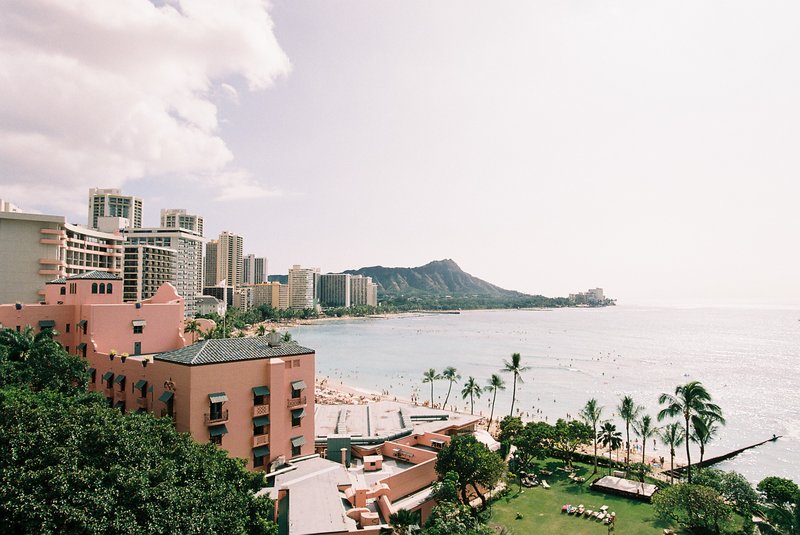
The extinct volcanic tuff cone that defines Honolulu's skyline. The 0.8-mile trail climbs through WWII-era bunkers and a 99-step spiral staircase to the summit rim — 760 feet up — with a sweep of Waikiki, the Pacific, and the Koʻolau Range.
Daily 6:00am - 6:00pm
Last reservation 4:00pm · Last entry 4:30pm · Online booking required · Water and sun protection essential
99 steps · no lift
2. USS Arizona Memorial~2 hr 30 min
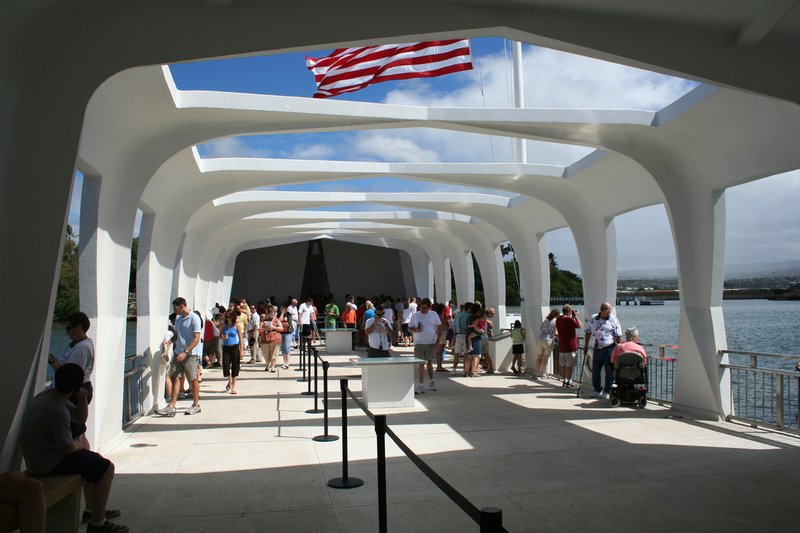
The sunken USS Arizona lies where she sank on December 7, 1941, entombing 1,177 sailors. Oil still seeps slowly to the surface after eight decades. The 45-minute NPS program begins with archival film, then a Navy boat to the memorial.
Daily 7:00am - 5:00pm
Last boat departs 3:30pm · Advance reservation required · No bags permitted · Arrive 1 hour before program time
Day 2
1. Nuʻuanu Pali Lookout~45 min
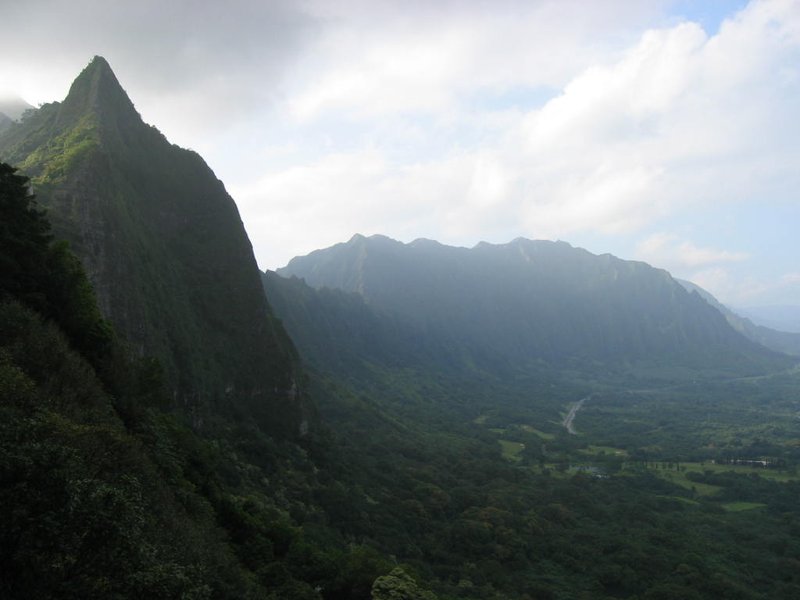
A 1,186-foot pass through the Koʻolau Range where Kamehameha I won the Battle of Nuʻuanu in 1795, unifying Oʻahu. The lookout commands a panorama of the Windward Coast — Kāneʻohe Bay and Kailua visible below ridgelines that drop 3,000 feet. Wind gusts top 50 mph.
2. Bishop Museum~2 hr
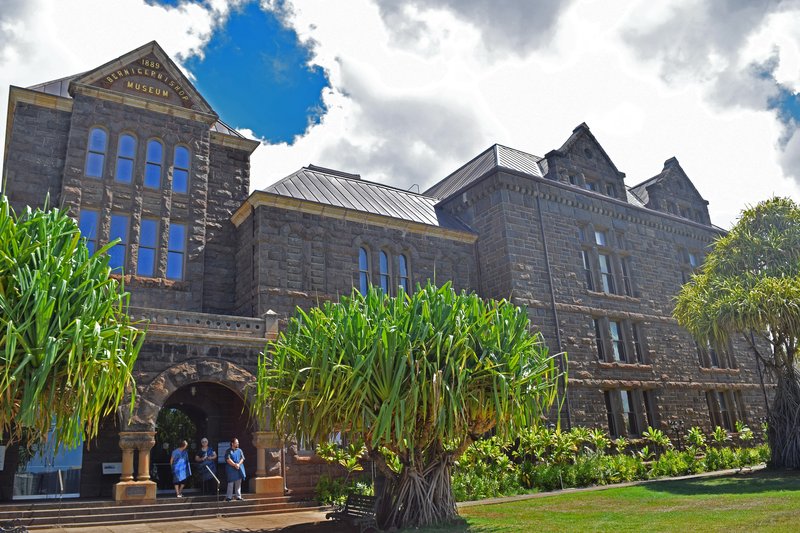
The Bernice Pauahi Bishop Museum holds the world's largest collection of Hawaiian and Pacific cultural artifacts — 24 million specimens including feather cloaks worn by the aliʻi, ancient navigational tools, and a planetarium projecting traditional Polynesian star navigation.
Wednesday - Monday 9:00am - 5:00pm
Closed Tuesday
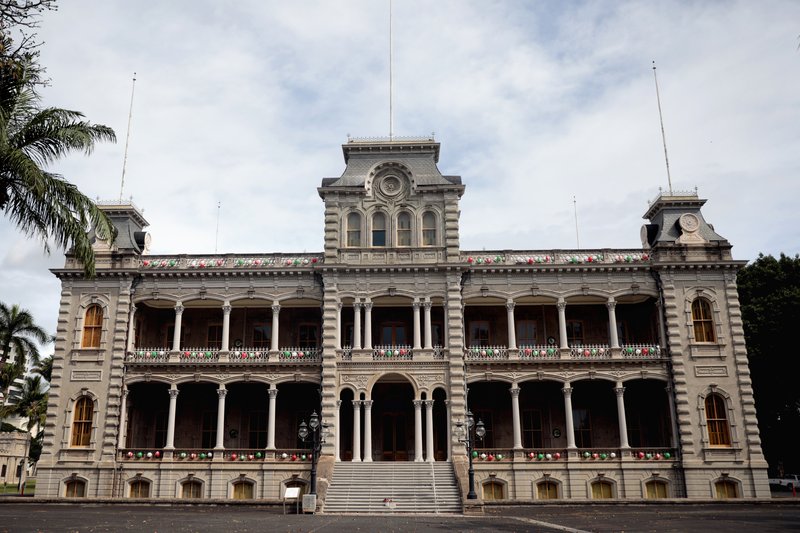
3. Iolani Palace~1 hr 30 min
The only royal palace ever built on American soil. Completed in 1882 for King Kalākaua with electric lights and telephones years before the White House had them. Queen Liliʻuokalani was imprisoned here for eight months after the 1893 overthrow of the Hawaiian Kingdom.
Tuesday - Saturday 9:00am - 5:00pm
Closed Sunday & Monday
Online booking only — no walk-ups · Guided and self-guided tours available · Audio guide included
4. Byodo-In Temple~1 hr
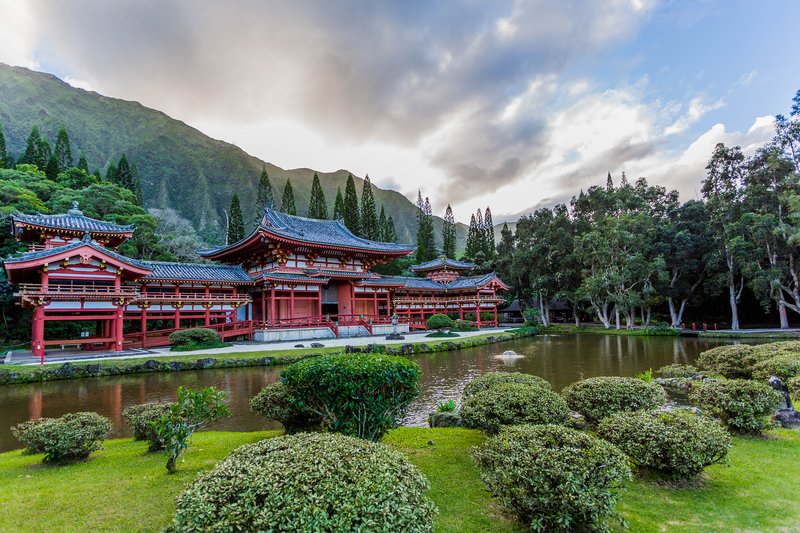
A full-scale replica of the 900-year-old Byodo-In Temple in Uji, Japan, built in 1968 to mark the centennial of Japanese immigration to Hawaii. The vermilion pavilion floats at the base of the Koʻolau cliffs above a koi pond, with a 9-ton brass Buddha inside.
Daily 8:30am - 5:00pm
Credit/debit only, no cash · Remove shoes before entering the temple
5. Kailua Beach~1 hr
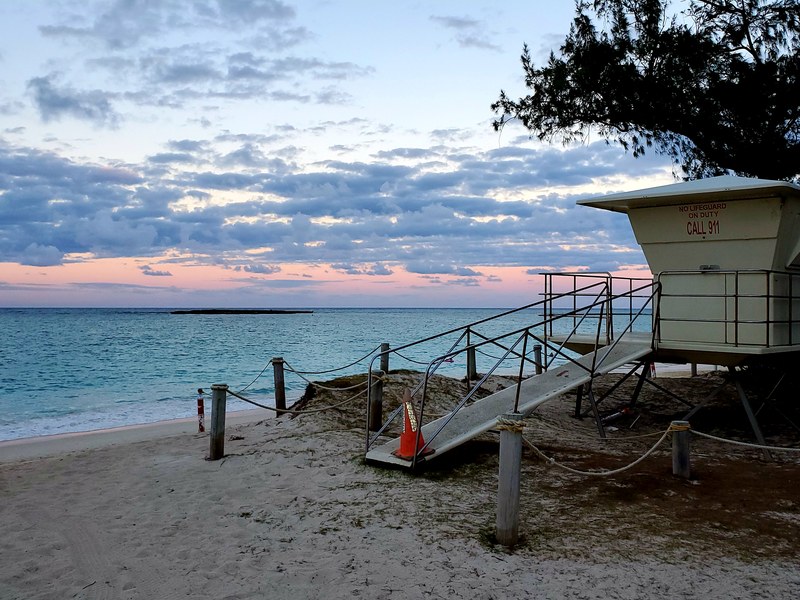
A 2.5-mile arc of powdery white sand on the Windward Coast — repeatedly rated America's best beach for its calm turquoise water, consistent trade winds, and uncrowded feel compared to Waikiki. Sea kayaks and outrigger canoes launch from the park at the north end.
Open 24/7
Day 3
1. Waimea Valley~2 hr
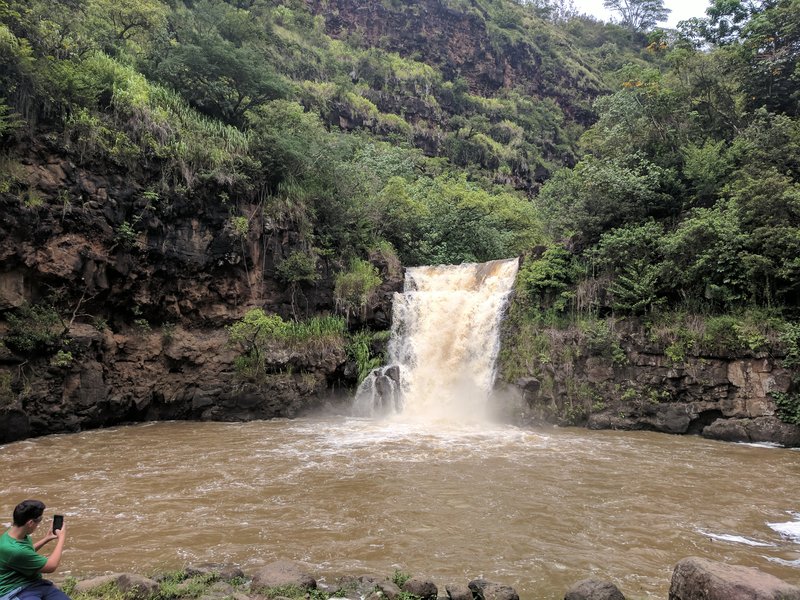
A 1,875-acre botanical sanctuary in a valley sacred to Native Hawaiians, with 5,000 identified plant species along a 0.9-mile paved path to Waimea Falls — a 45-foot waterfall dropping into a swimming lagoon. One of the most significant cultural and archaeological sites on Oahu.
Daily 9:00am - 5:00pm
Water shoes recommended for waterfall swim · Last entry 4:00pm
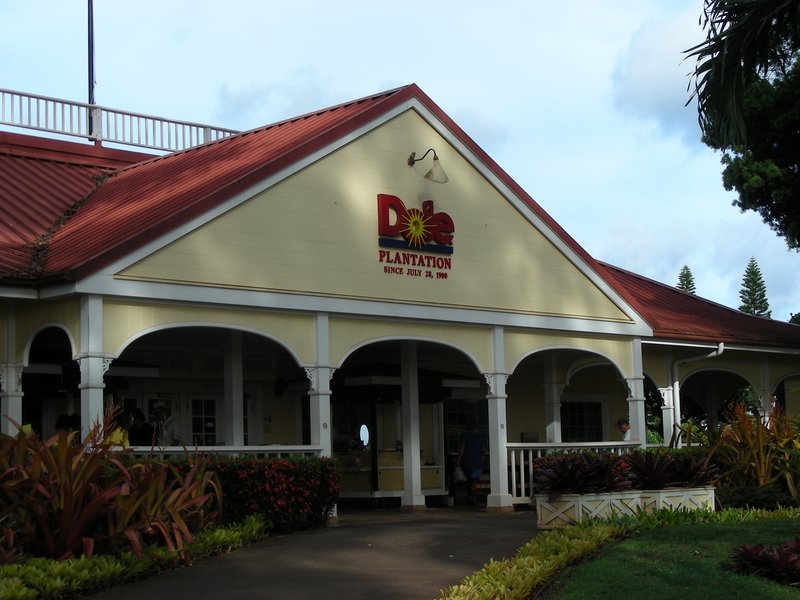
2. Dole Plantation~1 hr 30 min
The plantation founded in 1851 in Wahiawā, at the geographic center of Oahu. The pineapple garden maze holds a Guinness World Record at 3.1 acres. The Plantation Express train circles the grounds through pineapple fields. The Dole Whip soft-serve is a cult Hawaiian institution.
Daily 9:30am - 5:30pm
Free
Garden maze and train ride have separate fees · Dole Whip at the snack bar
3. Laniakea Beach~30 min
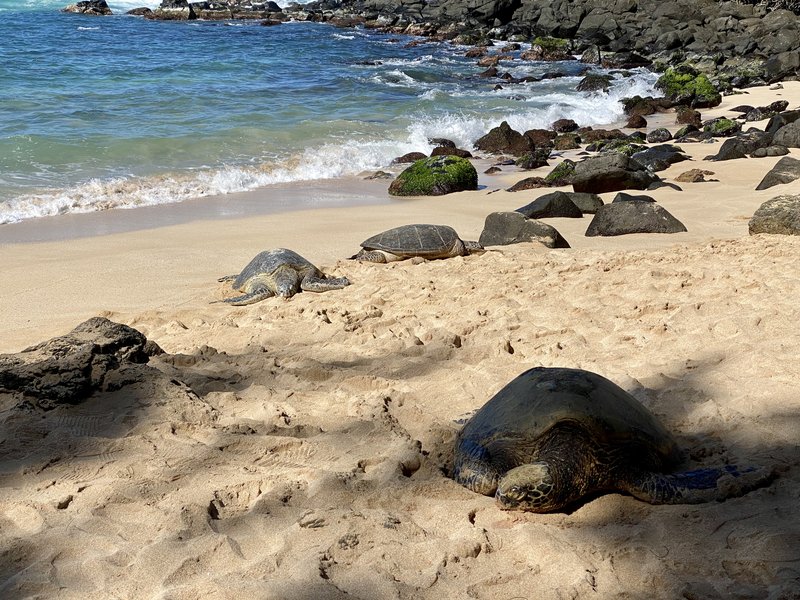
Known as Turtle Beach — Hawaiian green sea turtles come ashore here every day to rest on the sand. The turtles, called honu in Hawaiian, are federally protected. Volunteers with the Malama na Honu program maintain a respectful 10-foot viewing distance.
Open 24/7
Do not touch or approach the turtles · Volunteers present daily
4. Haleiwa~45 min
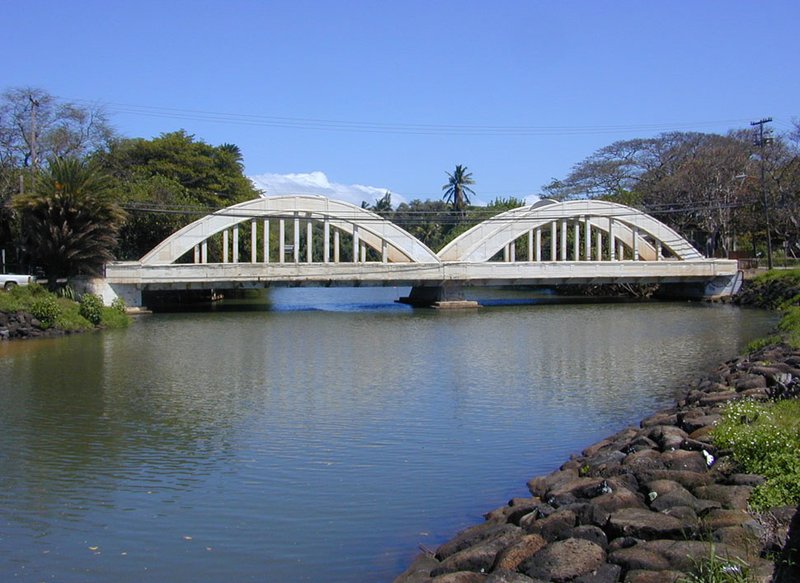
The original North Shore surf town — a historic plantation-era streetscape that remains the cultural capital of Hawaiian surfing. Home to Matsumoto's shave ice, galleries, surf shops, and Aliʻi Beach Park where Pipeline legends first competed. Unhurried, uncrowded, and entirely itself.
Day 4
1. Koko Head Crater Trail~2 hr
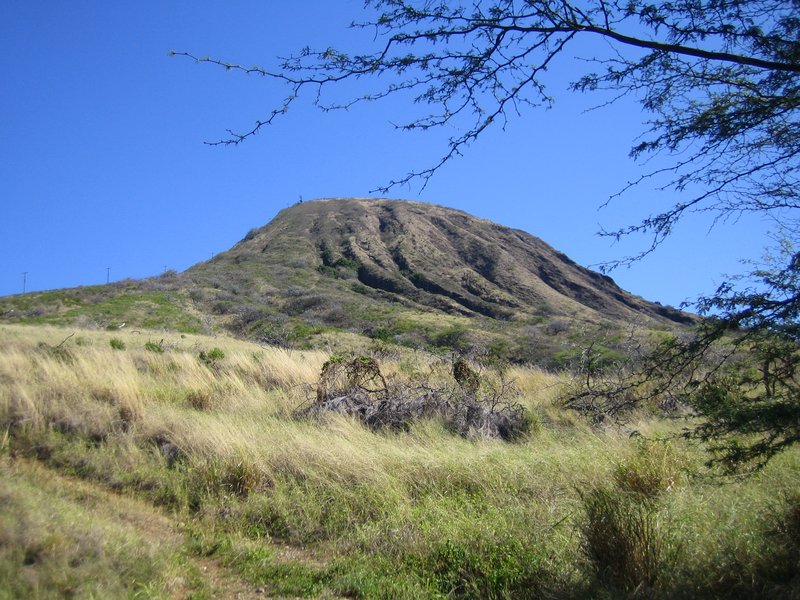
A 1,048-step staircase built on an old wartime railroad trestle that climbs the rim of Koko Head crater — an 800-foot extinct volcanic tuff cone. The summit delivers a 360-degree panorama over Hanauma Bay, Maunalua Bay, and the Koʻolau Range.
Open 24/7
1,048 railway ties with no handrails — steep throughout · Summit is hot and exposed · Bring water and start early
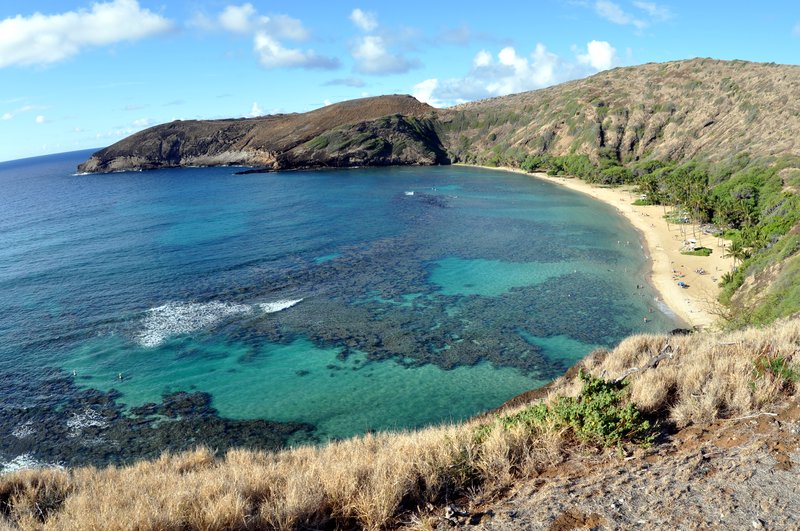
2. Hanauma Bay Nature Preserve~2 hr
A collapsed volcanic crater that became a coral reef — a Marine Life Conservation District with over 400 species of tropical fish at thigh depth, fearless of humans. Fish density is extraordinary. At the bay mouth, sea turtles pass within arm's reach.
Wednesday - Sunday 6:45am - 4:00pm
Closed Monday & Tuesday
Advance reservation required · Opens 48 hrs before at 7:00am HST · Snorkel gear rental available on-site · Mandatory conservation video on arrival
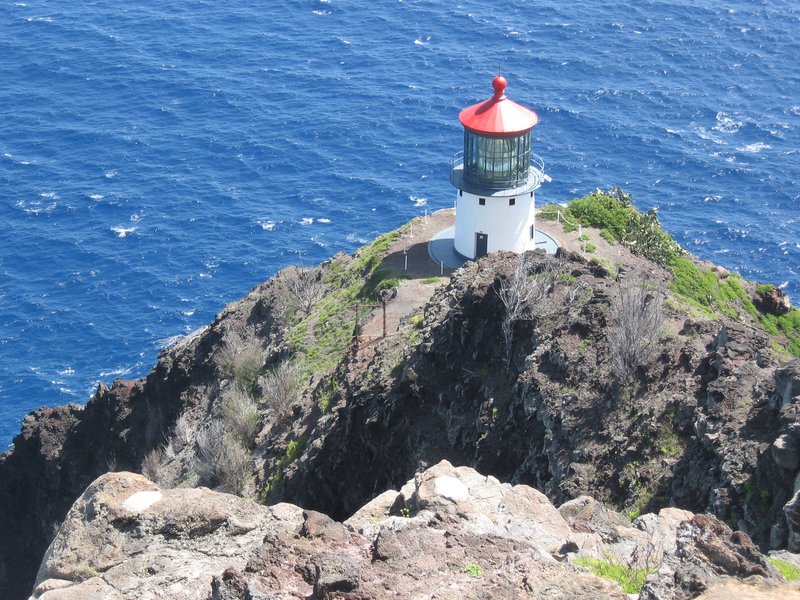
3. Makapuʻu Point Lighthouse Trail~1 hr 30 min
A paved 2-mile round-trip trail along Oahu's easternmost cliffs to the 1909 lighthouse at Makapuʻu Point. The trail follows the Ka Iwi Shoreline with unobstructed ocean views and, from December to May, humpback whales visible offshore.
Open 24/7
Paved but fully exposed — no shade on route · No access to the lighthouse building · Parking fills early on weekends
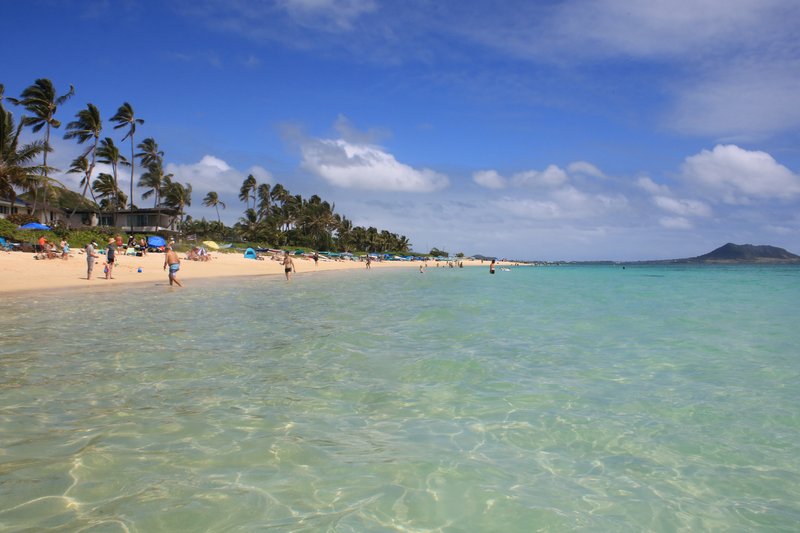
4. Lanikai Beach~2 hr 30 min
A half-mile crescent of powdery white sand facing the twin Mokulua Islands across a flat turquoise lagoon — consistently rated one of the finest beaches in the world. The twin islands are a seabird sanctuary kayakable in under twenty minutes from the beach.
Open 24/7
Kayak rental point is Kailua Beach Adventures, 0.5 mi from Lanikai · Seabird sanctuary — no landing on Moku Nui without permit
Day 5
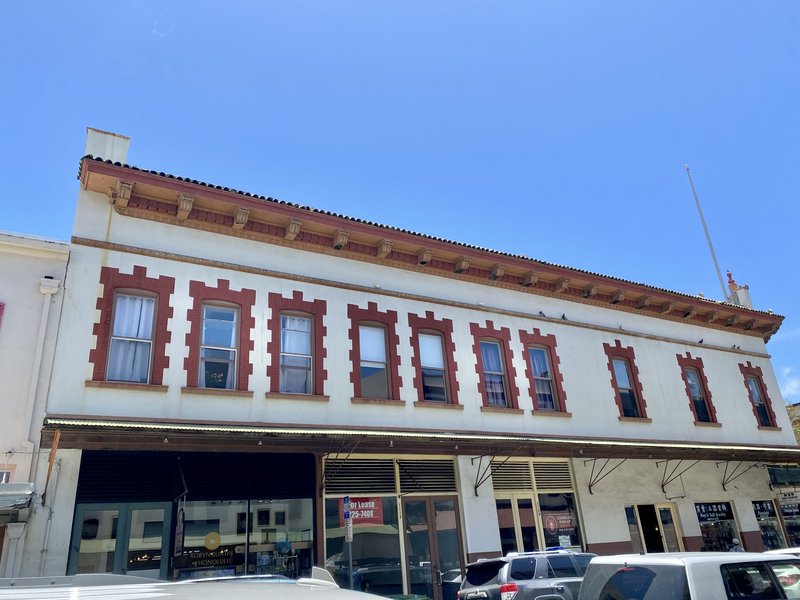
1. Chinatown Honolulu~1 hr 30 min
Honolulu's oldest commercial district — a six-block grid that has been the center of the city's Asian immigrant communities since the 1850s. Historic lei shops on Maunakea Street operate from 5:00am alongside galleries, herbalists, wet markets, and Oahu Market, one of the last traditional fish-and-produce markets in Hawaii.
Monday - Saturday 8:00am - 5:00pm
Closed Sunday
Free
Lei shops on Maunakea St open from 5:00am · Oahu Market busiest 6:00am - 11:00am · Street art throughout the neighborhood
2. Ala Moana Beach Park~1 hr
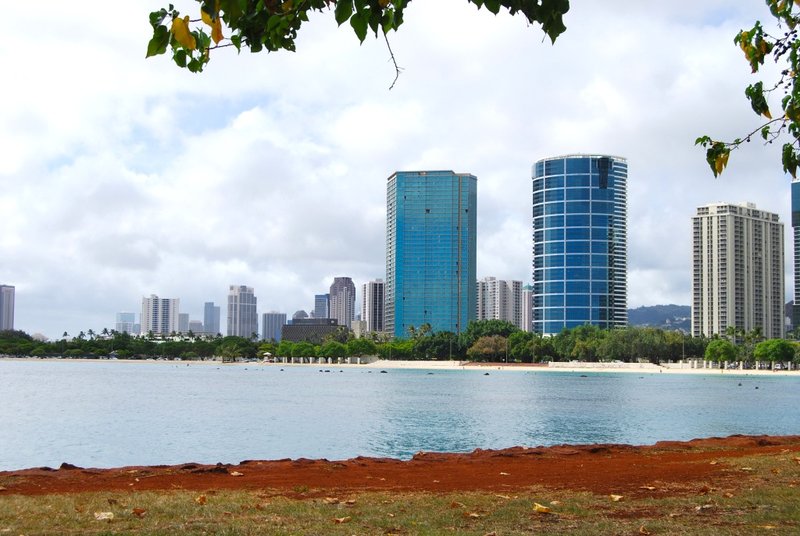
A 76-acre park on a reef-sheltered channel between Waikiki and downtown Honolulu — calmer than Waikiki Beach with no breaking surf, making it the choice of Honolulu families, outrigger canoe clubs, and early swimmers. The Magic Island peninsula at the east end offers sunset views back toward Diamond Head.
Open 24/7
3. Manoa Falls Trail~5 hr
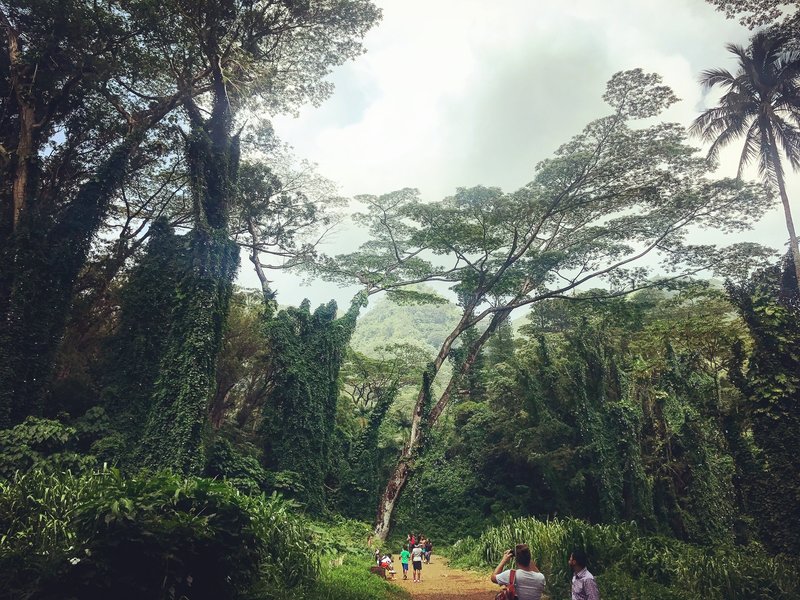
A 1.6-mile round-trip trail through Manoa Valley's native rainforest — bamboo groves, wild ginger, and tree ferns — ending at a 150-foot waterfall dropping into a rock grotto. One of the most accessible waterfall hikes on Oahu, with a guided tour that returns to Waikiki and includes a healthy lunch.
Daily 7:00am - 6:00pm
Trail is muddy year-round — water shoes recommended · No swimming under the falls
Weekly Closures
Museums · Closed Monday - Tuesday
Palaces · Closed Sunday - Monday
Tours
Viator
Two options: 6.5-hr Dole Plantation & Haleiwa Town visit, or the 9-hr Grand Circle Island tour including Nuʻuanu Pali, Byodo-In Temple, Tropical Farms, and the North Shore. Deluxe motorcoach with restroom and onboard narration.
9 hr · Large group
↔
Deluxe guided tour to Pearl Harbor with USS Arizona Memorial program, Punchbowl National Memorial Cemetery, and downtown Honolulu landmarks. Royal Star vehicle with original onboard narration and mint service.
9 hr · Small group
↔
Full-day minibus tour limited to 24 passengers circling the island. Stops include Diamond Head, Makapu'u Beach, Halona Blowhole, and the North Shore, with an hour of snorkeling to see Hawaiian green sea turtles.
8 hr · Small group · max 24
↔
Free tour run by local guides. Walk through Honolulu's history from ancient times to the plantation era, visiting King Kamehameha Statue, Iolani Palace exterior, Kawaiaha'o Church, and State Capitol.
1 hr 10 min · Max 30
Aerial sweep over Honolulu, Pearl Harbor, Diamond Head, Waikiki's turquoise reef, Hanauma Bay, and the North Shore. Blue Hawaiian Helicopters departs from Honolulu Airport area. Doors-off or doors-on.
45 min · Small group
A 2-hour catamaran snorkel trip from Waikiki to Turtle Canyon — the reef where Hawaiian green sea turtles feed; reef fish and coral gardens explored by a PADI-trained crew.
2 hr · Group
An 8-hour guided minibus tour from Waikiki to the North Shore — Waimea Falls, Haleiwa Town, Dole Plantation, shave ice and the surfing beaches that define the Hawaiian winter calendar.
8 hr · Small group
↔
GetYourGuide
A 4-hour guided tour to Pearl Harbor with pre-purchased skip-the-line access to the USS Arizona Memorial boat program — audio narration, exhibits and a return transfer to Waikiki hotels.
4 hr · Group
↔
Cappuccino
Island Vintage Coffee · 4.4 · 500+ reviews
Kona Coffee Purveyors · 4.6 · 350+ reviews
Daily 6:30am - 3:00pm
Restaurants Near Hotel
La Mer · 4.3 · 450+ reviews
Forbes Five Diamond French-Hawaiian fine dining. Ocean-view terrace.
Tuesday - Saturday 6:00pm - 9:00pm
Closed Sunday & Monday
In the hotel · Ground Floor
Orchids · 4.2 · 380+ reviews
Beachfront Pacific cuisine. Best Sunday brunch in Waikiki.
Daily 7:30am - 2:00pm · Daily 6:00pm - 9:00pm
In the hotel · Ground Floor
Monkeypod Kitchen · 4.1 · 1827+ reviews
Merriman's casual Hawaiian kitchen. Fish tacos, craft cocktails.
Daily 7:00am - 11:00pm
Roy's Waikiki · 4.1 · 3627+ reviews
Yamaguchi's Euro-Asian fusion. Blackened island fish, chocolate soufflé.
Daily 11:30am - 9:30pm
Downtown Restaurants
Fête · 4.4 · 550+ reviews
New American with Pacific Rim influences. Chinatown's most acclaimed table.
Tuesday - Saturday 5:00pm - 10:00pm
Closed Sunday & Monday
The Pig & The Lady · 4.3 · 1200+ reviews
Vietnamese small plates and inventive pho. Bright, crowded, excellent.
Monday - Friday 10:30am - 2:00pm · Monday - Friday 5:30pm - 10:00pm
Saturday - Sunday 10:00am - 2:30pm · Saturday - Sunday 5:30pm - 10:00pm
Lucky Belly · 4.2 · 1400+ reviews
Chinatown's best ramen and pork belly buns. Cold cocktails, consistently full.
Monday - Saturday 11:00am - 2:00pm · Monday - Saturday 5:30pm - 10:00pm
Closed Sunday
Giovedi · 4.6 · 180+ reviews
Italian technique meets pan-Asian flavors. Creative pasta, great cocktails.
Tuesday - Saturday 5:30pm - 10:00pm
Closed Sunday & Monday
Dining Areas
Haleiwa
Local Tastes
Plate Lunch
The quintessential Hawaiian working meal: two scoops of white rice, macaroni salad, and a protein — kalua pork, teriyaki beef, or chicken katsu. Born on the plantation era when workers of many nationalities shared food.
Malasadas
Portuguese-style fried doughnuts — no hole, coated in sugar, sometimes filled with custard or haupia. Brought to Hawaii by plantation-era workers. Leonard's Bakery on Kapahulu Ave remains the definitive version.
Loco Moco
White rice topped with a hamburger patty, a fried egg, and brown gravy. Invented in Hilo on the Big Island and now a statewide institution. Pure, honest comfort food found everywhere on Oahu.
Shave Ice
Not a snow cone — ultra-fine ice shaved from a block, packed into a cone, soaked in flavored syrups. Often served over vanilla ice cream or sweetened azuki beans. Matsumoto's and Waiola are the benchmarks.
Food Delivery
Uber Eats
Foreign number: accepted — the SMS verification code arrives on most international numbers.
Coverage is strong across Honolulu and Waikiki; most restaurants on the island deliver via the app. Delivery windows are typically 30–45 minutes.
DoorDash
Foreign number: accepted — SMS delivery can be slower on a foreign number, but sign-up works.
Coverage is broad across Waikiki and central Honolulu; grocery and restaurant options stretch from Kailua to Ewa Beach.
Shows, Performances & Concerts
Hawaii Theatre
Honolulu's restored 1922 theatre presents Hawaiian music, dance and touring performances; check the official calendar for your dates.
Getting Around
Uber
Foreign number: not required — the app accepts any international number and payment card; no local SIM needed.
Uber is the most-used ride-hailing service on Oʻahu. Pick-up times in Waikiki run 3–8 minutes; expect longer waits of 10–15 minutes during peak hours.
Lyft
Foreign number: not required — Lyft accepts international numbers at signup; no local SIM needed.
Lyft operates across Honolulu and Waikiki, with typical wait times of 5–12 minutes. Availability is lower than Uber outside central Honolulu.
Pickleball
Fort DeRussy Beach Park · Outdoor
4 free outdoor courts in a beachfront park; steps from most Waikiki hotels
Daily 7:30am - 5:30pm
Worth Knowing
On Oahu
Oahu puts the entire arc of Hawaiian history into a single day: the sunken battleship where American entry into World War II began, a royal lookout where Kamehameha I unified the islands by force, a volcanic crater bay where the fish have lived undisturbed long enough to swim in your hands.
The itinerary reads like history but feels like geography. Pearl Harbor is west. Nuʻuanu Pali is north. Hanauma Bay is east. Diamond Head is south. You circle nearly the whole island in a day, and every stop earns its place on its own terms. No other island in the world packs this particular combination of living reef and world-altering history into one morning and one afternoon.
Also on this site
Nearby Guides