From Hotel: 2 min · 1 min → São Bento Railway Station
1.São Bento Railway Station~30 min
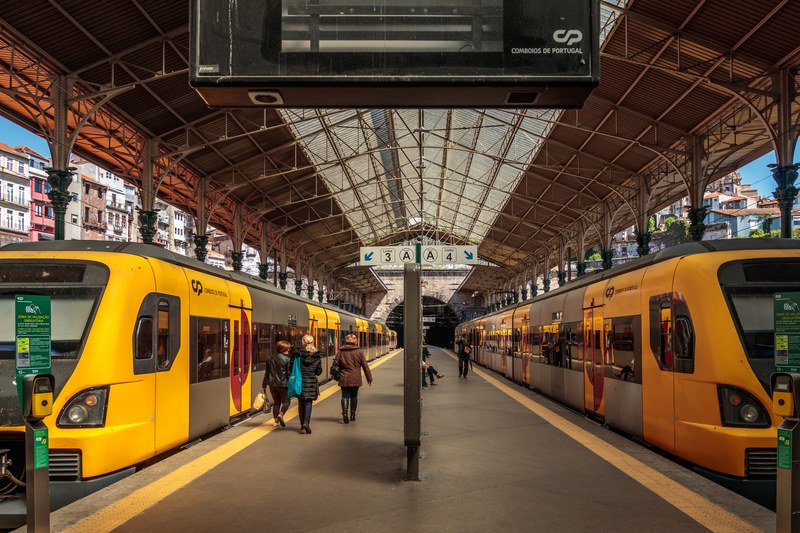
Porto's main station, one of the world's great interiors: 20,000 hand-painted azulejo tiles by Jorge Colaço · 1905–1916. Entry free. Go early to stand undisturbed in the hall — a working station with trains to Braga and the Douro Valley.
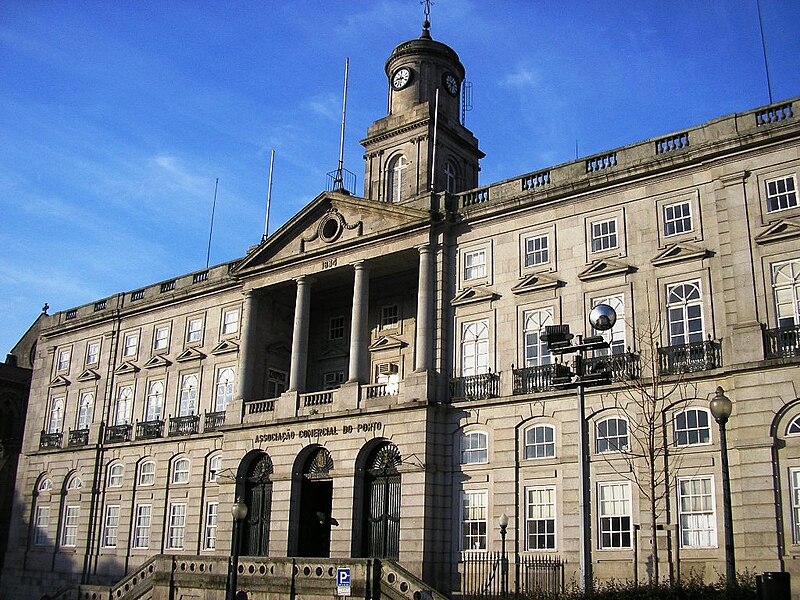
Neoclassical merchant palace · 1842–1910. The Arab Room — gilded stucco modelled on the Alhambra — is seen on the house's own 30-min tour. Next door, Igreja de São Francisco has 400 kg of gold leaf on every surface. Easy to pair in one stop.
Porto's defining skyline: a 76-metre Baroque bell tower by Nasoni · 1754. Climb 225 steps for a 360° panorama over the roofscape, the Douro, and the Atlantic on clear days. The ticket includes the gilded oval church and museum below.
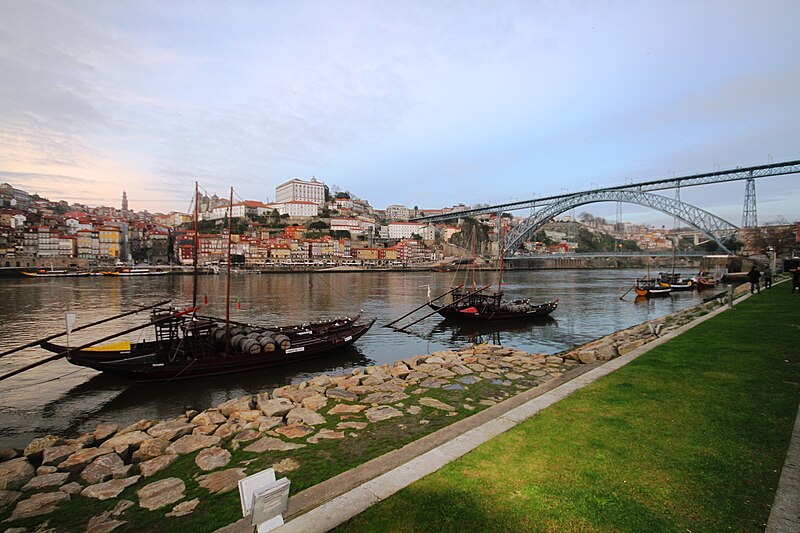
Porto's UNESCO-listed medieval riverside — tilting townhouses in yellow, terracotta, and green above Cais da Ribeira quay. Best at golden hour. Cross Dom Luís I Bridge lower deck for the full view back; the narrow lanes behind are quietest.
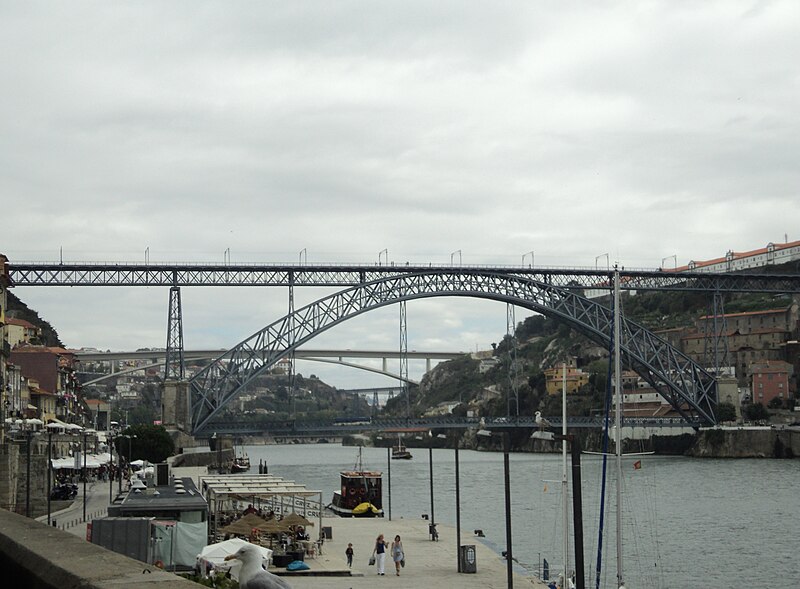
Double-deck iron arch bridge · 1886 by Théophile Seyrig — not an Eiffel bridge. Lower deck: wine cellars south, Porto's rooftops north. Upper deck, 45 m above, carries the Metro — cross it for the aerial view back over the city.
5 min · 5 min → Vila Nova de Gaia — Port Wine Cellars
2.Vila Nova de Gaia — Port Wine Cellars~1 hr 30 min
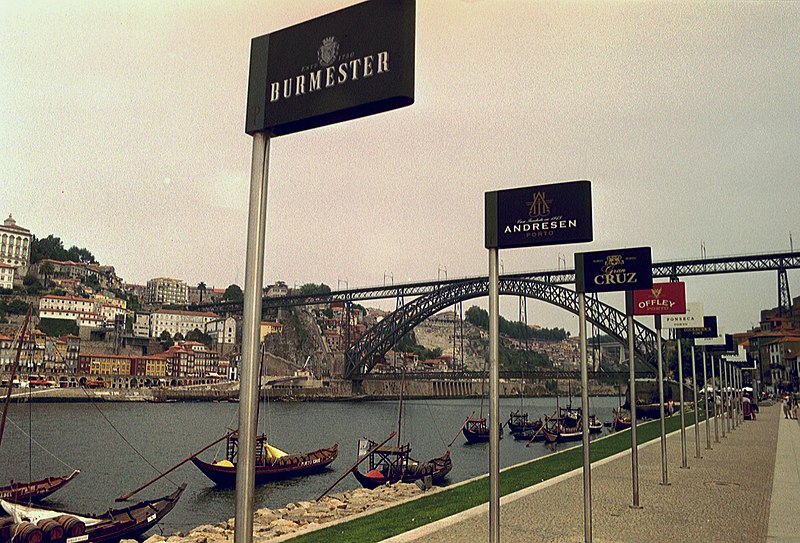
Port wine lodges terracing the Gaia hillside — rock-cut cellars called caves, each aging a different house's blend in oak barrels. Sandeman, Graham's, Cálem, and Ferreira terrace the slope; Graham's has the best Douro views. Free to walk the quayside between them.
A two-hour cruise under all six Douro bridges: Ribeira townhouses north, wine cellars terracing Gaia south, out toward the river mouth at Foz. Best in late-afternoon light. Departs the Cais de Gaia pier; a small-group boat keeps the deck uncrowded.
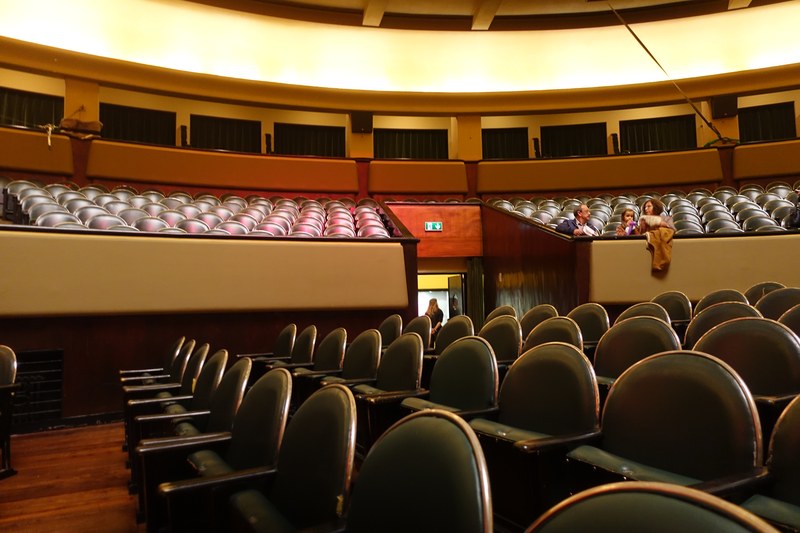
Porto's grand Art Deco concert hall on Rua de Passos Manuel — a curving Streamline Moderne landmark of the early 20th century, its rounded glass-and-stone facade and neon marquee lighting up the Baixa after dark. A protected building and still the city's main stage.
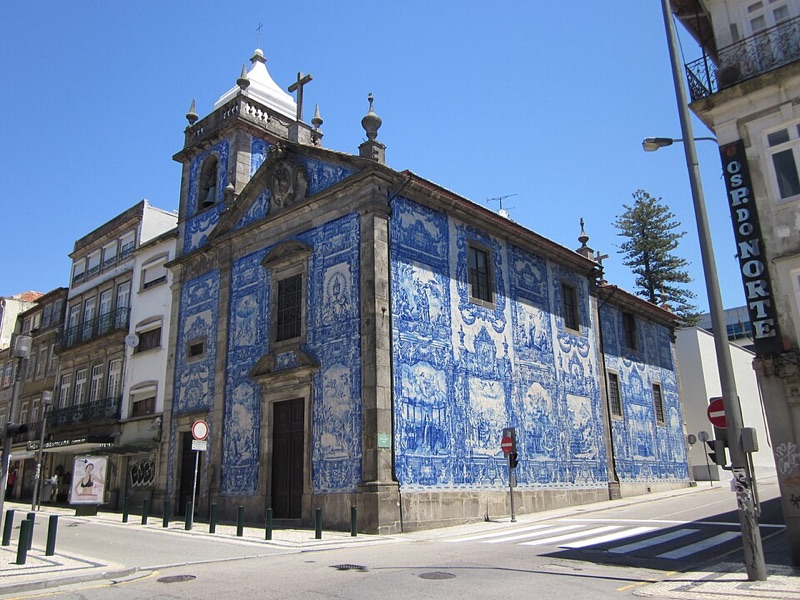
A small chapel on pedestrian Rua de Santa Catarina wrapped outside in nearly 16,000 blue-and-white azulejo tiles — laid in 1929 in an 18th-century style, depicting the lives of St Francis and St Catherine. The most photographed facade on the shopping street.
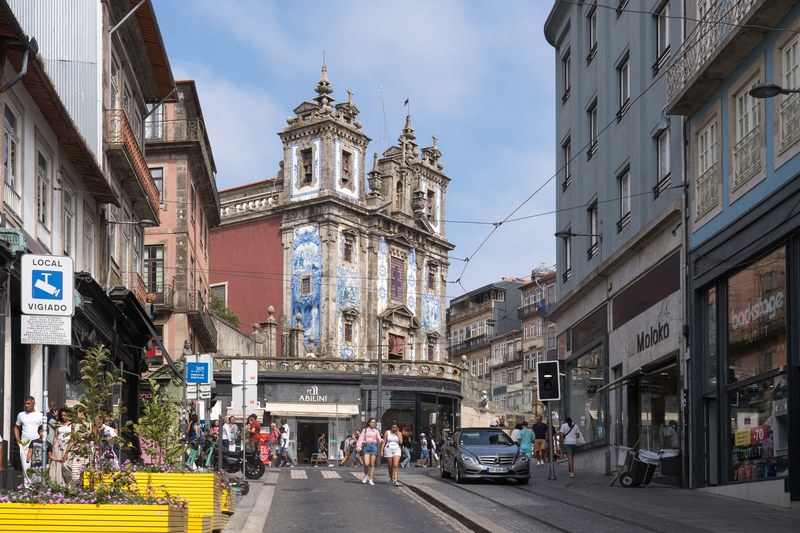
An 18th-century Baroque church above Praça da Batalha, its twin-tower granite facade faced with some 11,000 azulejo tiles by Jorge Colaço — the same artist as São Bento — laid in 1932. Free to step inside between services.
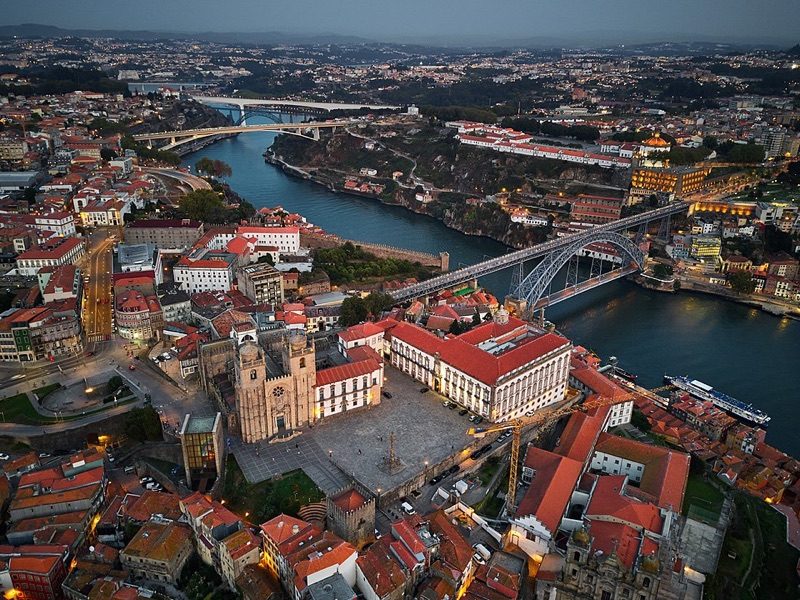
Porto's fortress-like Romanesque cathedral, begun in the 12th century on the city's highest hill. The Gothic cloister is lined with azulejos and the terrace out front gives one of the widest views over the old town and down to the river. The cathedral itself is free to enter.
From Hotel: 17 min · 6 min → Crystal Palace Gardens
1.Crystal Palace Gardens~1 hr
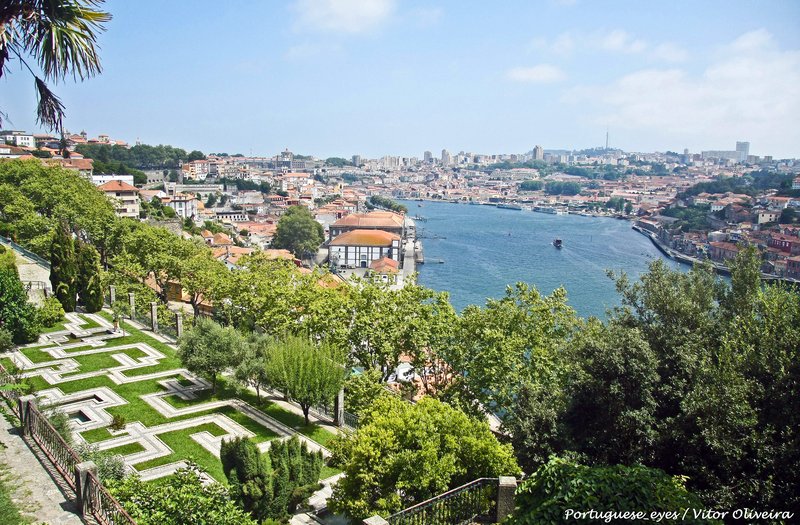
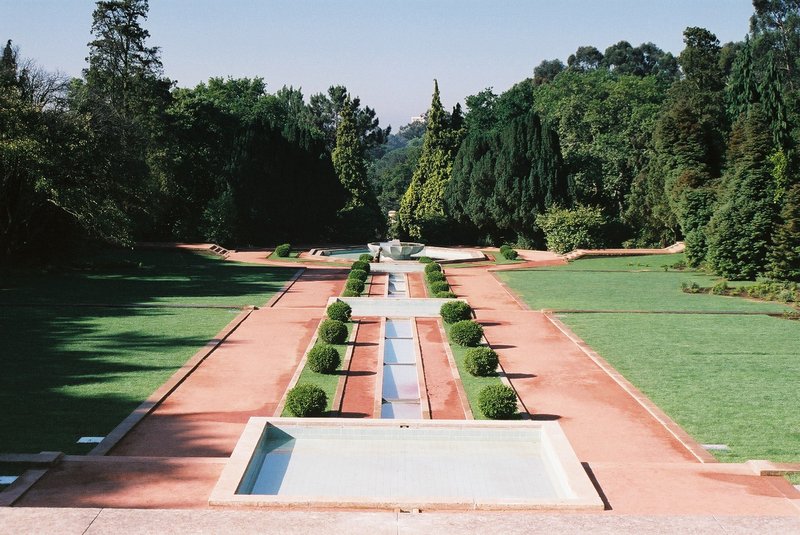
Romantic hillside gardens laid out in the 1860s around Porto's long-demolished Crystal Palace. Rhododendrons, camellias, araucarias, ginkgos and beeches surround a rose garden and fountains; peacocks roam loose. The terraces above the river give the widest garden view of the Douro in the city.
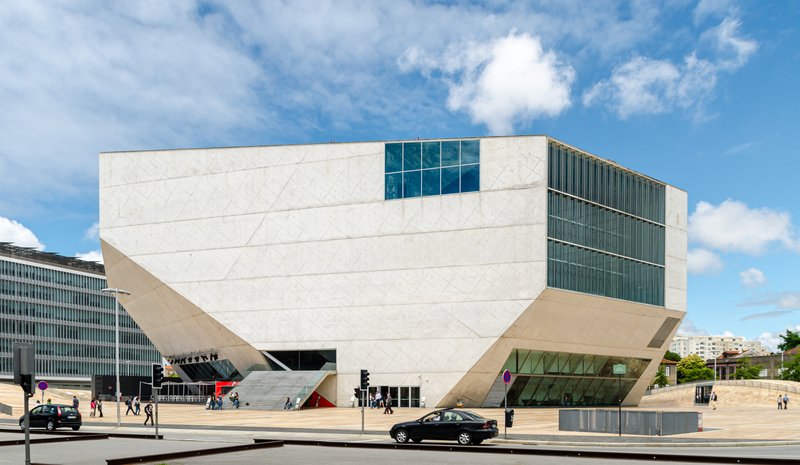
Rem Koolhaas's asymmetrical white polyhedron on the Boavista roundabout · 2005 — a hull beached at low tide, cut by vast undulating glass. The main hall, Sala Suggia, is the only concert hall anywhere with two walls made entirely of glass. The open visit runs QR-code audio guides through the building.
An 18-hectare estate of formal gardens, meadow and woodland laid out by Jacques Gréber around Casa de Serralves — a pink Art Deco villa built 1925–1944, its interiors fitted by Émile-Jacques Ruhlmann and René Lalique. A treetop walk runs above the woods; Álvaro Siza's museum sits at the far end of the axis.
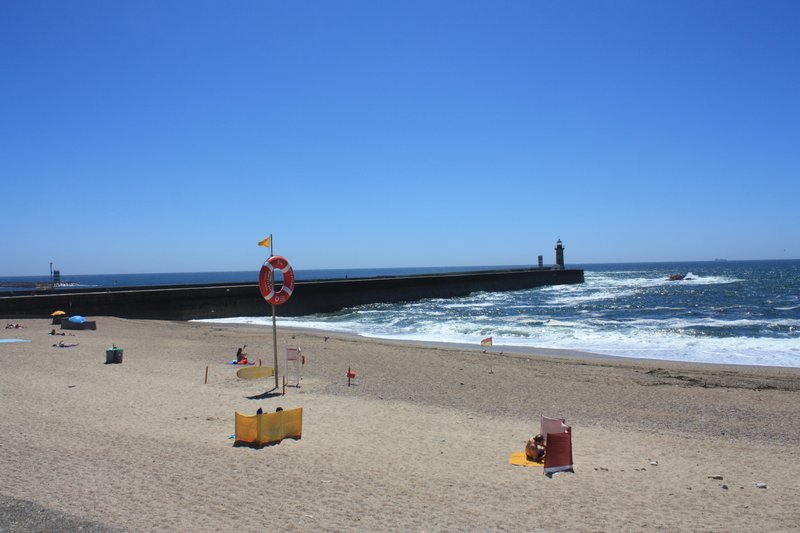
Where the Douro meets the Atlantic. The 1930s Pérgola da Foz runs a long cement colonnade above the seafront promenade; south of it the granite breakwater carries the hexagonal Felgueiras lighthouse of 1886, which the swell breaks straight over in a westerly. Sunset is the reason to come.
ARRIVE Guimarães: 16 min · 7 min → Historic Centre of Guimarães
1.Historic Centre of Guimarães~1 hr 30 min
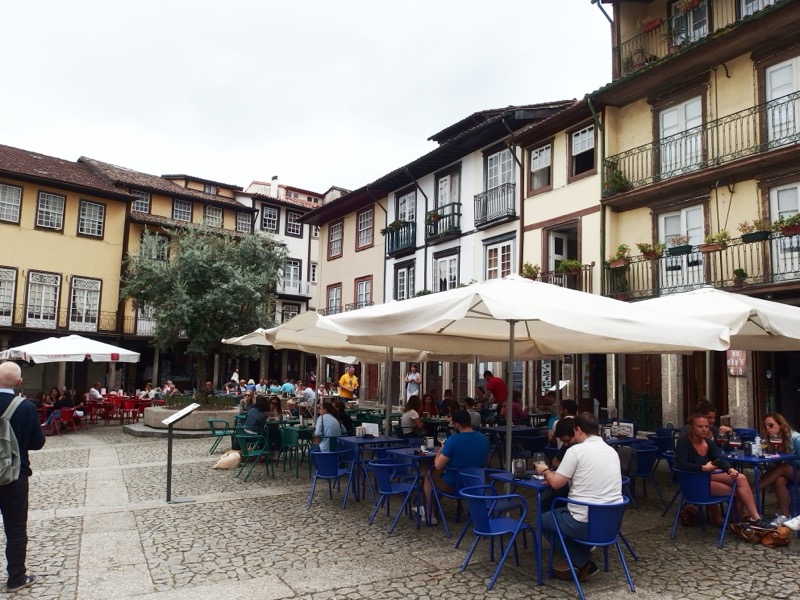
UNESCO-listed since 2001 and the tightest medieval town core in northern Portugal — granite arcades, wooden balconies and taipa-de-rodízio facades around Largo da Oliveira and Praça de São Tiago. The 14th-century Padrão do Salado canopy and the collegiate church of Nossa Senhora da Oliveira anchor the square.
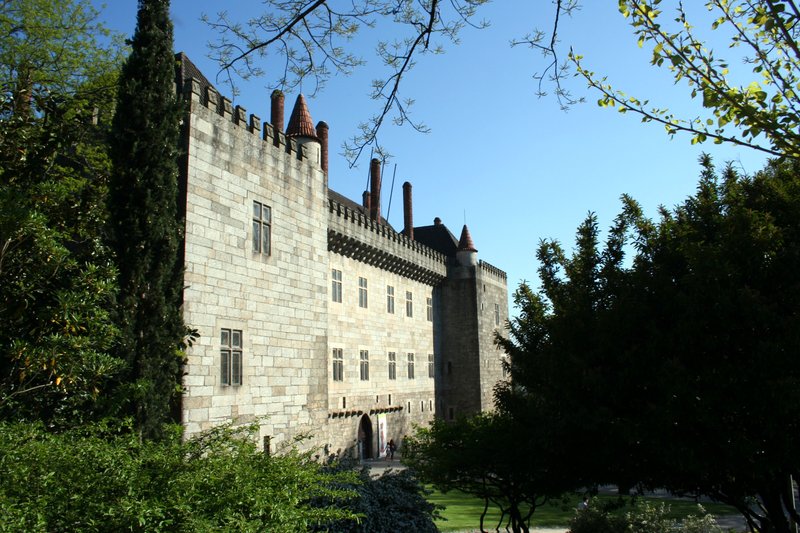
A 15th-century ducal estate built for Afonso, first Duke of Braganza, on a Burgundian model no other Portuguese palace follows — 39 brick chimneys over a slate roof, a banqueting hall under an upturned-hull ceiling, and rooms hung with Flemish tapestries, Persian carpets and 16th-century arms.
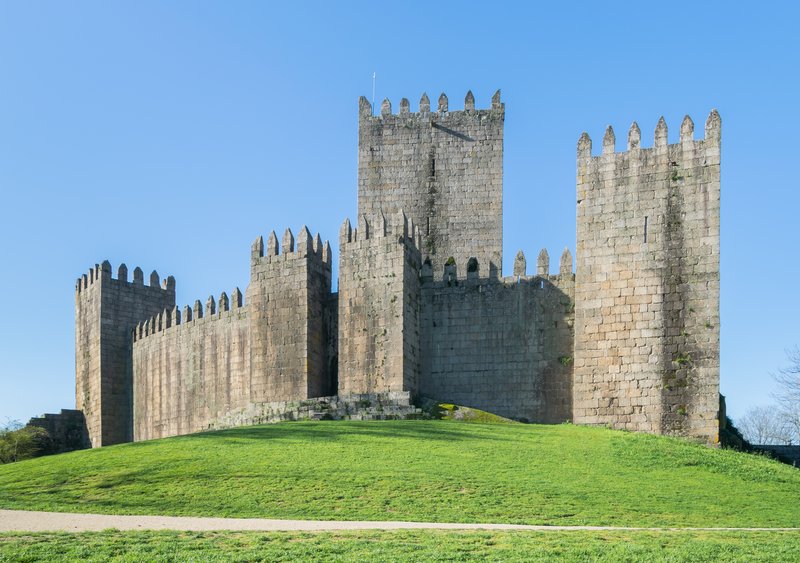
The castle Portugal counts as its cradle — founded in the 10th century by Countess Mumadona Dias and rebuilt as the stronghold where Afonso Henriques, the first king, was born. Eight square towers ring a shield-shaped curtain wall on a granite outcrop, with the tiny Romanesque church of São Miguel below.
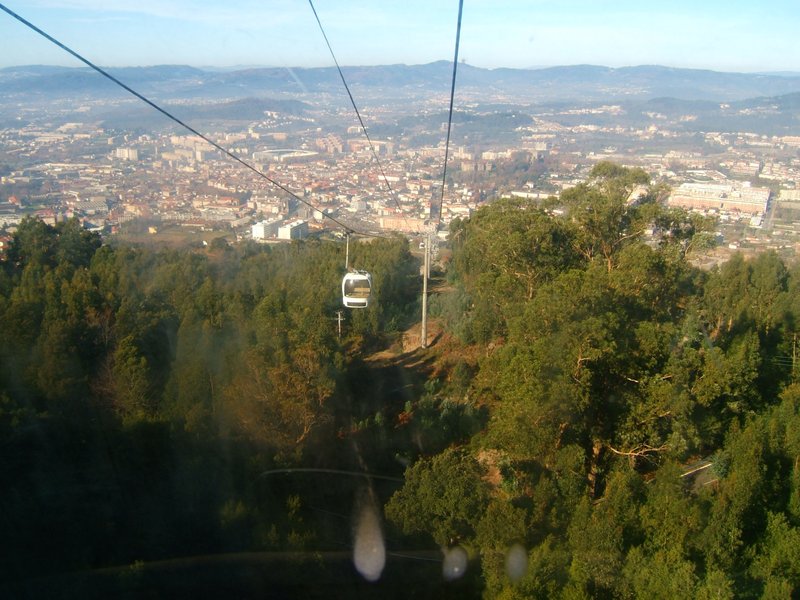
The granite mountain above Guimarães, 613 metres up and scattered with boulders, caves and pine. An Art Deco sanctuary built 1930–1947 crowns it and the terrace looks north over the whole Minho. The 1,700-metre Teleférico de Guimarães, Portugal's first cable car, climbs it in ten minutes.
Small-group walk through the UNESCO historic core — Cathedral, São Bento, Aliados, the Clérigos quarter, and down to the Ribeira riverfront with a local guide.
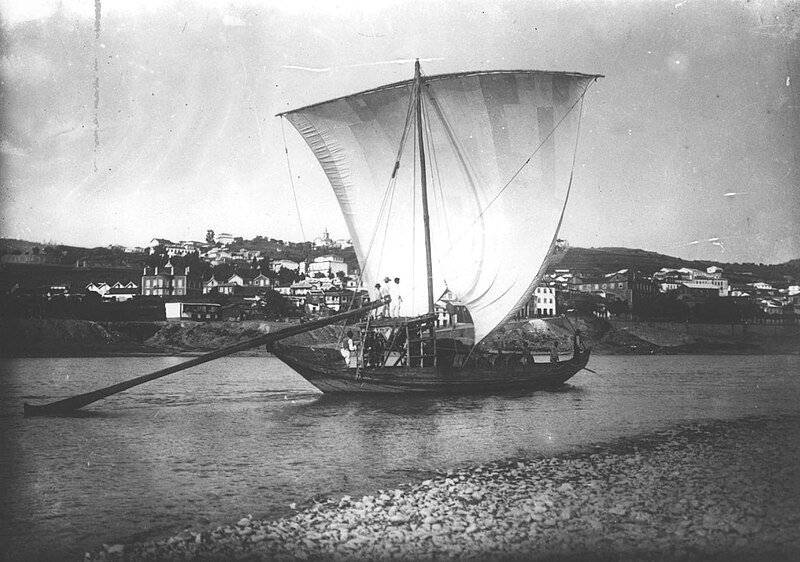
Full-day small-group run to the UNESCO Douro Valley — two wineries with Port and DOC Douro tastings, traditional Portuguese lunch, and a Rabelo boat cruise on the river at Pinhão. Max 8 guests.
Relaxed small-group cruise under all six Douro bridges aboard a comfortable boat, with a Port wine or Port tonic — Ribeira, the Gaia cellars, and the river mouth from the water.
Full-day excursion to Aveiro — Portugal's canal city, with a moliceiro ride — and Coimbra, the ancient university capital, taking in the cathedral and historic centre before returning to Porto.
Walking tour through Porto's Jewish history — the medieval Judiaria, the old quarters, and the story of the city's Sephardic community, told by a local guide from the Cathedral square.
Small-group walk — max 8 guests — through Porto's alleys and viewpoints with a local guide: São Bento station, Clérigos Tower, the Cathedral, and Lello Bookshop, plus hidden-gem spots and local insider tips beyond the standard tourist route.
Open-air tuk-tuk glide through Porto's prime landmarks and the narrow lanes a coach can't reach — both sides of the river, with a guide narrating along the way.
Small-group Douro cruise under the six bridges with a welcome drink and a local guide — Ribeira, the Gaia cellars, and the estuary, departing from the Douro Marina.
Walk past the most beloved sights — the Cathedral, tiled São Bento station, Avenida dos Aliados, and Clérigos Tower — with a guide unpicking the history of the historic centre.
Full-day run to Guimarães — the "birthplace of Portugal" with its medieval castle — and Braga, with its cathedral and the Bom Jesus do Monte staircase, through the green Minho.
Lively guided walk across the centre — Aliados, São Bento, Clérigos, and the first Ribeira viewpoints — with the city's history, street life, and culture told along the way.
Evening petiscos crawl through Porto's authentic neighbourhoods — five traditional stops with local food specialties, Port wine, and regional drinks away from the tourist trail.
Master class through three Gaia wine lodges with seven Port tastings — Reserve White, Tawny, Ruby, and aged Vintages — finishing at a modern interactive museum on the Douro Valley.
Porto's defining dish — layers of bread, wet-cured ham, linguiça sausage, and steak, sealed under melted cheese and a poured-over sauce of beer, tomato, and hot pepper. Rich, heavy, and magnificent.
The custard tart. Flaky concave pastry shell, warm egg-custard centre with a caramelised top, dusted with cinnamon. Best eaten within minutes of leaving the oven.
Salt-dried cod — Portugal's defining ingredient. Most common: à Brás — shredded with egg and matchstick potatoes; com natas — cream-baked; and à Lagareiro — olive-oil-roasted with potatoes.
Fortified wine from the Douro Valley, aged in the Gaia lodges. Categories that matter: Ruby — young, fruit-forward; Tawny — barrel-aged and nutty, 10- and 20-year the sweet spots; Vintage — the collector's port.
Foreign number: accepted. — it is the same Uber account as the ride app, so a foreign number already verified there signs straight in.
The widest roster in Porto — francesinha houses, the Cedofeita and Bonfim independents and the chains along Santa Catarina — with live courier tracking; fees stack on small orders and couriers hand over at the hotel door, so add the room number to the note.
Foreign number: not required. — it signs in with Google, Facebook or email, and a phone sign-up takes any prefix with the code by SMS or WhatsApp.
Thinner than Uber Eats here but strong on the Baixa and Boavista chains and on grocery runs from Pingo Doce and Continente, with a subscription that waives delivery fees; coverage fades in Foz and late in the evening.
Foreign number: accepted. — the verification code arrives by SMS on a foreign carrier, and an existing Uber account from home signs straight in.
The biggest fleet in Porto and the one with a car on Avenida dos Aliados in two or three minutes; fares are low by European standards and fixed at booking, which beats haggling over a taxi to Gaia or Foz. Serralves and the Guimarães day are the long rides, and the return from Guimarães is better by train.
Foreign number: accepted. — the SMS code reaches a foreign carrier with roaming on; WhatsApp verification is offered if it stalls.
Usually a euro or two cheaper than Uber on the same ride and worth a side-by-side check before booking; the fleet is smaller, so waits stretch past ten minutes in Foz and across the river in Gaia late at night.
Portugal's ecclesiastical capital holds some of the oldest churches in the country and the dramatic Bom Jesus staircase — a Baroque pilgrimage site above the city. The compact old town centres on the medieval Sé cathedral and treasury. A half-day covers the main sights.
A handsome coastal town at the mouth of the Lima river — the Praca da Republica, the hilltop Basilica of Santa Luzia reached by funicular, and long Atlantic beaches. CP trains run on the Minho line throughout the day.
A small canal city with colourful moliceiro boats, Art Nouveau facades, and ovos moles — egg-yolk pastries in wafer shells. Take the canal boat first, then walk the old quarter past tiled facades. The Aveiro Museum and São Gonçalinho chapel are the highlights.
Portugal's medieval capital and home to one of the oldest universities in continuous operation — the hilltop campus crowns the city, and the Baroque Joanina Library beneath it is the reason most people make the trip. Alfa Pendular and Intercidades trains run to Coimbra-B through the day.
Portugal's wine country — terraced vineyards on steep schist slopes producing port. The Linha do Douro train offers a window-seat journey through the valley. Régua and Pinhão are the best stops; Pinhão station has celebrated azulejo panels on its platforms.
A Train Station's Famous Tiles Sit on Top of a Demolished Convent
The 20,000 azulejo tiles that make São Bento one of the world's great public interiors cover a hall that didn't exist until a much older building was torn down to make room for it. The site was originally the Convent of São Bento de Ave Maria, founded on royal order in 1518, which survived a fire in 1783, a nineteenth-century decree abolishing Portugal's religious orders, and slow decay before finally being demolished in 1892 after its last resident nun had died. The station that replaced it wasn't finished until 1916, its tile murals depicting historic battles and royal processions painted onto walls standing exactly where centuries of monastic life had quietly played out before anyone thought to put a railway there.
Port wine exists because England and France couldn't stop fighting. After decades of on-and-off war beginning in 1688 cut English drinkers off from their usual Bordeaux, merchants turned to Portugal instead and began shipping wine out of Porto. The wine didn't survive the rough sea crossing well, so merchants started adding brandy to stabilize it for the voyage — and discovered, more or less by accident, that the stronger, sweeter result tasted better to English buyers than the original wine ever had. That accidental fix, refined in the cellars now lining the Gaia hillside across the river, became an entirely new category of wine that didn't exist a generation earlier.