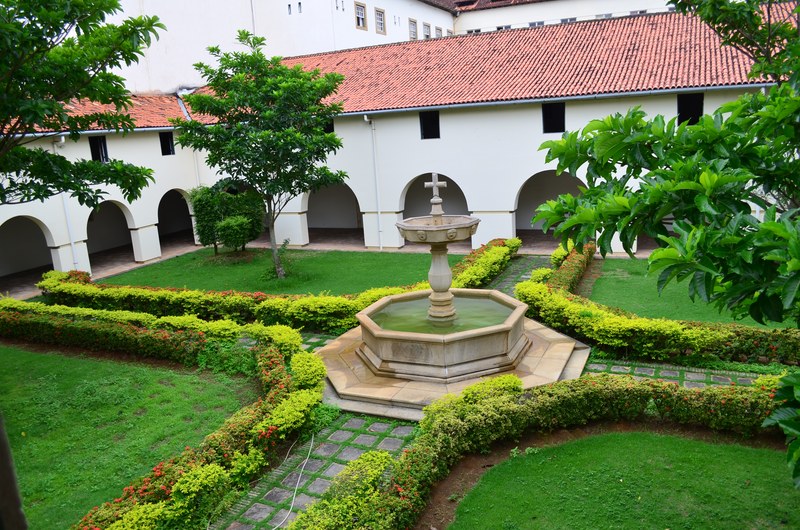
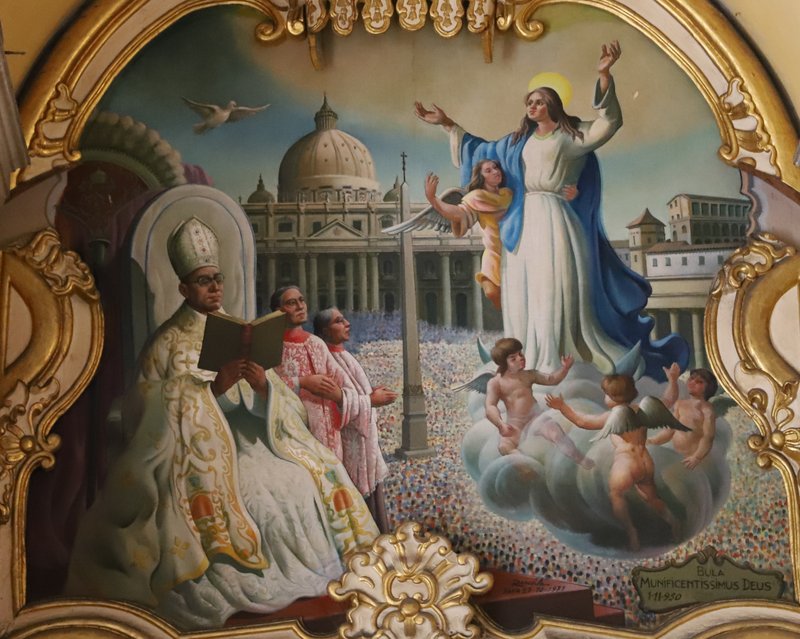
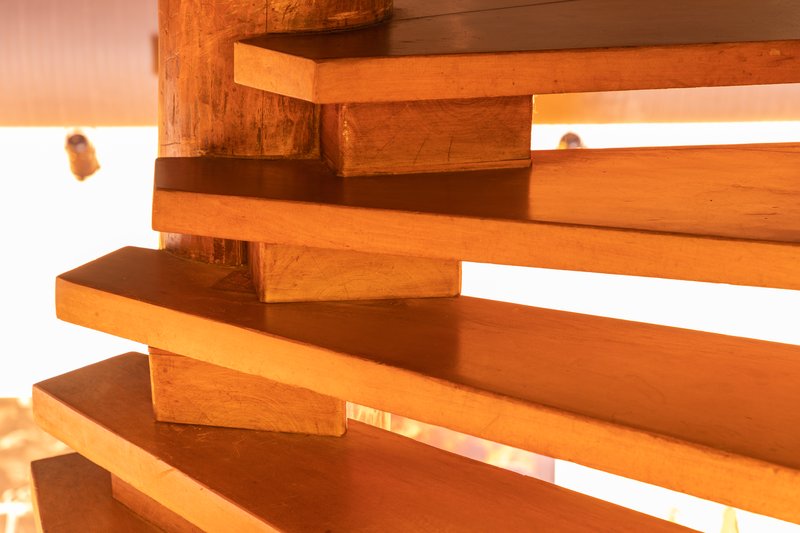
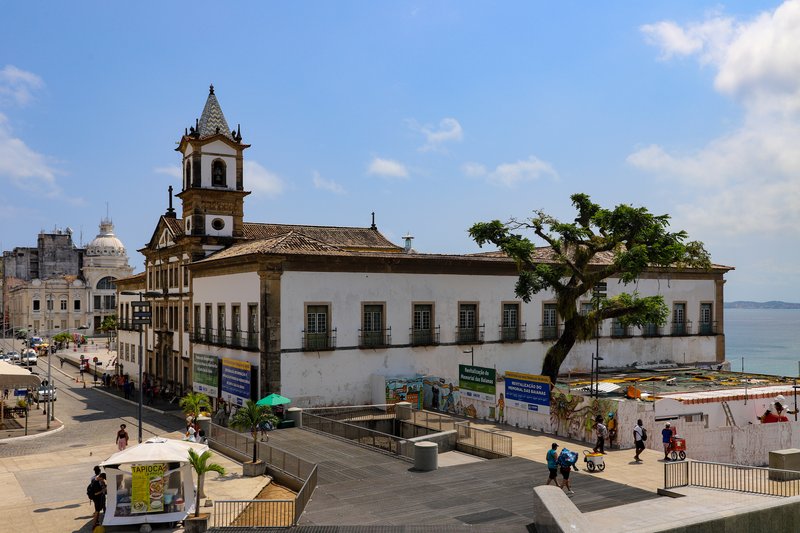
A Benedictine monastery founded in 1582, one of the oldest religious foundations in Brazil. The Basílica de São Sebastião has a 17th-century Baroque interior with carved jacaranda wood choir stalls and a gilded high altar. The Gregorian chant Sunday Mass at 10am is open to the public.
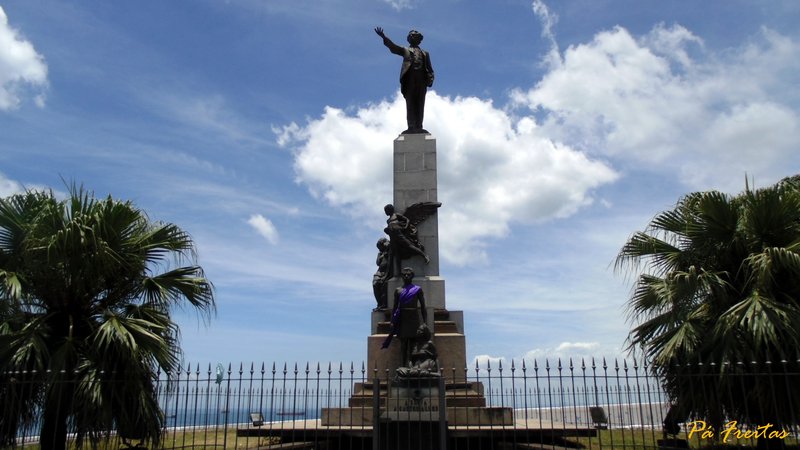
The main civic square of central Salvador, named after abolitionist poet Castro Alves whose monument anchors the space. During Carnaval it becomes one of the principal performance stages, with trios elétricos on elevated floats. The square marks the edge of Pelourinho's historic district.
Patron Saint of Bahia's church on the Comércio waterfront, completed in 1765. Built with prefabricated stone carved and shipped from Portugal — the only prefabricated church in Brazil. The interior holds a polychrome statue of the Virgin and ex-voto offerings.
The Museum of Modern Art of Bahia occupies a 17th-century colonial sugar mill complex on the Baía de Todos os Santos waterfront. The compound preserves original mill machinery, a slave warehouse, and a chapel alongside contemporary Brazilian art exhibitions.
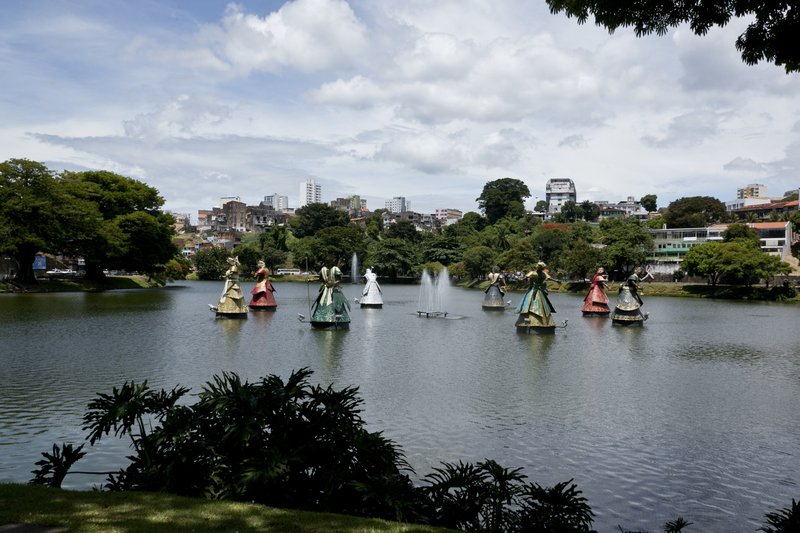
A Dutch-era reservoir built in the 17th century, encircled by a 3.5-kilometer public promenade. The lake holds eight large sculptures of the major Orixás commissioned in 1998 by artist Tatti Moreno — Iemanjá, Oxalá, Xangô, Oxum, and others — mapping Candomblé sacred geography onto a central public park.
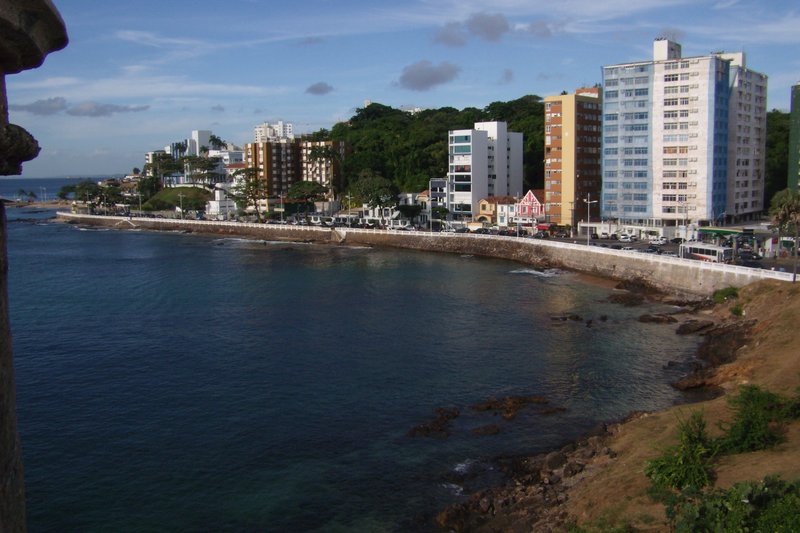
A protected cove where the Baía de Todos os Santos meets the Atlantic at the tip of the Barra peninsula. The beach faces west, making it the most popular sunset spot in the city. Calm waters result from the bay opening on one side and the fort breakwater on the other.
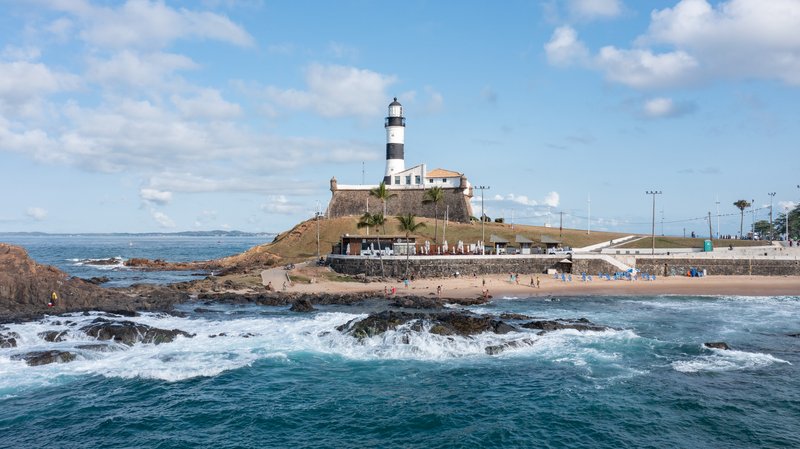
Positioned at the mouth of the Baía de Todos os Santos where it meets the Atlantic, Brazil's oldest surviving military fortification on dry land, built in the early 17th century. The lighthouse — Farol da Barra — has been operational since 1698. The complex includes a nautical museum of bay history.
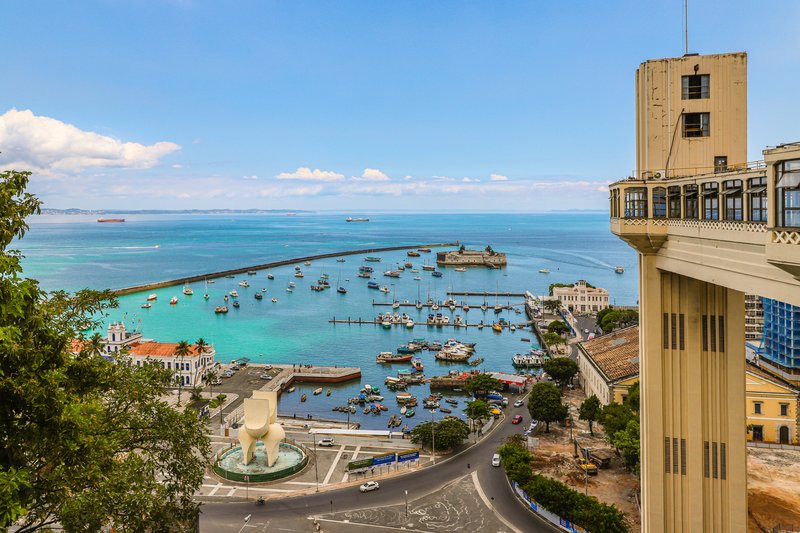
Connects Cidade Alta at 72 meters elevation to Cidade Baixa and the waterfront. Inaugurated in 1873 as a steam-powered lift and electrified in 1906, the four-cabin system makes over 900000 trips annually. The 30-second descent offers an unobstructed view over the Baía de Todos os Santos.
5 min · 2 min → Igreja da Ordem Terceira de São Francisco
4.Igreja da Ordem Terceira de São Francisco~45 min
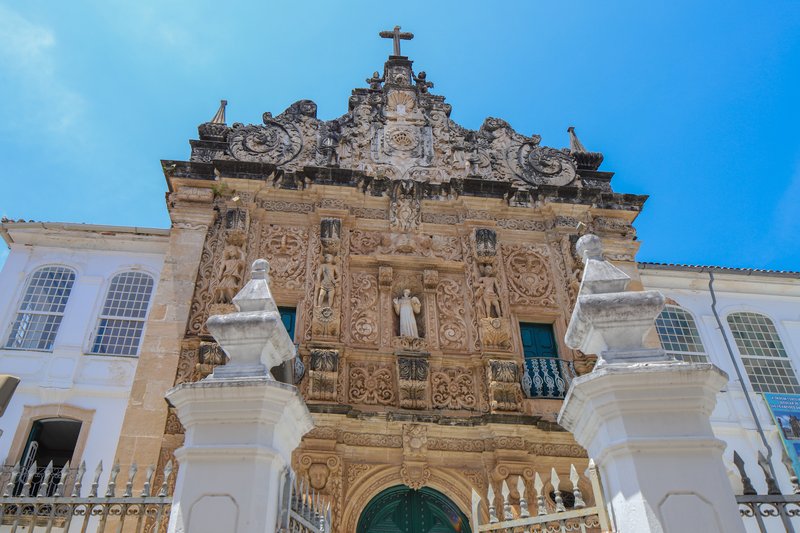
The sandstone facade is the only example of Hispanic-American Churrigueresque carving in Brazil, dating to 1703. The ornate surface was discovered under plain plaster in 1936 after more than 200 years of concealment. The interior holds a small museum of sacred art and silver processional objects.
A cultural exchange center documenting the historic ties between Bahia and the Republic of Benin, established by the Bahian and Beninese governments in 1988. Exhibits cover the transatlantic slave trade, Candomblé religious links to West African Vodun, and the return migration of freed Africans known as Agudas.
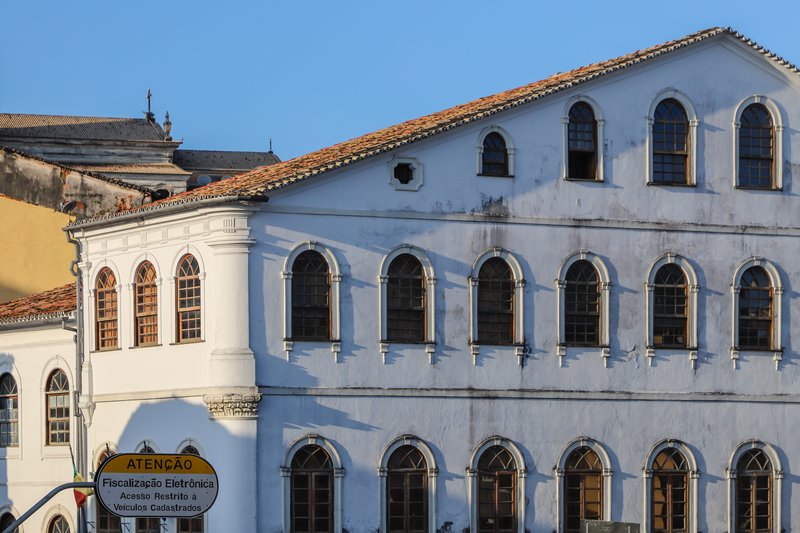
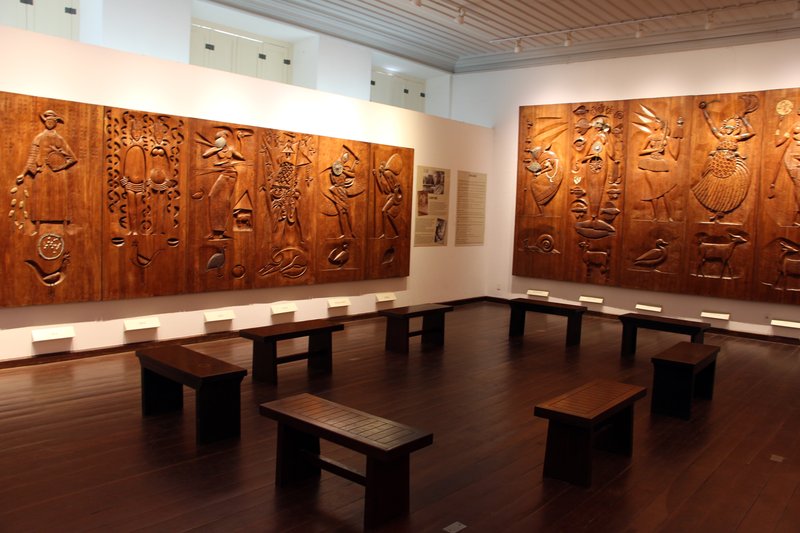
Founded in 1982 within the 18th-century Faculdade de Medicina building, the museum documents African and Afro-Brazilian culture through roughly 1200 objects — ceremonial items, Candomblé iconography, and 27 carved wooden panels by artist Carybé, each depicting one of the Orixás.
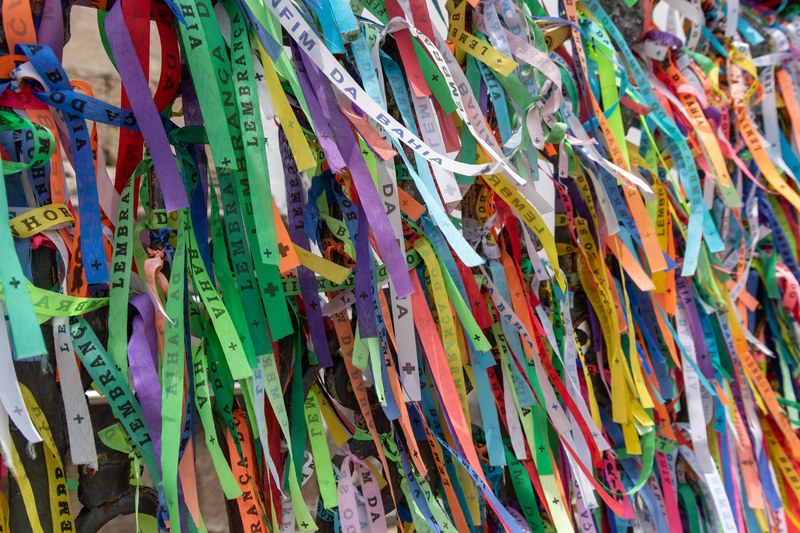
The most revered church in Bahia, built in 1745. The Sala dos Milagres is lined with thousands of ex-voto offerings: wax body parts, photographs, crutches, and written prayers left by devotees. The Lavagem do Bonfim each January draws millions to watch Baianas wash the church steps.
From Hotel: 3 min · 2 min → Fundação Casa de Jorge Amado
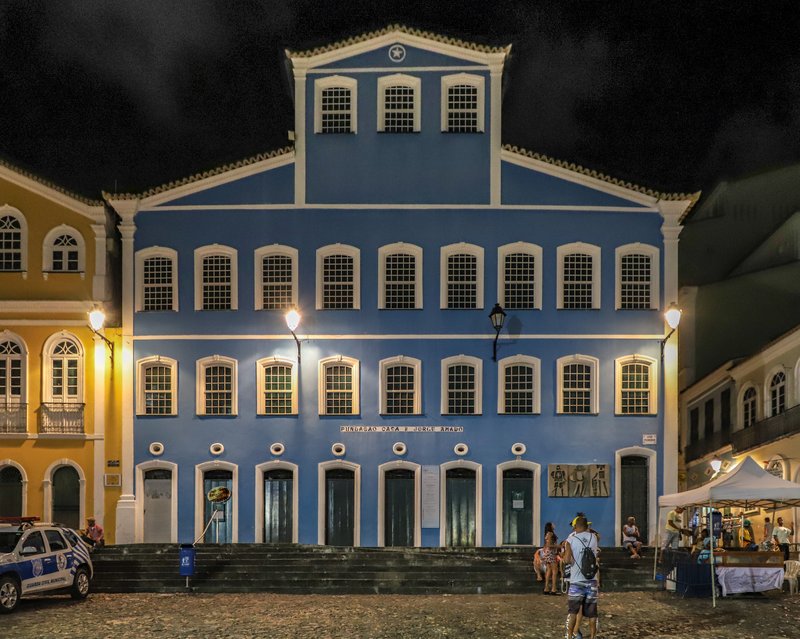
1.Fundação Casa de Jorge Amado~45 min
Museum dedicated to Bahia's most celebrated novelist, housed in a restored 18th-century mansion. Holds manuscripts, editions in 49 languages, photographs, and personal objects from Amado's career including Gabriela and Dona Flor.
1 min · 2 min → Igreja de Nossa Senhora do Rosário dos Pretos
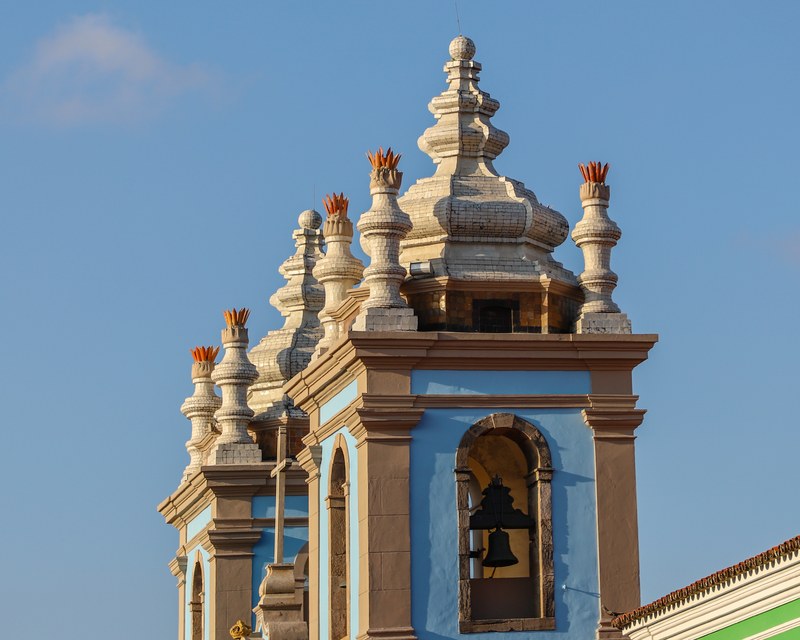
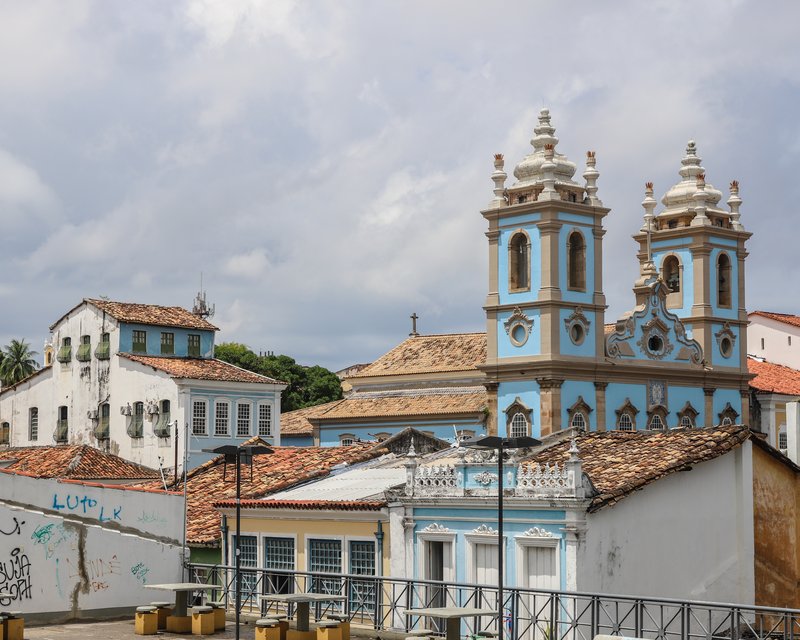
2.Igreja de Nossa Senhora do Rosário dos Pretos~30 min
Built from 1704 by the Brotherhood of Black Men — a confraternity that included enslaved Africans who funded and constructed the church themselves. One of the most historically significant Afro-Brazilian sacred spaces in the country, the church still holds masses with Candomblé percussion.
12 blocks of 17th-century Baroque and colonial architecture painted in saturated primary colors, recognized as a UNESCO World Heritage Site. The cultural heart of Afro-Brazilian life — capoeira circles, Candomblé drumming, and Baianas in white dress selling acarajé fill the squares daily.
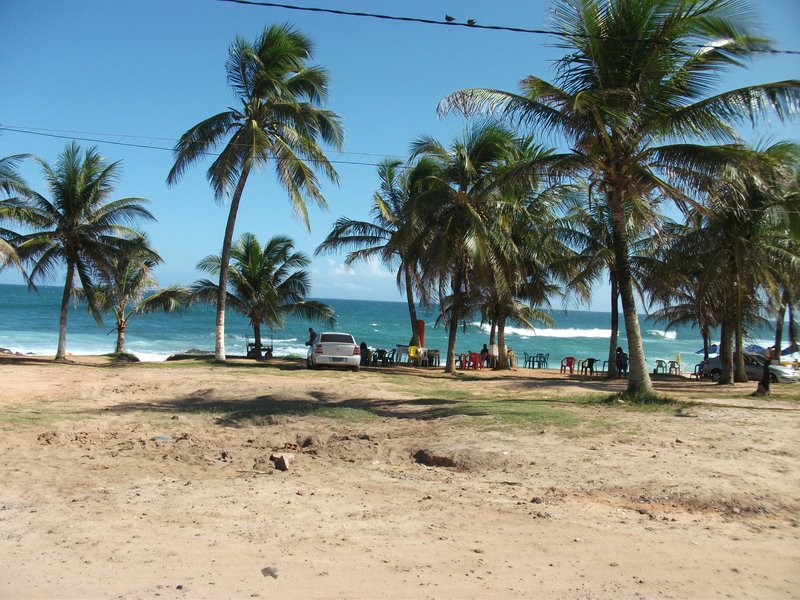
An open Atlantic-facing beach at Salvador's northern urban coast, known for consistent surf and the lighthouse at the city's northeastern limit. Vinícius de Moraes set his composition "Tarde em Itapoã" here, and the beach retains an unhurried character compared to the more central beaches closer to downtown.
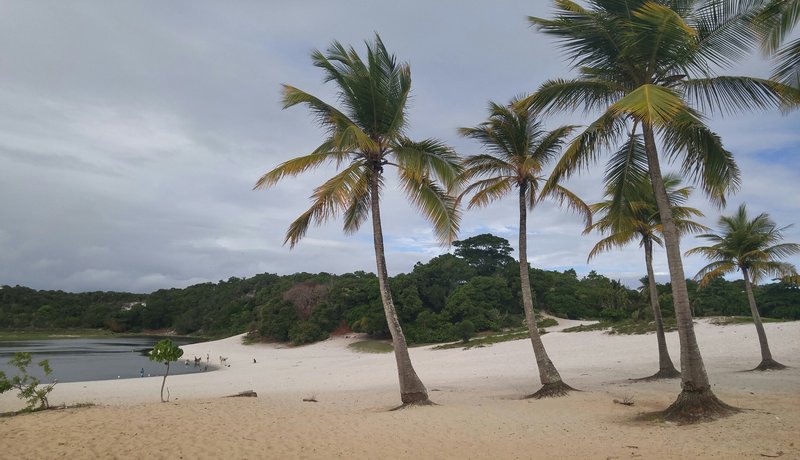
A freshwater lagoon with naturally dark water caused by decomposed organic matter, set against brilliant white sand dunes. Sacred to Candomblé practitioners and the setting that inspired Dorival Caymmi's celebrated composition "Itapoã." The surrounding dunes form a protected natural park.
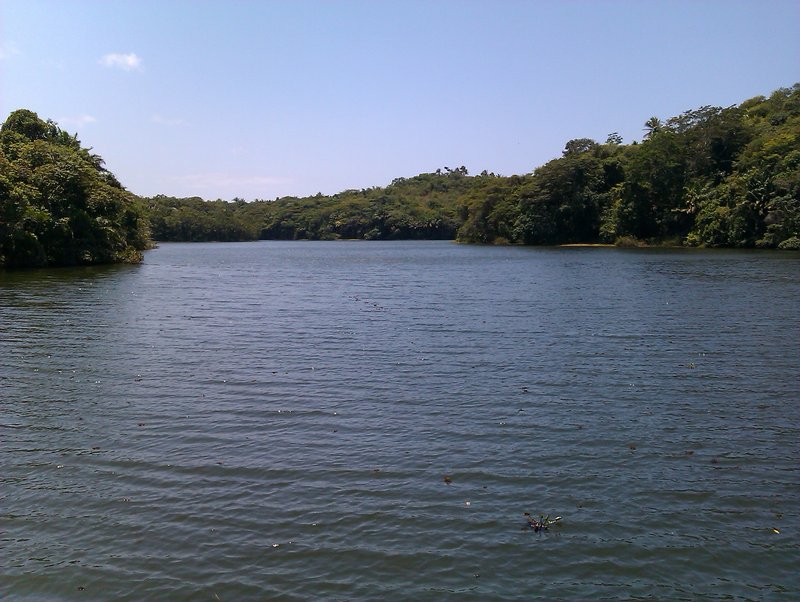
The largest urban forest reserve in Brazil at 1,720 hectares, preserving a continuous tract of Atlantic Forest within city limits. The park contains a freshwater lake, 10 km of hiking trails, capuchin monkeys, and migratory birds. The lakeside promenade is a popular walking and cycling circuit among residents.
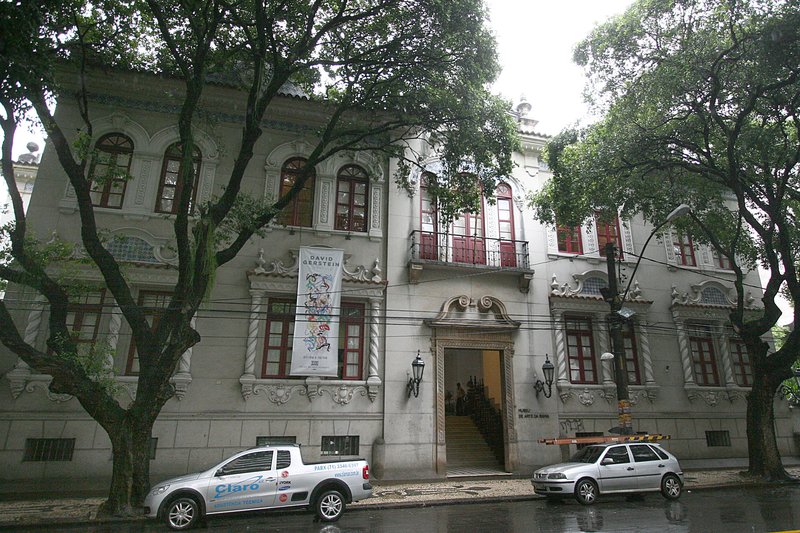
The oldest fine arts museum in Bahia, housed in a 1912 Neoclassical building in the Vitória district. The permanent collection covers European and Brazilian painting, decorative arts, and furniture from the 17th through 20th centuries, including Portuguese colonial-era religious art.
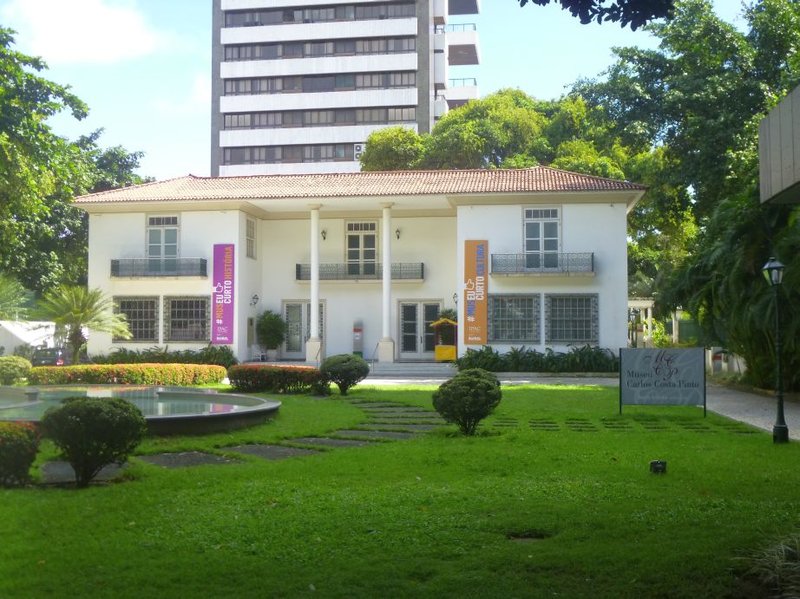
A private decorative arts museum in the 1954 mansion of industrialist Carlos Costa Pinto, on the same avenue as the Bahia Museum of Art. The collection covers 18th-century Portuguese silver, balangandã charm clusters worn by enslaved women as status markers, and colonial-era Baroque furniture.
Museum in the 17th-century Santa Casa de Misericórdia complex, one of the oldest charitable institutions in the Americas. The collection covers colonial silver, religious art, period medical equipment, and tile panels depicting the hospital's history of caring for the poor, slaves, and abandoned children.
An 8-hour guided tour covering historic districts, colonial churches, African-influenced neighborhoods, and cultural sites including the Bonfim church and Barra lighthouse, with lunch included.
A 3-hour overview of the historic center by vehicle and on foot, covering the key colonial landmarks and neighborhoods with a guide explaining the city's Portuguese and African heritage.
A 2.5-hour walking tour of Pelourinho with a guide covering the major Baroque churches, historic squares, and the cultural history of the neighborhood. Maximum 10 participants.
A 4-hour tour tracing the city's African roots through historic districts — Candomblé culture and African-Brazilian heritage sites — ending with an acarajé tasting from a traditional Baiana vendor.
A 6-hour tour exploring the city through an anthropological lens — colonial architecture, Afro-Brazilian religious heritage, local life — with lunch included. Maximum 6 participants.
A shared-group city highlights tour covering major landmarks by vehicle and on foot, with itinerary options ranging from 4 to 8 hours depending on the route selected.
A 1-hour live performance at the Associação de Capoeira Mestre Bimba, founded by the creator of Capoeira Regional in 1937. Program includes capoeira, maculelê stick fighting, samba de roda, and live percussion.
Black-eyed pea fritters deep-fried in dendê palm oil, filled with vatapá, caruru, and dried shrimp. Sold by Baianas in white dress — rooted in Candomblé offerings to the Orixá Iansã.
Fish or shrimp stew cooked in dendê palm oil with coconut milk, tomato, onion, and coriander. Served in a clay pot and distinct from the Espírito Santo version by the palm oil and coconut.
A thick paste of stale bread, dried shrimp, peanuts, cashews, coconut milk, and dendê palm oil. Eaten with rice or as filling inside acarajé; a ceremonial offering to Xangô in Candomblé.
Okra dish cooked with shrimp, peanuts, cashews, and dendê palm oil. A ritual food in Candomblé, traditionally prepared for the feast of the twin saints Cosme and Damião.
Black-eyed pea dough steamed inside a banana leaf — same base as acarajé but without frying. The banana-leaf technique was brought directly from West Africa to Bahia.
Black bean soup thickened to a dense broth, seasoned with garlic, onion, and dried meat. A street-food staple in bars and lanchonetes, served with farofa and hot sauce.
Performing arts venue in Bahia. Home to the Bahia Symphony Orchestra and the Castro Alves Theater Ballet — first public dance company in Brazil's Northeast.
One of the world's largest street festivals in February or March. Trios elétricos lead crowds through circuits Dodô, Osmar, and Batatinha for a full week.
Foreign number: accepted. — the SMS verification code arrives on international numbers.
Well-established across Salvador including Pelourinho, Barra and the Itaigara business district; UberX is the standard option and wait times are short across most neighbourhoods.
Foreign number: not accepted. — a Brazilian phone number is required to register.
Brazil's second-largest ride-hailing app; registration requires a Brazilian number, making it inaccessible to most foreign visitors — Uber and InDriver are the practical alternatives.
Foreign number: accepted. — the SMS verification code arrives on international numbers.
Negotiated-fare model where you propose a price and drivers respond; broader coverage in outer neighbourhoods than Uber, and rates can be lower at quieter times of day.
Salvador operates on two sacred geographies simultaneously. The Lavagem do Bonfim — the ritual washing of the church steps that draws millions each January — takes place at a Catholic church dedicated to Christ. But the ceremony belongs to Oxalá, the Candomblé Orixá of creation and the sky, whose energy the Baianas invoke through perfumed water. The church steps are the threshold of two religions at once, and neither disputes the other's presence.
The Dique do Tororó reservoir has been considered sacred to Oxum, the Orixá of freshwater and fertility, since before the colonial period. The eight Orixá sculptures installed in 1998 made explicit what practitioners already knew about the lake. A Dutch-engineered reservoir, built for colonial water supply, became a Candomblé altarpiece at the center of a modern city — functioning as both, simultaneously, without contradiction.