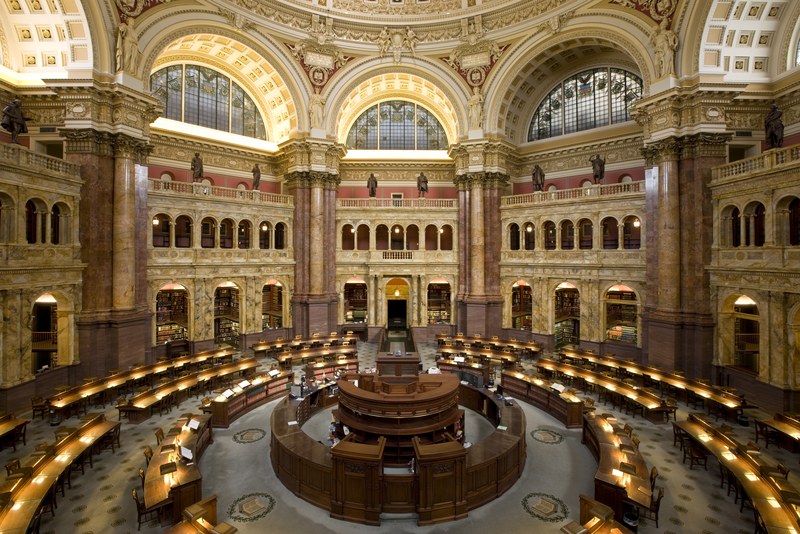
The Library of Congress is the world's largest library, with over 170 million items. The Thomas Jefferson Building's Great Hall and Main Reading Room are among the most ornate public interiors in the country, rising eight stories under a painted vaulted ceiling.
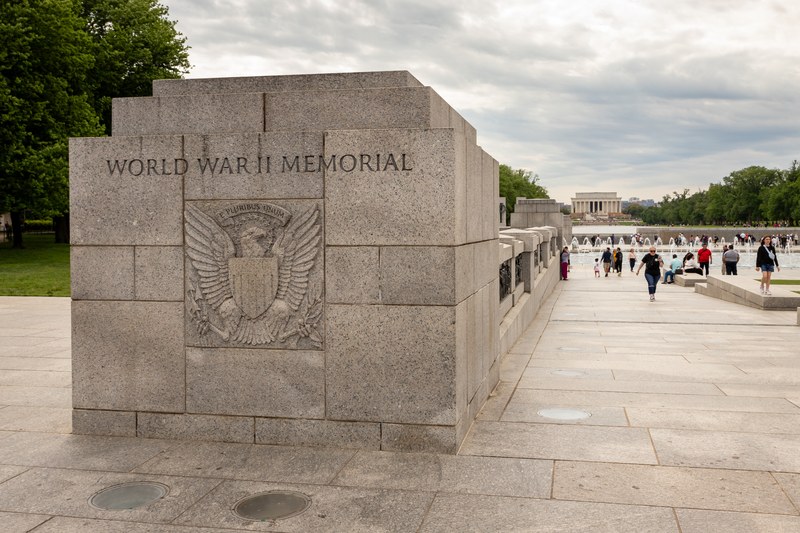
The National WWII Memorial honors the 16 million Americans who served in the armed forces during World War II. Fifty-six granite pillars represent every state and territory around a central plaza, and the Freedom Wall's 4,048 gold stars each stand for 100 American war dead.
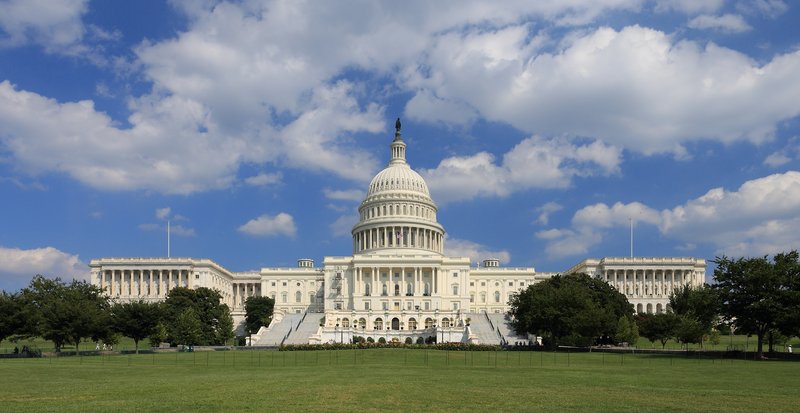
The US Capitol houses the Senate and House under its cast-iron dome, Washington's defining silhouette. The Capitol Visitor Center includes the Rotunda, Statuary Hall, and the Crypt; timed-entry reservations are required in advance.
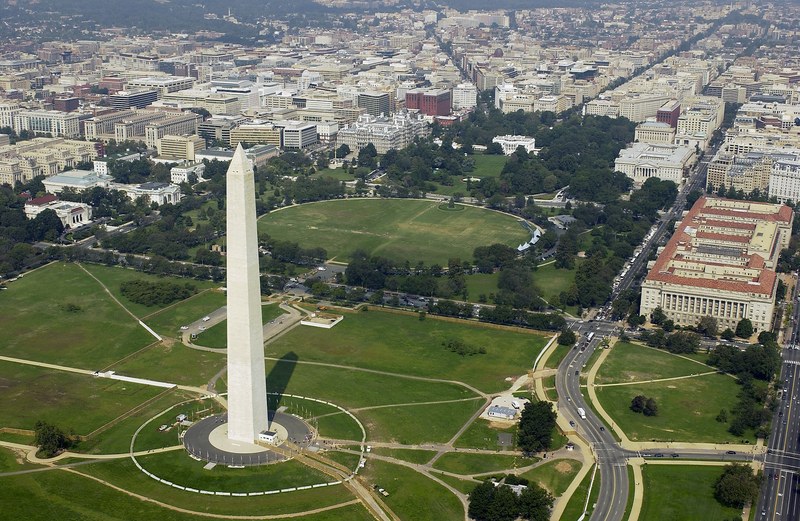
The Washington Monument is a 555-foot marble obelisk honoring the nation's first president. An elevator carries visitors to the observation deck for panoramic views over the National Mall and the city beyond.
3 min · 2 min → National Museum of African American History and Culture
2.National Museum of African American History and Culture~2 hr
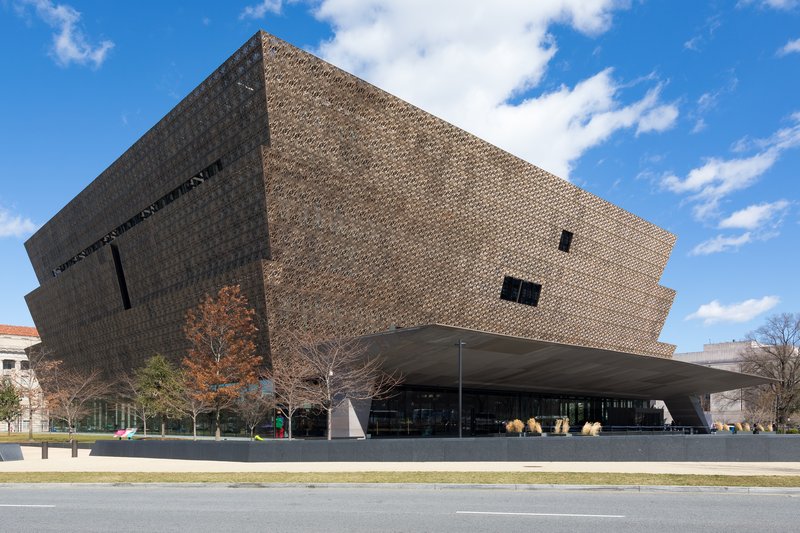
The National Museum of African American History and Culture traces the African American experience from slavery through the civil rights era to the present, across galleries beneath a three-tiered bronze corona facade inspired by Yoruba crown design.
3 min · 2 min → National Museum of American History
3.National Museum of American History~1 hr 30 min
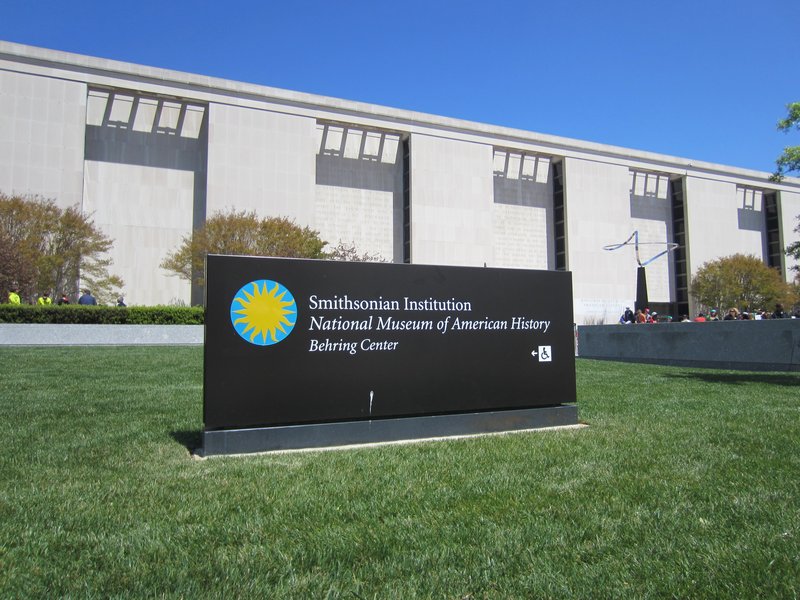
The National Museum of American History spans the country's social, political, and cultural history. Its centerpiece is the original Star-Spangled Banner flag, displayed in a climate-controlled chamber at the heart of the building.
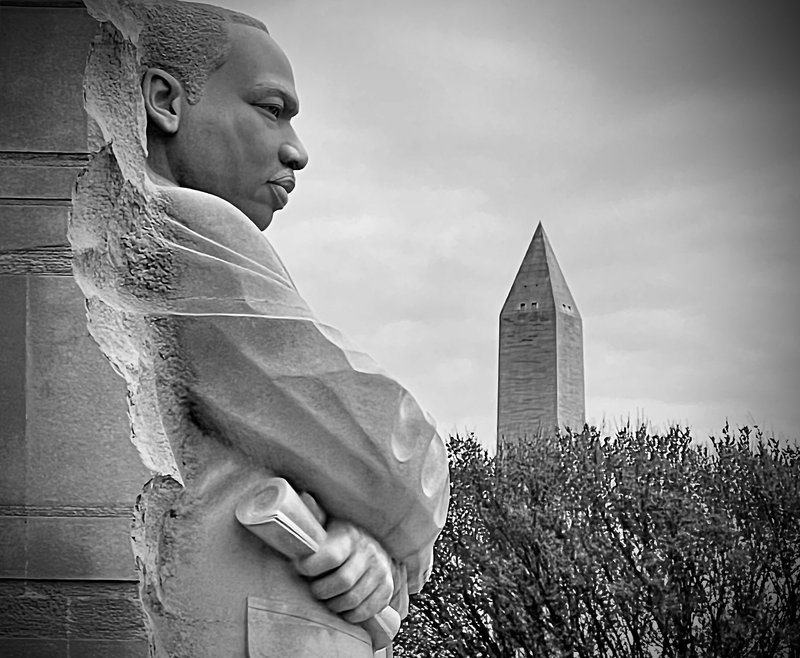
The Martin Luther King Jr. Memorial centers on the 30-foot "Stone of Hope," a granite statue of King emerging from a boulder split in two. An inscription wall along the site carries fourteen quotations drawn from his speeches and sermons.
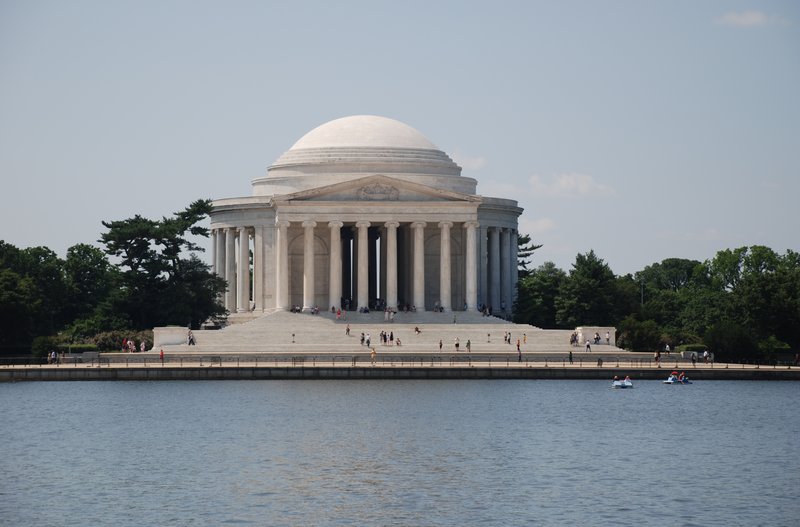
The Jefferson Memorial is a neoclassical rotunda on the Tidal Basin honoring the third president and principal author of the Declaration of Independence. Quotations from Jefferson's writings line the interior walls beneath a domed ceiling modeled on the Pantheon.
From Hotel: 9 min · 2 min → National Archives Museum
1.National Archives Museum~1 hr
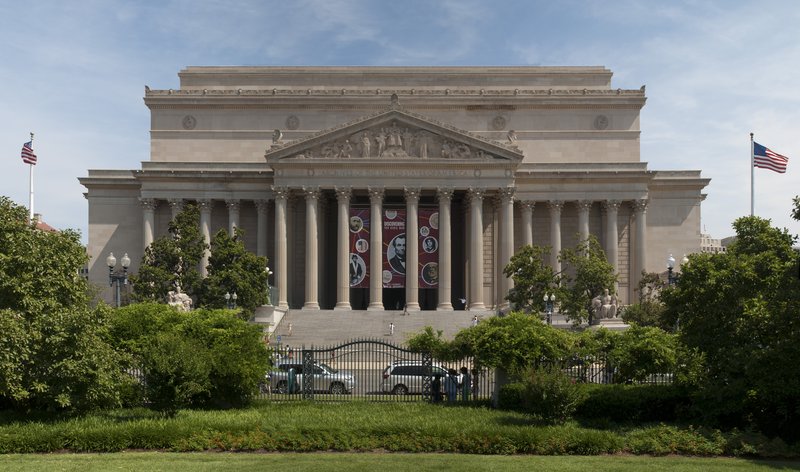
The National Archives Museum displays the original Declaration of Independence, Constitution, and Bill of Rights in the Rotunda for the Charters of Freedom, alongside rotating exhibits drawn from the nation's permanent historical record.
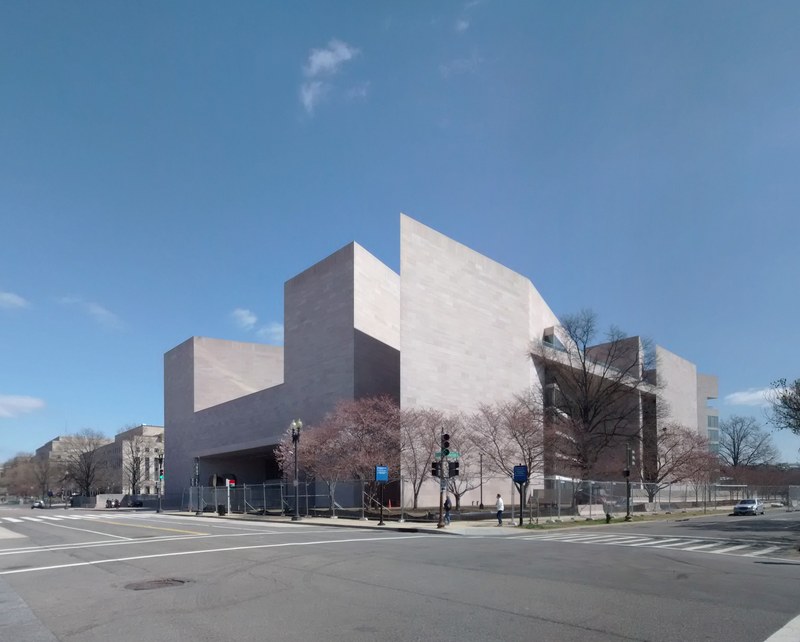
The National Gallery spans two buildings connected underground: the neoclassical West Building with Vermeer, Rembrandt, and Leonardo; and I.M. Pei's East Building with modern art and a Calder mobile in the soaring atrium.
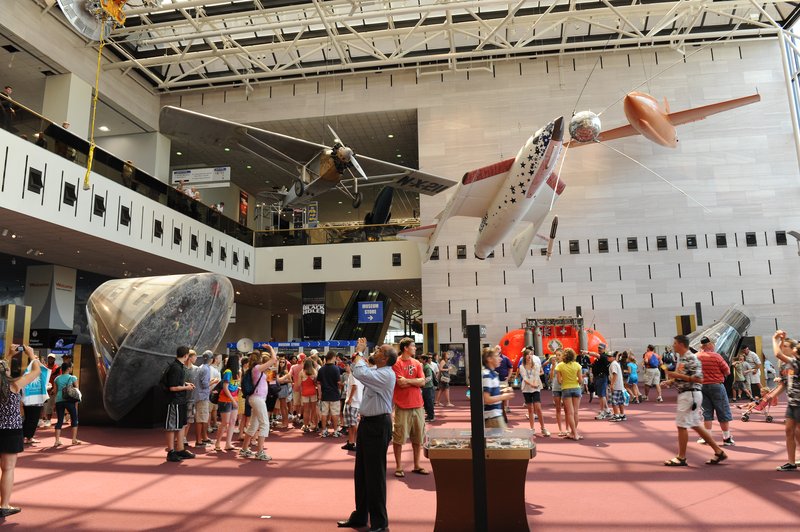
The National Air and Space Museum holds the world's largest collection of historic aircraft and spacecraft, including the Wright Flyer, Charles Lindbergh's Spirit of St. Louis, and the Apollo 11 command module.
9 min · 2 min → National Museum of Natural History
4.National Museum of Natural History~1 hr 30 min
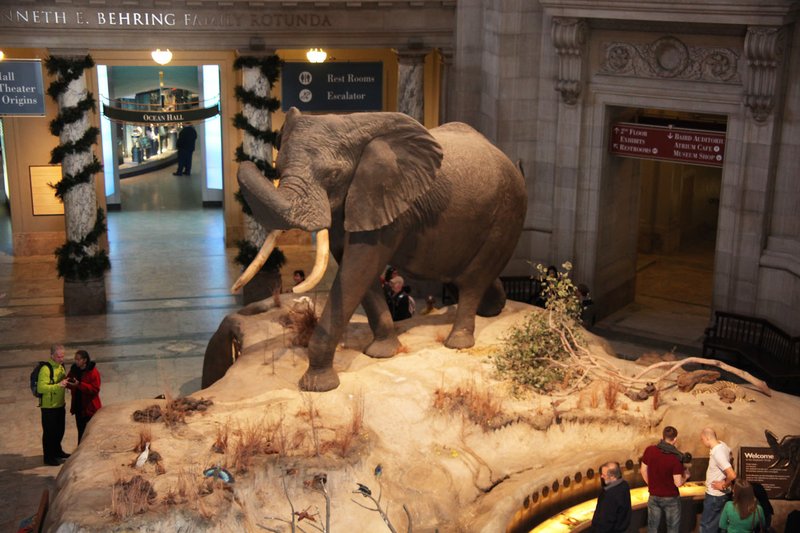
The National Museum of Natural History holds over 148 million specimens spanning paleontology, anthropology, and geology, including the Hope Diamond and the taxidermied African bush elephant that has greeted visitors in the rotunda since 1959.
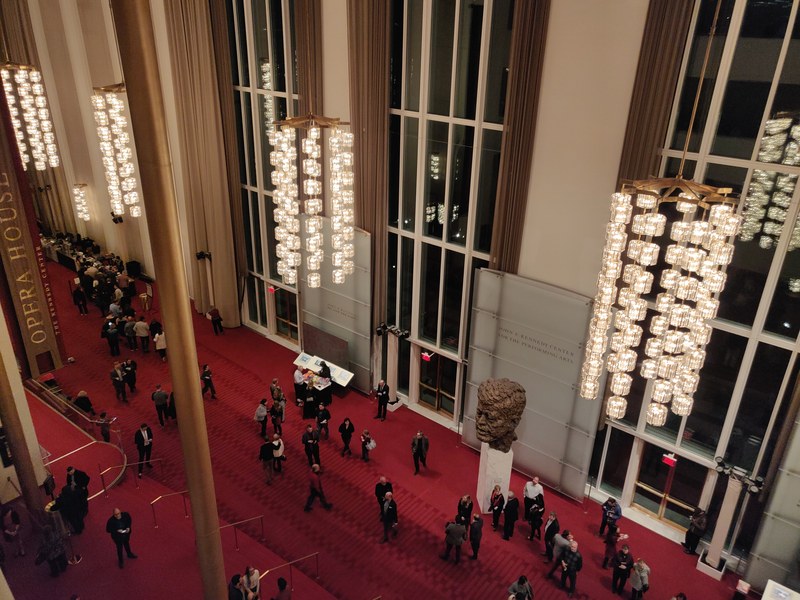
The Kennedy Center's 630-foot Grand Foyer, lined with crystal chandeliers, overlooks the Potomac River from Edward Durell Stone's 1971 building. The free rooftop terrace and daily Millennium Stage performances are open to the public without a ticket.
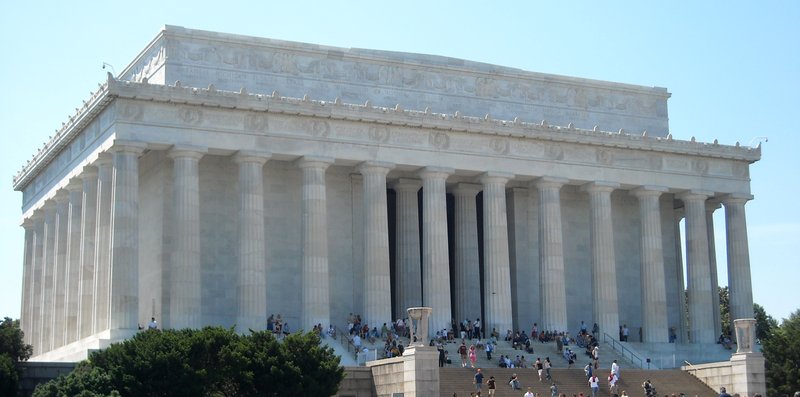
The Lincoln Memorial houses Daniel Chester French's 19-foot seated marble statue inside a Greek Revival colonnade. The west-facing terrace overlooks the Reflecting Pool and the Washington Monument along the National Mall.
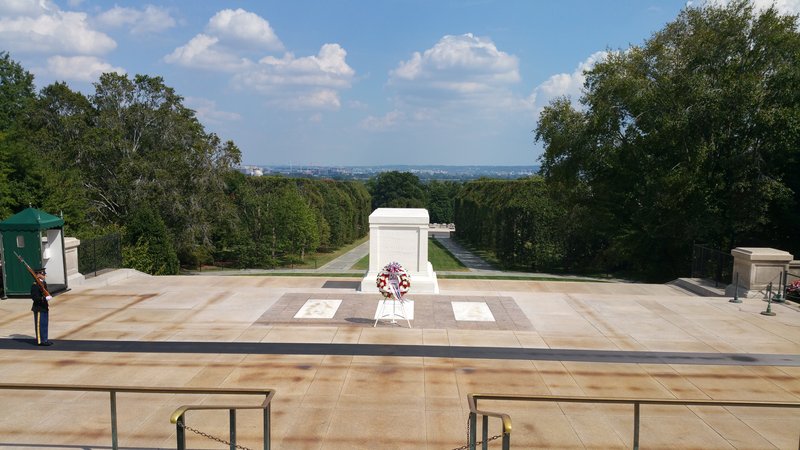
Arlington National Cemetery honors more than 400,000 service members across 639 acres in Virginia. The Tomb of the Unknown Soldier is guarded around the clock by the 3rd US Infantry Regiment, with the Changing of the Guard performed every half hour in daylight hours.
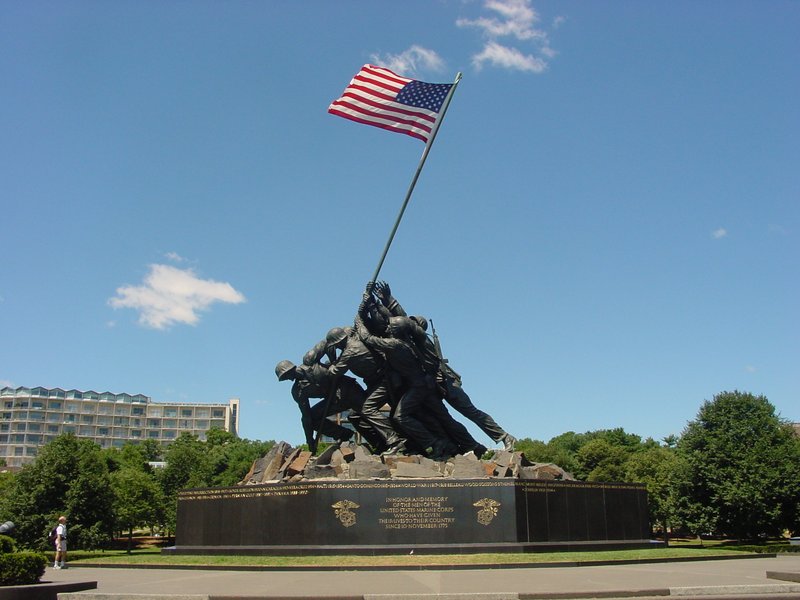
The Marine Corps War Memorial, known as the Iwo Jima Memorial, is a 32-foot bronze sculpture of the six Marines raising the American flag atop Mount Suribachi in 1945, honoring every Marine who has died in service since 1775.
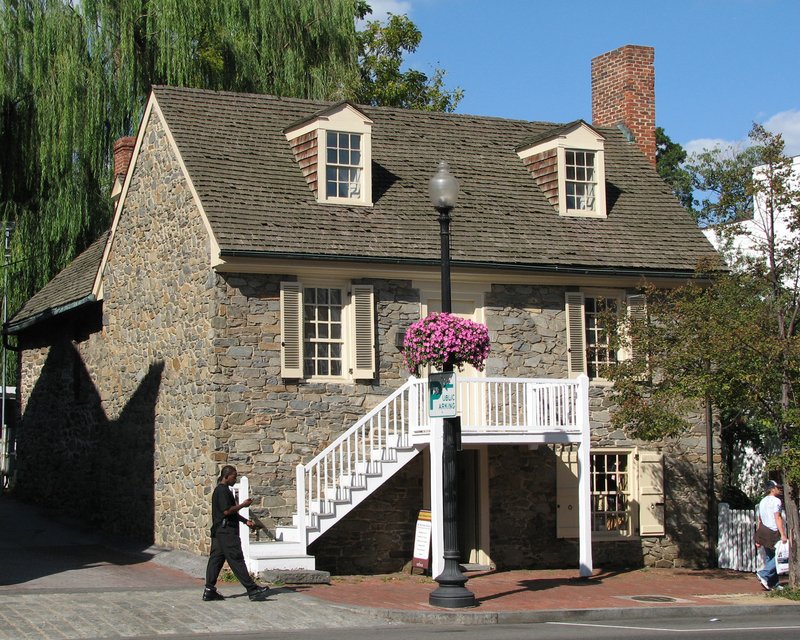
Built in 1765, the Old Stone House is the last surviving pre-revolutionary colonial building in Washington DC. The National Park Service furnishes the rooms in period style, with a Colonial Revival garden open behind the house.
5:20am Washington Union Station → 7:11am Philadelphia 30th Street
8:50am Washington Union Station → 10:51am Philadelphia 30th Street
10:18am Washington Union Station → 11:55am Philadelphia 30th Street
ARRIVE Philadelphia 30th Street Station: 38 min · 12 min → Independence Hall
1.Independence Hall~1 hr
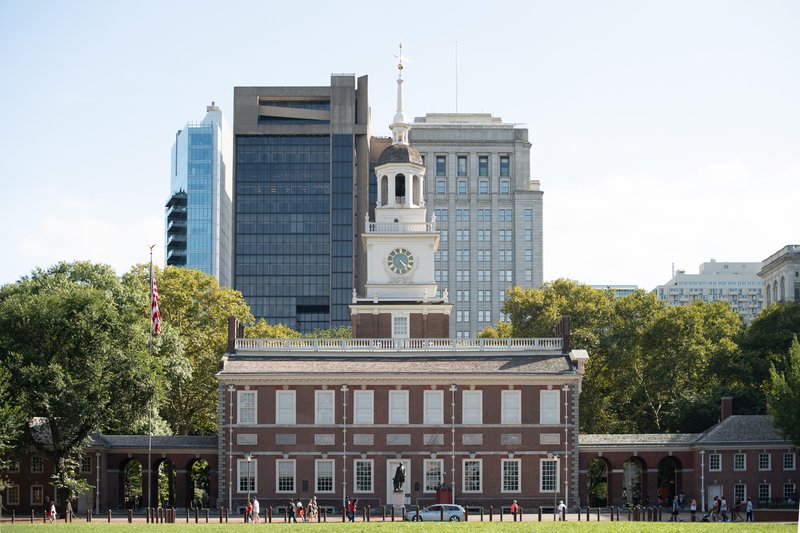
Independence Hall is where the Declaration of Independence was adopted in 1776 and the US Constitution drafted in 1787. Guided tours enter the Assembly Room where both documents were debated and signed, preserved with the original inkstand and the Rising Sun chair.
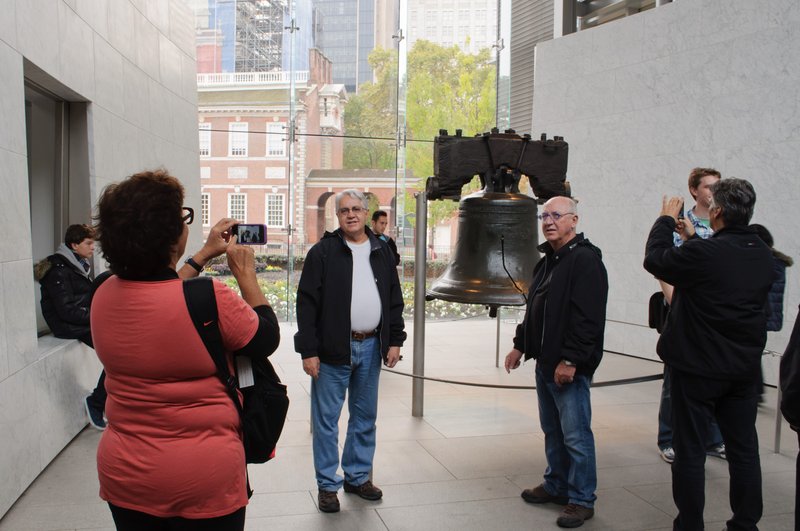
The Liberty Bell, with its famous fracture and the inscription "Proclaim Liberty throughout all the land," hangs in a glass pavilion facing Independence Hall. Cast in 1752, it became an emblem of abolition and civil rights over the following two centuries.
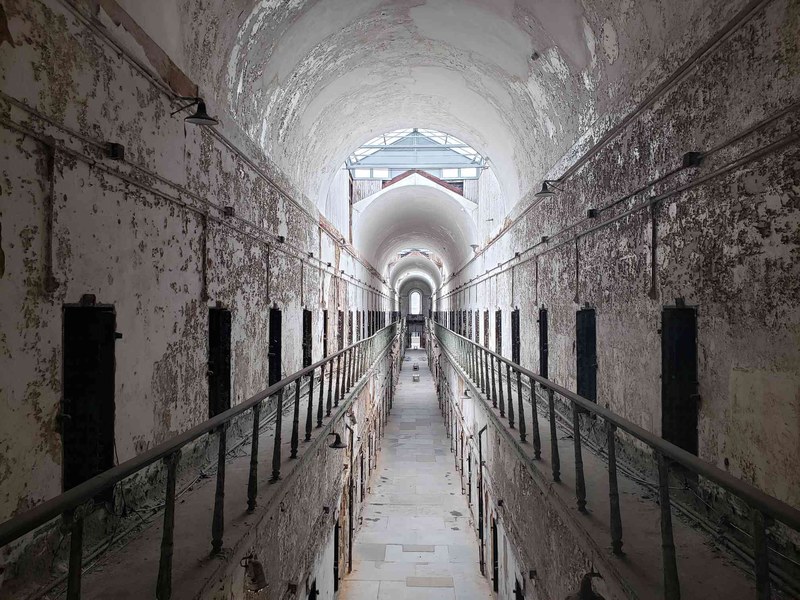
Opened in 1829, Eastern State Penitentiary pioneered the "separate system" of solitary confinement and became the model for hundreds of prisons worldwide. Now a preserved ruin, its vaulted radial cellblocks and Al Capone's restored cell are explored on a self-guided audio tour narrated by Steve Buscemi.
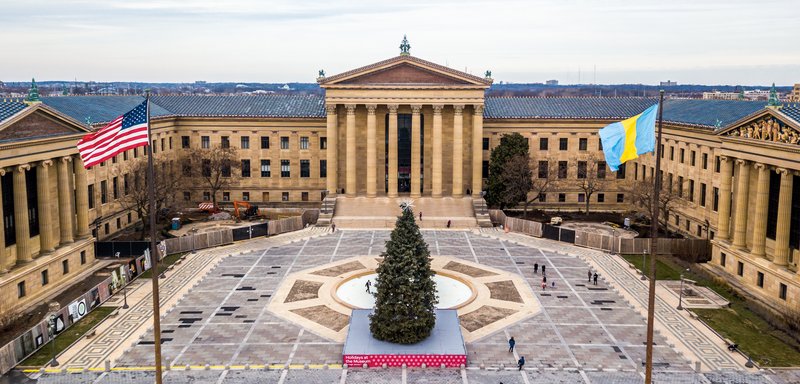
The Philadelphia Museum of Art holds more than 240,000 works across 200-plus galleries in a 1928 Greek Revival landmark. Its east entrance stair — the "Rocky Steps" — draws visitors for the sculpture of the boxer at the top and the skyline view down Benjamin Franklin Parkway.
A narrated evening tour of DC's illuminated monuments by open-air trolley — Lincoln Memorial, the Washington Monument, the White House, and the Capitol Reflecting Pool, with a live guide covering the history of each landmark after dark.
A small-group tour of Arlington National Cemetery with a licensed guide — the Tomb of the Unknown Soldier Changing of the Guard, the Kennedy eternal flame, and Section 60, followed by an optional bus extension to the Mall monuments.
A guided open-top double-decker bus tour of the National Mall monuments at night — Lincoln, Jefferson, FDR, WWII, Vietnam Veterans, and the Capitol, with a panoramic view of each illuminated landmark from the open upper deck.
A small-group electric-cart tour of the National Mall monuments by day or night — the Lincoln, Vietnam Veterans, Korean War, FDR, and Jefferson memorials, with a guide narrating behind the scenes of each site from an open-air vehicle.
A guided evening van tour of DC's monuments and memorials at night — stops at the Lincoln Memorial, the White House, the WWII Memorial, and the Capitol, with a local guide and groups capped at 14 for a quieter after-dark experience.
A Potomac River cruise with a buffet meal — brunch, lunch, or dinner options aboard the Spirit of Washington, with views of the DC waterfront, the Jefferson Memorial, and Reagan National Airport from the open deck.
A 24-hour open-top double-decker bus tour covering the White House, Washington Monument, Lincoln Memorial, US Capitol, Jefferson Memorial, and National Cathedral with multilingual audio commentary.
A 3-hour guided night tour of the National Mall by bus — 10 illuminated monuments including the White House, WWII Memorial, Lincoln Memorial, and US Capitol, with admission tickets to the Washington Monument included.
A small-group sunset walking tour of the National Mall monuments — the Lincoln Memorial, Vietnam Veterans Memorial, Korean War Memorial, and the Jefferson Memorial reflecting in the Tidal Basin, as each site transitions from dusk to floodlit night.
A 6-hour sightseeing tour combining a guided bus tour of 10+ National Mall stops with a seasonal Potomac River cruise — Lincoln Memorial, US Capitol, the White House, and Arlington Cemetery in one full-day itinerary.
A small-group guided tour inside the US Capitol and Library of Congress — the Rotunda, National Statuary Hall, the Capitol Crypt, and the Jefferson Building's Great Hall and Main Reading Room, with reserved entry included.
A 2-hour walking tour through Georgetown's historic streets — the C&O Canal, antebellum townhouses, power corridors, and the neighborhood gossip behind the buildings, led by a local guide fluent in the political and social history of DC's oldest enclave.
A 2.5-hour evening narrated trolley tour of DC's illuminated monuments — the Lincoln Memorial, White House, WWII Memorial, and Capitol Reflecting Pool, with a live guide on an open-air vehicle after dark.
A 2-hour small-group electric cart tour of the National Mall at night — Lincoln Memorial, Vietnam Veterans Memorial, Korean War Memorial, FDR Memorial, and Jefferson Memorial, with a local guide and groups of six for a quieter after-dark experience.
A 2-hour evening walking ghost tour through DC's most haunted streets — the White House grounds, the Octagon House, Lafayette Square, and Decatur House, with a theatrical guide weaving paranormal history and political intrigue into each stop.
The half-smoke is DC's signature sausage — a coarse pork-and-beef blend, naturally smoked and served in a split-top bun with chili, mustard, and onions. Ben's Chili Bowl on U Street has served it continuously since 1958.
DC's Adams Morgan and the U Street corridor form one of the most concentrated Ethiopian dining districts in the country, with injera-based communal meals at dozens of family-run restaurants across a four-block stretch.
A sweet, tangy, mildly spicy red sauce applied to chicken wings and fried food at DC carryout restaurants since the 1950s. Found nowhere else with the same cultural weight; a fixture at neighborhood carry-outs across the city.
Chesapeake Bay blue crab steamed in Old Bay is the defining seafood of the DC and Baltimore region. The Wharf on the Southwest waterfront has multiple vendors serving hard-shell crabs at outdoor tables alongside the water.
Foreign number: not accepted — DoorDash requires a US phone number for account verification.
DoorDash is the leading delivery app in Washington DC, with coverage across all major neighborhoods from Georgetown to Capitol Hill; most orders arrive within 30–45 minutes, and the selection ranges from local restaurants to national chains.
Foreign number: accepted — it uses the same Uber account you may already have.
Uber Eats covers DC broadly with strong restaurant variety from fast-food to upscale delivery, particularly around Penn Quarter, Dupont Circle and Georgetown; delivery times average 25–40 minutes.
Foreign number: not accepted — Grubhub requires a US phone number for SMS verification.
Grubhub has solid DC coverage with many local restaurants not found on other apps, particularly around the GW University corridor and Adams Morgan; a US number is needed to create a new account from scratch.
Foreign number: accepted — an existing Uber account works without modification.
Uber operates widely across Washington DC and the surrounding suburbs including Arlington and Bethesda; wait times in the city center average 3–6 minutes, with surge pricing common during peak government hours and major events on the Mall.
Foreign number: not accepted. — Lyft's own help says the number must be a US, Canadian or Puerto Rican one, and the code is texted only to that number.
Lyft serves all of Washington DC and major suburbs; rates are generally comparable to Uber, and the app is particularly strong around Capitol Hill, K Street and the Mall during tourist season.
A Library Bought After a Fire, a Diamond Sent by Mail
The Library of Congress exists in its current form because of a fire and a favor. When British troops burned the Capitol in August 1814, the original congressional library — about 3,000 volumes — burned with it. Thomas Jefferson, sitting on the largest personal book collection in the country, offered to sell his own library as a replacement. Congress agreed to buy all 6,487 volumes in 1815, over objections from lawmakers who complained his books covered too many subjects and too many languages. That purchase, controversial at the time, became the seed of the collection now housed under the Main Reading Room's painted dome.
The Hope Diamond didn't arrive at the Natural History Museum in an armored convoy — it came through the US Postal Service. In 1958, jeweler Harry Winston decided registered mail was the safest way to ship it, so he wrapped the diamond in brown paper and sent it from New York to Washington by train mail car, heavily insured against loss. A postal carrier drove the plain parcel to the museum and handed it over like any other registered delivery.