From Hotel: 10 min · 4 min → Fort Vredeburg Museum
1.Fort Vredeburg Museum~1 hr
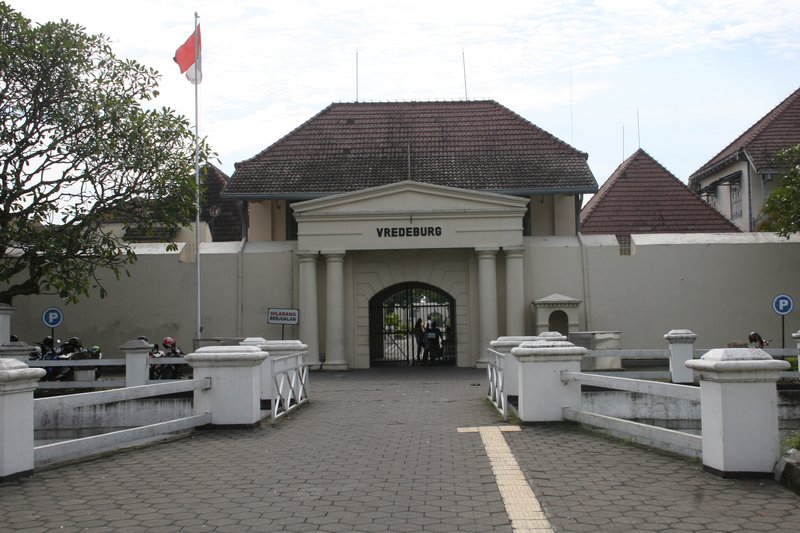
A restored Dutch colonial fortress at the top of Malioboro, its brick bastions now holding diorama halls that trace Yogyakarta's part in the Indonesian independence struggle.
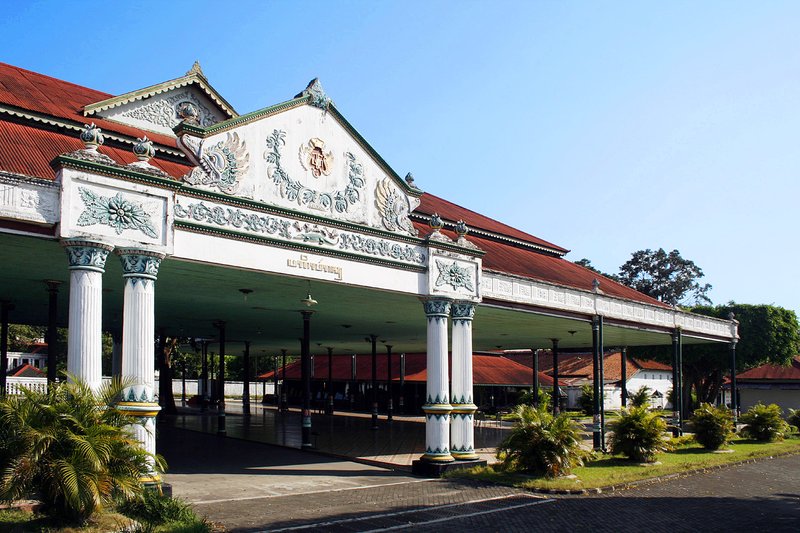
The working palace of the Sultan of Yogyakarta, built in 1755–56 and still the seat of the reigning Sultan and the center of Javanese court culture, with a museum of royal heirlooms and gamelan pavilions.
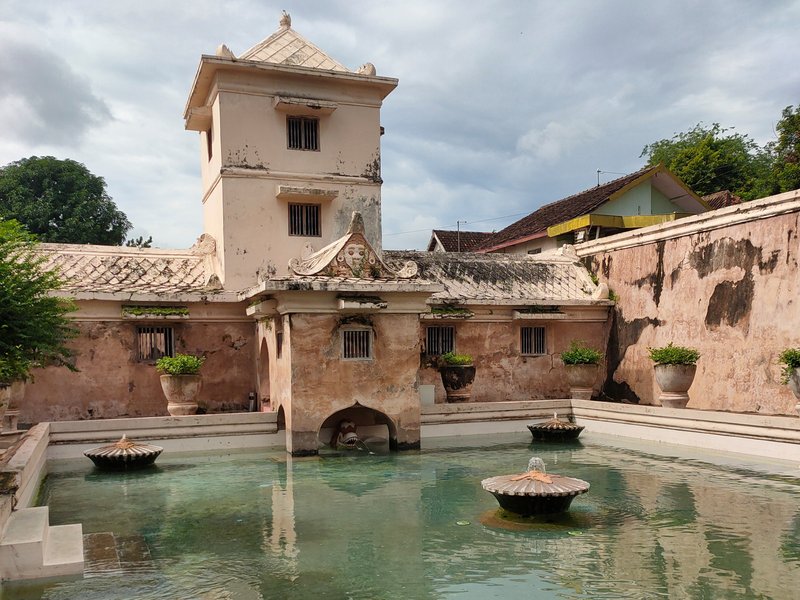
An 18th-century royal garden and bathing complex built for the Sultan's family, with a sunken swimming pool, a submerged mosque, and a warren of underground tunnels once used as a meditation retreat.
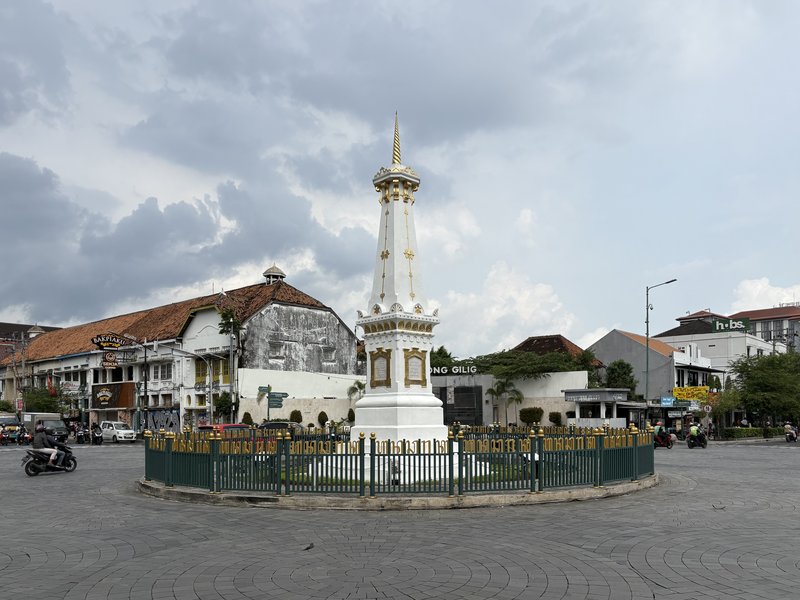
A white obelisk at the north end of Malioboro marking Yogyakarta's symbolic axis between the Kraton and the summit of Mount Merapi, rebuilt in 1889 after an 1867 earthquake toppled the original 1755 column.
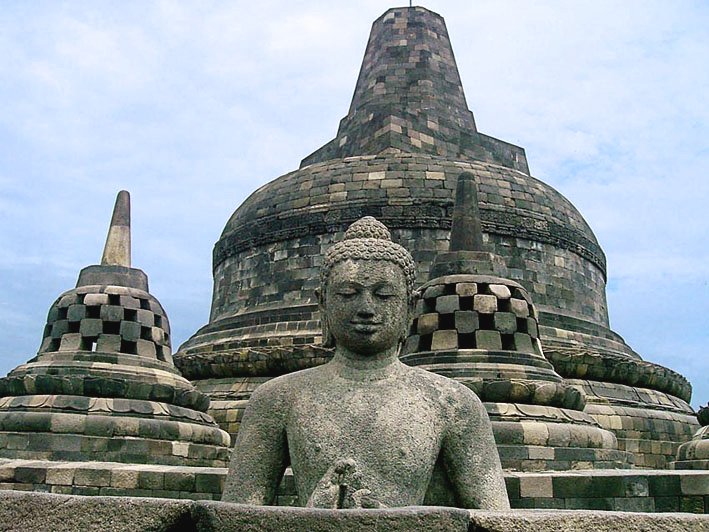
A 9th-century stepped pyramid of andesite stone — the largest Buddhist monument on earth — ringed by 2,672 relief panels and crowned with 72 bell-shaped stupas, each once holding a seated Buddha.
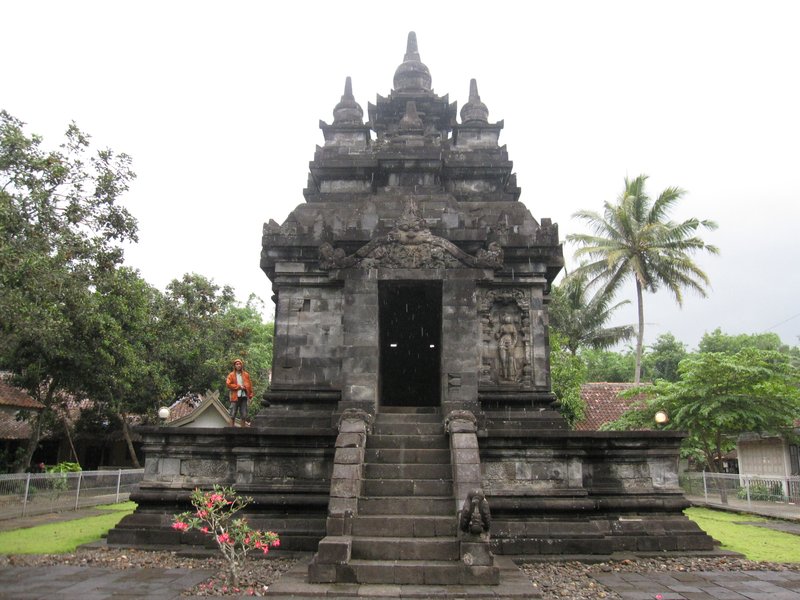
A small, finely carved 9th-century Buddhist temple standing exactly on the straight line between Borobudur and Mendut — thought to have served as a place of purification before the climb up Borobudur.
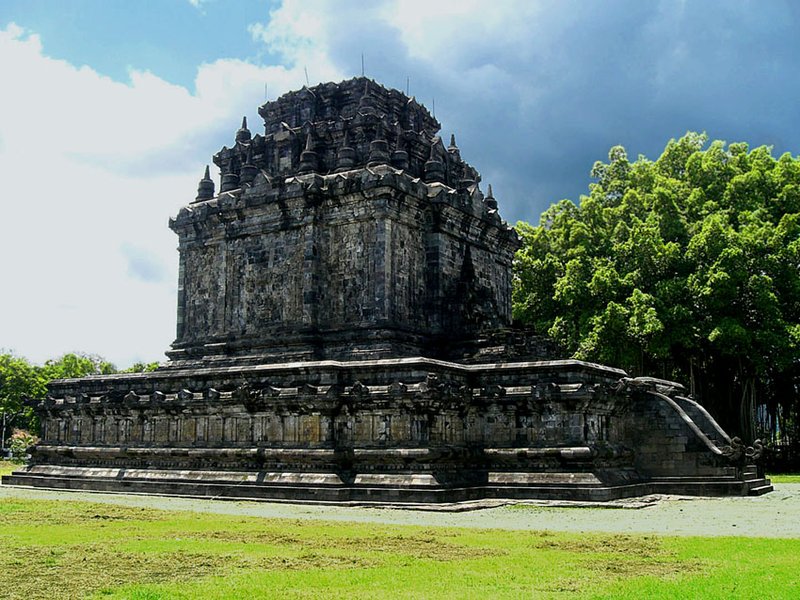
The oldest of the three temples on the Borobudur axis, built in the early 9th century, sheltering a monumental seated Buddha flanked by two bodhisattvas carved from a single block of stone.
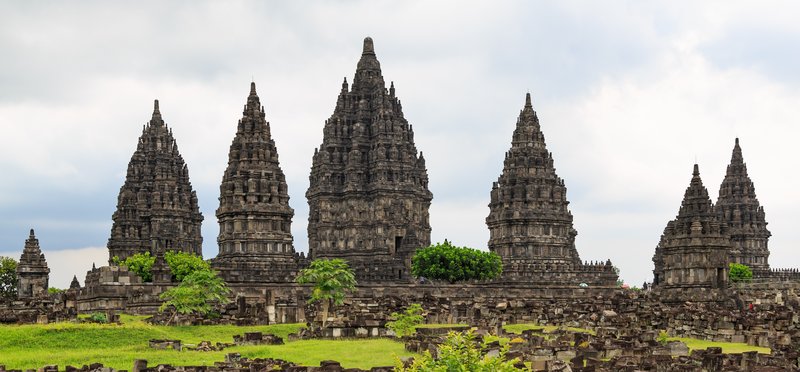
The largest Hindu temple compound in Indonesia and the second-largest in Southeast Asia, a 9th-century cluster of soaring stone spires dedicated to Brahma, Vishnu and Shiva, with the 47-metre Shiva temple at its center.
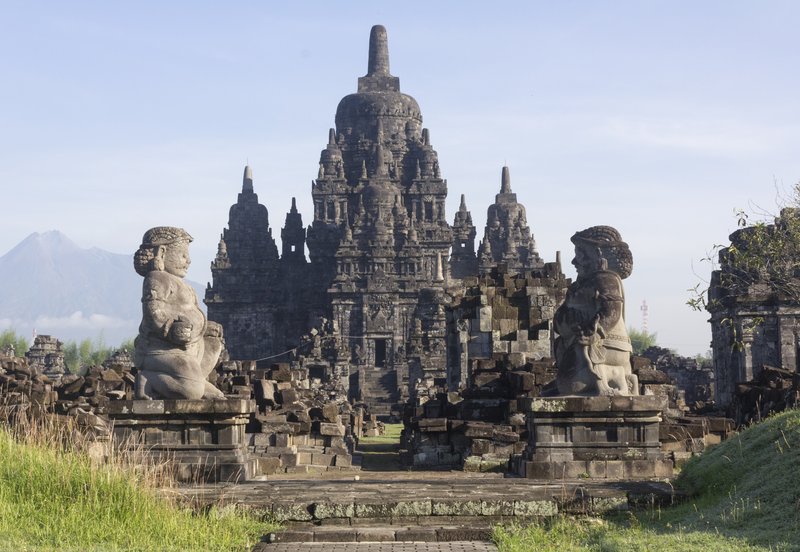
An 8th-century Buddhist temple complex of 249 individual shrines around a central sanctuary — the second-largest Buddhist temple in Indonesia after Borobudur, and the setting of the Roro Jonggrang legend.
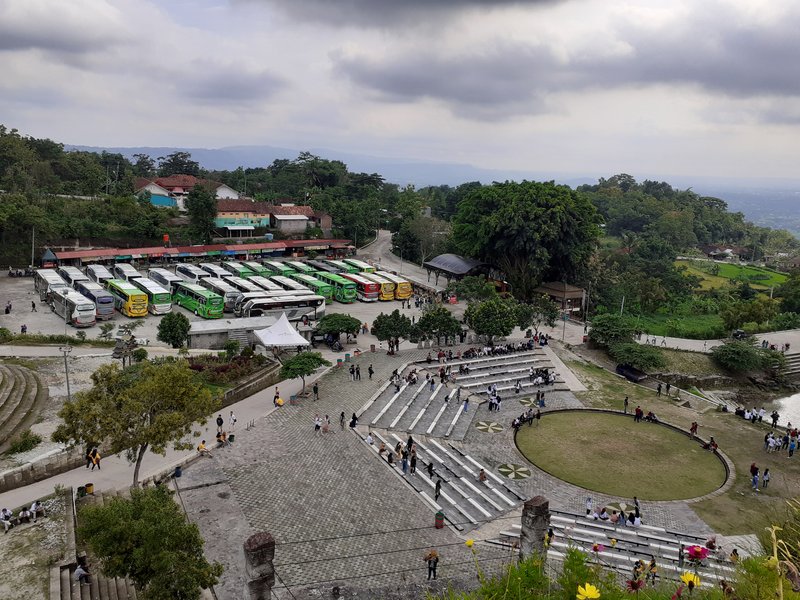
A disused limestone quarry whose sheer walls were carved into reliefs and amphitheater steps after mining stopped in 2014, now a viewpoint over the rice terraces toward Prambanan.
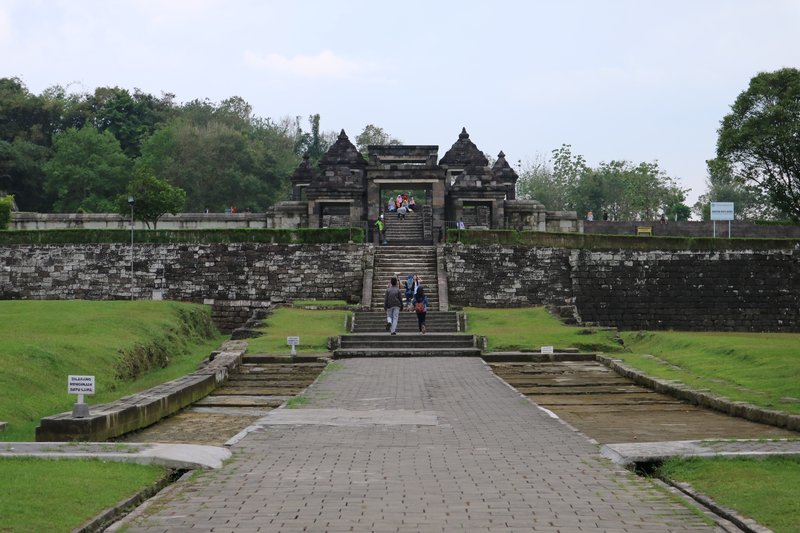
An 8th-century palace complex on a plateau above the Prambanan plain — gates, bathing pools and a crematorium terrace rather than a single temple — and the region's best-known sunset viewpoint.
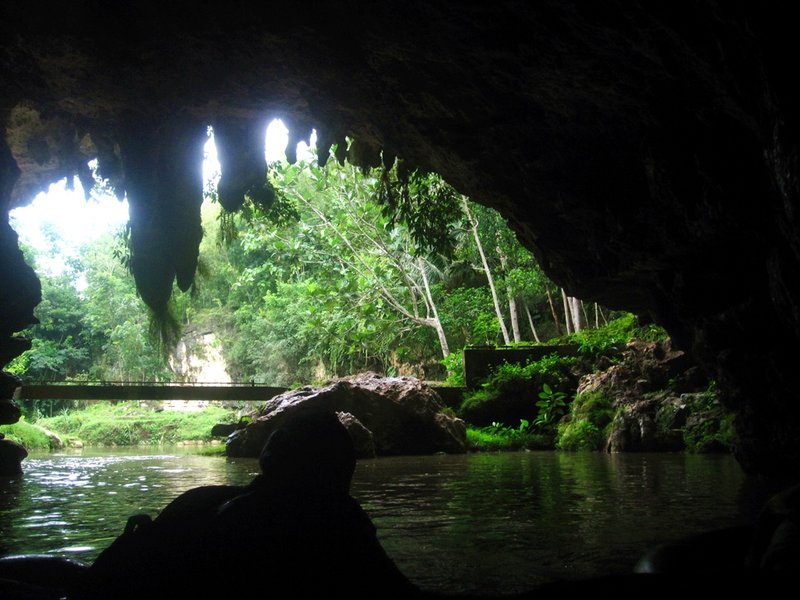
A karst cave with a 350-metre underground river, floated by inner tube past stalactites and three shafts of daylight breaking through collapsed ceiling holes onto the still, clear water.
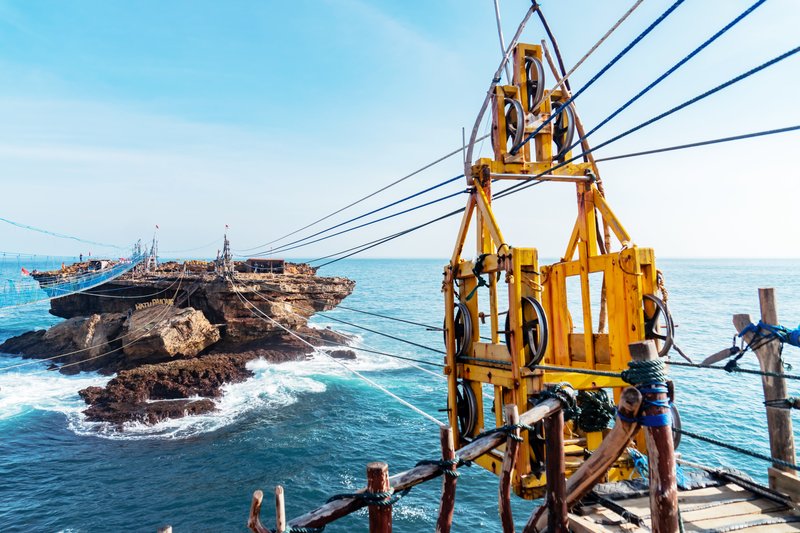
A rocky stretch of the southern coast where a hand-pulled wooden gondola, rigged on ropes by local fishermen, hauls riders 200 metres over crashing surf to the lobster-fishing islet of Watu Panjang.
ARRIVE Solo Balapan: 35 min · 10 min → Kraton Surakarta Hadiningrat
1.Kraton Surakarta Hadiningrat~1 hr
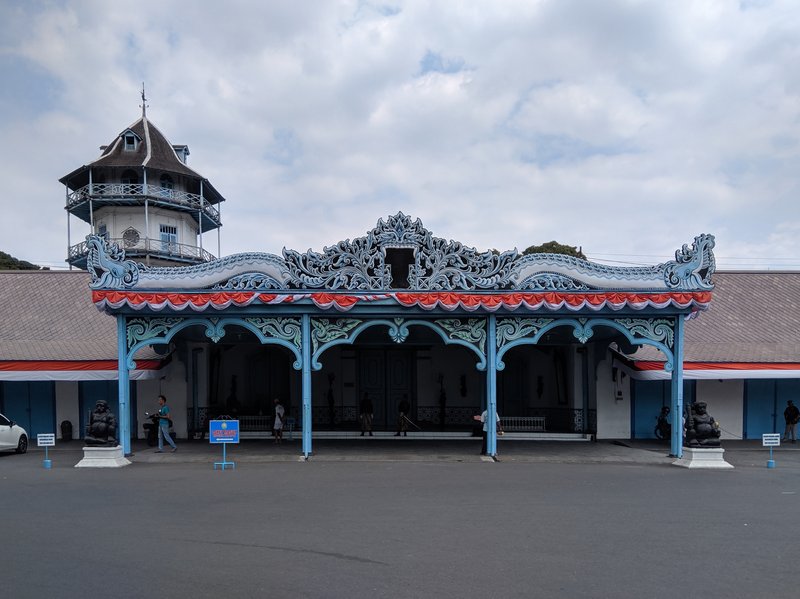
The palace of the Susuhunan of Surakarta, founded in 1745 after the Mataram Sultanate split in two, blending Javanese and European architecture around a great pendopo pavilion and a royal museum of heirlooms.
A square Dutch VOC fortress completed in 1780, its earthen bastions and dry moat built to garrison troops watching over the Kasunanan court — now an open green space inside its own brick ramparts.
The palace of the autonomous Mangkunegaran duchy, built in 1757 by Raden Mas Said around a vast open pendopo pavilion, with a museum of royal heirlooms, gamelan sets and dance costumes.
A pre-dawn climb to Setumbu Hill for the classic misty sunrise over Borobudur, a stop at Merapi Volcano's lava fields, then the Prambanan temple complex.
A flexible sunrise-or-sunset temple pairing — climb access at Borobudur and a Prambanan visit timed around golden-hour light, with a small-group guide.
A pre-dawn climb to Setumbu Hill for the classic misty sunrise over Borobudur, a stop at Merapi Volcano's lava fields, then the Prambanan temple complex.
Young jackfruit stewed for hours in palm sugar and coconut milk until dark and sweet, served with rice, chicken, egg and spicy krecek — Yogyakarta's signature dish.
Goat satay skewered on bicycle-spoke iron rods instead of bamboo, grilled over coconut-husk coals and seasoned only with salt, native to the Bantul area south of the city.
Small baked mung-bean pastries, originally a Chinese-Indonesian recipe adapted in the Pathuk neighborhood and sold in dozens of flavors from stalls near Malioboro.
Foreign number: accepted. — most international country codes receive the SMS OTP directly; a small minority are blocked, requiring a local Indonesian SIM to complete signup.
GoFood is part of the Gojek super-app and carries by far the widest catalogue in Yogyakarta, down to small gudeg warungs and street-cart stalls no other platform lists — the trade-off is an interface that leans Indonesian-first, with menus only partly translated to English.
Foreign number: accepted. — Grab's pan-Southeast-Asian signup form takes any international mobile number and the OTP arrives reliably, including on European and North American codes.
GrabFood's Yogyakarta merchant list is smaller than GoFood's, concentrated on the Malioboro–Kraton core, but the fully English interface and straightforward international-card payment make it the simpler app for a short first visit.
Foreign number: accepted. — the pan-Southeast-Asian signup form takes any international mobile number and the OTP arrives reliably on most carriers.
Grab's GrabBike motorbike and GrabCar car options cover the whole city and the temple routes to Prambanan and Borobudur, with upfront fares and an English interface; drivers are least plentiful late at night away from Malioboro.
Foreign number: accepted. — most international country codes receive the SMS OTP directly; a small minority are blocked, in which case a local Indonesian SIM completes signup.
Gojek's GoRide motorbike and GoCar options have the largest driver pool in Yogyakarta and the lowest average wait times in the historic core, though the app defaults to Indonesian with only partial English translation.
Halfway between Yogyakarta and Solo, Klaten holds Prambanan's lesser-visited sister site — Candi Plaosan, twin Buddhist-Hindu temples built by a royal couple of mixed faiths, with far fewer crowds than the main complex.
A few things this guide learned the hard way, so the reader doesn't have to.
Around Malioboro and the Kraton, a friendly stranger who mentions a "batik exhibition only open today, students only" is running the city's best-known tourist scam — the gallery sells ordinary batik at inflated prices and the "exhibition" runs every single day. Politely decline and keep walking.
Yogyakarta's Sultan holds a role found nowhere else in Indonesia: Hamengkubuwono X is simultaneously the hereditary head of the Kraton and the elected-in-practice Governor of the Special Region, a dual position written into the region's own founding law rather than the national one.
Becak and andong drivers around Malioboro rarely run a meter — agree the fare in cash before getting in, and expect a detour past a batik or silver shop partway through if the price seemed unusually low.
Mount Merapi is one of Indonesia's most active volcanoes and its alert level changes with little warning; check the current status before booking a jeep tour, since routes on the mountain's flank close first when activity rises.
The Ramayana Ballet moves indoors to the Trimurti building from November through April and loses its open-air, temple-lit backdrop in the process — the outdoor stage only runs May through October.