CUSCO
Palacio del Inka · a Luxury Collection Hotel
Peru
From Hotel: 🚶 3 min · 🚕 2 min → La Compañía de Jesús
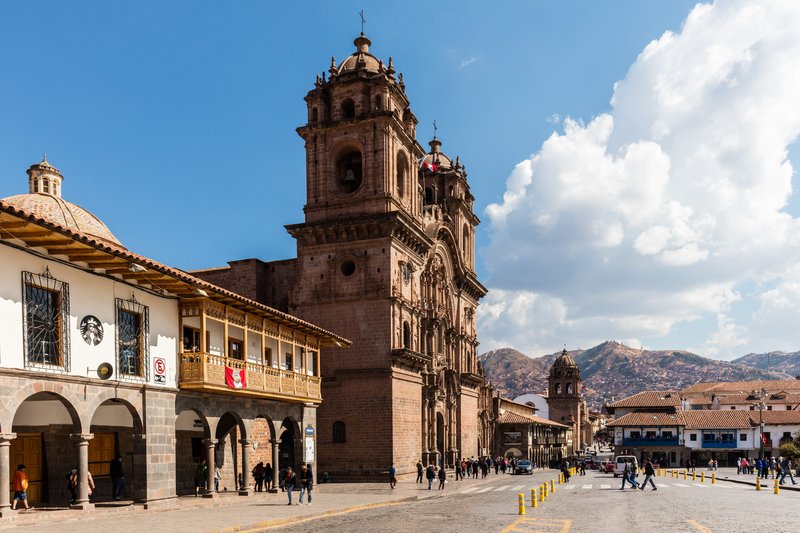
Built 1651–1668 by Jesuits on the palace of Huayna Cápac, this Baroque façade was so theatrically overdone the Pope ordered construction halted before it could eclipse the Cathedral. The gilded interior and carved portals are the finest Spanish Baroque work in Cusco.
🏛️ Monday - Saturday 9:00am - 5:30pm · Sunday 12:00pm - 5:30pm
⏰ ~30 min
🚶 1 min · 🚕 2 min → Plaza de Armas
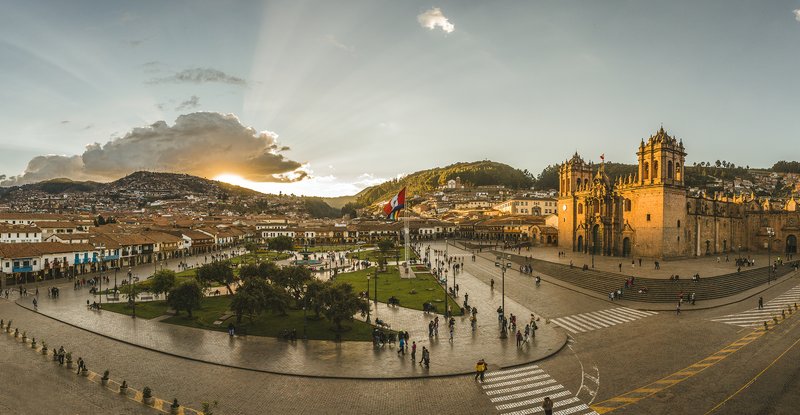
The civic heart of Cusco — a vast colonial plaza built atop the Inca ceremonial center of Huacaypata, where the empire once assembled for processions and festivals. The Cathedral and La Compañía frame two sides; the arcaded portals shelter restaurants and bars with balcony views over the square.
🚶 1 min · 🚕 2 min → Cusco Cathedral
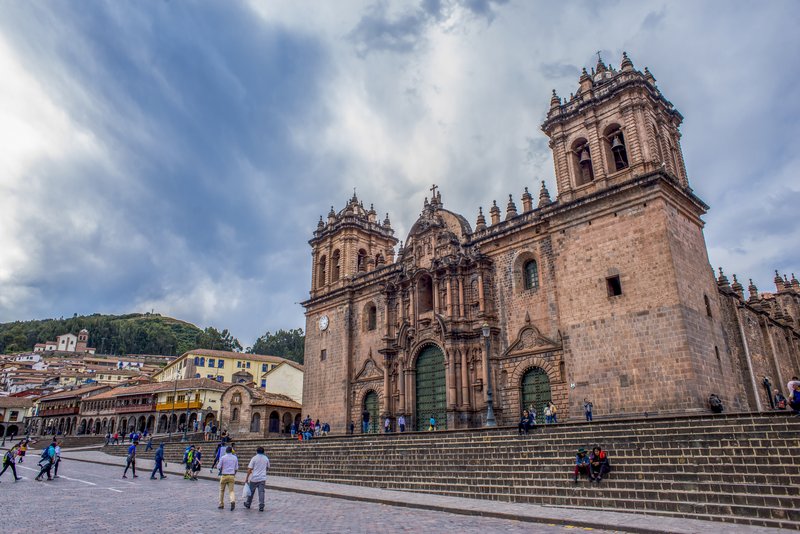
Built 1560–1654 on Inca palace foundations using stones from Sacsayhuamán, this is the masterwork of colonial Cusco. The interior holds 400 Cusco School paintings — including Marcos Zapata's Last Supper where Christ dines on guinea pig and chicha — and a silver altar weighing 1,500 kg.
🏛️ Monday - Saturday 10:00am - 5:30pm · Sunday 2:00pm - 5:30pm
⏰ ~1.5 hr
🚶 1 min · 🚕 2 min → San Blas
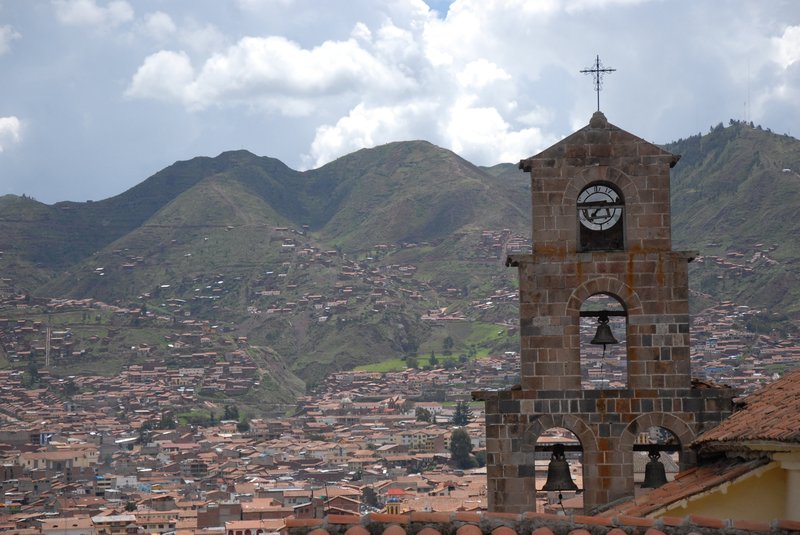
Cusco's artisan quarter since colonial times — steep cobblestone lanes and working workshops of weavers, ceramicists, and silversmiths. The church holds a single cedar pulpit carved from one tree by an anonymous Inca craftsman, considered the finest woodcarving in the Americas.
🚶 6 min · 🚕 2 min → Qorikancha
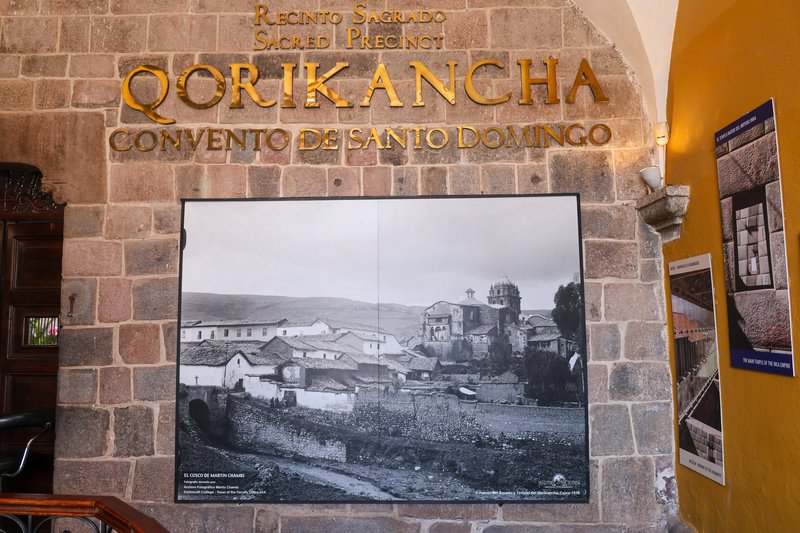
The Inca Temple of the Sun — walls once sheathed in gold sheet. The Spanish built the Convent of Santo Domingo directly atop the Inca foundations. Precision-fitted Inca masonry visible inside the cloister arches, perfectly intact while the colonial church above it sags. The finest stonework in Cusco.
🏛️ Monday - Saturday 8:30am - 5:30pm · Sunday 2:00pm - 5:00pm
⏰ ~1 hr
🚶 25 min · 🚕 10 min → hotel
From Hotel: 🚶 1 min · 🚕 2 min → Sacsayhuamán
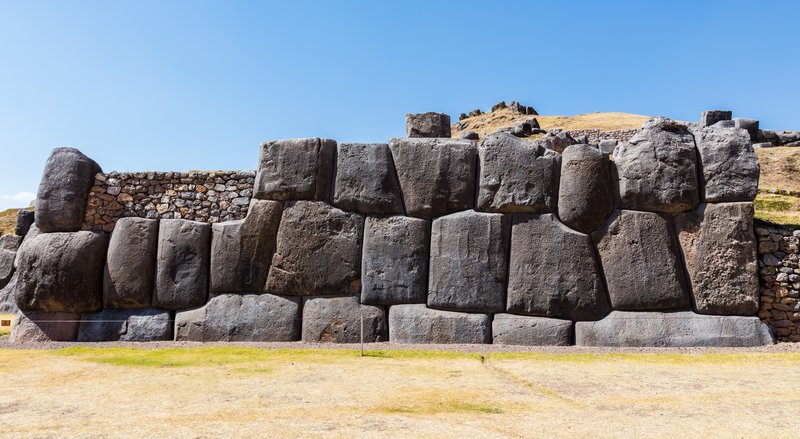
The Inca Empire's greatest monument — three zigzagging rampart walls of blocks up to 125 tonnes, fitted without mortar at 3,700 m above sea level by tens of thousands of workers over 70 years. The Spanish quarried it for generations and still could not remove all the stones.
🏛️ Daily 7:00am - 6:00pm
⏰ ~1.5 hr
🚶 8 min · 🚕 2 min → Tambomachay
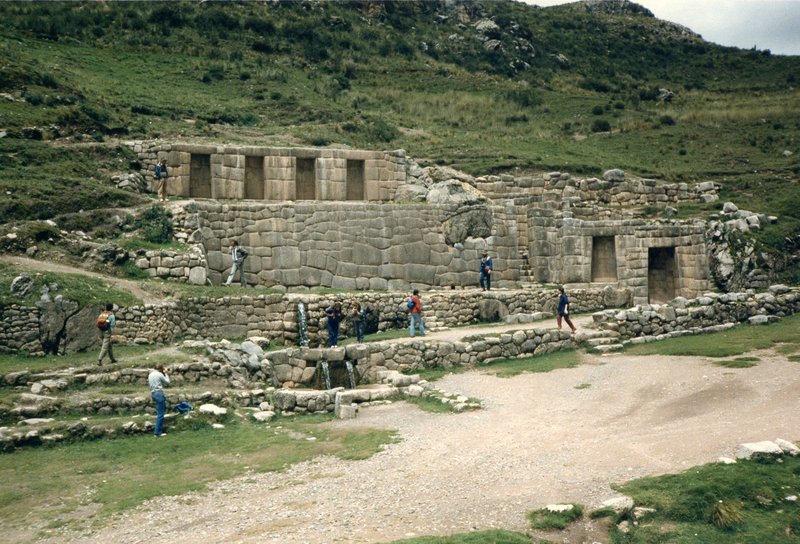
An Inca ceremonial bathing site — three tiers of perfectly fitted stone channels and fountains fed by an underground spring that has flowed since Inca times. Known as the Bath of the Inca, the hydraulic engineering is so precise that the flow rate has not changed perceptibly in 500 years.
🏛️ Daily 7:00am - 6:00pm
⏰ ~45 min
⚠️ Covered by Boleto Turístico Circuit 1
🚶 8 min · 🚕 2 min → Puca Pucara
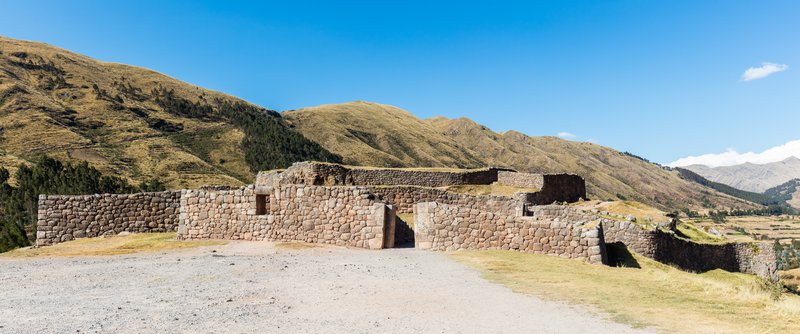
A red-stone Inca military complex at 3,700 m commanding the road to the Sacred Valley — a tambo and watchtower where armies and royal caravans were monitored. The masonry walls, stairways and niched chambers survive largely intact. Far quieter than Sacsayhuamán.
🏛️ Daily 7:00am - 6:00pm
⏰ ~45 min
⚠️ Covered by Boleto Turístico Circuit 1
🚕 9 min → Q'enqo
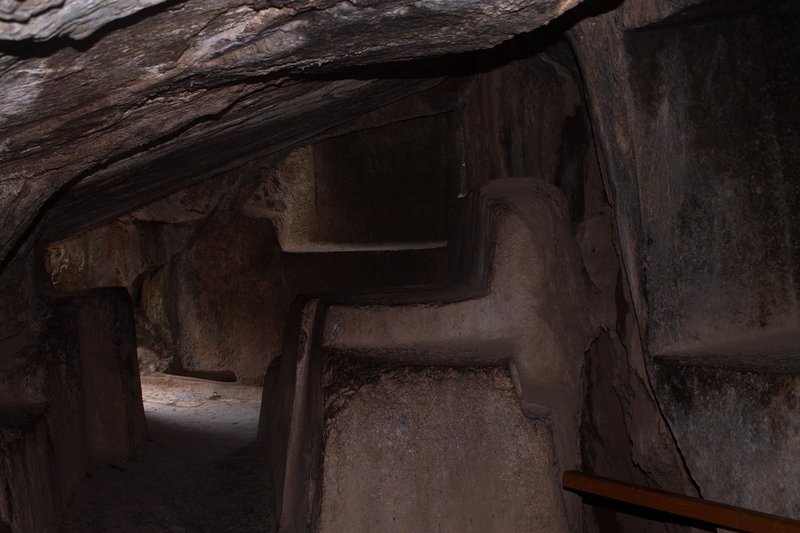
A labyrinthine Inca oracle site — channels, niches, and underground galleries carved into a limestone outcrop. The name means 'zigzag' in Quechua, referring to channels where priests poured chicha and llama blood to read omens. The cave below holds a stone table believed used for mummification.
🏛️ Daily 7:00am - 6:00pm
⏰ ~45 min
🚕 15 min → hotel
From Hotel: 🚕 15 min → Cristo Blanco
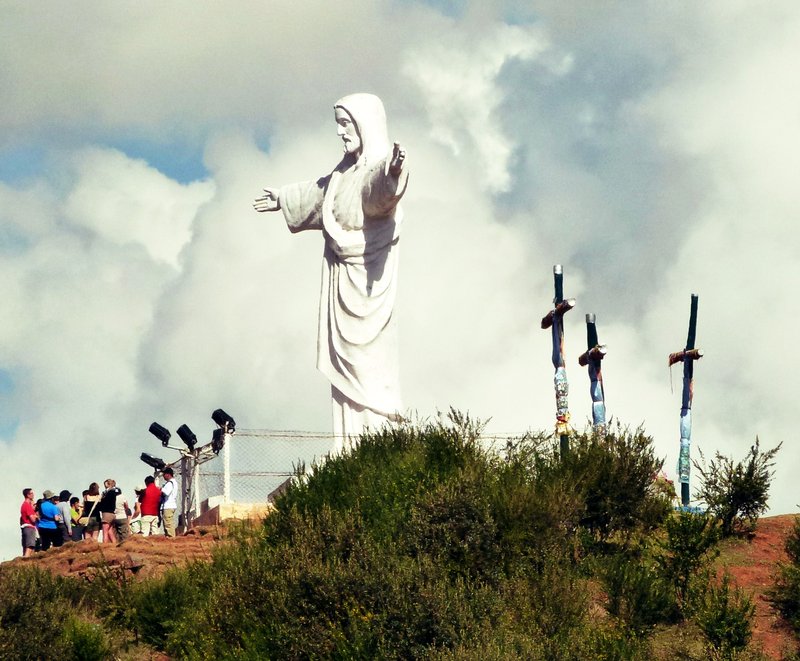
A 7.5-meter white Christ figure, arms extended, on a hilltop above Cusco — a gift from Palestinian immigrants in 1944. The panoramic view is the reason to come: the city spreads below in terracotta and white, the valley beyond, and Andean peaks on the horizon. The finest free viewpoint in Cusco.
🚶 14 min · 🚕 3 min → Moray
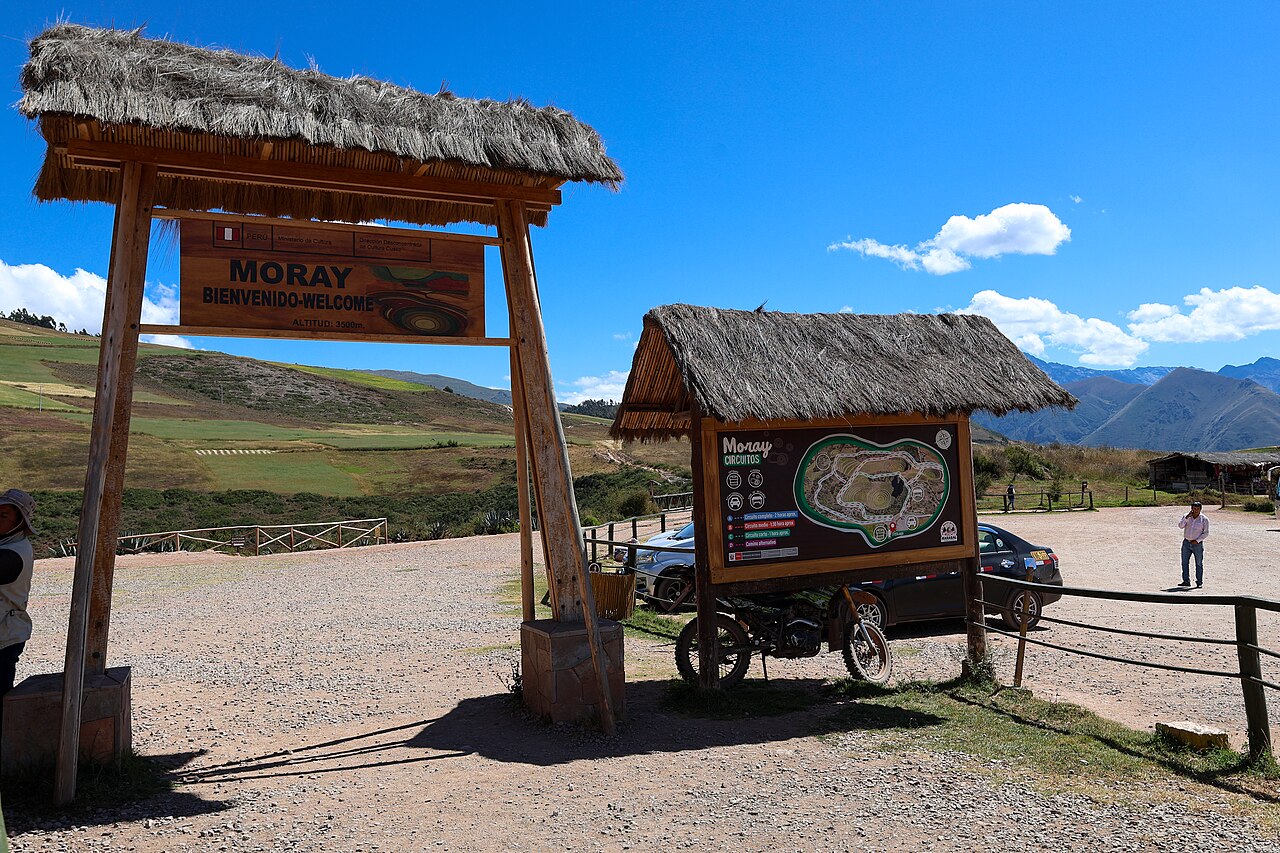
Concentric circular terraces dropping 30 m from rim to center, creating distinct growing conditions at each level. The leading theory: an Inca agricultural laboratory for testing crop adaptations at different altitudes. The geometry is precise and still not fully explained.
🏛️ Daily 7:00am - 5:00pm
⏰ ~1 hr
⚠️ Covered by Boleto Turístico Circuit 3
🚕 40 min → Chinchero
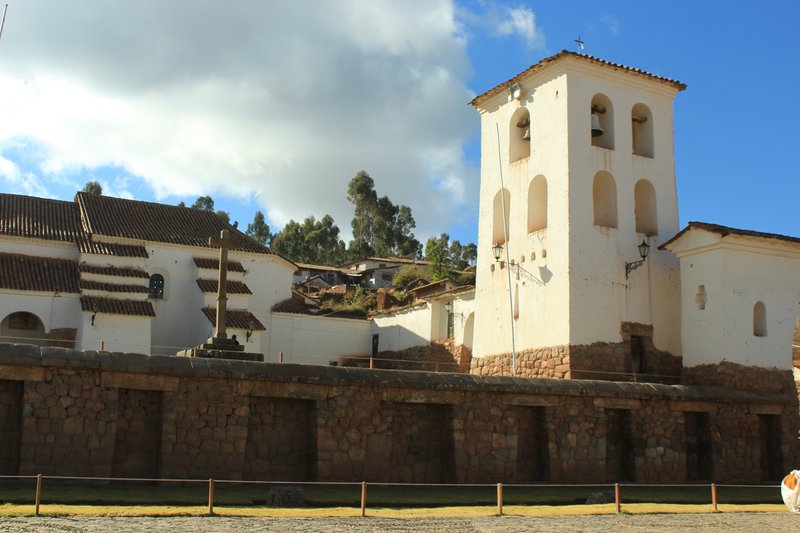
A village at 3,762 m whose colonial church was built directly on Inca palace walls — original masonry forms the foundation and the interior holds 17th-century murals. Extensive Inca terracing and a ceremonial plaza surround it. Far fewer visitors than Pisac.
🏛️ Daily 7:00am - 5:30pm
⏰ ~1 hr
⚠️ Covered by Boleto Turístico Circuit 2
🚕 51 min → Pisac
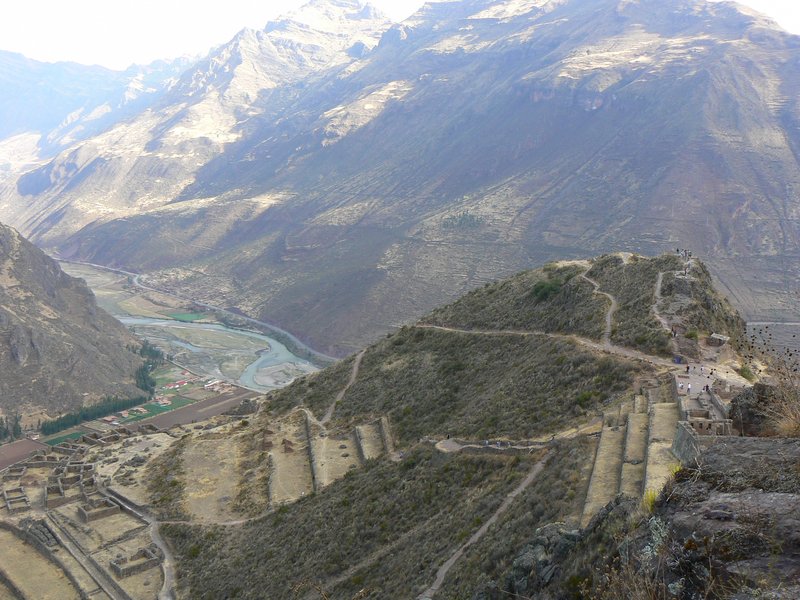
An Inca citadel on a mountain ridge above the Sacred Valley. Sweeping terraces cascade down the slope; the hilltop holds a ceremonial center with an intihuatana sun stone, temples, storehouses and the largest known Inca cemetery. Views over the valley are among the finest in the Andes.
🏛️ Daily 7:00am - 5:30pm
⏰ ~2 hr
⚠️ Covered by Boleto Turístico Circuit 2 · Bring water — exposed site at 3,400 m
🚕 40 min → hotel
From Hotel: 🚕 55 min → Ollantaytambo
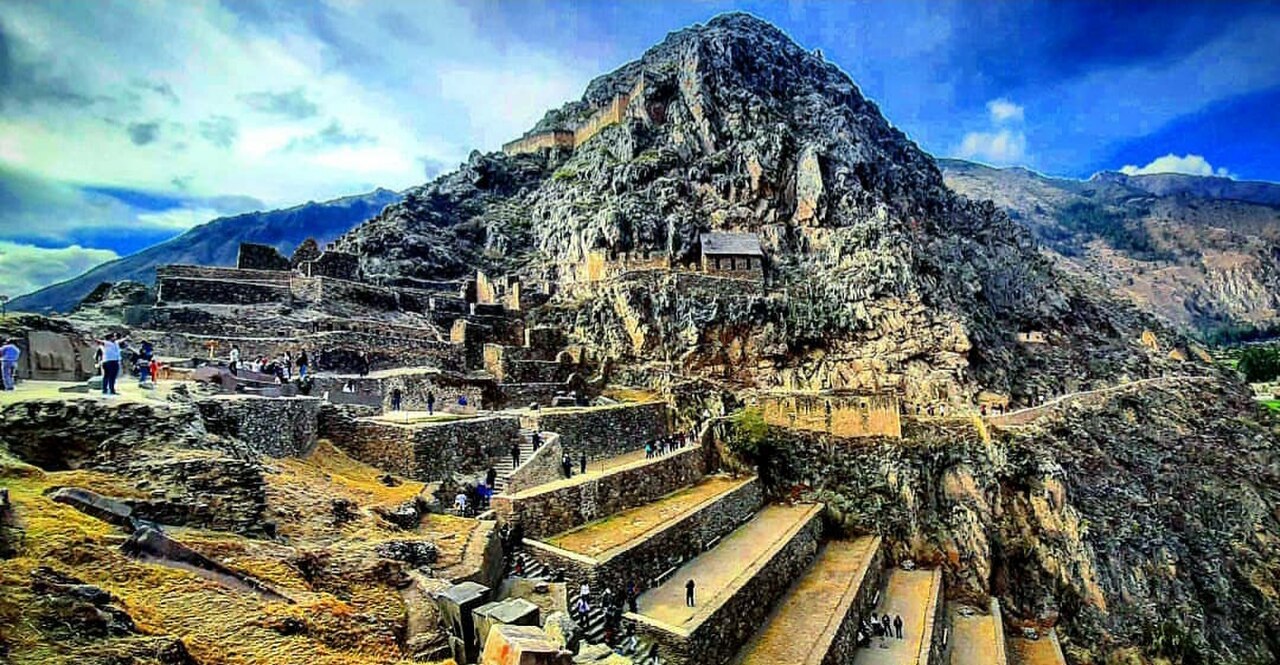
The best-preserved Inca town in existence — a living grid of original Inca streets and canals still occupied by residents. The terraced fortress temple above the plaza is where Manco Inca defeated a Spanish cavalry charge in 1537. The site commands the Sacred Valley at its narrowest point.
🏛️ Daily 7:00am - 5:30pm
⏰ ~1 hr 30 min
⚠️ Covered by Boleto Turístico Circuit 3
🚕 38 min → Maras
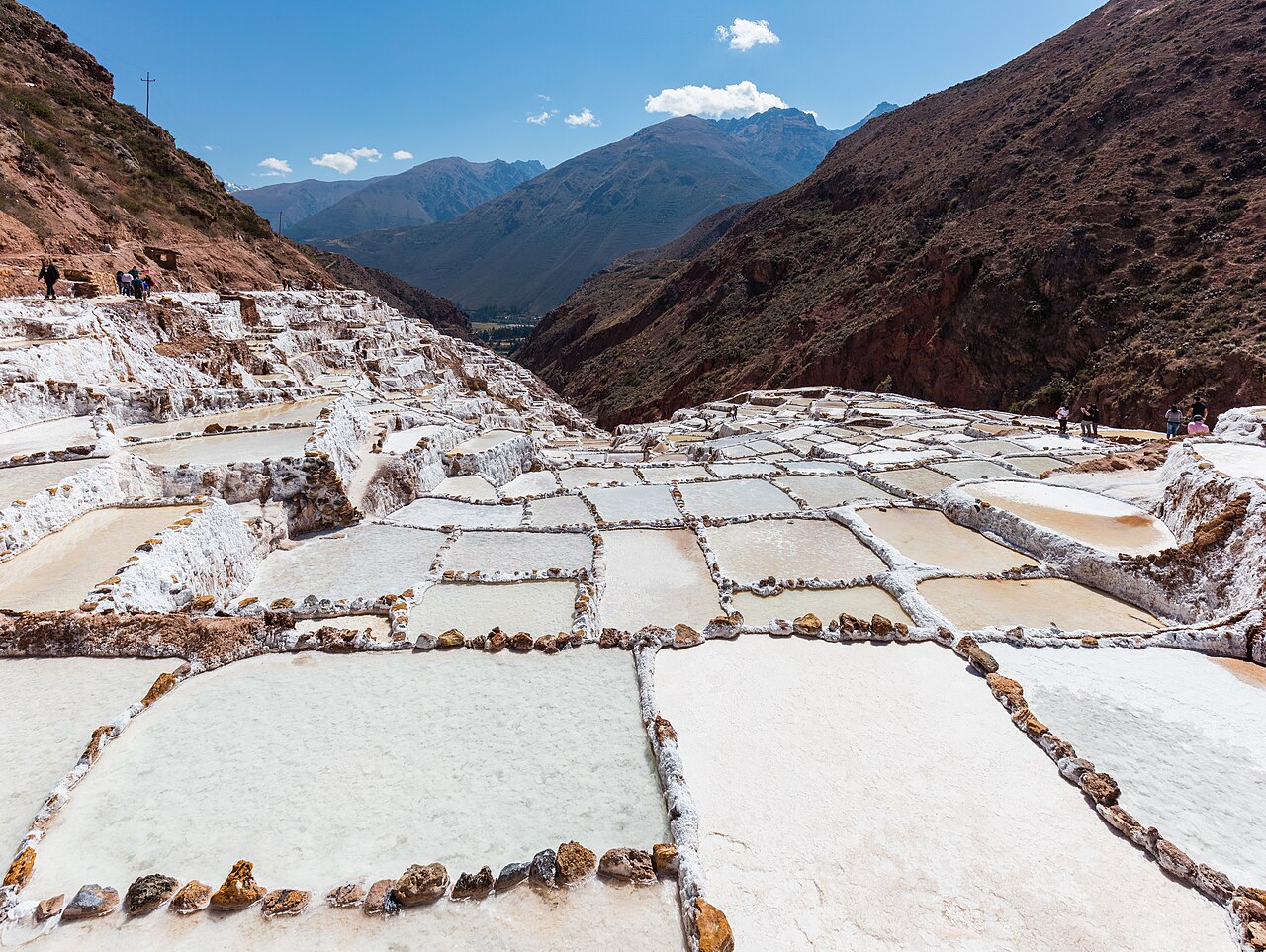
Over 3,000 terraced salt evaporation pools fed by a single saltwater spring in use since before the Inca Empire. Families have worked individual plots for generations — each pool hand-harvested several times a year. The terracotta-and-white patchwork across the hillside is visible from the path above.
🏛️ Daily 7:00am - 5:00pm
⏰ ~1 hr
⚠️ Covered by Boleto Turístico Circuit 3
🚕 1h 30 min → hotel
From Hotel: 🚕 3h 30 min → Vinicunca
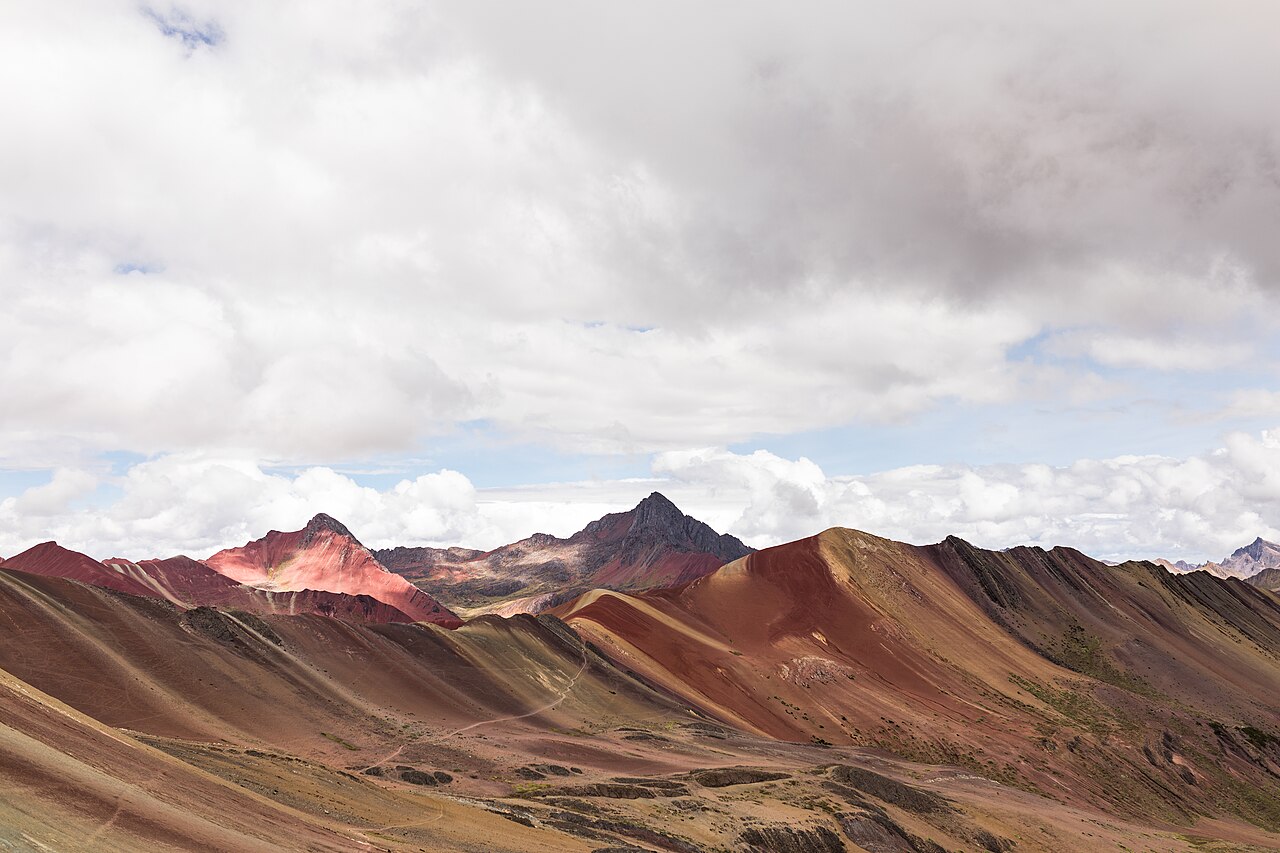
A 5,200 m mountain whose exposed mineral sediment layers produce vivid bands of red, yellow, green, and purple across the high Andean plain. The 8 km trek from the trailhead gains 300 m — strenuous at altitude. Requires at least 2 days of acclimatization in Cusco beforehand.
🚕 3h 30 min → hotel
🍋 From the Notebook
Cusco is a city that operates on two timelines simultaneously. The calendar you arrive with — the one that includes check-in times and tour reservations and altitude sickness remedies — sits on top of a much older chronology that the city itself has not forgotten. Walk far enough from the Plaza de Armas in any direction and you will find Inca stonework still in place under the foundations of Spanish churches, colonial mansions, and contemporary restaurants. The fit of the stones is precise enough to be unnerving. No mortar. No decay. Five hundred years of earthquakes and the joints remain tight.
The reason the Spanish built on top of rather than next to the Inca structures was not aesthetic — it was practical. The Inca masonry was better than anything the colonists could build. The 1650 earthquake that devastated the city's colonial buildings left the Inca foundations standing. The Qorikancha walls, the curved apse of the Temple of the Sun that the Spanish incorporated into Santo Domingo, have not moved perceptibly in five centuries. Sacsayhuamán's stones are so large that the Spanish quarried them for building material for generations and still could not remove them all. What remains is what was too big to take.
One thing worth knowing before you arrive: Cusco sits at 3,400 meters. The air at that altitude contains roughly 30% less oxygen than at sea level. This is not a metaphor or a polite warning — it is a physical reality that will affect your first day regardless of your fitness level. Walk slowly. Drink water. Accept the coca tea that everyone offers. The altitude taxes your body before you have any sense that it is happening, and then you stand up too quickly and the city tilts slightly. Give yourself 48 hours. The ruins will still be there.