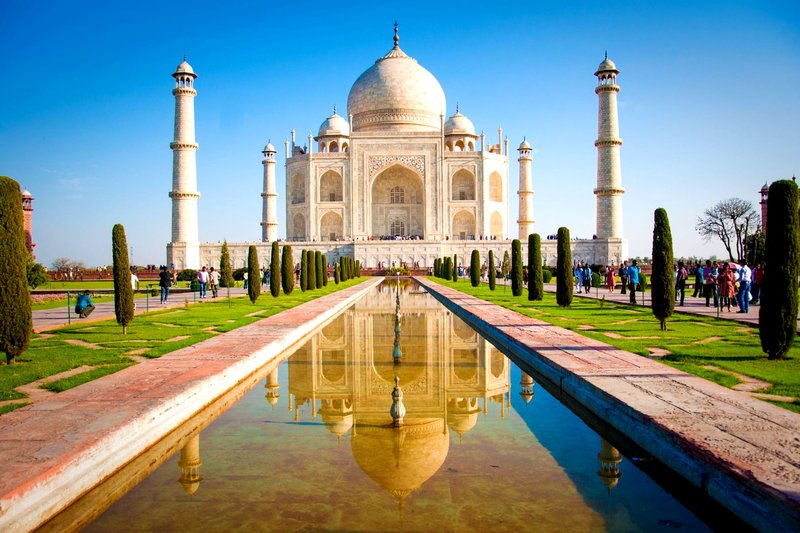
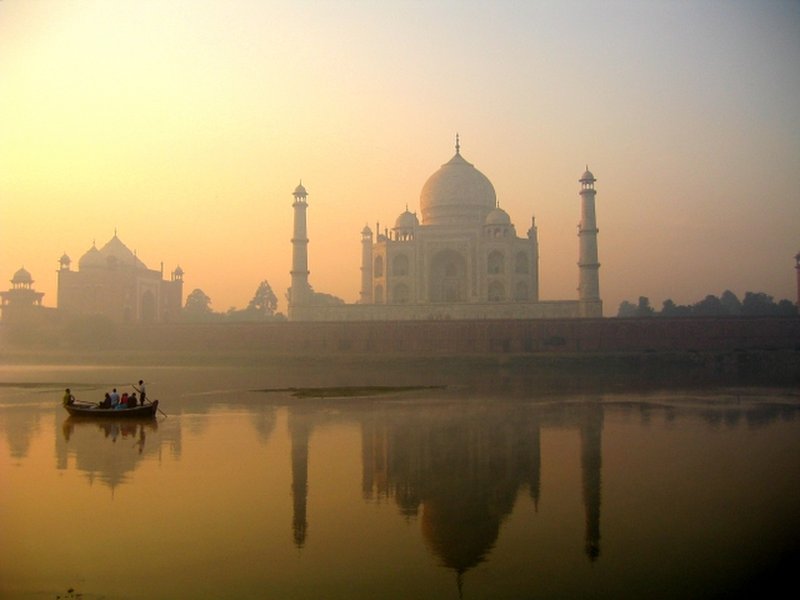
The white marble mausoleum Mughal emperor Shah Jahan built for his wife Mumtaz Mahal, completed in 1653 after some 20,000 workers labored for over a decade; a UNESCO World Heritage Site and one of the New7Wonders of the World.
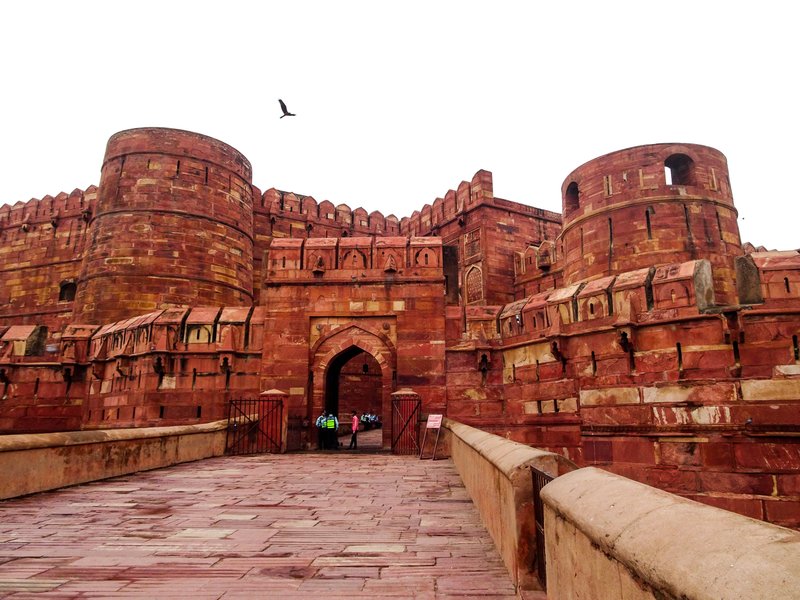
A red sandstone fortress-palace on the Yamuna's west bank, the primary Mughal residence until 1638 and later the place where Shah Jahan was held under house arrest by his son Aurangzeb, confined to rooms with a view of the Taj Mahal he built; a UNESCO World Heritage Site.
A red sandstone and marble congregational mosque commissioned by Jahanara Begum, Shah Jahan's eldest daughter, and completed in 1648 directly across from Agra Fort, its striped domes and zigzag marble inlay visible from the fort's ramparts.
India's oldest surviving Mughal garden, laid out on the Yamuna's east bank in 1526 by Babur, founder of the Mughal dynasty, who first called it Bagh-i-Gul Afshan; his body rested here before being carried to Kabul for burial, and its terraced, water-channeled charbagh plan became the template for every Mughal garden that followed.
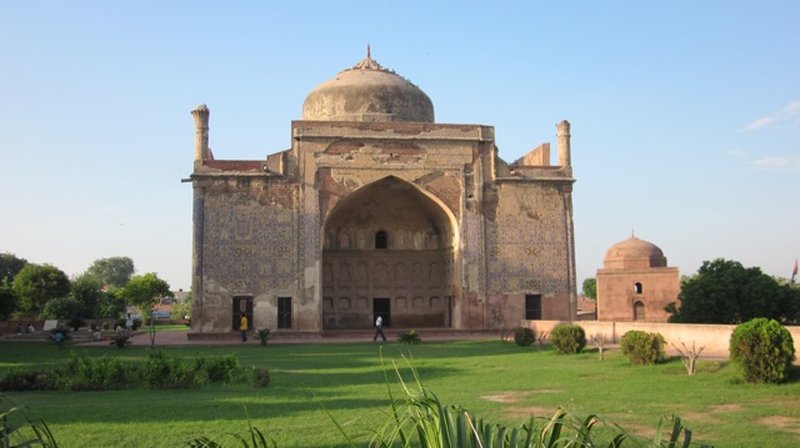
A riverside mausoleum built between 1628 and 1639 for Afzal Khan Shirazi, a Persian poet and minister at Shah Jahan's court, sheathed in glazed blue, turquoise and yellow tilework — chini, "China ware" — found nowhere else on an Agra monument.
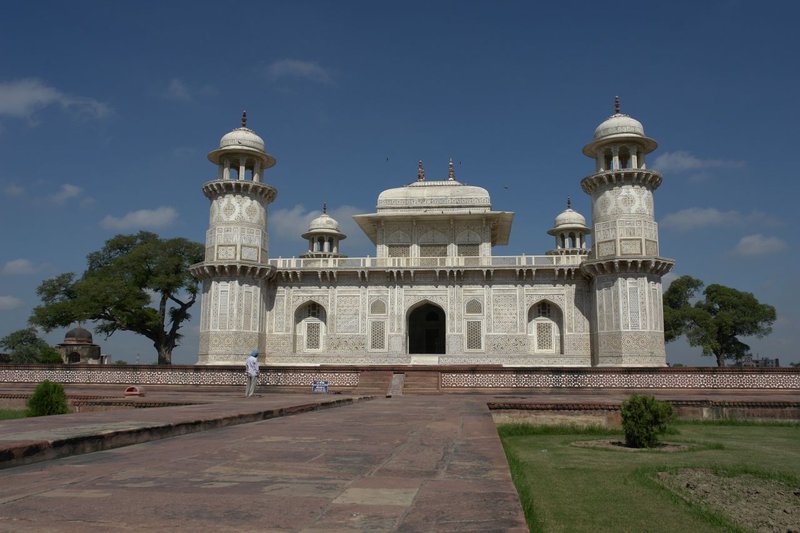
Nicknamed the "Baby Taj," this jewel-box mausoleum was commissioned in 1622 by empress Nur Jahan for her father Mirza Ghiyas Beg; the first Mughal structure built entirely of white marble with pietra dura inlay, it is widely considered the design draft for the Taj Mahal that followed it.
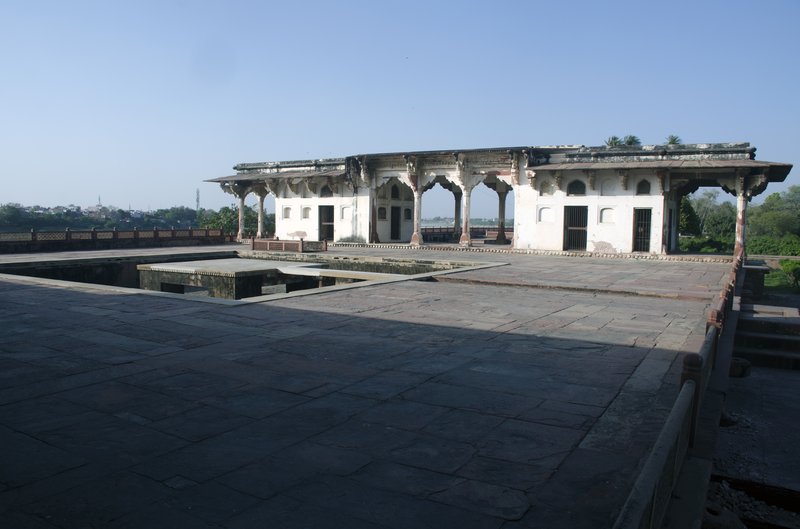
A charbagh garden on the Yamuna's east bank, laid out by Shah Jahan as a moonlit viewing terrace and perfectly aligned with the Taj Mahal on the opposite bank, now the city's best sunset vantage point for the mausoleum reflected across the river.
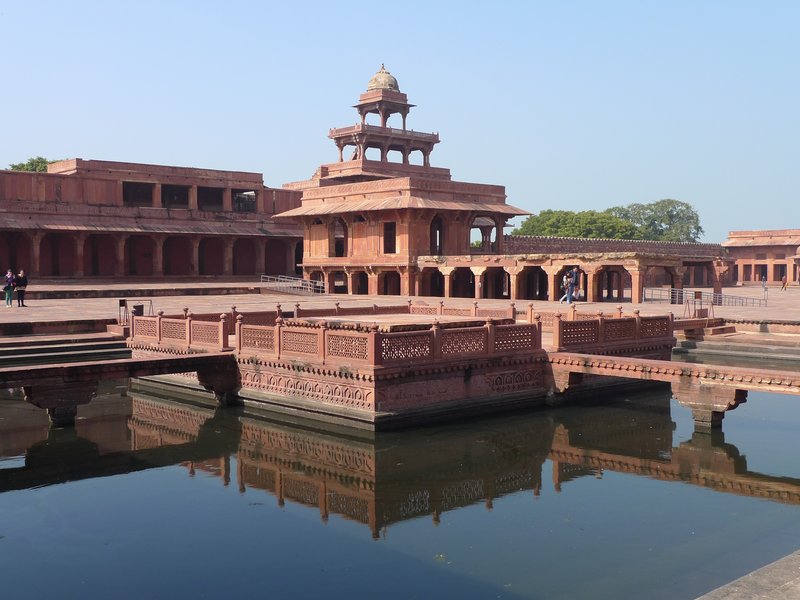
Emperor Akbar's purpose-built capital, raised in red sandstone from 1571 and abandoned within 15 years once its water supply failed; a UNESCO World Heritage Site whose palace complex — the five-tiered Panch Mahal, the carved single-pillar Diwan-i-Khas, Jodha Bai's Palace — survives almost exactly as the court left it.
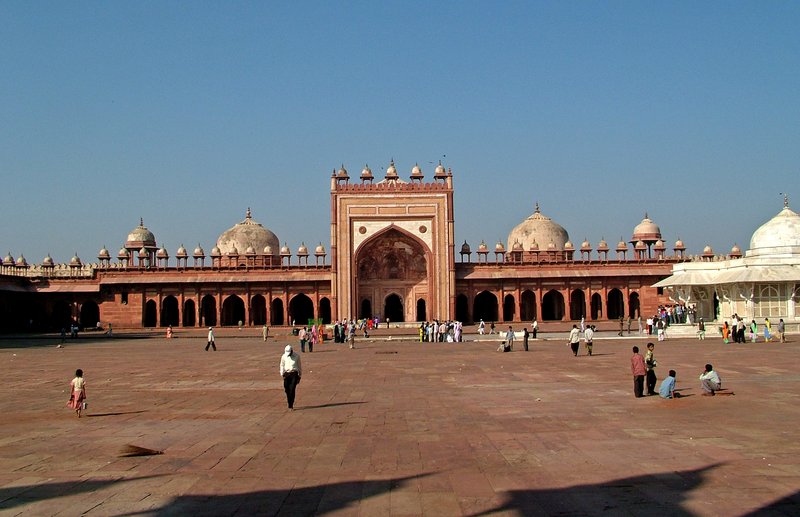
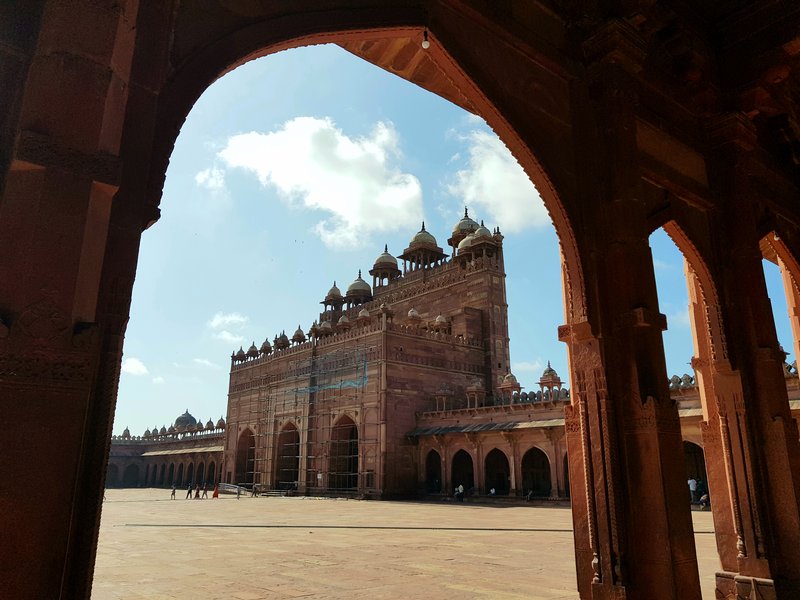
Completed in 1571 and entered through the 54-metre Buland Darwaza, built to commemorate Akbar's conquest of Gujarat, this is one of India's largest mosque courtyards and holds the white marble dargah of Sufi saint Salim Chishti, whose blessing Akbar credited for the birth of his heir.
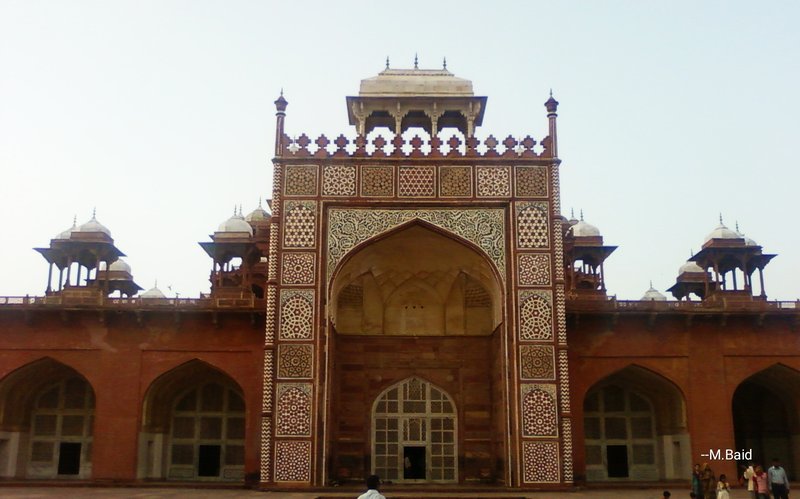
The mausoleum of Emperor Akbar, greatest of the Mughal rulers, begun by Akbar himself and completed by his son Jahangir in 1613 in the suburb of Sikandra; a four-tiered pyramid of red sandstone terraces rising to an open marble pavilion, a design found nowhere else among the Mughal tombs.
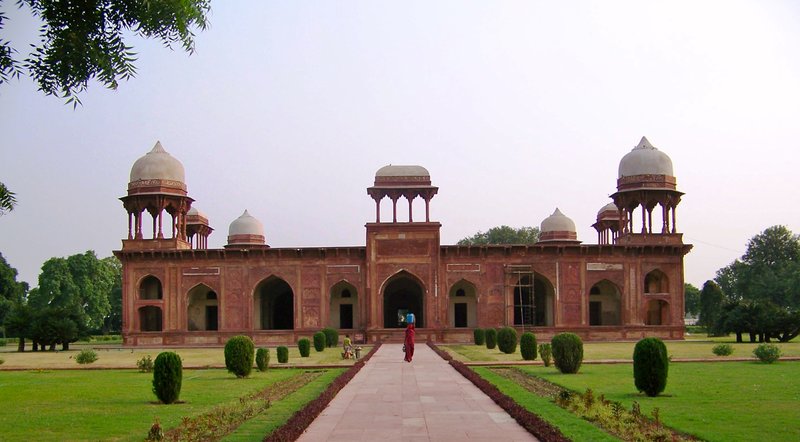
The garden tomb of Mariam-uz-Zamani, the Rajput princess who married Akbar and became the mother of Jahangir; built by her son around 1623 by remodeling an earlier pleasure pavilion, its red sandstone facade carved with the same geometric and floral patterns found at Akbar's Tomb nearby.
28 min → Wildlife SOS Elephant Conservation and Care Center
3.Wildlife SOS Elephant Conservation and Care Center~2 hr
A rescue and rehabilitation center beside the Sur Sarovar wetlands caring for elephants retired from begging, circuses and logging; guided walks bring visitors close enough to help bathe, feed and observe the elephants without riding them, run by the same charity behind India's sloth-bear rescue program.
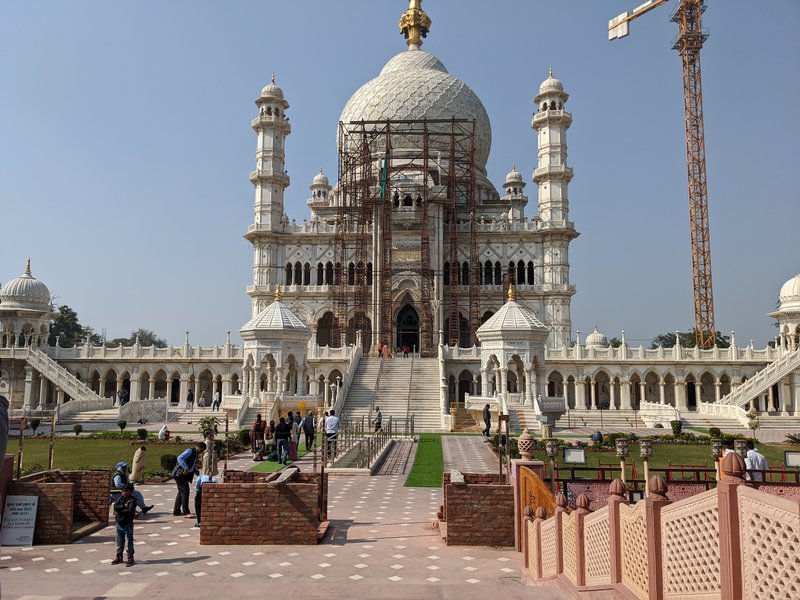
The spiritual headquarters of the Radhasoami faith, founded in 1915; its unfinished white marble Samadh has been under construction by resident craftsmen using the same pietra dura inlay techniques as the Taj Mahal since 1904, and is expected to take decades more to complete.
An evening street-food walk through Sadar Bazaar's market lanes by tuk-tuk, tasting local snacks with a guide who explains the neighborhood's history along the way.
A private, guide-led tour of the Taj Mahal and Agra Fort with air-conditioned transport, paced to the traveler's own interests rather than a fixed script.
A translucent, syrup-soaked candy made from ash gourd, Agra's signature sweet since the Mughal era; sold plain or in saffron-flavored kesar, angoori and fruit-flavored varieties, always by weight.
Agra's everyday breakfast: a deep-fried urad-dal kachori served with spiced potato curry, traditionally followed by hot jalebi to balance the heat — what chole bhature is to Delhi.
Foreign number: not required. — sign-up works with an email or Google account, so a foreign SIM is never needed to place an order.
India's largest food delivery platform, with the widest restaurant coverage in Agra's Taj Ganj and Sadar Bazaar areas; live order tracking and cash or card on delivery both work without an Indian bank account.
Foreign number: not accepted. — the sign-up SMS code is sent only to Indian mobile numbers; the app's International Logins feature does not yet cover ordering from Agra.
Matches Zomato on restaurant coverage in Agra and is often faster on delivery times, but a visitor without a local SIM cannot create an account — Zomato is the reliable fallback.
Foreign number: accepted. — the SMS code reaches most foreign carriers, though India's shortcode filtering occasionally blocks it; a fallback email code is offered when it does.
Uber's Agra coverage is thinner than Delhi or Mumbai, so wait times run longer outside the Fatehabad Road hotel belt; fares are metered in-app, avoiding the negotiation autos require.
Foreign number: not accepted. — sign-up requires an Indian mobile number to receive the SMS code.
India's largest homegrown ride app, with wider car and auto-rickshaw availability than Uber across Agra, but unreachable to a visitor without a local SIM.
The Gatimaan Express, India's fastest train at 160 km/h, links Agra Cantt to Delhi's Hazrat Nizamuddin station in under two hours, opening Humayun's Tomb, India Gate and Old Delhi's Jama Masjid to a single long day out and back. Early-morning outbound, early-evening return, leaving a full day in the capital.
Foreign visitors pay a one-time ₹500 ADA — Agra Development Authority — toll that covers same-day entry to the Taj Mahal, Agra Fort, Fatehpur Sikri, Akbar's Tomb and Itmad-ud-Daulah's Tomb together — the toll is waived on Fridays. Keep the receipt; gate staff at each site check it.
Photography is not allowed inside the Taj Mahal's central mausoleum chamber, where Shah Jahan and Mumtaz Mahal's cenotaphs sit — phones and cameras are fine everywhere else on the grounds. Large bags, tripods, food and smoking materials are barred at the security check and have no storage facility at the gates, so leave them at the hotel.
The Taj Mahal's ticket line moves fastest at the East Gate for foreign-ticket holders; the West Gate and South Gate serve mostly Indian-ticket visitors and domestic tour groups, and queue length there can run 30–45 minutes longer at midday.