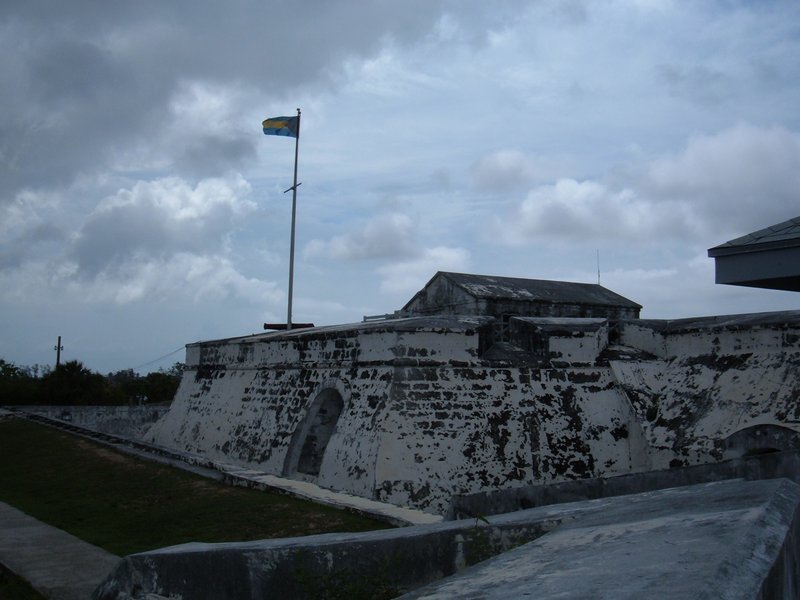
Nassau's largest fort, built by Lord Dunmore in 1787. More than 40 cannons guard a complex with a dry moat, underground passages, and a drawbridge — yet not a single shot was ever fired in anger. Walk the ramparts for wide views over the harbor and follow the dungeons into the coral limestone.
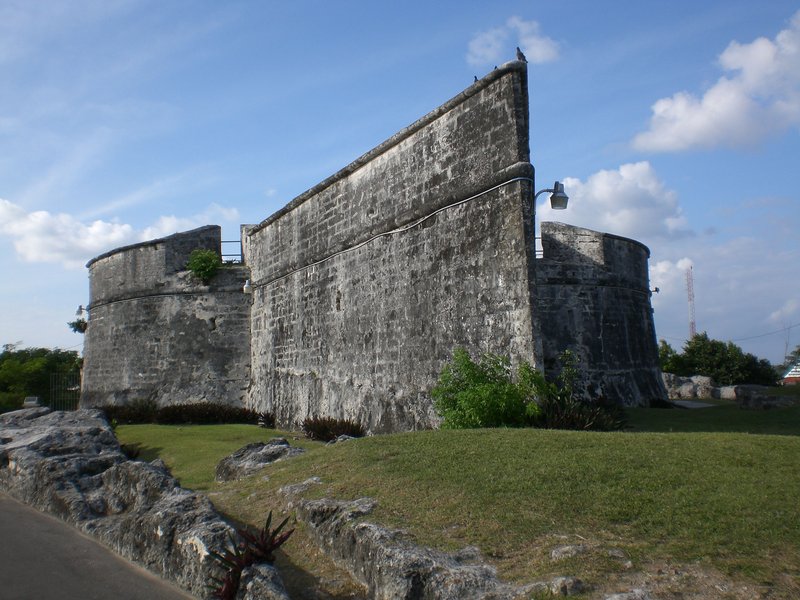
A small 1793 fort shaped like the prow of a warship, perched on Bennett's Hill — the highest point in Nassau. The adjacent Water Tower delivers the island's best 360-degree panorama: the colonial rooftops, harbor, and Paradise Island bridge all at once. Reached directly through the top of the Queen's Staircase.
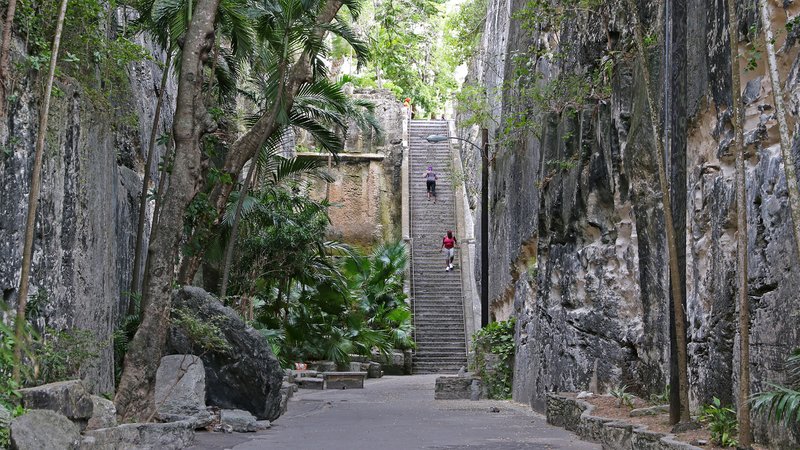
Sixty-six steps hand-carved through a coral limestone gorge by enslaved workers in the 1790s — each step traditionally said to represent a year of Queen Victoria's reign. The gorge is lush with ferns; at the top it opens onto Fort Fincastle and a wide hilltop view.
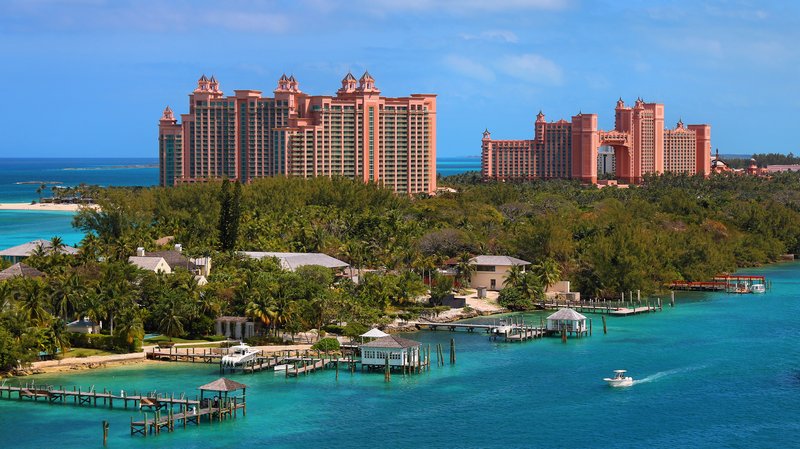
Nassau's landmark water park: 141 acres of slides, river rides, and lagoons threaded through faux-Mayan ruins on Paradise Island. The centrepiece is Leap of Faith — an eleven-story near-vertical drop through a clear tunnel inside a shark lagoon. Buy tickets in advance at the Atlantis resort website.
From Hotel: 20 min → Clifton Heritage National Park
1.Clifton Heritage National Park~2 hr
Nassau's most historically layered site: 208 coastal acres with Lucayan Amerindian petroglyphs, 18th-century slave settlement ruins, and loyalist plantation foundations. The guided Heritage Trail covers a mile of clifftop ground over turquoise shallows.
One of the last fragments of original Caribbean pine and hardwood forest on New Providence — old-growth canopy, ferns, and a stillness rarely found on the island. A short trail network winds through ancient trees. Look for the Bahama woodstar hummingbird and West Indian woodpecker in the canopy.
3.Nassau Helicopter Tour — Nassau Helicopters~30 min
A 15-minute aerial circuit over Nassau and Paradise Island: the geometry of the colonial downtown grid, Atlantis jutting into the lagoon, and the colour shift from deep indigo ocean to luminous turquoise shallows over the inner cays. Departs from Coral Harbour.
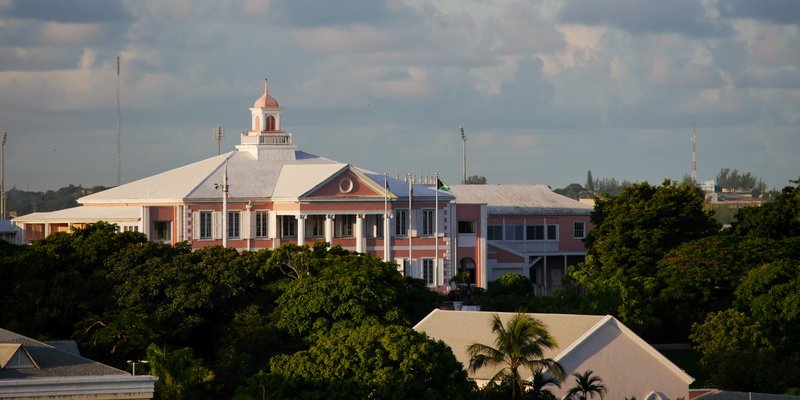
The official residence of the Governor-General, a pink-and-white colonial mansion on Mount Fitzwilliam overlooking downtown Nassau. A statue of Christopher Columbus stands on the front steps, and the interior is not open to visitors, but the Royal Bahamas Defence Force stages a Changing of the Guard ceremony on the grounds on the first and third Saturday of each month.
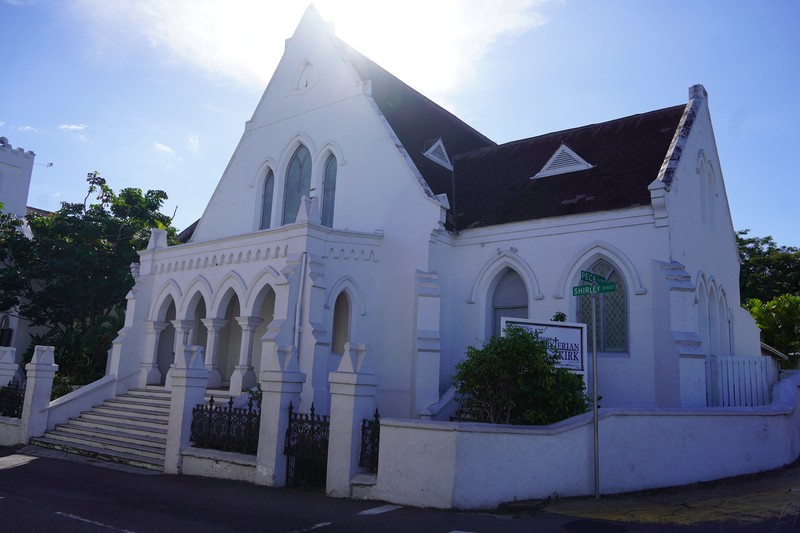
A plain white kirk built in 1810, and by most accounts the oldest Presbyterian congregation outside Scotland. Scottish loyalists fleeing the American Revolution founded the parish; the simple colonial building still holds services today, tucked into a quiet corner of downtown Nassau.
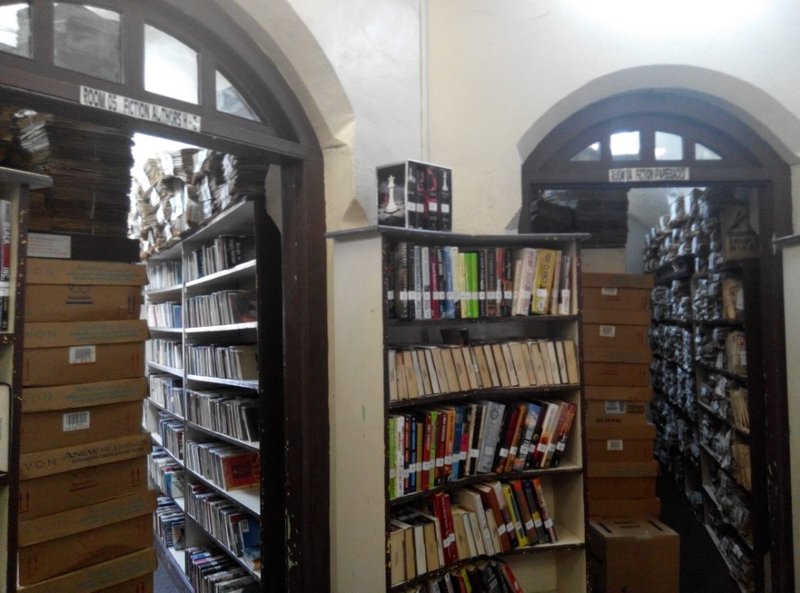
The largest and oldest of the Bahamas' five libraries, founded in 1837 and uniquely housed in an octagonal building that served as Nassau's first jail. A spiral staircase climbs past reading rooms lined with local history, and the old basement dungeon — once used to hold prisoners — is now part of the museum.
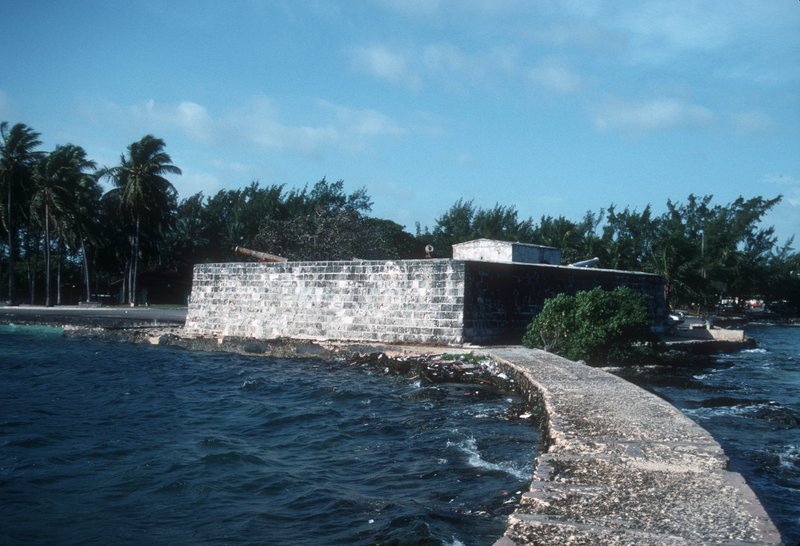
A small fort of four cannon on the eastern shore of New Providence, begun in 1741 under British engineer Peter Henry Bruce to guard against Spanish invasion — making it the oldest surviving fort in Nassau, older than both Fort Charlotte and Fort Fincastle. The low coral-stone walls sit right at the harbor mouth, facing Paradise Island across the water.
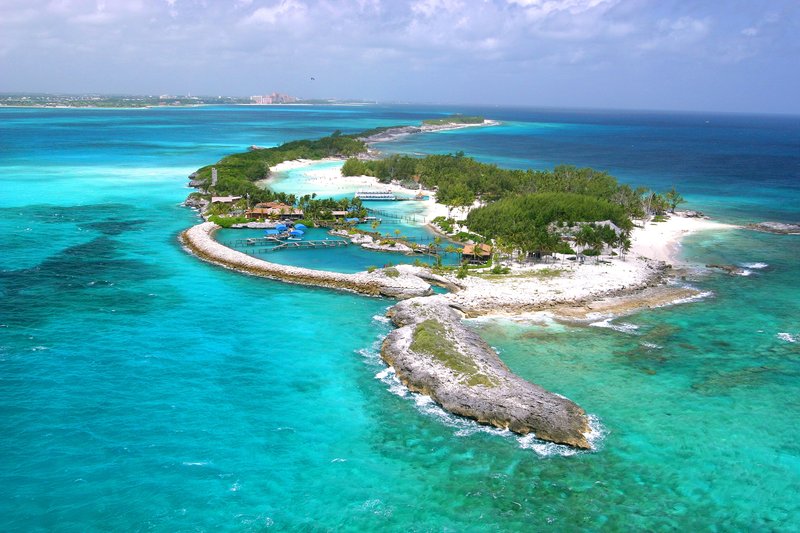
A private island three miles off Nassau, reached by a scenic 25-minute ferry through the harbour from the Paradise Island terminal. Dolphin Encounters runs shallow-water dolphin and sea lion programs here, and the island's white-sand beach and hammocks fill out the rest of a day trip once the animal encounters end.
Formerly Hog Island, renamed and developed from 1962 by A&P heir Huntington Hartford, who built the Ocean Club and installed the Cloisters — the remains of a 14th-century French monastery, dismantled by William Randolph Hearst and rebuilt here. The Versailles Gardens climb the hillside above it in terraces, past statues of Napoleon and Josephine, to a clifftop view over the channel.
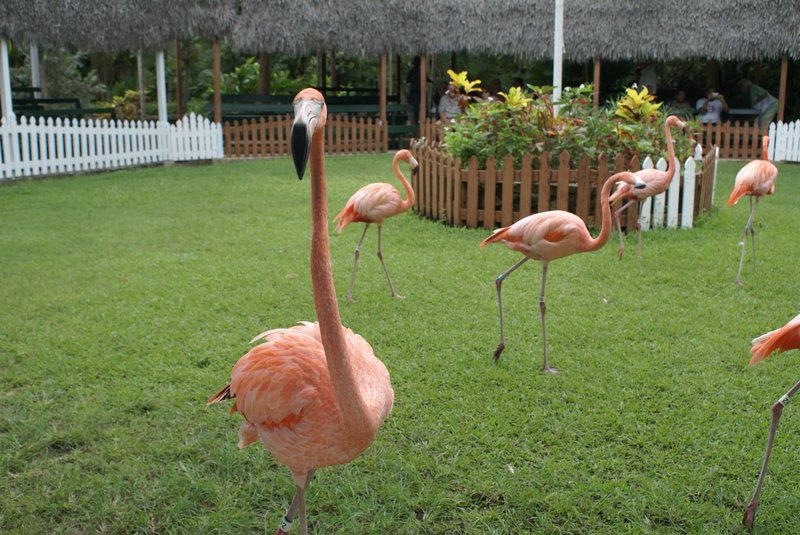
Four acres of tropical gardens founded in 1937 by Jamaican horticulturalist Hedley Edwards, now the only wildlife conservation centre in the Bahamas. Its Caribbean flamingos — the national bird — have been trained to march in formation for visitors since the 1950s, a routine National Geographic once called "ballerinas in pink."
A 2.5-mile strip of white sand on the north coast, lined with resorts and casinos and named for the transatlantic telegraph cable that once came ashore here. It was Nassau's original tourist beach before Paradise Island was developed, and it's still the widest, calmest stretch of sand on this side of the island.
Walking tour through Nassau rum heritage from John Watling's Distillery to a pirate pub — rum tastings, cocktail making, and conch fritters along the way.
A 5.5-hour group boat tour: coral reef snorkeling, swimming pigs at their cay, sea turtle encounter and lunch at a beach club — three classic Bahamian wildlife stops in one departure.
A 9-hour powerboat day trip from Nassau to the Exumas — swimming pigs at Big Major Cay, nurse shark feeding, iguana island, snorkeling the Thunderball Grotto and a conch salad lunch at Staniel Cay.
Raw queen conch chopped and marinated with lime juice, diced onion, peppers, and tomato — eaten fresh on the spot. Nassau's quintessential street dish; best at the Arawak Cay Fish Fry.
Tenderized queen conch, battered and fried until golden brown; served alongside peas and rice or fries. The Bahamian answer to fried chicken, found at every local diner.
Foreign number: accepted. — sign-up sends an OTP by SMS and the app asks for SMS permission only to auto-fill it, so the code has to reach the handset itself.
The broadest of the Bahamian delivery apps, carrying restaurants, groceries, retail and alcohol across New Providence and beyond. Payment is unusually flexible for the region — card, PayPal and the local Sand Dollar, Island Pay and Kanoo wallets are all taken.
Foreign number: not required. — the phone box takes a Bahamian-format number only, but Google, Facebook and email sign-in skip it entirely.
Delivers restaurant food and on-demand pickups anywhere in Nassau, and it is the only one of the three you can order from in a browser instead of the app. A shorter restaurant list than Bahama Eats, but the web ordering makes it the easiest to try once.
Foreign number: accepted. — the account is a name, an email address and a number together; KRAVEN documents no SMS verification step for a customer sign-up.
Covers New Providence, Freeport and Exuma — the only one of the three to reach the Family Islands — and carries beverage, grocery and retail stores as well as restaurants. Card only, and the app is the sole way in; there is no web ordering.
The official Nassau Paradise Island calendar lists this weekly Tuesday and Friday evening celebration of Bahamian music and culture at Atlantis Marina Village.
Foreign number: accepted. — registration takes an email address as well as the number, and HOP's own support runs over WhatsApp, which reaches a foreign number over data.
Nassau’s most active ride app and the answer to the no-Uber problem: the fare is fixed on screen before the driver moves, instead of being argued at the kerb. Cruise port and Cable Beach resort runs are standard, and it books from a mobile browser with no download.
Foreign number: accepted. — the account is an email address and a password, with the number stored alongside it rather than used as the login.
The other working Nassau option, drawing on taxi and livery drivers sanctioned by the Bahamas Road Traffic Department, with the fare shown upfront. A smaller fleet than HOP, so waits run longer — worth keeping as the second app rather than the first.
Between roughly 1706 and 1718, Nassau was not a British colony in any meaningful sense. It was a pirate republic. The harbor's shallow approach made the town almost invincible against large naval vessels, and its proximity to the shipping lanes between the New World and Europe made it irresistible to the men and women who preyed on those lanes. Blackbeard made Nassau his base. So did Charles Vane, Calico Jack Rackham, Anne Bonny, and Mary Read — the last two among the few documented women pirates in history. At the republic's peak, roughly a thousand pirates lived in Nassau, outnumbering the legitimate settlers. They operated a loose democracy, voted on where to sail next, and divided plunder by written contract.
The end came in 1718, when the British Crown appointed Woodes Rogers as Governor of the Bahamas with a mandate to clean up Nassau. Rogers arrived with a small fleet and a royal proclamation: any pirate who surrendered would be pardoned; any who refused would be hanged. Most surrendered. Eight who didn't were tried and hanged in the fort yard. Rogers had the bodies left on public display, and Nassau returned, reluctantly, to the empire. The phrase Rogers chose as his motto — and the Bahamas later adopted as its national motto — was Expulsis Piratis, Restituta Commercia: Pirates Expelled, Commerce Restored.