From Hotel: 22 min · 5 min → Marco Island Historical Museum
1.Marco Island Historical Museum~1 hr 15 min
Home to the Key Marco Cat — a crouching wooden feline carved by the Calusa around 700 CE and one of the most significant pre-Columbian artifacts found in North America. The museum traces 2,000 years of Calusa civilization on the shell-mound islands, and the 1896 Cushing expedition that unearthed the cat.
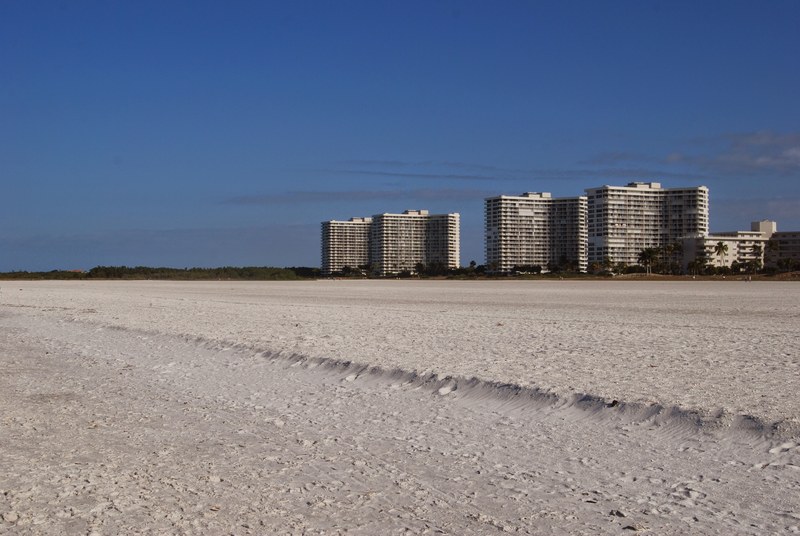
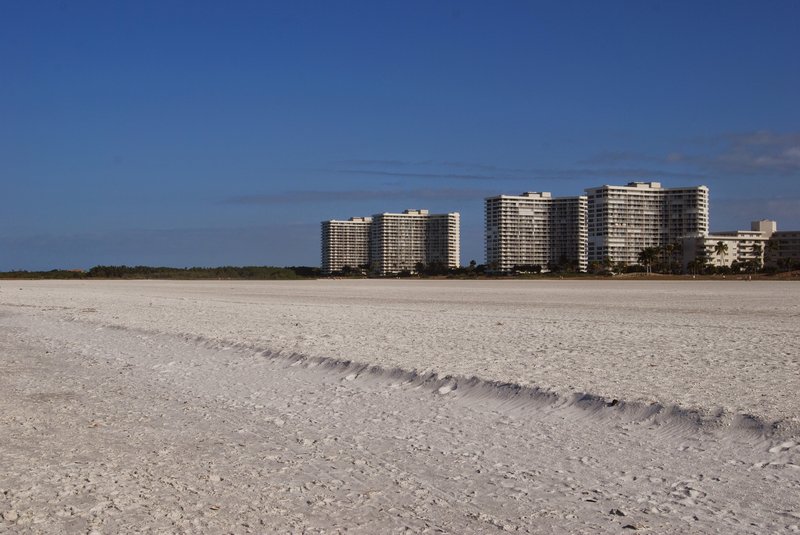
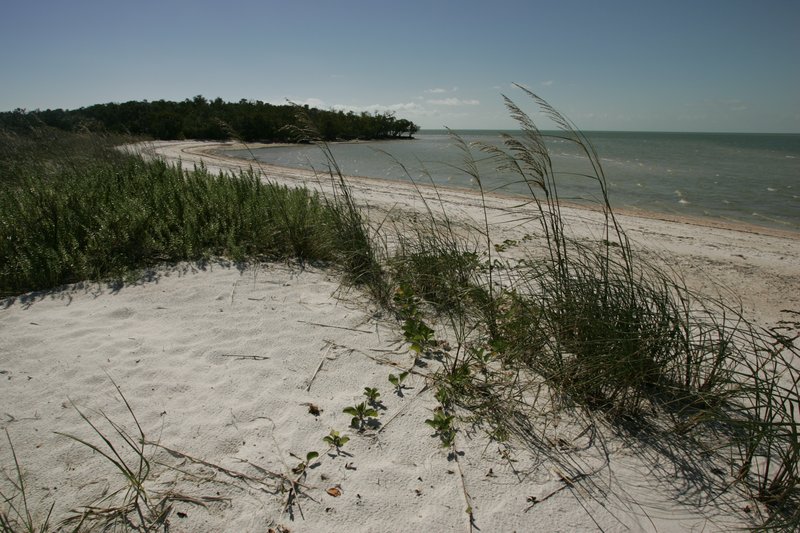
Marco Island's best Gulf sunset vantage — a wide, flat, white-sand expanse facing due west into open water with an unobstructed horizon. The public beach access here is unhurried; arrive in the late afternoon as the sun begins to drop directly over open water, behind nothing.
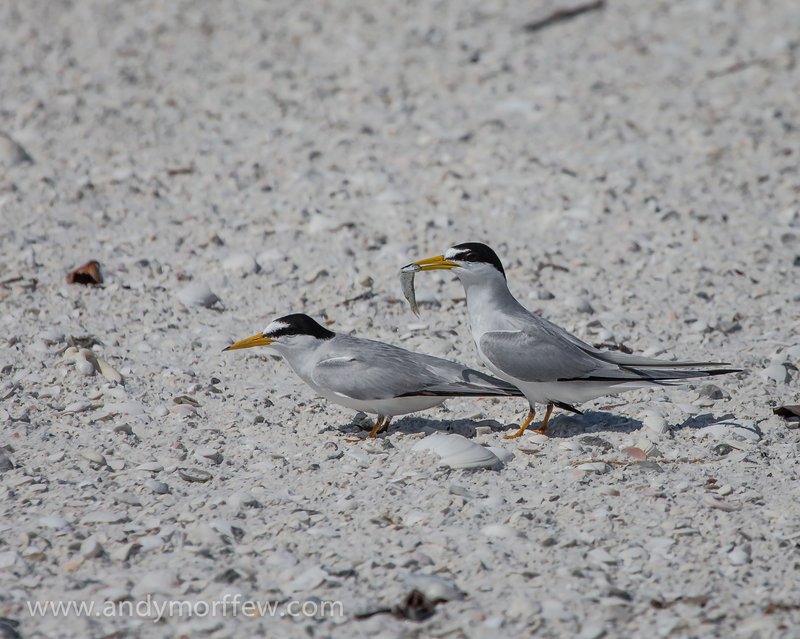
A tidal lagoon separates the parking area from Sand Dollar Island — a shelling spit at the edge of the Ten Thousand Islands. Roseate spoonbills, bald eagles, and nesting least terns work the lagoon; the north tip borders a protected colonial waterbird nesting zone.
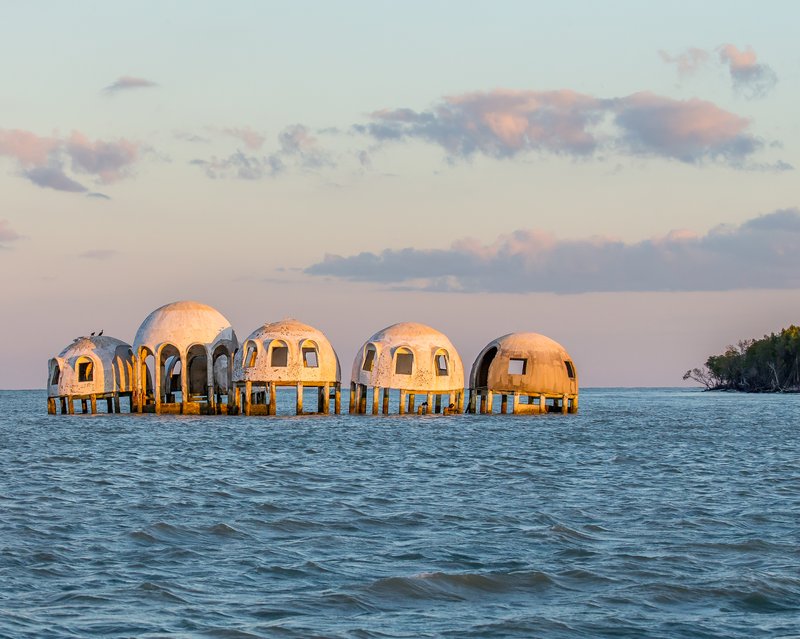
Six concrete domes built in 1982 now sit half-submerged in the Gulf, accessible only by boat. Hurricane Ian accelerated the erosion that has claimed the structure since 1992. Tours cross open mangrove waterways past dolphins and osprey before circling the ruins — one of the most unusual sights in Southwest Florida.
Southern tip of Marco Island where Caxambas Pass opens into the Gulf, giving kayakers direct access to the mangrove channels of the Ten Thousand Islands. Kayak Marco Island rents singles and tandems from the park; paddle into the estuary as dolphins follow the outgoing tide through the pass.
An Old Florida fishing village of roughly 300 people fifteen minutes east of Marco Island — stilt houses on canals, shrimp boats, hand-painted signs, and a bar where the Buzzard Lope dance has run every Sunday afternoon for decades. The Little Bar serves stone crab and smoked mullet in a waterfront fish-camp setting.
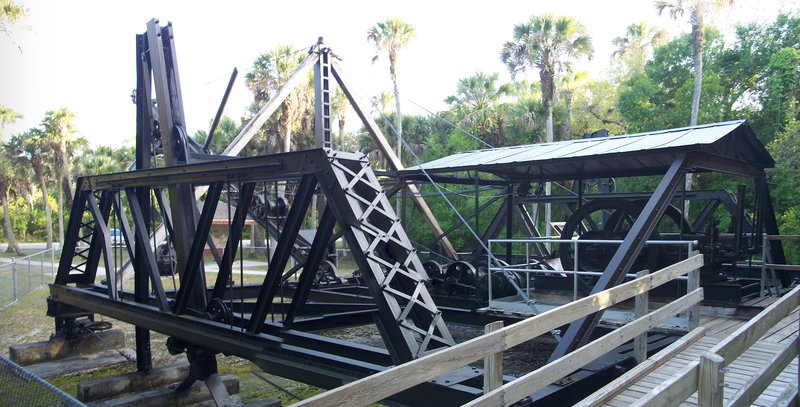
Pine flatwoods, cypress swamp, and mangrove estuary bordering Big Cypress National Preserve. The Bay City Walking Dredge — the steam-powered machine that cut the Tamiami Trail in the 1920s — stands preserved at the trailhead. Trails thread through five habitats including a boardwalk over the mangrove estuary.
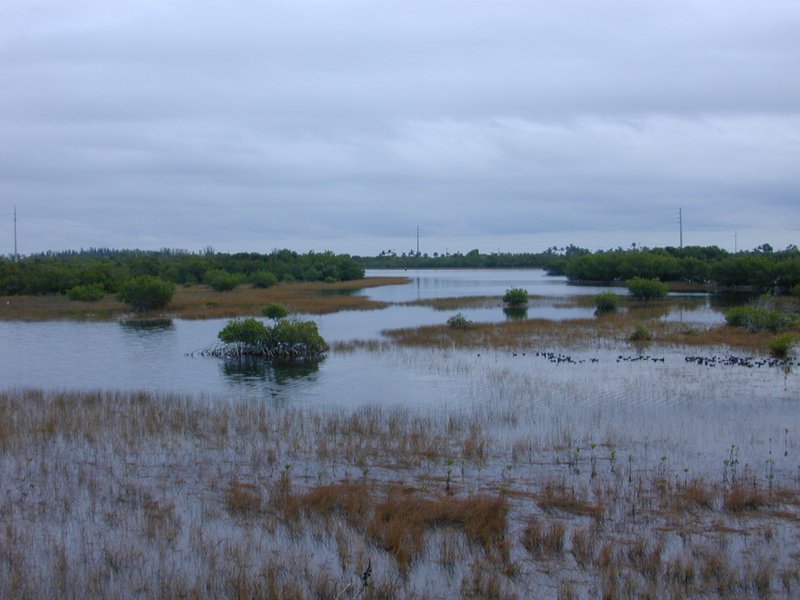
The Environmental Learning Center of Rookery Bay National Estuarine Research Reserve — one of 29 designated reserves in the US system, protecting 110,000 acres of intact mangrove coast. Exhibits on the estuary ecosystem, a 45-foot observation bridge over the bay, and a gallery of Southwest Florida natural art.
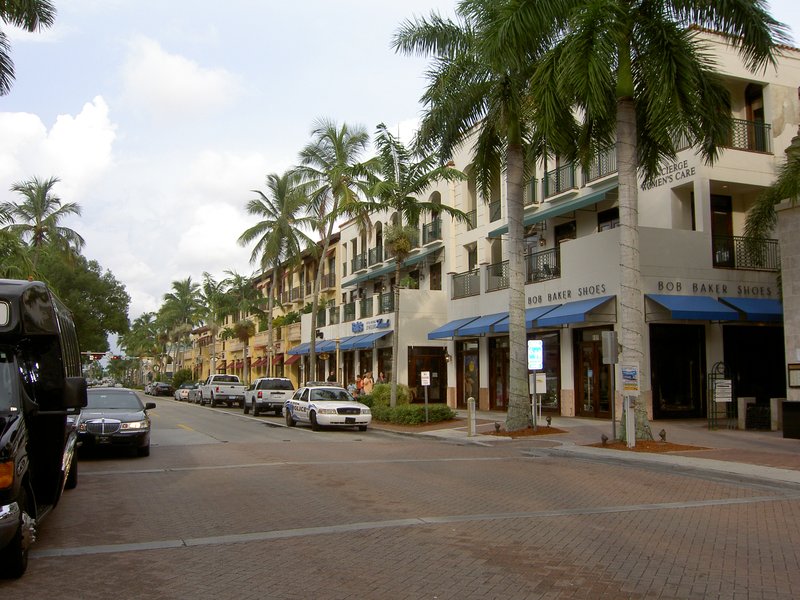
Old Naples' main street since the 1920s — a tree-lined stretch of upscale boutiques, galleries, and outdoor cafés running from US 41 to the Gulf. The Naples Pier at its western end is closed for a multi-year rebuild, but the wide public beach at the foot of 12th Avenue South, one block over, is open as always.
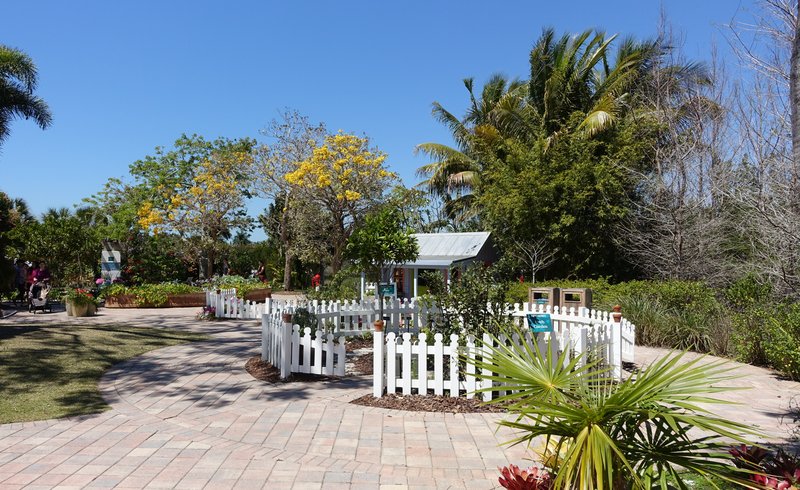
A 170-acre garden of cultivated grounds and preservation land representing seven habitat zones between the 26th parallels north and south — around 50,000 plants in all. A Brazilian garden, a Thai pavilion, a Balinese water garden, and a butterfly house sit along shaded paths and a boardwalk over the preserve's natural wetland.
A 43-acre AZA-accredited zoo built on a historic botanical garden first planted in 1919. Primates live on lake islands viewed by guided catamaran on the Primate Expedition Cruise, and roughly 70 species — including Florida panthers, leopards, and giraffes — are spread through the mature, shaded grounds Julius Fleischmann began landscaping in the 1950s.
From Hotel: 55 min → Big Cypress National Preserve — Oasis Visitor Center
1.Big Cypress National Preserve — Oasis Visitor Center~1 hr
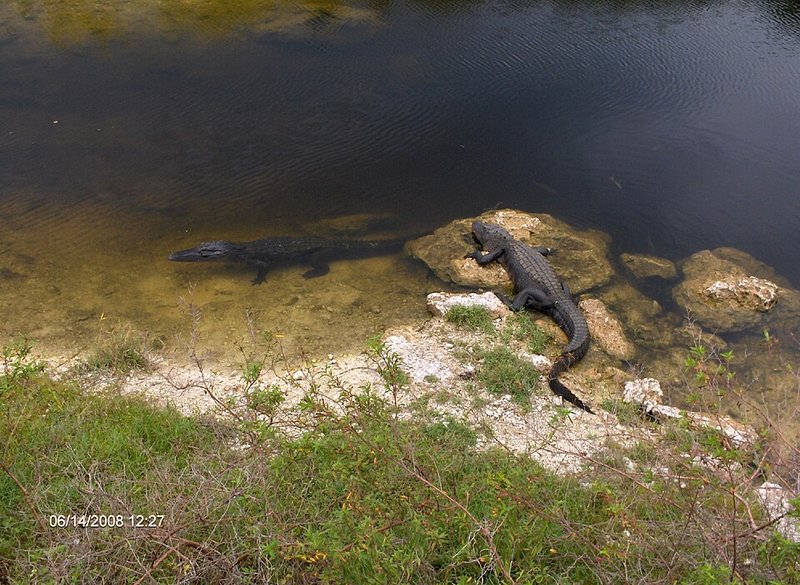
A 720,566-acre freshwater swamp preserve bordering the Everglades to the south — one of the first two national preserves ever designated in the US park system, in 1974. The short boardwalk behind the Oasis Visitor Center overlooks a roadside canal where alligators gather year-round, often within a few feet of the rail.
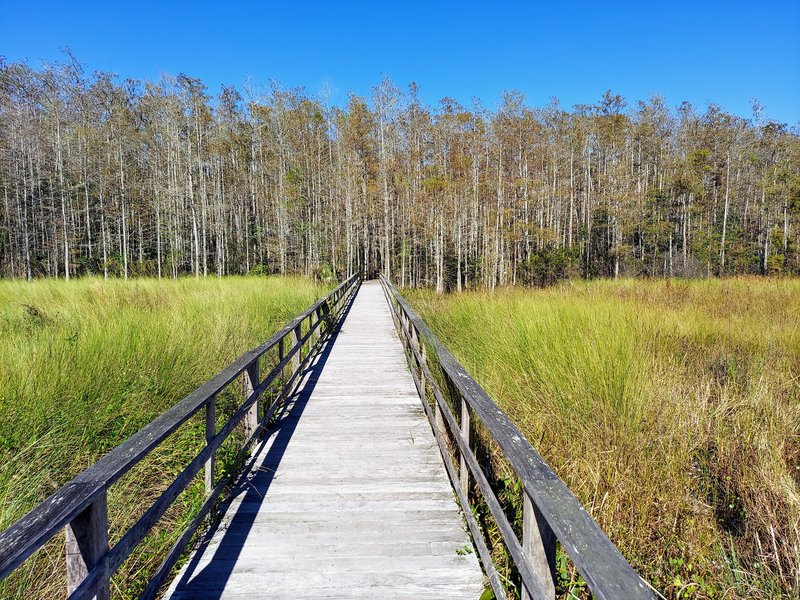
An Audubon sanctuary protecting the largest remaining stand of old-growth bald cypress in North America — some trees are around 500 years old and top 130 feet. A 2.25-mile boardwalk loops through pine flatwoods, wet prairie, and the cypress forest itself, with wood storks, alligators, and otters regularly seen from the rail.
A small former county seat on the Barron River, at the northern edge of the Ten Thousand Islands and the Gulf Coast entrance to Everglades National Park. The Gulf Coast Visitor Center runs a two-hour naturalist-narrated boat tour six miles out through the mangrove islands to open Gulf water — the easiest way to see the Ten Thousand Islands from a boat without chartering one.
Narrated eco-cruise through the Ten Thousand Islands and Cape Romano area with a focus on bottlenose dolphin identification and behavior — the same pod that lives in these waters year-round. The naturalist captain documents individual dolphins by dorsal fin and shares research data collected over years.
Small-group naturalist tour to uninhabited barrier islands in the Ten Thousand Islands for shelling, dolphin and manatee watching, and a pass by the Cape Romano dome ruins. Guide provides ecological context on the estuary and the unique geology of shell-mound islands.
Four-hour naturalist boat tour combining dolphin watching in Caxambas Pass, stops at remote barrier-island shelling beaches, and a route through the Ten Thousand Islands mangrove maze. Small group, open-air vessel, narrated throughout.
Morning shelling and wildlife tour to the shell-mound islands of the Ten Thousand Islands, with dolphin and bird watching. Guide explains how the Calusa built these islands from shell refuse over centuries of habitation.
Small-group kayak or stand-up paddleboard tour through the mangrove channels, watching for dolphins, manatees, sea turtles, and roseate spoonbills. Expert naturalist guide provides on-water ecological interpretation of the estuary.
Marco Island's most-reviewed wildlife excursion, run by a non-profit research team that has monitored the same resident dolphin population for over 25 years. Guests assist with fin-ID photo collection; every tour contributes to a long-running behavioral database.
Small-group boat tour to Caxambas Sandbar and Dickman's Island, navigating the mangrove channels of the inner estuary. Captain covers the natural history of the Ten Thousand Islands and the ecological role of the shell-mound islands.
Marco Island sits at the center of Florida's stone crab harvest; season runs October 15 through May 1. Claws are served chilled with a mustard dipping sauce. Buy at Kirk Fish Company in Goodland during season.
Florida's official state pie — made with Key lime juice, condensed milk, and egg yolks on a graham cracker crust. The filling should be pale yellow; a bright green slice is a warning sign. Ori's Bakery bakes theirs fresh daily.
Pastelitos de guayaba — flaky puff pastry filled with guava paste, sometimes layered with cream cheese; a staple of South Florida's Cuban immigrant culture. Ori's Bakery makes them fresh daily and has them in the case most mornings.
Foreign number: not accepted. — the sign-up form only takes US, Canadian, Australian and New Zealand numbers; a UK or EU number is refused before any code is sent.
Covers Marco Island's main commercial corridors along Collier and San Marco boulevards. Delivery times typically run 30–45 minutes. Most of the island's restaurants participate, including the larger dinner spots near the hotels.
Foreign number: accepted — it uses the same Uber account and number as the ride app.
Draws from largely the same restaurant pool as DoorDash on the island. Practical if you already have the Uber app from using rides during the trip — no second registration needed.
Foreign number: accepted. — the SMS code reaches foreign carriers, and Google or Apple sign-in works without one.
Covers Marco Island and the greater Naples area. Wait times are generally short in winter peak season; in summer demand drops and drivers can take 15–20 minutes. The large resort hotels also offer their own car service at similar rates.
Out-and-back along Marco Island's northern Gulf shoreline. The trail runs from Tigertail Beach north across a tidal lagoon and along the undeveloped barrier spit. Shorebird nesting colonies are dense in the lagoon section — roseate spoonbills, black skimmers, and snowy plovers work the water's edge. The turnaround point is where the spit narrows to a sandbar facing open water to the north.
Loop through pine flatwood, cypress swamp, tropical hardwood hammock, and mangrove estuary inside Collier-Seminole State Park. Wildlife density is high — look for Florida black bears, gopher tortoises, and manatees in the estuary section. The same park contains the Bay City Walking Dredge at its visitor area — the steam-powered machine that cut the Tamiami Trail through the Everglades in the 1920s.
The Key Marco Cat is a six-inch wooden figure — a crouching feline with a human torso, carved by the Calusa people around 700 CE. When Frank Hamilton Cushing pulled it from a waterlogged midden on Marco Island in 1896, it was still painted; within hours of exposure to air, most of the color was gone. The cat now lives at the Smithsonian.
What the cat represents is larger than the artifact. The Calusa controlled South Florida for two thousand years without ever practicing agriculture — they fed an estimated 50,000 people on the marine abundance of the Ten Thousand Islands estuary, building shell-mound cities from the material they ate. When Spanish explorers arrived in the 1500s, they encountered a civilization whose power came entirely from the sea, and whose leader Carlos sent Spanish emissaries home or killed them rather than submit. The Calusa were not conquered militarily; they were eliminated by disease and the slow collapse of the population that sustained them.
What Marco Island is now — a resort community built on sand and shell — sits on top of a civilization that maintained complex, hierarchical society in equilibrium with one of the most productive estuaries in North America for millennia, leaving the environment intact. The kayak routes through the Ten Thousand Islands you paddled on Day 2 follow the same channels the Calusa used to reach their shell-mound settlements. The cat outlasted everything.