TRIP OVERVIEW
Day 1 – Wat Rachathiwat · Abhisek Dusit Throne Hall · Wat Benchamabophit · Royal Barge National Museum
Day 2 – King Power MahaNakhon SkyWalk · Lumphini Park · Wat Yannawa · Bangkok Reflection
Day 3 – Grand Palace · Wat Pho · Wat Arun · National Museum Bangkok
Day 4 – Erawan Shrine · Bangkok Art & Culture Centre · Jim Thompson House · Benjakitti Forest Park
Day 5 – Wat Suthat & Giant Swing · Wat Ratchanatdaram Worawihan · Wat Traimit · Lhong 1919
Day 6 – Train Day · Ayutthaya
Day 1
1.
Wat Rachathiwat
~45 min
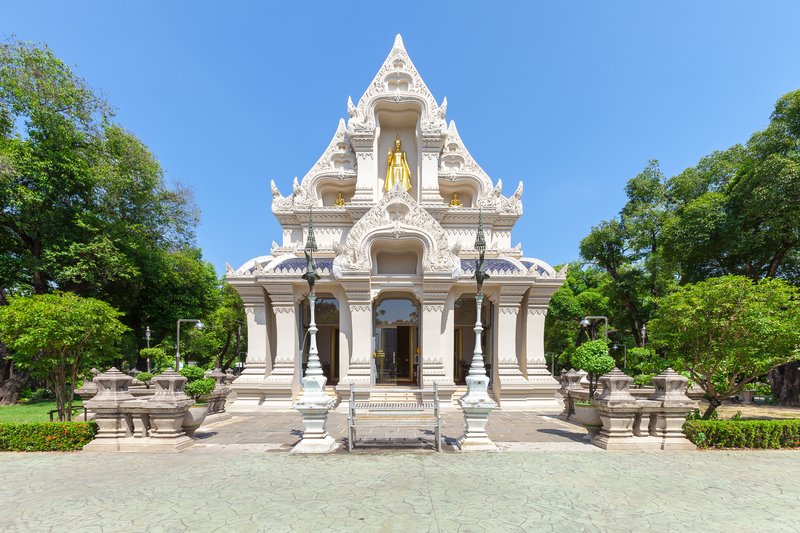
A royal monastery on the Chao Phraya founded in the Ayutthaya period and renamed by King Mongkut · Rama IV — now the founding temple of the Dhammayuttika Nikaya reform order. Its ordination hall holds Vessantara Jataka murals by Carlo Rigoli, fresh from decorating Ananta Samakhom Throne Hall, from sketches by Prince Naris, who also enlarged the Ayutthaya-period teak pavilion across the road.
2.
Abhisek Dusit Throne Hall
~45 min
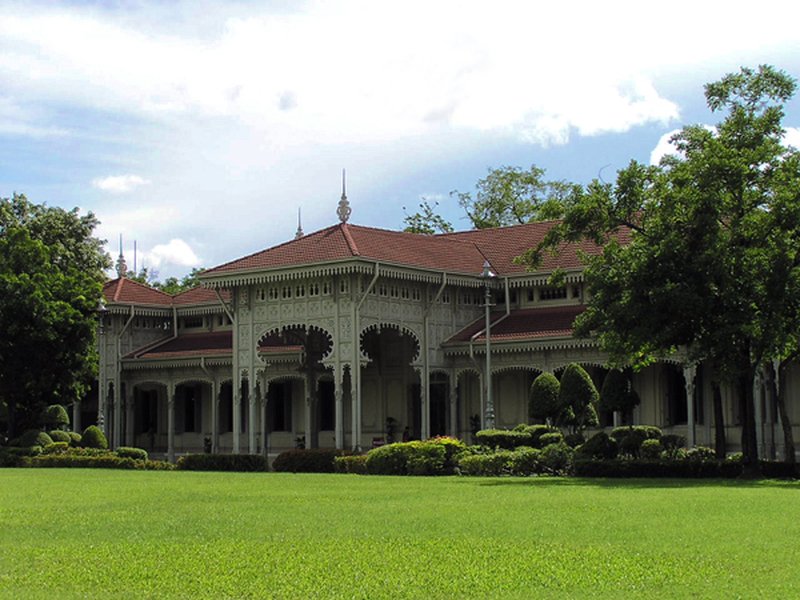
A single-story throne hall completed in 1904 for King Chulalongkorn · Rama V, with ornate Moorish-influenced fretwork. Restored in the 1980s and reopened in 1993 as the SUPPORT Museum, displaying Thai handicrafts through Queen Sirikit's SUPPORT Foundation — niello ware, gold and silver work, wood and soap carving, Thai silk. Stands east of Vimanmek Mansion, closed since 2016 for restoration.
Daily 9:30am - 4:00pm
Cash Only
No photography inside; bags, liquids and sunglasses checked into a locker at entrance
Dress code enforced: long sleeves and covered shoulders, trousers or skirt below the knee. Sarongs available at entrance.
3.
Wat Benchamabophit
~1 hr
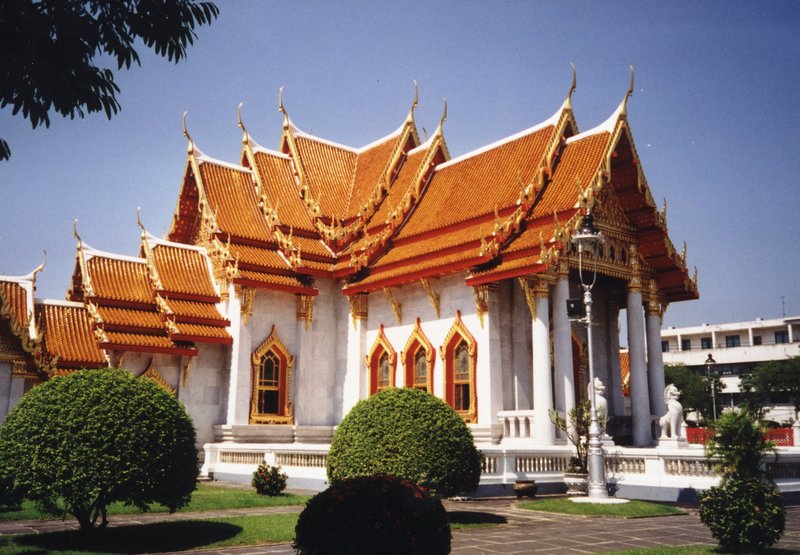
The Marble Temple — completed in 1911 under King Chulalongkorn, built entirely of Carrara marble imported from Italy. The cloisters hold 52 Buddha statues representing every mudra and regional style found across Asia. The temple appears on the reverse of the five-baht coin.
Daily 8:00am - 5:30pm
Cash Only
Dress code enforced: no shorts or sleeveless tops. Sarongs available at entrance.
4.
Royal Barge National Museum
~1 hr
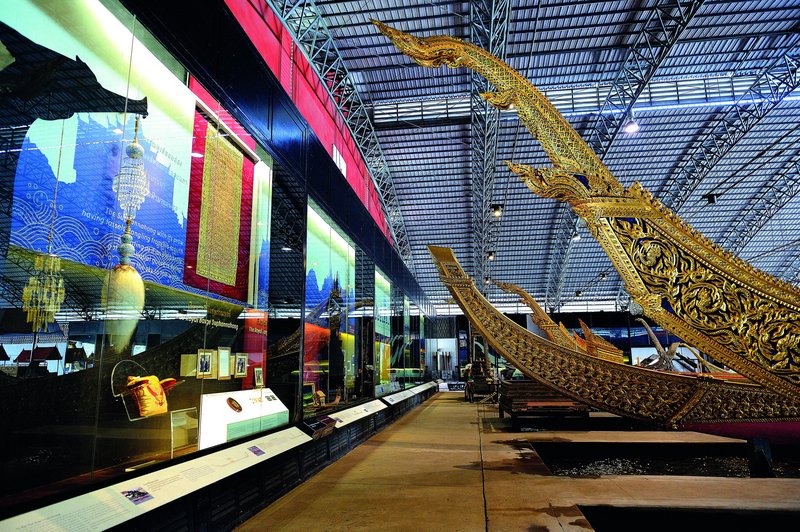
A dry-dock warehouse on a Thonburi canal housing the royal ceremonial barge fleet. The centrepiece is the Suphannahong — a 46-metre golden swan barge carved from a single teak tree, crewed by 50 oarsmen in full regalia during the Royal Barge Procession. Last deployed in 2019 for the royal coronation.
Day 2
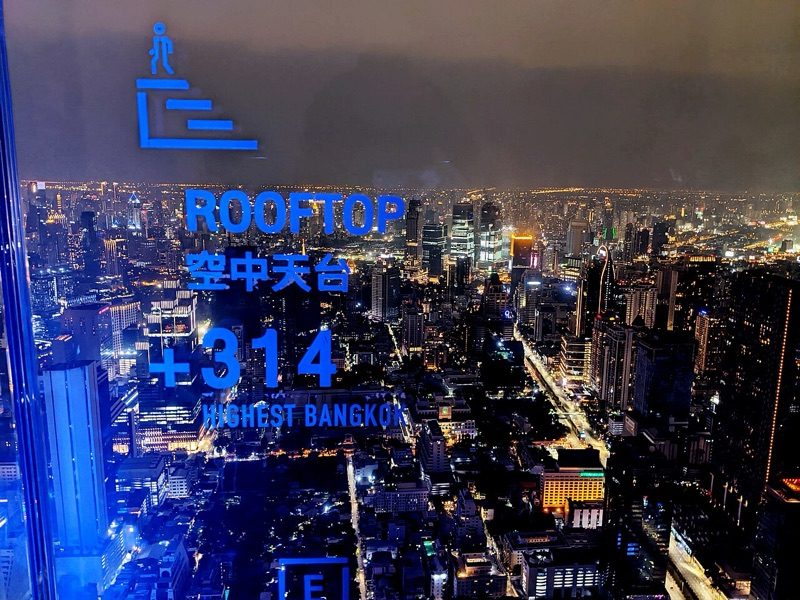
1. King Power MahaNakhon SkyWalk~1 hr 30 min
Bangkok's highest observation point at 314 m, perched atop the nation's tallest skyscraper. A glass-floored skydeck looks straight down 78 floors to street level. Inside, the SkyVerse immersive experience recreates Bangkok's history through room-scale projections from the capital's founding to its future.
Daily 10:00am - 12:00am
Heights · glass floor
2.
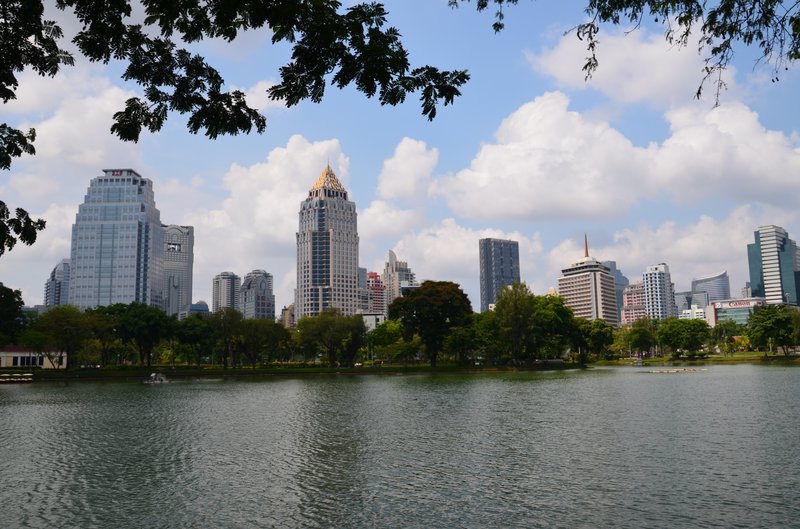
Lumphini Park
~1 hr
A 57.6-hectare public park in central Bangkok, opened in 1925 as Thailand's first public park. The grounds contain an artificial lake for paddle boats, tree-lined paths, and an outdoor gym. Monitor lizards — up to 2 metres long — inhabit the lake margins and are regularly visible from the pathways.
Daily 4:30am - 9:00pm
3.
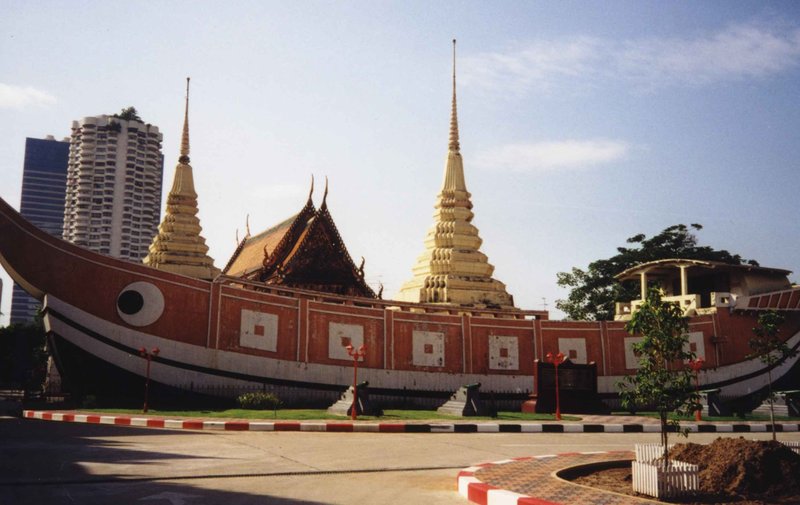
Wat Yannawa
~30 min
A temple on Charoen Krung Road built by King Rama III in the 1840s in the form of a 40-metre Chinese junk — the only temple in the world built to replicate a sailing ship. The hull contains two chedis serving as masts, built to preserve the memory of the junks that once crowded the Chao Phraya.
4. Bangkok Reflection~1 hr
A multi-floor rooftop experience on the 58th–61st floors of One City Centre, combining an open-air observation deck with large-format digital art. The centrepiece is the Akara Sky Hanuman — a colossal illuminated guardian deity visible from across Ploenchit. Views sweep over Lumpini Park and the central skyline.
No pictures available.
Day 3
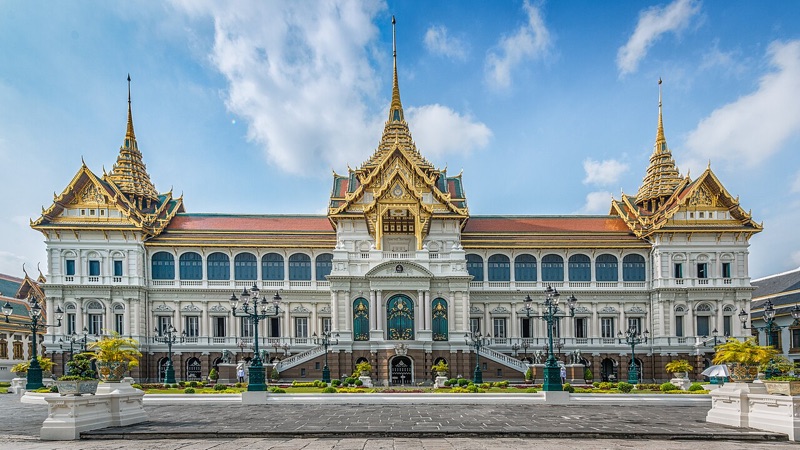
1. Grand Palace~2 hr
The ceremonial heart of the Thai kingdom, built in 1782 as the seat of the Chakri dynasty. The walled compound covers 218,000 sq m and holds Wat Phra Kaew — home of the sacred Emerald Buddha — alongside the Grand Throne Hall and the Royal Reception Halls used for coronations and state ceremonies.
Daily 8:30am - 4:30pm
45 min walk
2.
Wat Pho
~1 hr 30 min
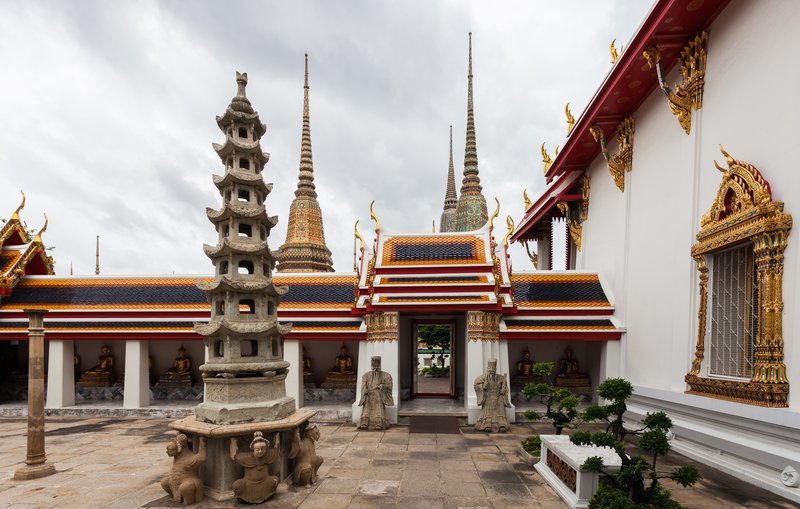
A royal temple complex on Rattanakosin Island dating from the 16th century, expanded by King Rama I in 1788. The complex houses a 46-metre-long Reclining Buddha covered in gold leaf, and is recognised as the birthplace of traditional Thai massage — massage pavilions operate within the grounds.
3.
Wat Arun
~1 hr
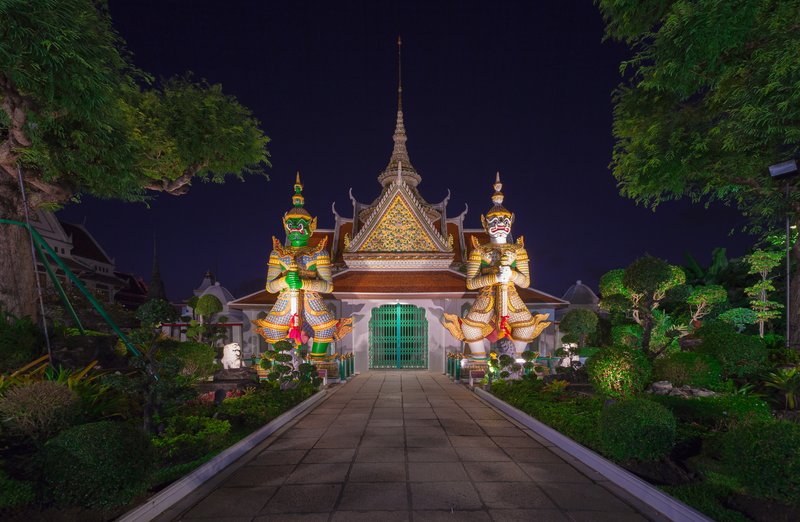
The Temple of Dawn occupies the west bank of the Chao Phraya, reached by a short cross-river ferry from Tha Tien Pier. Its 70-metre central prang is decorated with Chinese porcelain fragments and seashells set into plaster — work carried out during the reign of King Rama II in the early 19th century.
4. National Museum Bangkok~1 hr 30 min
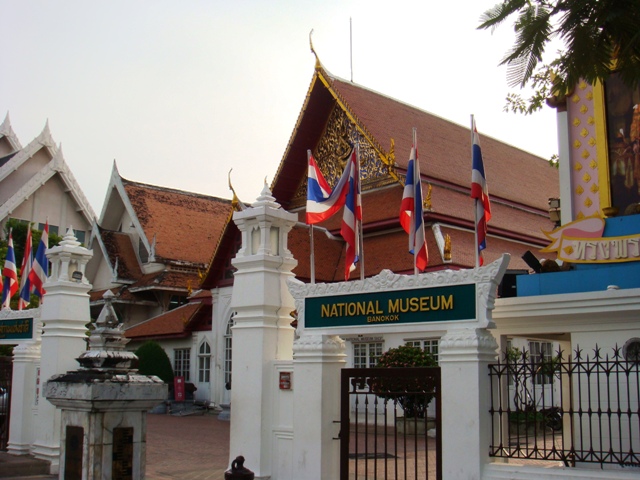
The largest museum in Southeast Asia, in an 18th-century palace complex. The collection spans 5,000 years of Thai civilisation — from Dvaravati stone reliefs and Khmer bronzes to gold regalia, royal funeral chariots, and the finest Sukhothai-era Buddhas anywhere.
Wednesday - Sunday 8:30am - 4:00pm
Closed Monday & Tuesday
Cash Only
Day 4
1.
Erawan Shrine
~30 min
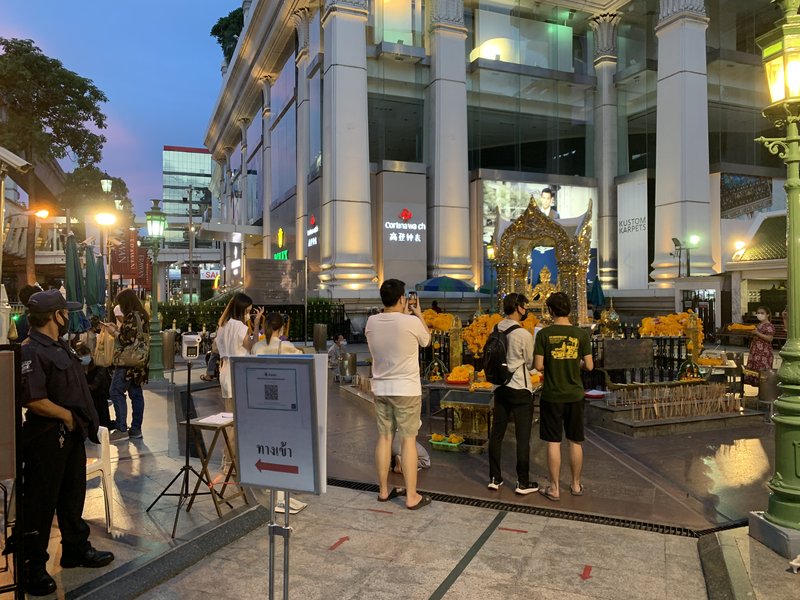
A public Brahmin shrine at the Ratchaprasong intersection housing a gold statue of Phra Phrom, the Thai representation of the Hindu deity Brahma. Built in 1956 after construction accidents at an adjacent hotel prompted spiritual intervention. Devotees commission resident classical dancers to perform as offerings.
2. Bangkok Art & Culture Centre~1 hr
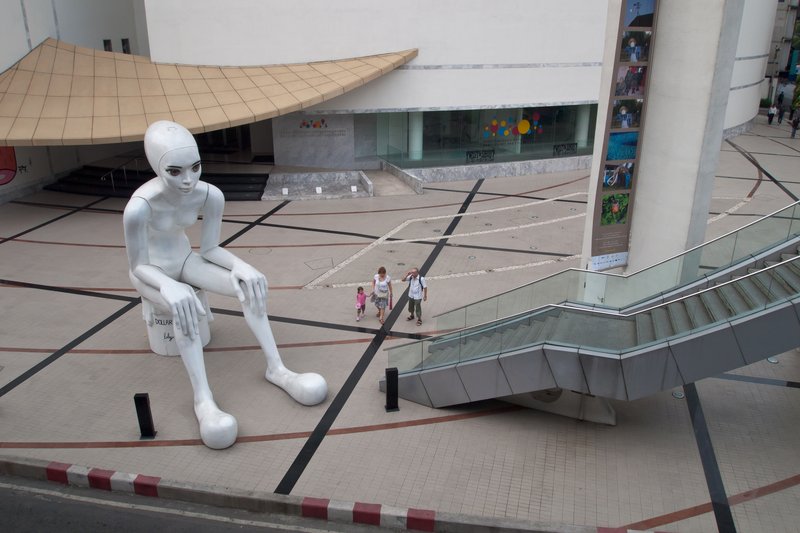
Bangkok's foremost contemporary art hub — a nine-floor curved tower at Pathumwan hosting rotating exhibitions by Thai and international artists, with independent galleries lining its spiralling atrium ramp.
3. Jim Thompson House~1 hr
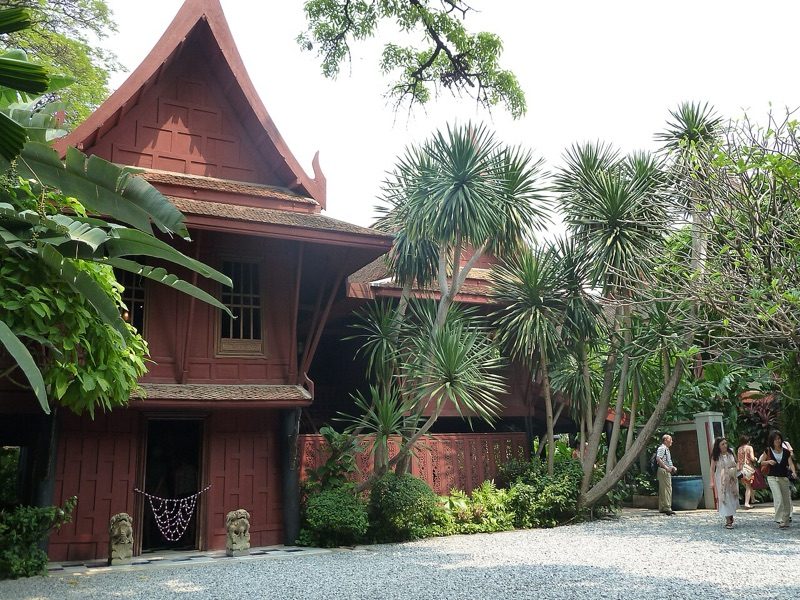
Six traditional Thai teak houses assembled by American silk entrepreneur Jim Thompson, who revived the Thai silk trade before mysteriously vanishing in 1967. The interiors preserve his personal collection — Burmese woodcarvings, Ayutthaya-era Buddhas, Chinese porcelain — arranged exactly as he left them.
4. Benjakitti Forest Park~1 hr
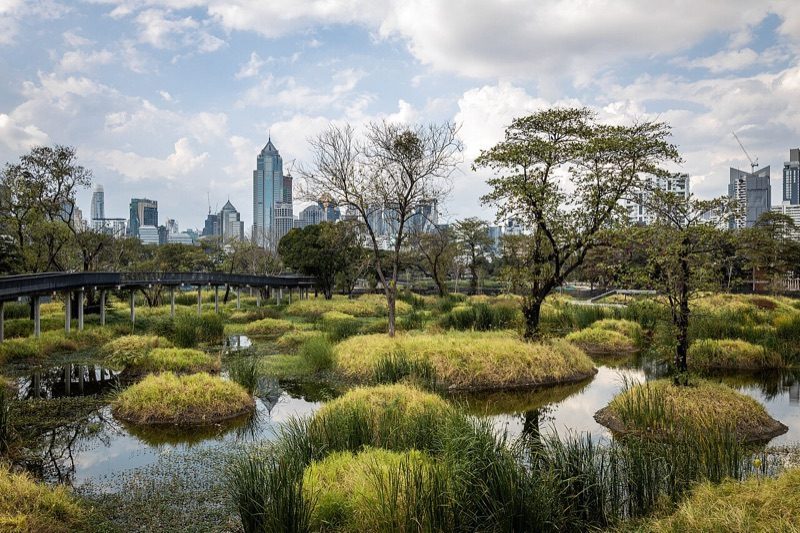
A 130-hectare urban forest on the former Thailand Tobacco Monopoly grounds. Elevated boardwalks wind through mangrove-style wetlands while the city skyline rises in every direction. The park links to Benjakitti City Park lake and Khlong Toei MRT — Bangkok's most ambitious green corridor.
Day 5
1.
Wat Suthat & Giant Swing
~1 hr
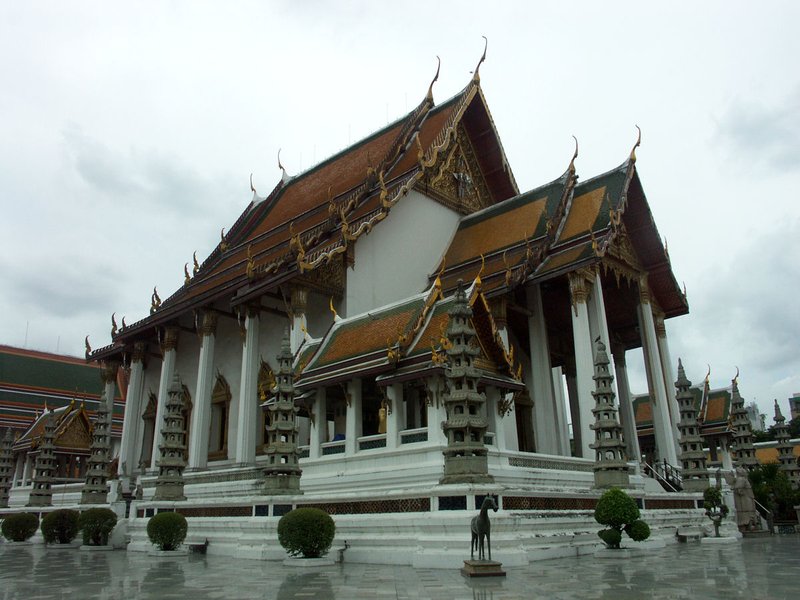
A first-class royal temple completed in 1847, containing the 8-metre-tall Phra Si Sakayamuni Buddha — one of the largest bronze Buddha images in Thailand. Directly in front stands the 21-metre-tall red teak Giant Swing, erected in 1784 and used in Brahmin ceremonies until 1935.
2.
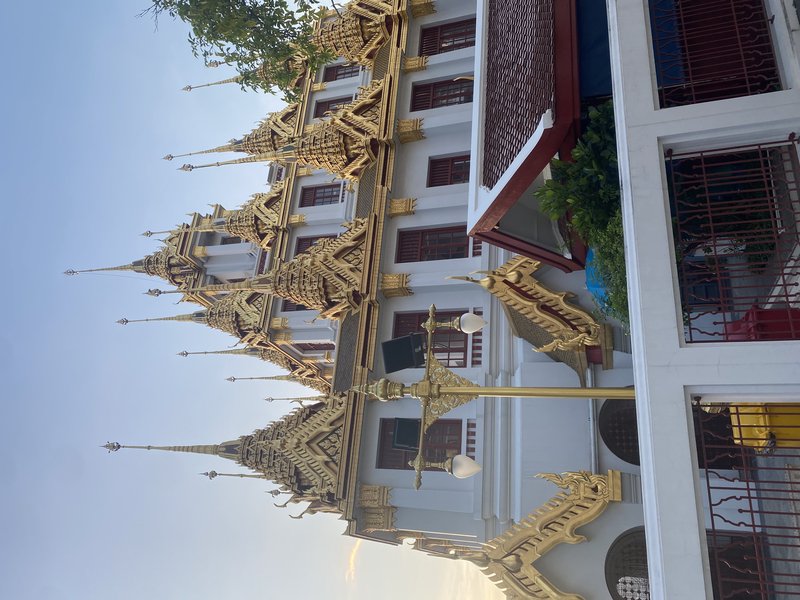
Wat Ratchanatdaram Worawihan · Loha Prasat
~1 hr
A royal temple built in 1846 under King Rama III, housing the Loha Prasat — an iron-spired multi-tiered tower with 37 metal spires representing the 37 virtues of enlightenment. One of only three Loha Prasat temples ever built in the world, the others being in India and Sri Lanka.
3.
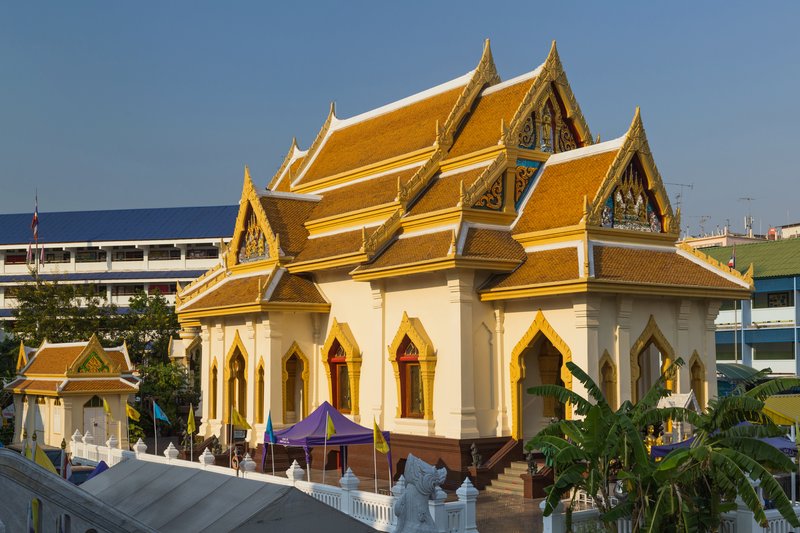
Wat Traimit
~45 min
Home to the world's largest solid gold Buddha — a 3-metre seated image weighing 5.5 tonnes. Discovered in 1955 when a plaster coating cracked during a move, revealing the gold beneath; hidden for centuries to protect it from the Burmese. The marble building housing it stands 16 storeys high.
4. Lhong 1919~1 hr
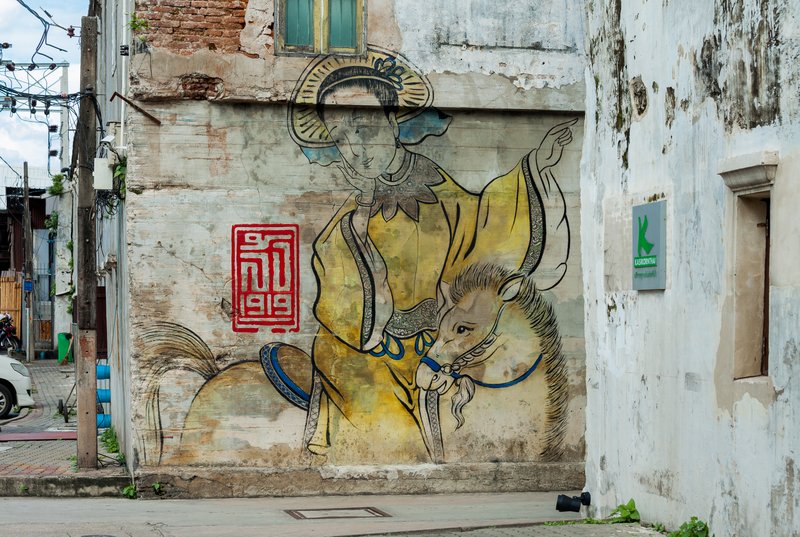
A restored 19th-century Chinese trading compound on the west bank of the Chao Phraya — warehouses now hold boutiques and galleries while the Mazu shrine draws devotees and river ferries dock at the original jetty.
Day 6
Krung Thep Aphiwat → Ayutthaya · SRT · 51–56 min
book at: Omio
7:30am Krung Thep Aphiwat → 8:21am Ayutthaya
7:50am Krung Thep Aphiwat → 8:57am Ayutthaya
8:45am Krung Thep Aphiwat → 9:41am Ayutthaya
1.
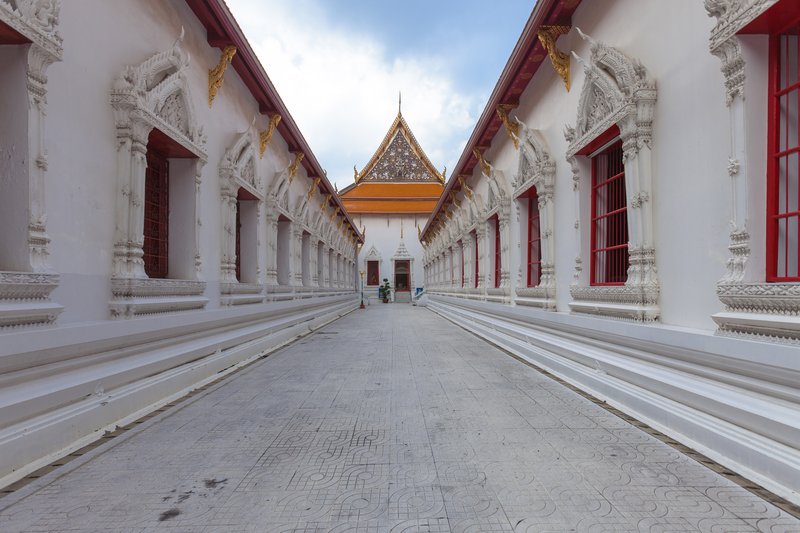
Wat Mahathat
~1 hr
A 14th-century royal temple that was the seat of the supreme patriarch of Ayutthaya. Its ruins contain the image synonymous with the city: a stone Buddha head entwined in the roots of a banyan tree, created when the tree slowly grew around a dislodged head after Burmese forces sacked Ayutthaya in 1767.
2.
Wat Phra Si Sanphet
~45 min
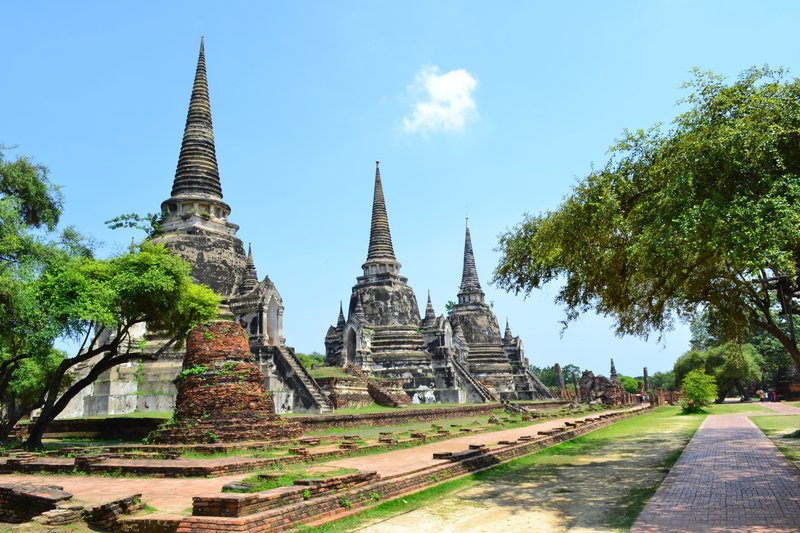
The grandest temple of the Ayutthaya royal palace, used for royal cremation ceremonies and holding the ashes of three kings. Once housing a 16-metre Buddha clad in 173 kg of gold — melted down by Burmese invaders in 1767 — now defined by three restored bell-shaped chedis, the defining image of ancient Ayutthaya.
3.
Wat Chaiwatthanaram
~1 hr
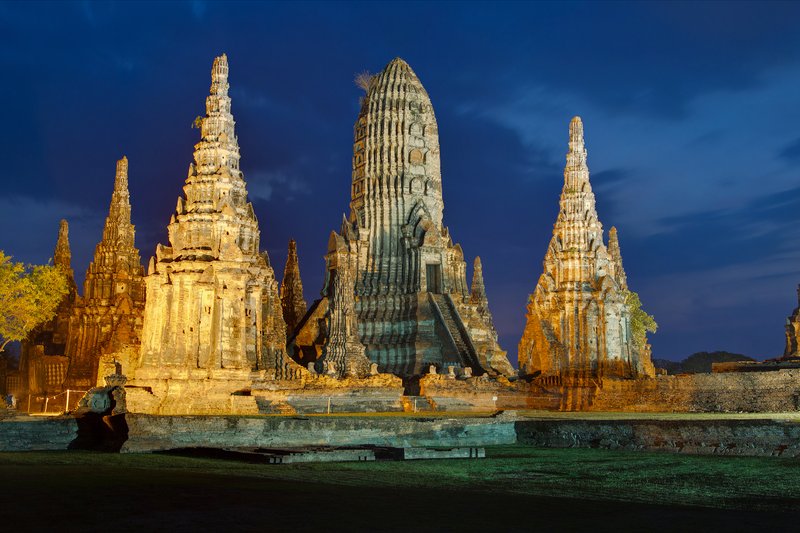
A 17th-century royal temple on the Chao Phraya's west bank. Its design mirrors Khmer cosmology: a central 35-metre prang representing Mount Meru, ringed by four corner prangs and a gallery of 120 headless seated Buddhas. The silhouette reflected in the river is the signature vista of Ayutthaya.
Ayutthaya → Krung Thep Aphiwat · SRT · 56–66 min
book at: Omio
3:39pm Ayutthaya → 4:35pm Krung Thep Aphiwat
4:04pm Ayutthaya → 5:10pm Krung Thep Aphiwat
4:50pm Ayutthaya → 5:40pm Krung Thep Aphiwat
Weekly Closures
Museums · Galleries · Closed Monday
Tours
Viator
A guided half-day tour covering the Grand Palace, Emerald Buddha, and Bangkok's most iconic temples, with admission included — a well-paced overview of the city's ceremonial core.
3 hr · Small group
↔
A tasting walk through backstreets locals actually use — past street stalls, market kitchens, and family-run shophouses for 10-plus Thai tastings with a passionate foodie guide.
3 hr · Small group
A hands-on Thai kitchen workshop in the Old Town beginning with a fresh-market tour to source ingredients — you make four traditional Thai dishes and eat what you cook.
3 hr 30 min · Small group
A guided walking tour pairing Wat Pho's 46-metre Reclining Buddha with the riverside spires of Wat Arun — two of Bangkok's most iconic temple sites in one morning.
3 hr · Small group
A half-day guided city tour taking in the Grand Palace compound plus three major temple complexes — Wat Traimit, Wat Pho, and Wat Arun — with a guide throughout.
3 hr · Small group
↔
GetYourGuide
Chef-designed tasting walk through Yaowarat backstreets with a maximum of 8 guests — 15-plus tastings including two Michelin-listed street food venues in Bangkok's finest Chinatown labyrinth.
3 hr 30 min · Small group · max 8
A lunchtime tasting walk away from the skyscrapers and into Bangkok's real foodie heartland — 15-plus tastings, a tuk-tuk ride, and a canal cruise, all in small groups of up to 8.
4 hr · Small group · max 8
3. Bangkok: Local Life · Culture & Food Walking Tour at Chinatown · GetYourGuide · 4.8 · 200+ reviews
A small-group walking tour through Bangkok's Chinatown tracing Chinese immigrant history, with stops at shrines, street-art alleys, and authentic Thai-Chinese food stalls.
3 hr · Small group
A morning workshop pairing a guided fresh-market visit with hands-on preparation of five traditional Thai dishes — you grind your own curry paste and eat your finished meal.
4 hr · Small group
5. Bangkok: Chinatown Street Tasting Walk with 10+ Local Dishes · GetYourGuide · 4.7 · 1500+ reviews
An evening tasting walk through Yaowarat with 10-plus dishes covering the full range of Thai-Chinese street cooking — noodles, dumplings, roast meats, and tropical desserts.
3 hr · Small group
TripAdvisor
Bangkok's top-rated tasting walk on TripAdvisor — a chef-led walk through Yaowarat backstreets for 15-plus tastings at street stalls and two Michelin-listed venues, in groups of up to 8.
3 hr 30 min · Small group · max 8
A lunchtime tasting walk through the old royal capital's culinary backstreets — 15-plus tastings with generous portions, ending with a tuk-tuk ride and canal cruise.
4 hr · Small group · max 8
A small-group culinary walk through Bangkok's most characterful neighbourhood markets and food alleyways — designed for people who want to eat where the locals actually eat.
3 hr · Small group
An evening tuk-tuk circuit through Bangkok's illuminated temples and night markets with street food stops — the city's most popular after-dark group outing.
3 hr · Small group
↔
Bangkok's highest-rated tasting walk — a guided backstreet exploration of 15-plus local dishes explaining the history and culture behind each one, led by a passionate local foodie.
3 hr · Small group
Cappuccino
Mother Roaster · 4.5 · 1000+ reviews
La Cabra Bangkok · 4.5 · 500+ reviews
Roots Coffee · 4.4 · 800+ reviews
Beans Coffee Roasters · 4.3 · 400+ reviews
Sarnies Bangkok · 4.4 · 2000+ reviews
Restaurants Near Hotel
Pier 28 · 4.3 · 800+ reviews
Hotel riverside restaurant — modern international with Chao Phraya views.
Daily 6:00pm - 11:00pm
Hong Sieng Kong · 4.4 · 2500+ reviews
Sino-Portuguese shophouse café blending Chinese and Thai flavours, riverside.
Daily 10:00am - 10:00pm
Supanniga Eating Room · 4.5 · 3000+ reviews
Regional Thai from the owner's grandmother's recipes — Trat and Khon Kaen.
Daily 11:00am - 10:00pm
Err Urban Rustic Thai · 4.4 · 1500+ reviews
Rustic Thai bar-diner near Grand Palace with lesser-known regional dishes.
Tuesday - Sunday 11:00am - 10:00pm
Closed Monday
Downtown Restaurants
Issaya Siamese Club · 4.5 · 4000+ reviews
Modern Thai in a 1920s colonial villa — inventive dishes in classic technique.
Daily 11:30am - 2:30pm · 6:00pm - 11:00pm
Paste Bangkok · 4.6 · 2000+ reviews
Lost royal Thai recipes from antique manuscripts — modern precision.
Wednesday - Monday 11:30am - 2:30pm · 6:00pm - 10:00pm
Closed Tuesday
Bo.lan · 4.5 · 1800+ reviews
Sustainable Thai fine dining — heirloom ingredients and ancient techniques.
Wednesday - Sunday 6:00pm - 11:00pm
Closed Monday & Tuesday
Aksorn · 4.5 · 600+ reviews
Chef Colin Clague’s homage to vintage Thai recipes in a 1950s shophouse.
Tuesday - Sunday 6:00pm - 10:30pm
Closed Monday
Le Du · 4.6 · 1200+ reviews
Chef Ton's modern Thai with seasonal local ingredients — Asia 50 Best entry.
Tuesday - Sunday 6:00pm - 11:00pm
Closed Monday
Dining Areas
Yaowarat Road · Chinatown
Local Tastes
Pad Thai
Stir-fried rice noodles with egg, bean sprouts, and dried shrimp, tossed in a tamarind-fish sauce glaze and finished with peanuts and fresh lime. Bangkok's most famous street dish, refined to an art form at old riverside noodle stalls.
Tom Yum Goong
Bangkok's signature hot-and-sour prawn soup — a powerful broth of lemongrass, galangal, kaffir lime leaf, chilli, and fish sauce. Invented in the Chao Phraya basin and still best eaten along the riverside.
Mango Sticky Rice
Glutinous rice steamed in sweetened coconut milk, served warm alongside slices of ripe Nam Dok Mai mango with a drizzle of salted coconut cream. The perfect Bangkok dessert, seasonal but found year-round at dedicated stalls.
Boat Noodles
Intensely dark, thin broth enriched with pork blood, herbs, and crispy garlic — ladled in small bowls to be eaten by the dozen. A holdover from when vendors paddled through Bangkok's canals selling food from boats.
Khao Man Gai
Poached chicken sliced over rice cooked in the same broth, served with a bowl of clear soup and a fermented soybean dipping sauce. Bangkok's quintessential everyday meal — morning or midnight, the best spots are always packed.
Food Delivery
GrabFood
Foreign number: accepted. — the same Grab account as the ride app, so there is no second sign-up or code.
Grab is the default in Thailand and the listings run well past the mall chains into street-food stalls and single-shop kitchens. The app is fully in English and takes a foreign card; hotel orders are usually handed over in the lobby rather than brought to the room.
foodpanda
Foreign number: not accepted. — registration is tied to a local number.
The main alternative to GrabFood in Thailand and often cheaper on the delivery fee, but the listings lean towards chains and the app pushes its own subscription hard. Because sign-up needs a Thai number it is realistic only if you pick up a local SIM.
Shows, Performances & Concerts
Bangkok Art & Culture Centre
The official tourism authority identifies rotating music, poetry, theatre, film and talks at Bangkok's contemporary-art centre.
Getting Around
Grab
Foreign number: accepted. — register with your home number and verify by SMS; a local SIM speeds the OTP up.
The only ride app that matters in Bangkok: metered taxis routinely refuse the meter for visitors, while Grab settles the fare in baht before you get in. It takes a foreign card, and the pickup pin beats trying to name a soi in English. The motorbike option cuts through the worst of the traffic.
Chao Phraya Express Boat
Commuter ferry along the Chao Phraya River — Nonthaburi to Sathorn Pier.
Bangkok has a ferry — operated by Chao Phraya Express Boat Co. Route: Nonthaburi → Sathorn Pier.
Train Stations Near Hotel
Saphan Taksin BTS · Silom Line
One stop from Asok interchange; connects through Silom to Siam and the whole Skytrain network.
Bang Sue Grand Station · Intercity Rail
Bangkok's main intercity hub, replacing Hua Lamphong for most services. Trains to Ayutthaya, Chiang Mai, and the south depart from here.
Day Trips by Train
Kanchanaburi · 2 hr 30 min
Site of the Death Railway and Bridge over the River Kwai, built by Allied POWs under Japanese occupation. The JEATH War Museum and Commonwealth War Cemetery anchor the visit; the surrounding valley is lush and peaceful. Recommended by Fodor's, Rough Guides, and Lonely Planet.
book at: Omio
Michelin Restaurants
Sühring
Contemporary German tasting menu — twin brothers · restored Sathorn villa.
Sorn
Southern Thai tasting menu — rare foraged ingredients, Chef Supaksorn Jongsiri.
Gaggan Anand
Progressive Indian — emoji-only tasting menu, Asia 50 Best, book months ahead.
R-Haan
Ancient Siamese royal court cuisine — rare royal recipes, Chef Chumpol Jangprai.
Baan Tepa
Modern Thai in a converted family home — local produce, Chef Chudaree Debhakam.
Heads Up
Bangkok temples — Covered entry
Wear covered shoulders and legs for temples; official visitor guidance also excludes shorts and sleeveless tops.
Worth Knowing
The River That Built a Capital
Bangkok exists because of the Chao Phraya. The Chakri kings chose this bend of the river to build a new capital — defensible, connected to the Gulf of Siam, and alive with commerce. For 200 years the river was Bangkok's highway: produce floated from the north, teak came from the forests, and entire floating markets sold goods from boats.
Today the same river carries the Chao Phraya Express ferries past the spires of the Grand Palace, past Lhong 1919's restored jetty, past the glass towers of Silom. Every stop on this guide touches it. Take the boat at least once — you'll understand the city differently from the water.
Also on this site
Nearby Guides