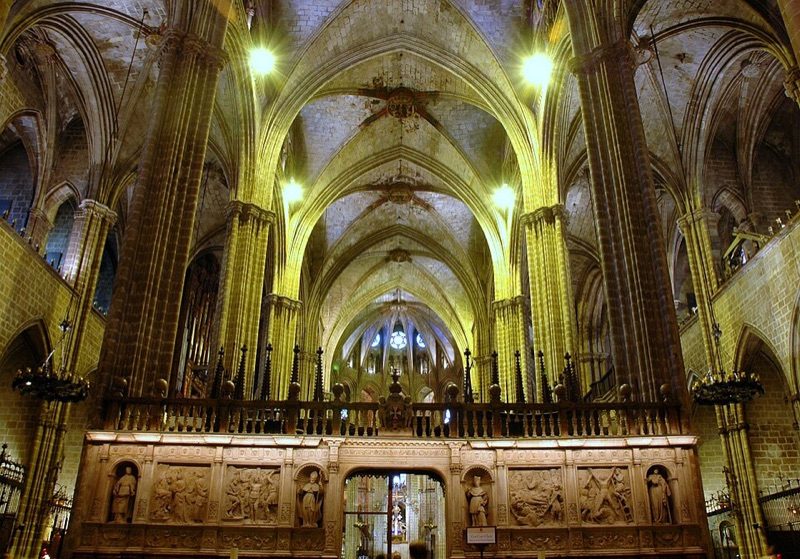
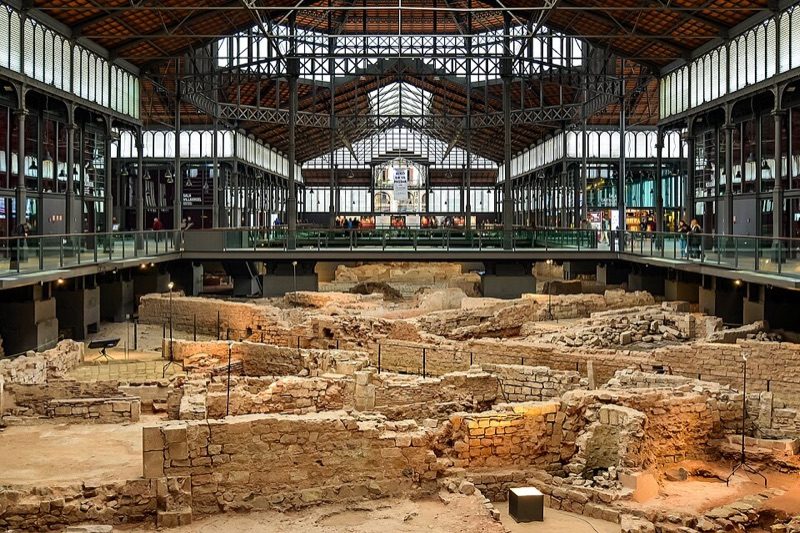
Barcelona's medieval heart: a warren of Roman walls, narrow Gothic lanes, and the soaring Cathedral of Barcelona at its center. The Cathedral's cloister — home to 13 resident geese — is one of the great peaceful surprises of any European city.
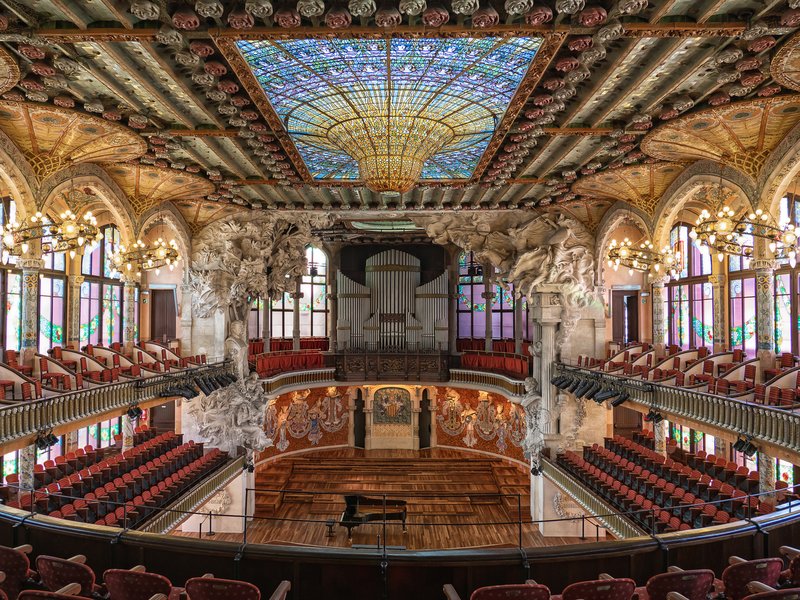
A riot of stained glass, mosaics, and sculpted stone — the world's most exuberant concert hall. Lluís Domènech i Montaner packed every surface with color and pattern, creating a UNESCO World Heritage auditorium that bursts with Art Nouveau brilliance.
Barcelona's most seductive pedestrian promenade — a wide tree-lined boulevard where every terrace spills onto the street. The 13th-century Basílica de Santa Maria del Mar anchors one end; tapas bars and oyster counters line the other.
Antoni Gaudí's first major commission — a stunning urban mansion built for patron Eusebi Güell that announced Barcelona's architectural revolution. The rooftop forest of ceramic-clad chimneys is as inventive as anything he created later, and far less crowded.
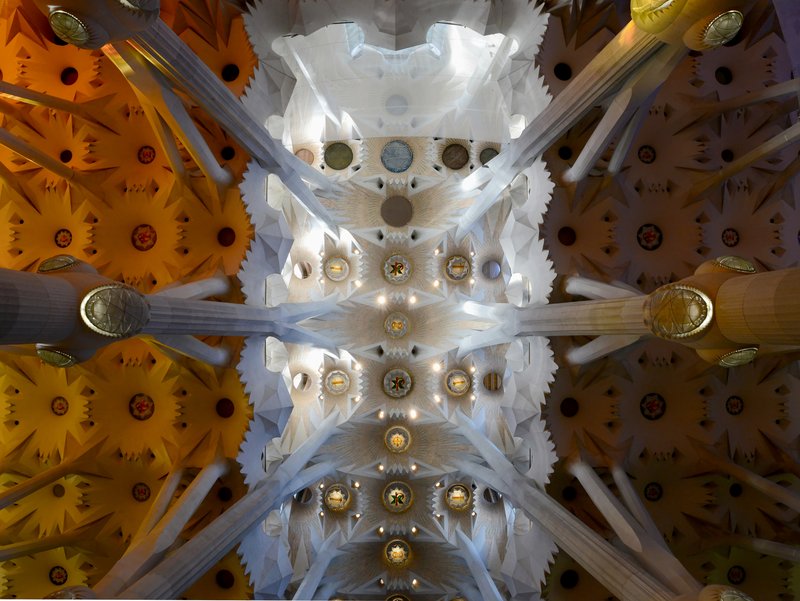
Spain's most-visited monument and still under construction — a cathedral that defies every category. Gaudí fused Gothic height and Art Nouveau organic form into a building that looks grown rather than built. Inside, tree-column forests hold a ceiling of stained-glass light.
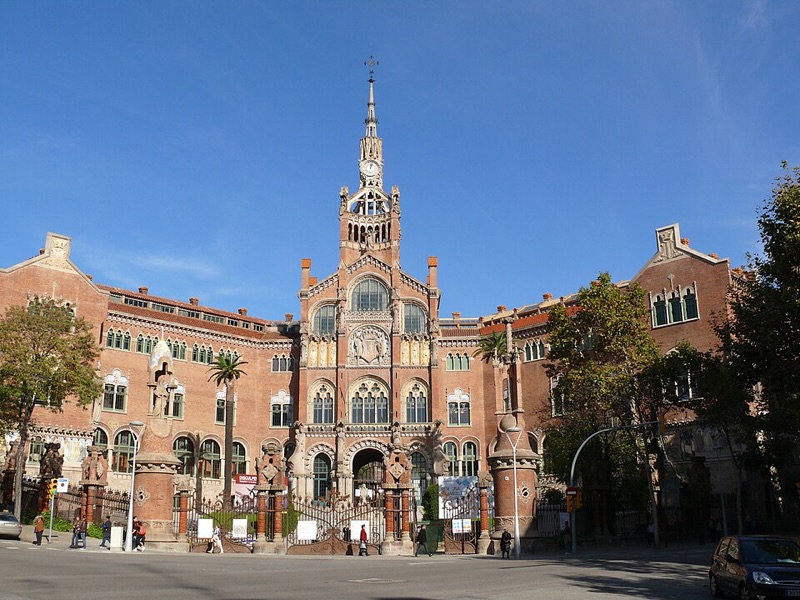
The world's largest Art Nouveau complex — a UNESCO World Heritage campus of 16 pavilions, gardens, and underground galleries built by Lluís Domènech i Montaner. Designed as a hospital that healed through beauty, with the Sagrada Família visible at the end of its central axis.
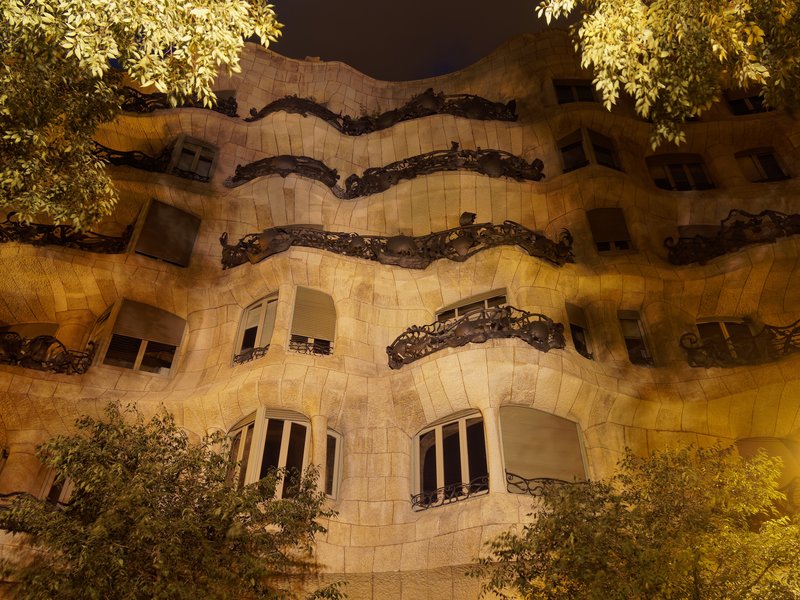
La Pedrera — Gaudí's masterwork of undulating stone facade and a rooftop populated with warrior-helmet chimneys and terracotta soldiers. The interior courtyard reveals a building that breaks every rule of architecture while following every rule of nature.
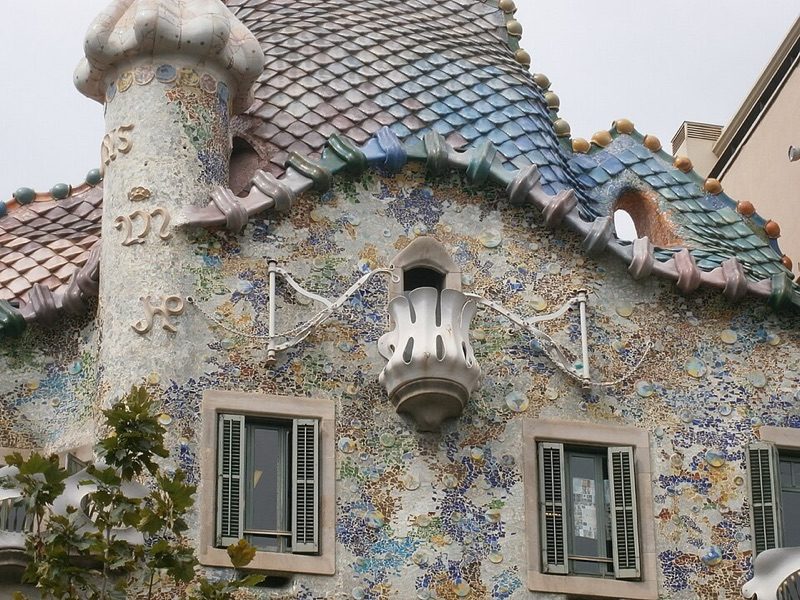
The dragon building: Gaudí's transformation of a plain apartment block into a shimmering fever dream of iridescent ceramic scales and bone-white balconies. The rooftop ridge is the spine of the dragon Sant Jordi famously slew; the interior is all oceanic curves and colored light.
Barcelona's bohemian former village, annexed only in 1897 and still fiercely independent in spirit. Car-light plazas — Plaça de la Vila de Gràcia with its landmark clock tower, Plaça del Sol — string together independent shops, vermouth bars, and terrace cafés at a village pace the Eixample grid never touches.
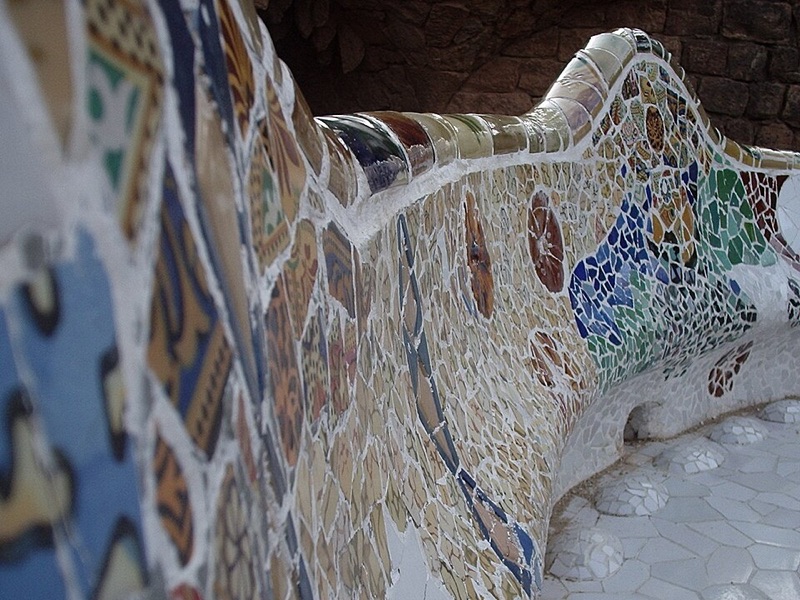
Gaudí's open-air masterwork — a hilltop public park that became something stranger and more beautiful than its origins. The Monumental Zone bursts with mosaic dragons, serpentine tiled terraces, and colonnaded halls, with Barcelona glittering in the valley below.
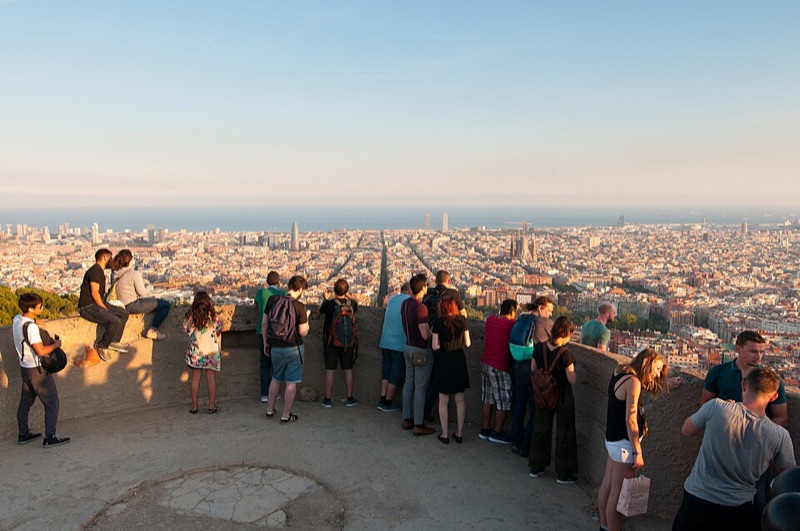
Barcelona's finest panoramic viewpoint — ruined Civil War anti-aircraft emplacements perched on the city's highest hill. The entire 360-degree cityscape unfolds: Sagrada Família needles, the Eixample grid, the port, the sea. The view is extraordinary at sunset.
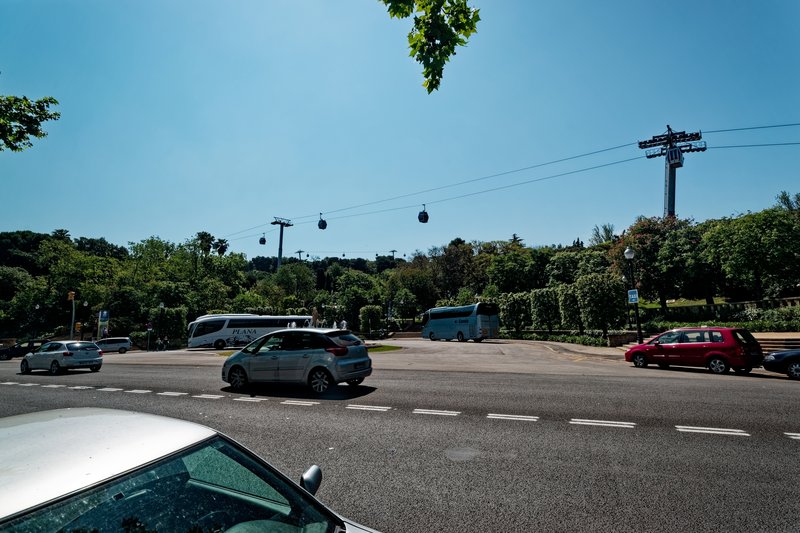
The classic cable car ascent up Montjuïc — Barcelona's harbor hill. The gondola rises from the Miramar gardens station through pine trees with dizzying views over the port, the city grid, and the Barceloneta waterfront as it climbs to the castle near the summit.
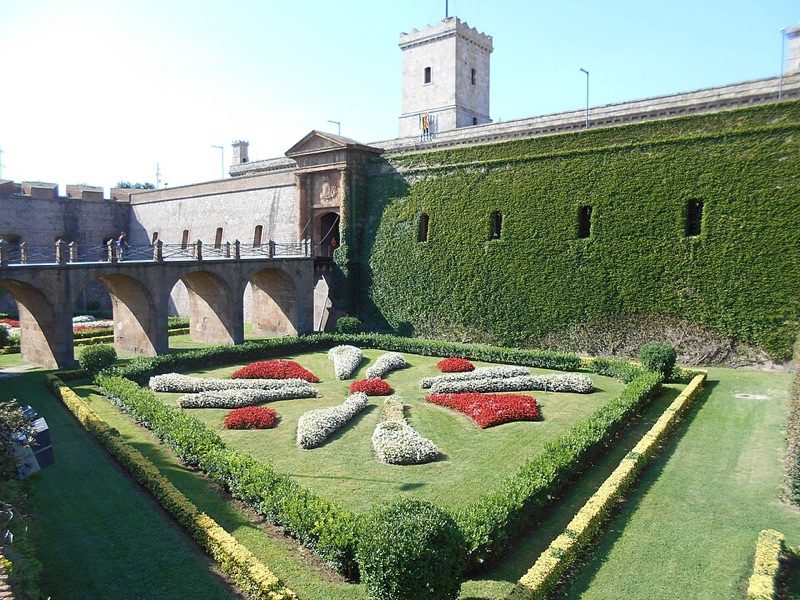
The hilltop military fortress whose battlements give the finest panoramic view in Barcelona — the entire city, the port, and the Mediterranean horizon laid out below. Its role as a political prison for centuries gives weight to every quiet corner.
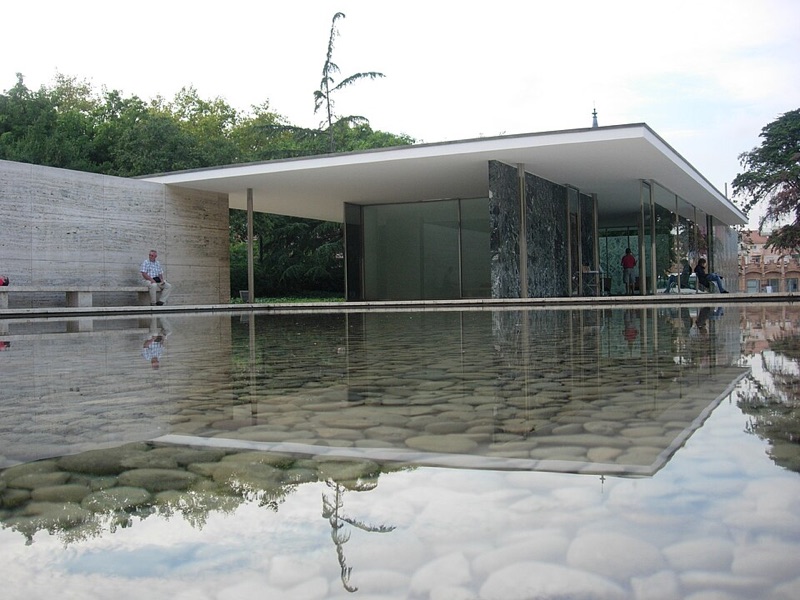
The German Pavilion by Ludwig Mies van der Rohe — rebuilt in the 1980s and still one of the most influential buildings in the world. Marble planes float over a reflecting pool; glass walls dissolve into columns. The famous Barcelona Chair sits exactly where it was designed to be used.
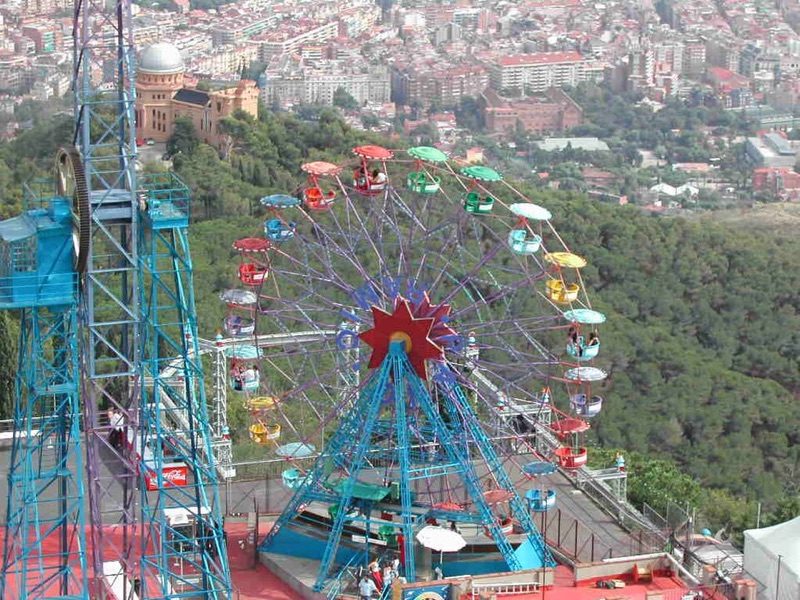
Europe's oldest amusement park still in operation, open since 1901, combines antique carousel rides and automaton displays with modern thrill attractions — all set on the summit ridge with sweeping views over the city. The century-old Ferris wheel and the airplane ride that circles the hilltop are the landmarks.
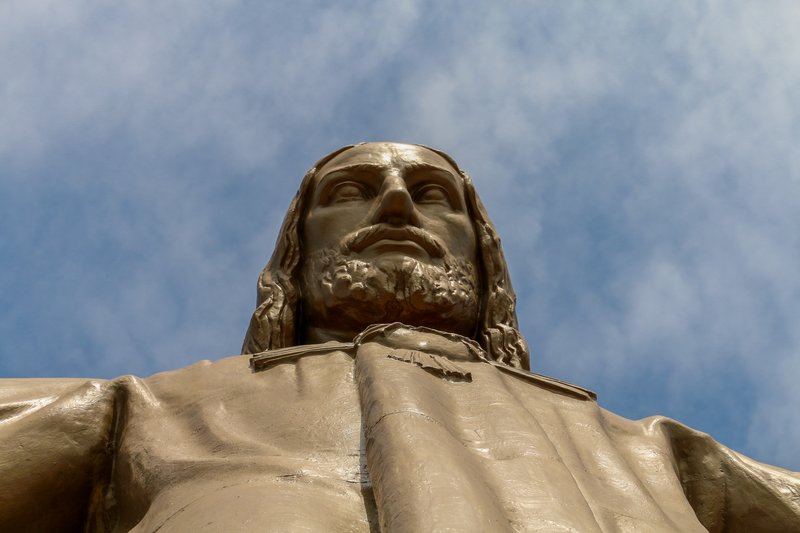
Perched at the 512-metre summit of Tibidabo, the Sacred Heart Basilica is Barcelona's highest point — its neo-Gothic towers and a gilded Christ figure visible from across the city. A terrace at the base of the statue delivers panoramas of sea and mountains at once.
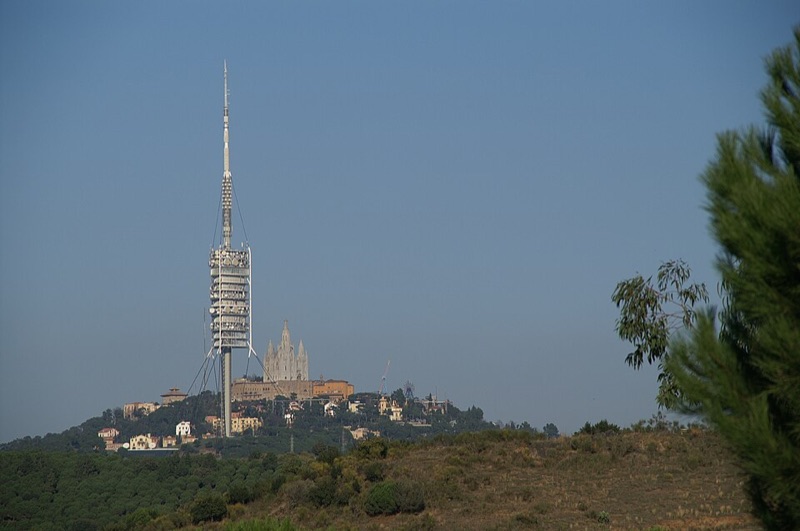
Norman Foster's slender telecommunications tower completed for the 1992 Olympics rises 288 metres above the Collserola ridge. The glass observation deck at level 10 sits above the tree line with unobstructed panoramas — city to the sea on one side and the Catalan hinterland on the other.
7:21am Barcelona-Passeig de Gràcia → 8:36am Girona
8:21am Barcelona-Passeig de Gràcia → 9:36am Girona
9:21am Barcelona-Passeig de Gràcia → 10:36am Girona
ARRIVE Girona: 20 min · 12 min → Catedral de Girona
1.Catedral de Girona~1 hr
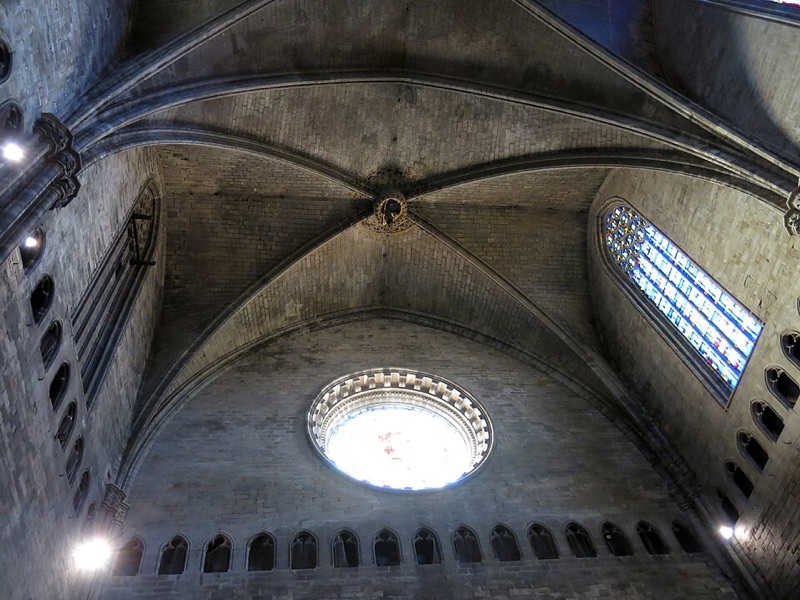
One of Europe's most imposing Gothic cathedrals and home to the widest Gothic nave ever built — a single enormous bay that creates a spaciousness unlike any other. The Romanesque cloister and treasury hold some of medieval Catalonia's most significant art.
One of Europe's best-preserved Jewish quarters — a labyrinth of medieval lanes where the community lived for centuries. Stone archways and narrow alleys are unchanged from medieval Catalonia, and the Museum of Jewish History occupies the old synagogue site.
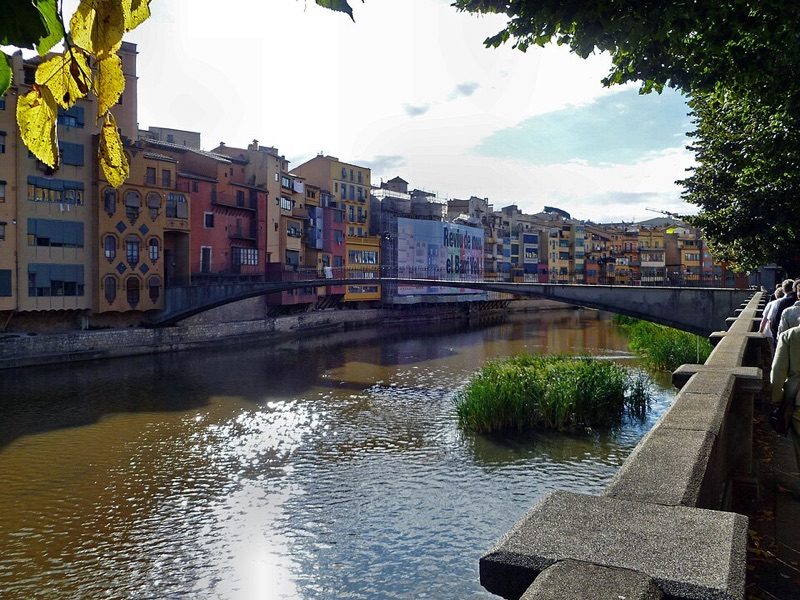
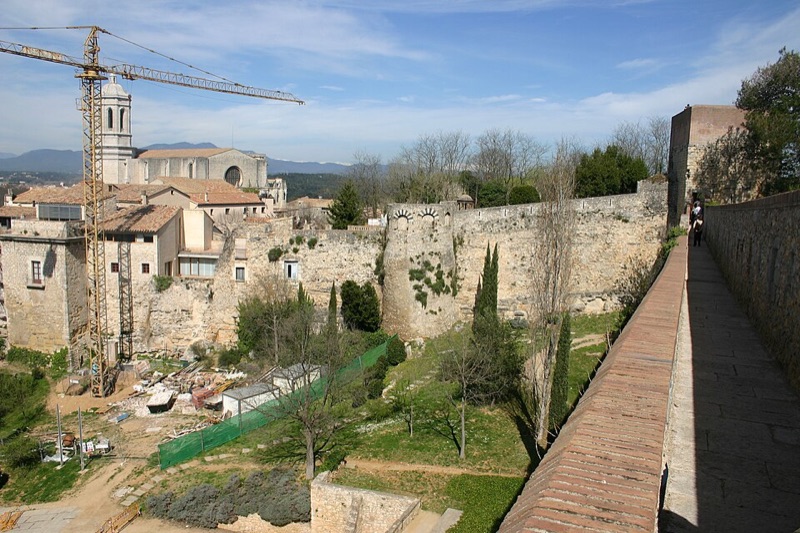
Girona's medieval walls offer the finest elevated walk in Catalonia — a path along the top of the ramparts with views over the red-roofed old town, the cathedral rising above, and the River Onyar below. The accessible towers show the fortified city at its full medieval extent.
Full-day guided tour hitting all three major Gaudí sites plus the Gothic Quarter. Best single-day overview of Barcelona for first visits — covers Sagrada Família, Park Güell, Gothic Quarter, and city panoramas.
Skip-the-line access and expert guided tour of Gaudí's Sagrada Família — nave, stained glass forests, towers, and the building's hidden symbolism explained over 90 minutes.
Comprehensive full-day city tour with skip-the-line access to Sagrada Família and Park Güell, guided Gothic Quarter walk, and Montjuïc panoramic stop — the complete Barcelona overview in one day.
Small-group walking tour through the medieval core — Roman walls, Gothic lanes, the Cathedral cloister, El Born, and Santa Maria del Mar. Perfect history context before exploring independently.
Full-day guided city tour combining the Gothic Quarter, panoramic Montjuïc views, and skip-the-line access to Sagrada Família — a well-paced itinerary hitting all three of Barcelona's iconic zones.
Expert-guided 2-hour walk through the Gothic Quarter's 2,000-year history — Roman ruins, medieval streets, Barcelona Cathedral, Sant Felip Neri Square, and hidden gems most tourists miss. Highly rated by English-speaking travelers.
2.5-hour guided walk covering both the Gothic Quarter and Passeig de Gràcia's Gaudí strip — Las Ramblas, Barcelona Cathedral, Plaça Reial, Casa Batlló, and La Pedrera exterior. Meet at Plaça de Catalunya with a guide holding a white umbrella.
2.5-hour small-group walk through Old Town and the Gothic Quarter with In Out Barcelona Tours — La Rambla, La Boqueria Market, Plaça Reial, Barcelona Cathedral, and Basilica de Santa Maria del Mar. One of GYG's most-reviewed Barcelona tours.
Sail Barcelona's coastline aboard the Catamaran Orsom — watch the crew raise the sails, soak up the sun on the front deck, and take in panoramic views of Sagrada Família, Hotel W, and the city skyline from the Mediterranean. Bar on board.
The most-reviewed day tour in Barcelona — Sagrada Família entry, Park Güell guided section, and Gothic Quarter walk. Professional guides and seamless logistics from start to finish.
Highly rated small-group city highlights tour — Sagrada Família, Park Güell, Gothic Quarter and panoramas guided by local experts. Praised consistently for pace, depth, and guide quality.
2-hour small-group walk through Old Town and the Gothic Quarter — Las Ramblas, La Boqueria Market, Plaça Reial, Barcelona Cathedral, and Basilica de Santa Maria del Mar. Recommended by 97% of travelers; max 15 per group.
2-hour small-group Gothic Quarter and El Born walk covering local myths, legends, and the shadowy history of Barcelona's medieval core. Recommended by 100% of travelers; max 15 per group.
3-hour guided walk covering both the Gothic Quarter and Passeig de Gràcia's Modernisme strip — Las Ramblas, Gothic lanes, Casa Batlló, and La Pedrera exterior. Guide meets at the Foot Locker with a white umbrella; max 20 per group.
The foundation of Catalan cuisine: thick country bread rubbed with ripe tomato, drizzled with olive oil, and finished with sea salt. Served at every table as a matter of course.
The Catalan original of the custard-and-burnt-sugar dessert — made with cinnamon and citrus zest. The crack of caramel under a spoon is one of Barcelona's great small pleasures.
The Sunday vermut ritual is as Barcelonian as Gaudí. Mid-morning locals gather for house vermouth with olives and anchovies — a pre-lunch institution that encapsulates the city's relationship with time.
A Barcelona original from La Barceloneta: hand-made potato and minced meat croquettes, deep-fried and served with alioli and spicy tomato sauce. Invented here and still a neighborhood staple.
Foreign number: accepted. — it runs on the same Uber account as the ride app, so no second code has to arrive.
The smaller of Barcelona's three delivery apps — Glovo carries far more of the independent kitchens. Uber Eats is strongest on chains and on late hours, and its interface stays in English throughout, which Glovo's does not always do.
Foreign number: not required. — it signs in with Google, Facebook or email, and a phone sign-up takes any prefix with the code by SMS or WhatsApp.
Barcelona's dominant delivery app and the one carrying the independent kitchens, plus pharmacy, supermarket and courier errands the food-only apps do not touch. The interface switches to English but restaurant menus often stay in Catalan or Spanish.
Foreign number: not required. — the account is made with Google, Facebook or an email address — there is no phone field, so no code has to arrive.
Weighted towards established restaurants and chains rather than Glovo's corner-shop model, so the listings are thinner but the delivery windows hold better. Sign-up is by email and a foreign card is accepted at checkout.
Foreign number: accepted. — the sign-up form takes any country dialling code, and Google, Apple or email sign-in skips the SMS code entirely.
In Barcelona Uber dispatches licensed city taxis rather than private-hire cars, so the vehicle that arrives is a black-and-yellow cab on the regulated tariff. Coverage is dependable across the centre and Eixample; waits stretch in the outer districts and on match nights.
Foreign number: accepted. — the sign-up form takes an international dialling code and the code arrives by SMS.
Usually the cheaper of the two ride apps here and often the quicker pickup away from the centre, though the driver pool thins late at night. Fares are quoted up front in euros and a foreign card works without a local billing address.
A UNESCO World Heritage Roman city with the finest Roman ruins on the Iberian Peninsula — amphitheater above the sea, a circus, aqueduct, and Romanesque cathedral above a well-preserved old town.
A beautiful Art Nouveau resort town on the Costa Daurada — white-washed churches, a seafront promenade, and the Cau Ferrat museum built by painter Santiago Rusiñol. The architecture and atmosphere are the draw.
The extraordinary serrated mountain crowned by the Benedictine Monastery of Montserrat and its revered Black Madonna. The jagged rock formations above the plain are as impressive as the monastery itself.
Medieval Catalan market town with a Roman temple in the main square and a cathedral cloister that shelters a full-wall cycle of Josep Maria Sert murals — one of the most unusual painted interiors in Spain, repainted after Civil War destruction.
The Dalí Theatre-Museum — the largest Surrealist object in the world, designed by Salvador Dalí as his own monument and final resting place. Contains his most comprehensive collection and is unlike any other museum.
Something unusual happens when you spend five days in Barcelona: the city starts to feel like a living argument about what architecture can be. Every generation has added to it — the Romans, the medieval Catalans, Ildefons Cerdà's radical 19th-century grid, then Gaudí and the Modernistas — and none of these layers erased the others. They simply accumulated, creating a place that is simultaneously ancient and perpetually under construction.
The Sagrada Família encapsulates this best. For over a century it has been the world's most famous unfinished building — and now, in the mid-2020s, it is nearly complete. There is something quietly remarkable about a city that waited that long for its cathedral. Barcelona kept building it anyway, across generations, across dictatorship, across the death of the original architect. The decision to keep going is its own kind of statement about the city's relationship to time and ambition.
There is also something worth noticing at the Bunkers del Carmel: the anti-aircraft batteries that were supposed to protect the city during the Civil War are now its finest viewpoint. Barcelonans didn't demolish them. They turned them into a picnic spot, a place for watching sunsets over the city that was bombed. The ruins became a park. It is a very Barcelona way of dealing with history.