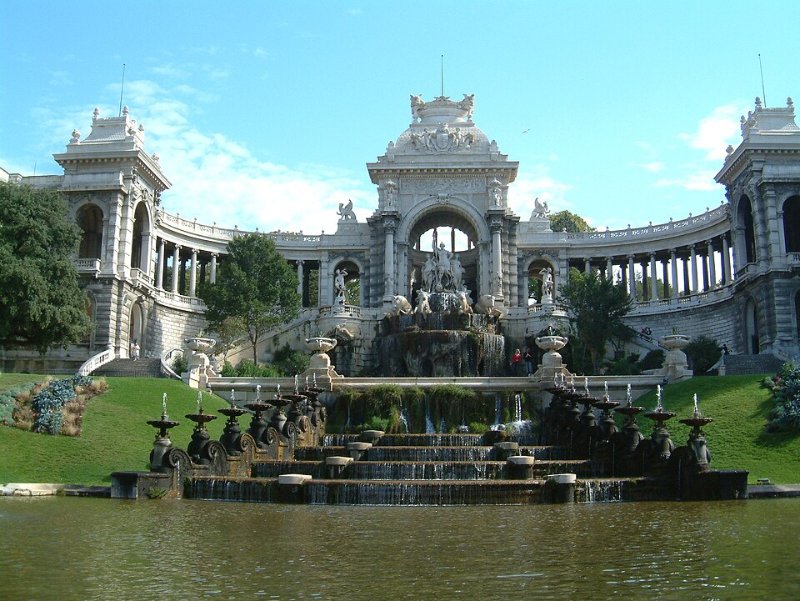
Built between 1862 and 1869 to celebrate the completion of a canal bringing water from the Durance River, this monumental palace flanks a triumphal cascade with colonnaded wings set in formal gardens. The left wing holds the Museum of Fine Arts; the right holds the Natural History Museum.
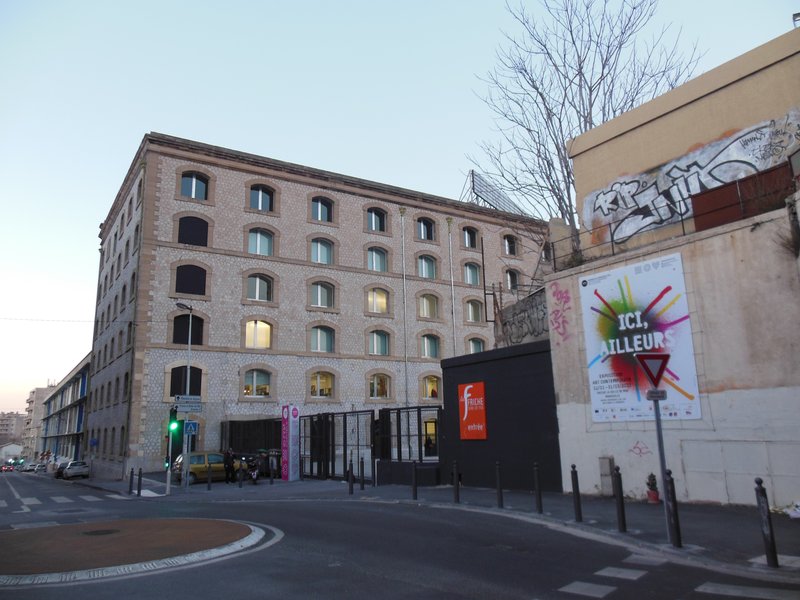
A former tobacco factory turned into one of France's largest arts complexes — sixty artistic organisations across 45,000 m² with concert halls, galleries, a rooftop terrace with city views, and artists' residences. Founded in 1992, it was central to Marseille's European Capital of Culture programme in 2013.
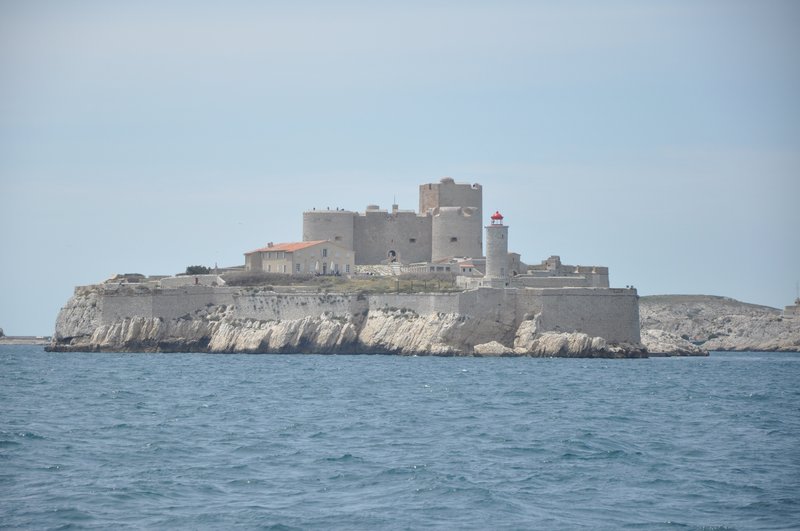
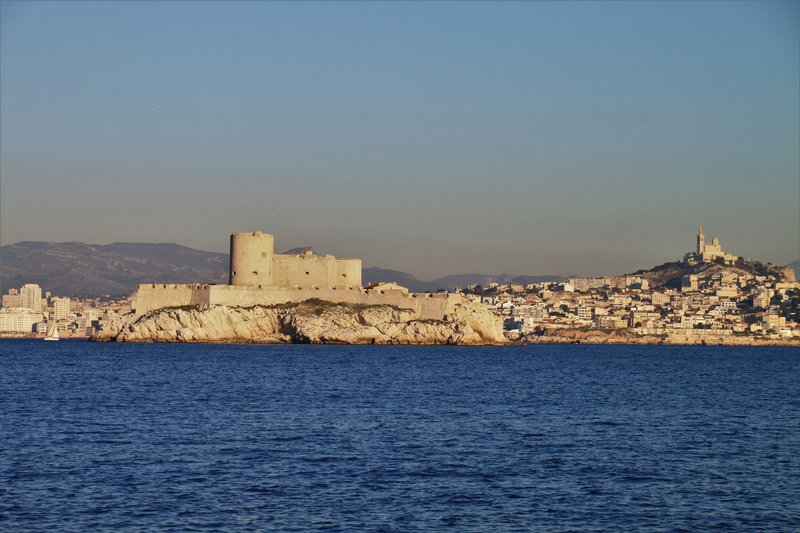
A 16th-century royal fortress on a limestone island in Marseille harbour — built by François I in 1524 and immortalised by Alexandre Dumas as the island prison of Edmond Dantès in The Count of Monte Cristo. The cells, battlements, and sea views are exactly as dramatic as the novel promises.
From Hotel: 14 min · 4 min → MuCEM — Museum of European & Mediterranean Civilisations
1.MuCEM — Museum of European & Mediterranean Civilisations~2 hr
A cube wrapped in a filigree shell of fibre-reinforced concrete by Rudy Ricciotti, connected to the 17th-century Fort Saint-Jean by a 130-metre aerial footbridge above the sea. Collections trace 5,000 years of Mediterranean civilisation; the rooftop delivers panoramic harbour views.
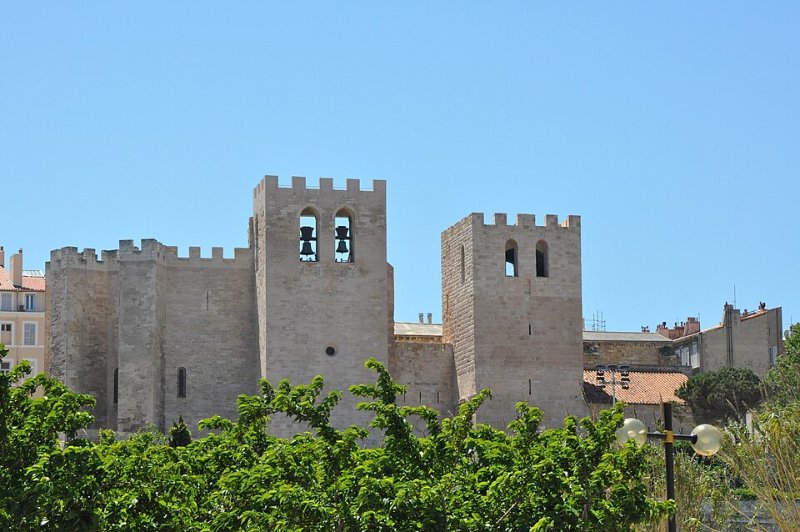
Founded in the 5th century over the tomb of the martyr Saint Victor, this fortified abbey is the oldest religious site in Marseille and one of the oldest in France. The 11th-century church conceals a labyrinthine crypt holding sarcophagi from the 3rd and 4th centuries, pagan and early-Christian together.
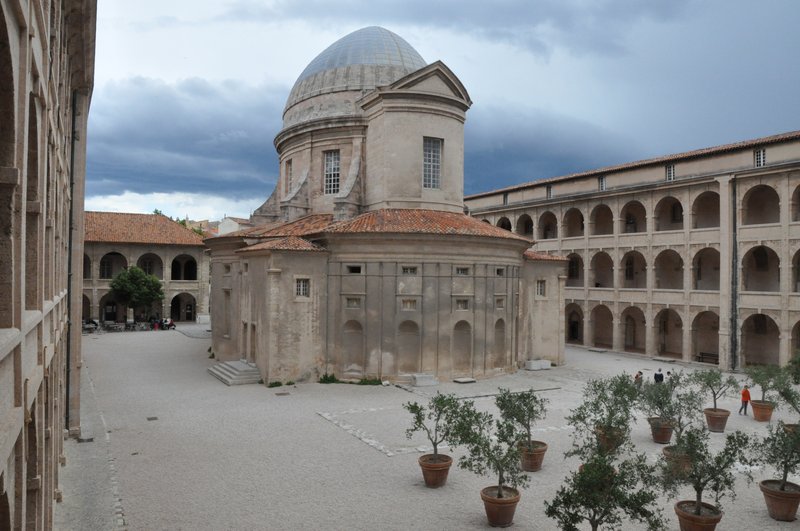
A 17th-century Baroque almshouse by Pierre Puget in the heart of Le Panier. Four arcaded galleries in three storeys surround a courtyard with a domed oval chapel of Baroque invention. The complex now holds the Museum of Mediterranean Archaeology and the Museum of African Arts.
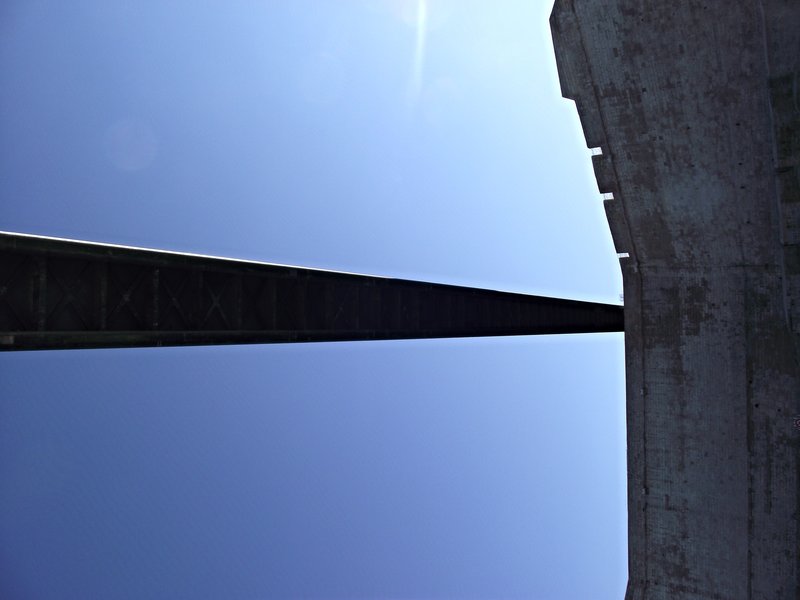
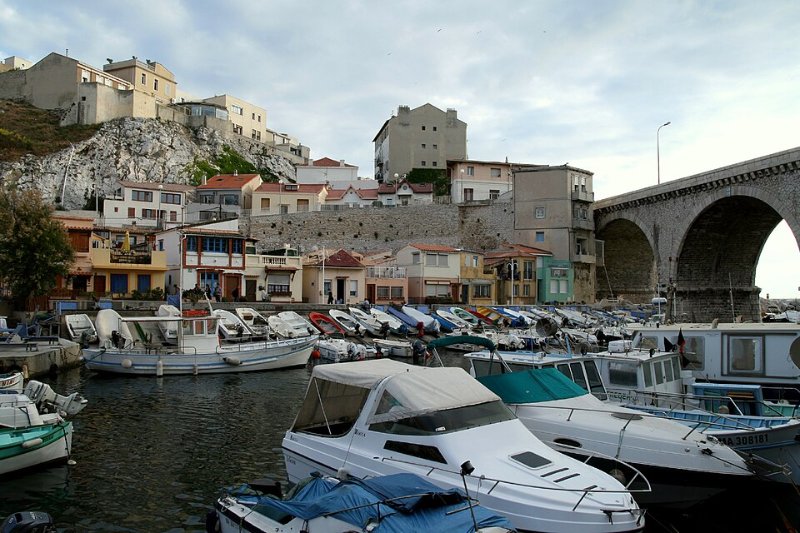
A tiny fishing cove tucked beneath the Corniche road and its 19th-century stone viaduct — coloured wooden boats moored alongside pastel cabins, the sea green and calm inside the walls of rock. It remains one of the last genuinely working fishing hamlets within the city limits of Marseille.
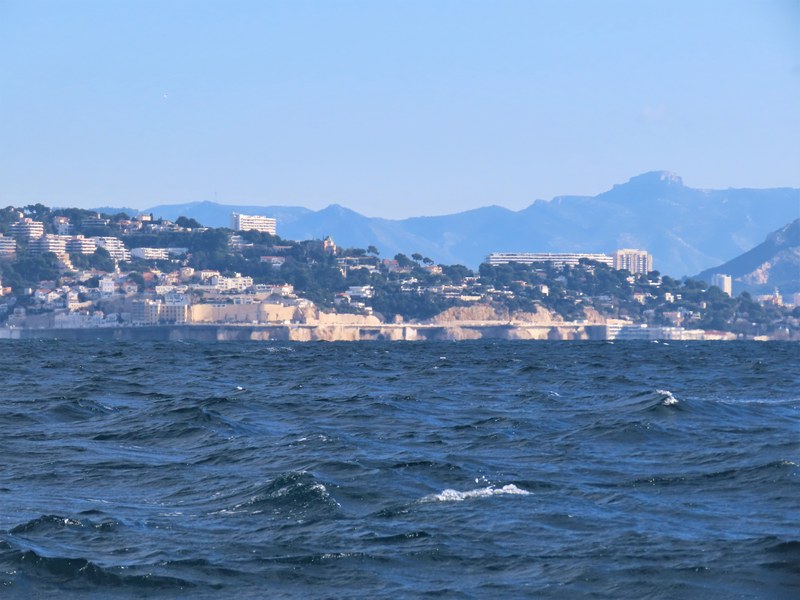
Marseille's great seafront boulevard runs 3.7 kilometres along the Mediterranean from the Catalans beach to the Prado beaches, named for President Kennedy in 1963. The promenade passes rocky inlets, sunbathers on the flat limestone shelves, and the open sea stretching to the horizon — the city at its most elemental.
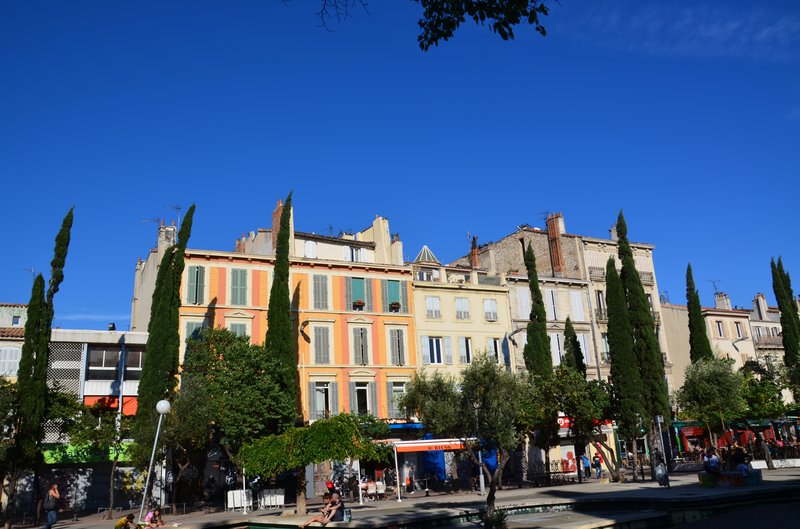
A wide Provençal avenue turned street-art district — stepped terraces and entire building façades painted by local and international artists, with independent record shops, vintage boutiques, and neighbourhood cafés on every corner. One of the few genuinely lived-in parts of central Marseille, unchanged by tourism.
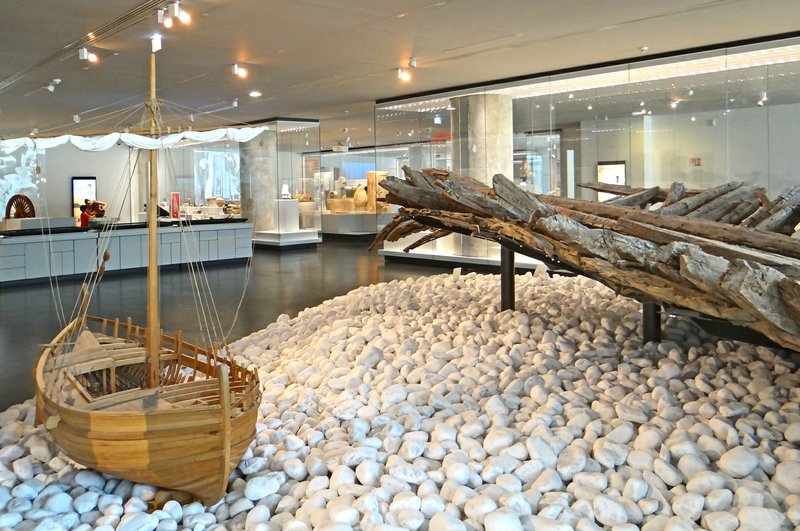
Marseille's main historical museum, built around excavated remains of the ancient Greek port of Massalia from 600 BC. A Roman merchant ship, amphorae, and wooden dock structures are displayed in situ above the harbour basin; the collection spans twenty-six centuries of continuous urban life.
Marseille's defining landmark — a Romanesque-Byzantine basilica perched on a 162-metre outcrop, crowned by a gilded statue of the Virgin that watches over the city and its sailors. Panoramic views across the old port, the Frioul archipelago, and the Provençal coast are among the finest in France.
Le Corbusier's 1952 vertical city — 337 apartments, a hotel, shops, nursery school, gymnasium, and a rooftop terrace with a running track, all on pilotis. Declared a UNESCO World Heritage Site in 2016, it is the most influential residential building of the 20th century.
7:42am Marseille Saint-Charles → 8:45am Arles · TER
9:43am Marseille Saint-Charles → 10:47am Arles · TER
ARRIVE Arles: 13 min · 4 min → Les Arènes d'Arles
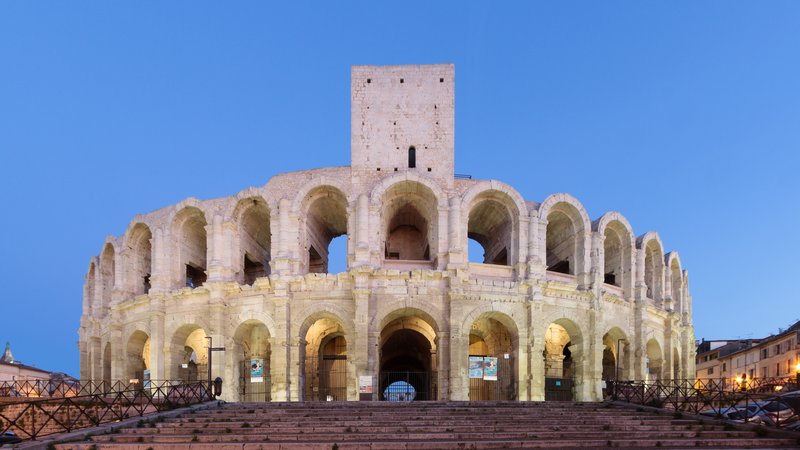
1.Les Arènes d'Arles~1 hr
A Roman amphitheatre built around 70 AD and among the best-preserved in the world, with two full tiers of arched galleries still standing. Listed as a UNESCO World Heritage Site, it once seated 20,000 spectators and remains in use today for bullfights and summer concerts.
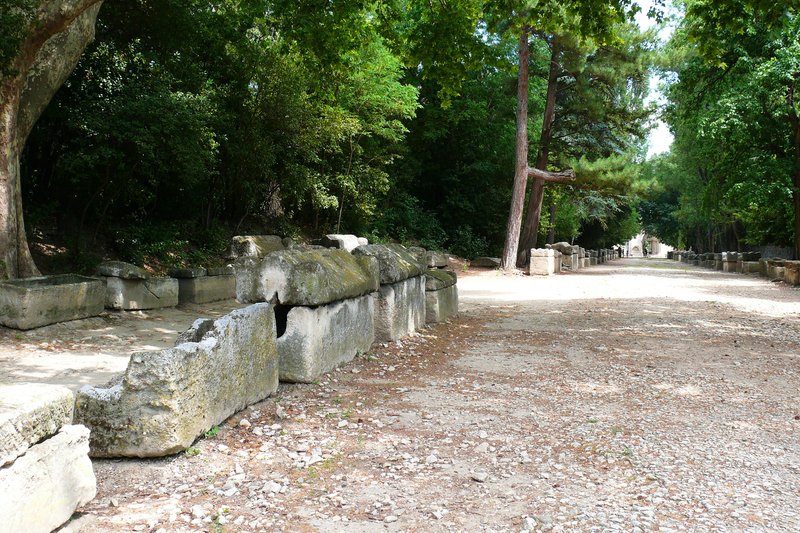
A Roman and early Christian necropolis in use from the 4th to 12th centuries, listed as a UNESCO World Heritage Site. The long avenue of sarcophagi beneath poplar trees was painted by Van Gogh and Gauguin in 1888; the site remains one of the most atmospheric ancient burial grounds in France.
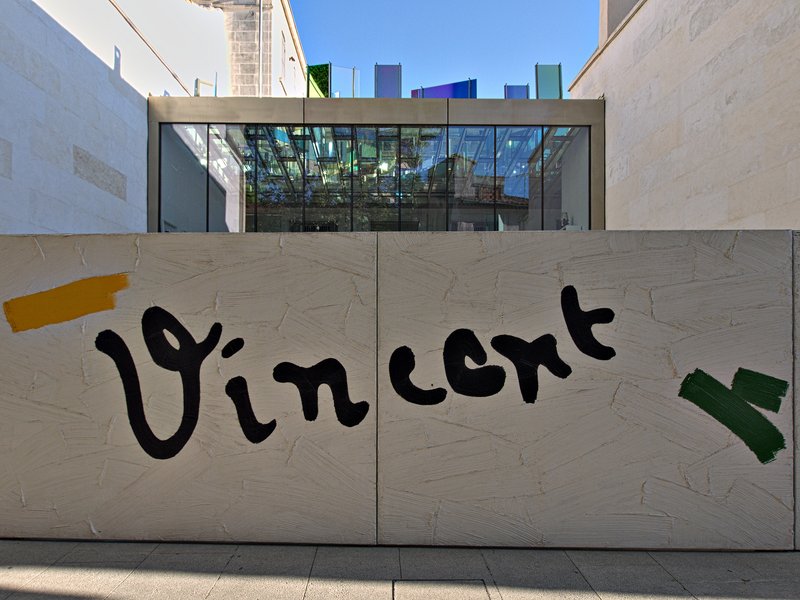
A foundation dedicated to Van Gogh's legacy in the city where he created over 300 works in 15 months. The permanent collection pairs historical Van Gogh pieces with contemporary art created in response to his work; housed in a converted 15th-century mansion with a rooftop terrace overlooking the Roman theatre.
A small-group walk through the old port, Le Panier, the MuCEM quarter and the principal monuments with a knowledgeable local guide and time for photographs.
An intimate walk starting at the old port — the Greek founding of Massalia, Le Panier, the Baroque churches — with a local guide and a maximum of 6 guests.
A full-day coach tour through classic Provence — the perched citadel of Les Baux-de-Provence, the medieval papal city of Avignon and the magnificent Roman aqueduct of Pont du Gard.
A small-group day tour to the Valensole Plateau's lavender fields — the best approach for the purple-sea landscape — plus a stop in Aix-en-Provence for lunch and a stroll through the fountain-lined old town.
A guided half-day hike into the Calanques National Park — rocky limestone trails above turquoise coves between Marseille and Cassis with commentary on the geology, flora and protected marine ecosystem.
Covers the historical heart of Marseille through Le Pharo, Le Panier and the Old Port, bringing the city's 2,600-year history to life over two and a half hours.
A coastal walk through the discreet coves and residential quarters of the 7th arrondissement — Malmousque, Bompard, Roucas Blanc — away from the tourist circuits.
Group sightseeing boat through the most spectacular inlets of the Calanques National Park — emerald water, sheer white limestone cliffs and a swimming stop in one of the sheltered coves.
Full-day shared tour east of Marseille — a morning in the charming port village of Cassis with views of the Calanques cliffs, then inland to Aix-en-Provence for an afternoon in the café-lined Cours Mirabeau.
Full-day tour to the Valensole lavender plateau in the Alpes-de-Haute-Provence — the purple fields at their peak, a stop at the charming village of Moustiers-Sainte-Marie, and sweeping views of the surrounding mountains.
A sailing cruise from the Old Port out to the Château d'If — Count of Monte Cristo's island fortress — then around the Frioul Archipelago calanques with views of the white cliffs and the open Mediterranean.
A shared-group day tour to the Valensole lavender fields — the guide takes visitors to quieter photography spots away from the crowds, with stops to taste lavender honey and explore the local village.
A 7-hour shared tour through the Alpilles — the Roman arena and Van Gogh haunts of Arles, then Saint-Rémy-de-Provence and the dramatic perched ruins of Les Baux-de-Provence with views over the Camargue plain.
A full-day tour hitting the three Provence highlights west of Marseille — Les Baux citadel at sunrise, the Roman Pont du Gard aqueduct and an afternoon walk through the papal Palais des Papes in Avignon.
A dedicated small-group lavender day tour to the Valensole Plateau — departing directly from Marseille, with a knowledgeable naturalist guide explaining the lavender cultivation, the peak bloom season and the surrounding Haute-Provence landscape.
Marseille's elemental fish stew — a minimum of three rockfish varieties simmered with saffron, fennel and orange peel, served with rouille and croutons. The city's most iconic dish, protected by recipe charter since 1980.
The anise-flavoured spirit of Provence, created in Marseille by Paul Ricard in 1932. Drunk cold with five parts water to one part pastis, it clouds to an opalescent yellow — the ritual aperitif at every Marseille terrace.
Orange-blossom biscuits shaped like a small boat, baked since 1781 at Four des Navettes. Traditionally eaten at Candlemas, now sold year-round as the city's oldest confection.
Deep-fried chickpea flour fritters — crisp outside, creamy within — a staple Marseillais street snack that predates the city's Italian community and is now firmly woven into Provençal food culture.
Foreign number: accepted. — it runs on the same Uber account and number as the ride app, so no second code is sent.
Broadest restaurant coverage in Marseille, reaching most arrondissements from the Vieux-Port to the northern neighbourhoods. Reliable for brasseries and Provençal kitchens in the centre; less consistent for small independent spots. Delivery windows are typically 30–45 minutes on evenings and weekends.
Foreign number: not required. — sign-up runs on Google, Apple, Facebook or email with no phone field at all, so no verification code has to arrive.
Stronger on independent and mid-range restaurants than Uber Eats, with good coverage of the central and coastal quarters. Reliable for Noailles and Endoume; thinner in the northern arrondissements. A flat delivery fee applies; orders under €10 carry a surcharge.
Foreign number: accepted. — the SMS code reaches foreign carriers, and Google or Apple sign-in works without one.
Available across central Marseille and the main tourist areas; reliable for Vieux-Port to Saint-Charles station runs and for reaching the Calanques access points in Les Goudes or Cassis. Surge pricing applies on weekend evenings around the Old Port and during large events at the Vélodrome.
Foreign number: accepted. — the code arrives by SMS on a foreign number, with a WhatsApp code as the fallback.
The lower-cost Uber alternative in Marseille, operating across the central city and the coastal arrondissements. Wait times are generally comparable to Uber; pricing is consistently 15–25% cheaper at non-peak hours, making it the better choice for routine transfers between neighbourhoods or to the main train stations.
A small fishing port at the foot of the highest sea cliffs in France, gateway to the Calanques national park — a UNESCO-protected landscape of turquoise inlets and white limestone pinnacles. Recommended by Fodor's, Rough Guides and National Geographic.
Elegant Provençal university city of Cézanne, fountains and the Cours Mirabeau — one of France's most beautiful provincial capitals. Recommended by Fodor's and Rick Steves.
The papal city of the Middle Ages — the Palais des Papes, the largest Gothic palace in Europe, and the Pont Saint-Bénézet are all UNESCO World Heritage Sites. Recommended by Fodor's and Rick Steves.
France's main naval base on a deep natural harbour — the old port, the atmospheric cours Lafayette market, and the cable car to Mont Faron with panoramic views over the bay. The port connects to ferries for the Îles d'Hyères.
The Roman city of the south — the Arènes de Nîmes amphitheatre, built 70 AD and among the best-preserved in Europe, the Maison Carrée temple, which inspired Thomas Jefferson's Virginia State Capitol, and access to the Pont du Gard aqueduct. Less visited than Arles, with all the same Roman gravitas.
Marseille is not quite like anywhere else in France, and certainly not like anywhere else in Europe. It is older than Paris by several centuries — founded by Greek sailors from Phocaea in 600 BC, it has been continuously inhabited ever since, absorbing wave after wave of migration until it became the most genuinely Mediterranean city on the continent: part Provençal, part North African, part Italian, wholly itself.
The instinct to compare it to other French cities is a mistake. It has none of the elegant detachment of Paris, none of Lyon's comfortable bourgeois certainty. It is rougher and more alive — a city that has never bothered to perform for visitors, which is one of the reasons visitors have always found it so compelling. The old port is not a backdrop; it is where things happen.
Give yourself time for the light. The particular quality of the light on the limestone and the sea in the early morning, or in the last hour before sunset when the Basilica of Notre-Dame de la Garde catches it and seems to float above the city on a column of gold — this is what the city is most proud of.