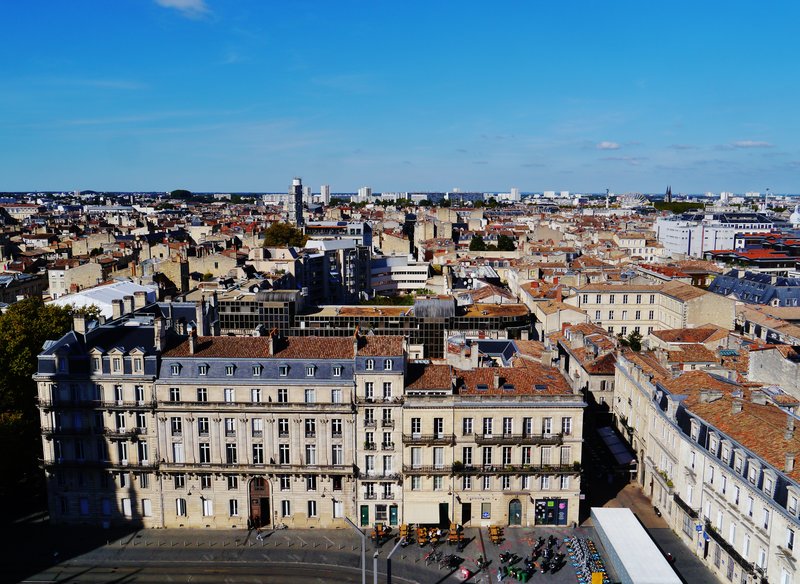
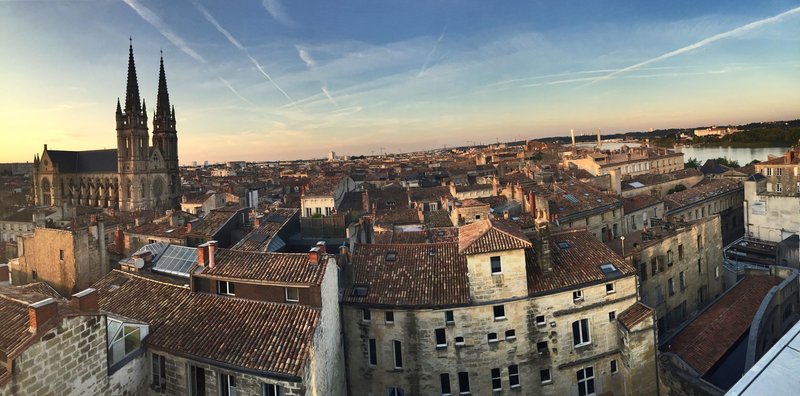
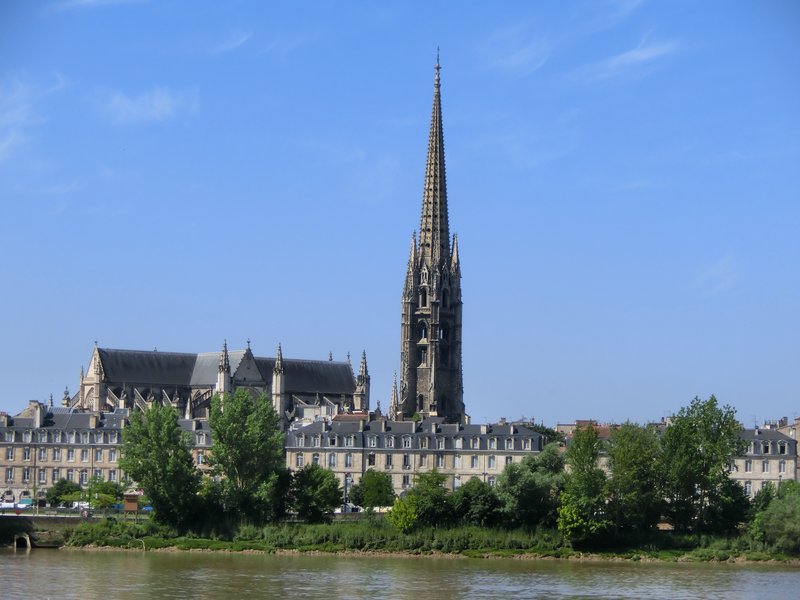
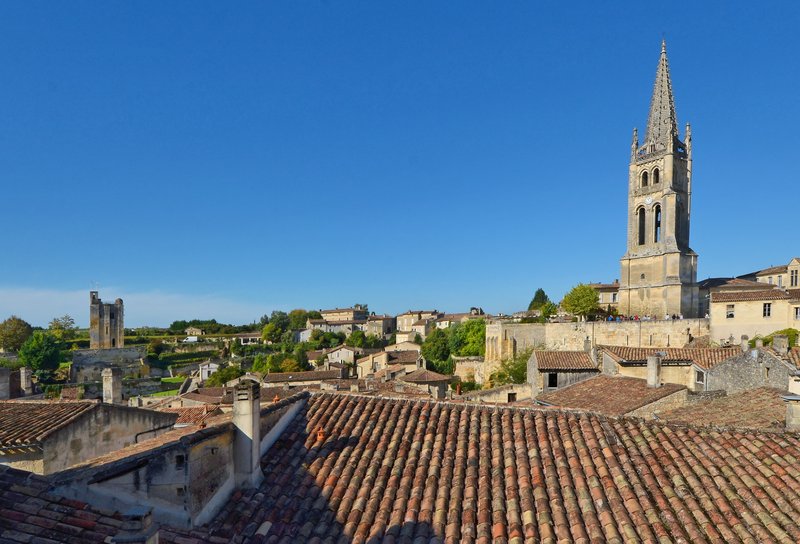
The 15th-century detached bell tower of Saint-André cathedral, built separately to spare it from its bells' vibrations. Timed-entry tickets required. The 229-step climb reaches a rooftop terrace at 50 metres — the best panoramic view in Bordeaux, sweeping across the limestone rooftops and the Garonne.
One of France's largest regional history museums, the Musée d'Aquitaine traces 25,000 years in the Bordeaux region. Its star object is the Laussel Venus bas-relief carved around 25,000 BC; a permanent exhibition documents Bordeaux's role as a principal Atlantic slave trade port.
One of France's oldest fine-arts museums, founded in 1801 by Napoleon. The collection spans the 16th to 20th century: Rubens, Titian, Veronese, Delacroix, and Matisse. Permanent collection is free; the museum occupies two wings flanking the Hôtel de Ville gardens.
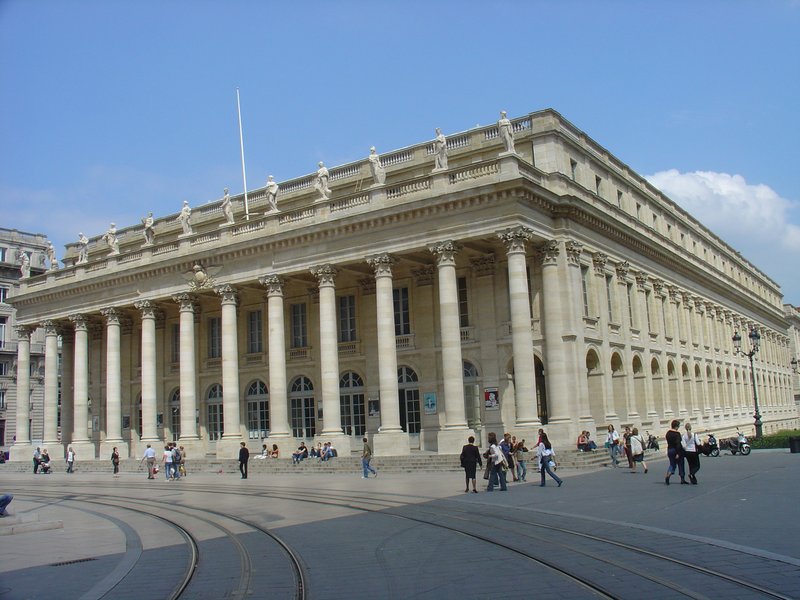
Designed by Victor Louis and inaugurated in 1780, one of Europe's finest neoclassical opera houses. Its 12-column Corinthian portico directly inspired Charles Garnier's Paris Opéra. Guided tours access the auditorium ceiling fresco, backstage corridors, and rehearsal rooms not open to audiences.
Once the quarter of Dutch, Irish, and English wine merchants who shipped Bordeaux wines across Europe, Chartrons was revived in the early 2000s as the city's antiques and art hub. Rue Notre-Dame is lined with dealers trading Louis XVI furniture and Belle Époque jewellery alongside contemporary galleries.
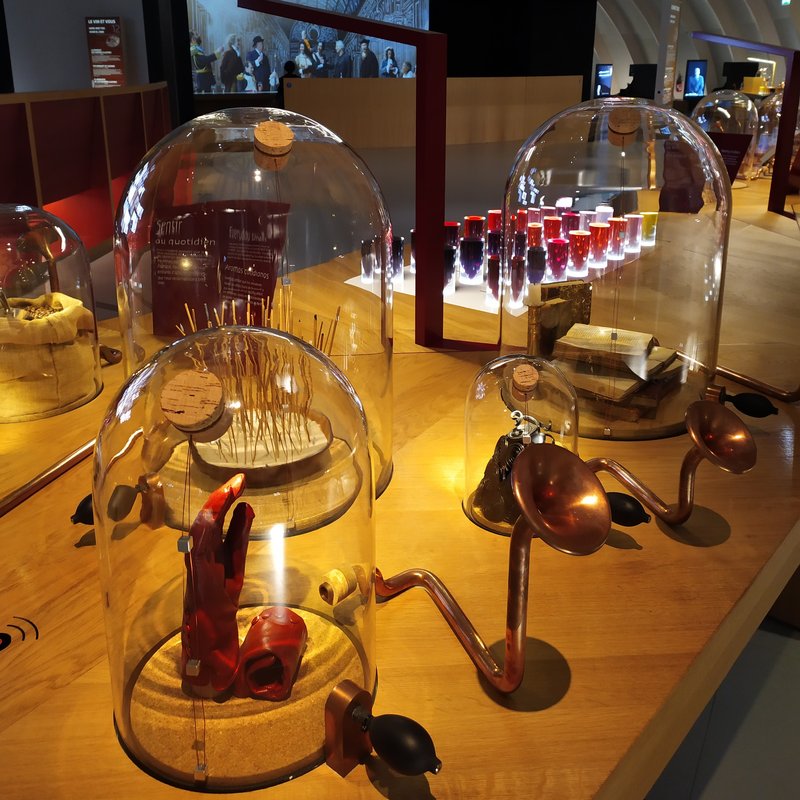
The world's only museum dedicated to the universal culture of wine, housed in an XTU-designed golden tower on the Garonne. Ten permanent galleries trace wine's 8,000-year history from ancient Mesopotamia to the present. The 8th-floor Belvédère ends the visit with a glass of regional wine and a panoramic view.
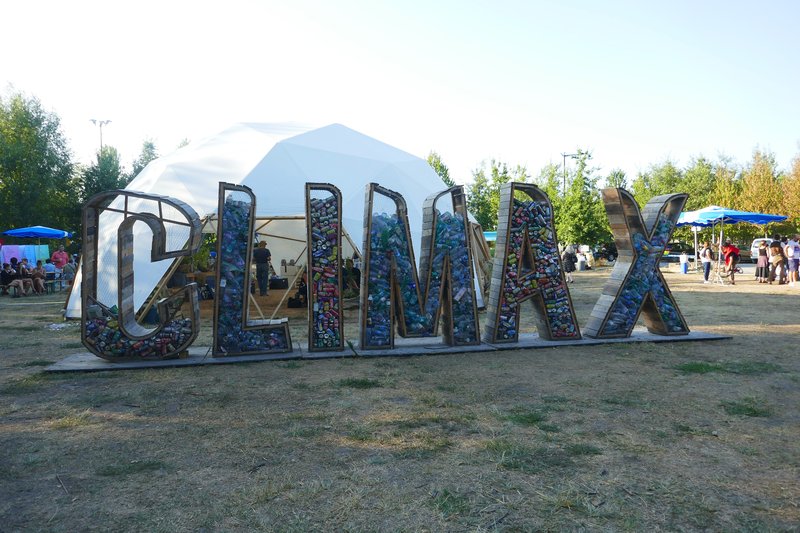
Darwin is a 9-hectare conversion of the 1874 Caserne Niel military barracks on the Garonne's right bank into an urban campus mixing eco-startups, an organic restaurant, a covered skatepark with leading street-art walls, and an urban farm. The riverside terrace bar is one of the best informal hangouts in Bordeaux.
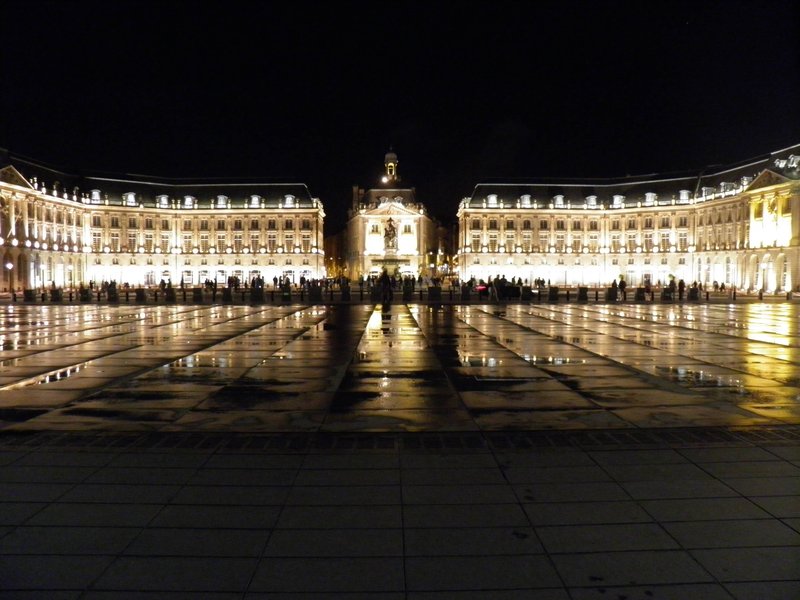
Three 18th-century limestone palaces designed by Gabriel for Louis XV, forming Bordeaux's grandest waterfront ensemble and a UNESCO World Heritage site. The Miroir d'Eau in front — 3,450 m² of shallow water — mirrors the baroque facades perfectly.
A 35-metre triumphal arch built in 1495 to honour Charles VIII's victory at Fornovo. Climb four medieval floors through Gothic tracery and corbelled battlements to a rooftop terrace overlooking the Garonne. Capacity is 19 visitors; narrow spiral stairs are part of the experience.
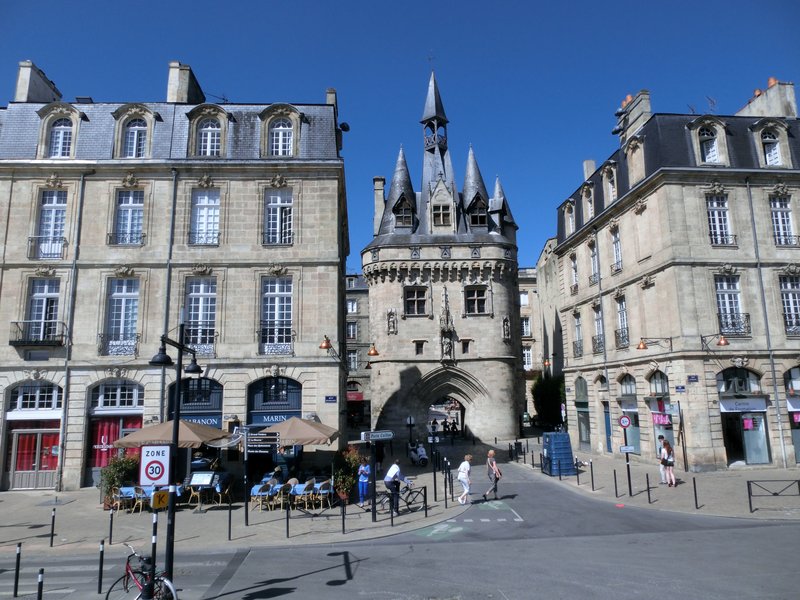
One of France's oldest and best-preserved medieval belfries, built as the city's main gateway in the 15th century. Its 7,800 kg bourdon bell still rings five times a year. Twin round turrets flank the arch — the last remnant of the city's fortified wall on this side of the old town.
Bordeaux's largest Gothic church, built 1350–1532, with a 114-metre detached stone spire — the third tallest in France. The spire stands separately because the marshy ground could not support its weight beside the nave. The church anchors the lively Saint-Michel quarter.
Europe's largest public square at 12 hectares, dominated by the Monument aux Girondins — a 54-metre column topped with a figure of Liberty, flanked by 1902 bronze fountains honouring the Girondins deputies executed during the Terror. The esplanade descends to the Garonne quays.
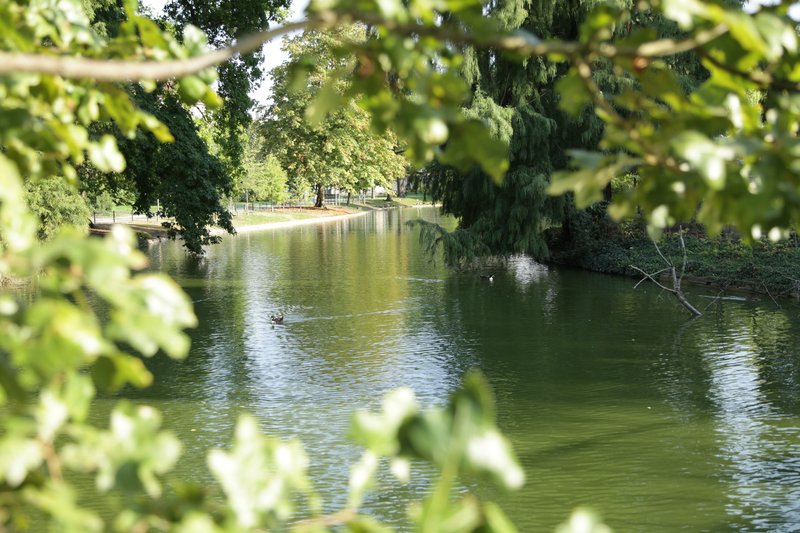
Created in 1746 under Intendant de Tourny, Jardin Public is the oldest public park in Bordeaux, classified as a Jardin Remarquable de France. Its 10 hectares contain a Natural History Museum, a historic botanical garden, a children's puppet theatre, and a bar-restaurant inside the restored orangerie.
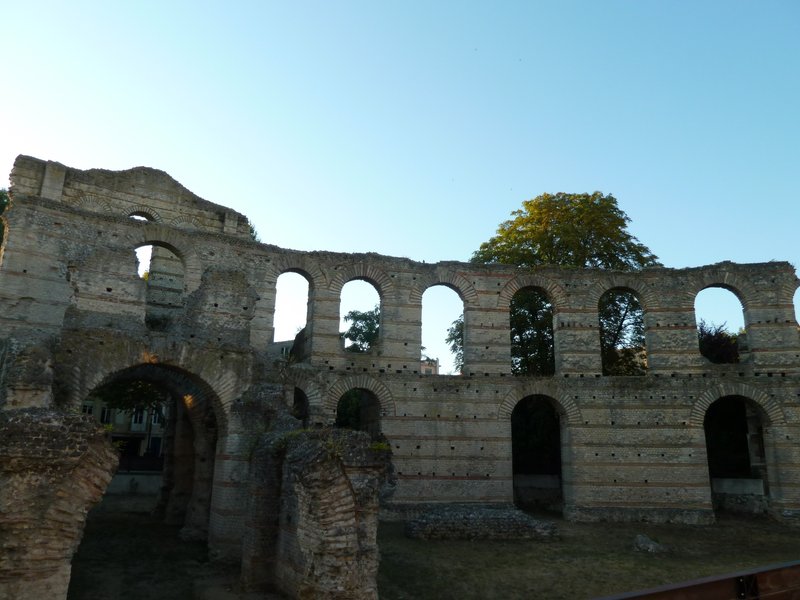
The only surviving Roman monument in Bordeaux — a 2nd-century amphitheater that held 15,000 spectators when the city was the Roman Burdigala. Its dramatic limestone arches rise from the urban fabric, the oldest standing structure in the city. Open June–September only; exterior visible year-round.
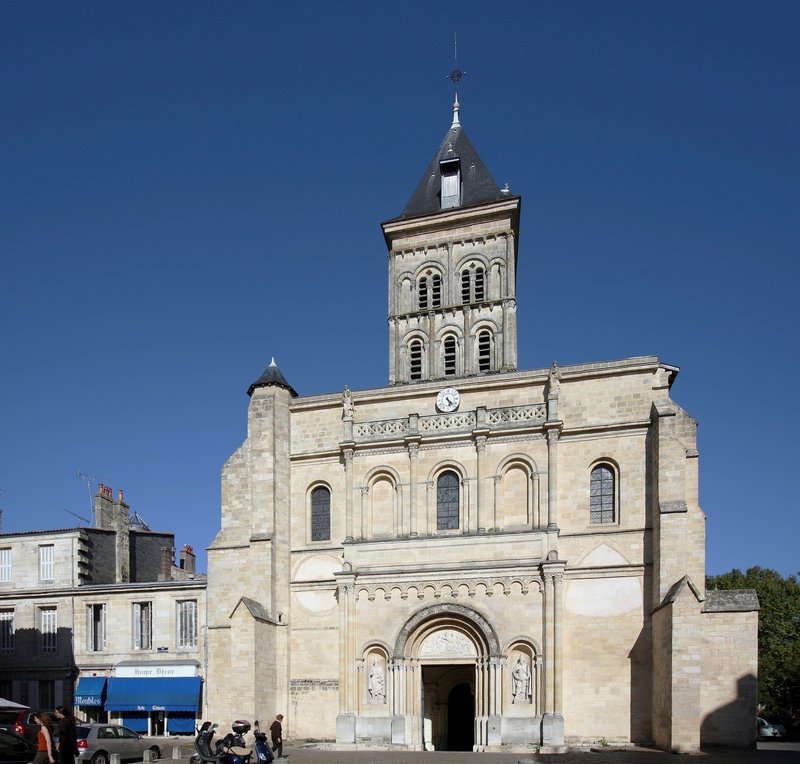
One of Bordeaux's oldest Christian sites, built on a 1st-century Roman necropolis. The 11th-century Romanesque basilica conceals a 5th-century episcopal necropolis — carved sarcophagi and early Christian inscriptions still in situ. A UNESCO World Heritage site on the Camino de Santiago.
>8:44am< Arrive Saint-Émilion · 5 min → Saint-Émilion centre
1.Église Monolithique~1 hr
The largest rock-hewn church in Europe, excavated from a single limestone cliff face between the 8th and 12th centuries. The entire nave — 38 metres long, 20 metres high — was carved by hand with no freestanding walls. Access by guided tour only from the Tourism Office.
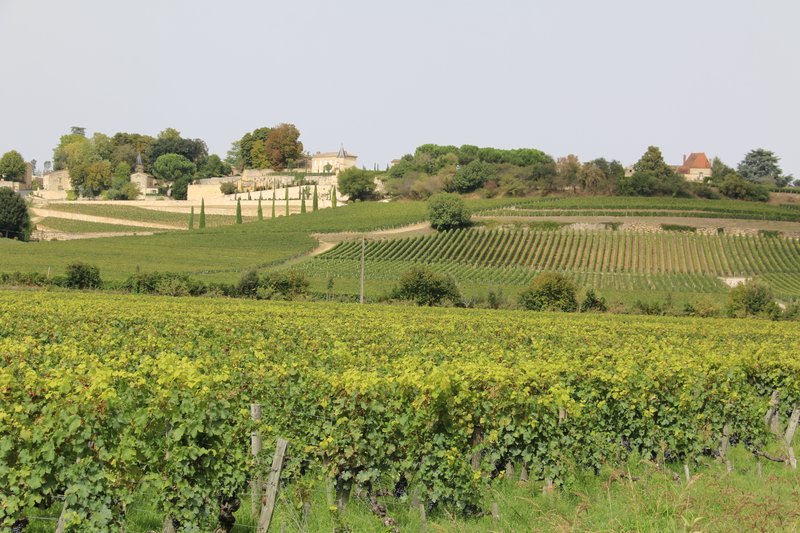
The tallest surviving medieval tower in Saint-Émilion, built by Louis VIII in 1224 as a royal keep asserting French authority over this newly-acquired Plantagenet territory. The 35-metre climb gives the best panoramic view over the UNESCO vineyard landscape.
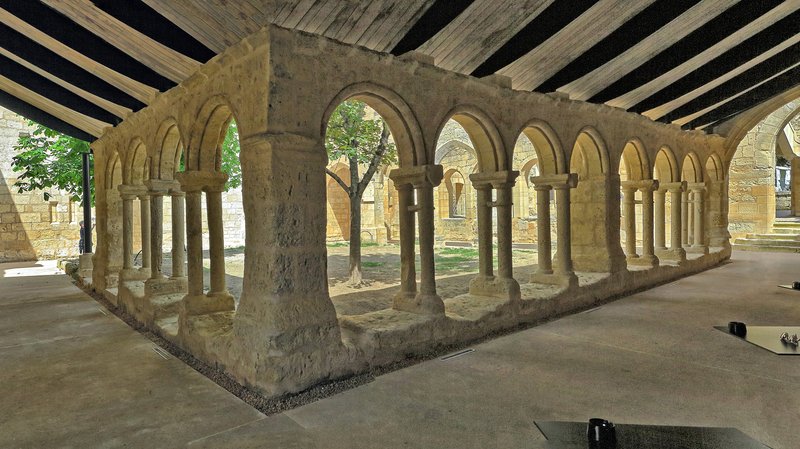
A 14th-century Franciscan cloister whose Gothic arcade is still largely intact above ground. Below it, limestone cellars excavated over centuries now produce Crémant de Bordeaux sparkling wine. The cellar visit includes a tasting in the vaulted gallery where Franciscan monks once stored their provisions.
Three-hour walk through the UNESCO old town stopping at the city's best independent bakeries — tasting canelés, croissants, and regional specialties while learning the history of the medieval streets.
Two-hour tip-based walking tour covering the UNESCO historic centre — main squares, waterfront, medieval gates, and the stories behind the Port of the Moon. Good orientation before exploring independently.
Evening walk through the illuminated UNESCO historic centre — Place de la Bourse, the Grand Théâtre, and the river quays lit by 1,400 floodlights. The city's famous light-up is best experienced on foot.
Full-day tour through two iconic appellations — a morning in the Médoc visiting classified châteaux, then across the Gironde estuary to Saint-Émilion for a winery tour, tasting and free time in the village.
The most reviewed Saint-Émilion tour on the platform — a half-day coach trip from Bordeaux to the hilltop UNESCO village with a château visit, winery tour and three wine tastings.
A half-day morning coach tour through the Médoc wine route — visits to two classified châteaux with winery tours, barrel-hall walks and guided tastings of Pauillac or Saint-Julien appellations.
Full-day shared tour to the Arcachon Bay — coastal views, a guided walk through the town of Arcachon, then lunch at an oyster shack on the bay with a tasting of freshly harvested Arcachon oysters.
Half-day morning tour into the Médoc — two château visits with cellar tours, tastings of classified Bordeaux red wines and an expert guide explaining the cru classification system and terroir of this legendary AOC.
An afternoon half-day wine experience in Saint-Émilion — visiting a different château from the standard itinerary with an in-depth cellar explanation and comparative tasting of three AOC wines with food pairings.
A full-day excursion to the Atlantic coast — the Arcachon Bay oyster village, seafood lunch, then the ascent of the Dune du Pilat, Europe's tallest sand dune, for panoramic views over the Landes forest and ocean.
A shared-group day trip to the Arcachon Bay combining a walking tour of Arcachon town, an oyster tasting at a local cabin on the water, and a climb up the legendary Dune du Pilat for ocean views.
Small caramelised rum-and-vanilla custard cylinder — crispy dark shell, soft interior. Bordeaux's most iconic pastry, with a protected designation since 1985.
Foreign number: accepted. — it runs on the same Uber account as the ride app, so no second code has to arrive.
Solid across the Bordeaux centre and out to Chartrons, though the bistros around Saint-Pierre are better represented on Deliveroo. Late-evening coverage thins on Sundays, when a good deal of the city is shut anyway.
Foreign number: not required. — sign-up runs on Google, Apple, Facebook or email with no phone field at all, so no verification code has to arrive.
The app with the better Bordeaux restaurants — the Saint-Pierre and Golden Triangle kitchens list here before they list anywhere else. Coverage is centre-weighted, so a hotel out past the boulevards will find the list thins quickly.
Foreign number: not required. — the account is made with Google, Facebook or an email address — there is no phone field, so no code has to arrive.
Broader than Deliveroo on chains and neighbourhood pizzerias, thinner on higher-end restaurants. Sign-up is by email rather than SMS, which makes it the simplest of the three to open once you are already in France.
One of Europe's finest 18th-century opera houses, designed by Victor Louis in 1780 — Ionic colonnade, celebrated ceiling fresco, 250+ performances per season.
Foreign number: accepted. — the sign-up form takes any country dialling code, and Google, Apple or email sign-in skips the SMS code entirely.
Works reliably across Bordeaux and out to the Saint-Émilion vineyards; prices are fixed at booking, so there are no surprises on long runs. Most drivers speak enough English to communicate a destination.
Foreign number: accepted. — registration works with a foreign number, and an email address can carry the account instead.
Cheaper than Uber on most in-city legs; coverage is good in the centre and reaches Cité du Vin and the Saint-Michel quarter without issue. Surge pricing is less aggressive than Uber at peak hours.
Market town at the confluence of the Dordogne and Isle rivers, gateway to Pomerol and Saint-Émilion wine country — the Saturday market around the medieval town hall is one of the best in the Gironde, and the riverside quays are unhurried by the day-tripper crowds.
Capital of the Dordogne, with a spectacular Byzantine-Romanesque cathedral of five domes visible across the river and a medieval core dense with Renaissance mansions — the city is also the closest urban base to the prehistoric cave paintings of the Vézère valley.
Capital of the world's most celebrated brandy appellation — Hennessy, Martell, Rémy Martin, and Courvoisier all operate cellar tours in the compact old town on the banks of the Charente.
Best-preserved medieval port in France — UNESCO-listed harbour guarded by three medieval towers, a car-free historic centre, and white limestone arcaded streets.
Ticket machines sit on every platform; inspectors patrol often and treat an unvalidated ticket the same as none, with an on-the-spot fine.
Église Monolithique · Saint-Émilion — Guided Entry Only
The monolithic church and its underground chambers open only as part of a guided tour bought on-site; there is no self-guided access to the interior.
Worth Knowing
Jules Verne and Victor Hugo Once Came to See the Mummies Under This Church
In 1791, when Bordeaux cleared the burial grounds around its parish churches, workers digging beneath Basilique Saint-Michel uncovered 74 bodies that had naturally mummified in the ground — no embalming, just something about the clay-rich soil and local conditions that preserved skin and features intact. The find became one of the city's biggest tourist draws for nearly two centuries, displayed in a deliberately eerie crypt setting beneath the tower and pulling in visitors that reportedly included Victor Hugo and Jules Verne, both of whom found the display strange enough to write about. Exposure to open air eventually caused the remains to deteriorate, and in 1979 they were sealed in coffins and reburied anonymously in a nearby cemetery. A video projection in the crypt today is the only trace left of one of Bordeaux's strangest attractions.
Darwin Ecosystem exists because nobody stopped the people who broke in. The site was a military barracks until the army abandoned it in 2005, after which squatters, graffiti artists, and skaters moved into the empty buildings before any official plan existed for the space. Rather than evict them, a local entrepreneur built an actual redevelopment project around what was already happening there, officially launching it in 2009 on a date chosen to mark Charles Darwin's 200th birthday. The indoor skatepark inside was built almost entirely from salvaged construction materials, and the grounds now also host a working urban farm — food grown on the same land where the occupation that saved the site began.