SAN SEBASTIAN
Hotel Maria Cristina · Luxury Collection
Spain
TRIP OVERVIEW
Day 1 – Basílica de Santa María del Coro · Monte Urgull · Peine del Viento · Monte Igueldo
Day 2 – San Telmo Museoa · Beach of La Concha · Miramar Palace · Kursaal Auditorium
Day 3 – Zurriola Beach · Aquarium of San Sebastián · Jardines de Alderdi Eder · Santa Catalina Bridge
Day 1
1.Basílica de Santa María del Coro~45 min
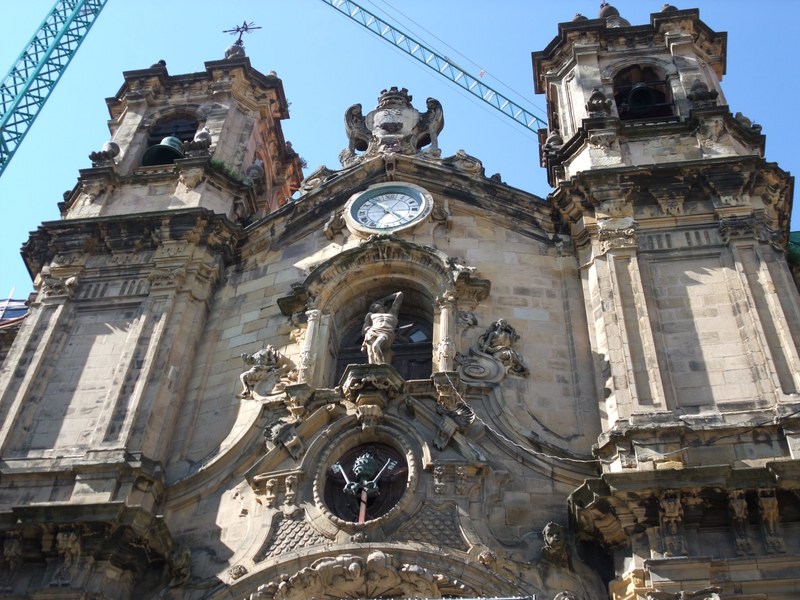
San Sebastián's principal Baroque church, built between 1743 and 1774. The Churrigueresque façade on Calle Mayor rises above the Old Quarter rooftops; inside, gilded altarpieces converge on the venerated Virgin of the Chorus — the city's patron — at the heart of a richly decorated nave.
2.Monte Urgull~1 hr 30 min
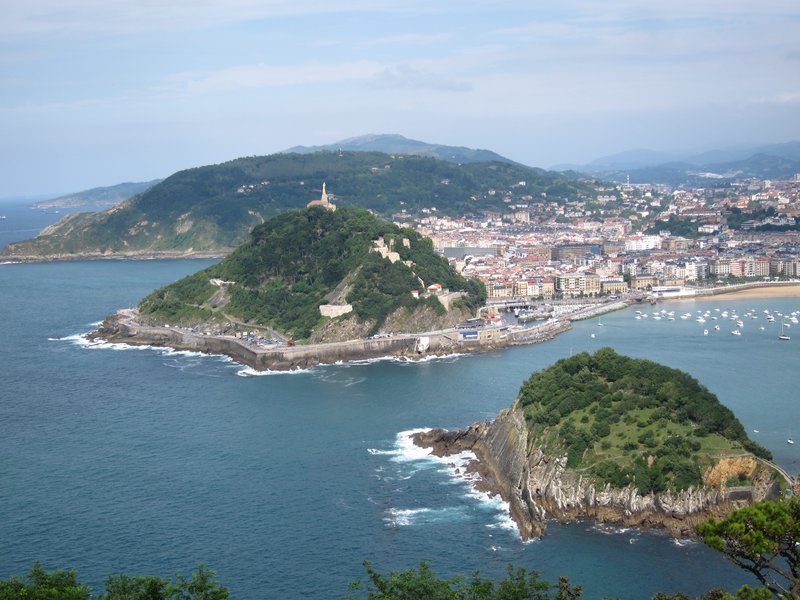
A forested hill rising from the Old Town harbour, crowned by the medieval Castillo de la Mota and a monumental Sacred Heart statue above the city. Walking its rampart paths reveals a sweeping panorama across La Concha Bay, Isla de Santa Clara, and the Basque coastline toward France.
Daily 8:00am - 9:00pm
20 min uphill
Free
May–September hours extended; October–April closes at 7:30pm.
3.Peine del Viento~45 min
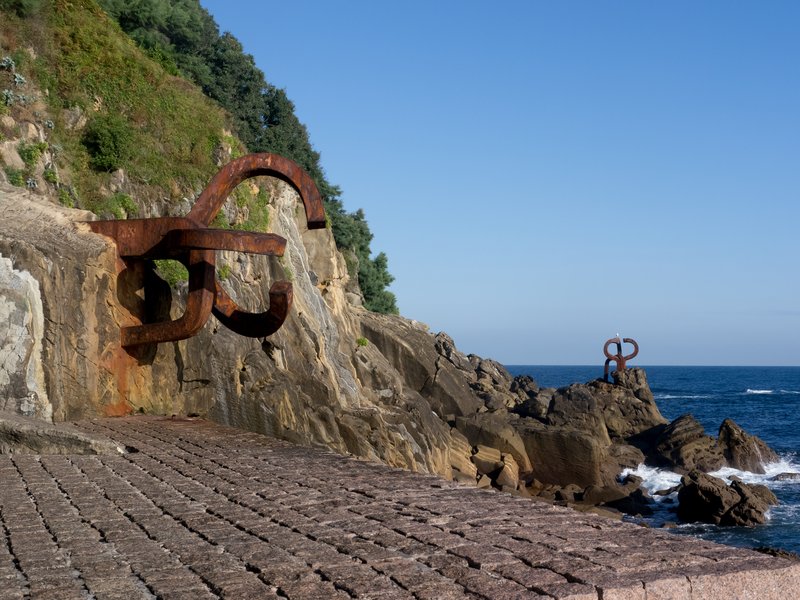
Eduardo Chillida's 1977 masterwork — "Comb of the Wind." Three curved iron claws are anchored into granite cliffs at the base of Monte Igueldo, reaching into Atlantic spray. Stone vents beneath the terrace channel the sea air, producing a theatrical whistle when waves crash through in heavy weather.
Open 24/7
4.Monte Igueldo~1 hr 30 min
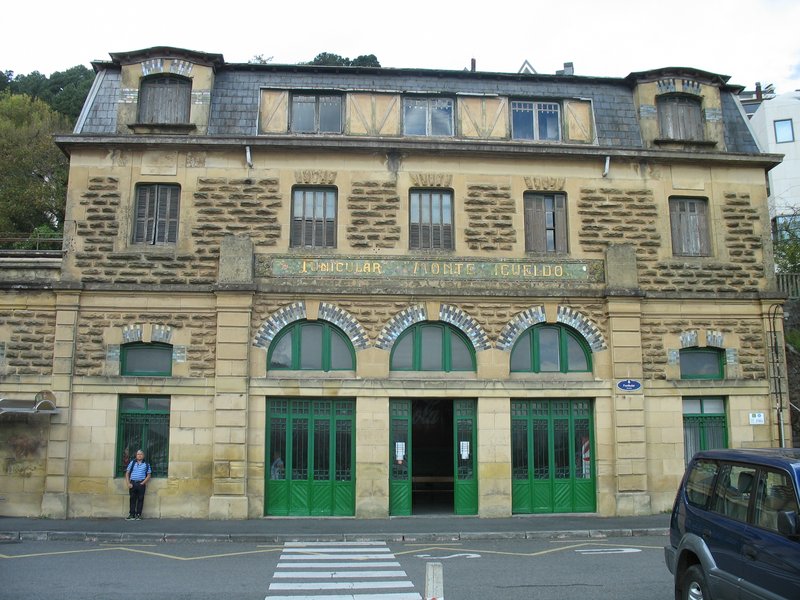
A 1912 funicular climbs to the summit of Monte Igueldo, where a circular panorama takes in the full arc of La Concha Bay, Isla de Santa Clara, Monte Urgull, and the Atlantic horizon. The vintage amusement park at the top dates from the same era as the funicular itself.
Daily 10:00am - 9:00pm
Day 2
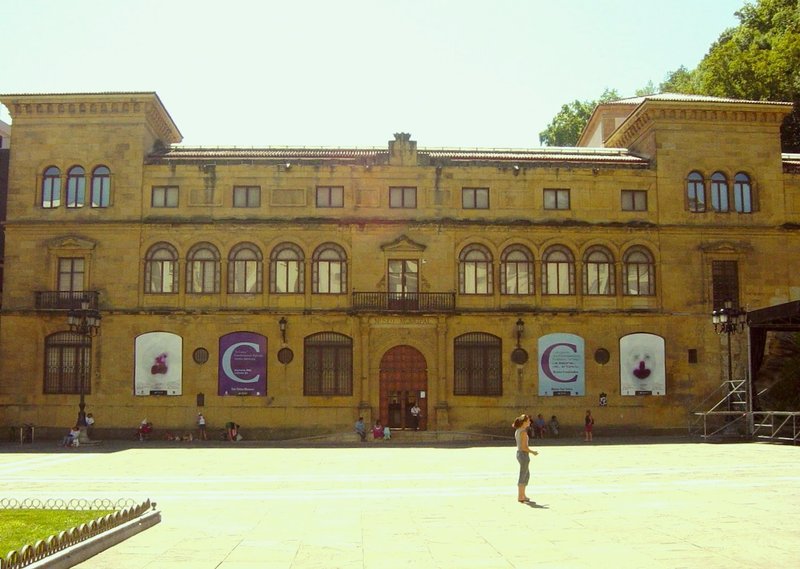
1.San Telmo Museoa~1 hr 30 min
The oldest museum in the Basque Country, housed in a 16th-century Dominican convent converted in the 1930s. Elías Salaverría's panoramic frescoes wrap the old church nave; the adjacent contemporary wing holds Basque history collections spanning prehistoric artefacts to the present.
Tuesday - Sunday 10:00am - 8:00pm
Closed Monday
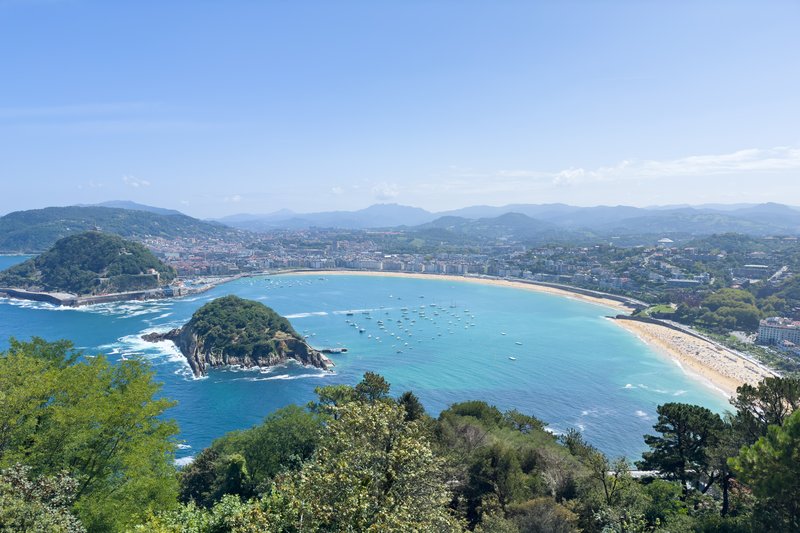
2.Beach of La Concha~45 min
A sheltered semicircular bay curving between Monte Urgull and Monte Igueldo — considered one of the finest urban beaches in Europe. The 19th-century Paseo de la Concha promenade lines the shore; Isla de Santa Clara floats at the centre of the bay.
Open 24/7
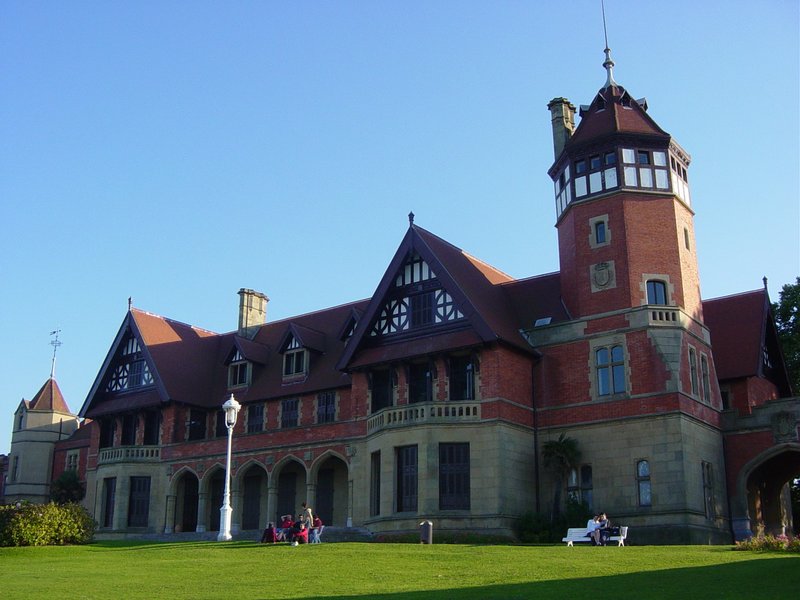
3.Miramar Palace~45 min
The summer royal residence built for Queen María Cristina in 1893, set on a promontory between La Concha and Ondarreta beaches. The English neo-Tudor manor now belongs to the city; its surrounding park commands a panorama across both bays from the highest point on the promenade.
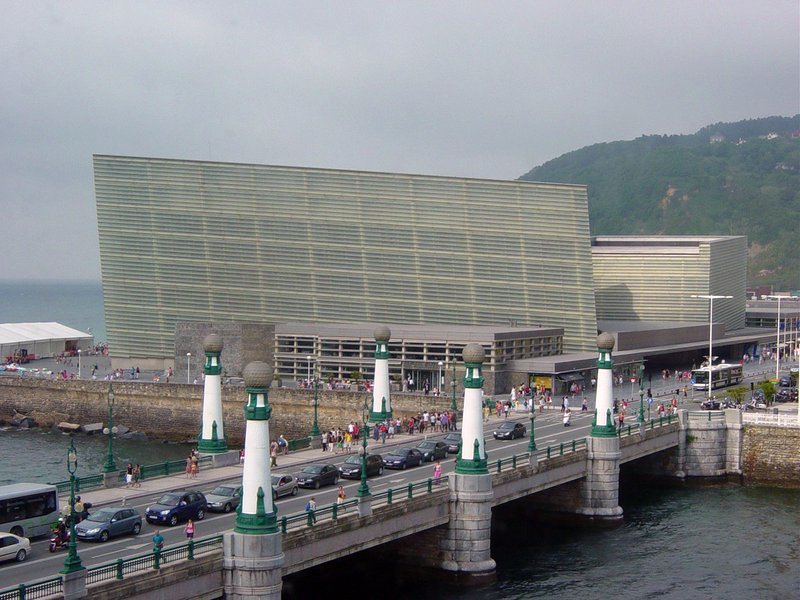
4.Kursaal Auditorium~30 min
Rafael Moneo's 1999 landmark at the Zurriola rivermouth — two luminous glass cubes rising from the Urumea estuary. The building houses a concert hall, auditorium, and convention centre; at night the translucent façade glows above Zurriola beach.
Open 24/7
Day 3
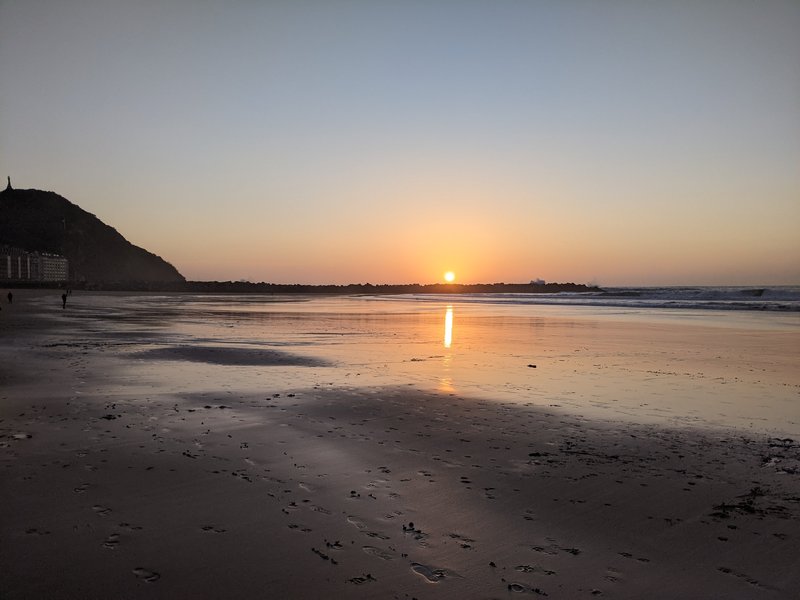
1. Zurriola Beach~45 min
The Gros neighbourhood's Atlantic-facing beach, separated from La Concha by the Kursaal headland and exposed to open ocean swells. Where La Concha is sheltered and promenade-lined, Zurriola faces north-west — the waves break harder and the crowd skews younger. The Kursaal glass cubes anchor the rivermouth end.
Open 24/7
2. Aquarium of San Sebastián~1 hr 30 min
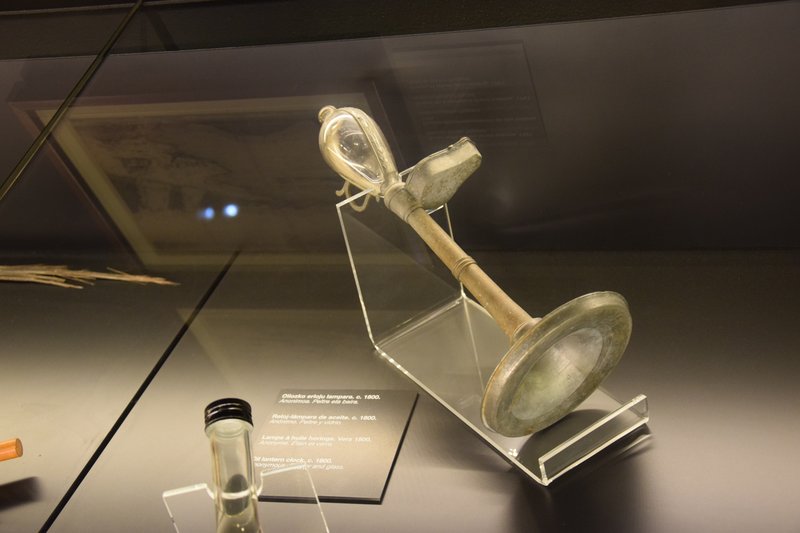
Housed in the 1928 Palacio del Mar at the old harbour, the aquarium traces the natural history of the Cantabrian Sea and the Basque fishing tradition. A 360-degree tunnel passes through a tank holding sharks, rays and large Atlantic species; the oceanographic collection covers ship models and marine charts.
Monday - Friday 10:00am - 8:00pm · Saturday - Sunday 10:00am - 9:00pm
3. Jardines de Alderdi Eder~30 min
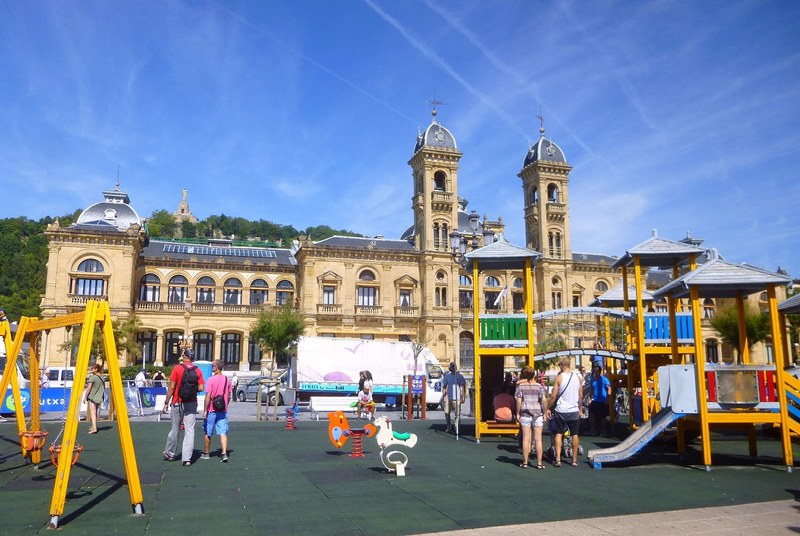
The formal garden terrace between the old town and the La Concha promenade, planted with magnolias and centred on the city's landmark street clock. The gardens front the neoclassical city hall — built in 1887 as a casino — marking the hinge between the Parte Vieja alleyways and the open bay.
Open 24/7
4. Santa Catalina Bridge~20 min
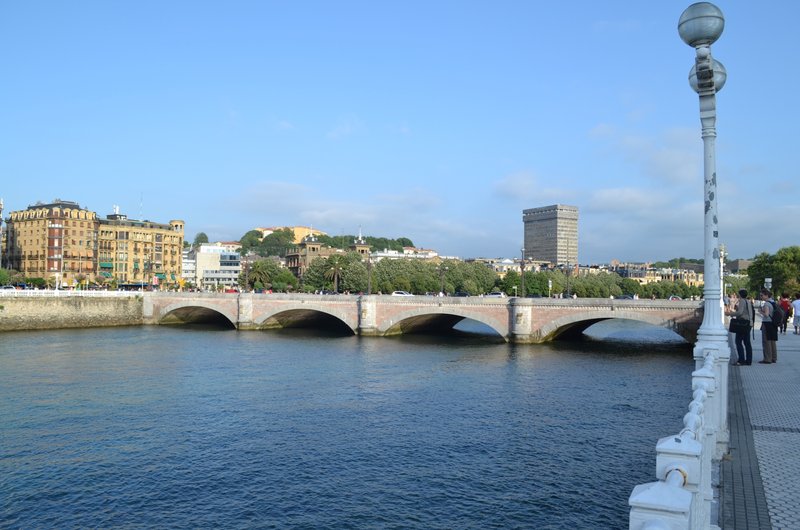
The most elaborate of the Urumea's three bridges, built in 1905 in Spanish Renaissance style with iron lamp standards and ceramic balustrades. It links the Parte Vieja to Amara; from mid-span, the river framing of the old town roofline and the Kursaal is one of the city's definitive views.
Open 24/7
Weekly Closures
Museums, Monuments & Most Restaurants · Closed Monday
Tours
Viator
Small-group walk through the medieval Parte Vieja, the old harbour, and the Romantic Quarter — eight centuries of Basque history in 90 minutes.
1 hr 30 min · Small group
City walk through the Old Town and Romantic Quarter covering Basque history and culture, with an optional pintxo and txakoli stop at the end.
1 hr 30 min · Small group
Day excursion to the medieval fortress town of Hondarribia and the fishing villages of Pasaia San Juan and San Pedro.
4 hr · Small group
Evening pintxos crawl through the Old Town with a local, stopping at five bars for traditional Basque bites and txakoli across the Parte Vieja and Gros.
3 hr · Small group
The city's most-reviewed pintxos experience — a small-group evening walk through the Parte Vieja's best bars, pairing Basque bites with txakoli across multiple stops.
3 hr · Small group
GetYourGuide
Guided walk through the Old Town's cultural highlights — architecture, Basque history, and local life — in 105 minutes with a knowledgeable local guide.
1 hr 45 min · Small group
A brisk guided overview of the city's top landmarks — Old Town, La Concha promenade, and the Romantic Quarter — in 90 minutes.
1 hr 30 min · Small group
Five-stop guided pintxo route through the Old Town — eight bites and five drinks including wines from different Spanish Denominations of Origin, Basque cider, and a traditional local liqueur.
3 hr · Small group
Evening pintxos and wine tour through the best bars in the Old Town and Gros — local family-run spots and hidden gems, with seven premium pintxos and five drinks including txakoli and local wines.
3 hr · Small group
Full-day small-group excursion from San Sebastián — the dramatic cliff-island hermitage of Gaztelugatxe on the Basque coast, then into Bilbao for the Guggenheim Museum with guided visit and tickets included.
9 hr · Small group
TripAdvisor
Premium small-group pintxo experience — morning La Bretxa market visit, then an evolution of Basque cuisine from classic to avant-garde pintxos paired with txakoli, rioja, and artisan cider at curated stops.
3 hr · Small group
Premium gourmet pintxos evening in the Old Town — seven creative pintxos and five drinks at the city's best bars, with a guide who pairs each bite with a matched Basque or Spanish wine.
3 hr · Small group
Twelve food and drink tastings across the Old Town with a local guide — cured meats, seafood pintxos, tortilla, Basque cheesecake, txakoli, rioja, cider, and a sloe-berry liqueur across five stops.
3 hr 30 min · Small group
Small-group pintxos tour through the Centro district — the less-touristed neighbourhood bars and bistros away from the Parte Vieja, with a local guide and wine pairings throughout.
2 hr 30 min · Small group
Cappuccino
Old Town Coffee · 4.5 · 2808+ reviews
Tuesday - Sunday 9:00am - 6:00pm
Closed Monday
Loaf Bakery · 4.5 · 180+ reviews
Kafe Botanika · 4.5 · 210+ reviews
Wednesday - Saturday 9:00am - 11:30pm · Sunday 9:00am - 8:00pm
Closed Monday & Tuesday
Simona Specialty Coffee Club · 4.6 · 690+ reviews
Restaurants Near Hotel
Mendaur Berria · 4.7 · 2147+ reviews
Modern Basque pintxos — creative counter and hot daily specials.
Daily 9:30am - 11:00pm
Bar Nestor · 4.6 · 5722+ reviews
Cult tortilla española and txuleta steak — legendary omelette and beef.
Tuesday - Sunday 1:00pm - 3:30pm · 7:30pm - 10:30pm
Closed Monday
La Viña · 4.4 · 8126+ reviews
Birthplace of the famous Basque cheesecake — pintxos and tarta de queso.
Tuesday - Sunday 10:30am - 3:45pm · 7:00pm - 11:00pm
Closed Monday
Borda Berri · 4.6 · 890+ reviews
Hot pintxos to order — braised pork ribs, Idiazabal risotto, pig's ear.
Tuesday - Sunday 12:00pm - 3:30pm · 7:00pm - 11:30pm
Closed Monday
Gandarias · 4.3 · 144+ reviews
Old Town institution — pintxos bar and restaurant; txuleta and croquetas.
Daily 11:00am - 12:30am
Downtown Restaurants
La Cuchara de San Telmo · 4.7 · 137+ reviews
Hot pintxos à la plancha — foie gras, veal cheeks, salt-cod confit.
Tuesday 7:30pm - 11:30pm · Wednesday - Thursday 12:30pm - 5:30pm · 7:30pm - 11:30pm
Closed Friday, Saturday, Sunday & Monday
Karrika Taberna · 4.6 · 395+ reviews
Neighbourhood pintxos and taberna in Parte Vieja — honest Basque cooking.
Daily 12:00pm - 11:30pm
Bar Gorriti · 4.4 · 560+ reviews
Open since 1921 — 50+ pintxos hot and cold, including the bacalao croqueta.
Daily 9:00am - 11:00pm
Atari Gastroteka · 4.5 · 720+ reviews
Modern gastroteka on the main strip — creative pintxos and daily specials.
Daily 11:00am - 11:00pm
Local Tastes
Pintxos
The Basque answer to tapas — small bites anchored to bread with a toothpick or served hot from the plancha. Stand at the bar, order two or three per stop, and move between bars with a glass of txakoli.
Gilda
San Sebastián's emblematic pintxo — a skewer of anchovy, green olive, and guindilla pepper in olive oil. Named after Rita Hayworth's character in the 1946 film, it was invented at Bar Casa Vallés.
Basque Cheesecake
The burnished, crustless cheesecake invented at La Viña in 1990 — now copied worldwide but still best at the source. Creamy inside with a deliberately dark, almost caramelised top.
Txakoli
The region's slightly sparkling, bone-dry white wine — poured from height to aerate it, fizzing into the glass. Brisk acidity makes it the natural pintxos partner.
Food Delivery
Uber Eats
Foreign number: accepted. — it runs on the same Uber account, so the code comes by SMS to any international number, with a voice call as the fallback.
Covers the centre, Gros and Amara with a list that leans to pizza, burgers and a few pintxos bars boxing up for delivery; couriers reach the Maria Cristina in 20–30 minutes. Smaller than Glovo's list in this city and fees climb after 11pm.
Glovo
Foreign number: not required. — it signs in with Google, Facebook or email, and a phone sign-up takes any prefix with the code by SMS or WhatsApp.
The biggest delivery list in Donostia — most of the Gros and Centro restaurants that deliver at all are on it, plus supermarkets and pharmacies — and the easiest to set up without a local number. Delivery to the Old Town is slow at lunch on weekends, when the streets are pedestrian-only.
Just Eat
Foreign number: not required. — the account is made with Google, Facebook or an email address — there is no phone field, so no code has to arrive.
The longest-established platform in Spain and strong on the neighbourhood kitchens — kebab, Chinese and the sidrería-style grills of Amara — that the newer apps skip. Fewer riders than Glovo, so evening waits run longer, but no sign-up friction at all for a visitor.
Getting Around
Cabify
Foreign number: not accepted. — registration asks for a Spanish mobile and the verification code is texted only to a +34 number.
The Spanish-grown app and the one with the most licensed drivers in Donostia — fixed fares, clean cars and a reliable pick-up from the Maria Cristina within five minutes. The catch is the sign-up: without a Spanish SIM you cannot open an account at all, so it is for readers who buy a local number.
FreeNow
Foreign number: accepted. — the code comes by SMS to any EU or international number, and the app re-sends it by voice call if the text does not land.
Books the city's licensed taxis rather than private cars, so it works exactly where taxis do — the Old Town ranks, the Kursaal, the Renfe station — and the fare is the metered taxi fare with no surge. The best choice here for a visitor with a foreign number; waits stretch on rainy weekend nights.
Uber
Foreign number: accepted. — the code comes by SMS to any international number, and "Call me with code" reads it out if the SMS is blocked.
Thin in San Sebastián — Uber here dispatches licensed taxis and a small VTC pool, so a request often lands on the same cab FreeNow would send, at a similar price. Useful because the account you already have works on arrival; not the app with the shortest waits in Gros or Amara after dark.
Train Stations Near Hotel
Donostia-San Sebastián · Renfe
Renfe regional and long-distance trains → Madrid · Vitoria-Gasteiz · Pamplona.
Amara · EuskoTren
EuskoTren narrow-gauge → Bilbao via scenic coast · Hendaye France border crossing.
Day Trips by Train
Zarautz · 20 min
The surf capital of the Basque Country — a 2.5 km crescent beach that hosts the WSL championship, a compact old town, and the clifftop promenade with views of the coast. EuskoTren runs several times an hour on the coastal line.
book at: trainline.com or Omio
Hendaye · 35 min
A French Basque seaside town at the mouth of the Bidasoa river — wide beaches, the old town of Hendaye-Ville, and views of the Basque coast across the estuary.
book at: trainline.com or Omio
Pamplona · 1 hr
Navarre's walled capital — the medieval citadel, the Camino de Santiago pilgrimage route through the old town, and the bullring made famous by Hemingway's The Sun Also Rises. Renfe Alvia trains run direct on the San Sebastian-Pamplona line.
Vitoria-Gasteiz · 1 hr 10 min
The Basque Country's quiet capital — a medieval almond-shaped Casco Viejo, the Fine Arts Museum with its El Greco and Rubens, and one of Europe's most successful urban green-ring park systems. Renfe trains run direct on the Donostia-Vitoria line.
Bilbao · 2 hr 30 min
The Guggenheim Bilbao, the Casco Viejo old quarter, and a city with its own Michelin-starred scene — a full-day trip on the scenic EuskoTren coastal line.
book at: trainline.com or Omio
Michelin Restaurants
Akelarre
Pedro Subijana · innovative Basque cuisine above the Atlantic cliffs.
Arzak
Juan Mari and Elena Arzak · Basque avant-garde · four decades of mastery.
Mugaritz
Andoni Luis Aduriz · conceptual Basque tasting menu in a hillside farmhouse.
Hiking
Monte Ulia · Moderate
A steep coastal forest climb on the Camino del Norte above the surf beach.
6 km return · 190 m ascent
2 hr
Jaizkibel Ridge Trail · Hard
A ridge walk along the westernmost Pyrenean peak above the Basque coast.
10 km return · 450 m ascent
3 hr 30 min
Worth Knowing
A Note on San Sebastián
San Sebastián is one of the highest concentrations of Michelin stars per capita anywhere on Earth — a small city that outsized its geography by deciding that food was taken as seriously as art. The Old Town operates as a kind of living laboratory where every bar is in permanent competition with its neighbour.
Walk the pintxos circuit at 8pm on any weekday and you'll find locals who eat this way not because it's traditional, but because it's genuinely the best way to eat. The Peine del Viento is the right place to understand why Chillida kept returning to the Basque coast his whole life — those iron claws are not a monument to the landscape, they're a conversation with it.
Also on this site