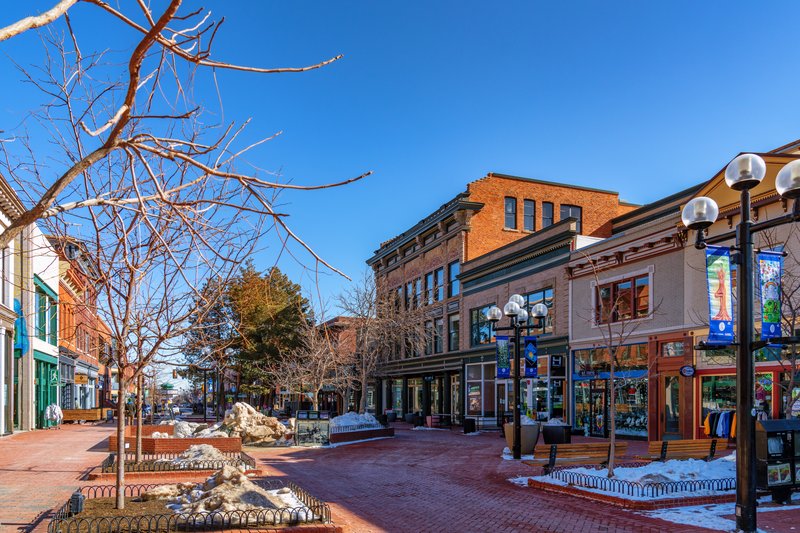
A four-block pedestrian historic district closed to traffic in 1977 and named a Great Public Space in America by the American Planning Association. The brick promenade is lined with 19th-century commercial buildings — over 70% locally owned — anchored at the 1300 block by the County Courthouse.
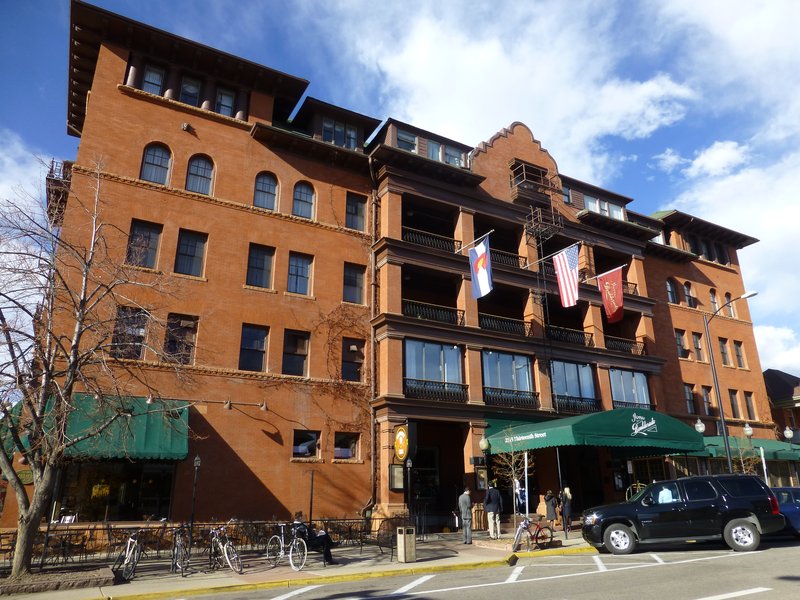
The city's oldest luxury hotel, opened January 1, 1909. The lobby features a cantilevered cherry-wood staircase and a stained-glass atrium ceiling — both original. The 1908 Otis elevator is still in daily operation. On the National Register of Historic Places since 1994.
A 5.5-mile paved multi-use path following Boulder Creek from the canyon mouth to Stazio Ballfields, eliminating all street crossings via bridges and underpasses. It passes the Main Library, Civic Area Park, and the Dushanbe Teahouse — a gift from the sister city in Tajikistan.
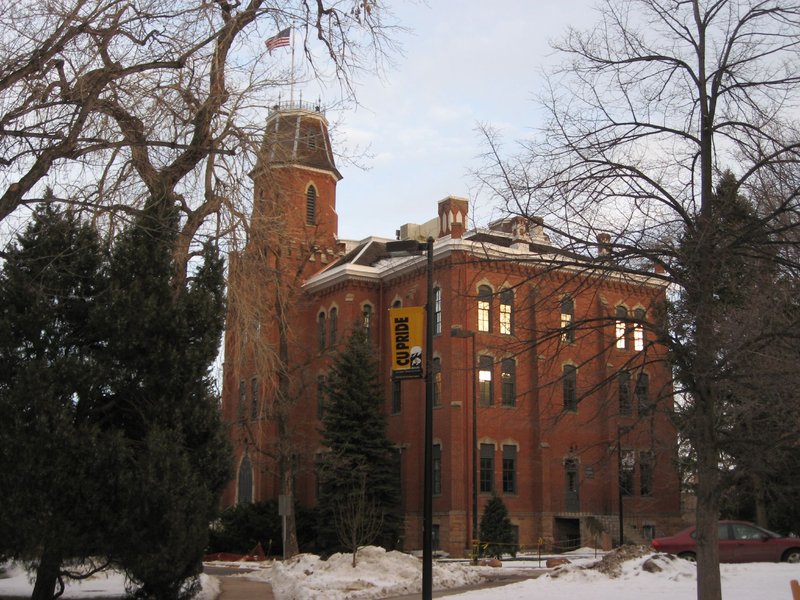
Colorado's flagship research university, founded 1876. Campus defined by the Klauder Italianate Romanesque style — rough sandstone walls and red-orange tiled roofs — set as architectural standard in 1921 and required for all new construction. Old Main anchors the original quadrangle.
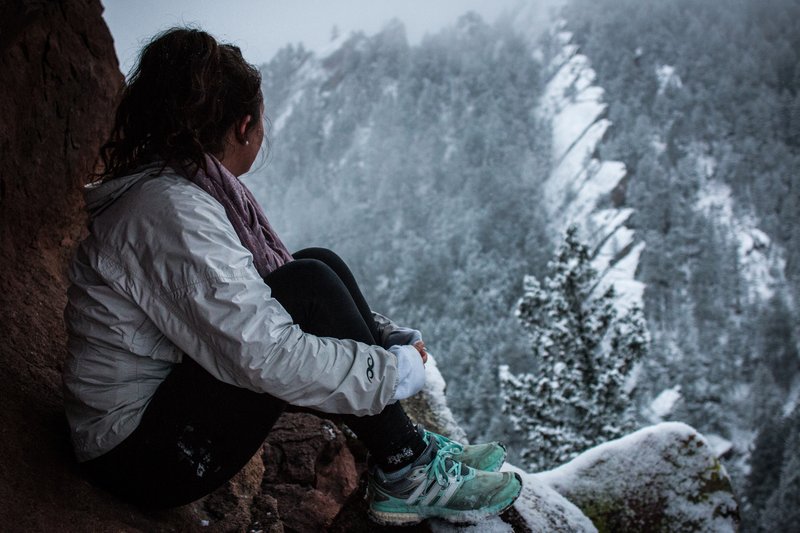
A National Historic Landmark and the only Chautauqua west of the Mississippi still in operation since its founding. The 40-acre grounds sit at the base of the Flatirons, steeply tilted sandstone slabs that define the city's skyline. The Auditorium and Dining Hall remain in active use.
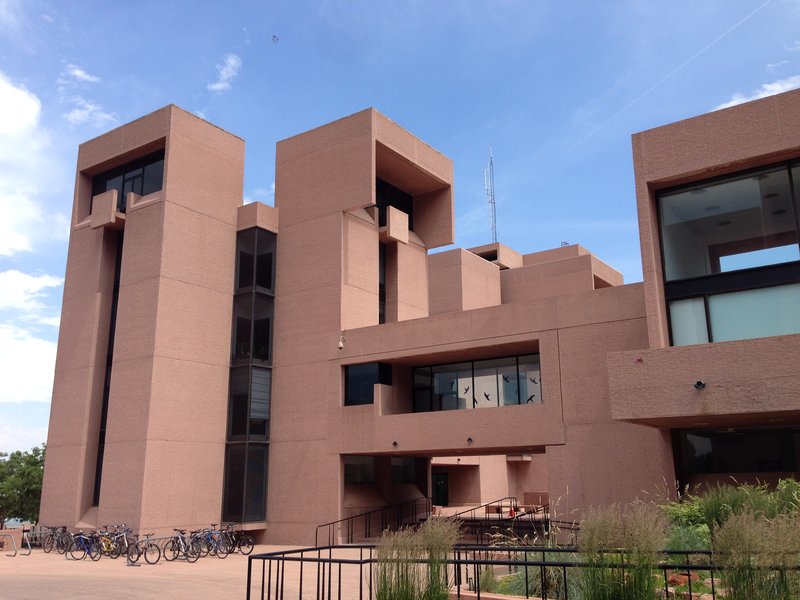
Mesa Laboratory, designed by I.M. Pei, 1963–1967. Board-formed concrete with embedded local pink rhyolite reads as continuous with the Flatiron sandstone cliffs behind it. Free exhibits on weather, climate, and atmospheric science. Views across the valley from the mesa top.
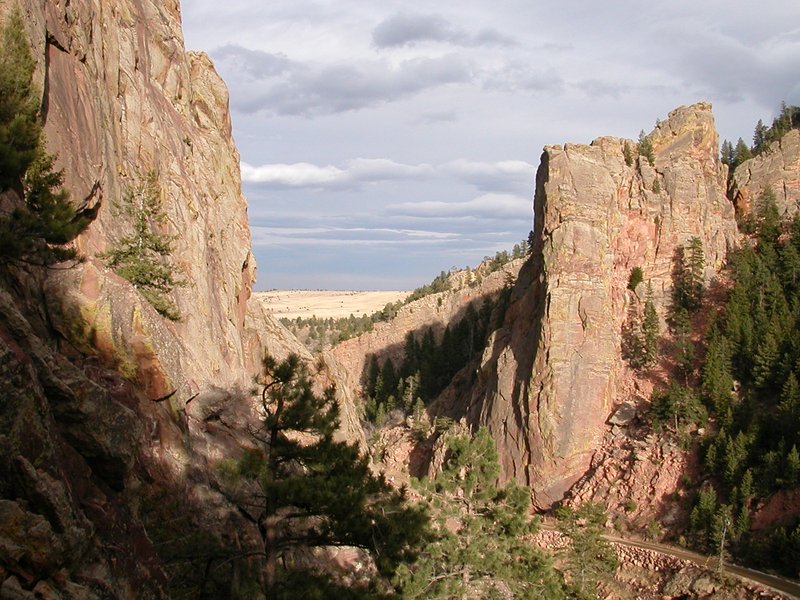
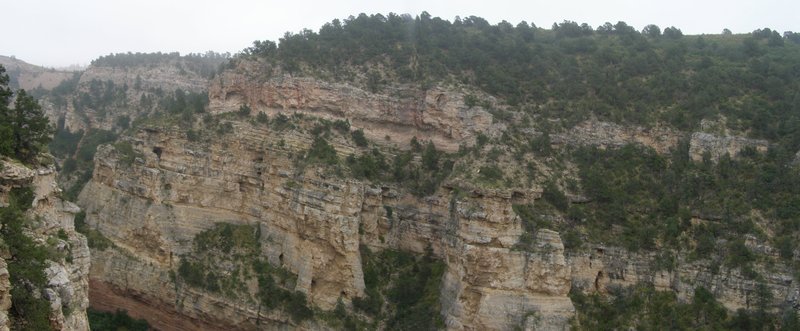
An 855-acre state park cut by South Boulder Creek through a dramatic sandstone canyon, with quartzite walls rising 850 feet from the creek bed. The vertical faces are among the best natural rock climbing venues in the country. A 1.5-mile trail follows the creek to a natural swimming hole.
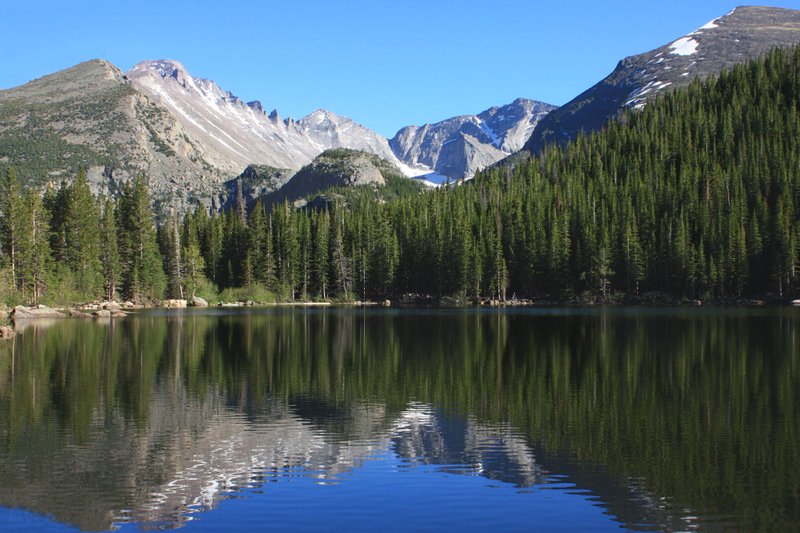
An alpine lake at 9,475 feet in Rocky Mountain National Park, accessible year-round via the Bear Lake Road corridor. The 0.5-mile loop around the lake reflects Hallett Peak and the Continental Divide. The trailhead connects to Glacier Gorge, Emerald Lake, and Nymph Lake trails.
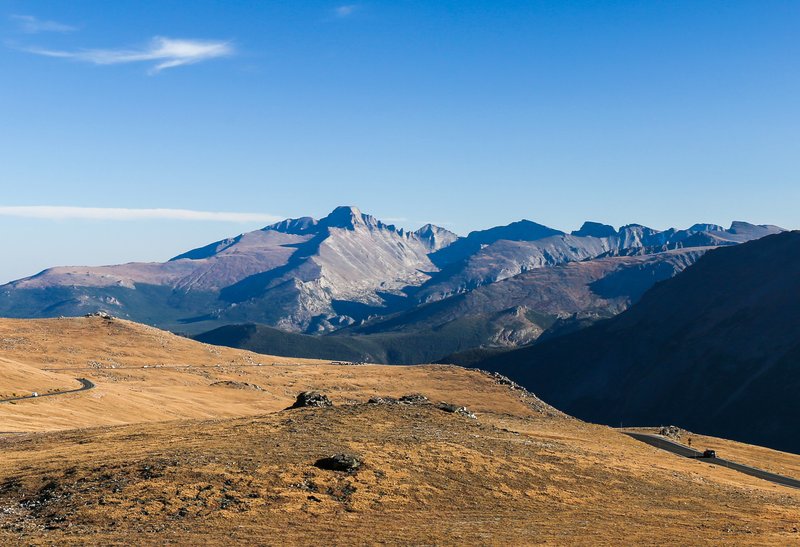
The highest continuous paved road in the United States, reaching 12,183 feet and remaining above treeline for 11 miles. The Alpine Visitor Center at 11,796 feet sits above the tundra with panoramic views of the Never Summer Mountains and the Kawuneeche Valley. Bighorn sheep, marmots, and ptarmigan are commonly seen.
From Hotel: 47 min → Red Rocks Park & Amphitheatre
1.Red Rocks Park & Amphitheatre~1 hr 30 min
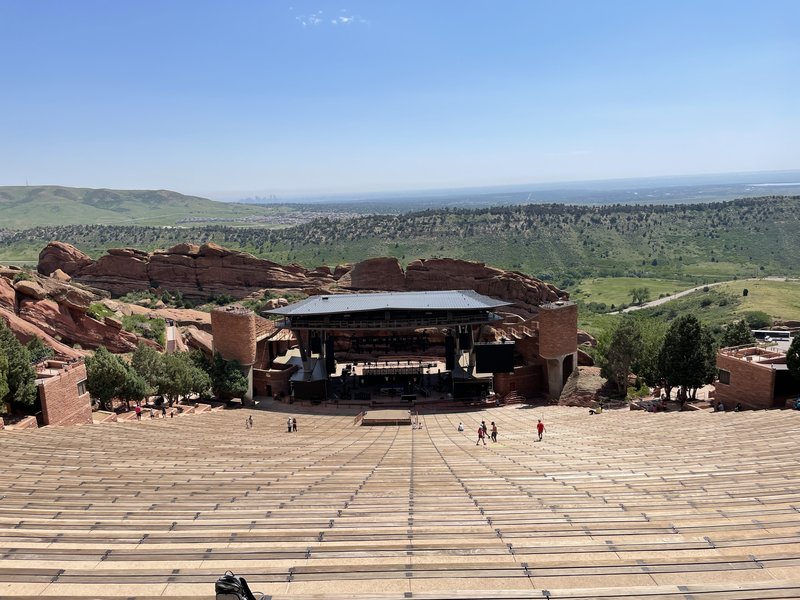
A naturally framed open-air amphitheatre set between the 300-foot sandstone monoliths Ship Rock and Creation Rock. Walk the 69-row bowl, visit the performers' hall of fame, and follow the short geology trail through rock layers recording roughly 250 million years.
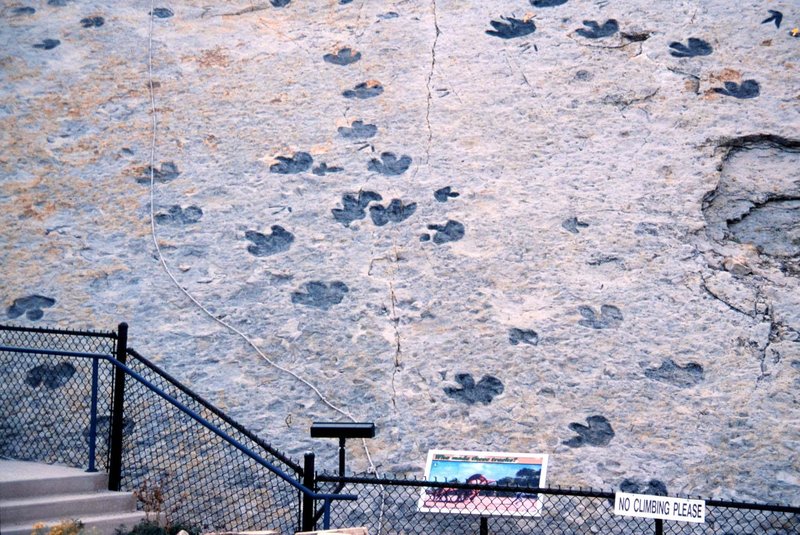
A celebrated fossil site where a paved ridge road passes more than 250 dinosaur tracks, exposed Jurassic bones, ripple marks, and the quarry where the first Stegosaurus fossils were found. The guided bus pauses at the main tracksite and bone bed with an interpreter.
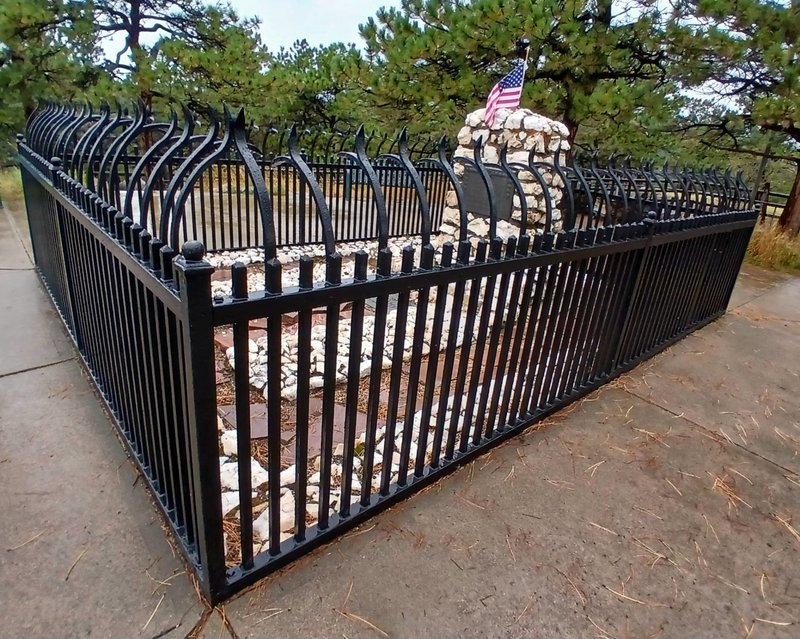
A compact museum devoted to William F. “Buffalo Bill” Cody and the international Wild West show that shaped his legend. His grave sits outside in Lookout Mountain Park, beside an observation deck with a broad view over Golden and the plains.
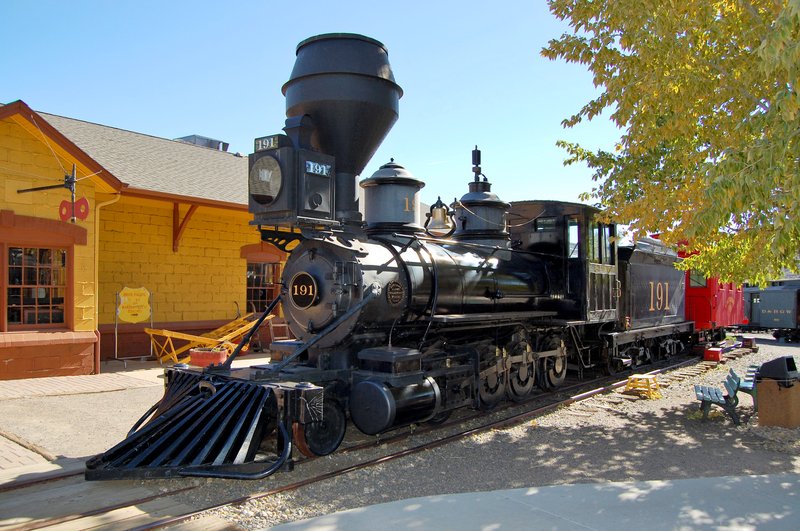
A 15-acre railyard preserving more than 100 locomotives, passenger cars, and cabooses from Colorado's narrow-gauge era. Explore the 1880s-style depot museum, watch restoration work inside the roundhouse, and walk among heavyweight steam engines and ornate passenger stock.
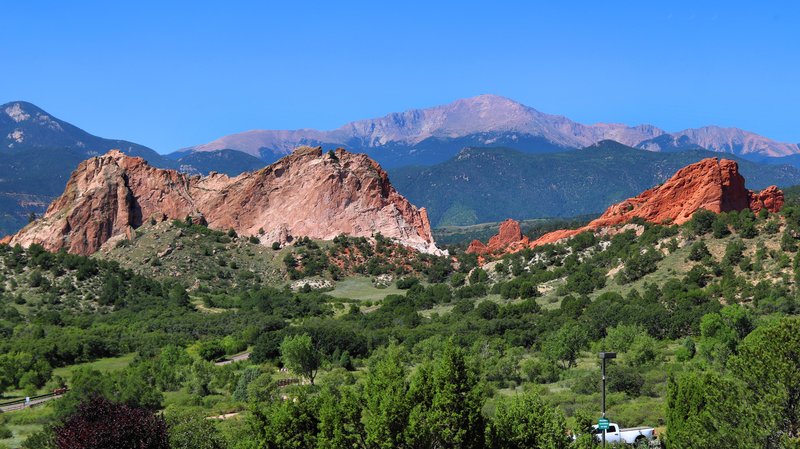
A free National Natural Landmark where immense red sandstone fins rise vertically beneath Pikes Peak. Start at the visitor center overlook, then follow the paved Central Garden paths around North Gateway Rock, South Gateway Rock, and the narrow fin known as the Three Graces.
A guided underground route through 15 rooms of stalactites, flowstone, and twisting limestone passage discovered by local explorers in 1880. The family-focused Discovery Tour covers a half-mile of electrically lit walkway and explains the cave's geology and history.
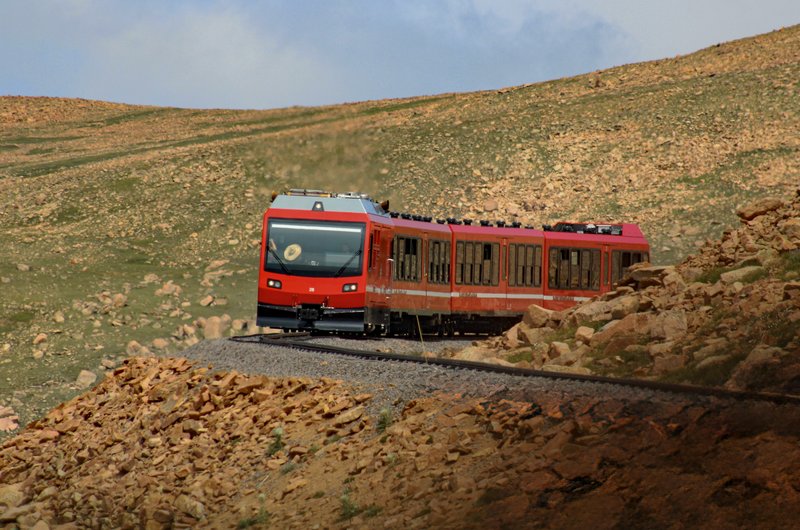
A rack railway climbing nine miles from Manitou Springs to the 14,115-foot summit of Pikes Peak. The train follows Ruxton Creek, crosses the timberline, and pauses for 40 minutes at the summit before descending; allow extra time for the required early check-in.
A professional astronomer leads a 2-hour evening tour outside town using large telescopes, a laser pointer, and narration on planets, constellations, nebulae, and star clusters.
A free 2-hour guided walking tour of downtown led by Jitka, covering local history, architecture, street art, and restaurant recommendations. Meets on Pearl Street.
A 2-hour evening stargazing tour led by astronomer Luke with large telescopes, camp seating, red flashlights, and narration on visible celestial objects.
Colorado's defining condiment — roasted Hatch or Pueblo green chiles slow-cooked into a thick sauce poured over breakfast burritos, smothered fries, and eggs. Ask for "Christmas" to get red and green together.
The city has one of the highest concentrations of craft breweries per capita in the US. The local style runs toward hoppy IPAs and small-batch experimental ales.
The Colorado breakfast burrito — a flour tortilla filled with scrambled eggs, roasted green chile, cheese, and potatoes — is the state's morning staple.
Foreign number: not accepted. — a US mobile number is required to complete sign-up.
The widest delivery net in Boulder, covering the Pearl Street restaurants, the Hill by campus and most of the chains along 28th Street; fees stack up on small orders and drivers hand off at the hotel lobby rather than the room.
Foreign number: accepted. — the code arrives by SMS on a foreign SIM, and an Uber login carries over without a second sign-up.
Smaller restaurant list than DoorDash but the same app a visitor already has for rides; strongest downtown and near the university, with pickup-in-store an option that skips the delivery fee on short walks from the Residence Inn.
Foreign number: accepted. — the verification code arrives by SMS on a foreign SIM, and an existing Uber account signs straight in.
Boulder's main ride app, with cars usually 5–10 minutes out downtown and at the Residence Inn; rides to Chautauqua and the trailheads are short and cheap, but cars thin out after midnight and at the far-flung trailheads, so book the return before you set off.
Foreign number: not accepted. — sign-up takes only a US, Canadian or Puerto Rico number and refuses VoIP numbers, so the code never reaches a foreign SIM.
The second app in town, often a few dollars under Uber on the same route and with similar waits around Pearl Street and the university; useful as a price check when Uber surges after a CU game or a Chautauqua concert, but its coverage drops off fast outside the city grid.
An 82-Year-Old Crossed This Canyon on a Wire — For the 80th Time
In 1906, a performer named Ivy Baldwin decided the walls of Eldorado Canyon needed a tightrope strung between them, and the following year he made his first crossing on a wire stretched 582 feet above the canyon floor with no net underneath. He kept coming back for the next four decades, walking the same high wire more than eighty times over his career. His final crossing came on his 82nd birthday in 1948 — by then his family had insisted on a lower, shorter wire — and only after that walk did he finally agree to retire from a stunt he'd been performing since before Colorado's sandstone walls had a state park around them.
I.M. Pei didn't design NCAR's Mesa Laboratory from a drafting table alone — he went looking at the Southwest first. Touring the region before starting the project, Pei studied the Ancestral Puebloan cliff dwellings at Mesa Verde and abandoned an early plan for a single tall tower in favor of a cluster of forms meant to look like they'd grown out of the mesa rather than been placed on top of it. He had the concrete mixed with the same local stone as the surrounding cliffs, then had workers hand-tool the surface with bush hammers to expose the mica and roughen the texture until the building's skin reads less like architecture and more like an extension of the Flatirons behind it.