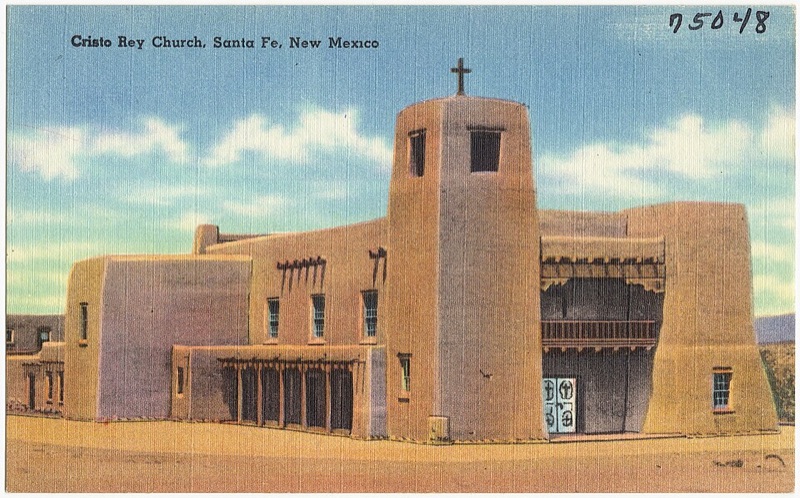
Completed in 1940 to mark the 400th anniversary of Coronado's expedition. The largest adobe church built in the 20th century — parishioners made 200,000 bricks by hand. The 18th-century stone altar screen inside is the finest surviving example of Spanish colonial stonework in the Americas.
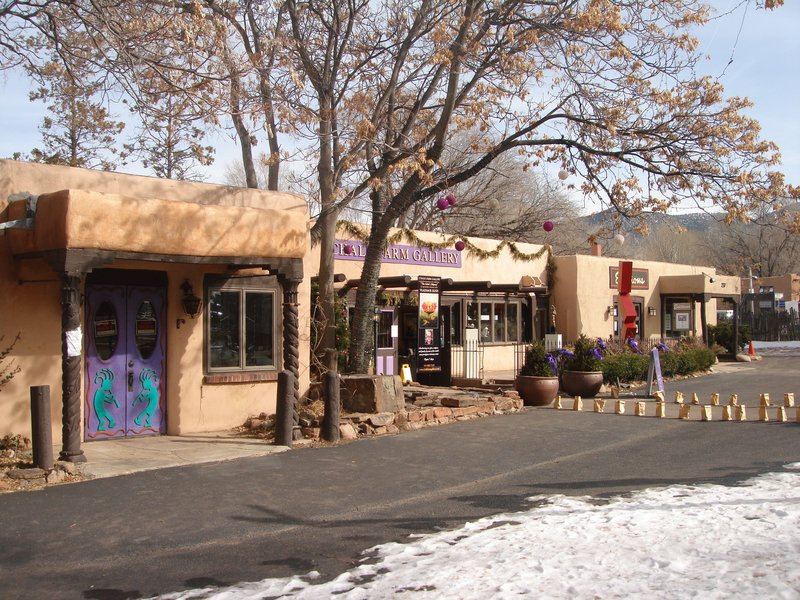
A half-mile stretch lined with more than 80 galleries and studios in historic adobe compounds — one of the most concentrated art markets in the United States. Began as a Pueblo trade route and became the city's bohemian art colony in the 1920s.
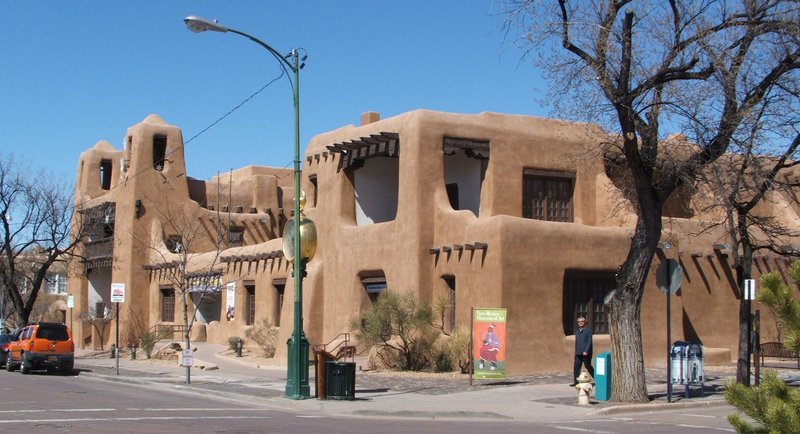
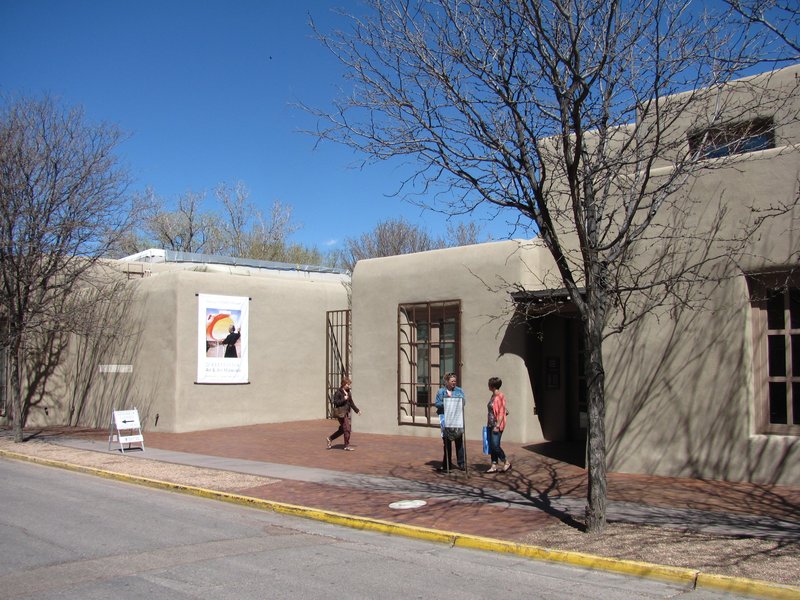
Opened in 1917 in the Pueblo Revival style — one of the first purpose-built art museums in the American Southwest. Permanent and rotating collections spotlight Southwestern modernism and Native American contemporary art.
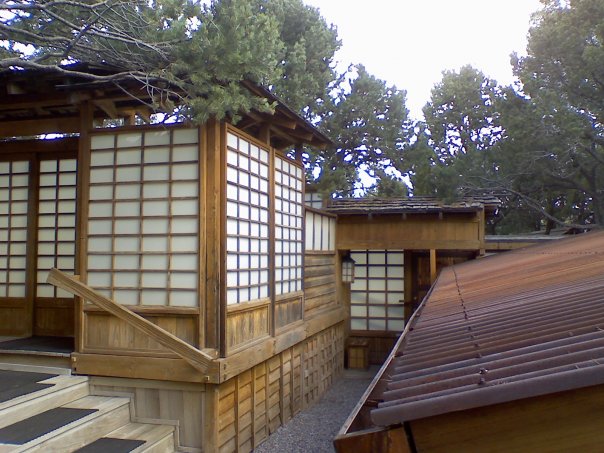
A Japanese-style mountain spa perched in the pinon forest 4 miles above Santa Fe on Hyde Park Road. Private cedar tubs and communal rock pools fed by hot mineral water, with a full menu of massage and body treatments. Reservations required — book well in advance for summer weekends.
From Hotel: 37 min · 8 min → Museum of International Folk Art
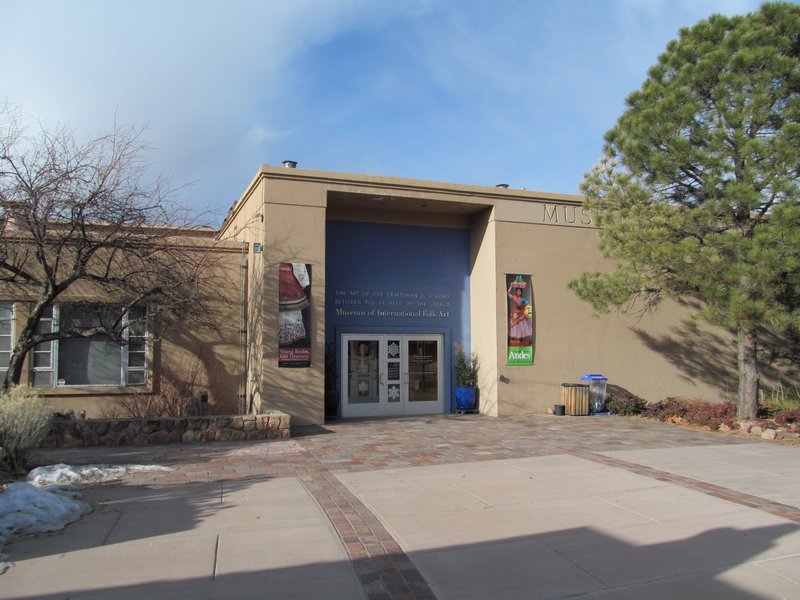
1.Museum of International Folk Art~1 hr
Houses one of the world's largest collections of folk art — over 130,000 objects from more than 100 countries. The Girard Wing hangs 10,000 pieces floor to ceiling in a permanent installation that is itself a work of art. On Museum Hill south of the Plaza.
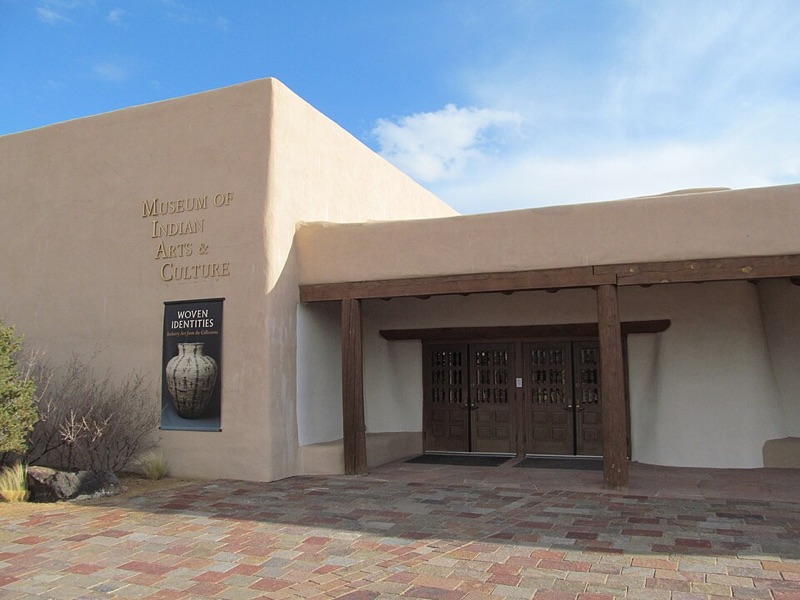
The Southwest's primary repository of Native American art — 75,000+ objects spanning 14,000 years of Pueblo, Navajo, and Apache culture. "Here, Now and Always" was organized by the Native communities themselves, making it as much a cultural document as a museum collection.
7 min · 2 min → Wheelwright Museum of the American Indian
3.Wheelwright Museum of the American Indian~1 hr
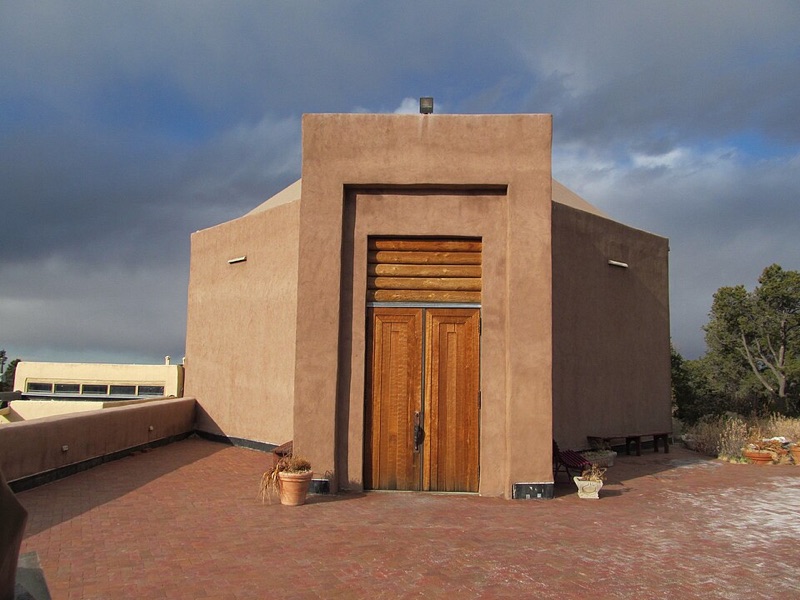
Founded in 1937 as New Mexico's oldest independent museum dedicated solely to Native American art. The eight-sided hogan-shaped building echoes traditional Navajo architecture. Rotating shows draw from a collection of Navajo, Pueblo, and Plains art spanning the 19th century through today.
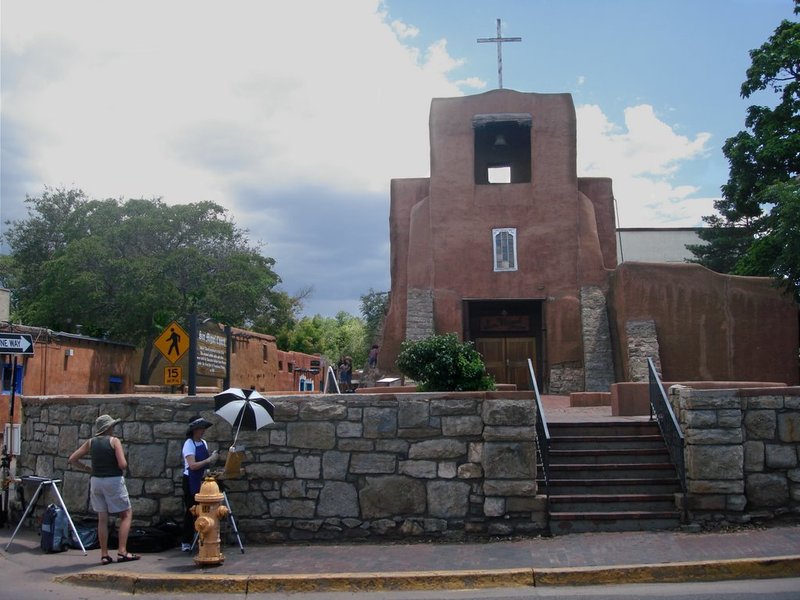
Dating to around 1610, one of the oldest churches still in active use in the United States. Rebuilt after the Pueblo Revolt of 1680. Inside: a Spanish colonial altar screen, an 18th-century buffalo-hide painting, and a 780-pound bell cast in Spain in 1356.
From Hotel: 12 min · 3 min → New Mexico State Capitol
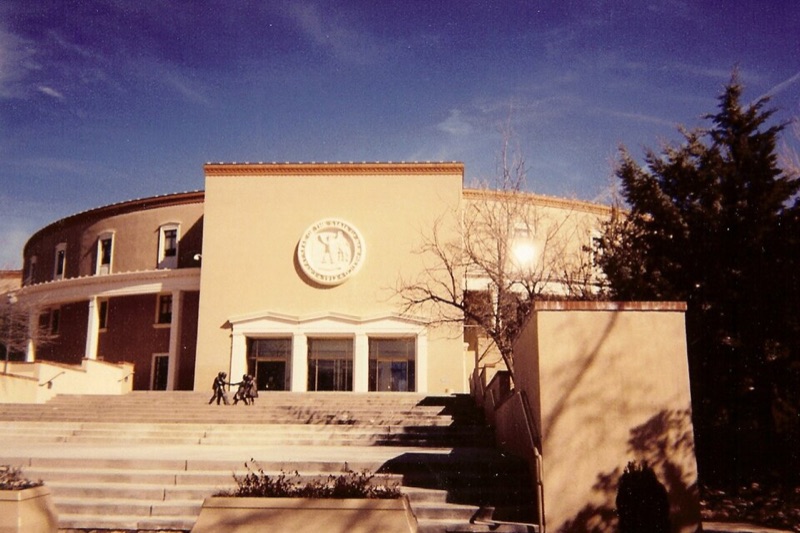
1.New Mexico State Capitol~45 min
The only round capitol building in the country — designed to evoke the Zia Pueblo sun symbol on the state flag. The circular corridors display nearly 600 works by New Mexico artists, including paintings, sculpture, photography, and weaving. The Governor's Gallery hosts rotating exhibitions. Free self-guided tours.
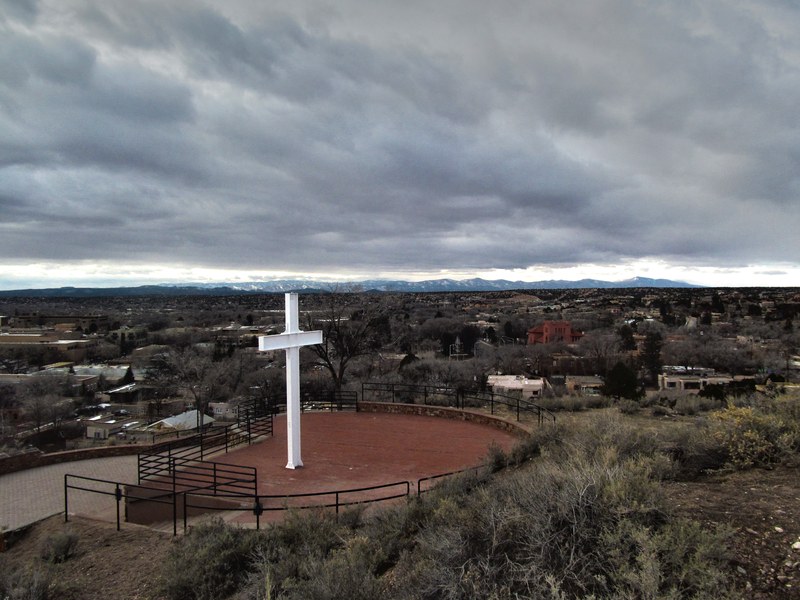
A 21-foot concrete cross at the summit of Fort Marcy Hill commemorating the 21 Franciscan priests killed in the 1680 Pueblo Revolt. A brick walkway winds up from Fort Marcy Park with interpretive plaques on the revolt and its legacy. From the top: views over the city toward the Jemez and Sangre de Cristo mountains.
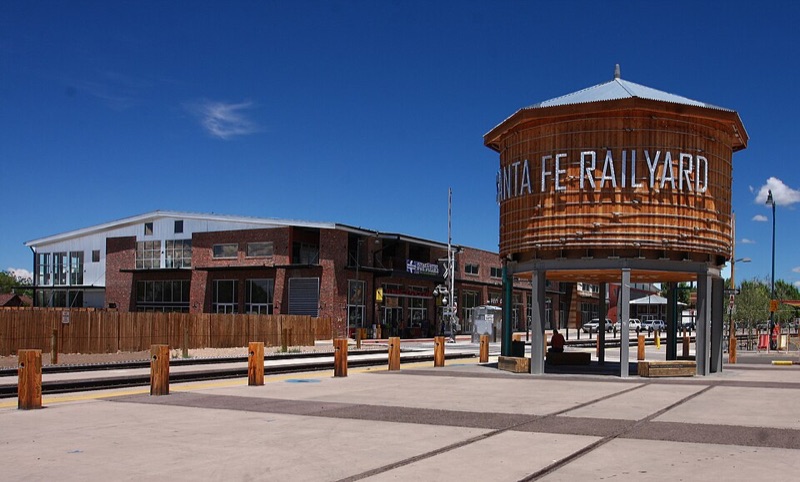
The Southwest's leading contemporary art center, founded in 1995 to mount large-scale international exhibitions. Housed in a converted 1950s warehouse in the Railyard Arts District — the same creative cluster that holds the city's craft breweries and the Saturday farmers market.
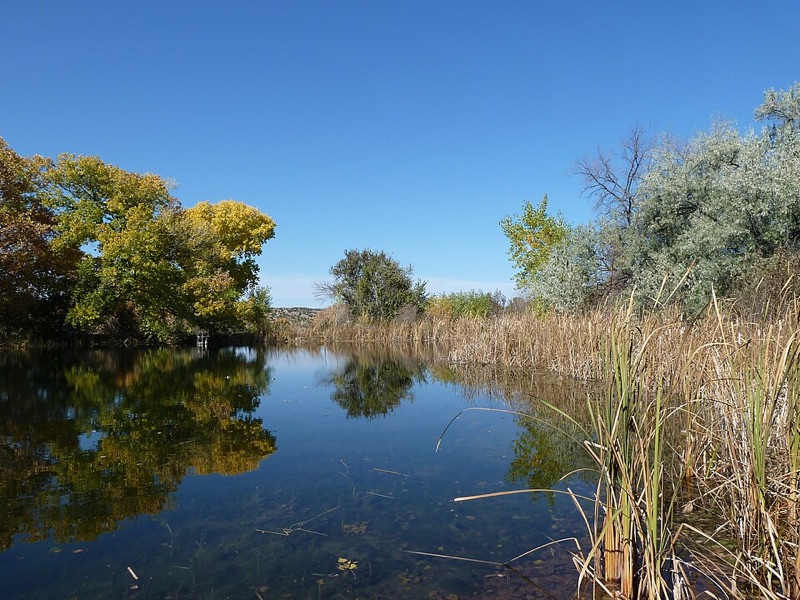
An 8-acre native plant garden on Museum Hill, showcasing species from the Chihuahuan Desert and Colorado Plateau alongside permanent sculptural installations. Designed around a restored acequia — traditional earthen irrigation channels that have carried water through New Mexico since the 17th century.
From Hotel: 4 min · 2 min → IAIA Museum of Contemporary Native Arts
1.IAIA Museum of Contemporary Native Arts~1 hr
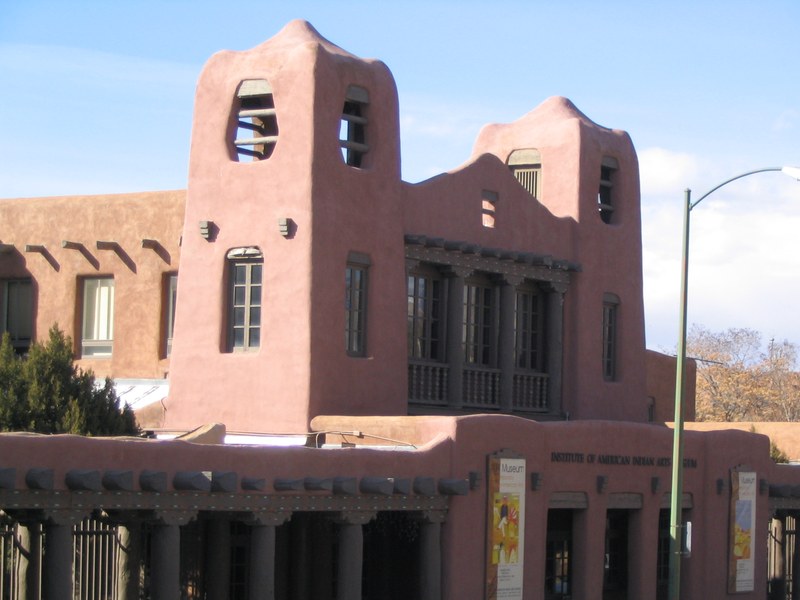
The exhibition venue of the Institute of American Indian Arts — the nation's only accredited four-year college dedicated to Native American arts. A collection of 9,000+ works spans painting, photography, sculpture, film, and textile since the 1960s, anchored in a restored Federal building on the Plaza.
1 min · 2 min → Cathedral Basilica of St. Francis of Assisi
2.Cathedral Basilica of St. Francis of Assisi~30 min
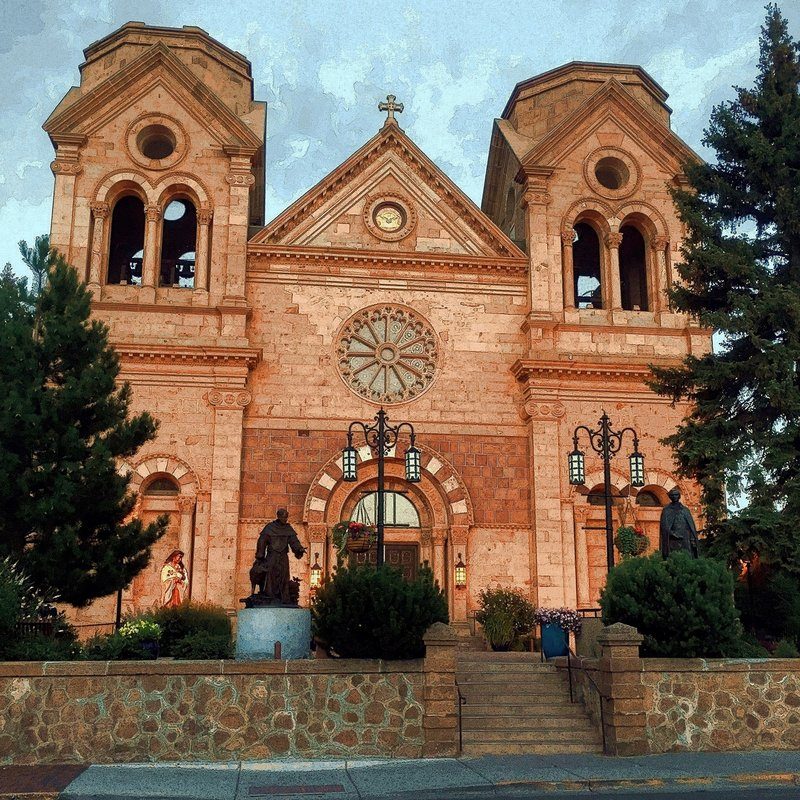
Romanesque Revival basilica commissioned in 1869 by Archbishop Lamy. Golden sandstone facade and twin towers anchor the east side of the city. La Conquistadora chapel inside is the oldest Marian shrine in the United States.
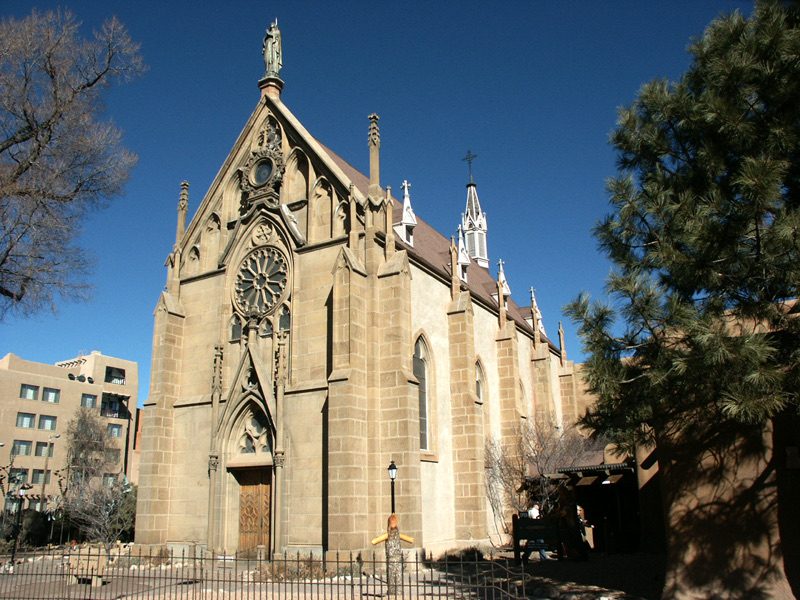
Gothic Revival chapel built 1873–1878 by the Sisters of Loretto, famous for its "Miraculous Staircase" — a 360-degree spiral with no visible center pole, attributed to an anonymous carpenter who appeared and vanished without payment.
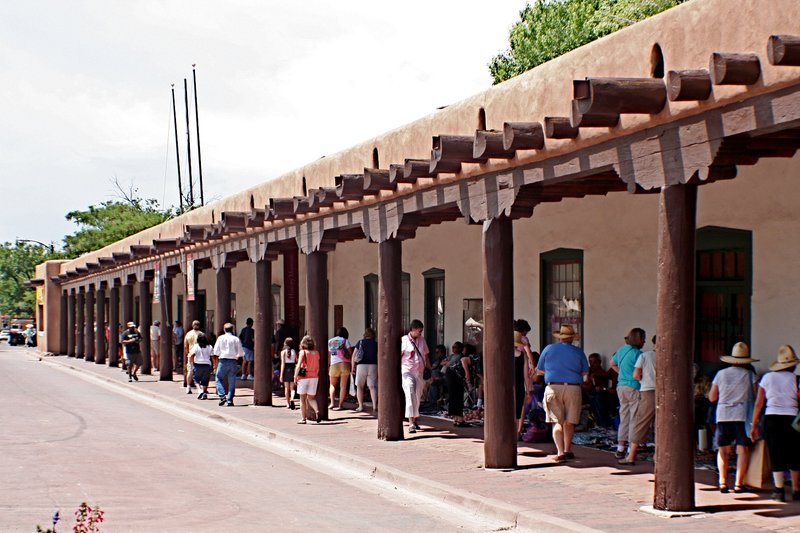
The oldest continuously occupied public building in the United States, built c. 1610 by Spanish colonial governors. The shaded portal outside is lined daily with Native American artists selling handcrafted jewelry and pottery directly.
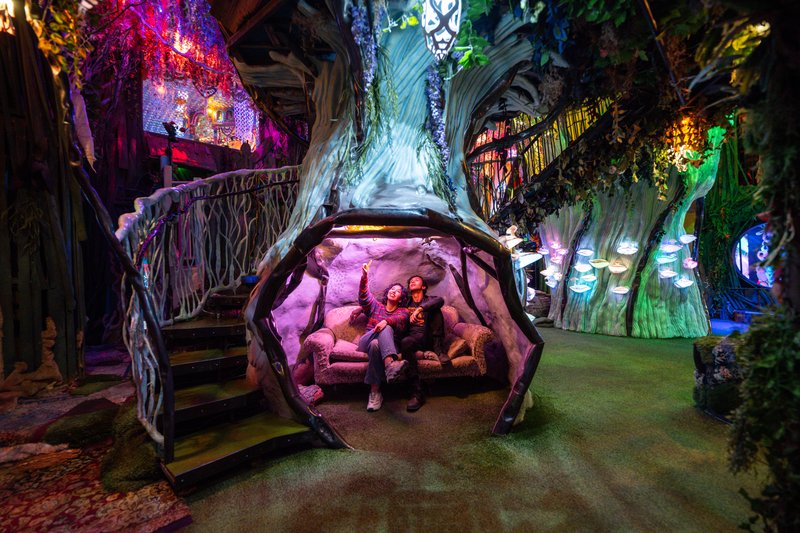
Immersive art installation from the Santa Fe–born artist collective, set inside the House of Eternal Return. Victorian rooms collapse into interdimensional portals and inhabitable sound sculptures. This is the original location where the immersive-art venue format was invented.
The world's largest permanent collection of work by Georgia O'Keeffe — more than 3,000 pieces spanning her entire career. The only US museum dedicated to a female artist during her lifetime, housed in a restored 1917 adobe building.
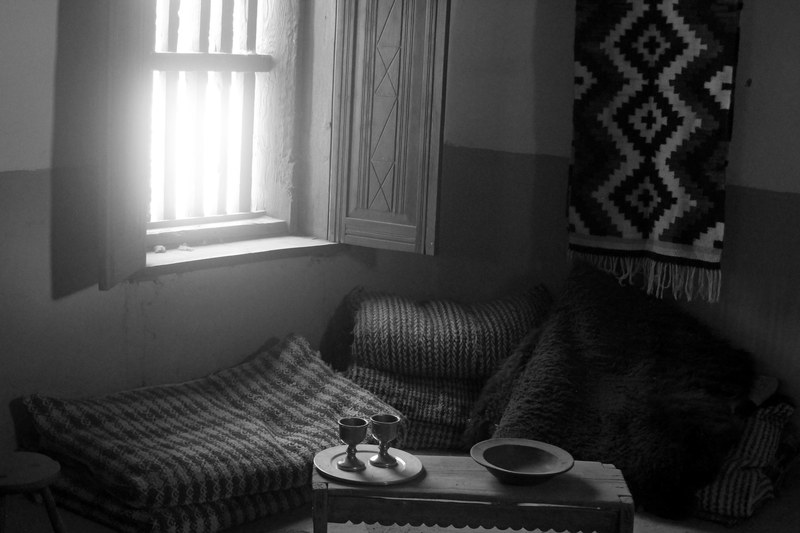
A 200-acre living history museum on the grounds of a Spanish colonial ranch that served as a paraje — a required rest stop — on the Camino Real between Mexico City and the capital. Operating from c. 1710 until the 1930s. Interpreters demonstrate colonial trades: weaving, blacksmithing, milling, and wine pressing.
10:11am Santa Fe Depot → 11:48am Albuquerque Downtown
ARRIVE Albuquerque Downtown: 12 min → Indian Pueblo Cultural Center
1.Indian Pueblo Cultural Center~1 hr
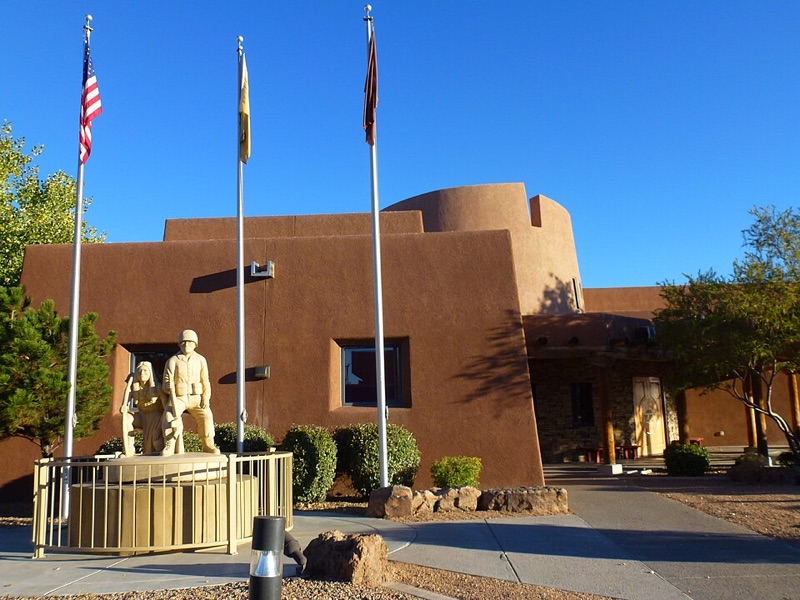
Jointly owned and operated by New Mexico's 19 Pueblos — the only institution in North America hosting traditional Pueblo dances every weekend year-round. The museum traces 2,000+ years of Pueblo history from ancestral origins through the Pueblo Revolt to contemporary life, told from within the communities themselves.
The city's founding plaza, laid out in 1706 by Spanish colonists following the Law of the Indies. San Felipe de Neri Church anchors the north end of the square — still an active parish. The surrounding adobe blocks hold galleries, turquoise jewelry shops, and the Albuquerque Museum on the east side of the plaza.
Walking history tour by Ana Pacheco, City Historian 2015–2017 and author of eight books on the city. Covers the Manhattan Project, Canyon Road, Loretto Chapel, San Miguel Mission, Pueblos, and the Civil War in New Mexico.
High-energy tour by Victor Romero, whose family roots in northern New Mexico predate the Spanish arrival 400 years ago. Storytelling on culture, architecture, and Native and Spanish history.
Two-mile walk through the historic eastside exploring Pueblo, Spanish Territorial, and Northern New Mexico architecture. Includes access to interior courtyard spaces. Runs Thursday through Saturday.
Small-group walk through one of the world's most vibrant art districts. Five to six gallery stops including a historic site, with guided discussions on the evolution from Native traditions to contemporary works.
Scenic train ride aboard restored passenger cars across the high desert to panoramic views over the Galisteo Basin. Includes a champagne welcome and live entertainment onboard.
New Mexico's signature ingredient — Hatch green chile roasted and sauced onto everything from burgers to enchiladas. Ask for "Christmas" to get both red and green chile on the same plate.
Foreign number: not accepted. — a US mobile number is required to complete sign-up, and the verification code is texted only to a US number.
The deepest list in Santa Fe — the Plaza, Guadalupe District and Cerrillos Road kitchens are all on it, with delivery to the east-side inns in 30–40 minutes — but only readers with a US SIM can open an account. Fees stack up on small orders; DashPass pays off only if you order more than twice.
Foreign number: accepted. — it runs on the same Uber account, so the code comes by SMS to any international number, with a voice call as the fallback.
The practical choice for a visitor without a US number — it runs on the Uber account you already have, and its Santa Fe list covers the downtown New Mexican kitchens and the Cerrillos Road chains. Couriers are few after 9pm and orders to the Museum Hill and foothill hotels can sit unclaimed.
Foreign number: not accepted. — Grubhub's own policy is US numbers only, and the verification code is texted only to a US number.
Worth a look for the handful of pizza and sushi counters that list only here, and its Grubhub+ trial waives delivery fees for a first visit. Unusable without a US number, and its driver pool in Santa Fe is the thinnest of the three, so evening orders run slow.
Foreign number: accepted. — the code comes by SMS to any international number, and "Call me with code" reads it out if the SMS is blocked.
Reliable around the Plaza, Canyon Road and Museum Hill, where a car arrives in five minutes or so, and the only app that reaches Ten Thousand Waves and Bishop's Lodge without a long wait. The pool is small — a dozen cars on a quiet evening — so book the return from Meow Wolf before you go in.
Foreign number: not accepted. — Lyft's own help says the number must be a US, Canadian or Puerto Rican one, and the code is texted only to that number.
Thinner than Uber in Santa Fe, with most drivers working the Plaza-to-Railyard core and the Cerrillos Road hotels, so it is a backup for when Uber shows nothing rather than a first call. Waits out at Las Golondrinas run long, and it cannot be registered without a North American number.
Every painter who came to New Mexico eventually said the same thing: the light here is unlike anywhere else. At 7,000 feet elevation, the afternoon sun hits adobe walls and cuts shadows so sharp they look painted on. Georgia O'Keeffe noticed it in the 1930s. Ansel Adams brought his camera. The Taos Society of Artists built an entire movement around it.
What makes this city worth slowing down for is that the light is still doing the same thing. The Portal artists at the Palace of the Governors set up before 10am because the angle matters. Canyon Road's adobe compounds are oriented to catch it. Even Meow Wolf's founders — a collective of local artists who could barely afford rent — chose this city because the creative community was already here, drawn by a quality of place that hasn't changed since the Pueblo people built these streets a thousand years ago.