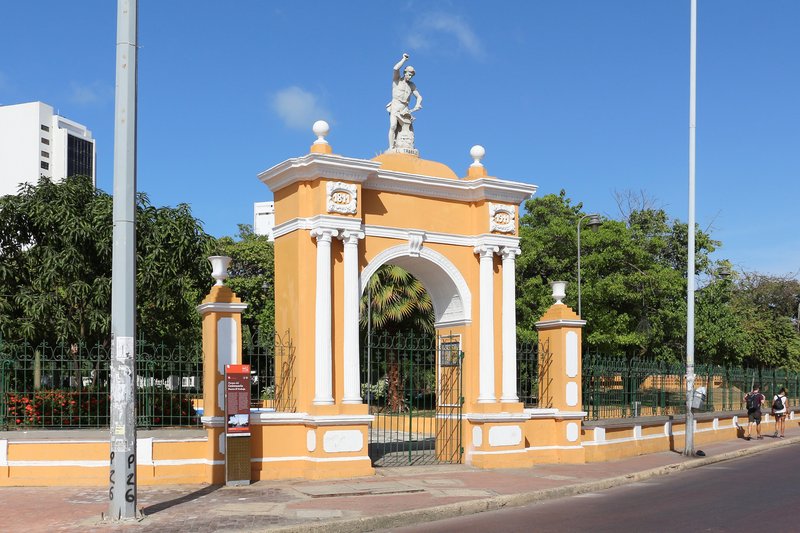
A leafy colonial-era park just outside the old walls where dozens of green iguanas roam freely through the benches and palms, locals play chess in the shade, and street vendors sell cold coconut water — a genuine local gathering spot.
The main departure pier for day trips to the Islas del Rosario and Playa Blanca — shared lanchas leave from here from 8:00am and return by late afternoon, with tickets including stops at the oceanario and Playa Blanca.
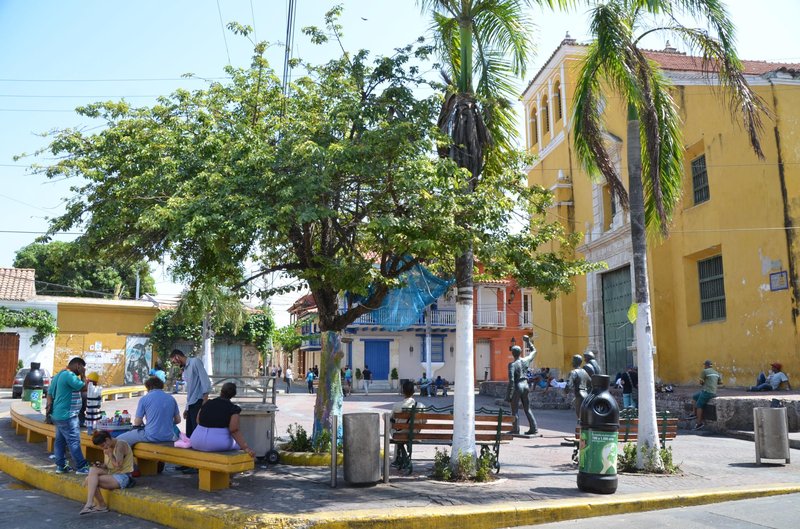
The social heart of Getsemaní — a laid-back colonial square fronting the 18th-century Trinidad church, where locals pull out rocking chairs in the evening and vendors serve fresh juice and patacones.
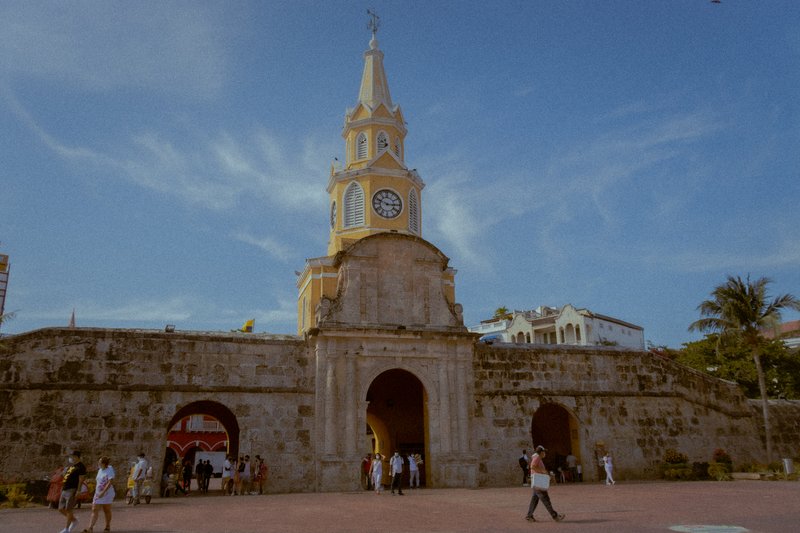
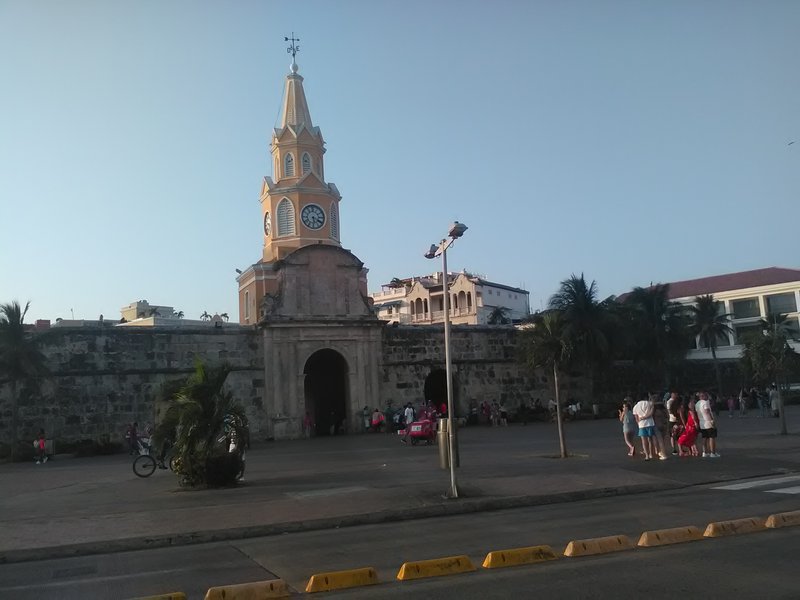
The 18th-century clock-tower gate that marks the ceremonial entrance to Cartagena's walled city, its four arched passages opening onto Avenida Venezuela and the main plaza at the edge of the historic centre.
From Hotel: 25 min · 10 min → Palacio de la Inquisición
1.Palacio de la Inquisición~1 hr
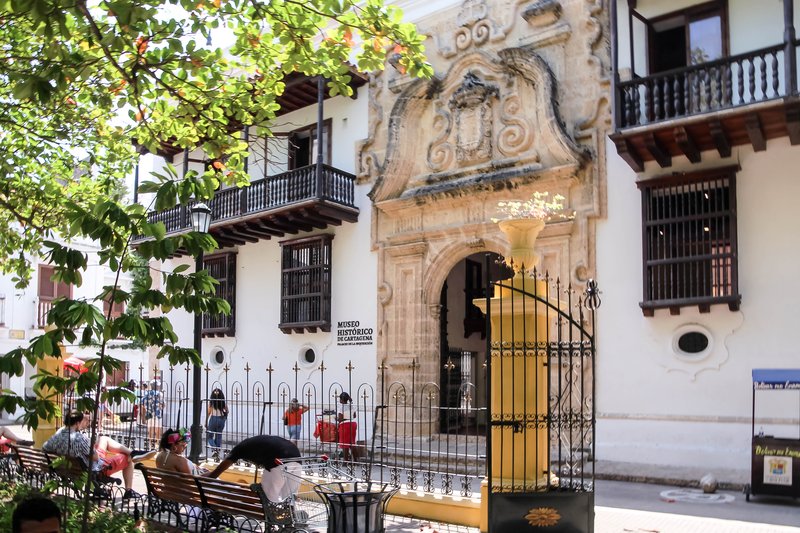
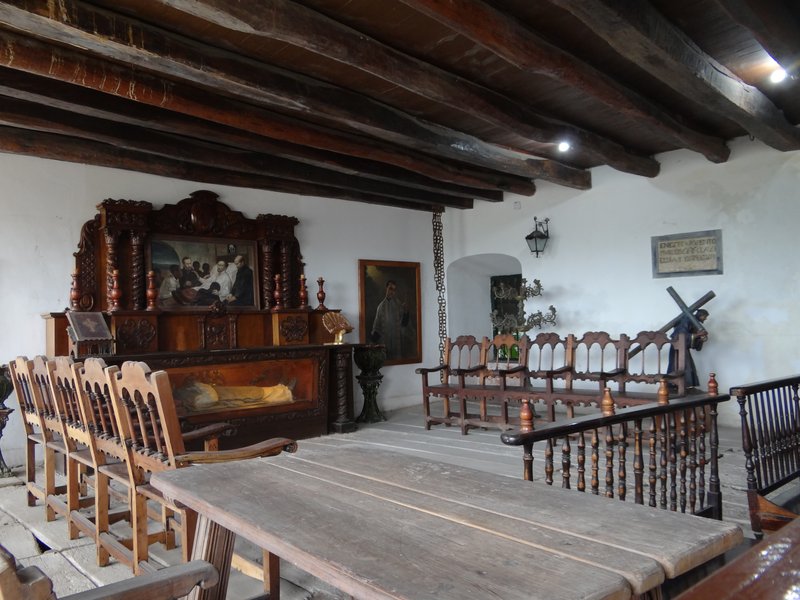
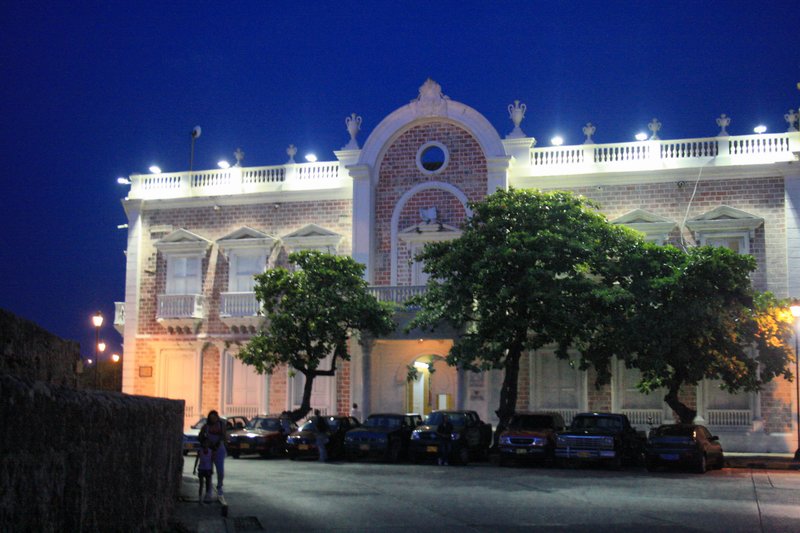
A baroque colonial palace on Plaza de Bolívar that served as the seat of the Holy Office of the Inquisition, now a museum covering colonial history with original instruments and period artifacts.
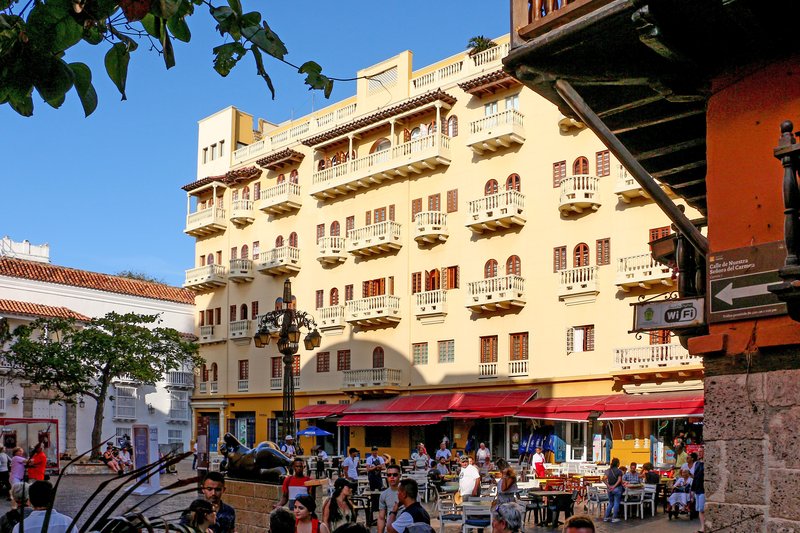
Cartagena's most atmospheric colonial square — an irregular plaza anchored by the 1539 Iglesia de Santo Domingo, the city's oldest church, and Fernando Botero's bronze "La Gorda" sculpture, ringed by terrace restaurants and colonial façades.
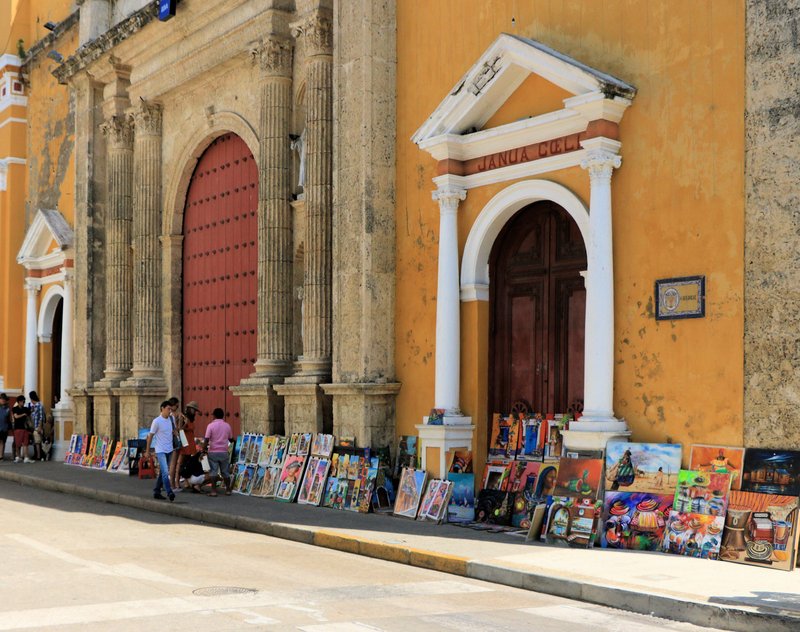
Cartagena's principal Roman Catholic cathedral, begun in 1575 and rebuilt after Francis Drake's cannon bombardment, its terracotta-and-white façade sitting at the heart of the walled city on Plaza de la Proclamación.
A colonial-era Jesuit convent and church dedicated to Peter Claver — the Jesuit priest who ministered to enslaved Africans brought to the port — with a peaceful three-story courtyard and a museum of religious art.
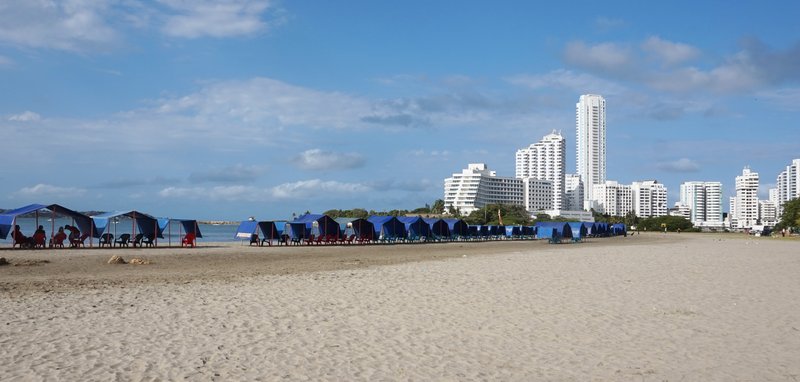
Cartagena's main urban beach — a broad golden-sand strip lining the Bocagrande peninsula, backed by hotels and open for swimming, with vendors offering fresh fruit and limonada de coco along the shore.
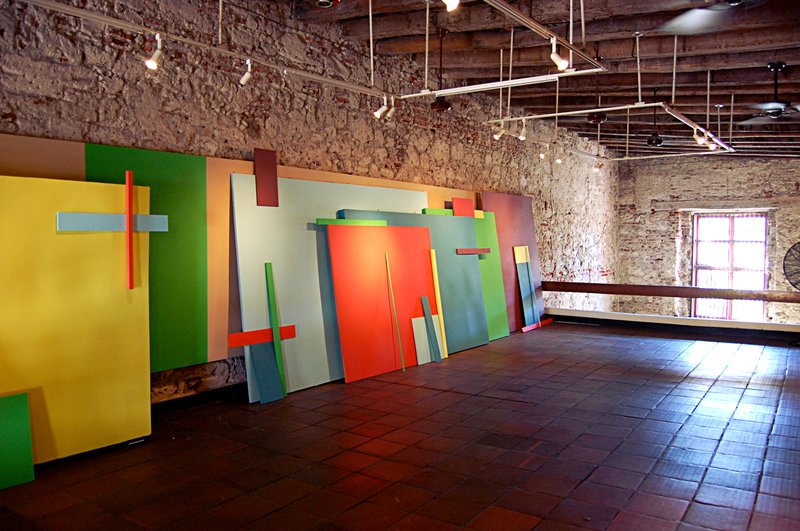
A restored 1912 rum warehouse on the old city waterfront now serving as Cartagena's principal modern art museum — five galleries of Colombian and Caribbean art from the 20th and 21st centuries, with rotating international exhibitions.
The vibrant historic neighborhood outside the walls, celebrated for its colorful street murals, authentic local culture, and community-run plazas — now one of the most-photographed neighborhoods in South America.
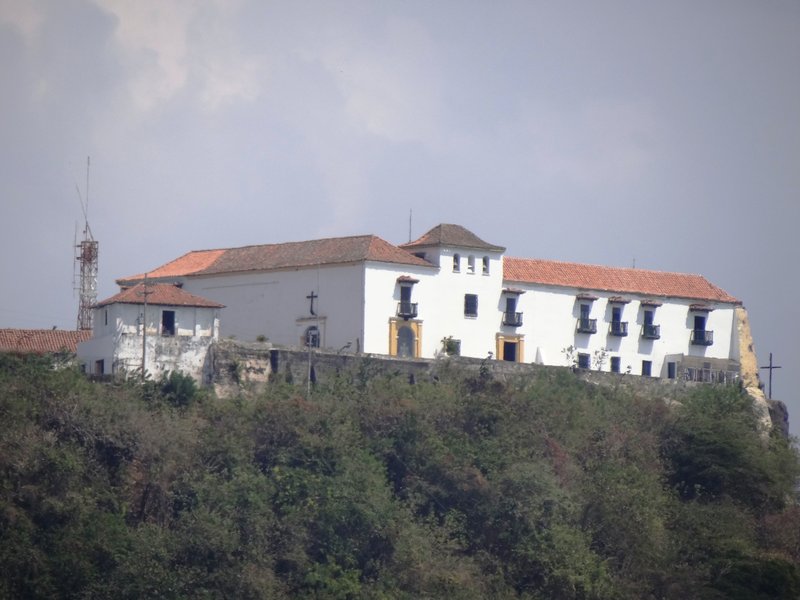
A hilltop Augustinian convent at 150 metres offering the best panoramic views in Cartagena, reached by taxi up a winding road past a military checkpoint, with the city, bay, and islands all spread out below.
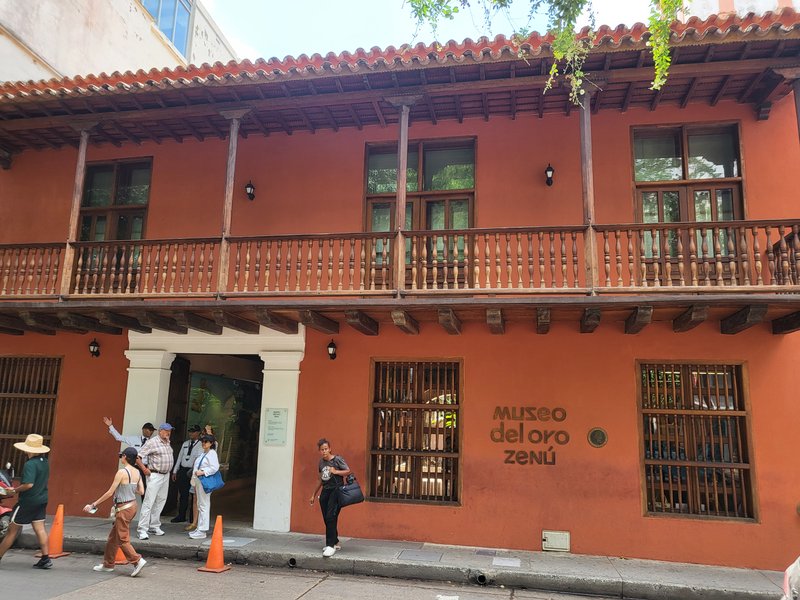
The Banco de la República's gold museum in Cartagena showcasing pre-Columbian goldwork and ceramics of the Zenú people, including intricate filigree work and cast figures, with free admission.
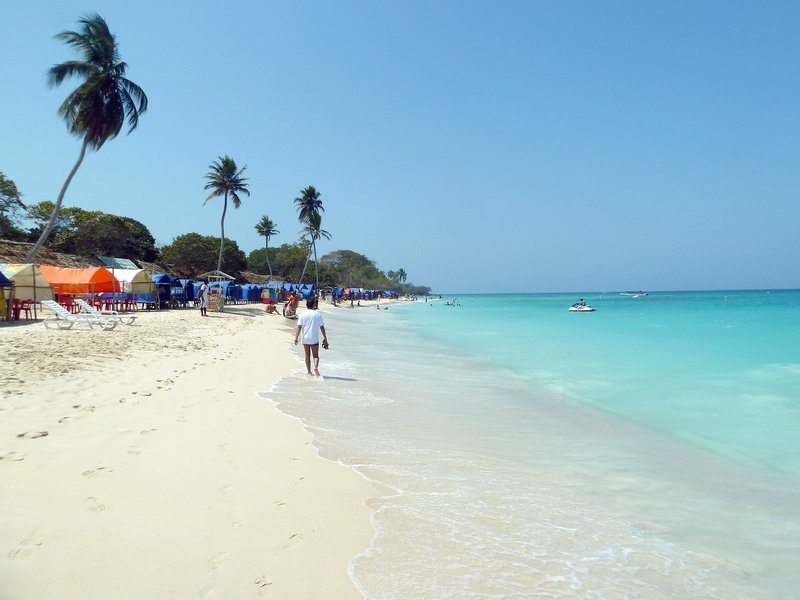
One of the finest beaches in Colombia — a long stretch of white powder sand lining Isla Barú, with turquoise water shallow enough for wading and wooden palapas offering coconut cocktails and freshly grilled fish.
A coral-reef aquarium built on stilts in the Caribbean waters of the Rosario archipelago, home to nurse sharks, rays, moray eels, and sea turtles — the only marine aquarium of its kind on Colombia's Caribbean coast.
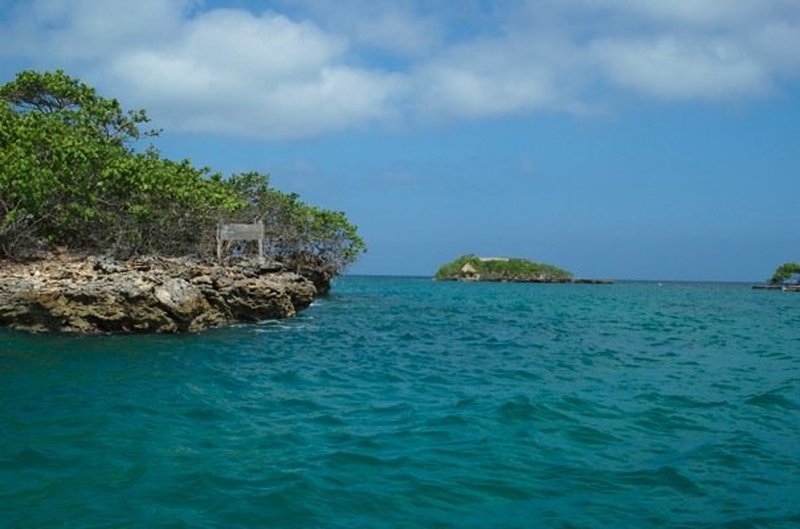
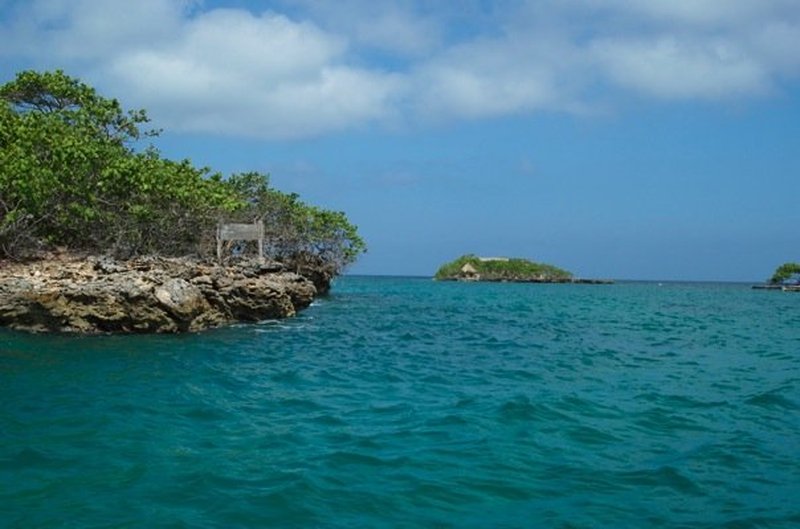
A small, largely undeveloped island in the Rosario archipelago with clear snorkeling water directly off its beach, a handful of beachfront restaurants, and the kind of quiet that disappears by noon — the lancha back to Cartagena departs from here.
From Hotel: 22 min · 9 min → Castillo San Felipe de Barajas
1.Castillo San Felipe de Barajas~2 hr
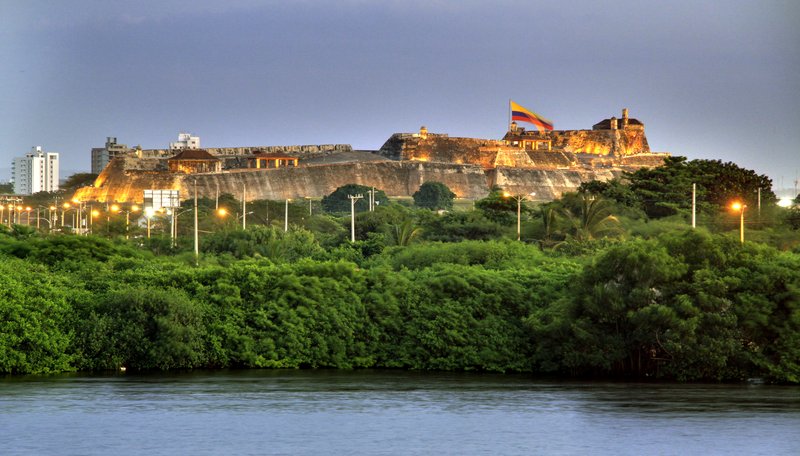
A massive 16th-century Spanish fortress atop San Lázaro hill, famed for its labyrinthine underground tunnels and commanding views over Cartagena Bay — the largest Spanish fortification ever built in the Americas.
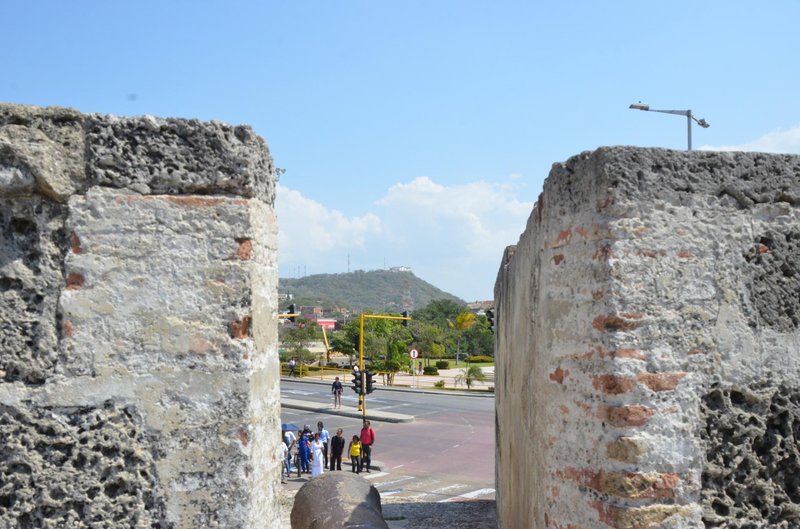
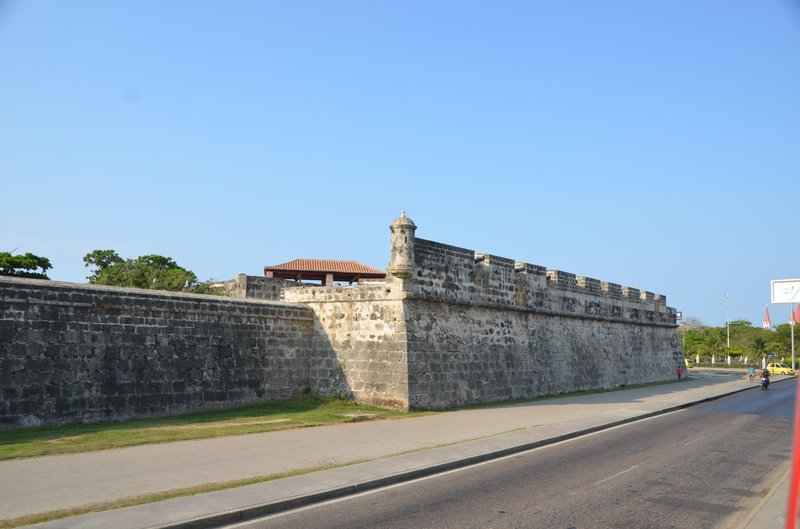
The historic coral-stone ramparts encircling Cartagena's old city, built over nearly two centuries to defend against pirates and rival empires — walk the broad top of the walls for panoramic harbor views.
A 17th-century Mercedarian convent in the heart of the old city — now the University of Cartagena's auditorium — with one of the finest colonial courtyards in the Caribbean: two-storey arcaded galleries, a central garden, and consistently uncrowded in the morning.
15 min · 5 min → Castillo San Sebastián del Pastelillo
4.Castillo San Sebastián del Pastelillo~45 min
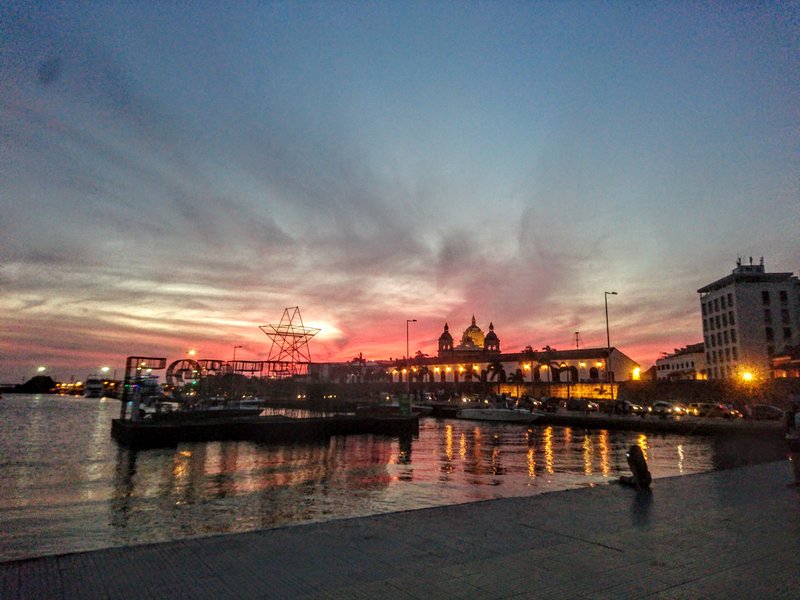
A compact 17th-century fort on the tip of Manga island, facing the walled city across the inner bay — the exterior walls and waterfront terrace offer one of the best angles on the city skyline and Las Bóvedas from across the water.
A sheltered cove beach at the northern tip of Bocagrande — calmer water than the main Bocagrande beach, fewer vendors, and a genuinely local morning atmosphere with Cartagena families, joggers, and fishing boats launching from the shoreline.
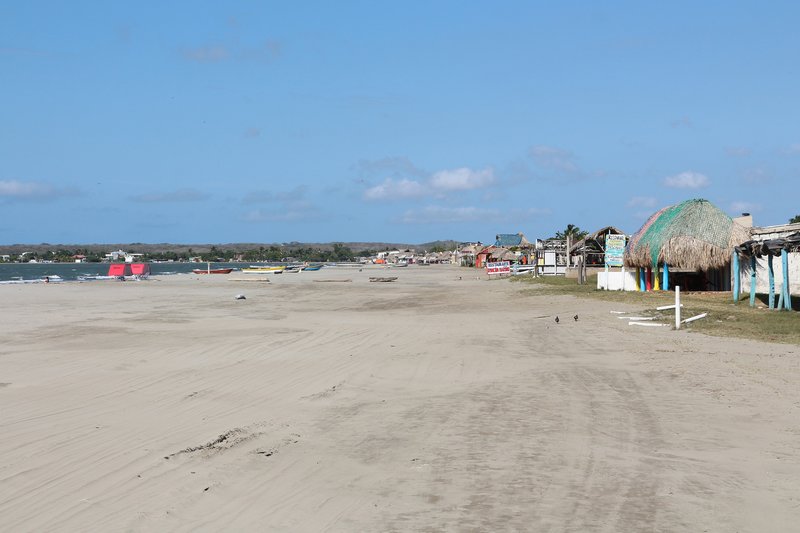
A traditional Afro-Colombian fishing village where the Caribbean Sea meets the Ciénaga de la Virgen lagoon — local families offer short dugout-canoe paddles through the mangrove channels, and the wide oceanfront beach stretches north without resort development.
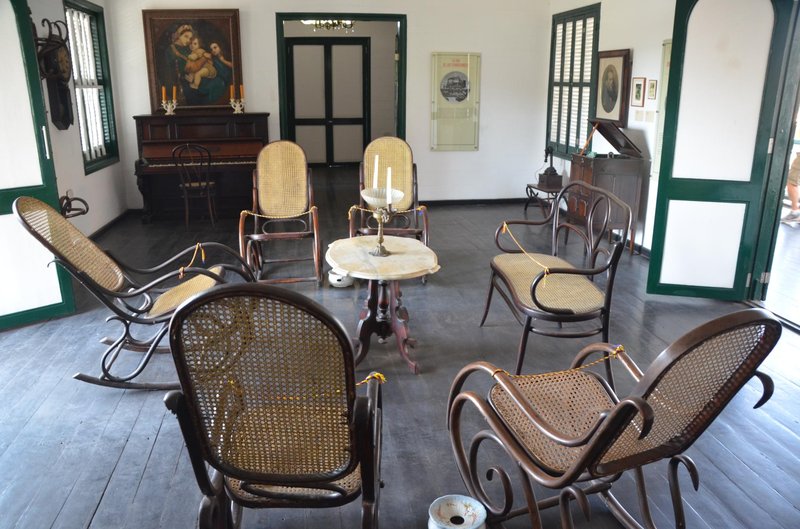
The preserved Caribbean-style wooden home of Rafael Núñez — Colombia's four-time president and author of its national anthem — now a small museum in the El Cabrero neighborhood, just a short walk from the old city walls.
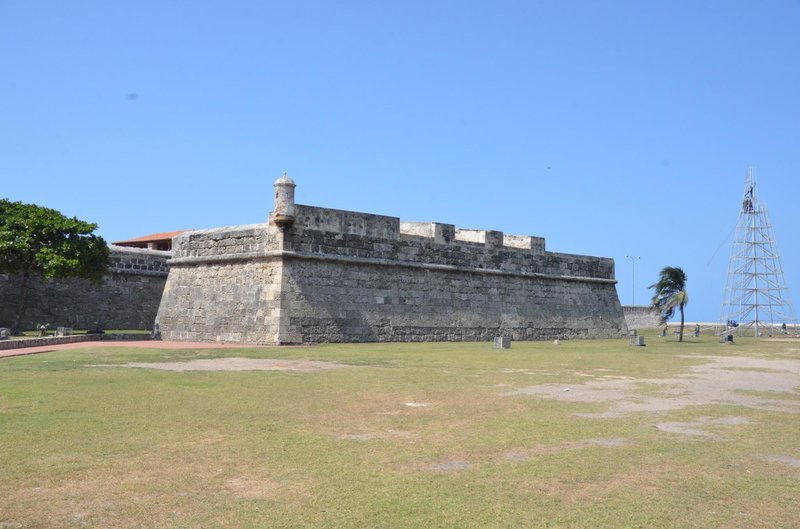
A 17th-century corner bastion built into the old city wall facing the Caribbean — one of the quieter sections of Las Murallas, with open-sea views, a shaded parapet walkway, and a natural end point for a last stroll along the walls before leaving Cartagena.
2.5-hour walking tour of the walled city: Castillo San Felipe, Palacio de la Inquisición, Catedral Basílica, and the inner plazas; small groups with a local guide.
Evening walking tour of Getsemaní and the walled city; 8–10 local food stops including arepas, patacones, and Caribbean fruit; ends at a local bar with a welcome cocktail.
3-hour private walking tour of the walled city and Getsemaní; custom itinerary, photography stops at the colourful buildings, and insider context on Colombia's Caribbean history.
Day trip by lancha from Cartagena to five Rosario Islands highlights — coral reef snorkeling, the Oceanario aquarium, Playa Blanca beach time, beach club access, and a grilled fish lunch included.
A modern specialty coffee bar in Bocagrande serving Colombian single-origin espresso drinks, cold brew, and fresh avocado toast — one of the few genuinely third-wave cafés in the neighbourhood.
A rooftop bar and café set on the top of the old city wall facing the Caribbean — espresso drinks and tropical cocktails served with a full view of the sea; arrive before sunset for the best light.
An upscale Colombian kitchen from the Rausch brothers — ceviches, grilled meats, arroz con coco, and craft cocktails with sea views on the Bocagrande strip.
A legendary Cartagena dining room with live bolero and vallenato — arroz con coco, sancocho, and Colombian stews in a colonial house unchanged in forty years.
Contemporary Colombian kitchen at Hotel Charleston Santa Teresa — modern technique, craft cocktails, and a colonial-house setting on Plaza Santa Teresa.
Cartagena's definitive dish — a rich Caribbean seafood stew with shrimp, clams, squid, and fish cooked with coconut milk and a sofrito of tomato, onion, and ají dulce. Served in a clay pot at nearly every traditional restaurant.
Toasted coconut rice — the essential Caribbean side dish of the Colombian coast, with a subtle sweetness from the coconut cream that caramelises in the pan. Served alongside grilled fish and cazuela at virtually every coastal restaurant.
Green plantains sliced, smashed flat, and twice-fried until golden and crisp — the Caribbean equivalent of a chip, eaten salted as a snack or as a base for shredded chicken, hogao, and ají picante throughout the old city and Getsemaní.
A blended lemonade made with fresh lime juice, condensed milk, ice, and young coconut flesh — the signature refreshment of Cartagena's beach vendors and open-air bars, best ordered at the Bocagrande beachfront stalls in the afternoon.
A thick chicken stew with yuca, potato, corn, and cilantro — the Colombian coastal comfort dish eaten for Sunday lunch; the correct accompaniment is white rice and a wedge of lime squeezed at the table.
Foreign number: accepted. — the Rappi app accepts international numbers at signup; SMS verification code arrives on US, Canadian, and European numbers without issue.
The dominant food delivery platform in Colombia; coverage across Bocagrande, Centro Histórico, and Getsemaní is strong with delivery times of 30–50 minutes; selection includes local restaurants, Éxito and Carulla supermarkets, and pharmacy delivery in one app.
Foreign number: accepted. — OTP verification arrives reliably; connect the same account used elsewhere; no Colombia-specific signup required.
Narrower restaurant selection than Rappi in Cartagena but often faster delivery in Bocagrande; strong coverage of chain restaurants and hotel-district cafés; reliable for late-night orders when local kitchens are closed.
Foreign number: accepted. — OTP arrives reliably on US, Canadian, and European numbers; use the same account as at home with no additional setup required.
Reliable across Bocagrande, Getsemaní, and the walled city; surge pricing applies during carnival week in February and during cruise-ship days when demand spikes at the port gate; drivers navigate the narrow old-city streets well.
Foreign number: accepted. — international country-code selector at signup; SMS OTP arrives on foreign numbers; download and register before arrival to save time.
Consistently cheaper than Uber for longer trips to Convento de la Popa, La Boquilla, and Casa Rafael Núñez; the bidding model lets you propose a fare and the driver accepts or counters — typically 20–30% below Uber's quoted price on the same route.
Pay in pesos — USD is technically accepted but always costs you more
The Colombian peso — COP — is the only currency that gets you market-rate prices in Cartagena. Street vendors, taxi drivers, and smaller restaurants routinely quote in USD for tourists but apply a 15–25% conversion premium. Withdraw COP at any Bancolombia or Davivienda ATM — both reliably accept foreign cards and charge lower fees than hotel exchanges. Visa and Mastercard work broadly; American Express is hit-or-miss outside luxury hotels.
The walled city and Bocagrande are safe to walk during the day. After dark, Getsemaní is lively on the Plaza de la Trinidad but quieter side streets warrant the same caution you'd give any Latin American city at night — keep valuables out of sight and take Uber rather than walking across the moat. The US State Department rates Colombia Level 2 — Exercise Increased Caution.
The city's main international airport, Rafael Núñez — airport code CTG — is 15 minutes from Bocagrande by Uber — close enough that early departures are low stress. Taxis from outside the terminal are unmetered; agree the fare before you get in or use Uber from the arrivals hall to avoid the negotiation entirely.