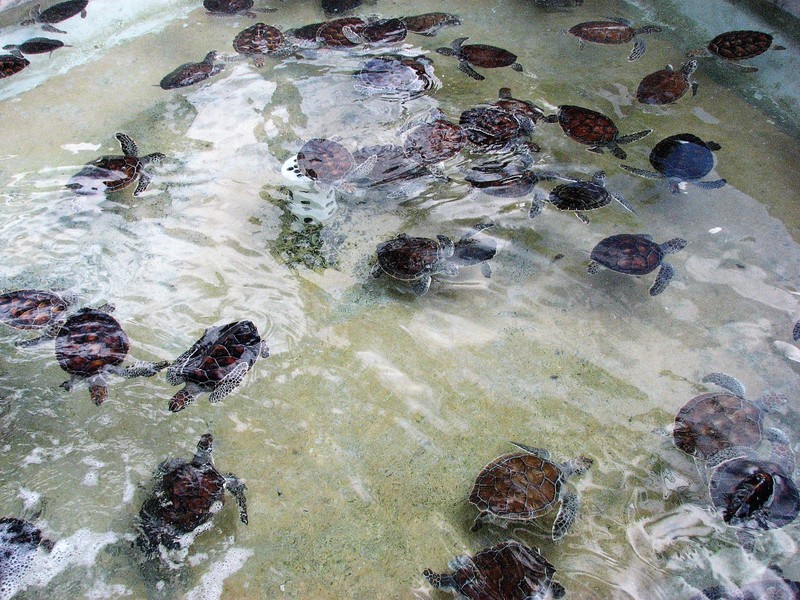
Conservation facility breeding green sea turtles since 1968. Visitors snorkel with dozens of turtles in the Turtle Lagoon, feed them in open pools and explore Predator Reef, a butterfly house and a Caribbean free-flight aviary.
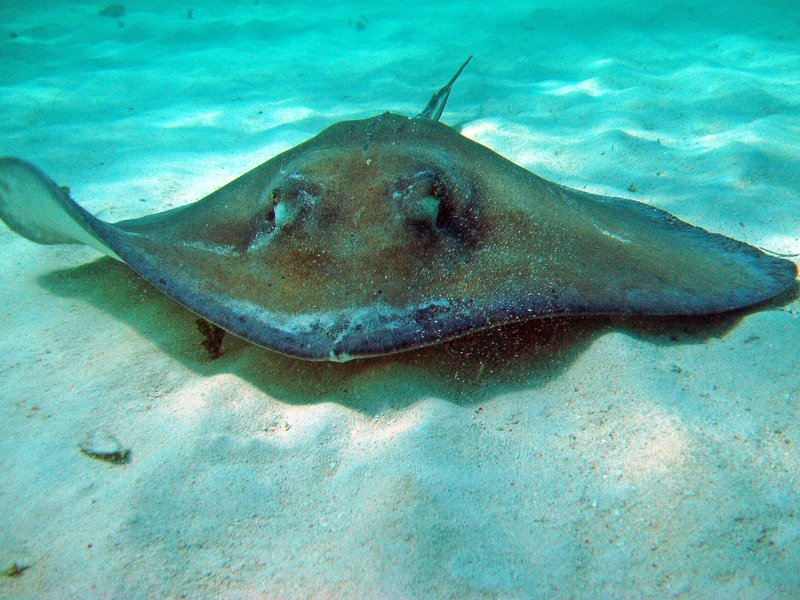
A sandbar in the North Sound where 160+ tagged southern stingrays congregate daily. Waist-deep water lets visitors stand, feed and touch the animals. Accessible only by boat — tours include two coral reef snorkel stops.
From Hotel: 30 min → Queen Elizabeth II Botanic Park
1.Queen Elizabeth II Botanic Park~1 hr 30 min
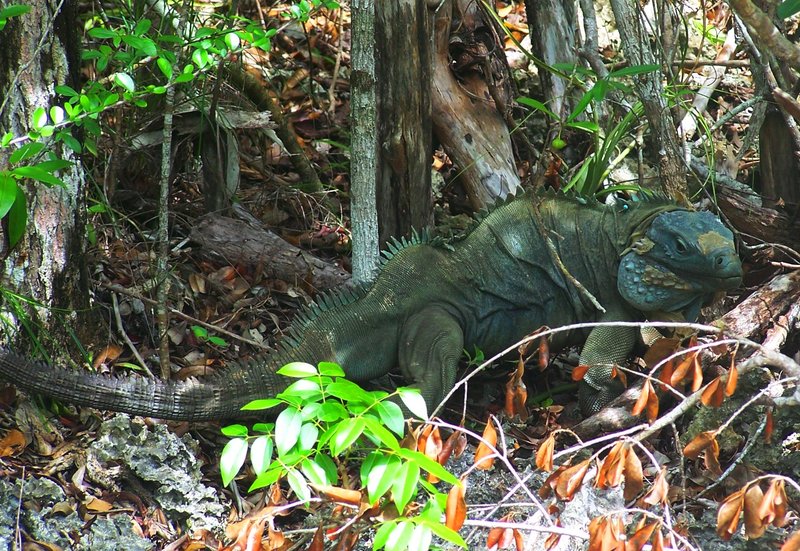
A 65-acre national park protecting Grand Cayman's rarest wildlife. The Blue Iguana Recovery Programme breeds Cyclura lewisi — fewer than 500 survive in the wild — for release. The Orchid Boardwalk shows four endemic orchid species including the Wild Banana Orchid, Cayman's national flower.
Three caverns on Grand Cayman's north coast, opened 2016 and voted a TripAdvisor Top 5 Attraction in the World. Guided tours move through tropical forest into cave chambers where stalactite and stalagmite crystal formations — some millions of years old — hang above a still underground lake.
From Hotel: 15 min → Cayman Islands National Museum
1.Cayman Islands National Museum~1.5 hr
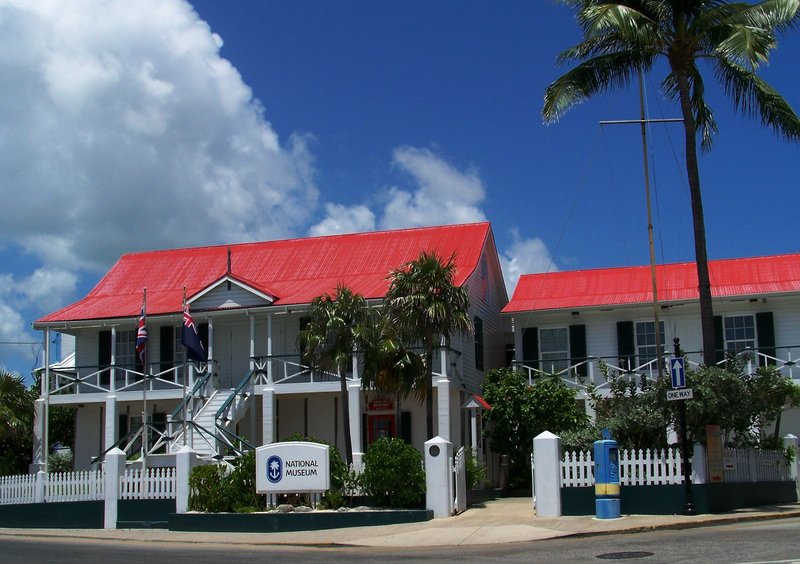
Housed in the restored Old Courts Building on Harbour Drive, the Cayman Islands National Museum opened in 1990. Its permanent collection covers the natural environment, maritime history, and social development of the islands, with exhibits on shipwrecks, reef ecosystems, and traditional Caymanian life.
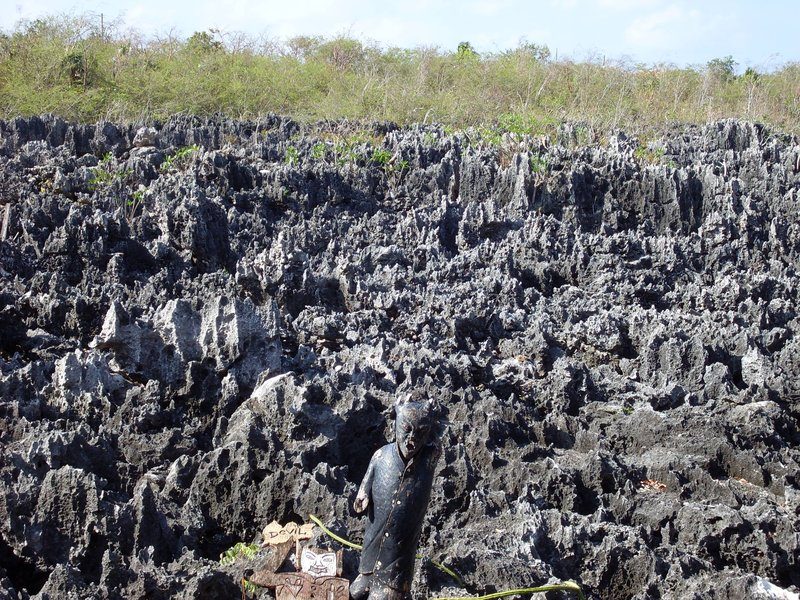
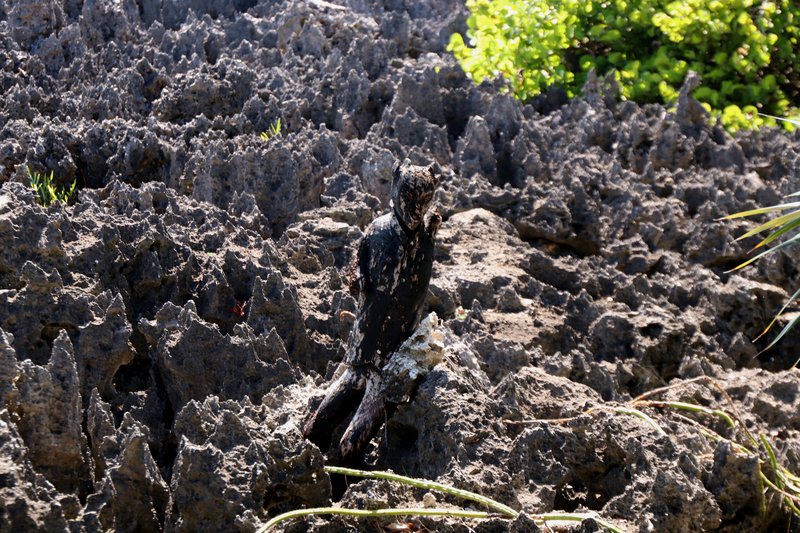
Hell is a small area in West Bay consisting of a half-acre of jagged, black ironshore limestone formations. The formations were named for their appearance in the 1930s. A government post office on site allows visitors to have mail postmarked "Hell, Grand Cayman."
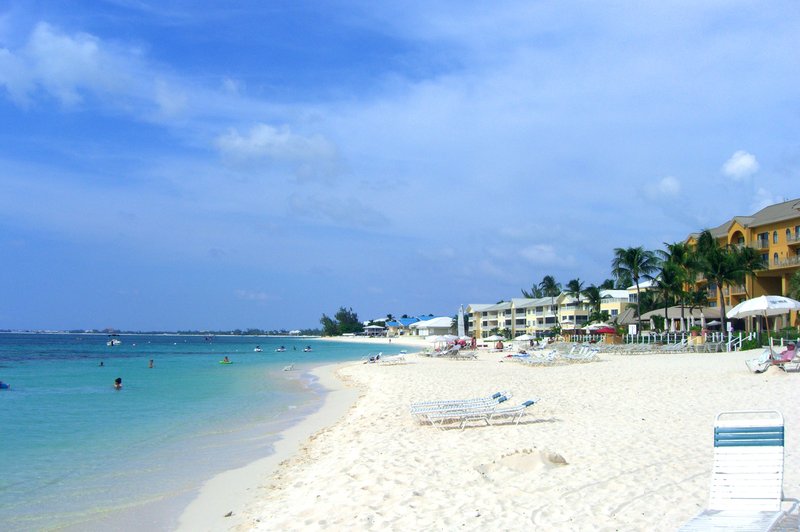
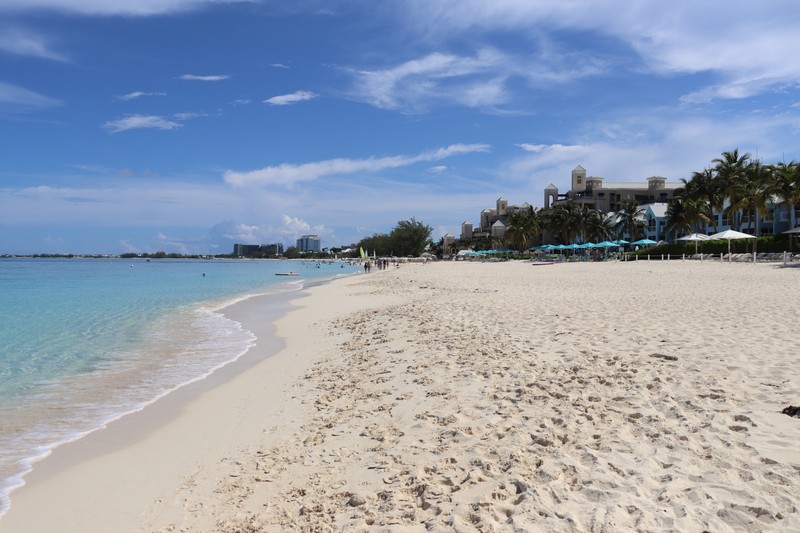
Seven Mile Beach runs for approximately 5.5 miles along the western coast of Grand Cayman — shorter than its name suggests. The beach has calm, clear water due to an offshore barrier reef that reduces wave action. The hotel sits on this stretch of shore.
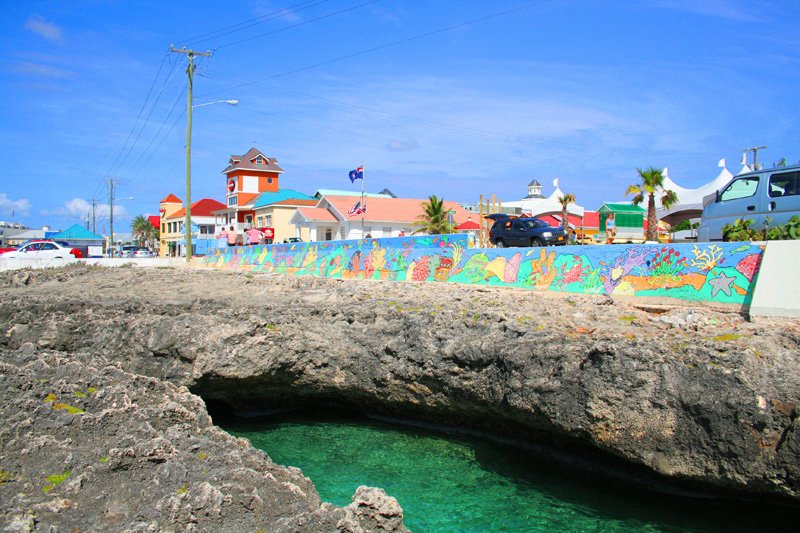
Harbour Drive in George Town is the main commercial waterfront, lined with duty-free shops and jewellery stores. The area also contains several historic buildings including the Legislative Assembly and the old courthouse. Cruise ships dock at a nearby pier — the busiest port of call in the Cayman Islands.
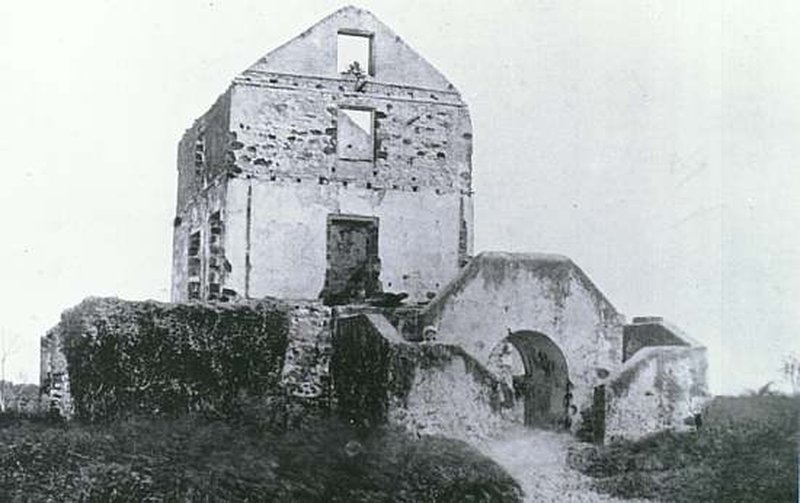
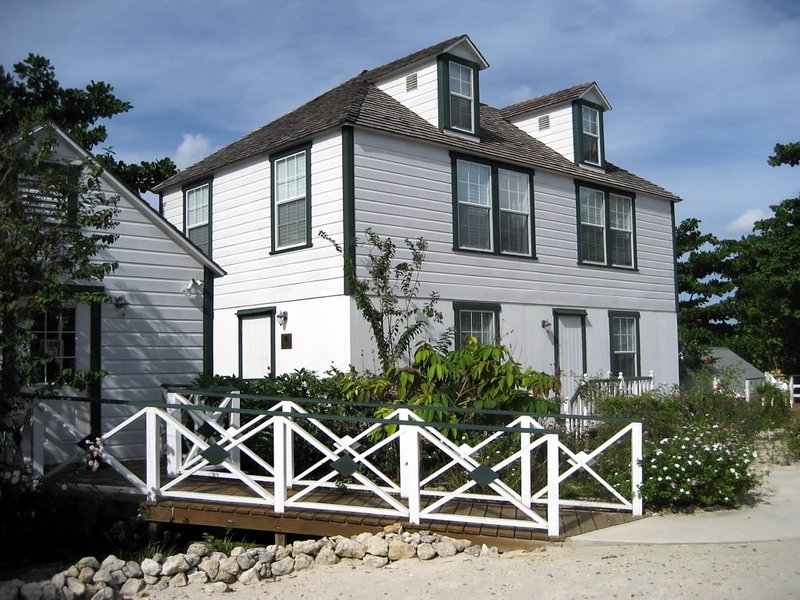
The oldest surviving stone structure in the Cayman Islands, built in 1780 by Englishman William Eden using coral-rock walls and a slate roof shipped from England. In 1831 the house hosted the meeting that led to Cayman's first elected parliament, and in 1835 the Slavery Abolition Act was read aloud from its stone archway — earning it the name "the birthplace of democracy" in the Caymans.
One of the oldest surviving houses in the Cayman Islands, built in the 1700s and later home to the Presbyterian missionaries and teachers who ran Bodden Town's first school and church. A guide from a Bodden Town founding family walks visitors through period rooms furnished with artifacts from the Watler family, in what was once the island's capital.
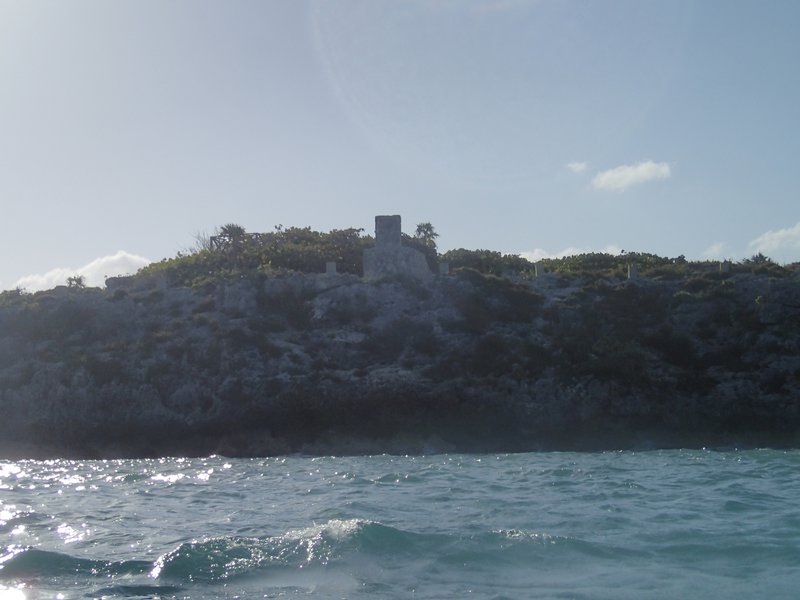
A white steel skeletal lighthouse standing 26 feet tall on a bluff at Grand Cayman's easternmost point, first lit in 1937 on the site of the island's original 1900 navigational beacon. Its light warns ships off a stretch of reef once known as the "Graveyard of the Caribbean," where the wreck this coast is most famous for happened two centuries earlier.
A clifftop memorial overlooking Gun Bay, where ten merchant ships and the Royal Navy frigate HMS Convert ran aground on the reef on the night of 8 February 1794. East End and Bodden Town residents paddled through pounding surf and saved 450 stranded sailors — the event still marked as Cayman's own founding legend. Queen Elizabeth II dedicated the monument on the 1994 bicentennial.
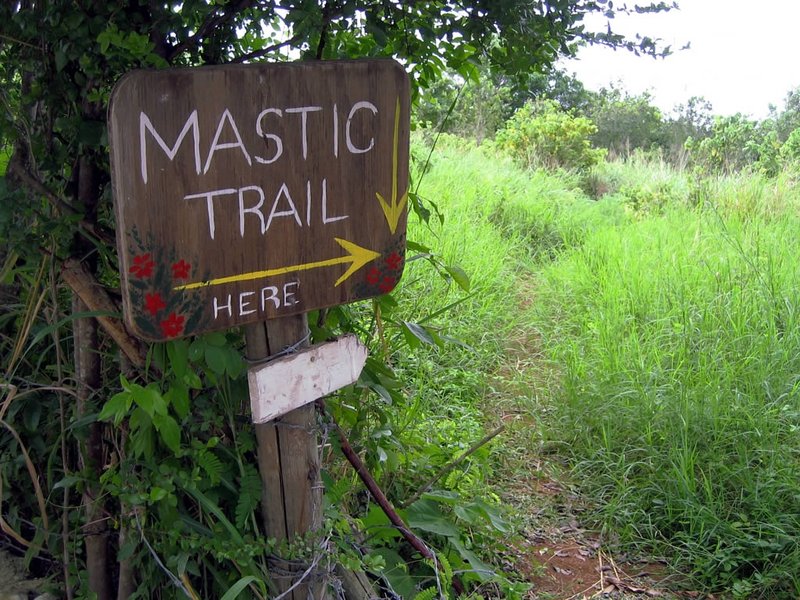
An 843-acre tract holding the largest surviving stretch of native dry forest in the Cayman Islands, crossed by a 4km footpath restored in the mid-1990s from a route over a century old. National Trust guides lead small groups past ancient mastic and ironwood trees, orchids, and the endemic Grand Cayman parrot, along the highest ground on this low-lying island.
A 685-acre waterfront town built from 2007 on the shore of the North Sound, with walkable courtyards, a harbour and marina, and a free 75-foot Observation Tower giving the highest public view on Grand Cayman. The town centre mixes restaurants, shops and a cinema around a central canal, with kayak and boat access into the North Sound.
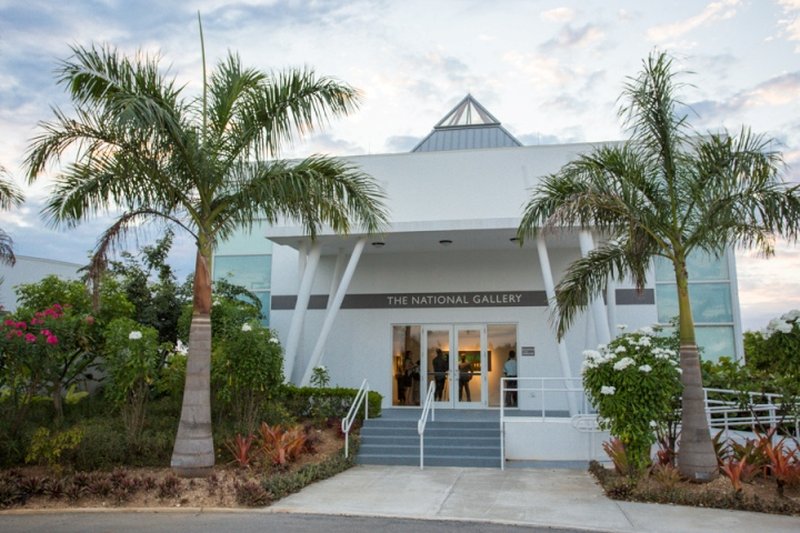
Founded in 1996 and holding the national collection on behalf of the Caymanian public, the gallery shows work by Caymanian artists including Gladwyn K. Bush, Bendel Hydes and Nickola McCoy Snell alongside temporary exhibitions, a sculpture garden and a small café. Entry to the main collection is free.
A residential district on Grand Cayman's northwest point, one of the island's two largest and among its earliest settled. Traditional Caymanian cottages, sand yards and small churches line the back roads around Boggy Sand Road, a quieter contrast to the resort strip a few minutes south — the district watched the 2011 sinking of the USS Kittiwake offshore from its own public beach.
The classic North Sound circuit: Stingray City Sandbar for close-up stingray interaction, then two coral reef snorkel stops with a local guide — the most-reviewed tour on the island.
A 4.5-hour North Sound loop: Stingray City Sandbar, two snorkel reefs, Starfish Point where you wade with cushion starfish, then a Seven Mile Beach stop.
A 5.5-hour catamaran day: Stingray City Sandbar in the morning, coral reef snorkel, then sail to Rum Point for beach time at one of the island's most scenic bays.
An evening boat tour into the bay where millions of dinoflagellates light up the water as you move — the glowing wake and silhouettes of fish make for one of the Caribbean's most surreal after-dark experiences.
A 3.5-hour boat tour covering three North Sound sites: Stingray City Sandbar for stingray interaction, Coral Gardens snorkel reef, then Starfish Point where cushion sea stars dot the shallows.
A 45–90-minute guided tour of Cayman's only operating rum and vodka distillery — the copper pot stills, the aging process and a tasting of Seven Fathoms rum, the only rum aged underwater in Grand Cayman.
A 3.5-hour catamaran cruise from George Town: Stingray City Sandbar for stingray interaction, a coral reef snorkel stop and beach time at Starfish Point — the most-reviewed catamaran stingray tour on the island.
The island's most iconic snack — fresh queen conch spiced with scotch bonnet and herbs, battered and deep-fried golden. The heat from the pepper makes it one of the Caribbean's most distinctive fried bites.
Grand Cayman's most famous export — a dense buttery cake soaked in aged Tortuga rum, produced on the island since 1987. Available in original, coconut, chocolate and banana; sold at virtually every hotel and the airport.
Cayman's traditional one-pot stew: white fish simmered in coconut milk with cassava, yam and plantain. A Sunday dish at home kitchens across the island — rich, filling and entirely Caymanian in character.
Foreign number: accepted. — Let's Eat accepts international mobile numbers; no Cayman Islands number is required to register or order.
The primary food delivery platform in the Cayman Islands; covers George Town and Seven Mile Beach with a solid selection of local restaurants and beachfront spots.
Foreign number: accepted. — Bento accepts international mobile numbers; no local number is required to place an order.
Covers Grand Cayman with restaurant and same-day grocery delivery; good for convenience orders in the Seven Mile Beach area when you don't want to leave the resort.
Foreign number: accepted. — Drift accepts international mobile numbers; no Cayman Islands number is required to create an account.
Grand Cayman's main ride-hailing app; covers George Town, Seven Mile Beach, and all major stops across the island; reliable for moving between the hotel strip, the waterfront, and evening dining.
Foreign number: accepted. — Island GO accepts international mobile numbers; no local number is required to register.
Secondary ride-hailing option covering Seven Mile Beach and George Town; check both Drift and Island GO for availability — driver supply on a small island can vary.
The story of Stingray City is an accident of appetite. In the 1940s and 50s, local fishermen anchored in the North Sound shallows to clean their catch before heading to market. They threw the scraps overboard. The southern stingrays — which hunt by scent along the sandy bottom — began appearing to take the discards. Decade by decade, the same sandbars, the same fishermen, the same routine: the rays learned that boats meant food. By the time sport divers discovered the site in the 1980s, the stingrays had been behaviourally conditioned for nearly forty years. No breeding programme, no fencing, no management — just one generation of stingrays teaching the next that humans are a reliable food source. What visitors now experience as a wildlife sanctuary began as a rubbish pile.
The Grand Cayman Blue Iguana — Cyclura lewisi — is one of the rarest lizards on Earth. In 2002, fewer than 15 individuals remained in the wild — a number so low that biologists believed the species would be functionally extinct within a decade. The Blue Iguana Recovery Programme at the Queen Elizabeth II Botanic Park now returns 150 to 200 juveniles to the wild each year. It is one of the very few examples in the Caribbean of a species pulled back from the edge not by habitat restoration, but by direct human intervention: eggs collected, incubated, hatchlings raised to a survivable size, then released on the same karst limestone where their ancestors lived before humans arrived.