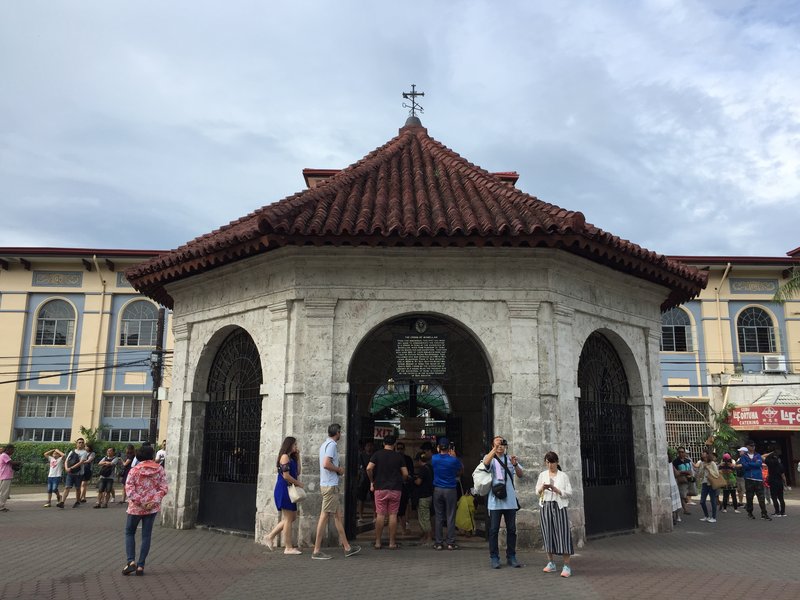
A weathered wooden cross planted by Ferdinand Magellan's expedition in 1521, sheltered inside an octagonal coral-stone pavilion on the plaza where Christianity first arrived in the Philippines.
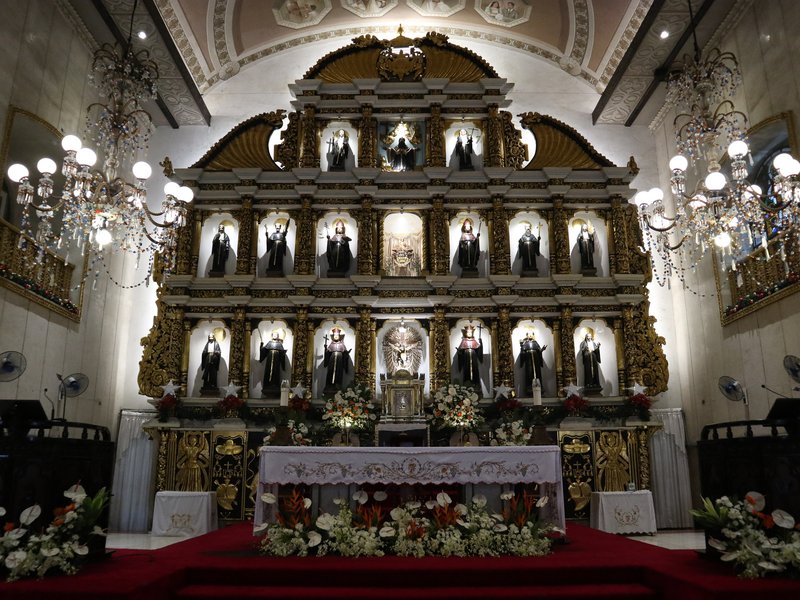
The oldest Roman Catholic church in the Philippines, an Augustinian basilica built in an Earthquake Baroque style around the venerated Santo Niño de Cebú image first given to Rajah Humabon's wife in 1521.
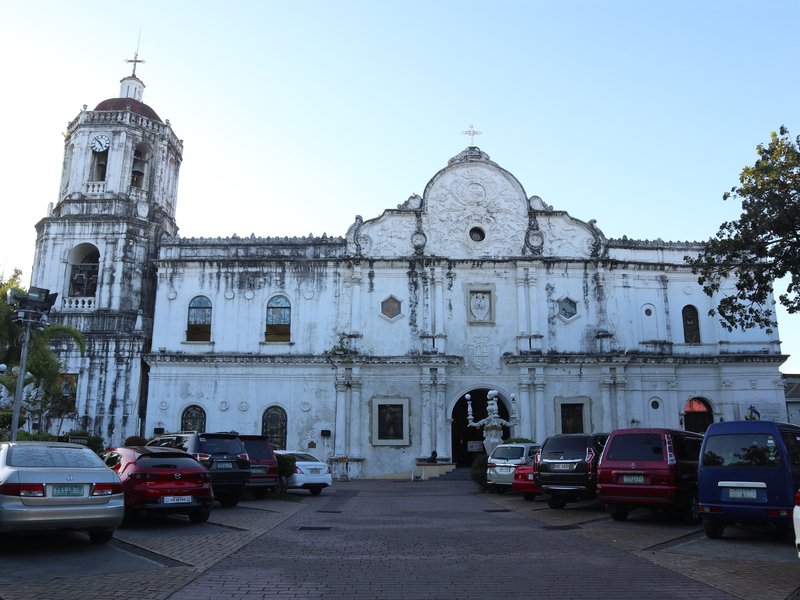
The seat of the Archdiocese of Cebu, founded in 1598 and dedicated to Saint Vitalis of Milan, its Spanish colonial facade and dome anchoring the downtown skyline above Plaza Sugbo.
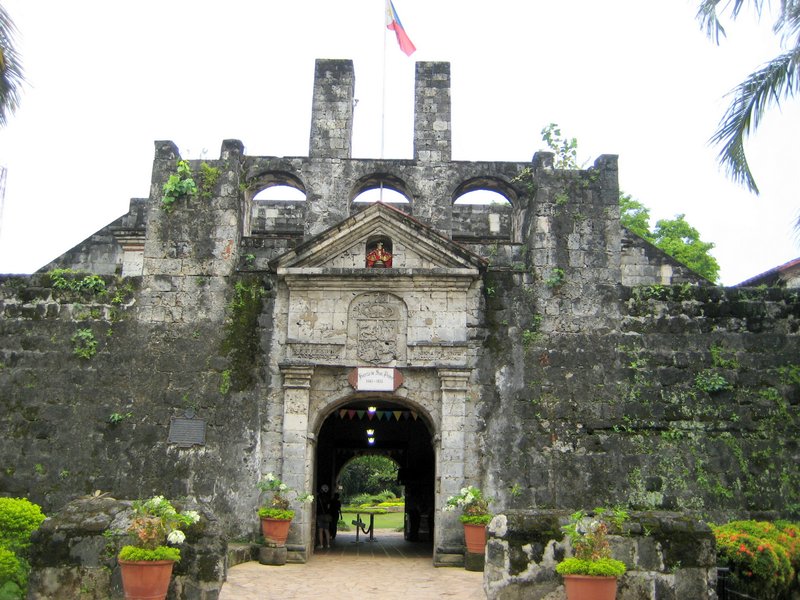
A triangular Spanish bastion fort begun in 1565 by Miguel López de Legazpi and rebuilt in stone in the 1700s, its thick coral-stone walls and mounted cannons now enclosing a small museum and garden above the old harbor.
A two-storey coral-stone and hardwood home built between 1675 and 1700 by a Chinese trader's family in the Parian district, still furnished with the original family's period antiques and religious statuary.
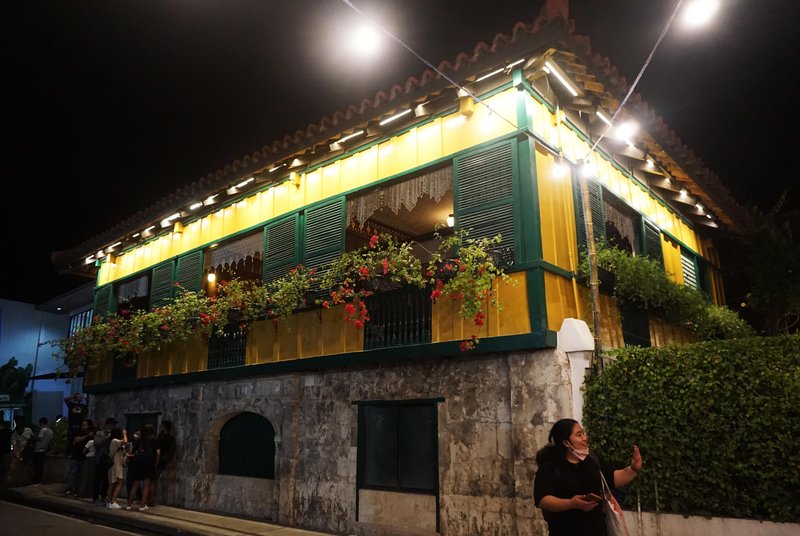
A coral-stone-and-hardwood merchant house built in the 1850s and home to four generations of the Gorordo family, including the Philippines' first Filipino bishop, now furnished as a period showcase of 19th-century Cebuano domestic life.
A sprawling bronze, brass and concrete tableau by sculptor Eduardo Castrillo, staging the city's history from the 1521 Battle of Mactan to the year-2000 beatification of Pedro Calungsod across the old Parian plaza.
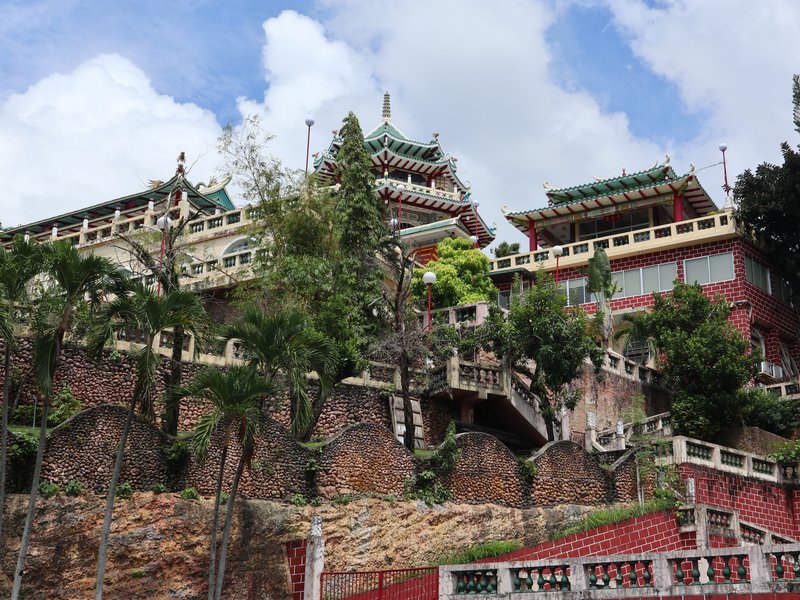
A multi-tiered temple built in 1972 by Cebu's Chinese-Filipino community, entered through a replica Great Wall gate and open to worshippers and visitors alike, with balconies looking down over the whole city.
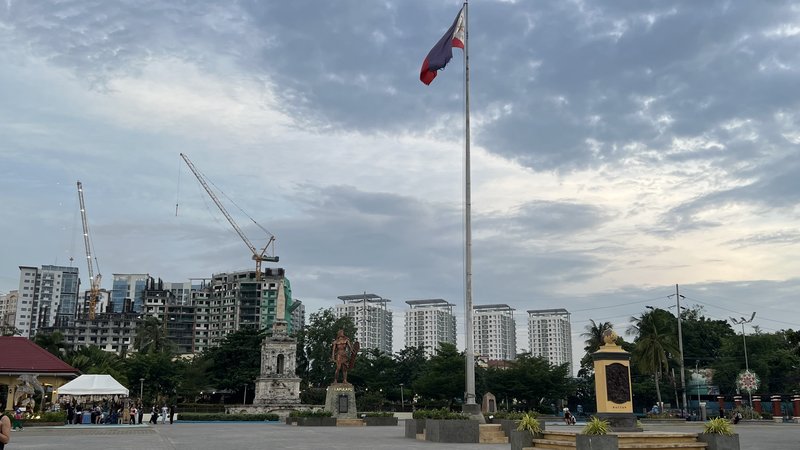
A national shrine on the shore where the datu Lapu-Lapu defeated Ferdinand Magellan's forces in 1521, pairing a bronze monument to Lapu-Lapu with a separate marker for Magellan on the believed battle site.
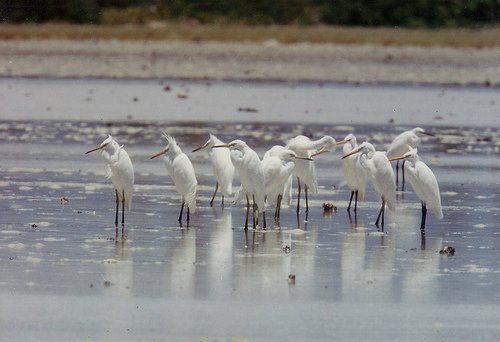
A mangrove-and-mudflat reserve on the Philippines' first declared Ramsar wetland site, hosting up to 97 bird species — including migratory shorebirds arriving from as far as Siberia — viewed from a boardwalk and observation tower reached by outrigger boat from Mactan.
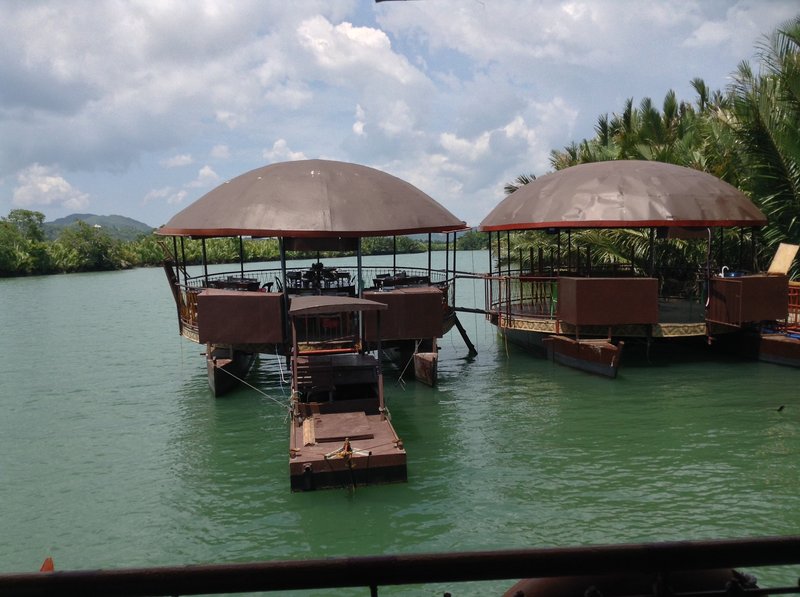
A leisurely float down the jungle-lined Loboc River aboard a floating restaurant raft, with a buffet lunch and live rondalla music on the way to a small waterfall turnaround point.
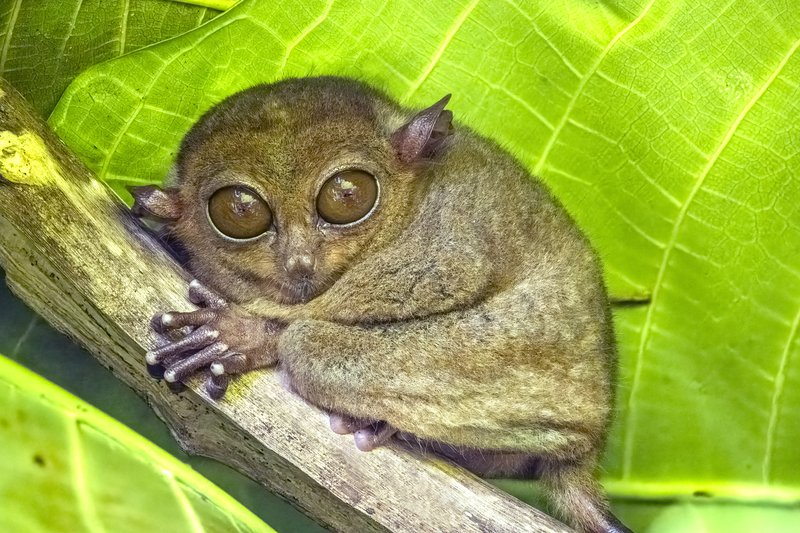
A 134-hectare forest reserve run by the Philippine Tarsier Foundation, where wardens lead small groups along a quiet boardwalk to spot wild Philippine tarsiers — palm-sized, saucer-eyed primates among the oldest surviving primate lineages on Earth — clinging to the undergrowth.
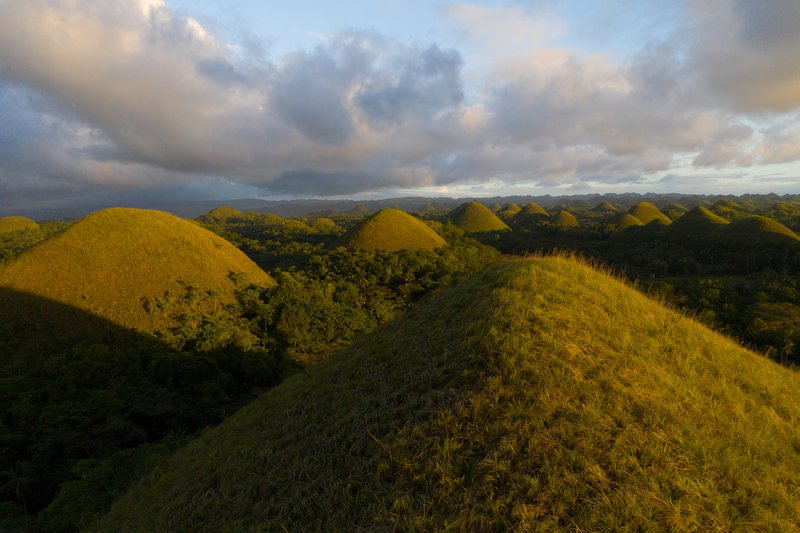
More than a thousand near-identical grass-covered cones spread across Bohol's interior, the grass turning cocoa-brown at certain times of year, seen from the Carmen viewing deck as a National Geological Monument and UNESCO Global Geopark.
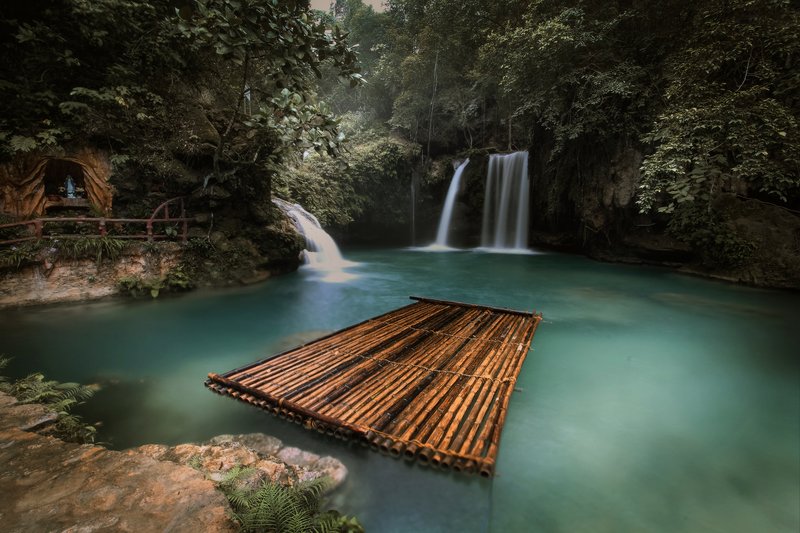
A three-kilometer limestone canyon of turquoise mountain-spring water in South Cebu, descended by swimming, sliding and rope-assisted rappels past seven optional cliff jumps to the three-tier, 40-meter Kawasan waterfall at the bottom.
A small-group boat day at Nalusuan, Hilutungan and Caohagan islands off Mactan, with snorkeling gear, life jackets and a boat-cooked BBQ lunch included.
A full-day Bohol crossing by fast ferry to the Chocolate Hills, the Tarsier Conservation Area, a Loboc River lunch cruise and Baclayon Church, with a driver-guide throughout.
A guided walk through Colon Street and Carbon Market tasting Cebuano street food and market snacks, with the stories behind each stop from a local guide.
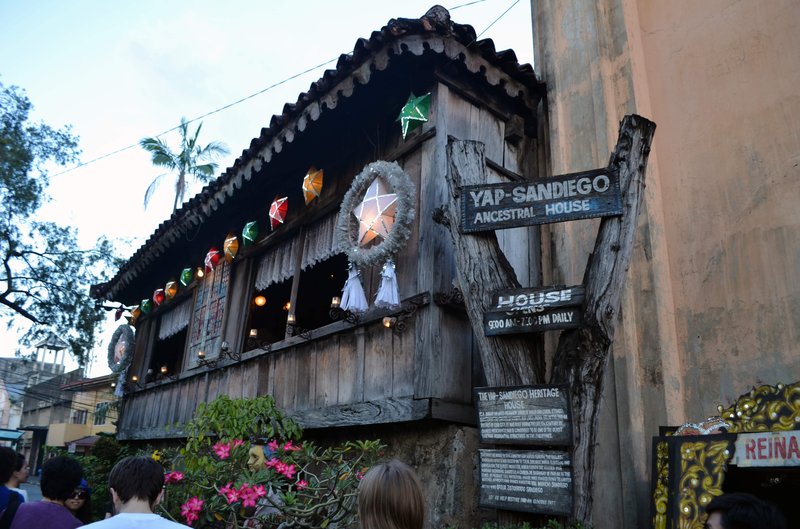
A shared-joiners sweep of Cebu City's heritage core and the Busay highlands — Heritage Monument, Yap-Sandiego House, Fort San Pedro, the Taoist Temple, Sirao Garden and Temple of Leah.
A small-group full-day tour to Bohol's Chocolate Hills, the Tarsier Conservation Area, the Mahogany Forest and a Loboc River buffet cruise, round-trip by ferry.
A group tour south to Badian for a zipline ride into the canyon, river trekking, optional cliff jumps and a swim at Kawasan Falls, with a seaview lunch after.
A South Cebu double bill: shore-entry snorkeling with the Moalboal sardine run and wild sea turtles, then Kawasan Falls canyoneering with a Filipino lunch after.
A small-group, guaranteed-departure day trip to Bohol's Chocolate Hills, the Tarsier Conservation Area and a Loboc River lunch cruise, ferry transfers included.
Two South Cebu headliners in one day — an Oslob whale-shark swim followed by Kawasan Falls canyoneering, with lunch, safety gear and a trained guide included.
A walk through downtown Cebu's market lanes and heritage streets tasting street food and riding a jeepney with locals, capped with a night-market stop.
A whole pig slow-roasted over charcoal until the skin shatters and the meat stays juicy, seasoned only with native herbs and no soy or liver sauce — the style Anthony Bourdain called the best pig he'd ever eaten.
Cebu's signature pasalubong export — ripe local mangoes sliced and sun- or machine-dried to a sweet, chewy strip, sold loose by the kilo or in branded packs across the city's markets.
A Cebuano-Chinese street snack of ground pork and jicama seasoned with five-spice, wrapped in a thin tofu skin and deep-fried to a crisp shell, served sliced with a sweet-spicy dipping sauce.
Foreign number: accepted. — the sign-up country-code selector takes any country, and the OTP arrives by international SMS within seconds of requesting it.
The dominant delivery app across the Philippines and the most reliable choice in Cebu City — wide restaurant coverage from mall food courts to standalone Ayala/IT Park restaurants, live rider tracking, and in-app cashless payment. Coverage thins out on the outer edges of Cebu City after dark.
Foreign number: accepted. — the Philippines sign-up form accepts a foreign country code and sends the OTP by international SMS the same way as a local number.
Foodpanda's Cebu City coverage overlaps heavily with Grab, with a broader spread of small independent eateries and dessert shops alongside the same mall chains — worth checking side by side with Grab for a specific restaurant, since neither app carries every merchant in the city.
Foreign number: accepted. — the sign-up country-code selector takes any country, and the OTP arrives by international SMS within seconds of requesting it.
Uber does not operate in the Philippines — Grab is the only ride-hailing app in Cebu, covering the whole metro from Mactan to downtown. Fares show upfront before booking, a real advantage over flagging a taxi. Surge pricing and driver cancellations are common at rush hour and in heavy rain.
Magellan's Cross and the Basilica sit thirty seconds apart because they're one story split in two: Magellan planted the original cross in April 1521, and the carved Santo Niño image he gave Cebu's first Christian convert as a baptismal gift survived a village fire decades later to become the oldest Christian relic in the Philippines — the reason Cebu, not Manila, calls itself the birthplace of Philippine Christianity.
Grab covers ride-hailing and food delivery, but jeepneys, wet markets and most Colon Street and Carbon Market vendors are still cash-only — GCash is spreading fast through the malls and chain restaurants of IT Park and Ayala Center but isn't yet standard at street level in the older downtown core, so small peso bills matter more there than around the hotel.
Several of this guide's day tours pass through Oslob, where boatmen hand-feed wild whale sharks close to shore to guarantee sightings — a practice marine biologists have flagged for altering the animals' natural feeding and migratory behavior. It's still fully legal and heavily booked; travelers weighing the ethics sometimes look at open-water encounters elsewhere in the Philippines instead.