From Hotel: 10 min · 2 min → Raffles City Exploration Deck
1.Raffles City Exploration Deck~1 hr
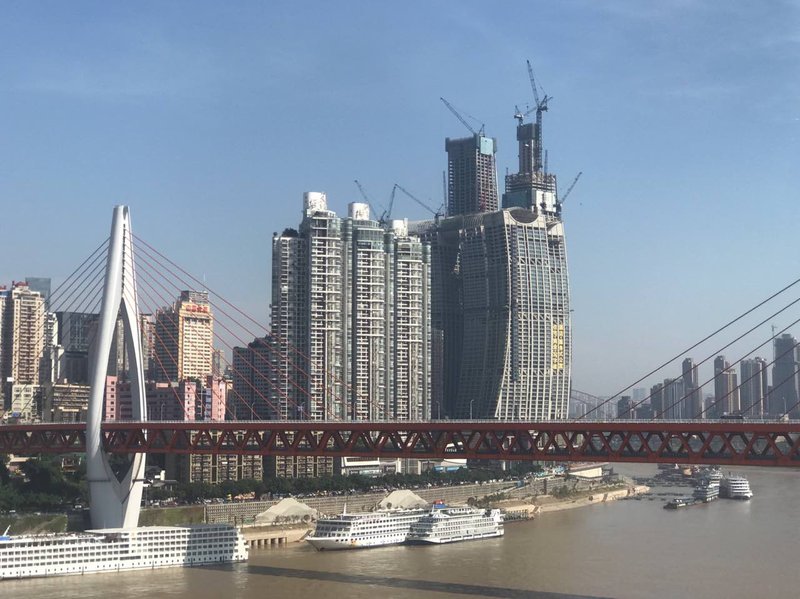
The Crystal — a 300-metre glass skybridge laid across four skyscrapers, 250 metres above the meeting of the Yangtze and Jialing. A 270° panorama over Chaotianmen, an open-air glass platform, and a vertigo-grade skywalk along the spine. Time it for golden hour and watch the city light up.
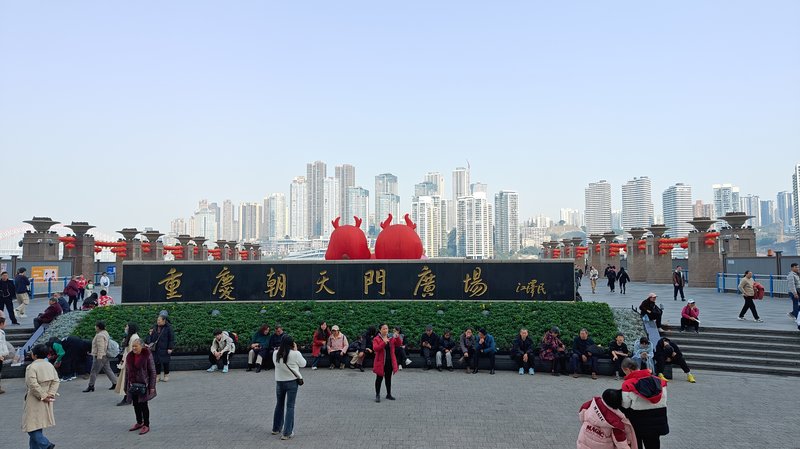
The confluence of the Yangtze and Jialing at the tip of the Yuzhong peninsula — for centuries the dock where imperial edicts arrived and trade entered the city. A wide esplanade overlooks both rivers; the Raffles City towers rise directly behind. Evenings bring the lit skyline reflected on both rivers.
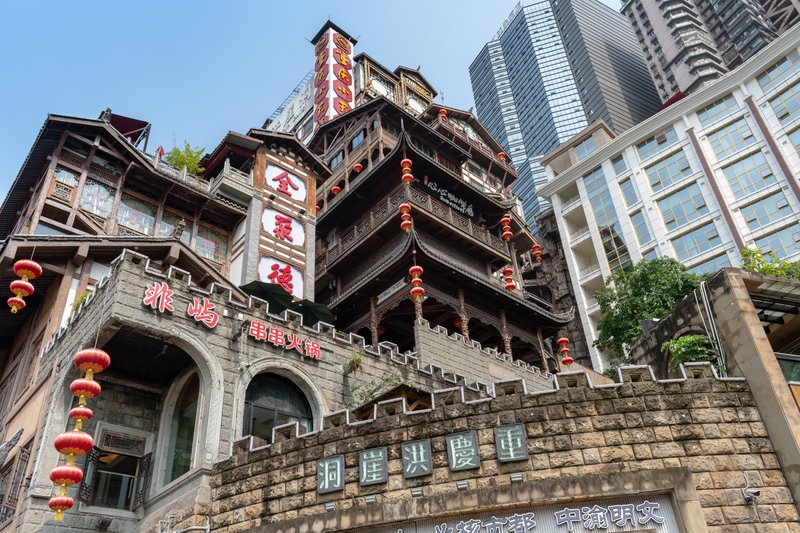
An eleven-storey cascade of traditional stilted houses built into the cliff above the Jialing River. By day it is a warren of teahouses and snack stalls; after dark the whole cliff lights up gold and the view from Qiansimen Bridge is pure Spirited Away. Arrive before sunset and eat your way down the levels.
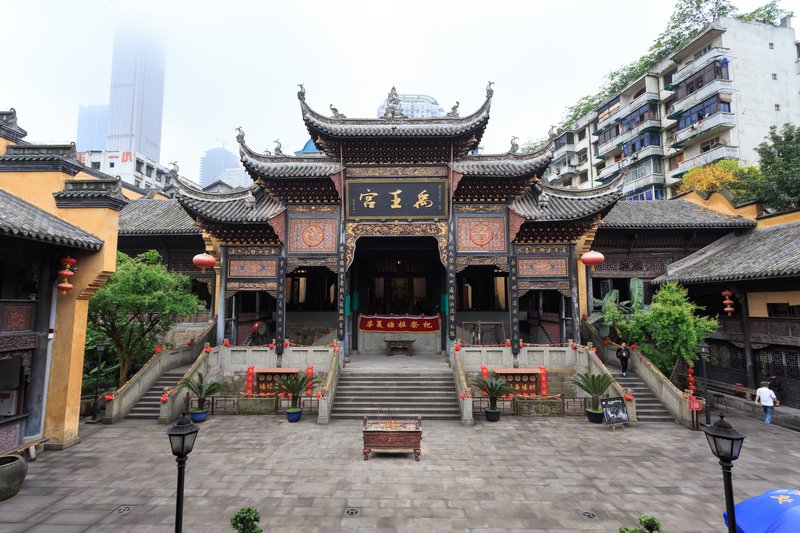
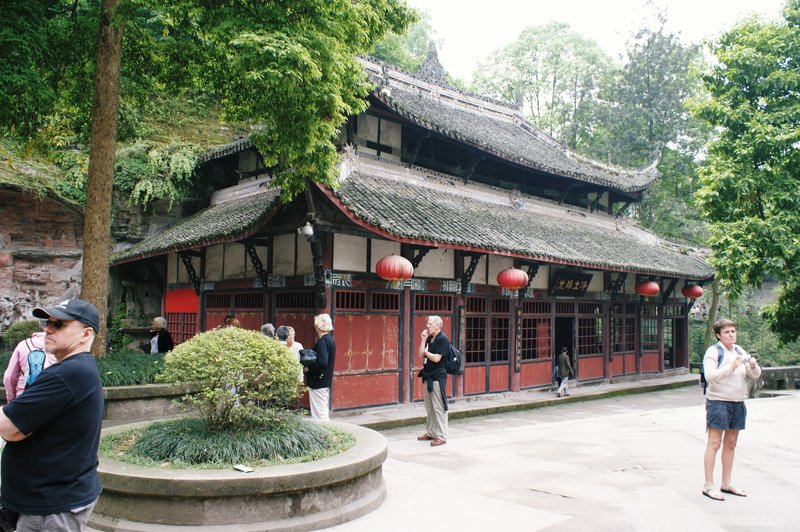
The largest surviving guild-hall complex in China, built in 1759 for migrants from Hunan and Hubei. Four courtyard theatres and ceremonial halls cling to the Yangtze cliff — a National Key Cultural Relic and one of Chongqing's finest Qing ensembles, with a museum of the Huguang immigration period inside.
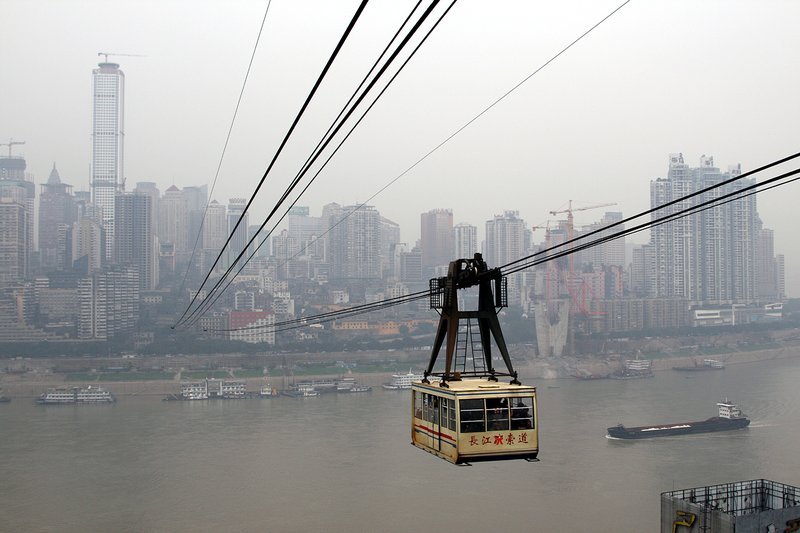
Chongqing's flying gondola — a 1,166-metre aerial tramway strung across the Yangtze since 1987, when it carried commuters. Skyscrapers slide past the windows, the river rolls below, and at night the lit peninsula spreads out behind you. Ride round-trip and save the skyline for the return leg.
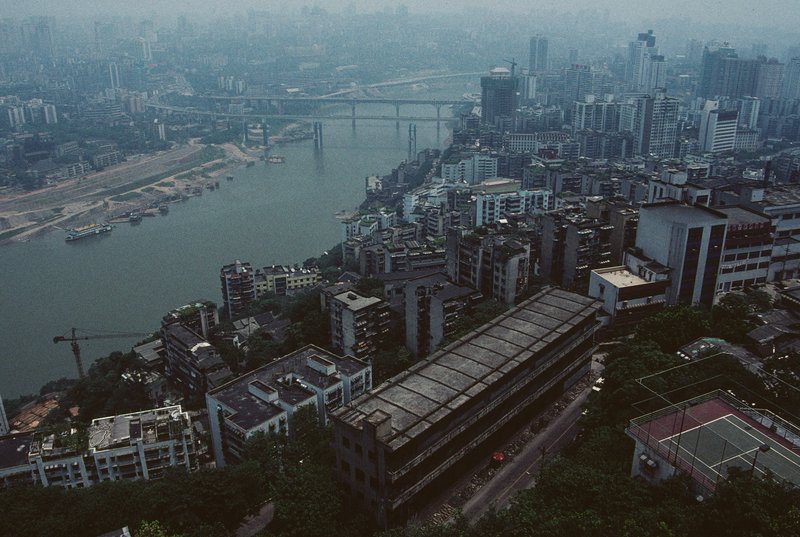
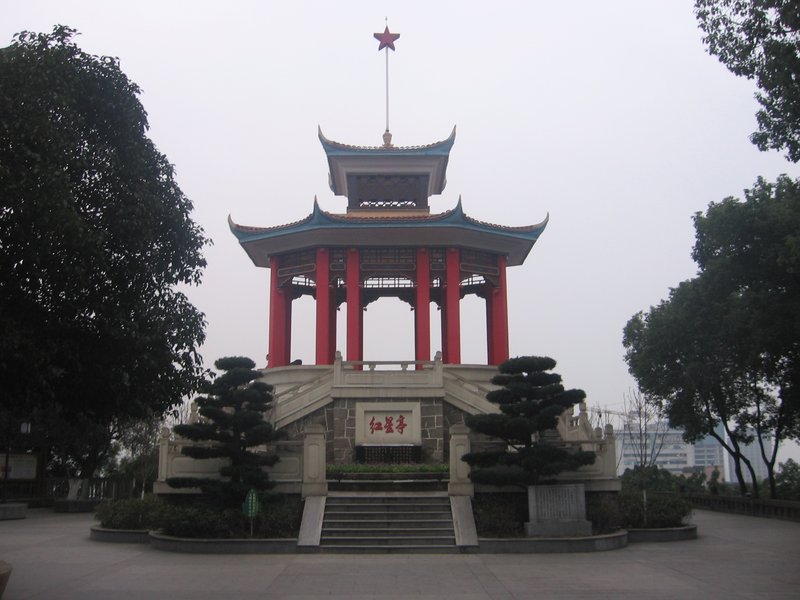
The highest point of the Yuzhong peninsula — a classical hilltop garden on the ridge between the Yangtze and Jialing rivers. Climb the seven-storey Kansheng Tower for a 360° sweep over both rivers and the skyline stacked on the hills between them: the best single place to read the city's geography.
A Ming-and-Qing-era porcelain port on the Jialing River — flagstone lanes climbing the hillside between timber shophouses, teahouses and chilli-strung snack stalls. Watch candy-makers hammer maltose, sample mahua dough twists, and duck into the quieter alleys above the main street where old Chongqing still breathes.
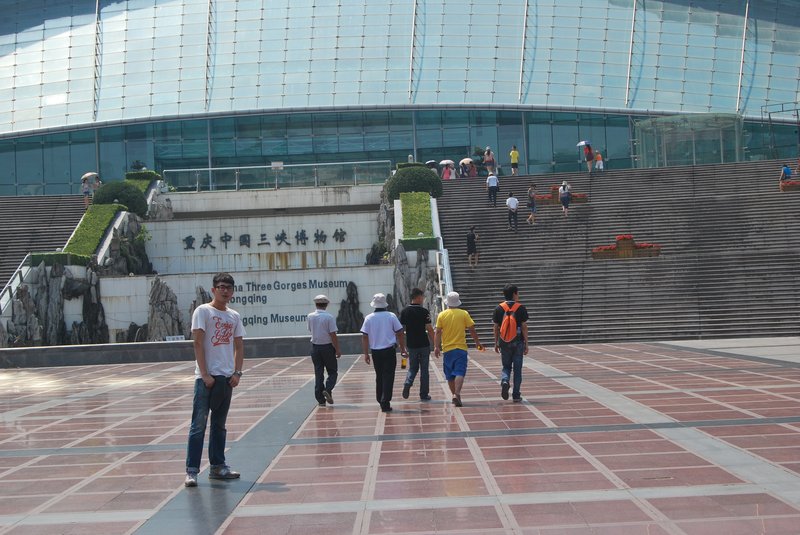
The definitive museum of the Three Gorges — a vast four-floor complex facing the People's Auditorium across the civic square. Collections cover Ba culture, ancient Sichuan, the Yangtze's epic history, and artefacts rescued from submerged cities before the reservoir filled.
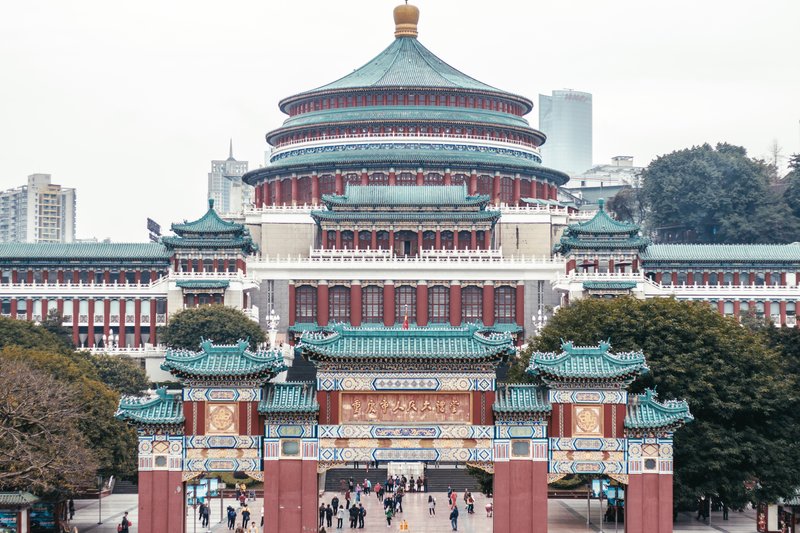
A colossal 1950s assembly hall crowned with a triple-eaved green-and-red dome modelled on Beijing's Temple of Heaven — one of the boldest pieces of traditional-revival architecture in China. It anchors the vast People's Square, where locals gather to dance in the evenings.
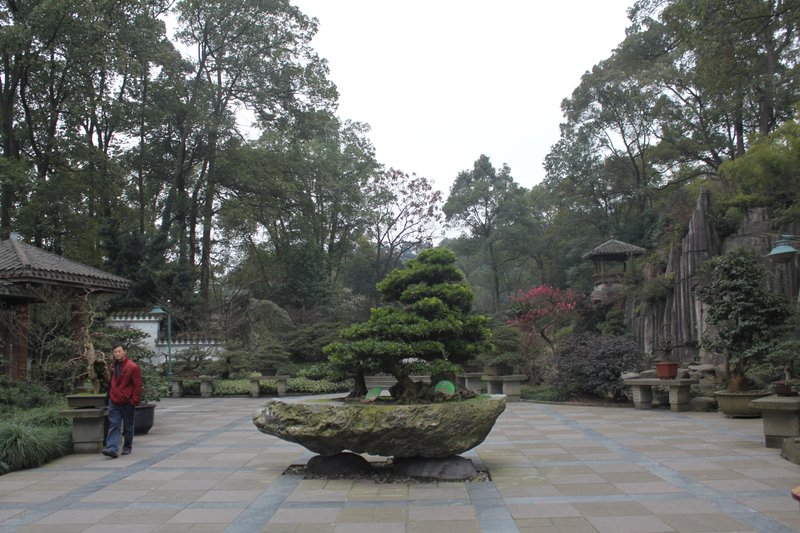
A forested hilltop park on the highest ridge of the Yuzhong peninsula. Shaded paths climb through bamboo and subtropical trees to pavilions with panoramic views over the Jialing River, the Yangtze and the ridge-stacked skyline. The quietest vantage point in central Chongqing.
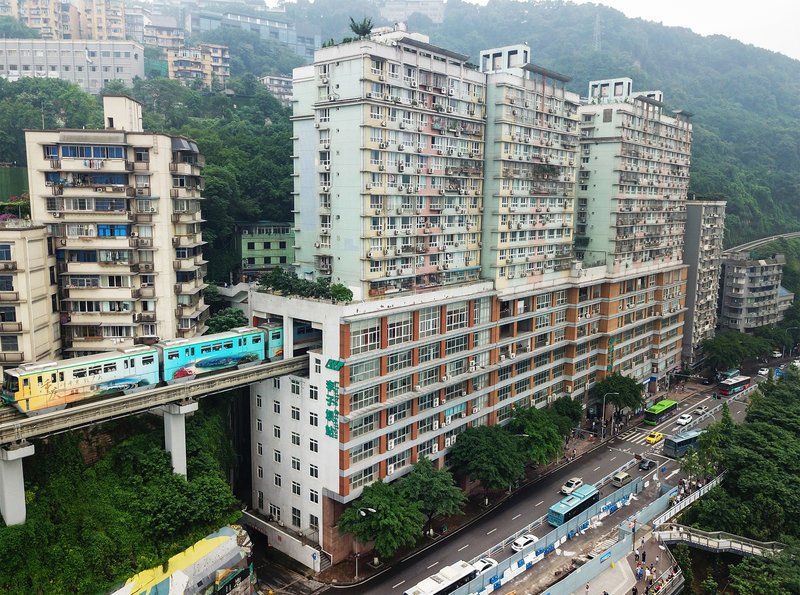
The monorail station built straight through the sixth to eighth floors of a 19-storey residential tower — Chongqing's most famous piece of mountain-city engineering. Trains glide into the building, pause inside, and slip out the other side. A purpose-built viewing platform across the street frames the spectacle.
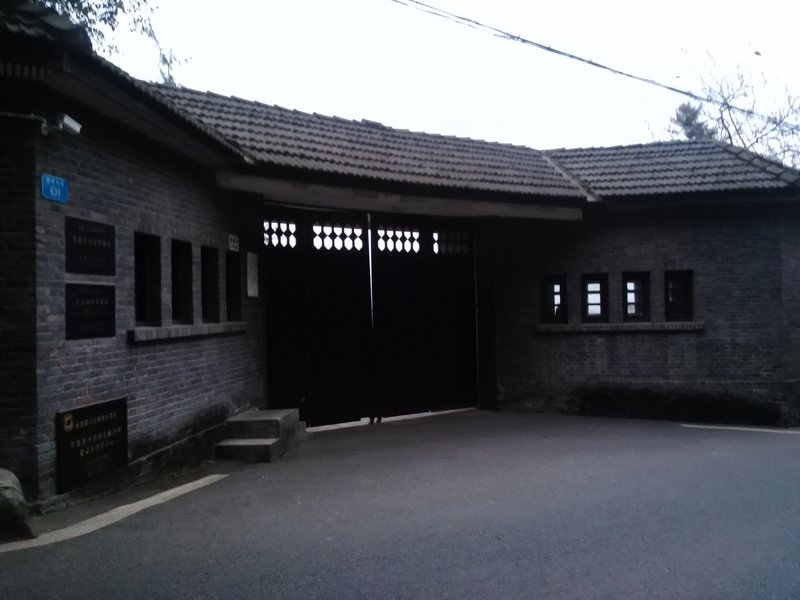
General Joseph Stilwell's wartime residence and Allied headquarters in Chongqing. The 1940s villa is preserved with period furniture — jeeps in the courtyard, wartime radio equipment and tactical charts throughout. One of the few places in China that tells the Allied side of the Pacific war.
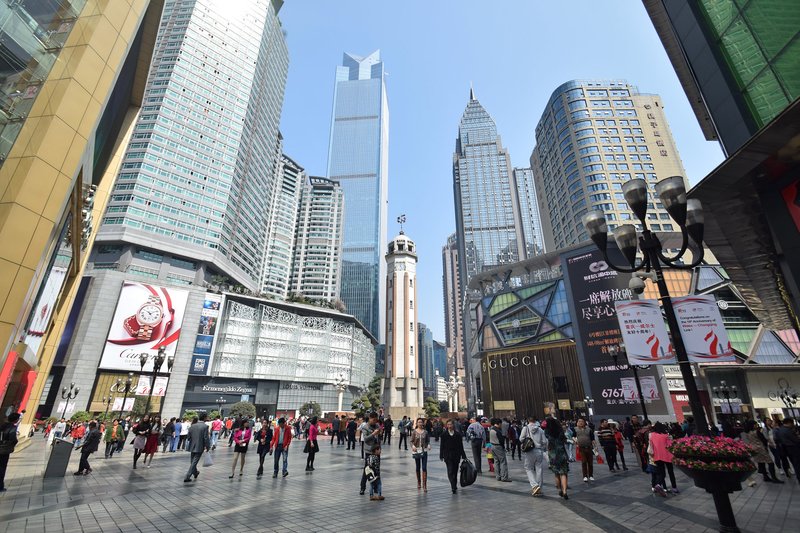
A 27-metre clock tower built in 1945 to commemorate victory over Japan. It stands at the intersection of Minzu and Minquan roads, surrounded by the busiest pedestrian plaza in southwest China. National Key Cultural Relic since 2013.
From Hotel: 35 min → South Mountain Botanical Garden
1.South Mountain Botanical Garden~1.5 hr
The largest botanical garden in Chongqing — 117 hectares of subtropical parkland on the Nanshan hillside, opened in 1954. Specialist sections include a camellia garden, a rose garden and an orchid house, with winding paths through 1,646 species of subtropical flora. The approach route to the viewpoint above.
Chongqing's most celebrated night panorama: a 270° platform on the Nanshan hillside at 437.5 m, facing the lit Yuzhong Peninsula across the Yangtze. The view takes in both rivers, the Raffles City towers and the full crescent of the mountain city after dark. Stay for dusk to catch the transition from gold to neon.
The centrepiece of the Dazu UNESCO World Heritage Site — a 500-metre horseshoe cliff with over 10,000 Song-dynasty carvings. Highlights include a 31-metre reclining Sakyamuni and a 1,007-arm Guanyin. The most complete Buddhist cliff-carving programme in China.
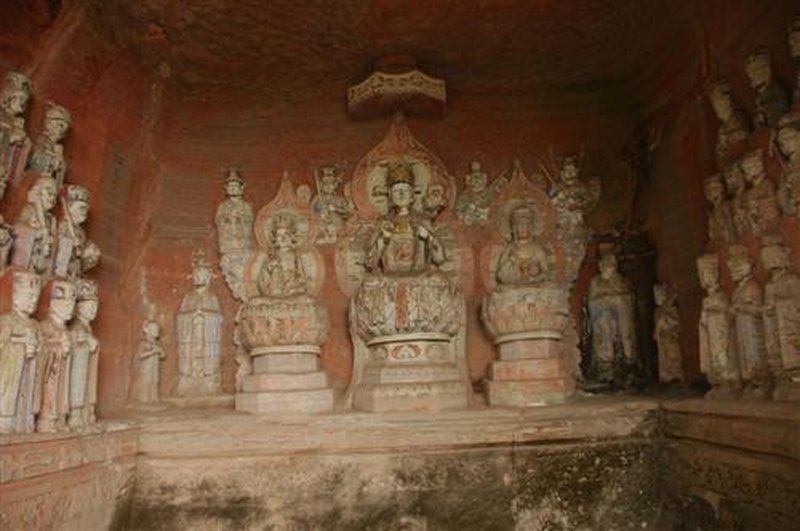
The oldest section of Dazu — a 300-metre cliff at North Mountain with 290 sculptures carved 892–1162. Tang and Song bodhisattvas, warriors and deities share the rockface in a sequence tracing Buddhist art from bold Tang forms to delicate Song refinement. The least-crowded of the Dazu sites.
Small-group sweep of the vertical city: watch the monorail thread the residential tower at Liziba, climb the stacked lanes of Baixiangju, ride Asia's second-longest escalator, cross the Yangtze by cableway, walk an open-air deck over the Jiefangbei skyline, and finish in the night market at Hongya Cave.
Full-day run to the UNESCO-listed Wulong Karst: the Wujiang River gallery off the Chibi Observation Deck, a glass-elevator descent to the Three Natural Bridges, and a choice of Fairy Mountain's meadows or the Longshuixia Fissure's pathways. Transport, guide and entry handled.
A local-led walking day on the quiet south bank: hidden Taoist cave shrines at Laojundong, the old tea-horse trail over Huangjueya's restored old street, river views along Xiahao Road — capped with a proper nine-grid hotpot feast back across the water.
Group cruise downstream through the Three Gorges — Qutang, Wu, and Xiling — on a Chinese 5-star vessel: guided shore excursions at Shennü Stream, Fengdu Ghost City, and the Three Gorges Dam with commentary throughout.
The city's invention and obsession: a bubbling nine-grid pot of beef-tallow broth packed with chilli and numbing huajiao pepper, born on the docks where boatmen stewed offal. Locals eat it year-round, even in the summer heat.
The breakfast of the mountain city — springy wheat noodles in a slick of chilli oil, sesame paste, garlic and huajiao, eaten standing at hole-in-the-wall counters. Order wanza mian to add silky stewed peas.
Hot-and-sour glass noodles hand-pulled from sweet potato starch, drowned in black vinegar and chilli, topped with peanuts and sprouts. Chongqing's street-stall classic — the Bayi Road version is the benchmark.
Crunchy fried dough twists plaited by hand and fried to a deep gold — Ciqikou's signature souvenir. The classic is lightly sweet; the Chongqing twist adds chilli and huajiao, naturally.
Foreign number: not accepted. — use the Meituan mini-program inside Alipay or WeChat instead.
China's dominant food delivery platform with massive Chongqing coverage; excellent range of hot pot restaurants, noodle shops, and Sichuan street food; fastest delivery in the city — most orders arrive under 30 minutes.
Foreign number: not accepted. — use the Ele.me mini-program inside Alipay instead.
Alibaba's delivery platform; strong Chongqing presence with a wide restaurant selection; good backup if Meituan is unavailable for a particular spot — both are accessible via mini-programs for visitors without a Chinese number.
Foreign number: accepted. — the DiDi International app works with foreign numbers and supports English.
The main ride-hailing app in Chongqing; covers all central districts including Jiefangbei, Jiangbei, and Shapingba; useful for navigating the city's steep terrain and crossing the Yangtze — the metro is often faster downtown but DiDi is essential for hilltop areas.
The Dazu Rock Carvings — a UNESCO World Heritage constellation of more than 50,000 Buddhist, Taoist and Confucian figures cut into cliff faces between the 9th and 13th centuries. The Baodingshan circuit is the showpiece: a horseshoe valley of giant reclining Buddhas and a thousand-armed Guanyin in still-vivid pigment.
Sichuan's laid-back capital, one hour west by bullet train: giant pandas at the research base in the morning, bamboo-chair teahouses and ear-cleaners in People's Park after lunch, and the lantern-lit alleys of Kuanzhai Xiangzi before the evening train home. The classic two-city pairing.
Gateway to the Wulong Karst, the UNESCO-listed valley of the Three Natural Bridges — colossal limestone arches over a mossy gorge threaded with walkways, with the Longshuixia Fissure's slot canyon next door. Morning departures put you at the park entrance shuttle before midday.
Chongqing refuses every flat-city assumption. The monorail at Liziba doesn't go around the apartment tower — it goes through floors six to eight, and the residents say they barely hear it. The Crystal at Raffles City is a skyscraper that lies down: 300 metres of glass laid horizontally across four towers, so the observation deck is also a bridge. Even the cableway began life in 1987 as ordinary public transport — a bus line in the sky for dock workers — and only later did the city realise its commute was a world-class attraction.
The two days trace a quiet historical arc. Ciqikou was the porcelain port where the Jialing's cargo came ashore a thousand years ago; Chaotianmen, where the hotel stands, was the gate where officials greeted imperial edicts arriving by river. The same two rivers that made Chongqing a trading post now make it a spectacle — everything worth seeing in this city is, one way or another, a way of looking at the water.