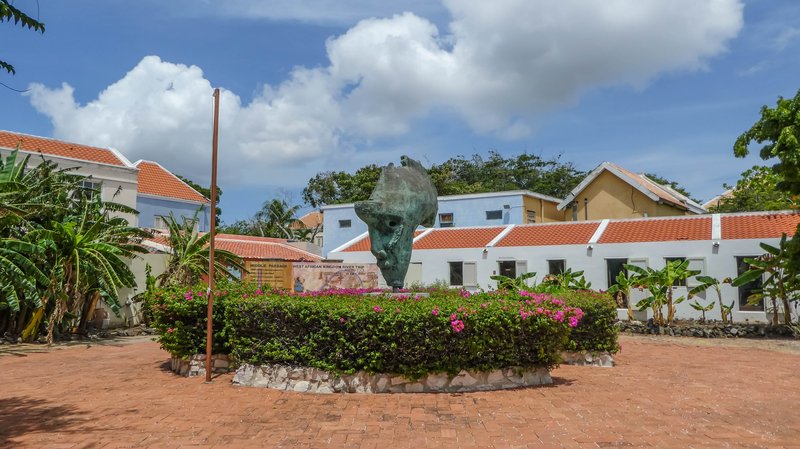
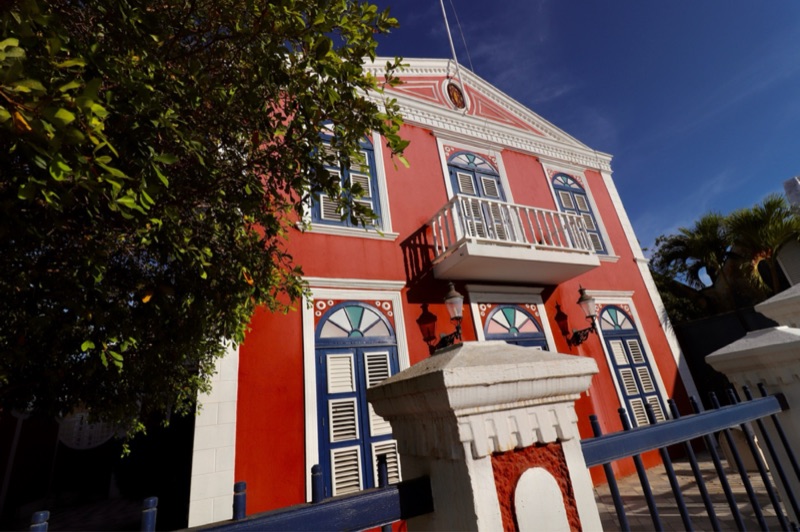
Set within a restored 18th-century trading compound in Otrobanda, this is the Caribbean's foremost museum on the transatlantic slave trade. Nineteen exhibition houses span African sculptures, archaeological finds and documentation of the Middle Passage, set into stone alleys and courtyards that amplify every exhibit.
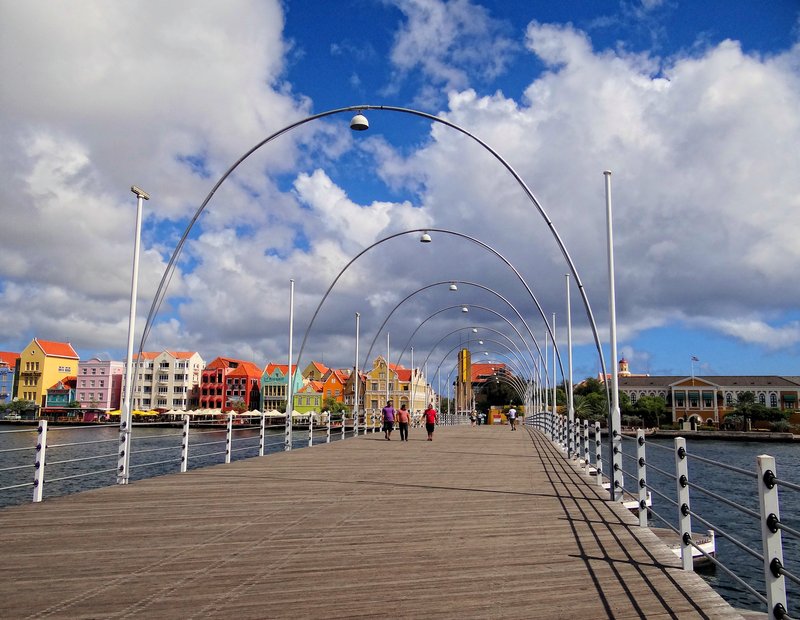
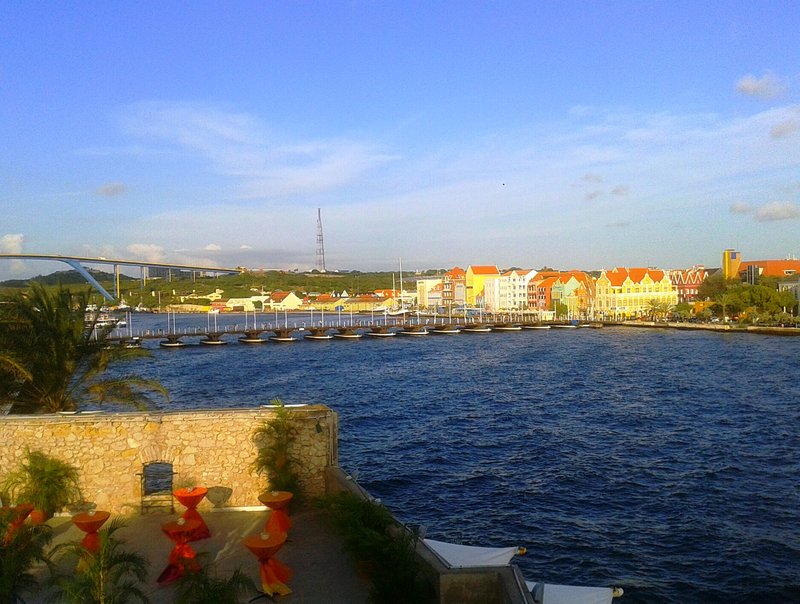
Curaçao's 213-metre pontoon bridge swings open to let ships through Sint Annabaai, revealing views of Willemstad's pastel Handelskade waterfront — one of the Caribbean's most photographed skylines. Nicknamed "The Old Lady," it has spanned the channel since 1888; a free ferry runs when the bridge is open.
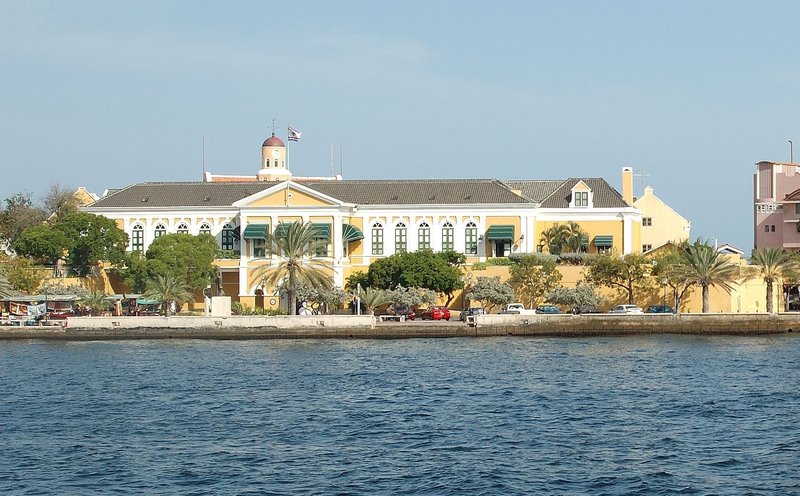
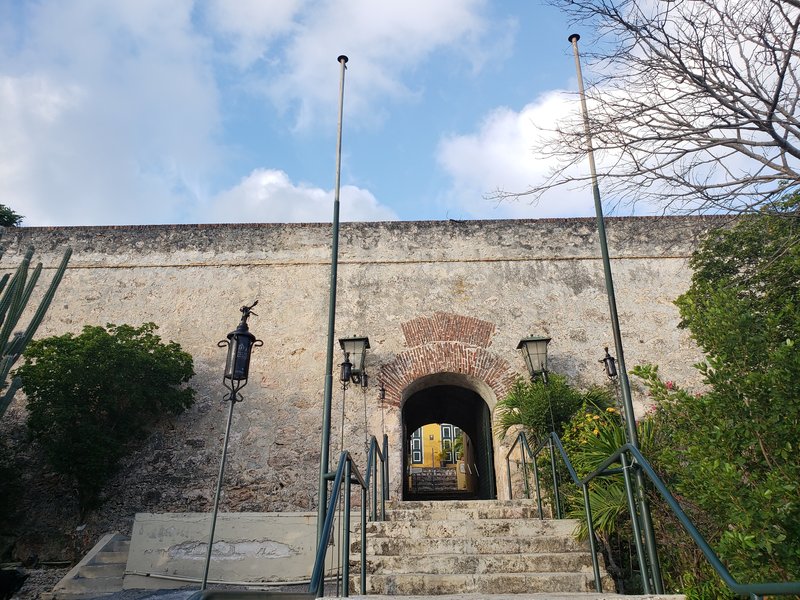
Built in 1635, Fort Amsterdam is the oldest Dutch colonial fort in the Caribbean. Its yellow walls now house the Governor's Palace and a 1769 church with British cannonballs still embedded from the 1804 bombardment. The grounds are free and open; guided church visits run on a limited schedule.
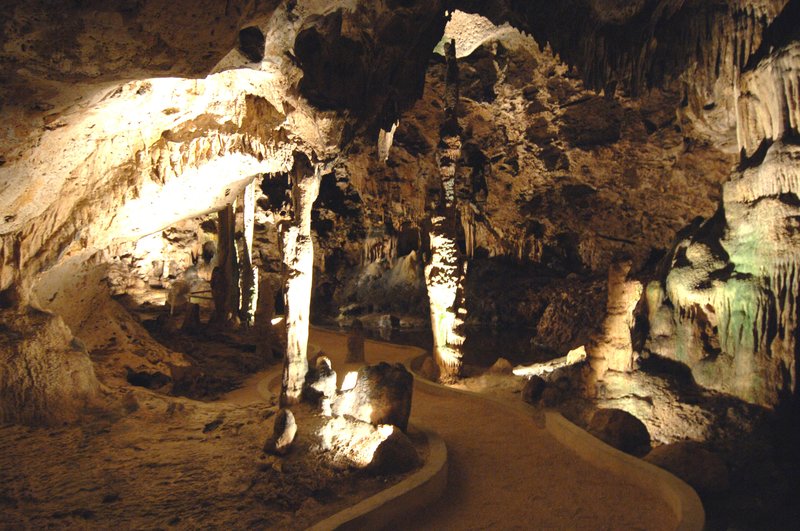
Used as a hideout by escaped enslaved people in colonial times, these limestone caverns extend 800 metres underground and drip with stalactites and stalagmites. Guided tours depart on the hour and cover cave pools, formations nicknamed "Romeo & Juliet" and ancient Arawak petroglyphs carved into the walls.
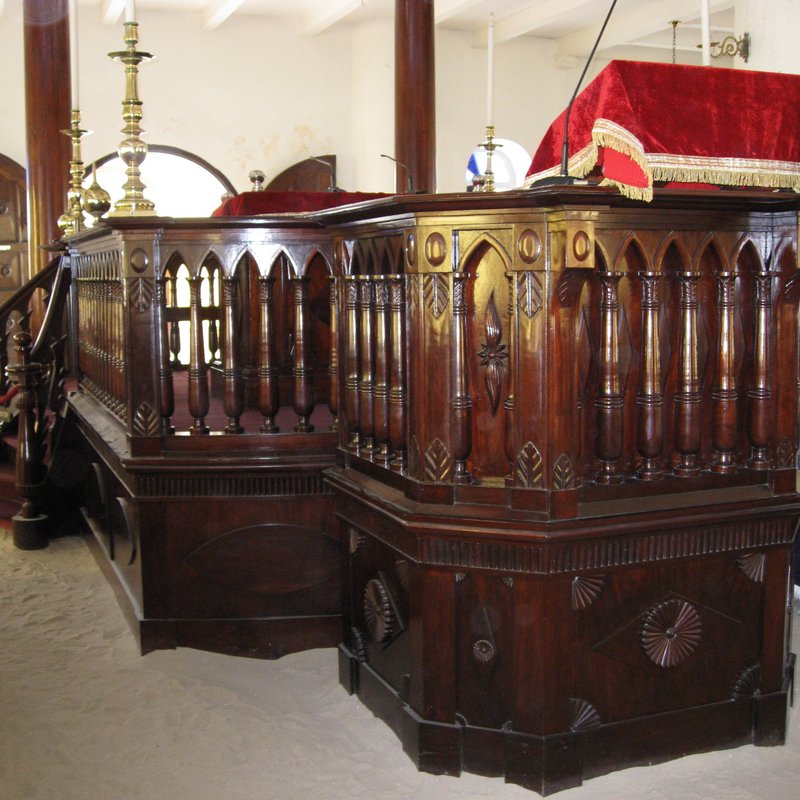
The oldest continuously operating synagogue in the Western Hemisphere, built in 1732. Its famous sand-covered floor — evoking the Israelites' desert wandering — glows under baroque chandeliers. Entry includes the Jewish Cultural Historical Museum, tracing Sephardic Jews who fled the Inquisition to settle here.
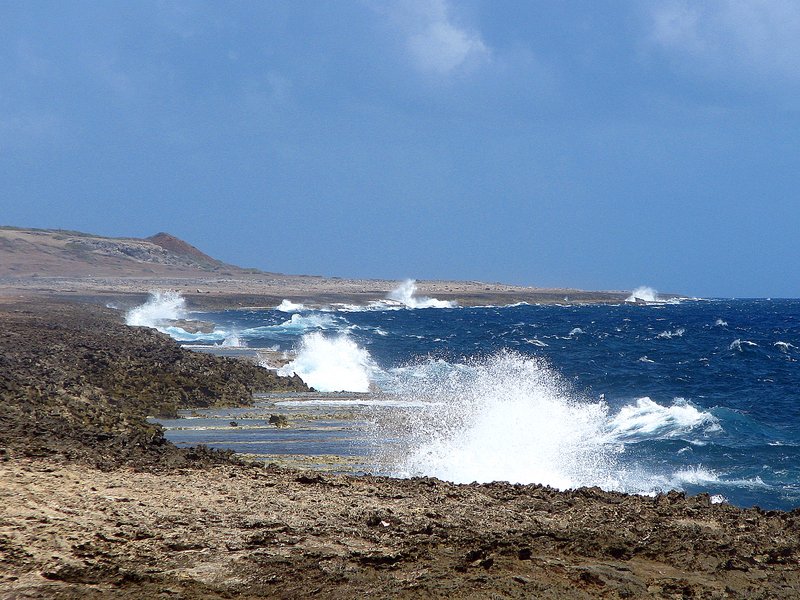
Along Curaçao's wild northern coast, seven sea-inlets sculpted by Atlantic surf form blowholes, sea caves and rocky coves. The most dramatic is Boka Tabla, where you enter a cave and watch waves thunder in from below. Trails weave through thorny scrub, and the beaches serve as nesting grounds for hawksbill turtles.
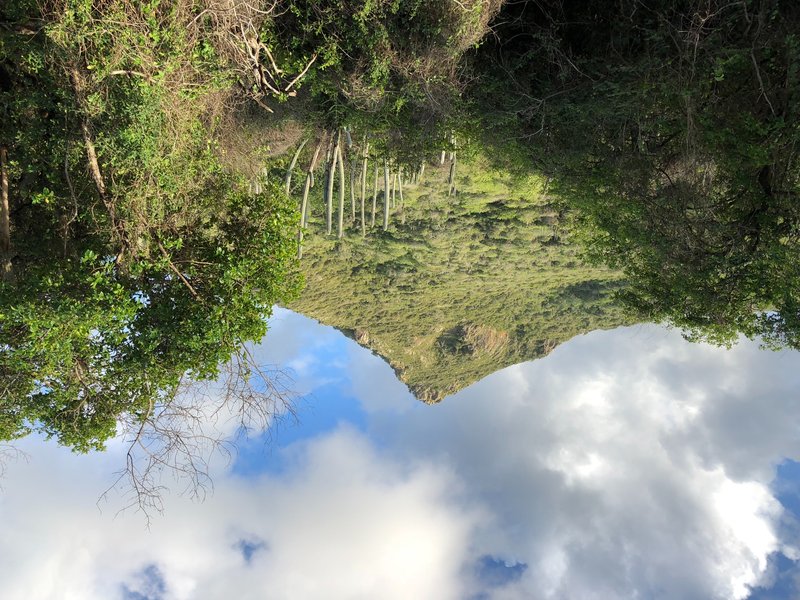
At 375 metres, Mount Christoffel is the highest point on Curaçao and its best hike — a 2–3 hour scramble over volcanic rock rewarded with a 360-degree panorama stretching to Venezuela on a clear day. The park protects white-tailed deer, over 200 bird species and rare native dry forest.
Dutch fort built in 1828 at the mouth of Sint Annabaai. Yellow stone walls, bastions and cannon platforms form part of the UNESCO World Heritage fortification system. The sea-facing ramparts and waterside promenade are open to walk; the view back to the Handelskade is excellent.
An 18th-century Dutch colonial neighborhood on the eastern edge of Punda — pastel-painted townhouses whose balconies lean over narrow streets. Founded as Willemstad's merchant residential quarter, it is now UNESCO World Heritage and the most photogenic streetscape in the city outside the Handelskade.
A Dutch fort built in 1797 on the highest hill of Otrobanda, commanding a panorama over Sint Annabaai, both UNESCO harbor districts and the Caribbean Sea. Walls and bastions survive largely intact; the terrace is the best elevated viewpoint in Willemstad — the only place to see the harbor's full geometry.
An 18th-century Dutch colonial plantation house preserved as a cultural center and gallery. The main house has deep verandas, coral-stone walls and period rooms; the grounds hold gardens and an archive of Curaçaoan art and history. The best place on the island to understand the plantation era's domestic scale.
A guided walk through Willemstad's UNESCO-listed historic districts — Punda and Otrobanda — covering colonial architecture, the floating market, Sephardic history and local street art.
A full-day sailing catamaran trip to uninhabited Klein Curaçao — snorkelling over coral reefs, sunbathing on a deserted white-sand beach, BBQ lunch and open bar on the return crossing.
A 4-hour guided circuit of Willemstad and beyond — historic Punda and Otrobanda, the Chobolobo Blue Curaçao distillery, the Hato Caves approach and Westpunt scenic overlooks.
A boat snorkel tour to two of Curaçao's best coral reef sites on the protected leeward coast — calm, clear water with high fish density; all gear included.
A 4-hour introductory tour combining Willemstad's colonial highlights with a stop at one of the island's southwest beaches — the most accessible overview for first-time visitors.
A 1-hour guided tour of the Chobolobo distillery where the original Curaçao liqueur is made — the distillation process, the laraha orange peel drying rooms and a tasting of classic and seasonal flavors.
A 3.5-hour guided UTV convoy through Curaçao's countryside and rugged coast — off-road dirt tracks, a local beach stop for a swim and back through Willemstad's outskirts with a guide narrating island history.
A full-day jeep tour to Shete Boka National Park on the wild northeastern coast — blowholes, sea turtle nesting beaches, then afternoon snorkeling at Playa Lagun with a local lunch mid-day.
A half-day speedboat tour along the southwest coast — Kokomo Beach, the Blue Room sea cave for a swim-through, snorkeling over coral reef and a stop at Cas Abao Beach.
Curaçao's national dish — a hollowed-out Edam cheese shell stuffed with spiced chicken, olives, raisins and capers, then baked until the cheese melts into a golden crust.
A dense cornmeal side dish that accompanies nearly every traditional Curaçaoan main — sliced into wedges or served soft, soaking up braised meats and island stews.
The island's famous electric-blue liqueur, made from the dried peel of the laraha citrus — a bitter orange grown only on Curaçao and distilled at the Senior & Co. Chobolobo Distillery since 1896.
Foreign number: not accepted. — sign up with a local Curaçao SIM; foreign numbers, including US ones, have been rejected at registration.
The dominant delivery and ride-hailing platform on the island; covers Willemstad and the main hotel and beach areas; food delivery spans a reasonable selection of local restaurants and cafés though the roster is smaller than a major city — order early in the evening when demand is highest.
Foreign number: not accepted. — sign up with a local Curaçao SIM; foreign numbers, including US ones, have been rejected at registration.
The primary ride-hailing app on the island; covers Willemstad and the main resort and beach areas; reliable for hotel pick-ups and moving between districts; driver supply is thinner in the north and west toward Christoffel, so allow extra wait time there.
In 1499, Spanish conquistadors arrived at Curaçao and pronounced it — along with Bonaire and Aruba — one of three islas inútiles, useless islands, because they found neither gold nor a native population large enough to enslave for plantation work. The Spanish were wrong about the gold, but they were right that Curaçao would defy easy exploitation. The island's poor soil and near-total absence of fresh water made conventional plantation agriculture nearly impossible, so the Dutch, who seized it in 1634, built something different: a trading hub. Willemstad became one of the busiest entrepôts in the Atlantic world, and the Sint Annabaai channel — the same waterway the Queen Emma Bridge still crosses — hosted ships carrying enslaved people, cotton, indigo and silver between three continents for more than two centuries. It is not a comfortable history, and the Kurá Hulanda Museum does not let you forget it.
Out of that unlikely soil grew one of the island's strangest exports: a liqueur the colour of a swimming pool. The laraha orange — a descendant of Valencia oranges brought by Spanish settlers in the 1500s — proved spectacularly unfit to eat. The soil was too arid, the fruit too bitter. But the dried peel was extraordinarily aromatic, and in 1896 a Dutch family named Senior began distilling it with neutral spirits at Landhuís Chobolobo. The resulting liqueur was originally amber. The blue came later, when someone decided that an island famous for the colour of its water deserved a drink to match. Today Blue Curaçao is in cocktails on every continent, and almost nobody who orders one knows that the island it is named for is Dutch, speaks four languages on any given street corner, and was once dismissed as utterly worthless.