From Hotel: 13 min · 6 min → Basilica of San Francisco
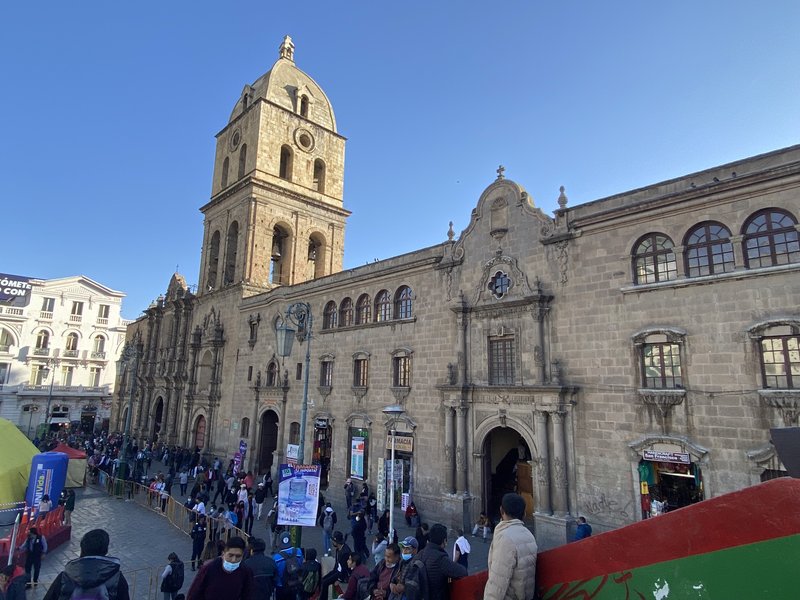
1.Basilica of San Francisco~1 hr
A 18th-century Andean Baroque basilica whose carved stone facade weaves condors, native fruit and Aymara motifs into a Franciscan church, with a museum, crypt and rooftop reached by guided tour.
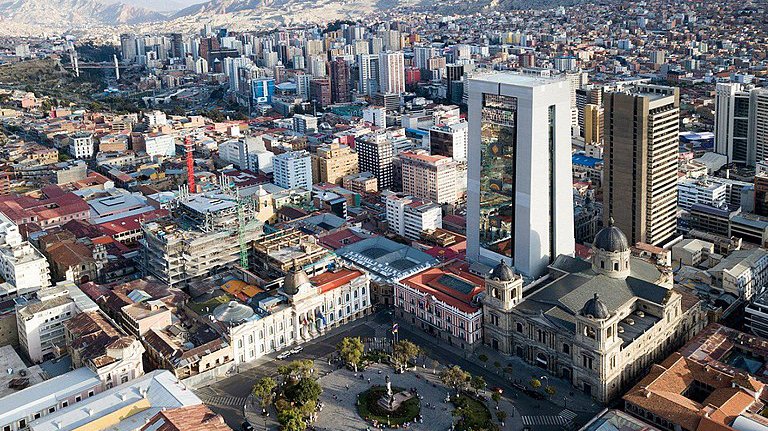
The historic main square of La Paz, named for independence leader Pedro Domingo Murillo and ringed by the Government Palace, the Legislative Assembly and the Cathedral — the working center of Bolivian political life since colonial times.
1 min · 2 min → Cathedral Basilica of Our Lady of Peace
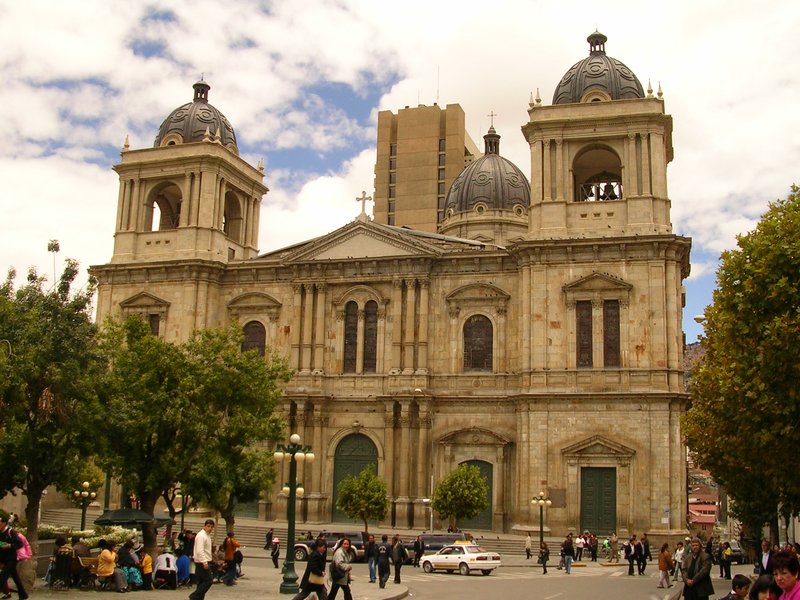
3.Cathedral Basilica of Our Lady of Peace~30 min
La Paz's neoclassical cathedral took a century to build — begun in 1835, its twin towers only added for Pope John Paul II's 1989 visit — and holds a five-nave interior on the same square as the Government Palace.
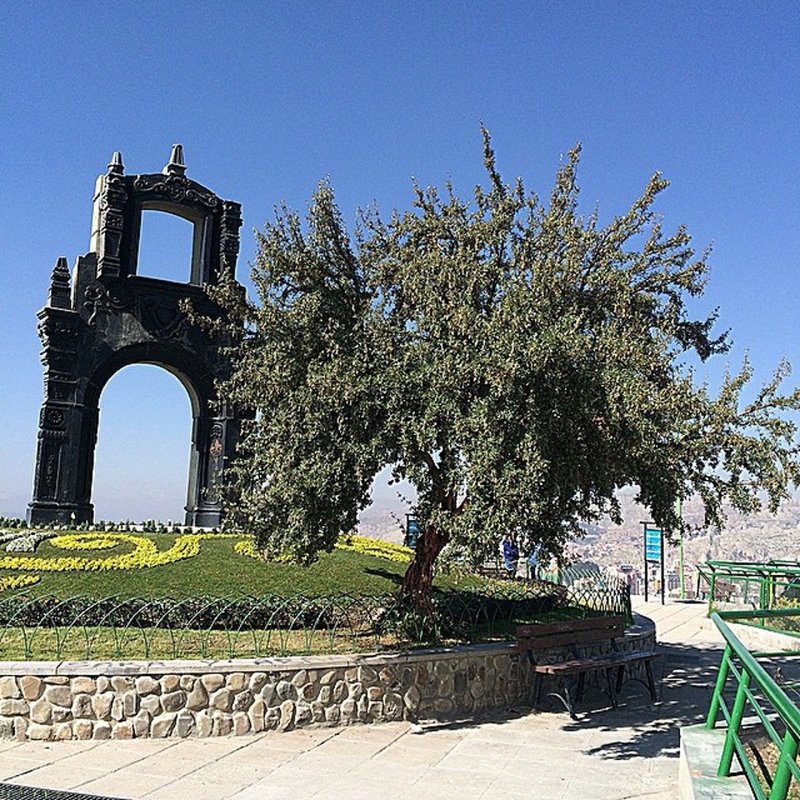
A hilltop lookout above Villa Pabón, named for the small falcon that once nested here, delivering a near-360° panorama of La Paz's canyon of red-brick houses climbing toward El Alto — with snow-capped Illimani on the horizon at sunset.
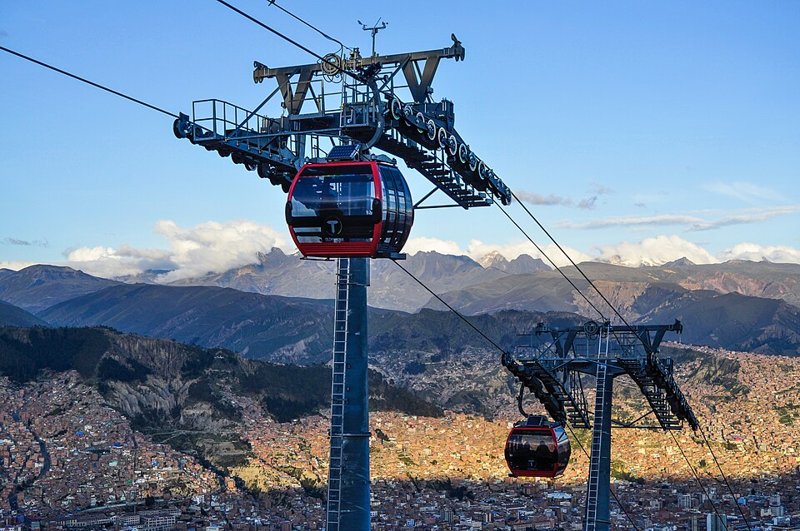
The world's highest and longest urban cable-car network — ten lines and 30km of cable strung across the canyon linking La Paz, at 3,600m, with El Alto on the rim above at 4,000m. The Red Line climbs past the cemetery district to El Alto with the widest views of the city and Illimani in the network.
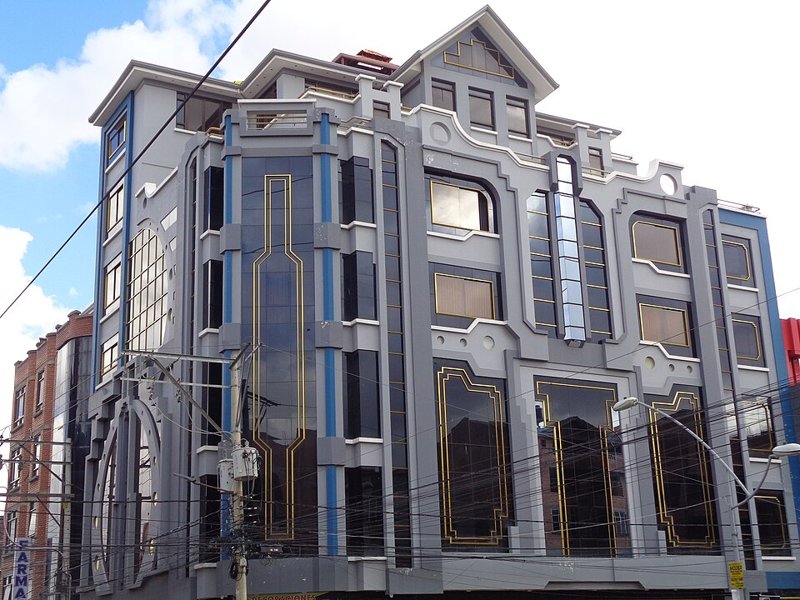
Neo-Andean "cholets" — chalet-sized mansions in circular windows and psychedelic Tiwanaku-inspired facades — dot El Alto's skyline, the self-taught architect Freddy Mamani's answer to newly wealthy Aymara identity. A guide gets inside one of the 60-plus buildings, otherwise closed to visitors.
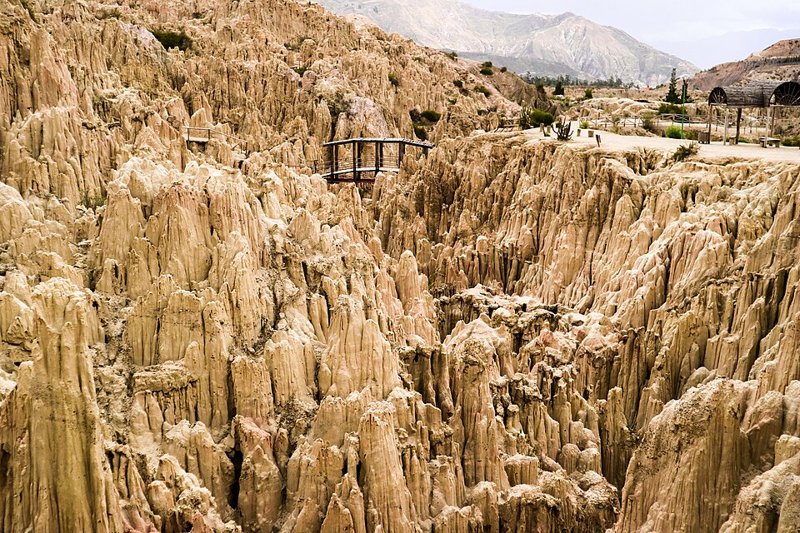
A protected badland of clay and sandstone spires, craters and stalagmite-like chimneys carved by erosion 10km south of downtown, colored from pale beige to deep violet by shifting mineral content. Neil Armstrong gave it its name on a visit shortly after his own moon landing.
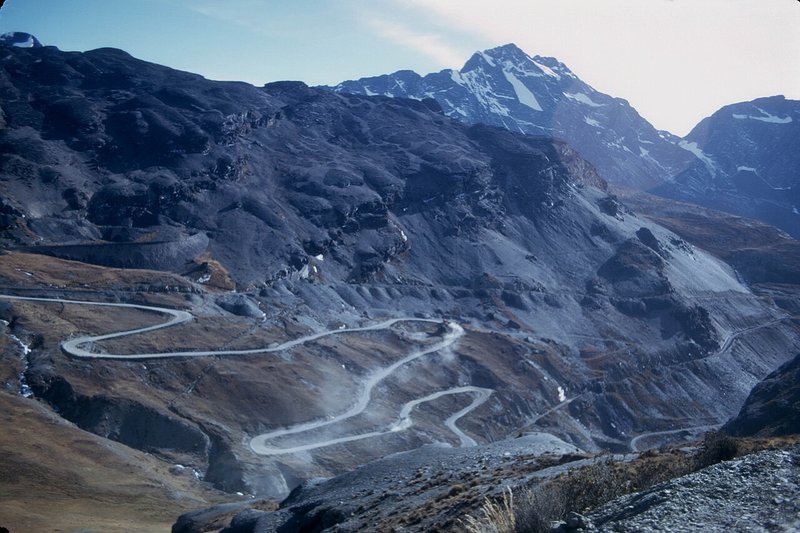
A guided downhill ride down the North Yungas Road — 64km from the 4,650m pass at La Cumbre into the cloud forest above Coroico, on a narrow gravel track cut into the mountainside with a sheer drop on one side. Vehicle support, safety gear and a stop to swim and rest at an ecolodge are included; return to La Paz is by road.
An overnight trip to Lake Titicaca — Copacabana's lakeside cathedral, then a boat to Isla del Sol, the Inca sun-cult's sacred island, for a night among its ruins and terraced hillsides before returning to La Paz.
Pairs the pre-Inca Tiwanaku ruins — monumental stone gateways older than the Inca themselves — with an afternoon on the shore of Lake Titicaca, the world's highest navigable lake, in a single long day out of La Paz.
An overnight round-trip bus to the Salar de Uyuni, the world's largest salt flat — a blinding white expanse that turns into a mirror after rain, plus the rusted Train Cemetery outside Uyuni town.
South American plates a block from the hotel, on the corner of Sagárnaga and Linares in the middle of the Witches' Market district — portions built for sharing.
Bolivia's national snack — an oven-baked pastry with a slightly sweet crust around a juicy, spiced beef-or-chicken-and-potato filling, eaten mid-morning, always before noon.
A highland soup native to La Paz itself, made with lamb, vegetables and chuño — freeze-dried potato, an Andean preserving technique that predates the Inca — garnished with fresh mint.
Foreign number: accepted — the sign-up form takes any country code, though SMS codes to non-regional carriers can take a few minutes to arrive.
Bolivia's largest delivery marketplace and the widest restaurant list in La Paz, but the app is Spanish-only and its Zona Sur coverage is thinner than the historic center and Sopocachi.
A traditional Andean peña running since 1978 — live folk music, costumed regional dance and a Bolivian dinner menu, with musician Pepe Murillo a stage regular.
Foreign number: not required — the same account used at home works in La Paz, no new sign-up.
Covers the whole city including El Alto and Zona Sur, but La Paz's grid of one-way streets and hill switchbacks means drivers sometimes decline a fare or take longer than the quoted ETA; it also runs 10–20 Bs above a street taxi.
Foreign number: accepted — the country flag on the phone field is user-selectable at sign-up.
A bargaining model instead of a fixed fare — the rider names a price and drivers accept or counter — which locals lean on for the cheapest rate in the city; expect a short wait while offers come in.
La Paz runs on two exchange rates and two clocks of altitude
Bolivia's official Boliviano rate and its street "blue" rate have diverged sharply since the recent dollar shortage — cards and bank withdrawals settle at the weaker official rate, while cash dollars change hands informally for meaningfully more Bolivianos. Bring cash dollars in good condition and change small amounts as needed rather than relying on a card for everything.
At 3,640m, altitude is the real itinerary planner: most visitors feel some breathlessness or a mild headache for the first day or two. Coca tea — mate de coca — is sold everywhere and is the local first response; keep the first day light, drink more water than usual, and treat Day 3's Death Road ride as a poor choice for anyone still adjusting.
Mi Teleférico is not a sightseeing ride laid on for tourists — it is the city's actual mass-transit backbone, carrying more daily trips than any bus line, so the cheapest way to see La Paz from above is also the way locals commute to work.