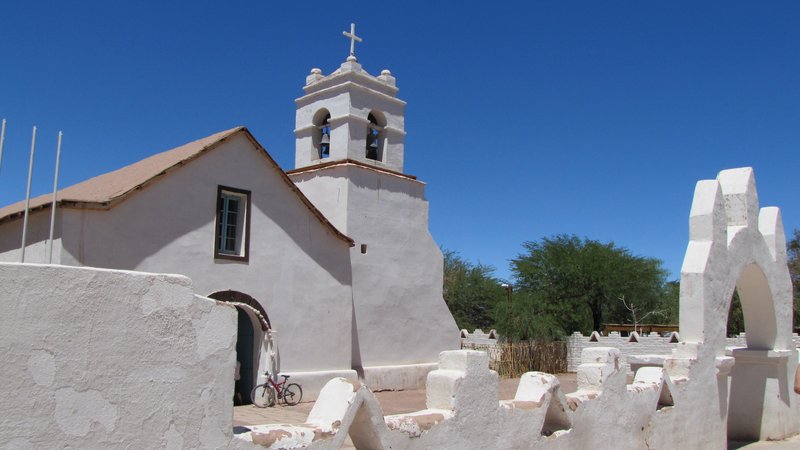
A squat 1745 adobe church on the main plaza, built with cactus-wood roof beams and carob-wood joinery — one of the oldest and most complete examples of Andean colonial architecture in northern Chile.
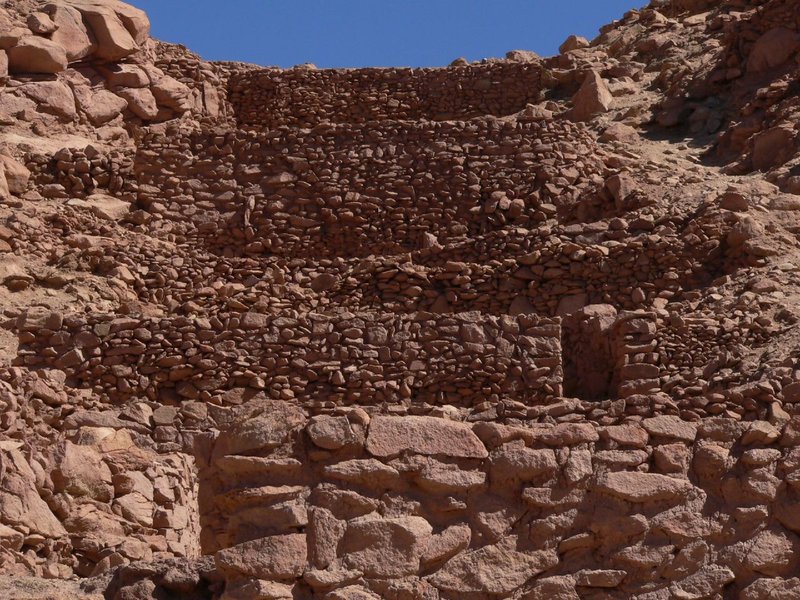
A stone hilltop fortress built by the Atacameño people in the 12th century to guard the San Pedro river valley, with a steep switchback trail climbing past restored defensive walls to a viewpoint over the oasis and Licancabur volcano.
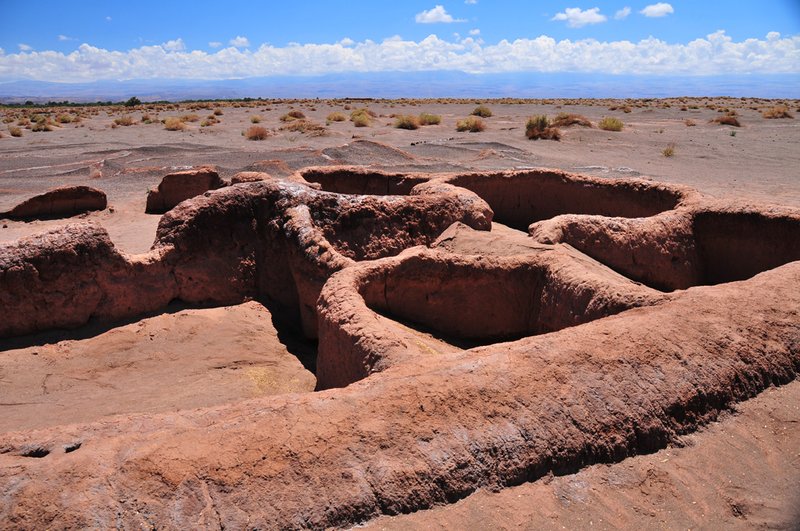
The excavated ring-walled remains of a village first settled around 380 BCE, its circular mud-and-vault houses among the oldest confirmed human structures in the Atacama Desert, half-buried again by the dunes that preserved them.
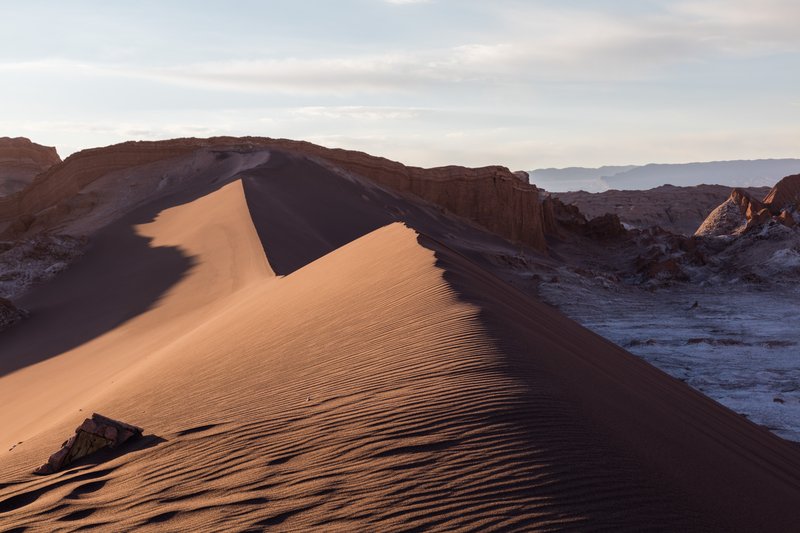
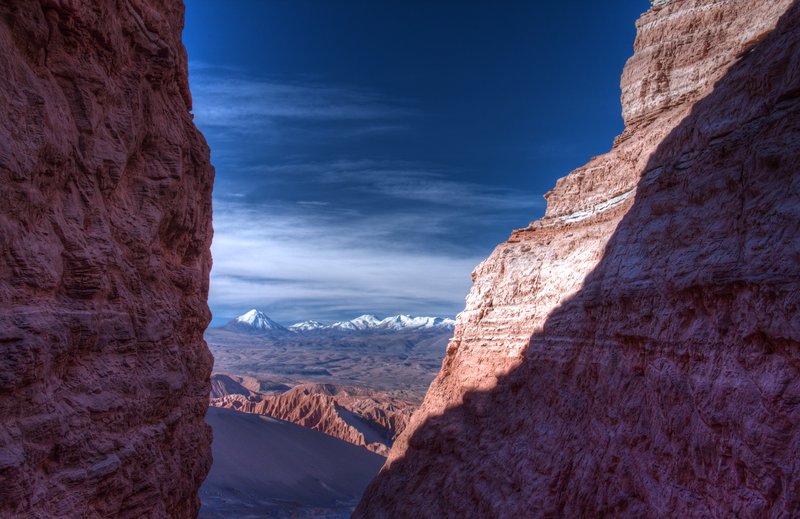
Wind- and water-carved dunes, salt crusts and rock ridges inside the Cordillera de la Sal, glowing red and gold as the sun drops — the single most photographed landscape in the Atacama, best timed around sunset.
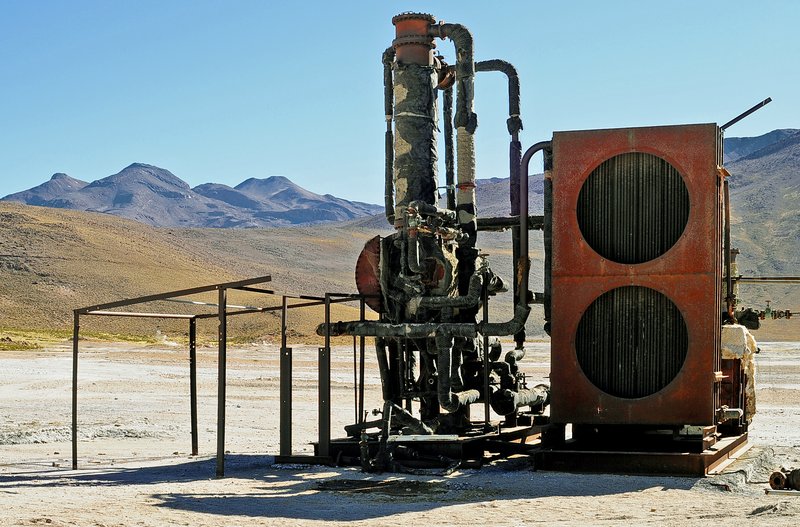
Over 80 fumaroles and geysers erupting across a high-altitude basin in the Andes, their steam columns tallest and most photogenic at sunrise when the temperature contrast with the freezing night air is greatest.
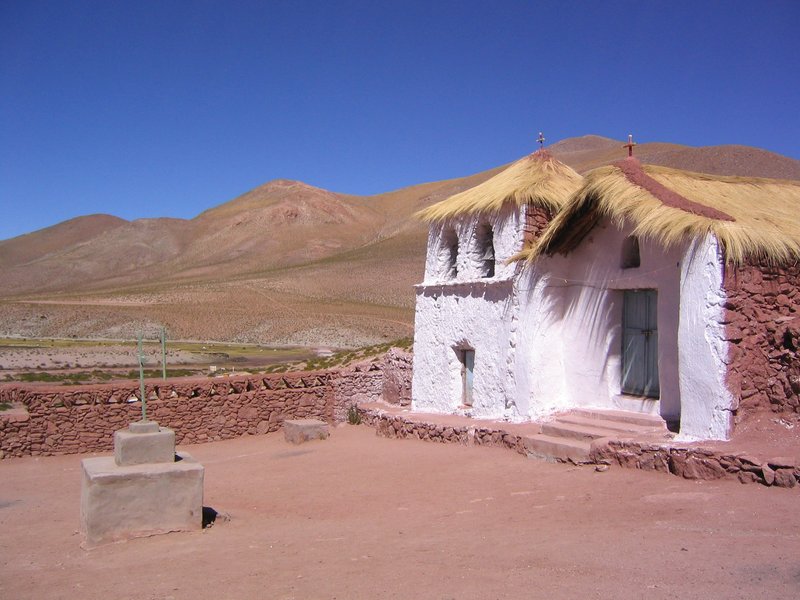
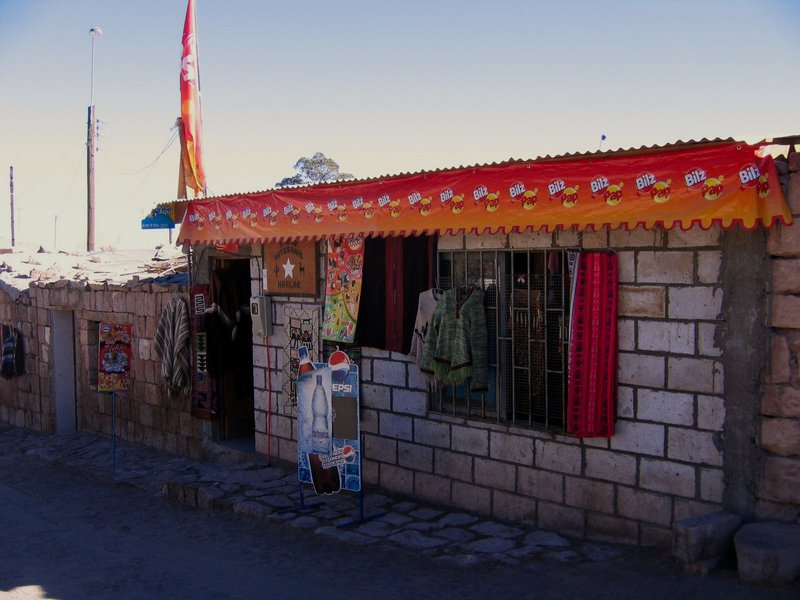
A cluster of stone-and-adobe houses at 4,000 m, home to a handful of Atacameño families and their llama herds, with a small 18th-century church and stalls selling llama-meat anticuchos and goat-cheese empanadas.
Eight geothermal pools connected by wooden walkways along a canyon river at 3,475 m, the water naturally warm year-round — the natural place to thaw out after a pre-dawn start at the geysers.
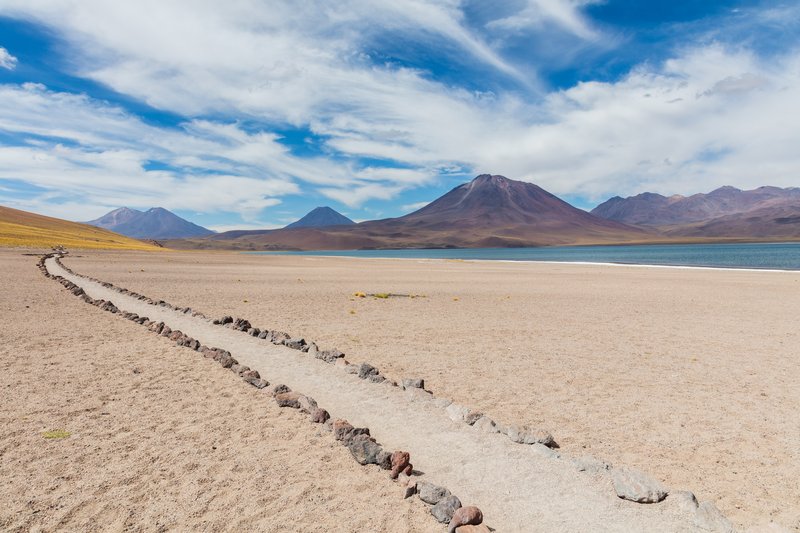
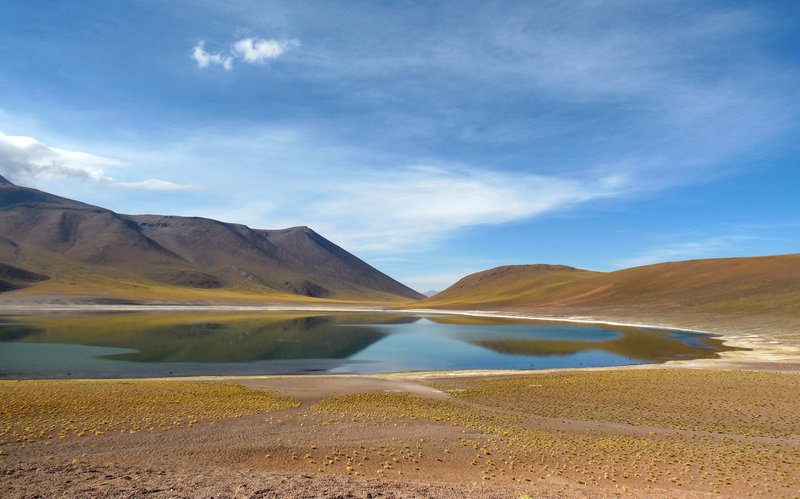
A brilliant blue-green brackish lake at 4,140 m, fed only by groundwater and springs, framed by the snow-streaked cone of Cerro Miscanti — one of the highest-altitude lagoons on the whole itinerary.
A smaller brackish lake at 4,120 m, split from Miscanti by an ancient lava flow and fed from it by seepage, sitting directly beneath the volcanic cone that shares its name.
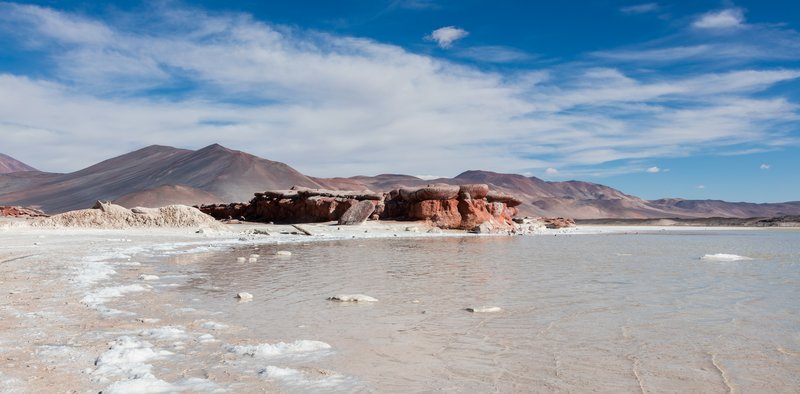
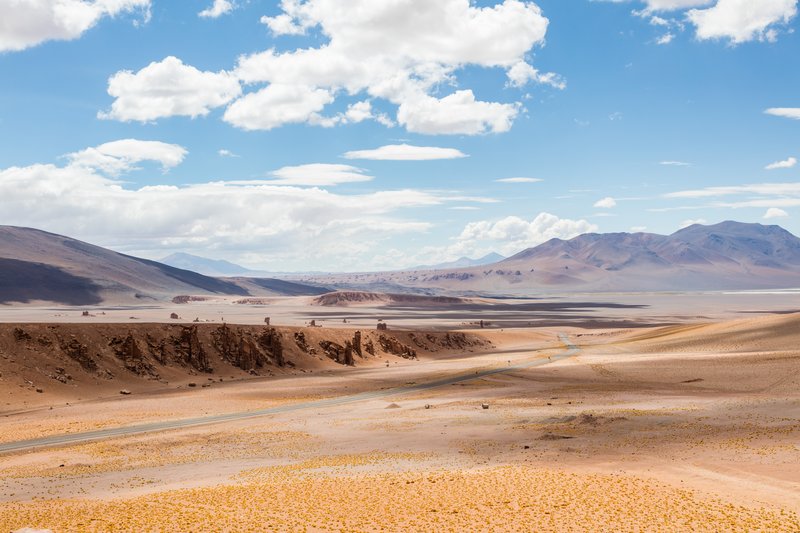
Rust-red, iron-oxide-stained rock outcrops rising from a shallow turquoise salt lagoon inside the Salar de Talar at 4,200 m — one of the most improbable colour combinations in the whole desert.
A village built almost entirely from pale volcanic liparita stone, its 1750s San Lucas bell tower a National Monument, with a green quarry-canyon orchard of pear, fig and apricot trees standing in total contrast to the surrounding desert.
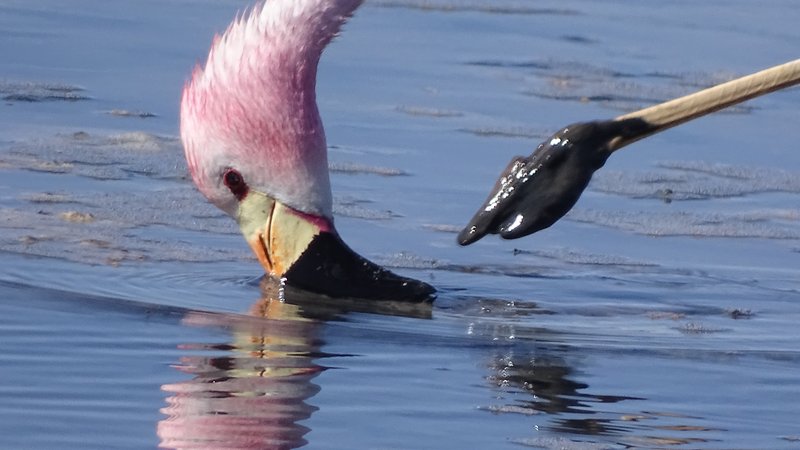
A crusted-salt wetland inside the vast Salar de Atacama, Chile's largest salt flat, where Chilean, Andean and James's flamingos wade and feed against a backdrop of volcanoes — the most reliable flamingo-viewing spot in the desert.
Towering red-gold sand dunes and wind-carved ridges just outside town, inside the same salt-and-clay Cordillera de la Sal as Valle de la Luna — the desert's main sandboarding ground, and a sunset viewpoint in its own right.
Freestanding volcanic rock pillars balanced upright on the open plain at 4,200 m inside the La Pacana caldera, reached on the little-visited Salt Flats Route alongside the turquoise Salar de Quisquiro — CONAF closures permitting, this remote loop is reached on a private, custom-arranged 4x4 excursion booked directly with a local operator rather than a fixed-departure platform tour.
Seven crystal-clear salt lagoons an hour from town across the Llano de la Paciencia, with a float in one and a sunset snack among dramatic salt-and-rock formations.
A float in the turquoise, ultra-saline Laguna Cejar plus visits to the nearby Ojos del Salar sinkholes and Laguna Tebinquiche, all inside the Salar de Atacama.
A guided alternative to visiting Valle de la Luna independently — Las Tres Marías, Duna Mayor and Piedra del Coyote, ending with sunset drinks and snacks.
A guided ascent of the extinct 5,600 m Cerro Toco volcano, with a professional mountain guide, first-aid kit and radios, ending in panoramic views of Bolivia's altiplano and the ALMA telescope array.
A geological and cultural tour to the Rainbow Valley's mineral-streaked slopes and the ancient Yerbas Buenas petroglyphs left by the Atacameño people, with breakfast included.
Telescope viewing, guided commentary and a campfire with drinks and snacks, with an alternate meeting point at Plazoleta la Apacheta for outlying stays.
History, geology and archaeology in one outing — the Matancilla region's Rainbow Valley slopes and the Yerbas Buenas petroglyph field, with an included breakfast.
A 3-in-1 highland excursion — an outdoor breakfast, the crimson Piedras Rojas formations, Socaire village and the Miscanti/Miñiques lagoons, with lunch included.
A multi-day cross-border expedition into Bolivia's southwest — volcanoes, coloured lagoons, geysers and the Salar de Uyuni itself, ending back in San Pedro or in Uyuni town.
Llama meat — soft-textured and closer to lamb than beef — served the classic Chilean "a lo pobre" way, fried with onions, a bed of chips and a fried egg on top.
A wild desert herb with a minty, aromatic bite, steeped into pisco sours and folded into homemade ice cream — the flavor most associated with the Atacama.
A slow-cooked dried-corn stew with beef, lamb and pork fried in garlic, onion and paprika — the dish that anchors San Pedro's traditional ceremonies and feast days.
No food delivery platform serves San Pedro de Atacama — PedidosYa, Uber Eats and Rappi all stop well short of this town in their Chile coverage. Restaurants take phone orders for pickup, and many hotels and lodges phone the order in for guests or send staff to bring food back from town.
Getting Around
Uber
Foreign number: accepted. — the global app takes any country's mobile number at signup and Chilean carriers deliver the SMS verification code without issue.
Uber runs here as a radio-taxi request layer rather than full ride-hailing — a request is filled by a licensed local taxi driver rather than a private car, so wait times run longer than in a big city and coverage can thin out after dark.
The desert rewards slowing down more than any checklist
San Pedro de Atacama sits at 2,408 m, and the altitude is real before it is anything else — Days 3 and 6 both cross 4,200 m, so the first day or two are worth keeping light on alcohol and heavy exertion, whatever the itinerary suggests.
The single best-known activity in this guide doesn't have a fixed address: a night under the Atacama's skies, reputed among the clearest and darkest on Earth, is reason enough on its own to extend a stay past the length of the excursions. A stargazing tour ships in the Tours section for whichever clear night works best in the itinerary — moonless nights show the most stars, but a bright moon over the Cordillera de la Sal is its own kind of unforgettable.
Nights are cold at this altitude year-round, even when the daytime desert sun feels relentless — pack real layers for every excursion that runs past sunset, not just for the stargazing tour.
Cash is still king here: many tour operators, the smaller restaurants and the CONAF and community-run reserve entrances at Valle de la Luna, Miscanti-Miñiques and Chaxa take cash only or add a surcharge for cards, and ATMs in town run out of bills on busy weekends.