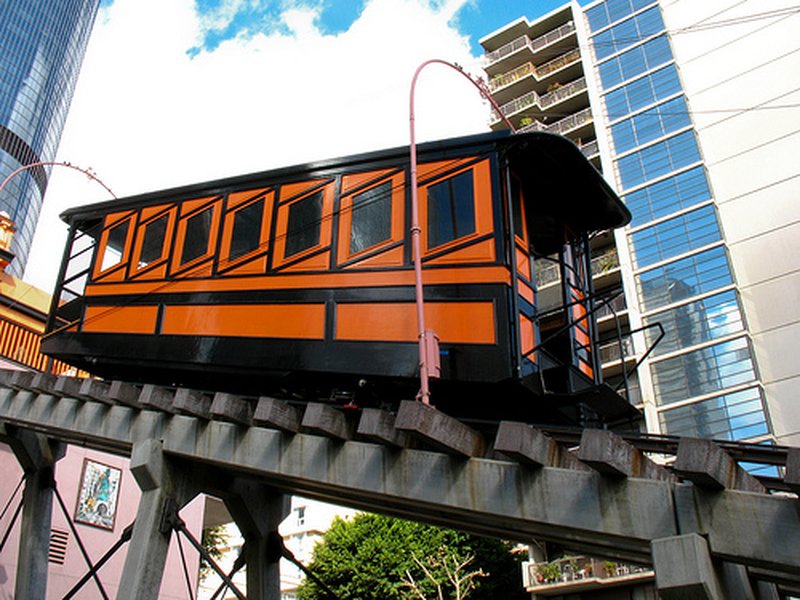
A funicular railway first built in 1901 and billed as the world's shortest, climbing a single steep block between Hill Street and Bunker Hill. The two orange-and-black cars — Olivet and Sinai — have been a Downtown landmark for over a century and still carry passengers the 298-foot climb.
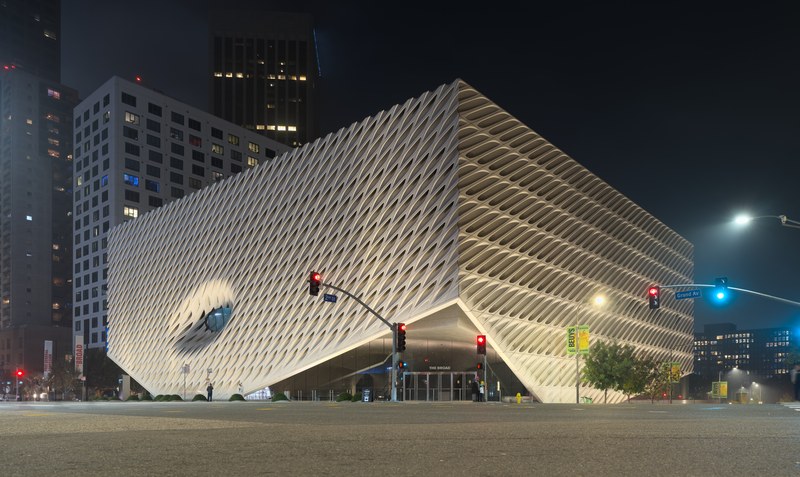
A contemporary art museum behind a honeycomb "veil" facade, directly across Grand Avenue from Disney Hall. The free collection runs from Warhol and Basquiat to Koons, and the timed-entry Infinity Mirror Rooms by Yayoi Kusama are the signature draw — reserve a slot ahead online.
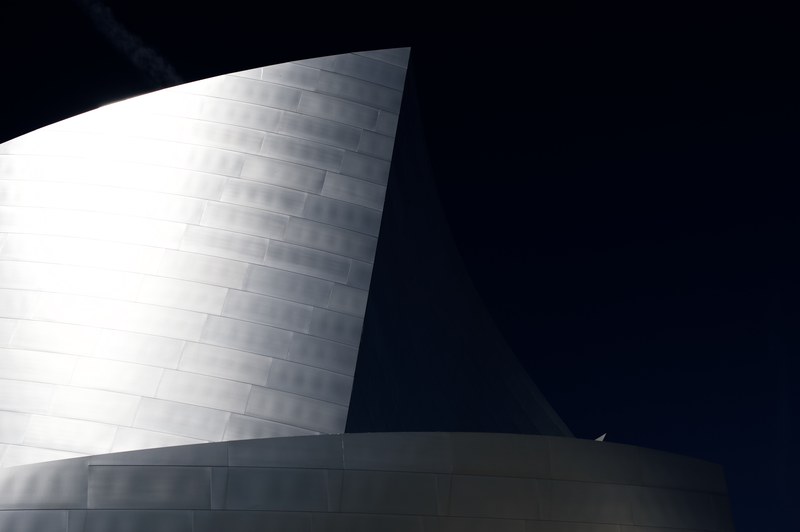
Frank Gehry's billowing stainless-steel concert hall, home of the LA Philharmonic and the sculptural centrepiece of Downtown's Grand Avenue. A free self-guided audio tour, narrated by John Lithgow, covers the lobby, gardens, and exterior.
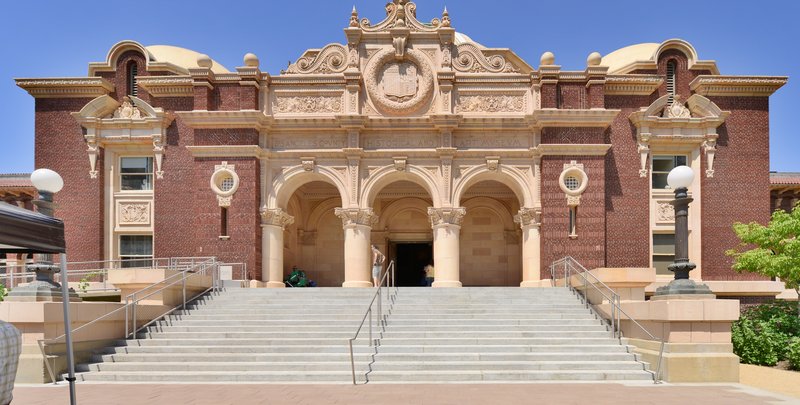
A 1913 Beaux-Arts building in Exposition Park housing nearly 35 million specimens, from a full-scale dinosaur hall to a live butterfly pavilion. The rotunda's trio of mounted elephants is one of the most recognizable museum interiors in the city.
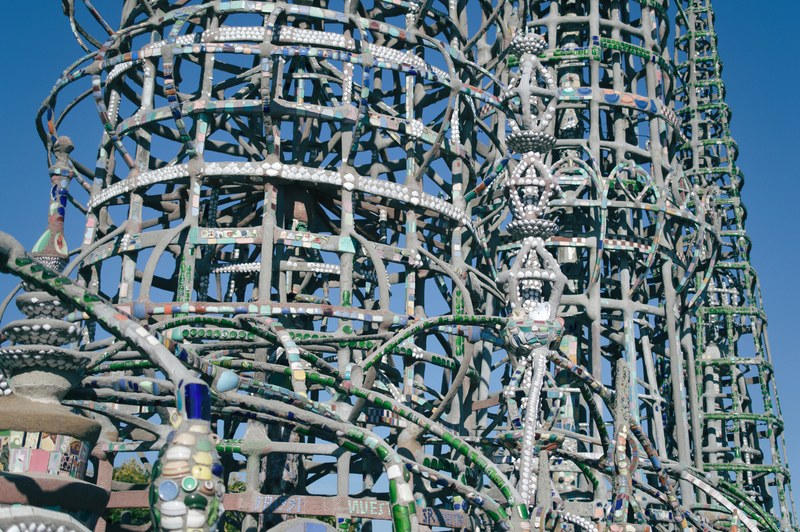
Seventeen interconnected steel and mortar spires built entirely by hand by Italian immigrant Simon Rodia between 1921 and 1954, encrusted with broken tile, glass, and seashells. The tallest tower reaches 99 feet and the complex is one of the most remarkable works of outsider art in the world.
The largest art museum in the western United States, spanning seven buildings on Wilshire Boulevard's Miracle Mile. The outdoor installation Urban Light — 202 restored cast-iron street lamps — stands at the entrance and is the most photographed artwork in Los Angeles.
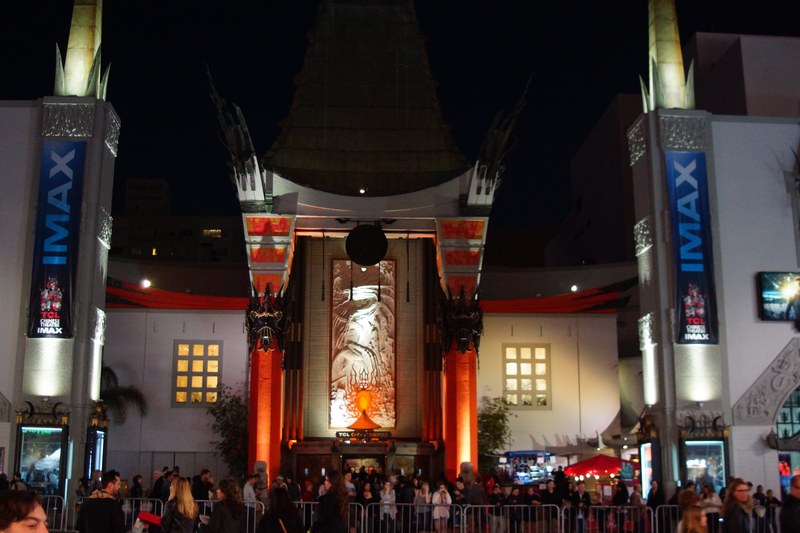
The 1927 movie palace on Hollywood Boulevard, built as a fantasy Chinese pagoda and still hosting premieres. Its forecourt holds nearly 200 hand- and footprints of film legends pressed into the concrete, free to wander among the Walk of Fame stars.
An Art Deco landmark on the south slope of Mount Hollywood, free to enter, with sweeping views over the LA basin, the Hollywood Sign, and a domed planetarium. The terraces at sunset are the classic Los Angeles panorama.
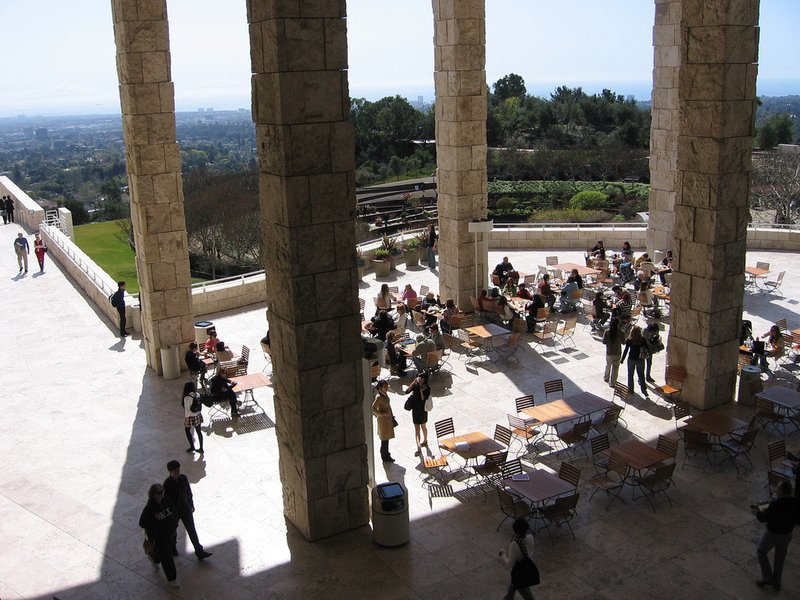
Richard Meier's travertine-clad campus on a Brentwood hilltop, reached by a cable-hauled tram. Free to enter, it pairs European paintings, the Central Garden, and some of the best views in the city. Admission is free; only parking is paid, and a timed entry is reserved online.
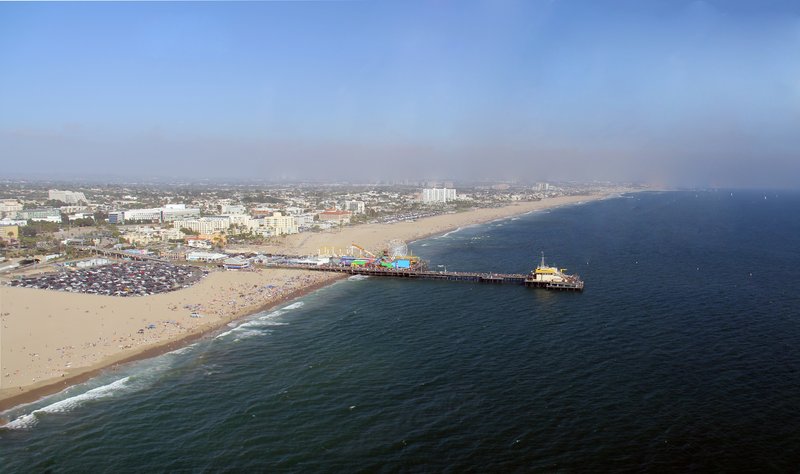
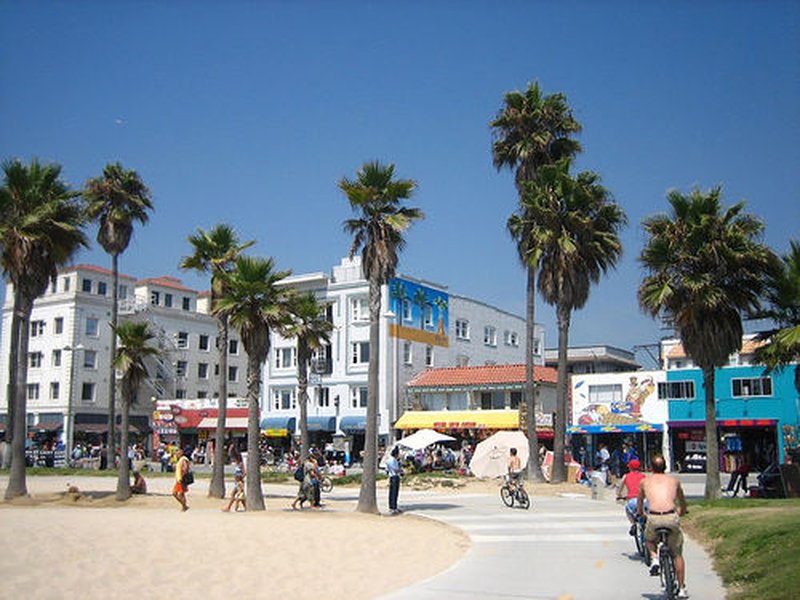
The 1909 pier marking the western end of Route 66, with Pacific Park's solar-powered Ferris wheel, an aquarium under the deck, and wide ocean views. The boardwalk and beach below it are the postcard image of the LA coast.
A quiet pocket of footbridges and waterways dug in 1905 to recreate Venice, Italy, and now lined with bungalows and gardens. A slow loop along the canal walkways is one of the most charming, low-key strolls on the Westside.
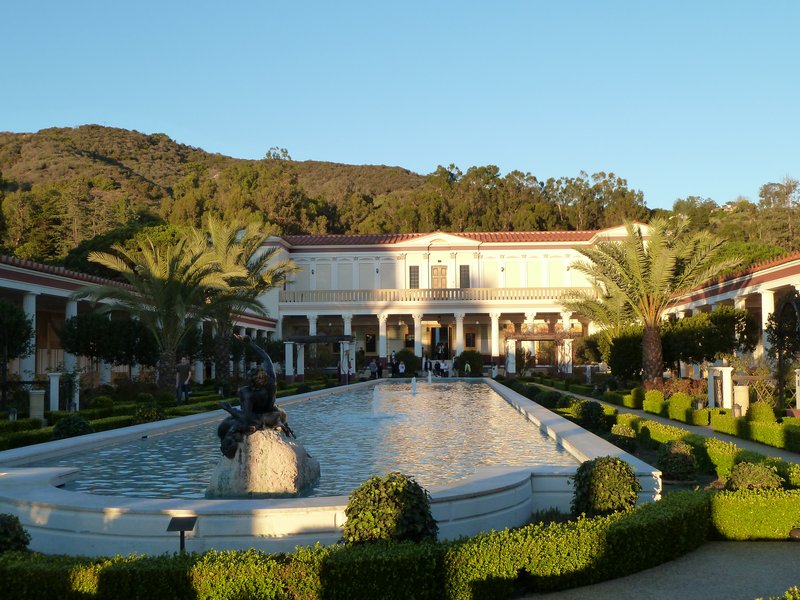
A J. Paul Getty Museum campus housing 44,000 Greek, Roman, and Etruscan antiquities inside a reconstruction of a 1st-century Roman seaside villa. The outdoor peristyle gardens — colonnaded courtyards with mosaic floors and bronze sculptures — are the defining experience on the West Coast for ancient art.
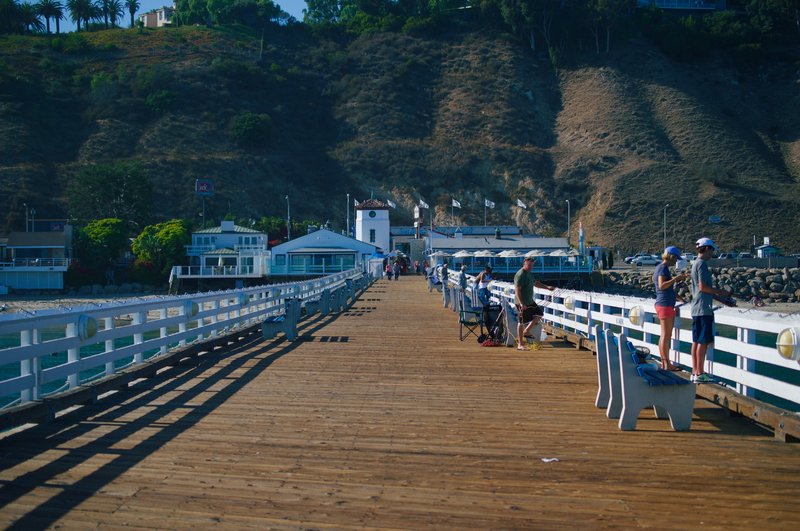
A 780-foot pier extending into Santa Monica Bay from the Pacific Coast Highway, originally built in 1905. The views back toward the Santa Monica Mountains and the length of Zuma Beach make it the natural endpoint for a day on the Malibu coast.
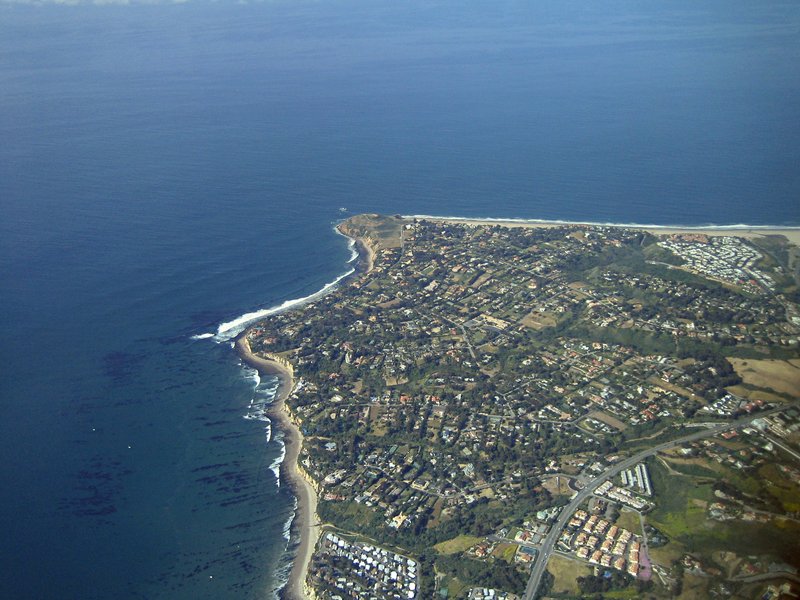
A rocky headland at the northern end of Santa Monica Bay. A clifftop trail climbs bluff dunes to panoramic views of Catalina Island; gray whales migrate past directly below in winter. The volcanic tidepools at the base rank among the most extensive on the Southern California coast.
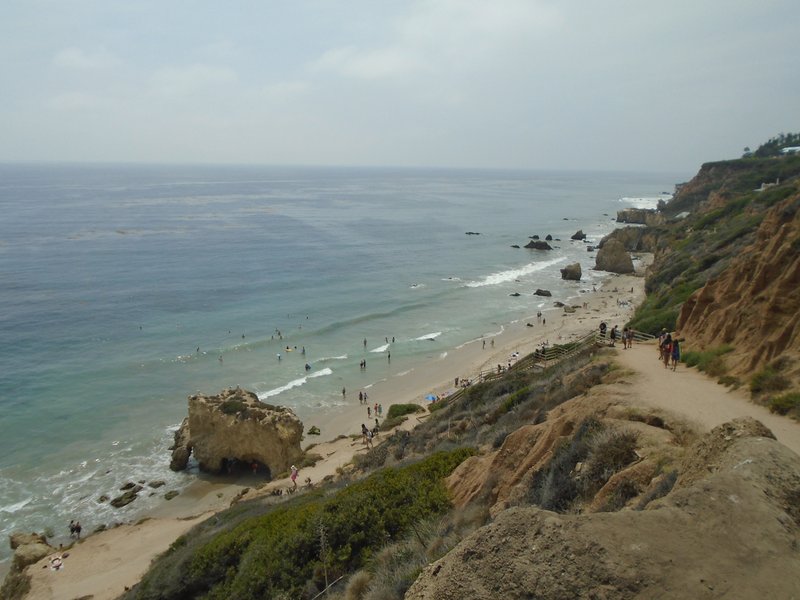
The most dramatic beach in Malibu: sea stacks, natural rock arches, and wave-carved caves line a narrow strip of sand accessible only via a steep staircase from the clifftop parking lot. The rock formations and sheltered cove geometry make this beach visually unlike anything else on the LA coast.
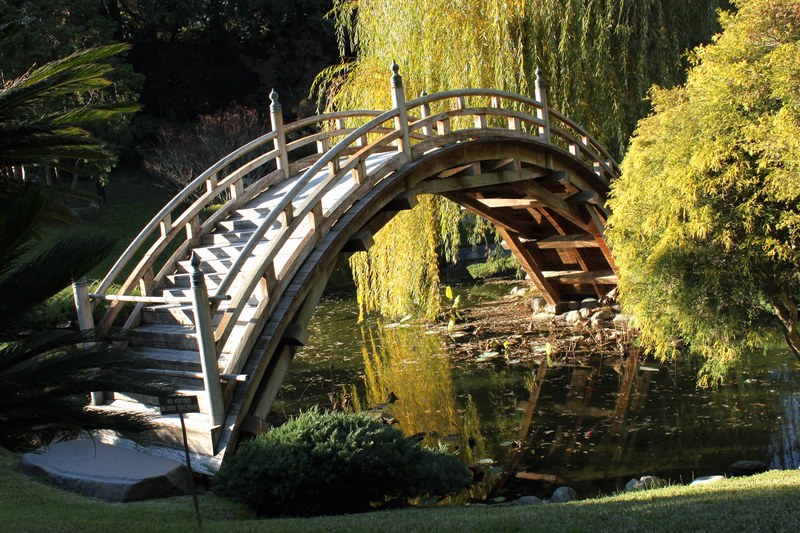
Henry Huntington's 207-acre San Marino estate combines three institutions: a research library holding a Gutenberg Bible; galleries anchored by Gainsborough's The Blue Boy; and 15 botanical gardens culminating in a 12-acre Chinese Garden modeled on classical Suzhou design.
One of the finest small art museums in the United States — 12,000+ works spanning 2,500 years: Raphael, Rembrandt, Goya, Degas, and Picasso in the galleries; an exceptional Indian and Southeast Asian sculpture collection; and a serene outdoor garden with a reflecting pond.
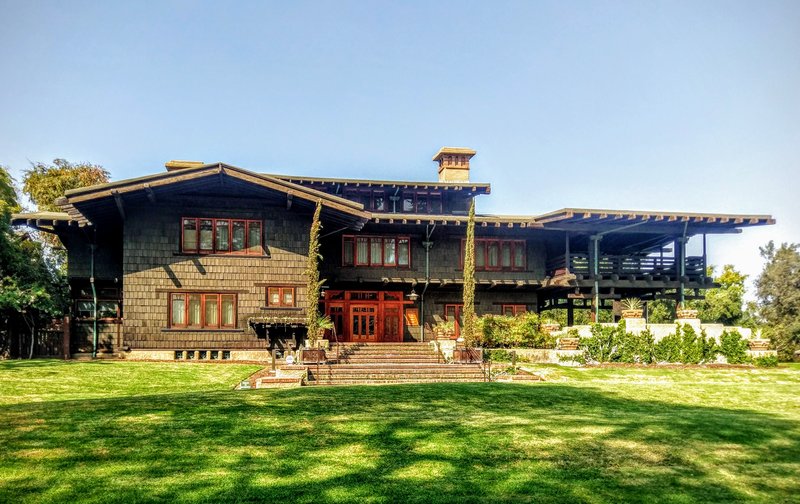
The 1908 masterpiece by Charles and Henry Greene — the supreme example of American Arts and Crafts: teakwood joinery, art glass windows, and Japanese-influenced overhanging eaves built for Procter & Gamble heir David Gamble. Docents work room by room through the obsessive craft detail.
Four-hour small-group van tour hitting Hollywood Walk of Fame, Beverly Hills mansions, Rodeo Drive, Sunset Strip, and the Santa Monica Pier — the city's greatest hits with a knowledgeable local guide.
90-minute guided hike to the closest legal vantage point of the Hollywood Sign — canyon trails, film-history commentary, and the best photo spots above the city.
Two-hour group van tour covering the Hollywood Walk of Fame, Rodeo Drive, the Sunset Strip, and celebrity home drive-bys — the city's most iconic sights in one efficient sweep with a local guide.
Eight-hour small-group coach tour covering Hollywood, Beverly Hills, Santa Monica, and the Sunset Strip — a full LA sweep with a local guide who keeps the commentary lively all day.
Two-hour open-air double-decker loop through Hollywood and Beverly Hills — celebrity home drive-bys, Rodeo Drive, the Sunset Strip, and the Walk of Fame with live guide commentary. 14 max per bus.
Two-hour guided walk through DTLA's historic core — Grand Central Market tastings, Angels Flight railway ride, Bradbury Building exterior, and Walt Disney Concert Hall, with food and architecture commentary woven together. 15 max.
Two-hour open-air guided loop through Hollywood — celebrity home drive-bys, the Walk of Fame, TCL Chinese Theatre, Sunset Strip, and Rodeo Drive in a canopy-top Mercedes minibus with live commentary. 14 max.
Foreign number: accepted. — verification codes arrive by SMS to any international number.
The most widely used delivery platform in Los Angeles with deep coverage across all major neighborhoods from Santa Monica to Silver Lake and Downtown; delivery times are competitive across most of the metro area.
Foreign number: accepted. — uses the same Uber account for verification; SMS codes reach international numbers.
Uses the same Uber account as the ride app. Strong coverage across the Los Angeles metro area with a wide range of restaurant options from fast-casual chains to higher-end establishments; reliable for orders in Hollywood, Beverly Hills and the Westside.
Foreign number: not accepted. — sign-up requires a US or Canadian mobile number to receive the verification SMS.
Sign-up requires a US or Canadian mobile number. Smaller market share than DoorDash or Uber Eats in Los Angeles but covers the major neighborhoods; useful as a backup when other platforms show longer wait times or limited availability.
Foreign number: accepted. — verification codes arrive via SMS or in-app notification to any international number.
The primary ride-hailing option across Los Angeles with coverage spanning from the beach cities to the Valley and Downtown; surge pricing is common during peak hours and after events at major venues.
Foreign number: not accepted. — the verification code is sent via SMS to US, Canadian, or Puerto Rican numbers only; international numbers are not accepted.
Lyft requires a US, Canadian, or Puerto Rican mobile number — the code is texted only to that number. Operates alongside Uber throughout the Los Angeles metro area with similar coverage and comparable fares; shared rides available across the resort zone and in central Los Angeles.
The "American Riviera" — a red-tiled Spanish-Revival downtown, a palm-lined waterfront, and the hilltop Old Mission. The Pacific Surfliner hugs the coast for one of the most scenic rail rides in the country.
Balboa Park's museums and gardens, the historic Gaslamp Quarter, and a walkable waterfront, all linked by an easy coastal Surfliner ride down the SoCal shore.
What struck me building this is how vertical Los Angeles really is, despite its reputation for sprawl. Both days are built around a climb to a vantage point — Griffith Observatory on the slope of Mount Hollywood, the Getty on its Brentwood ridge — and from each you can trace the whole basin out to the ocean. The city reads completely differently from above than it does stuck on a freeway.
There's also a neat thread between two of the stops: the same architect-as-showman impulse that gave 1927 Hollywood its fantasy Chinese pagoda runs straight through to Gehry's stainless-steel concert hall eight decades later. LA has always treated its buildings as part of the entertainment — worth keeping in mind as you move from the Walk of Fame to Grand Avenue.