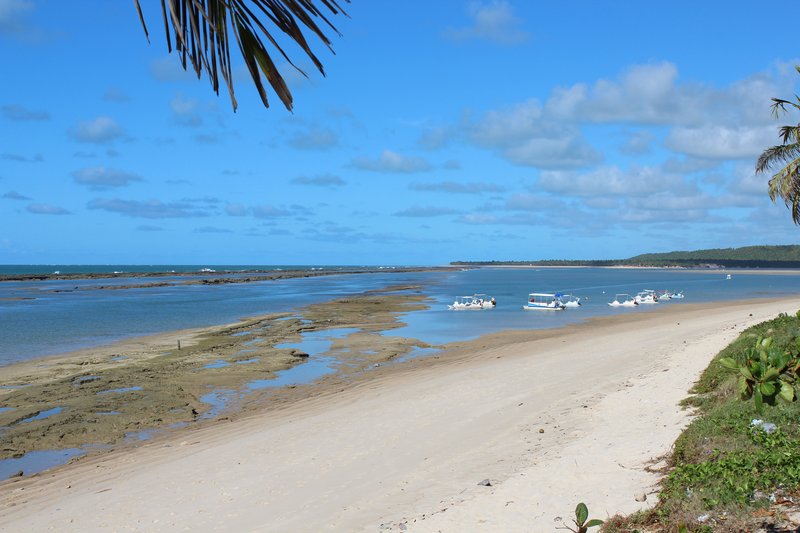
A 19th-century lighthouse on the headland of Maceió's urban coast, still operational and accessible on foot. At low tide the receding ocean exposes a broad reef flat and a natural sandbar connecting the lighthouse base to outer rock outcroppings — the same reef system that feeds the Pajuçara pools further north.
Maceió's main surf beach runs for 2 km through the Jatiúca neighborhood, backed by coconut palms and beachfront kiosks. Northeast-facing and unobstructed, it draws local surfers from dawn and swimmers through the afternoon. The beach widens north toward the reef flats.
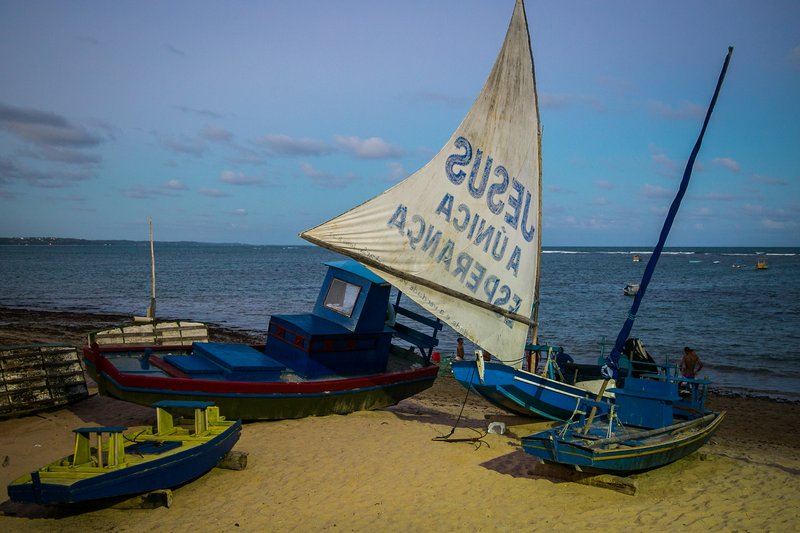
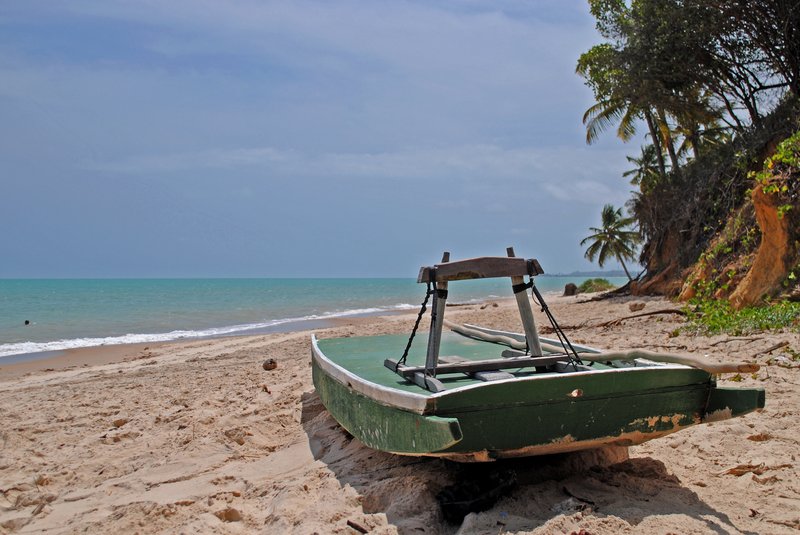
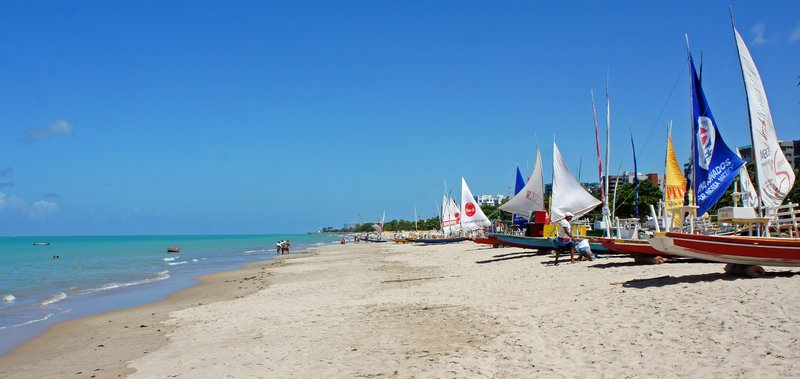
Seven kilometers north of the urban strip, Jacarecica is where the coconut grove comes down to the tide. The beach narrows between the palms and the breakers, with fishing skiffs hauled above the high-tide mark and no development beyond small kiosks.
From Hotel: 46 min → Marechal Deodoro Historic Center
1.Marechal Deodoro Historic Center~1.5 hr
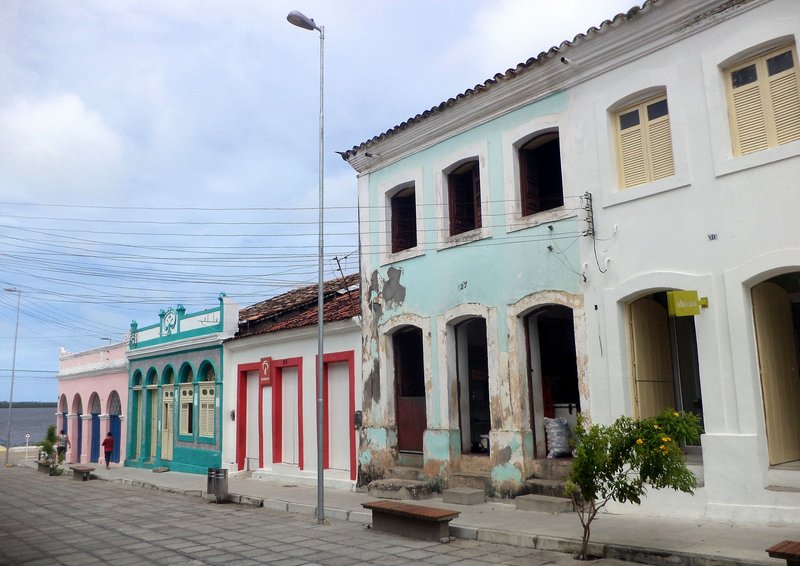
Brazil's original Alagoas capital and birthplace of the first republic president. Cobblestone lanes of whitewashed baroque churches and 17th-century convents have barely changed since the colonial era. The Igreja e Convento de Santa Maria Madalena sits at the lagoon's edge, its bell tower doubling in the still water.
A wide horseshoe beach behind a natural reef, where a glass-bottom boat called Barco Cristal ferries visitors out to see staghorn coral, parrotfish, and reef rays through the hull. The outer reef wall drops into deep Atlantic blue — visible through the hull even without overhead sun.
A thin peninsula at the mouth of the Lagoa Azul where the lagoon and the Atlantic run parallel, separated by a strip of white sand barely 50 meters wide. From the tip you can see both bodies of water — calm turquoise lagoon on one side, open ocean swells on the other — without moving your feet.
A coconut-flanked peninsula at the Roteiro River mouth where rusted-red sandstone cliffs rise 20 m from turquoise water and a crescent of white sand separates the river lagoon from open Atlantic. Access is by boat from Barra do Roteiro — the absence of a road is precisely why it looks like this.
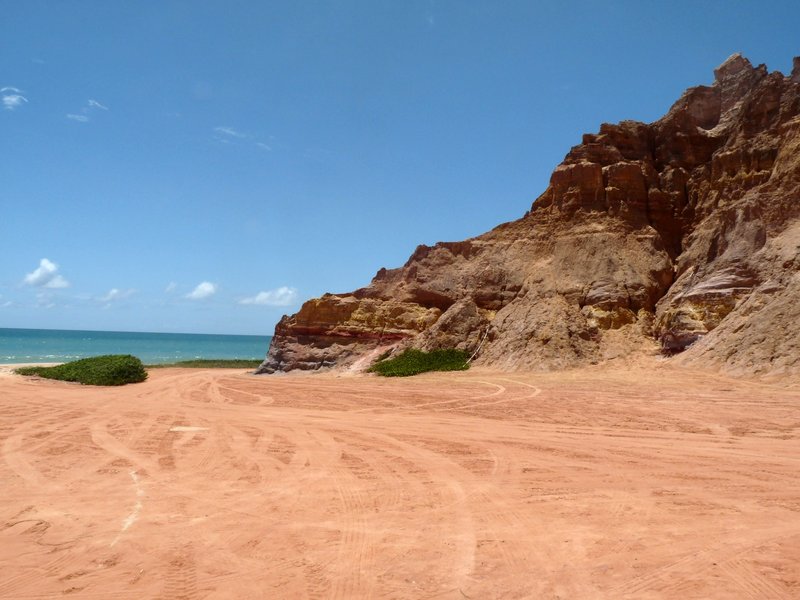
Layered red, white, and yellow sandstone cliffs rising 35 m above a strip of untouched beach with no road access. The only way down is by dune buggy from the plateau, dropping through a steep sand ramp to the shore. No kiosks, no parasols — just the cliffs and the South Atlantic.
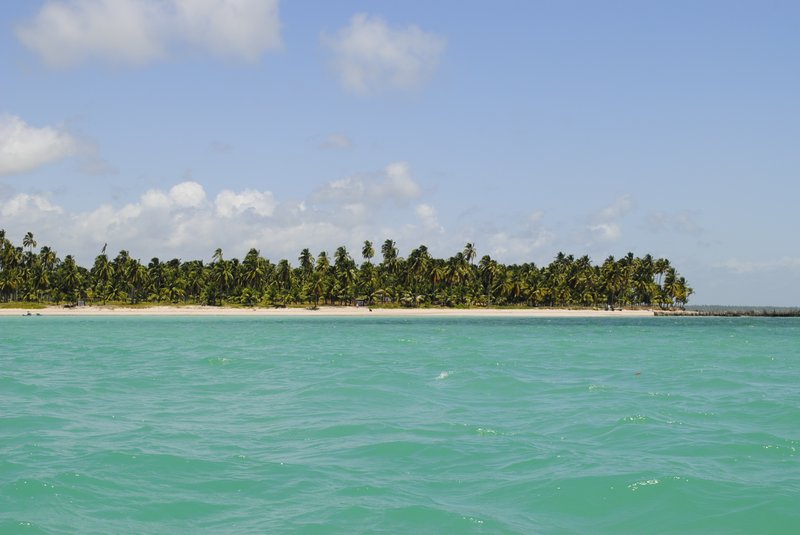
24 km north of the hotel, Ipioca marks the boundary where the city's coastal reach runs out and the Atlantic takes over. Dense coconut palms close in to the dune line, and the beach runs for 5 km without development. No kiosks or parasols beyond a small strip near the access road.
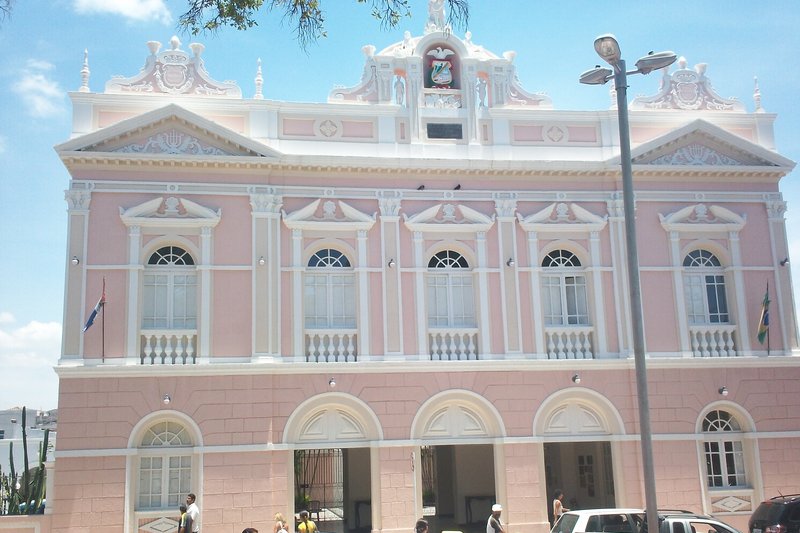
Inaugurated in 1910 and registered as national heritage by IPHAN, Teatro Deodoro anchors Maceió's historic center with its neoclassical columns. The main hall still stages concerts, plays, and regional dance performances under original high ceilings.
9 min · 3 min → Instituto Histórico e Geográfico de Alagoas
2.Instituto Histórico e Geográfico de Alagoas~1 hr
Founded in 1869, IHGAL holds the most comprehensive archive of Alagoas history — 18th-century geographic manuscripts, Lampião's personal effects, and records documenting the Palmares quilombo. The museum display rooms on the ground floor are open to walk-in visitors; library access is by appointment.
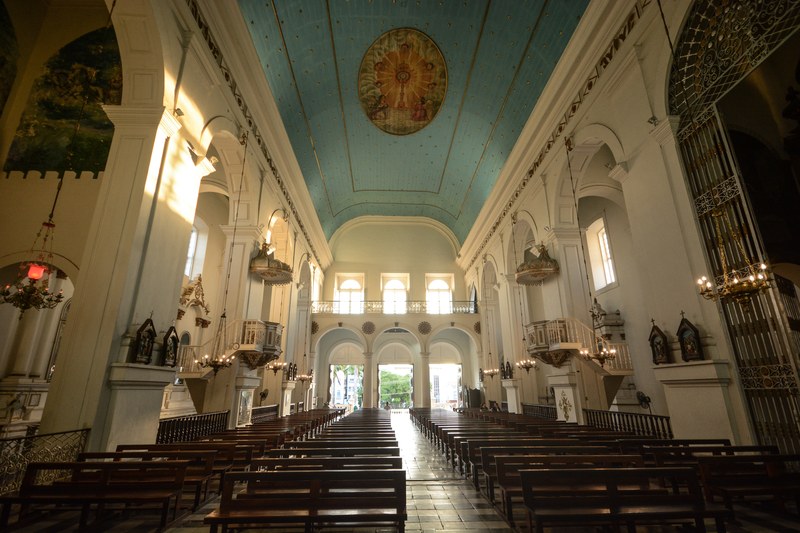
Built on the site of a 1611 chapel at Praça Dom Pedro II, the Metropolitan Cathedral was elevated to its current status when Pope Leo XIII created the Diocese of Alagoas in 1900. The neoclassical facade features twin bell towers visible across the plaza.
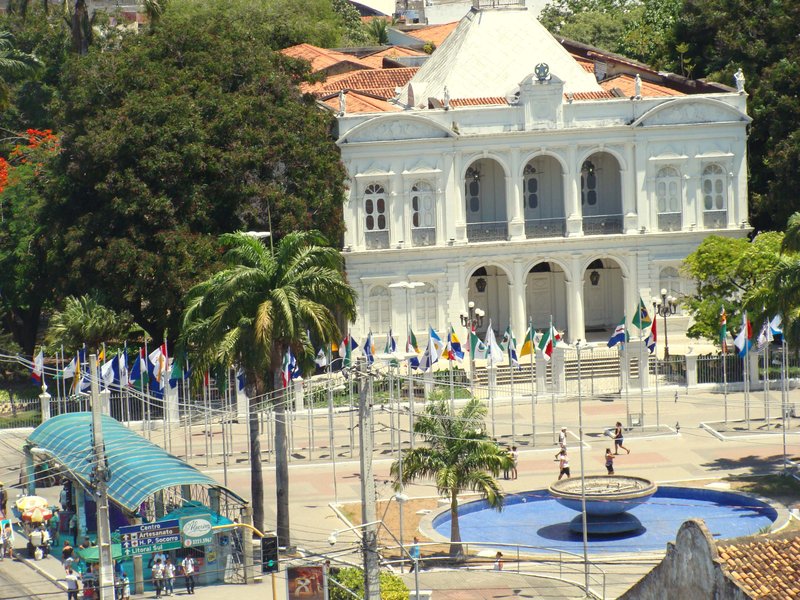
Maceió's grandest civic square, anchored by the neoclassical Palácio dos Martírios — former governor's residence, now a museum, draped in blue-and-white Portuguese azulejos. Imperial palms and period streetlamps line the esplanade, with the Teatro Deodoro facing across.
A hilltop viewpoint where a single panorama holds the Atlantic coastline, the silver-blue expanse of Lagoa Mundaú, and the city skyline. The adjoining baroque church of São Gonçalo do Amarante is one of the oldest in Alagoas. Sunset turns the lagoon into a copper mirror.
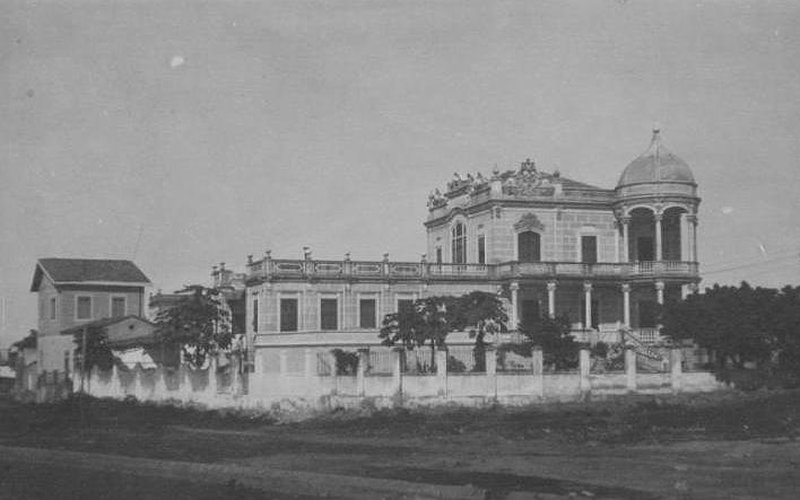
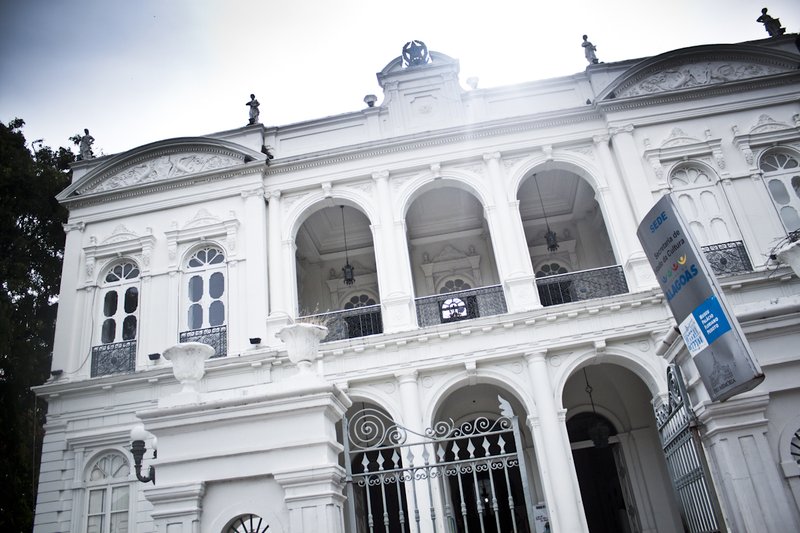
Housed in a 19th-century palacete on the Avenida da Paz, the museum documents Alagoas folk culture through textiles, religious objects, and carnival artifacts. The permanent collection includes Guerreiro costumes, Bumba Meu Boi figures, and pieces tied to the religious and festive traditions of the state.
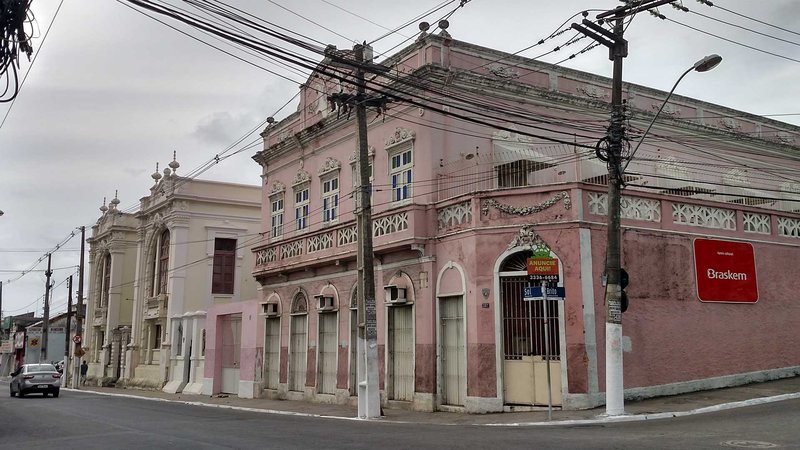
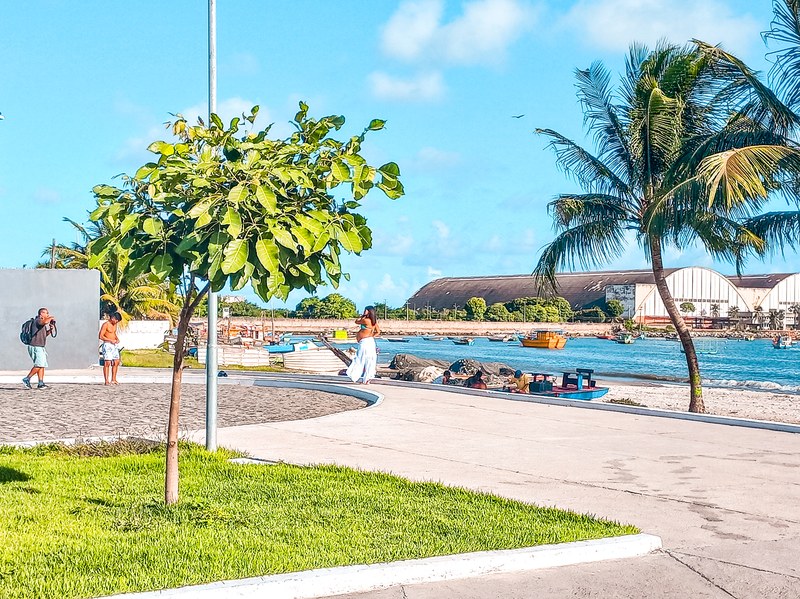
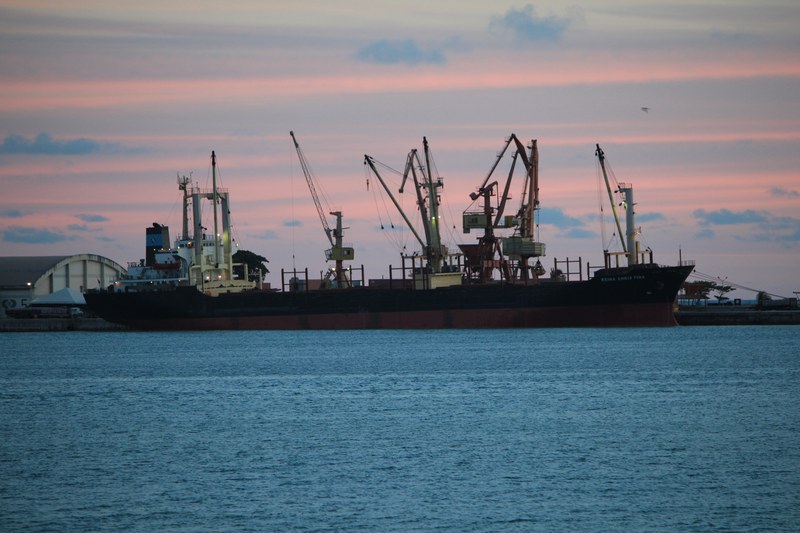
Maceió's original port district, where 19th-century merchant warehouses line cobblestone lanes to the working harbor. Painted colonial facades in ochre and terracotta frame the Capelinha de Nossa Senhora dos Navegantes — a seafarers' chapel barely larger than a living room, overlooking fishing boats and freighters.
Jangada rafts carry visitors 1 km offshore to a vast tidal reef where shallow saltwater pools form between coral heads. Best at low tide, when the pools reach waist depth and the water turns glass-clear turquoise.
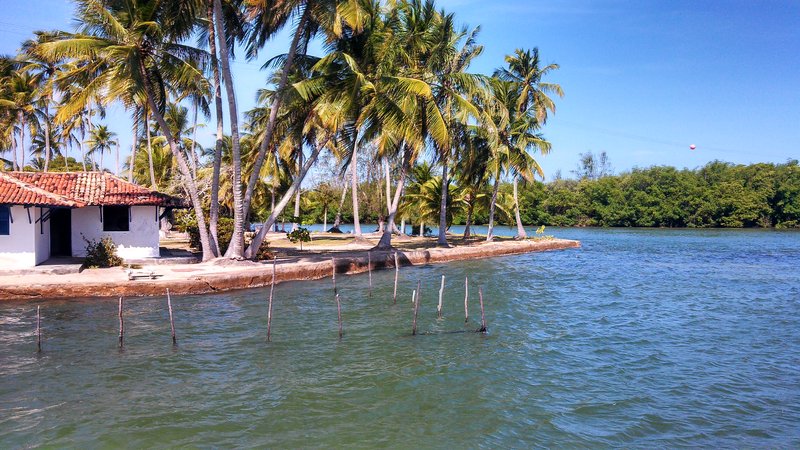
A schooner voyage through nine mangrove islands of Lagoa Mundaú, where stilt-house fishing communities appear between channels so narrow the hull brushes the roots. Guides point out roseate spoonbills, herons, and net-fishing techniques unchanged in a century. Returns to Pontal da Barra.
From Hotel: 14 min → Museu Palácio Floriano Peixoto
1.Museu Palácio Floriano Peixoto~1 hr
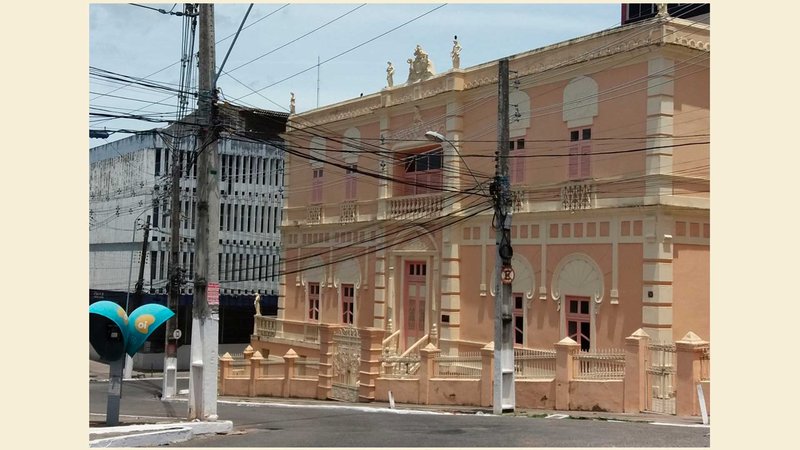
The palace museum opens the interior rooms of the Palácio dos Martírios. Period furniture, ceremonial silver, and state portrait collections line the piano nobile hallways; the original reception rooms are preserved around the central staircase.
The foundation holds nearly 3,000 works — sacred sculpture, colonial religious art, and Brazilian academic paintings assembled by Senator Pierre Chalita over five decades. The Baroque sacristy section and colonial gold-leaf altarpiece are the collection's core.
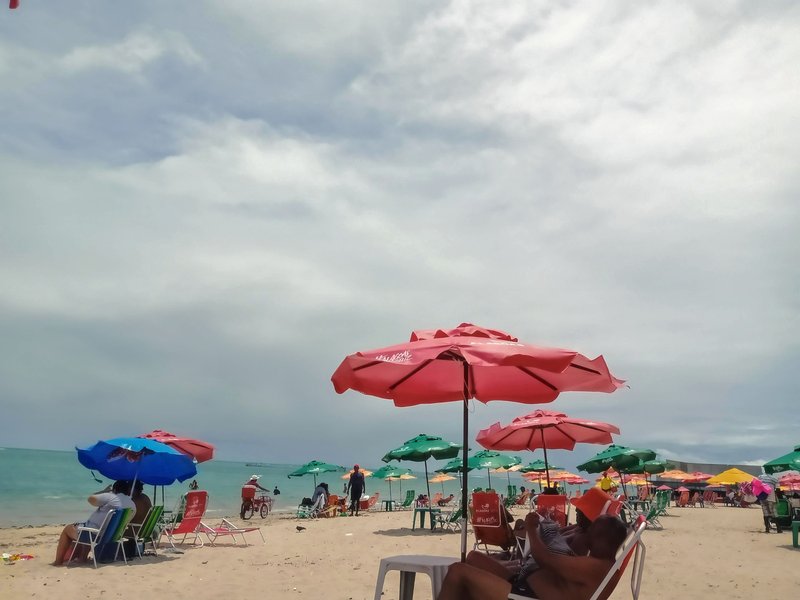
Maceió's most-used urban swimming beach runs from the Ponta Verde headland toward the Lighthouse. The reef offshore calms the surf, making it the flattest stretch for swimming along the city coast. Beachside kiosks and coconut vendors line the promenade the full length.
Tiny blue mussels from Lagoa Mundaú simmered in coconut milk with coriander and palm oil — Maceió's defining dish. Farinha de mandioca finishes every bowl.
A hot cassava-flour crepe folded around fillings — coalho cheese and coconut, or carne de sol and manteiga de garrafa. Sold by street vendors near the beachfront from early morning.
Baked coconut candy — caramelized, chewy at the centre and slightly crunchy at the edge. A signature Alagoas sweet sold in small shops and on the beach.
Foreign number: not accepted — a Brazilian number and CPF are both required.
Brazil's dominant delivery platform with strong coverage across Ponta Verde, Pajuçara and Jatiúca; the widest restaurant selection in Maceió by far, including local tapioca and sururu specialists.
Foreign number: not accepted — only a mobile number from a Latin American country where Rappi operates works.
Active in Maceió with coverage of the main beachside districts; a useful alternative to iFood for grocery and convenience deliveries alongside restaurant orders.
Foreign number: accepted — the app account and linked card work without a local number; no Brazilian phone number or CPF is required to request a ride.
The most reliable ride-hailing option in Maceió with good coverage of the beach districts and the city centre; useful for reaching Pajuçara pier and the lagoon-side neighbourhoods quickly.
Foreign number: accepted — an international number registers and receives the SMS verification code; no Brazilian CPF is required.
Brazilian ride-hailing app with strong local driver availability in Maceió; fares are competitive with Uber and it is worth checking both apps before booking.
Maceió is the only city I researched where you see fresh water, salt water, reef water, and lagoon water all within the same day — and each is a genuinely different shade. The lagoon sits at grey-green, stained by mangrove tannins. The ocean at Pajuçara is shallow turquoise above the reef. At Gunga, where the Roteiro River meets the sea, there is a visible boundary line where two colors run parallel without mixing.
Sururu — the small blue mussel from Lagoa Mundaú — only exists there because of the brackish mix. The lagoon is the freshwater overflow from interior rivers meeting the tidal salt intrusion from the Atlantic. The mussel colonizes the exact salinity band where neither freshwater nor saltwater species can thrive. Maceió's most famous dish grows at a boundary.