TRIP OVERVIEW
Day 1 – Teleférico do Funchal · Jardim Botânico da Madeira · Rua de Santa Maria · Forte de São Tiago · Monte Palace Tropical Garden · Sé Cathedral
Day 2 – Cabo Girão · Câmara de Lobos
Day 3 – Pico do Arieiro · Curral das Freiras · Ribeiro Frio & Balcões Levada
Day 4 – Ponta de São Lourenço · Machico
Day 5 – Porto Moniz · São Vicente · Paul da Serra
Day 1
1.
Teleférico do Funchal
~1.5 hr
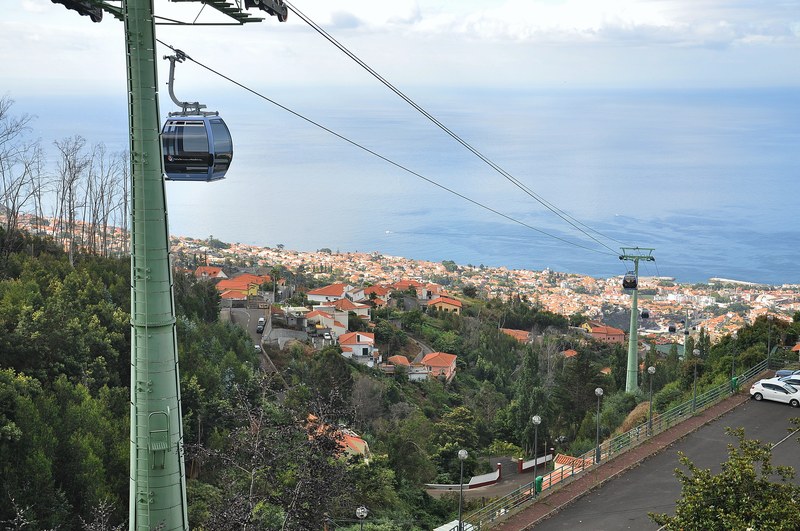
Gondolas glide 1,800 m over Funchal's rooftops to Monte village, 560 m up. The 15-minute ascent reveals the harbour and Atlantic below. At the top: Monte Palace garden at your feet, the wicker toboggan run to the right, and a square with coffee. Ride up and walk back, or take the toboggan for the descent.
2.
Jardim Botânico da Madeira
~1 hr 30 min
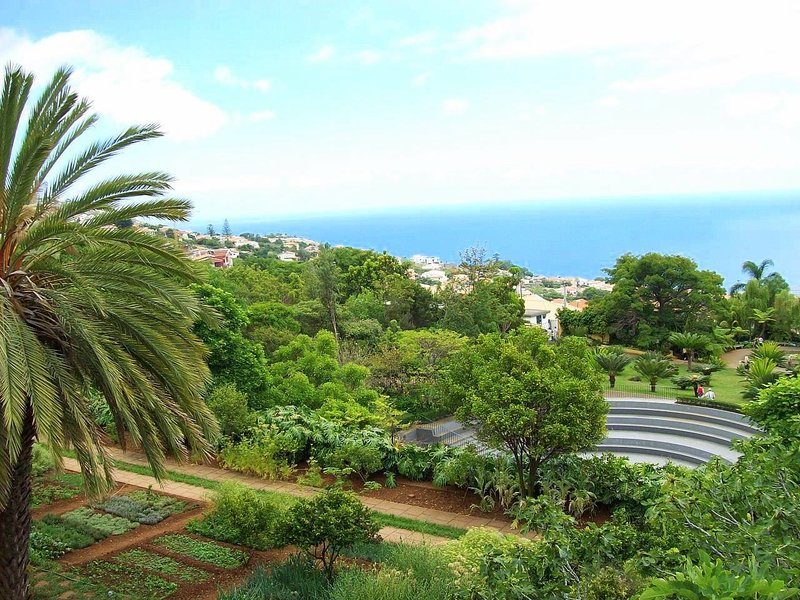
Eight terraced hectares above Funchal on the Reid's Hotel estate. Plants by continent of origin: cacti from the Americas beside anthuriums from Borneo beside dragon trees native to the island. The view down over Funchal's harbour to the Atlantic is built into the layout — the garden's best feature is what it frames.
Daily 9:00am - 6:00pm
3.
Rua de Santa Maria
~1 hr
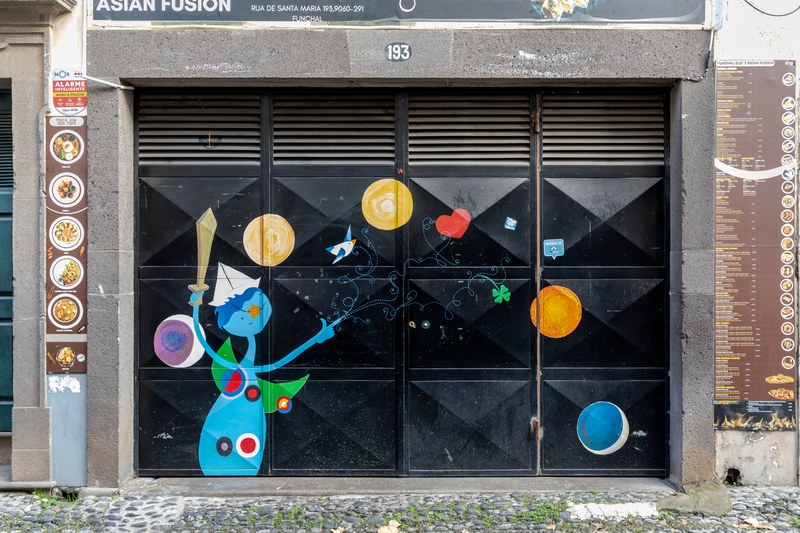
Funchal's oldest street, rebuilt as an open-air gallery. Over 200 wooden doors painted by local and international artists — abstracts, portraits, tropical murals, fado scenes. The street still functions: small tascas, wine shops, and pastry counters open onto the lane.
Open 24/7
4.
Forte de São Tiago
~30 min
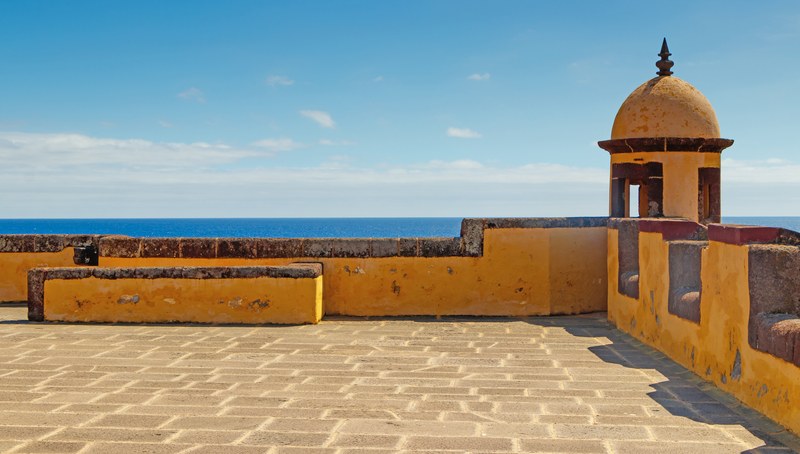
The ochre-yellow fortress at the east end of Zona Velha, built in 1614 to guard Funchal's harbour. English, Dutch, and French forces tried these waters; the walls held. Walk the ramparts for an Atlantic view and a sightline back along Rua de Santa Maria. The ground floor holds rotating exhibitions.
Monday - Friday 10:00am - 5:00pm
Closed Saturday & Sunday
Cash Only
5.
Monte Palace Tropical Garden
~2 hr
Palace across 70,000 m² of terraced hillside: tile-work fountains, Zen lake crossings, 100,000 cacti in a greenhouse, and free-roaming peacocks. Inside: Portuguese azulejo tiles and South African art across six centuries. Start at the top terrace and work down through the Zen garden to the ornamental lake.
Daily 9:30am - 6:00pm
6.
Sé Cathedral
~45 min
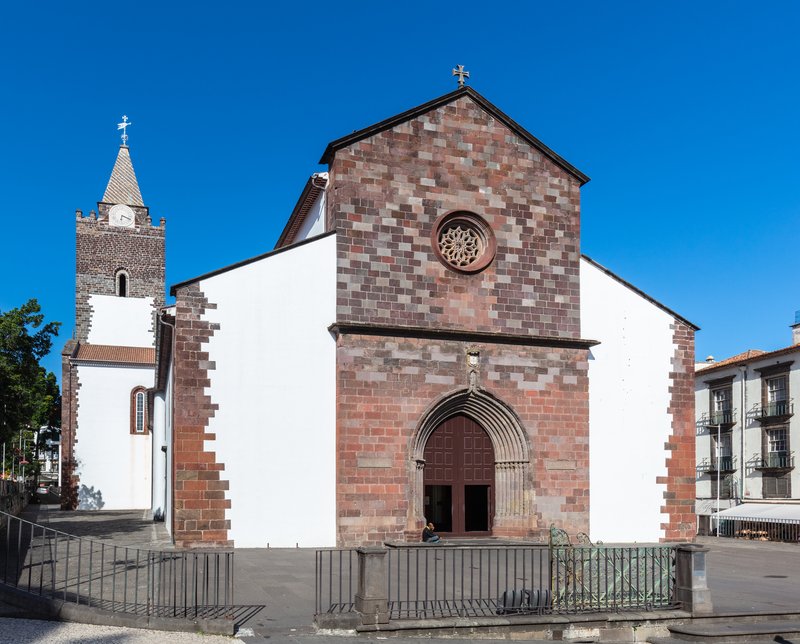
Consecrated in 1514 under King Manuel I, the oldest building in Funchal. The plain exterior hides a ceiling of 1,400 ivory-inlaid Mudéjar panels, and a 16th-century side chapel. The choir stalls are the secret — reach them through the side entrance.
Monday - Saturday 9:00am - 12:00pm · Monday - Saturday 4:00pm - 6:00pm · Sunday 9:00am - 1:00pm
Free
Day 2
1.
Cabo Girão
~45 min
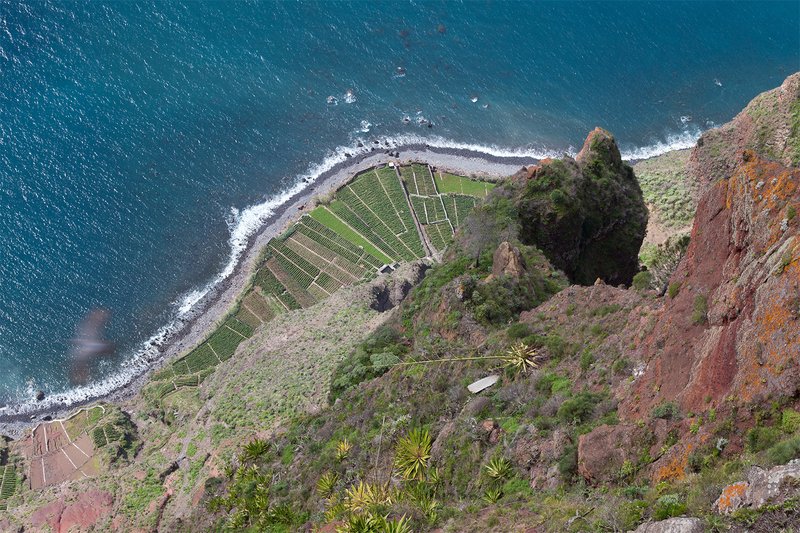
Europe's highest sea cliff at 580 m — a glass-floored skywalk cantilevered over the drop, looking straight down to cultivated terraces worked on the cliff face below, still farmed by villagers lowered by rope. The Atlantic presses against the base. Nothing else on Madeira matches this scale.
Daily 9:00am - 8:00pm
Cash Only
€5 skywalk platform fee, paid at the self-service kiosk
2.
Câmara de Lobos
~1 hr
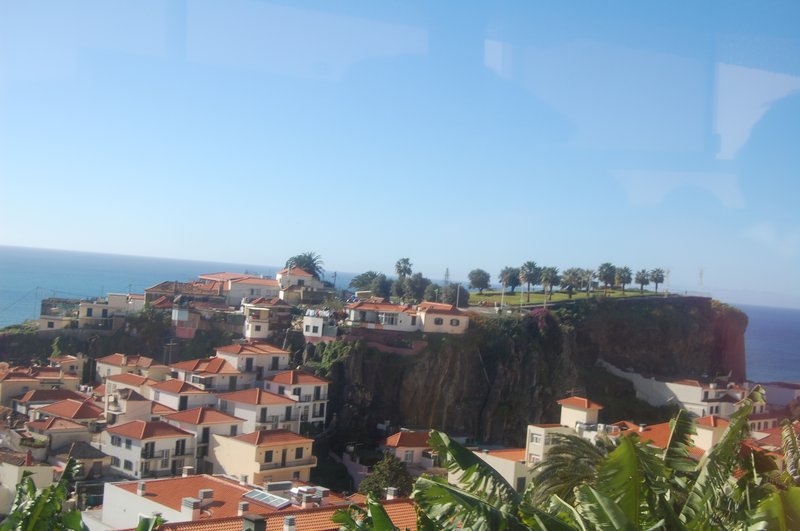
A fishing village 9 km west of Funchal where Churchill painted the harbour repeatedly. The coloured boats still come in daily; fishermen land espada at the stone pier while poncha is poured at the same tables. Looking back up at Cabo Girão's cliffs from here, the cliff's true scale becomes legible.
Open 24/7
Day 3
1.
Pico do Arieiro
~1 hr
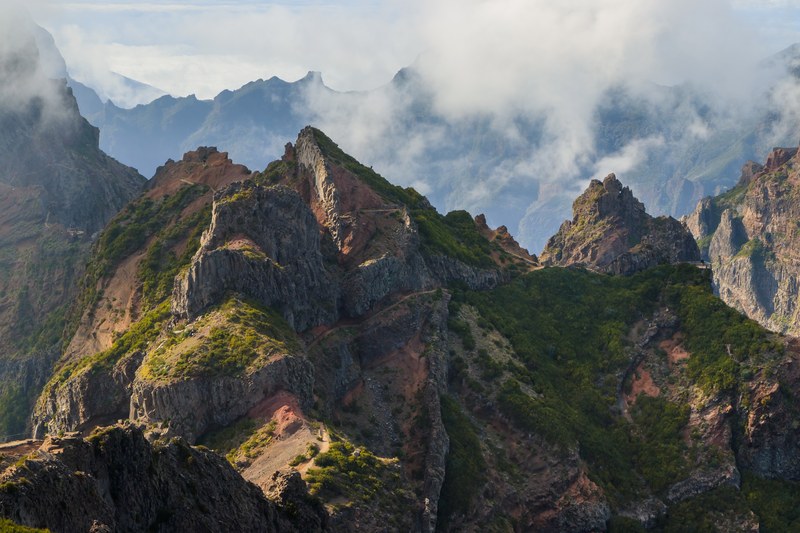
Third-highest peak in Madeira at 1,818 m — a road-accessible summit above the clouds, looking out over volcanic ridges and peaks. On clear days the island's entire central spine is visible. The PR1 trail starts here for the 11 km ridge walk to Pico Ruivo; the summit platform views alone justify the drive.
Open 24/7
2.
Curral das Freiras
~1 hr
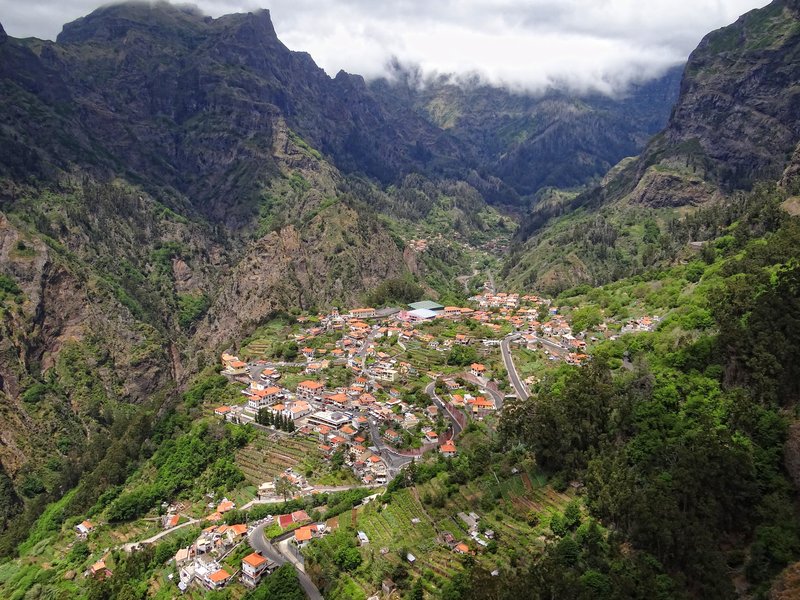
A village hidden inside a volcanic caldera so deep the nuns of Santa Clara fled here from pirates in the 16th century. The Eira do Serrado viewpoint sits 800 m above the valley, looking straight down at terraced gardens ringed by vertical rock walls. The road down cuts through seven tunnels carved into the caldera.
3.
Ribeiro Frio & Balcões Levada
~1 hr 30 min
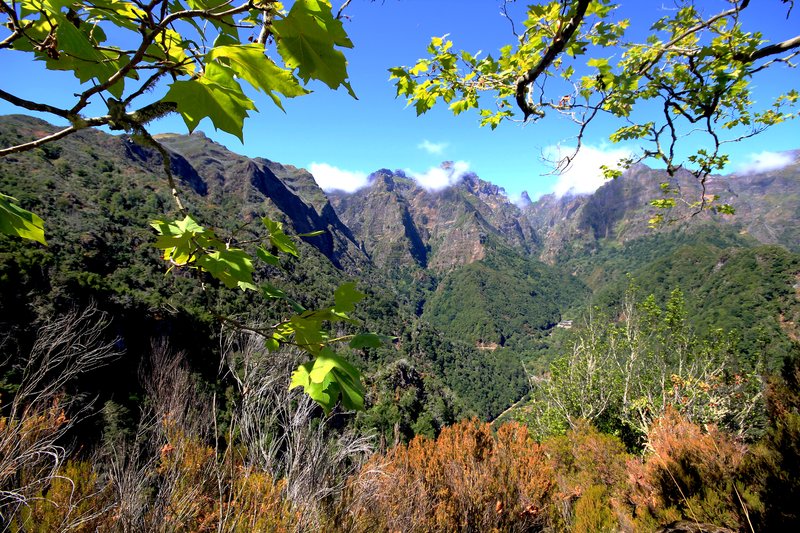
A mountain village at 860 m with a trout farm, from which the PR11 trail follows a levada 1.5 km through laurisilva forest to the Balcões viewpoint. The path runs beside a water channel through ancient laurel and til trees draped in moss; the viewpoint opens to Madeira's north coast valleys and the sea below.
Day 4
1.
Ponta de São Lourenço
~3 hr
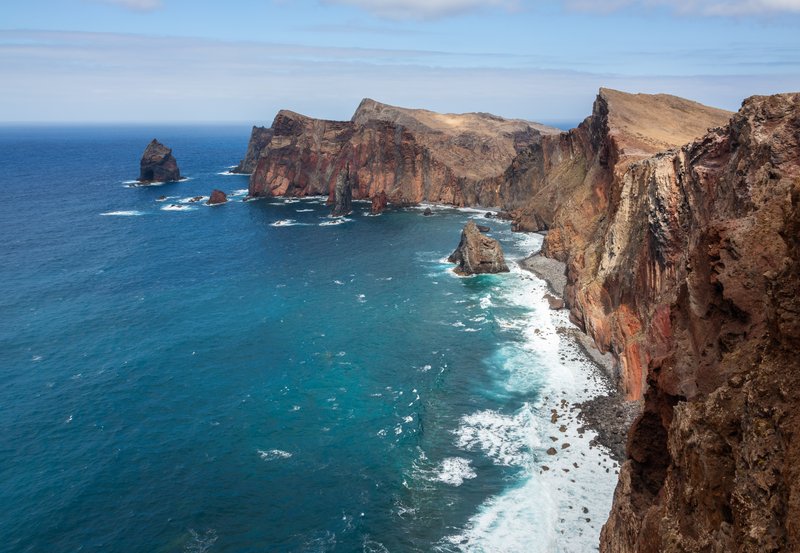
The easternmost tip of Madeira — a 2.5 km trail along a basalt peninsula where Atlantic surf breaks on both flanks simultaneously and the path narrows to a ridge between sheer sea cliffs. The landscape strips back to bare volcanic rock and heath scrub, with no shelter and an unobstructed panorama of the sea below from the end platform.
Open 24/7
Trail registration required before visiting
2.
Machico
~1 hr
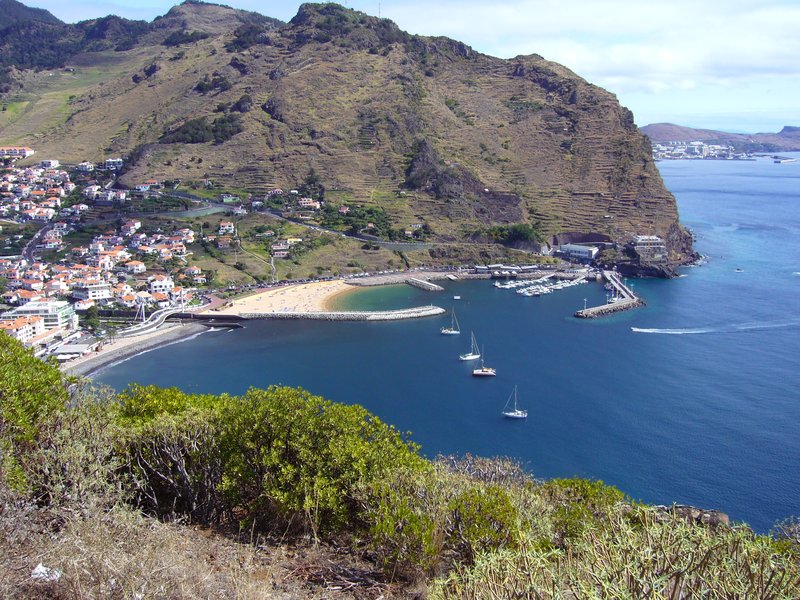
Madeira's second-largest town and the site where João Gonçalves Zarco's expedition first landed in 1419. The waterfront bay curves below a fortified headland; the 15th-century Igreja Matriz de Machico stands at the town centre, and the Forte São João Baptista guards the river mouth. From here the beach is backed by the town's oldest streets.
Open 24/7
Day 5
1.
Porto Moniz
~1 hr 30 min
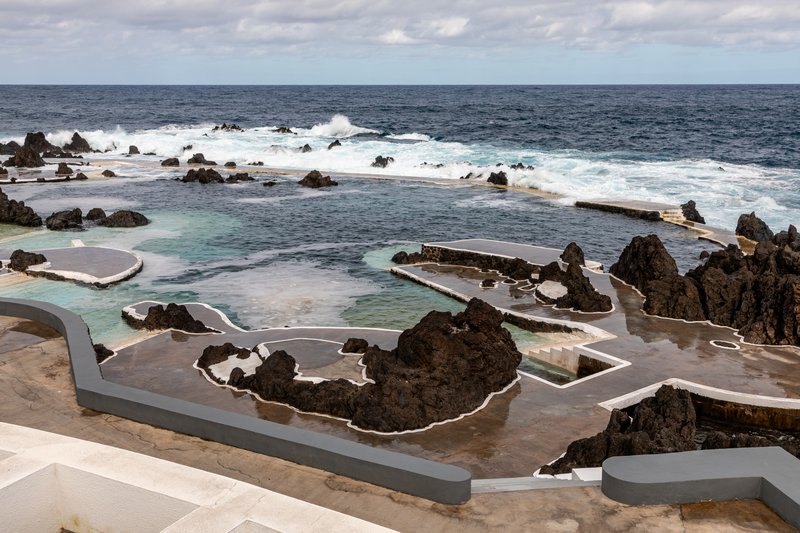
A fishing village at Madeira's northwest tip, sheltered by a complex of natural lava-rock pools formed where solidified basalt meets the Atlantic. The pools fill and drain with the tides, temperature-regulated by the sea, giving the clearest swimming on the island. The drive up the north coast to reach them follows cliffs and tunnels cut through volcanic rock.
Open 24/7
2.
São Vicente
~1 hr
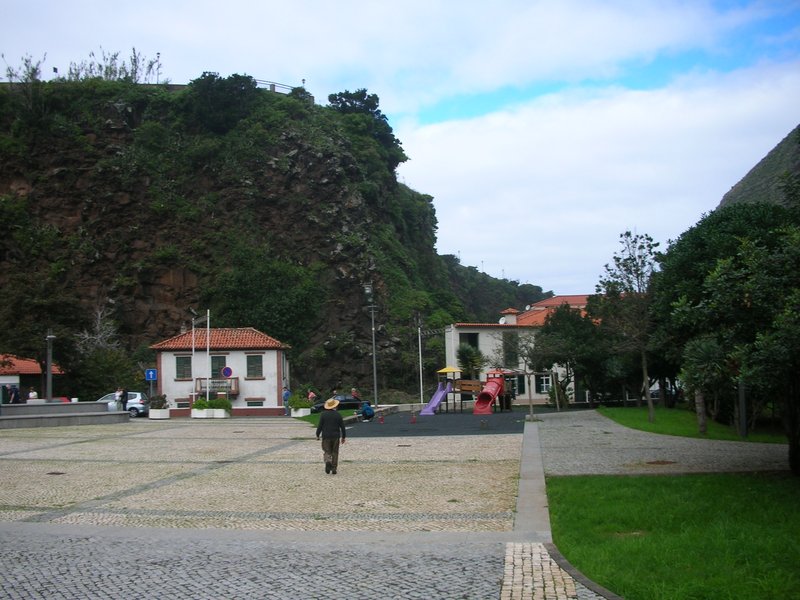
A village on Madeira's north coast at the mouth of a river valley, flanked by the basalt sea cliffs typical of the windward shore — among the island's most complete examples of traditional Madeiran architecture, with whitewashed houses and cobbled streets, and freely walkable on its own. The village's namesake volcanic caves, the Grutas de São Vicente, are closed indefinitely for structural work.
3.
Paul da Serra
~45 min
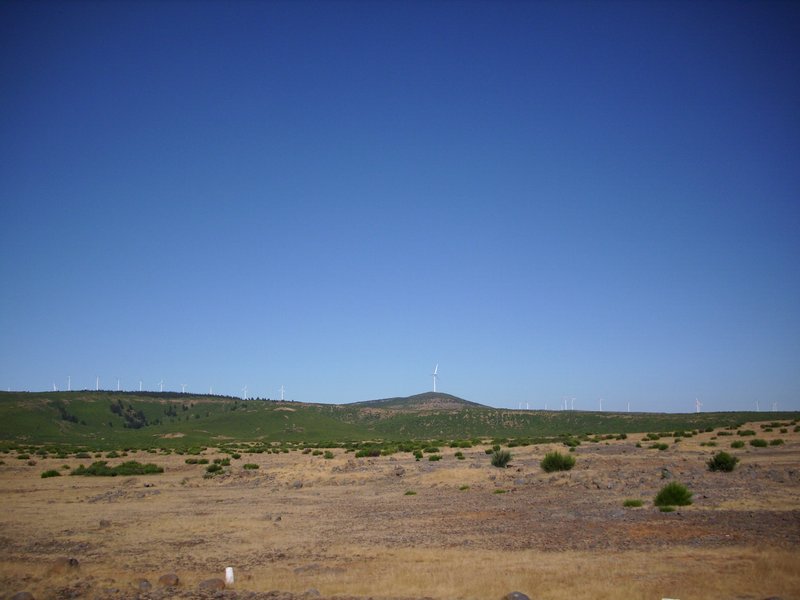
A high plateau at 1,400 m in the centre of Madeira — the island's only area of flat open land, covered in heather and grass with wind turbines on the horizon. The contrast with Madeira's usual steep terrain is immediate. On a clear day it looks out over the south-coast valley to the sea; when low cloud rolls in from the north, the plateau sits in mist with visibility under 50 m.
Open 24/7
Weekly Closures
Most City Museums · Closed Monday
Mercado Dos Lavradores · Closed Sunday
Tours
Viator
Open-top jeeps wind through mountain villages above Funchal inaccessible by coach: Câmara de Lobos fishing village, traditional windmills, and hilltop panoramas over the south coast. Bilingual guide; photo stops at every turn; maximum 14 guests.
3 hr · Max 14
↔
Three-hour sail tracking resident bottlenose dolphins and seasonal sperm whales along the island's south-coast cliffs. Marine biologist onboard; sustainable watching protocols in effect; snorkelling included.
3 hr · Max 30
Accessible introduction to Madeira's volcanic canyons: natural waterslides, abseil descents, and cold swimming pools inside the Ecological Park above Funchal. No experience required; all gear provided; maximum 10 participants.
4 hr · Max 10
Full day in open-top 4x4s through Madeira's northwest: the Fanal laurisilva forest, Porto Moniz volcanic lava pools, Seixal black-sand beach, and the Cabo Girão sky bridge at 580 m. Limited to 8 people.
8 hr · Max 8
↔
Small-group minibus circuit around Madeira's west: Cabo Girão glass skywalk, the Fanal laurel forest, Porto Moniz lava pools, and a traditional lunch stop in Seixal village. Bilingual guide throughout the day.
8 hr · Max 12
↔
GetYourGuide
A tasting walk through Funchal's historic center: Madeira wine at a family lodge, grilled espetada at the market, poncha cocktail at a Zona Velha tasca, and bolo do caco with honey butter. Bilingual guide; max 14 guests.
3 hr · Max 14
Four hours through Funchal's culinary culture: shopping the stalls with your guide at Mercado dos Lavradores, a wine-pairing session at a family cellar, and street tastings along Rua de Santa Maria. Max 12 guests.
4 hr · Max 12
Two hours in the Zona Velha with a local historian: the painted-door sequence along Rua de Santa Maria, Forte de São Tiago's ramparts, the old city walls, and the lesser-known squares of the historic core. Max 12 guests.
2 hr · Max 12
Electric buggies through the mountain roads inland from Funchal: levada-side trails, viewpoints above the cloud line, and forested ridgelines inaccessible by regular vehicle. Guide leads in a front buggy.
4 hr · Max 8
↔
Small-group guided walk along the Levada do Furado from Ribeiro Frio through ancient laurisilva forest to Portela — the island's most popular levada trail, rich in endemic bird species and old-growth tree ferns, with a bilingual guide explaining the irrigation history.
5 hr · Max 12
↔
TripAdvisor
3.5-hour tasting walk through Funchal with a passionate local guide: Madeira wine at a family lodge, grilled espetada, poncha cocktail in Zona Velha, and bolo do caco with honey butter — the full sweep of island food culture in one afternoon.
3 hr 30 min · Max 10
2.5-hour open-boat tour tracking resident bottlenose dolphins and seasonal sperm whales along the island's south-coast cliffs — sustainable watching protocols, marine biologist commentary, and some of the most reliable cetacean sightings in the Atlantic.
2 hr 30 min · Max 30
Half-day jeep excursion into the mountain villages above Funchal — Câmara de Lobos fishing village, mountain viewpoints, traditional windmills, and a lunch stop in a hillside restaurant before the return to Funchal.
4 hr · Max 14
↔
Three-hour sail on a responsible-tourism catamaran scanning for resident bottlenose dolphins and seasonal sperm whales along Madeira's south coast — marine biologist onboard, snorkelling included, and a stop in a sea cave on clear days.
3 hr · Max 30
Fast RIB speedboat — more agile than a catamaran — covers a wider zone of the south coast for dolphin and whale sightings, with a naturalist guide providing running commentary and sustainable approach protocols throughout.
2 hr · Max 12
Cappuccino
Boutique Cafe Lido · 4.4 · 300+ reviews
Monday - Friday 6:00am - 10:00pm · Saturday - Sunday 7:00am - 10:00pm
LOFT Brunch & Cocktails · 4.5 · 500+ reviews
Prima Caju · 4.5 · 400+ reviews
Loja do Chá · 4.4 · 700+ reviews
Art Food Corner · 4.6 · 400+ reviews
Monday - Saturday 8:00am - 7:00pm
Closed Sunday
Restaurants Near Hotel
Quinta Palmeira · 4.3 · 300+ reviews
Classic Madeiran cuisine in a garden setting; hearty portions and regional wines.
Monday - Saturday 12:00pm - 3:00pm · Monday - Saturday 7:00pm - 11:00pm
Closed Sunday
Beef & Wines · 4.6 · 400+ reviews
Prime cuts and Madeiran espetada; smart-casual with a strong local wine list.
Tuesday - Saturday 7:00pm - 11:00pm
Closed Sunday & Monday
Dona Amélia · 4.5 · 500+ reviews
Traditional Madeiran and Portuguese classics in a warm family-run dining room.
Tuesday - Sunday 12:00pm - 3:00pm · Tuesday - Sunday 7:00pm - 10:30pm
Closed Monday
Porta do Lado · 4.4 · 300+ reviews
Contemporary Madeiran and Portuguese cuisine with a focus on island produce.
Monday - Saturday 12:00pm - 3:00pm · Monday - Saturday 7:00pm - 10:30pm
Closed Sunday
Sabores da Nossa Ilha · 4.4 · 300+ reviews
Madeiran home cooking with hearty portions and local wine by the glass.
Daily 11:00am - 11:00pm
Downtown Restaurants
Armazém do Sal · 4.5 · 1000+ reviews
Upscale Portuguese in a salt warehouse; modern technique and local ingredients.
Monday - Saturday 12:00pm - 3:00pm · Monday - Saturday 7:00pm - 11:00pm
Closed Sunday
Cidade Velha · 4.5 · 2000+ reviews
Traditional Madeiran meats; open-fire grill in the heart of the Old Town.
Tuesday - Sunday 12:00pm - 3:00pm · Tuesday - Sunday 7:00pm - 12:00am
Closed Monday
O Tapassol · 4.5 · 500+ reviews
Portuguese tapas and Madeiran small plates; sharing-friendly with island wine.
Monday - Saturday 12:00pm - 3:00pm · Monday - Saturday 7:00pm - 11:00pm
Closed Sunday
Lá ao Fundo · 4.6 · 200+ reviews
Mediterranean and Portuguese fusion; open kitchen and relaxed Old Town ambiance.
Daily 12:00pm - 11:30pm
Sabor a Fado · 4.4 · 1922+ reviews
Portuguese food with live fado from 8:00pm; Madeira's only dedicated fado house.
Daily 6:00pm - 1:00am
Dining Areas
Câmara de Lobos
Local Tastes
Poncha
Madeira's signature cocktail: aguardente de cana muddled with local honey and citrus juice. Served at every Zona Velha bar — the passion fruit version is the modern island riff.
Espetada
Whole chunks of beef skewered on a long bay-laurel stick, salted only, then grilled over a wood fire. Served hanging on iron hooks at the table — the original Madeiran barbecue, born in the mountain villages above Funchal.
Bolo do Caco
Flat round bread cooked on a basalt slab, served warm with garlic butter. Found at every cafe and market stall; the go-to base for sandwiches at Mercado dos Lavradores.
Madeira Wine
The island's fortified wine, aged for decades in oak by fractional blending — four dryness levels from Sercial to Malmsey. Sip Verdelho as aperitivo; Malmsey with dessert. Most wine tours include a cellar visit.
Bolo de Mel
Dense dark molasses cake spiced with cinnamon, anise, and cloves. Made once a year around Christmas but sold year-round in Funchal; the flavor deepens over weeks, and a whole cake keeps for months.
Food Delivery
Uber Eats
Foreign number: accepted. — the SMS verification code arrives on any international number.
Strong coverage across Funchal with reliable 25–40 min delivery windows; the best selection of local restaurants and international chains in the city centre.
Glovo
Foreign number: not required. — it signs in with Google, Facebook or email, and a phone sign-up takes any prefix with the code by SMS or WhatsApp.
Covers central Funchal and the hotel strip along Estrada Monumental; useful for grocery runs and pharmacy orders alongside restaurant delivery.
Getting Around
Bolt
Foreign number: accepted. — the SMS verification code arrives on any international number.
The dominant ride-hailing app on Madeira, with good driver availability across Funchal and the western hotel corridor; significantly cheaper than taxis for most journeys.
Michelin Restaurants
Il Gallo d'Oro
Fine dining; Chef Benoît Sinthon's tasting menu at The Cliff Bay Hotel.
William
Modern French-Portuguese cuisine by Chef Luís Pestana at Reid's Palace Hotel.
Desarma
Portuguese tasting menu on the rooftop of The Views Baía hotel; 180° views.
Hiking
Levada do Furado: Ribeiro Frio to Portela · Easy
11 km one way · 100 m ascent
3 hr
Madeira's most celebrated levada walk follows a narrow water channel through laurisilva — the ancient laurel forest that covers the island's north-facing slopes, draped in moss and tree ferns. The path is level for most of its length; the first kilometre to the Balcões viewpoint alone is worth the drive. Return by taxi from Portela or arrange a one-way transfer.
Ponta de São Lourenço · Easy
8 km return · 200 m ascent
2 hr 30 min
The easternmost tip of Madeira traces a spine of volcanic cliffs above the Atlantic, with the path dropping repeatedly to sea level before climbing back to exposed viewpoints. The rock changes colour from black basalt to orange tuff as the peninsula narrows; the final headland gives a view of the Desertas islands to the south-east. Start early — no shade on the peninsula after mid-morning.
Pico do Arieiro to Pico Ruivo · Hard
7.5 km one way · 400 m ascent
4 hr 30 min
The ridge walk linking Madeira's third and first highest peaks crosses exposed knife-edge ridges and passes through tunnels cut into the rock by hand. The route regularly breaks above the cloud line to viewpoints over the northern and southern coasts. Drive to Arieiro and end at Pico Ruivo, where a taxi or pre-arranged transfer returns to Funchal.
Levada das 25 Fontes · Easy
10 km return · 250 m ascent
3 hr
The trail descends from the Paul da Serra plateau through laurisilva to a natural pool fed by 25 separate springs cascading over a moss-covered basalt wall. The descent is gentle and the path wide; the return climb is the only real effort. A second branch leads to the Risco waterfall, adding 30 min.
Worth Knowing
The Toboggan Run
From Monte Palace, turn left out of the garden exit and walk two minutes to the top of Caminho do Monte, where two men in white linen suits and straw hats will ease you into a wicker basket-sled and push you downhill. The carreiros do Monte have been doing this since 1850 — steering with their feet and guiding with hemp ropes — and nothing about the method has changed. You cover 2 km of steep cobblestone at up to 48 km/h, arriving at Livramento, not the cable car terminal. From Livramento it's a ten-minute walk or a short Bolt back to the hotel. Skip the waiting taxis at the bottom.
Also on this site