From Hotel: 4 min · 2 min → Galería de las Colecciones Reales
1.Galería de las Colecciones Reales~2 hr
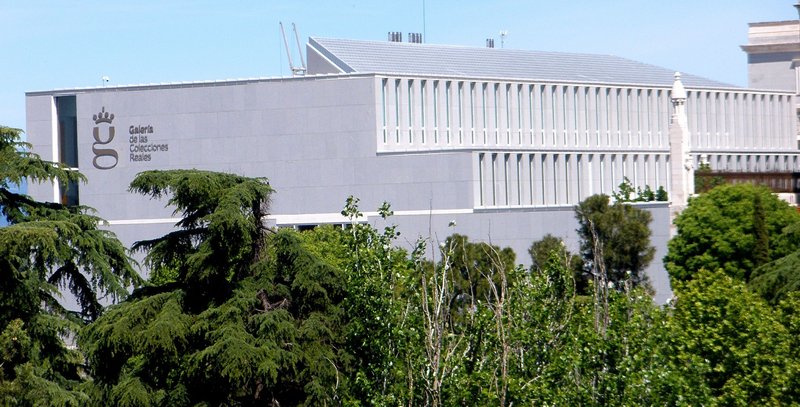
A 40,000 m² underground gallery below the Royal Palace. Eight centuries of Spanish royal collections — Charles V's armour, Philip II's tapestries, royal carriages, Velázquez and Caravaggio canvases — descending past the stone foundations of the medieval Alcázar.
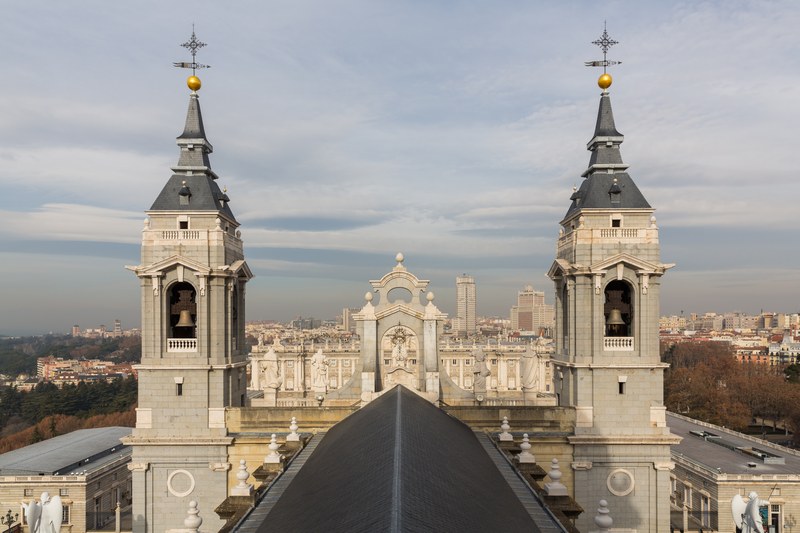
Madrid's cathedral took over a century to build, consecrated by Pope John Paul II. The neo-Gothic exterior faces the Royal Palace; inside, the Gothic crypt and the brightly frescoed main nave make an unlikely combination. The paid dome climb gives city views over the Royal Palace gardens.
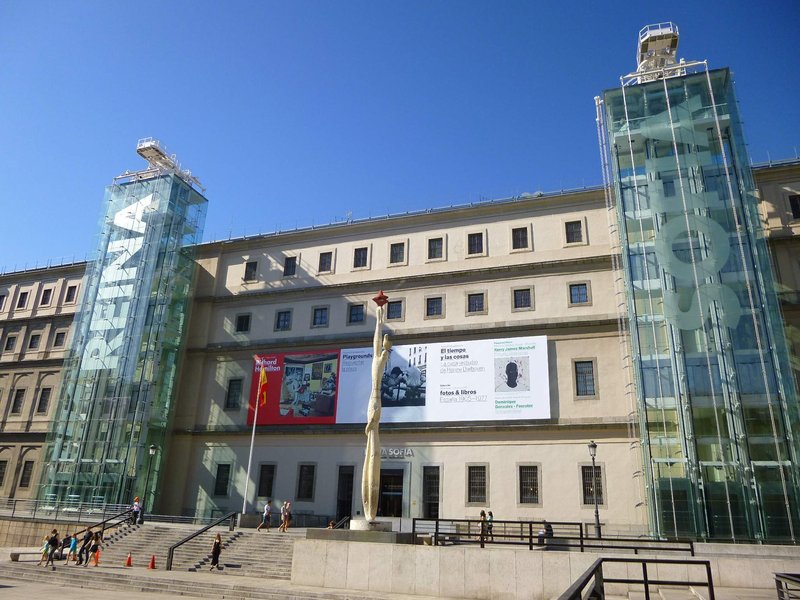
Spain's national museum of 20th-century art and the permanent home of Picasso's Guernica — the vast canvas depicting the bombing of a Basque town. Beyond Guernica: major works by Miró, Dalí, and the Spanish Surrealists in a converted 18th-century hospital.
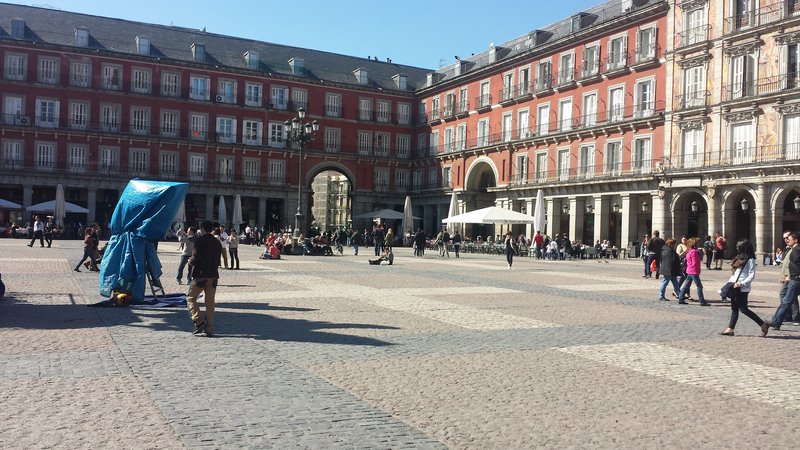
Madrid's great ceremonial square — 129 × 94 metres of uniform Habsburg arcades, completed in the early 17th century. Built for bullfights and royal proclamations; nine gateway arches open onto it. The equestrian statue of Philip III at the centre is by Giambologna and Pietro Tacca.
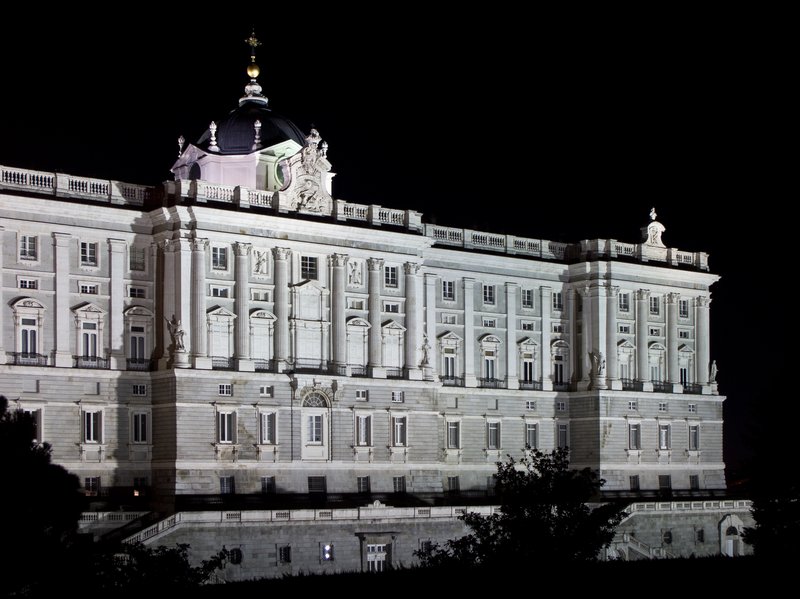
The largest functioning royal palace in Western Europe — 3,418 rooms, 50 open to visitors. The Throne Room with its Tiepolo ceiling, the Royal Armoury, the Royal Pharmacy, and halls of Flemish tapestries and portraits by Velázquez and Goya.
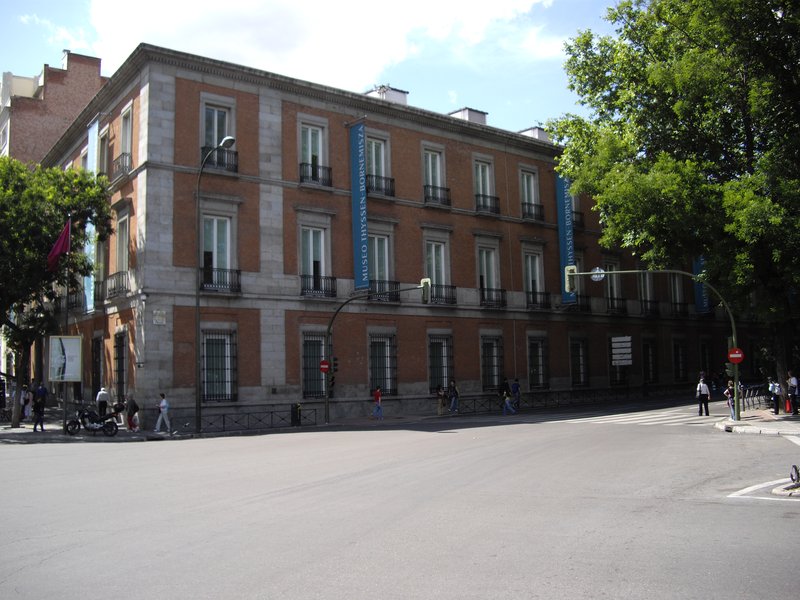
The former private collection of the Thyssen-Bornemisza dynasty — 1,000 works from Van Eyck to Basquiat, Caravaggio to Hopper. Where the Prado goes deep into the Spanish masters, Thyssen goes wide across seven centuries of European painting in a single neoclassical palace.
The 1926 Beaux-Arts cultural palace on Gran Vía and Alcalá, with one of Madrid's finest rooftop terraces seven floors up. The Azotea gives 360° views: the Gran Vía canyon, the Metrópolis building, the dome of the Cibeles palace, and the Sierra on clear days.
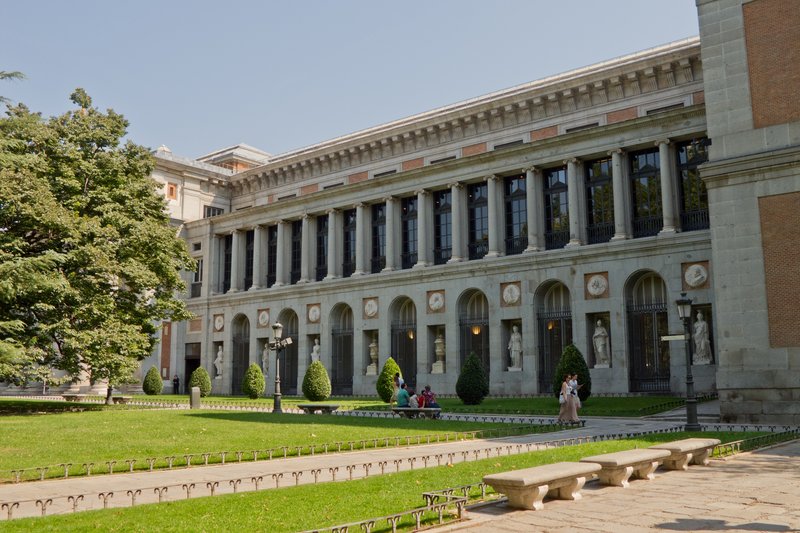
Spain's national painting museum — Velázquez's Las Meninas, Goya's Black Paintings, Bosch's Garden of Earthly Delights, and 8,000 works spanning five centuries. The most essential visit in Madrid. Three hours minimum; four is more comfortable.
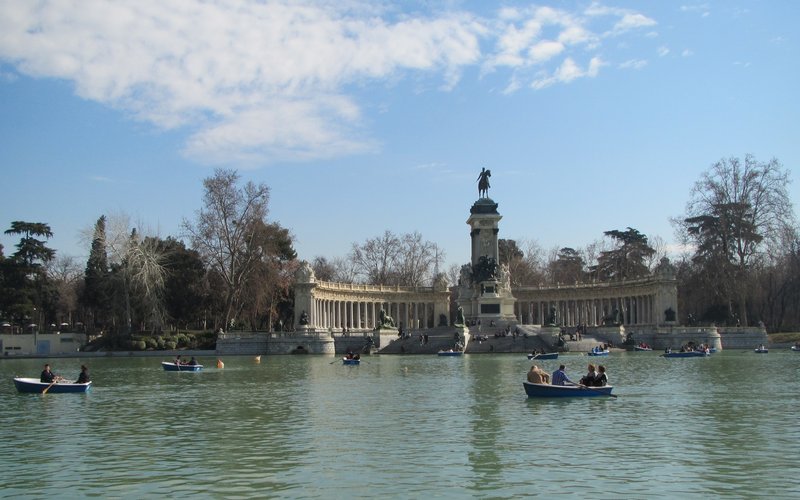
125 hectares of parkland opened to the public in the 19th century and UNESCO-listed as part of the Paseo del Prado corridor. The Estanque Grande lake, framed by the colonnaded Alfonso XII monument, is where Madrileños rent rowboats on Sunday mornings. The Palacio de Cristal is currently closed for renovation.
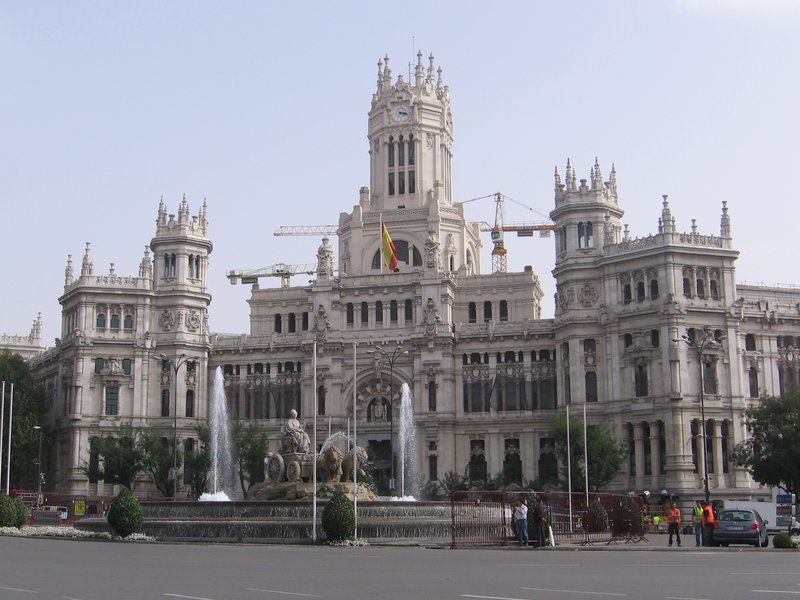
The Palacio de Cibeles — Madrid's city hall — is a Beaux-Arts steel and granite structure built in the early 20th century. The Mirador observation deck in the central tower gives 360° views over Retiro, the Paseo del Prado corridor, the Almudena dome, and north to Guadarrama.
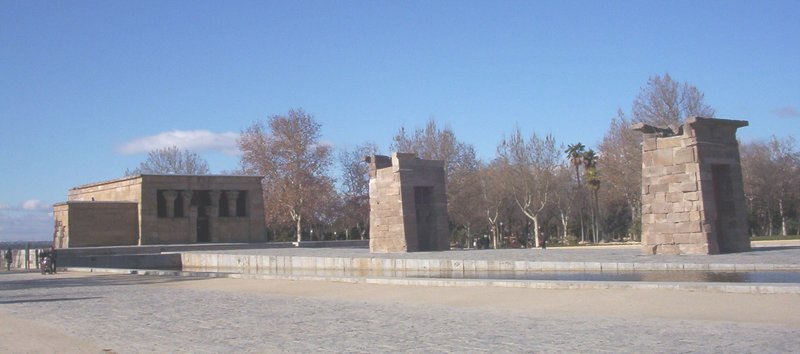
A 2nd-century BCE Egyptian temple given to Spain by Egypt after the Nubian monuments rescue campaign, dismantled from the Nile and rebuilt stone by stone in Parque del Oeste. Standing in a shallow reflecting pool facing the Sierra de Guadarrama, it makes the finest sunset viewpoint in the city.
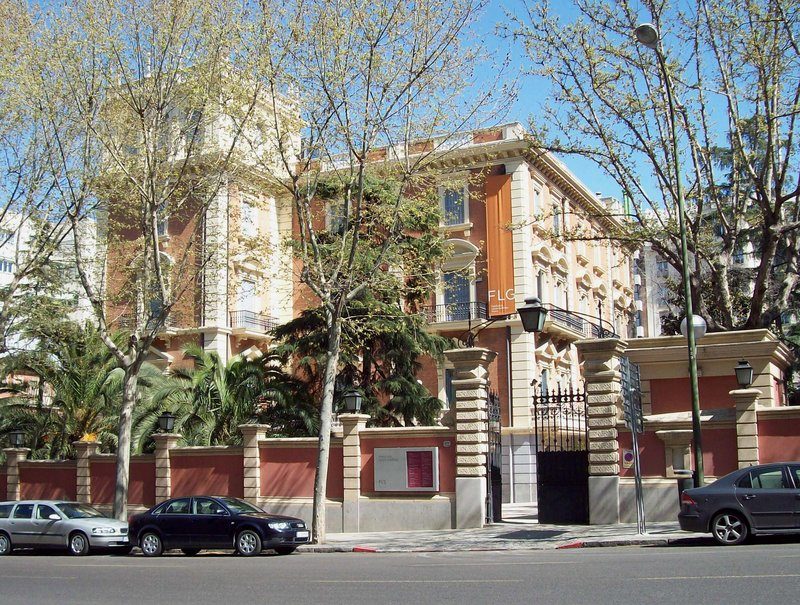
The Belle Époque mansion of publisher José Lázaro Galdiano, bequeathed to Spain with over 12,000 works. Four floors of uncrowded galleries: Goya's early Witches' Sabbath, a Hieronymus Bosch St. John the Baptist in Meditation, and Charles V's ornate pocket watch alongside Limoges enamels and medieval ivories.
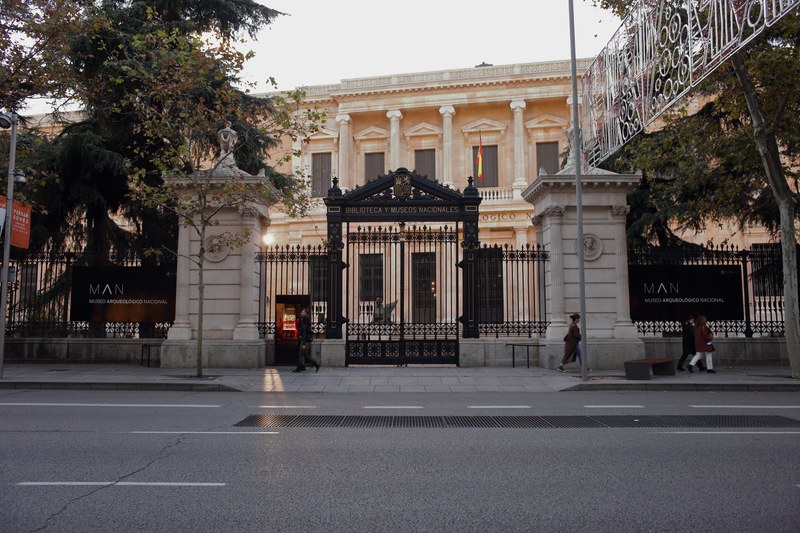
Spain's largest archaeological collection. Highlights: La Dama de Elche — a fifth-century BC Iberian limestone bust — at ground level; a full-scale Altamira cave replica in the basement; and the Treasure of Guarrazar — Visigothic gold votive crowns set with sapphires and garnets — on the upper floors.
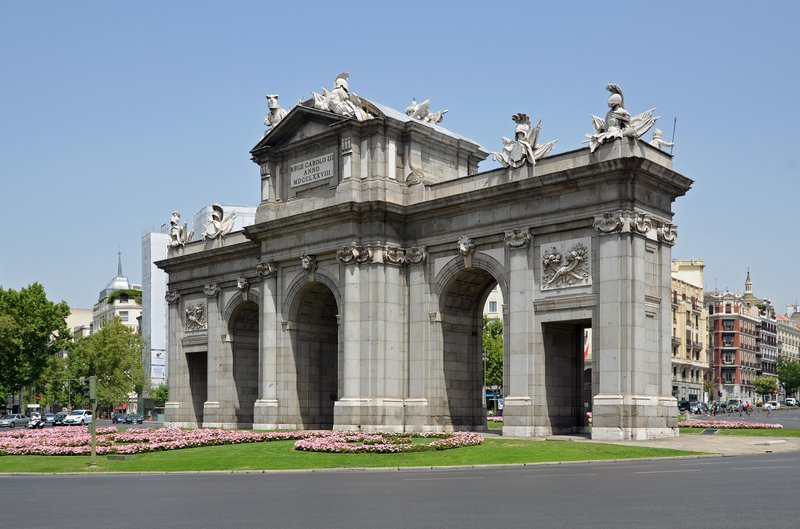
Completed in 1778 by Francesco Sabatini for Charles III. Five arched passages pierce the limestone span — three elliptical arches at center, two rectangular doorways on the flanks. Sculpted lion heads and trophies mark the keystones. Once the eastern gate of Madrid, it opens onto the road to Alcalá de Henares.
ARRIVE Toledo: 20 min · 6 min → Cathedral of Toledo
1.Cathedral of Toledo~1 hr 30 min
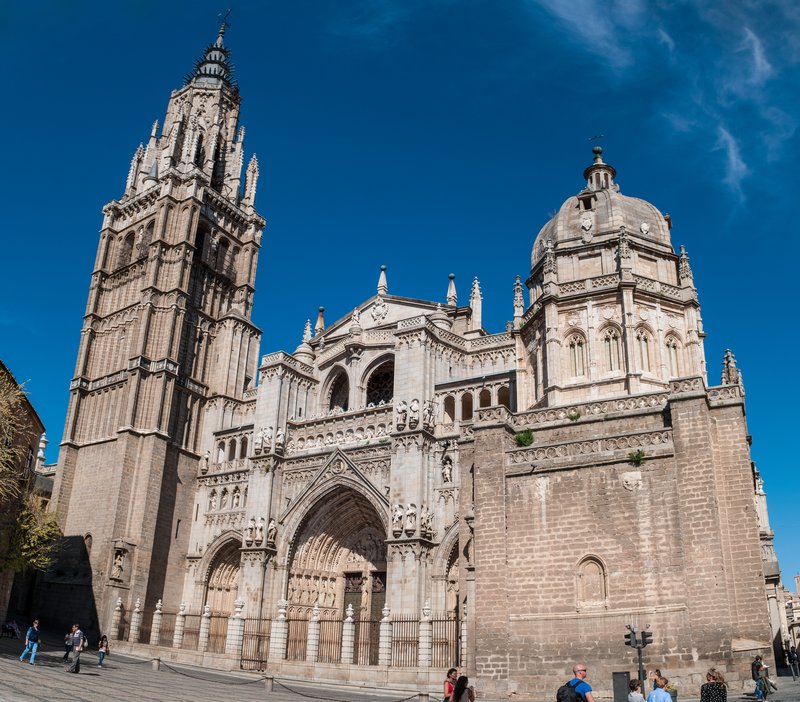
The primatial cathedral of Spain, begun in the 13th century on the site of the city's main mosque. Inside: El Greco's Disrobing of Christ and the extraordinary Transparente altarpiece, lit by a hidden skylight punched through the vault. Stands in the same rank as Cologne and Chartres.
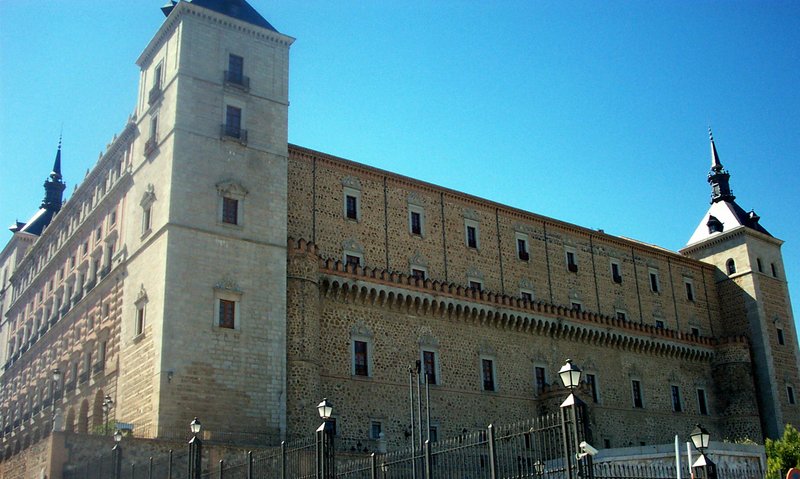
The stone fortress dominating Toledo's highest point — Roman origins, rebuilt as an imperial palace by Charles V, destroyed and rebuilt in the Civil War. Now Spain's Army Museum, with the panoramic terrace over the Tagus gorge as the main reason to visit.
A medieval church that exists for one reason: El Greco's The Burial of the Count of Orgaz, painted in the 16th century and still in the apse where it was commissioned. The 15-foot canvas is a masterpiece — densely observed nobility below, a visionary celestial scene above.
A sweeping walk through the layers of Madrid's past — Roman, Moorish, Habsburg, and Bourbon — from Plaza de Oriente to Lavapiés. Exceptional narrative depth from local guides.
Intimate 70-minute flamenco show in a brick-vaulted cave below the Sala Torero — only three rows of seating around the stage, guaranteeing close-up views of dancers, guitarist, and singer. One complimentary drink included.
Full-day guided circuit — early entry to the Royal Palace, a walking circuit of the historic center, and a guided Prado visit. The most efficient single-day overview of Madrid's core.
Two hours inside the Palacio Real with a local guide — the Throne Room, Royal Armoury, Royal Pharmacy, and Goya portraits, without queuing. The most direct route through the palace's highlights.
The Prado's essential highlights in 90 minutes — Las Meninas, Goya's Saturn, Bosch's triptych — with a maximum of 6 people. More time per work than any larger group allows.
Expert-guided small-group Prado tour — Velázquez, Goya, El Greco, and Rubens with an art historian guide; skip-the-line access and a maximum of 8 people.
Authentic flamenco in Madrid's most intimate tablao — just 40 seats around the stage near the Royal Palace. One complimentary drink included · sangria, beer, wine, or soft drink. Shows delivered by professional resident artists.
Small-group guided tour of the Reina Sofía — Guernica, Miró, Dalí, and the Spanish Surrealists with context on the Civil War and 20th-century Spanish history. Skip the line included.
Two hours inside the Palacio Real with an expert guide — Throne Room, Banquet Hall, Royal Apartments, and the Royal Armoury; skip-the-line access from Opera metro.
Three UNESCO cities in one day by coach — the Roman aqueduct of Segovia, the medieval walls of Ávila, and the Gothic cathedral and Jewish Quarter of Toledo. Guided in English throughout with live commentary.
Two-and-a-half-hour group walk through the heart of Habsburg Madrid — Plaza Mayor, the Royal Palace exterior, and the streets linking them, with a guide carrying a yellow-and-orange umbrella at Puerta del Sol.
Intimate tablao in a brick-vaulted cave below the Sala Torero — just three rows of seating around the stage ensuring close-up views of the dancers, guitarist, and singer. One complimentary drink included.
Two-hour SANDEMANs tour meeting in Plaza Mayor — covers the Royal Palace, Gran Vía, and Plaza de España with a professional guide, free for children under 13, conducted in English.
Legendary tablao near the Almudena Cathedral — founded 1956, Spain's most celebrated flamenco stage; 90-minute show with one guitarist, three singers, and three dancers; optional 3-to-5-course Michelin-quality dinner.
Two-hour ExperienceFirst tour meeting outside Heladería Palazzo at Puerta del Sol 11 — Royal Palace, Almudena Cathedral, Plaza de España, and Puerta del Sol, with a maximum of 25 participants.
Madrid's signature dish — a three-course chickpea stew served in sequence: first the broth, then the chickpeas and vegetables, then the meats. A whole ritual in a single meal, only at lunch.
Fried squid rings in a crusty Spanish roll — the quintessential Madrid street snack sold from bars around Plaza Mayor. Minimal batter, fresh squid, simplicity is the point.
Ridged fried dough sticks served with thick dark drinking chocolate — a Madrid tradition eaten at any hour from breakfast through the early hours after a night out.
Slow-cooked tripe stew with chorizo, morcilla, and chickpeas in a paprika-red sauce — a Sunday staple in Madrid's tabernas. Divisive to outsiders, beloved by madrileños.
Foreign number: accepted — it uses the same Uber account and number as the ride app.
The widest restaurant selection in Madrid, with strong coverage across all central districts; delivery windows in the city centre typically run 25–40 min.
Foreign number: not required. — it signs in with Google, Facebook or email, and a phone sign-up takes any prefix with the code by SMS or WhatsApp.
Strong competitor to Uber Eats in Madrid with a large catalogue of local restaurants, supermarkets and pharmacies; particularly useful for late-night orders.
Foreign number: not required. — the account is made with Google, Facebook or an email address — there is no phone field, so no code has to arrive.
Spain's longest-established food delivery platform with a broad network of independent restaurants; delivery times are slower than Uber Eats but the selection of local madrileño spots is excellent.
Foreign number: not accepted — requires a Spanish or European number to register.
Madrid's premium ride-hailing option, popular with business travellers; prices run slightly above Uber and Bolt but cars are typically newer and drivers professional.
Foreign number: accepted — Uber links to an existing account or registers with any international mobile number; the verification SMS delivers internationally.
Good coverage across central Madrid; surge pricing applies during peak hours and major events at the Santiago Bernabéu.
A 1st-century Roman aqueduct still intact after 2,000 years, the fairy-tale Alcázar castle, and a medieval old city on a granite ridge — all 30 minutes by high-speed train.
Royal palace town on the Tagus — the Palacio Real de Aranjuez with its Hall of Mirrors, manicured Parterre and Island Gardens, and the Strawberry Train heritage railway. A UNESCO World Heritage Cultural Landscape.
Philip II's monastery-palace-mausoleum, one of the most austere and powerful buildings in Europe — built in the Guadarrama foothills with a royal pantheon, vast library, and basilica where generations of Spanish monarchs are buried.
A medieval city of hanging houses perched on cliffs above two river gorges — the Casas Colgadas, the abstract art museum inside a 14th-century house, and the Cathedral of Cuenca. A UNESCO World Heritage City reached by high-speed AVE train.
The best-preserved medieval walled city in Spain — 2.5 km of 11th-century granite walls with 88 towers, still fully intact and walkable on top. The Gothic cathedral and birthplace of Santa Teresa complete the picture.
Closes without notice for state ceremonies — even with a confirmed timed ticket. Check the official website the morning of your visit.
Reina Sofía — Closed Tuesday
Closed every Tuesday — an unusual closure for a museum at this international level.
Temple of Debod — Interior Cap
Only 30 visitors inside at once. Walk-up queues fill quickly on summer weekends. Exterior and reflecting pools are always accessible.
Worth Knowing
The Weight of Layers
The Galería de las Colecciones Reales is the strangest museum in Madrid — not for what it contains, but for where it is. You enter from street level next to the Palacio Real and descend five floors into the bedrock beneath the city, past the stone foundations of the original medieval Alcázar wall, into a vast underground space that runs beneath three successive buildings constructed on the same ground over a thousand years. The experience of moving between Baroque tapestries and medieval stone — under three millennia of successive construction — is unlike anything I have encountered in a European museum.
And then, the Temple of Debod: an Egyptian temple from the second century BCE disassembled stone by stone from the Nile bank, shipped to Spain, and rebuilt on a hill overlooking a modern European capital — because Spain helped UNESCO save Nubian monuments from rising dam waters. Both facts are simultaneously true. Standing between them at sunset — the Sierra de Guadarrama orange behind the temple, the city spread below — the mind does something it rarely does at European monuments: it genuinely doesn't know what time it is.