From Hotel: 6 min · 3 min → Saint Basil's Cathedral
1.Saint Basil's Cathedral~45 min
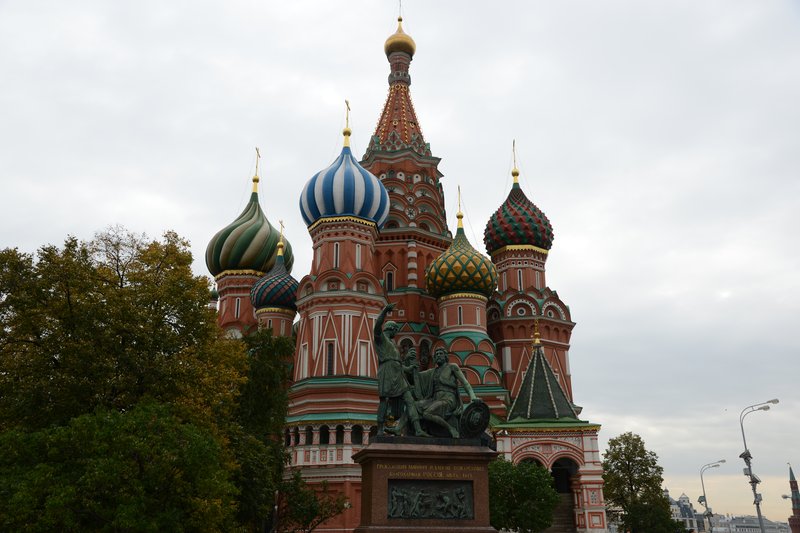
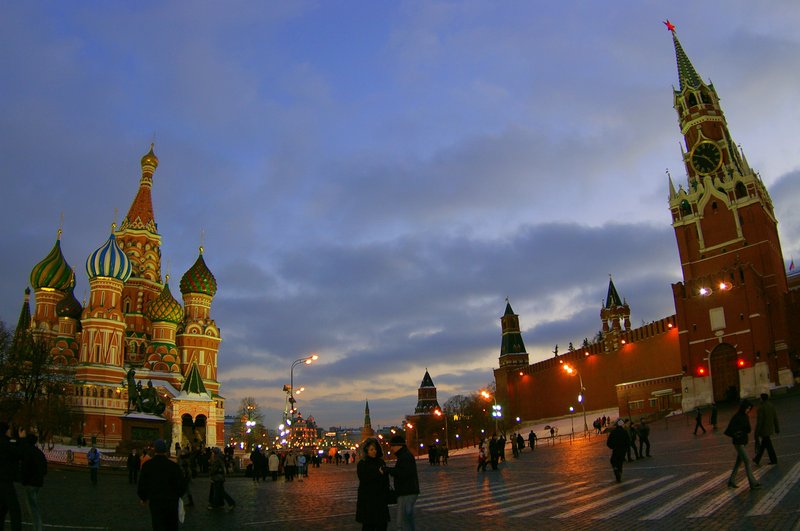
Nine wildly different onion domes, each painted its own pattern, rising over the south end of Red Square. Built in 1561 to mark Ivan the Terrible's capture of Kazan, it is really nine separate chapels joined into one — and the single most photographed building in Russia.
Russia's most famous square, framed by the Kremlin wall, Saint Basil's Cathedral, the State Historical Museum and the GUM department store's glass-roofed facade. Cobblestones underfoot, Lenin's Mausoleum at one end — the stage for centuries of coronations, parades and revolutions.
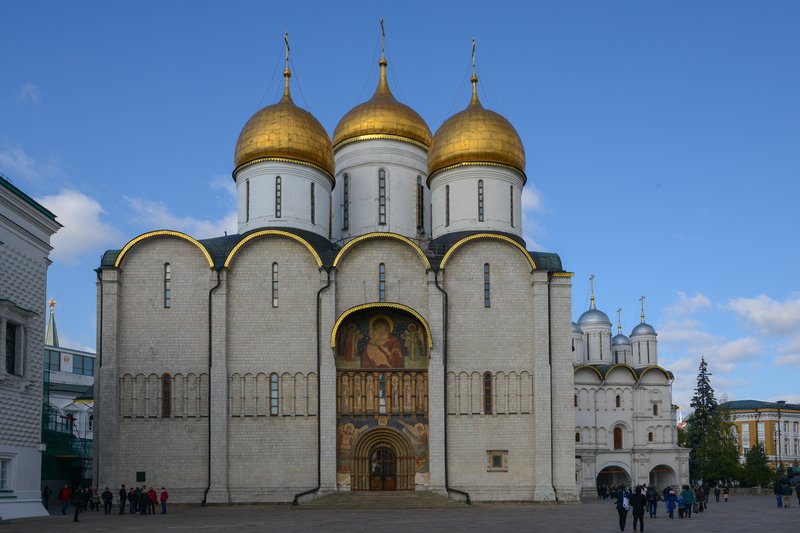
The fortified seat of Russian power for more than five centuries — golden-domed cathedrals, the Grand Kremlin Palace and the Armoury Chamber's Fabergé eggs and imperial carriages behind red brick walls. Enter through the Kutafya Tower into Cathedral Square.
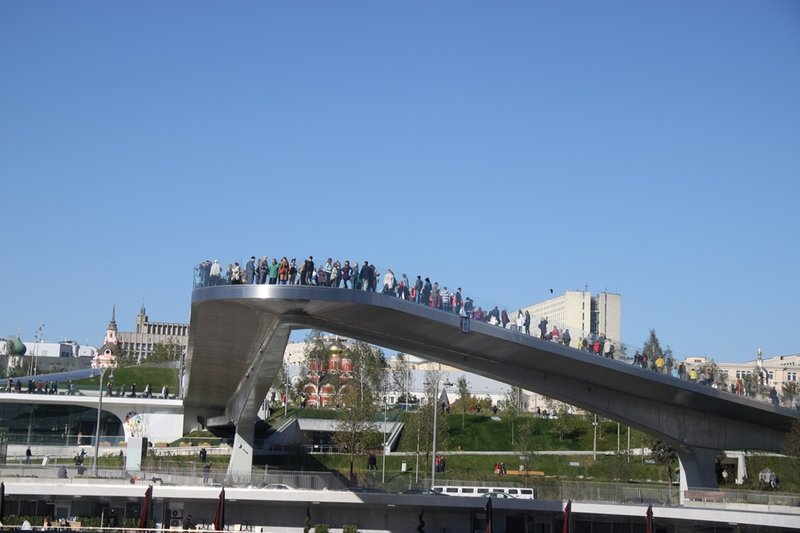
A landscaped park built in 2017 on the site of a demolished Soviet hotel, stitching four Russian climate zones together beside the Kremlin wall. Its Floating Bridge cantilevers 70 metres out over the Moskva River — the only spot in the city where all five Kremlin stars line up at once.
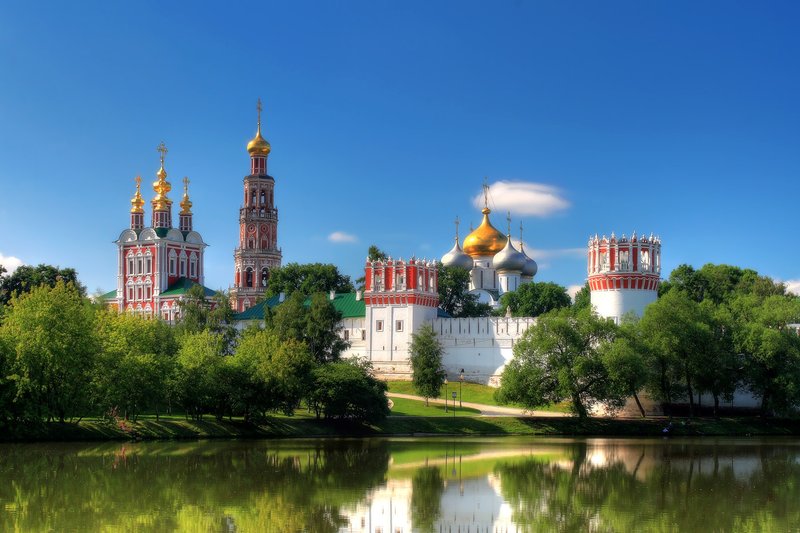
A fortified 16th-century convent on a bend of the Moskva River, its red-brick walls and tent-roofed towers a UNESCO World Heritage Site. The adjoining cemetery holds Chekhov, Gogol, Bulgakov and Khrushchev — one of the few Soviet leaders buried outside the Kremlin wall.
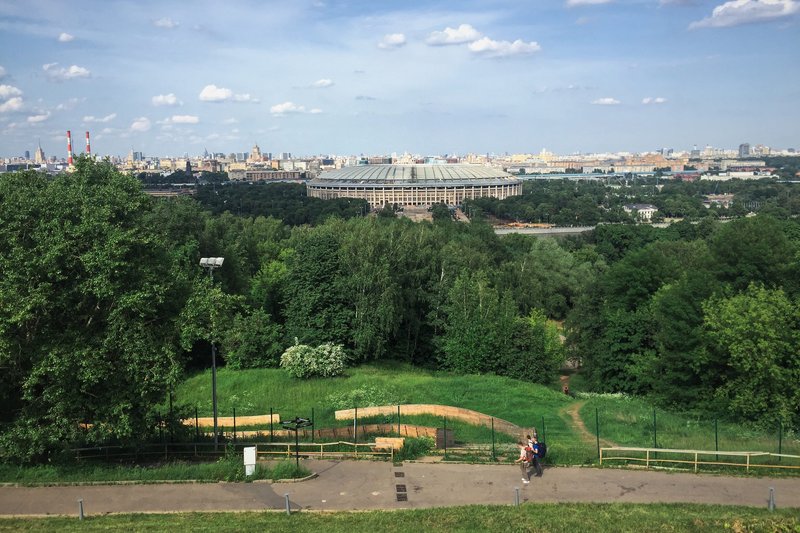
A wooded bluff on the river's south bank, the highest natural point in central Moscow, with the panoramic terrace below Moscow State University's Stalin-era tower. On a clear day the whole skyline unrolls — the Kremlin, the "Moscow-City" towers and the river looping below.
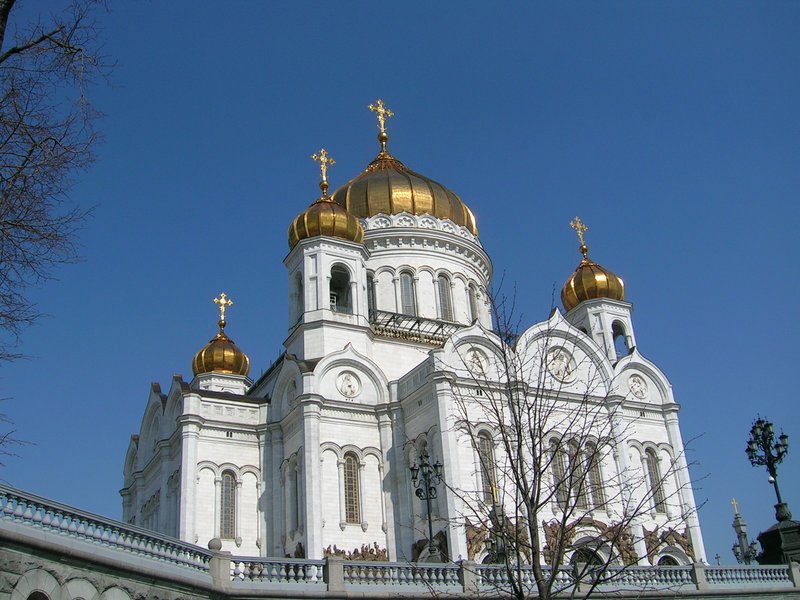
The world's tallest Orthodox Christian church — dynamited by Stalin in 1931 for a Palace of Soviets that was never built, its foundation spent decades as an outdoor swimming pool, and the gold-domed cathedral was rebuilt on the same spot after 1991. Its riverside terrace faces the Kremlin.
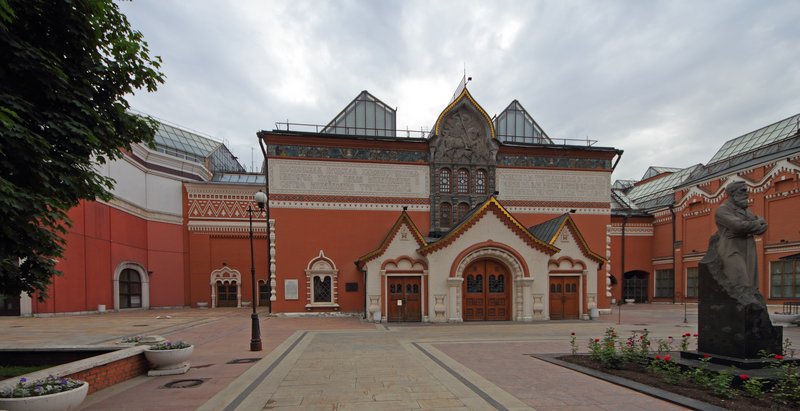
The definitive collection of Russian art, founded on merchant Pavel Tretyakov's private holdings in 1856 — Andrei Rublev's icons, Ilya Repin's Barge Haulers on the Volga and Viktor Vasnetsov's fairy-tale canvases across a red-brick, fairy-tale-gabled building in Zamoskvorechye.
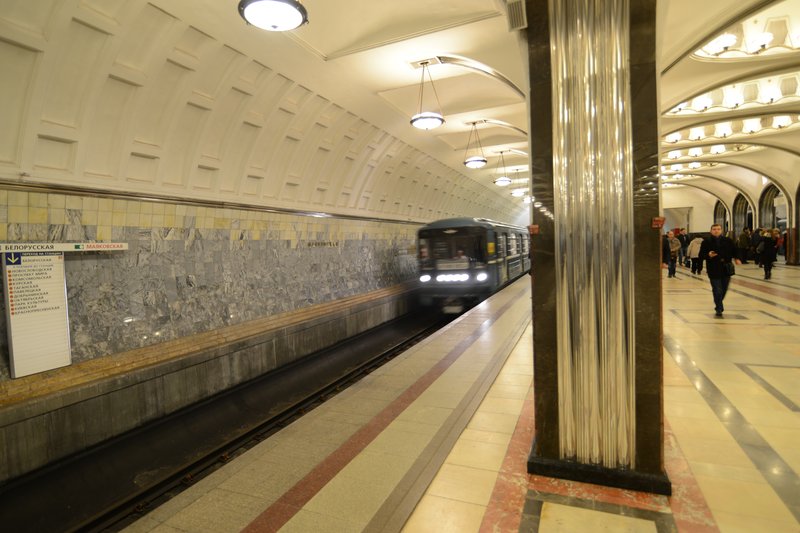
The world's most opulent subway — chandeliers, mosaics and marble halls built as "palaces for the people." A short ride links three showpiece stations: Komsomolskaya's gilded stucco hall above three rail terminals, Mayakovskaya's steel-and-rhodonite arches with 34 ceiling mosaics, and Novoslobodskaya's stained-glass panels.
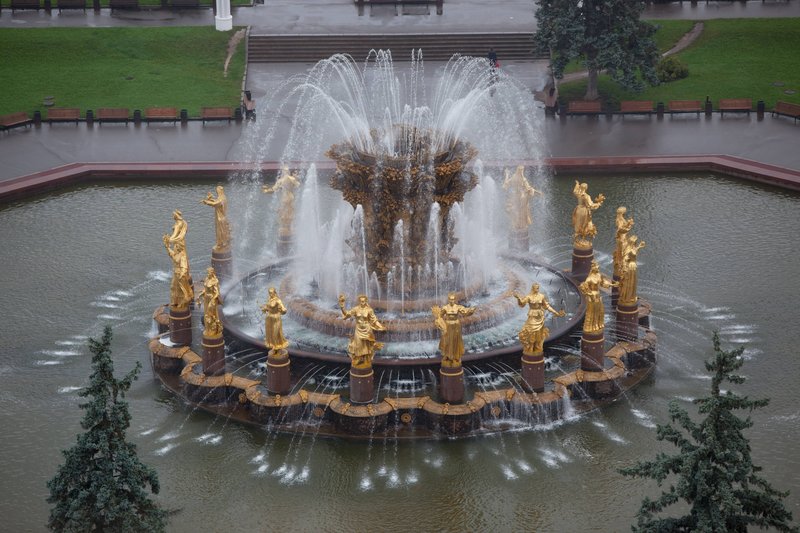
A 578-acre Soviet exhibition park opened in 1939, its avenue lined with over 50 monumental pavilions — one for every republic and industry of the USSR — golden fountains, and the 25-metre stainless-steel Worker and Kolkhoz Woman statue guarding the north entrance.
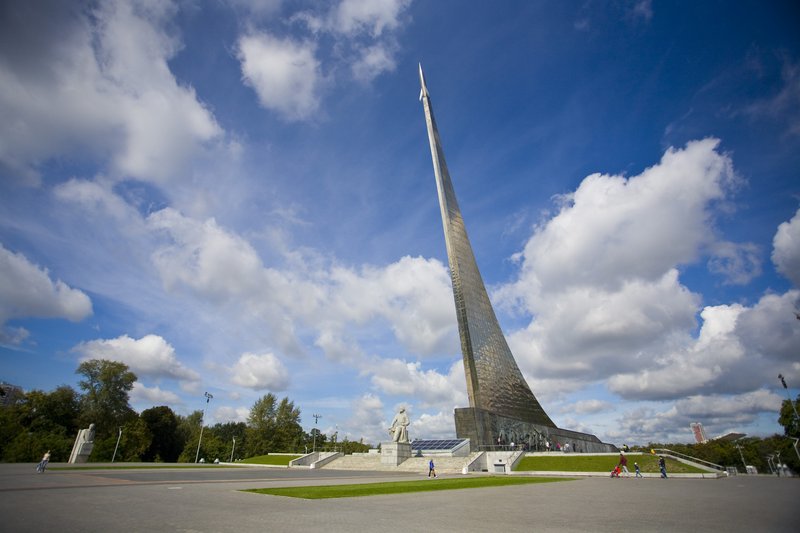
Real Soviet spacecraft, Sputnik and Laika's flight capsule, Yuri Gagarin's spacesuit and a scale model of the Mir space station, housed inside the granite base of the 110-metre titanium Monument to the Conquerors of Space. One of the world's great space-history collections.
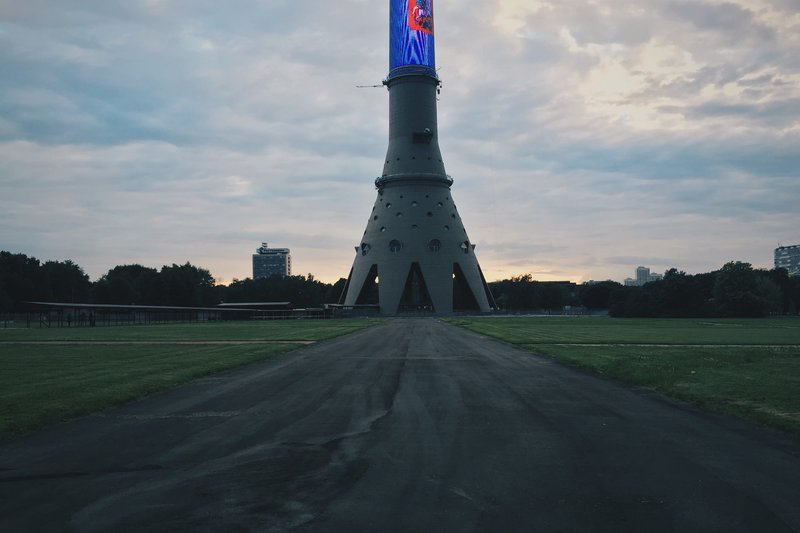
At 540 metres, the tallest free-standing structure in Europe and once the tallest in the world. A high-speed lift climbs to an observation deck with a glass floor section over Moscow — book with a passport or ID in hand, as the security checkpoint requires one to enter.
One of the world's great opera and ballet houses, the Bolshoi has staged premieres of Tchaikovsky's Swan Lake and The Sleeping Beauty since 1825. Even if a performance isn't on the programme, the neoclassical facade and gilded, tiered auditorium visible on a backstage tour are a spectacle in themselves.
Russia's leading collection of Western European art, spanning Ancient Egyptian antiquities, plaster casts of classical sculpture, Dutch Golden Age painting and an exceptional Impressionist and Post-Impressionist wing — Monet, Renoir, Picasso and Matisse, assembled largely from the private collections of two Moscow merchants in the early 20th century.
Moscow's most beloved park, transformed after a 2011 redesign from a fairground into a sweeping riverside promenade. Hire a bike or rollerblade along the Moskva River embankment, watch outdoor film screenings and exhibitions in the summer pavilions, then drift into the adjacent Neskuchny Garden — the city's oldest park.
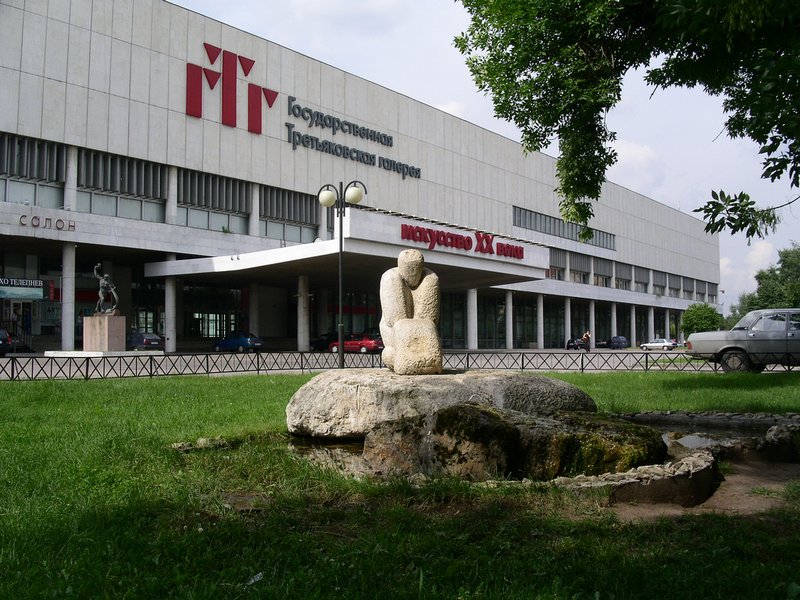
The 20th-century wing of the Tretyakov institution, surveying Russian art from 1900 to the present in a brutalist block on Krymsky Val — Kazimir Malevich's Black Square, El Lissitzky's Constructivist posters and a sculpture park outside where deposed Soviet monuments stand in ironic rows.
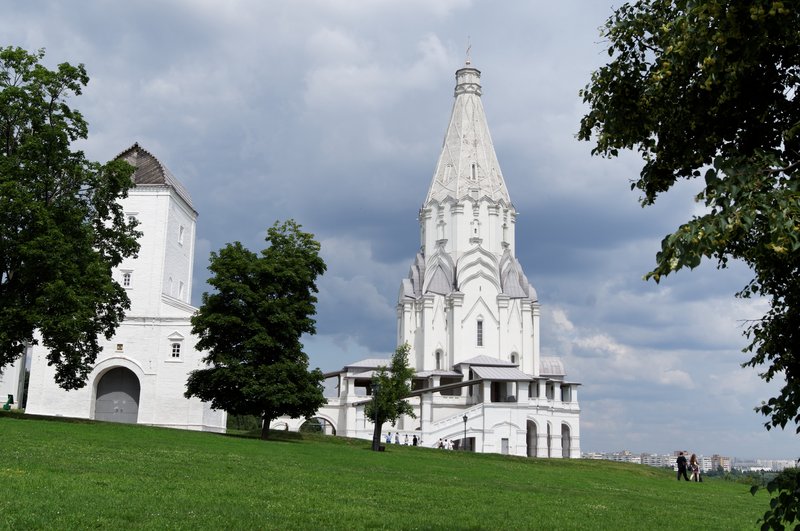
A former royal estate on a bluff above the Moskva River, centred on the Church of the Ascension — built in 1532 and one of the first tent-roofed stone churches in Russia, now a UNESCO World Heritage Site. Wander the orchard-covered grounds, visit the wooden palace reconstruction and look out over the river bend below.
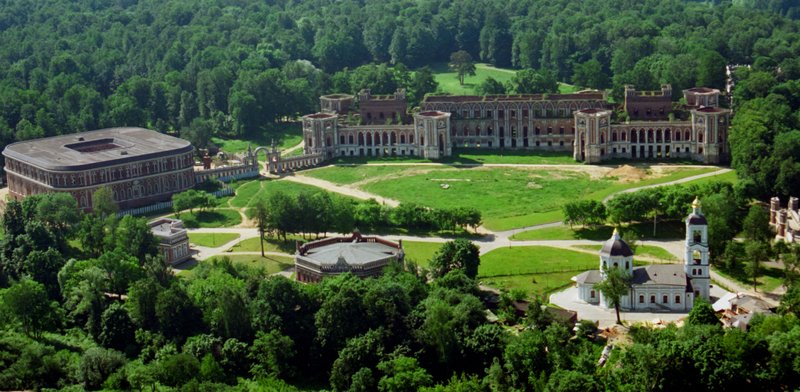
Catherine the Great's unfinished summer residence — a peculiar mix of Gothic arches and Moorish latticework that she ordered demolished and rebuilt twice, then abandoned when her architect fell out of favour. The Grand Palace and its bridge-pavilions were finally completed in 2007 and now house a museum, surrounded by a vast park with two lakes and formal gardens.
A two-hour small-group walk through Red Square, Nikolskaya Street and Alexander Garden, taking in Saint Basil's, the Kremlin walls and the Bolshoi Theatre with a local guide.
A private four-hour tour of the Kremlin's Cathedral Square and grounds with entrance fees included, plus Red Square and Saint Basil's — pickup and drop-off at the hotel.
A small-group ride through the metro's most opulent "underground palaces" — Komsomolskaya, Mayakovskaya, Novoslobodskaya and more — with a guide explaining the Stalin-era art and history station by station.
A 3.5-hour combined walk covering the Kremlin cathedrals, Red Square and Saint Basil's, plus a guided pass through the metro's most beautiful stations.
A private two-hour walk through the Kremlin's Cathedral Square with a licensed guide, covering the Assumption, Annunciation and Archangel cathedrals and the Tsar Bell and Tsar Cannon.
A full walking survey of the historic center paired with a ride through the metro's ornate stations — the Kremlin walls, Red Square and Saint Basil's on foot, then the "underground palaces" by train.
A full-day private survey pairing Red Square and the Kremlin's Armoury Chamber with a metro ride and a stroll down the pedestrian Arbat — a comprehensive first-day overview with a private guide.
Small hand-folded dumplings of minced meat in dough, boiled and served with butter, sour cream or vinegar — Siberia's answer to ravioli, a Russian staple everywhere.
Strips of sautéed beef in a sour-cream and mustard sauce, named for a 19th-century Russian noble family — invented in Saint Petersburg, but a fixture of Moscow's classic restaurants.
Foreign number: not accepted. — sign-up uses Yandex ID phone verification, and the SMS code reliably arrives only on a Russian or CIS number.
Moscow's dominant food-delivery app since absorbing its main rival Delivery Club, with the widest restaurant list in the city; the interface has an English toggle, and couriers reach central hotels quickly, but ordering needs a working local number and a Mir-network card or cash on delivery.
Foreign number: not accepted. — the SMS verification code reliably arrives only on a Russian or CIS mobile number; a local SIM or eSIM bought on arrival is the fix.
The dominant ride app in Moscow since absorbing Uber's local operations in 2017 — wide coverage, an English interface, and a fixed fare shown before booking. Cash payment to the driver works around the card problem, since foreign Visa and Mastercard no longer function in Russia.
The most-visited town on the Golden Ring, built around the Trinity Lavra of Saint Sergius — a walled monastery of gold and blue-star domes that has drawn Orthodox pilgrims since the 14th century. Suburban trains depart Yaroslavsky Station all day.
Russia's imperial second capital — the Hermitage, Peterhof's fountains and the pastel canals of the historic centre. The Sapsan high-speed train departs Leningradsky Station and covers the 650 km in about four hours, making it a long but doable single-day round trip.
Neither card network has processed Russian transactions since international rails cut off Russian banks. Bring cash or use the Mir domestic card.
Ostankino Tower — Passport required
The security checkpoint will not admit a visitor without an original passport or ID — a photo or copy is not accepted.
Worth Knowing
A City Rebuilt Twice Over
Almost nothing standing in central Moscow predates the 1930s in its current form. Stalin's general reconstruction plan widened Tverskaya into a boulevard, moved whole stone buildings sideways on rails to make room, and dynamited the original Cathedral of Christ the Saviour to clear a site for a Palace of Soviets that was never finished — the foundation became the world's largest open-air swimming pool for three decades before the cathedral rose again on the same spot after 1991. The Moscow Metro was built in the same years as a showcase as much as a transit system: Stalin ordered stations decorated as "palaces for the people," and workers rode past mosaics and chandeliers most Muscovites had never seen indoors, let alone underground.
The Kremlin's five ruby stars replaced the eagles of the Russian Empire in 1935 and have burned continuously ever since, lit from inside and rotated with the wind so they never look dark from any angle — visible day and night from the Zaryadye Park floating bridge, the one place all five line up in a single view.