From Hotel: 10 min · 3 min → Palazzo Reale di Napoli
1.Palazzo Reale di Napoli~1 hr 30 min
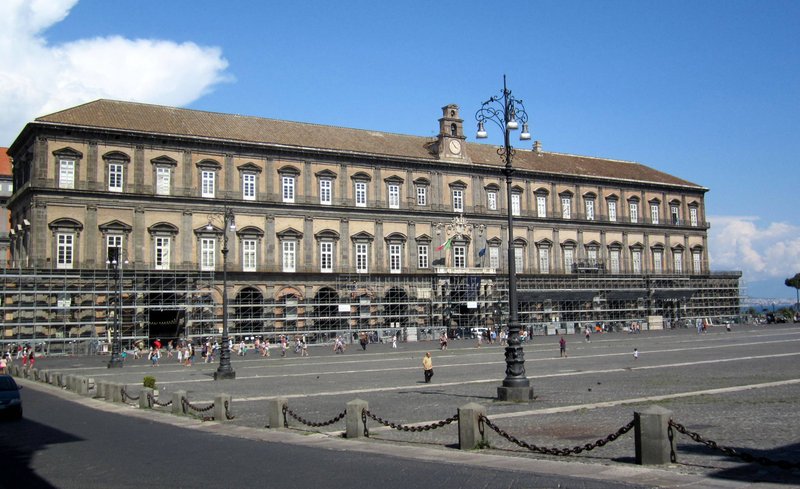
The Bourbons' royal palace on Piazza del Plebiscito — 30 frescoed rooms of Flemish tapestries and Neapolitan Baroque furniture arranged as they were in 1800. Eight bronze dynastic statues line the facade; the Royal Apartments are an intact record of 19th-century court life.
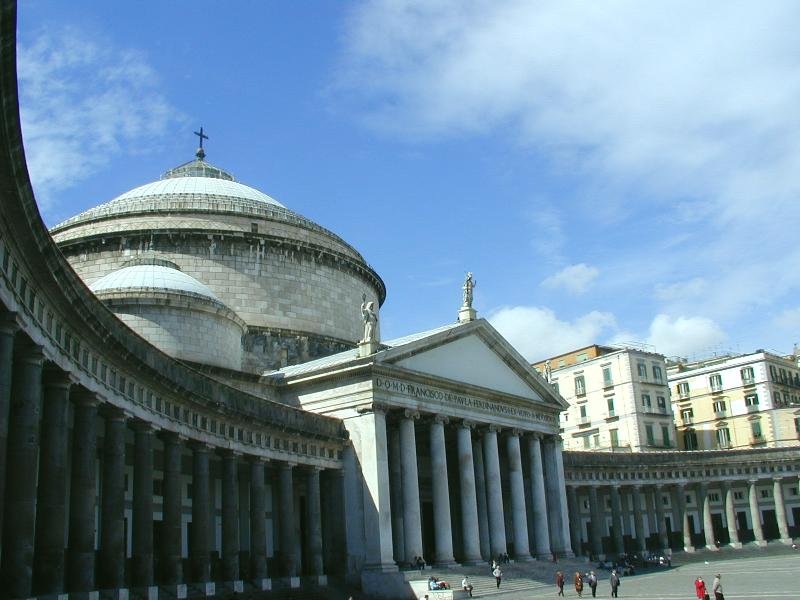
Naples' grandest public space — a sweeping semicircle of Doric columns flanking the Basilica di San Francesco di Paola, the Royal Palace closing one end, Vesuvius visible at the far end of the seafront. The scale of the city becomes legible from here.
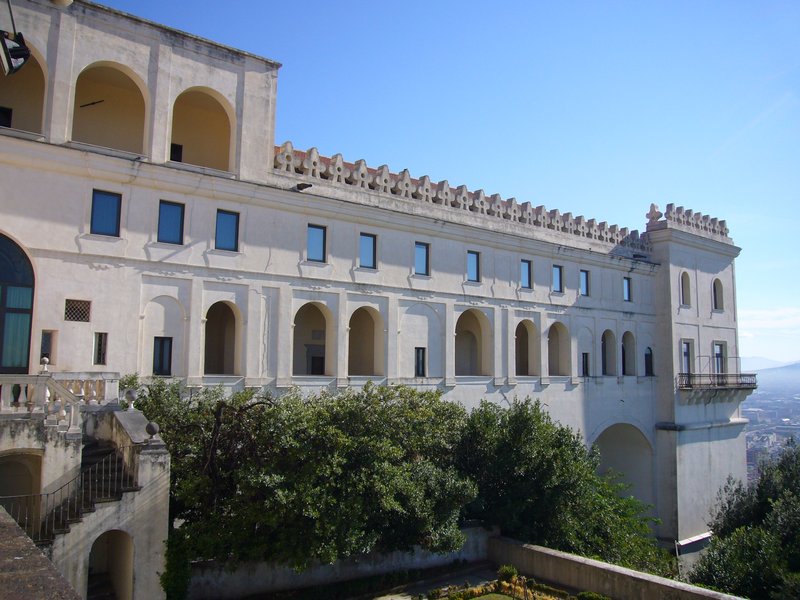
A 14th-century Carthusian monastery at the Vomero summit, rebuilt in the 17th century into a showcase of Neapolitan Baroque. The museum holds the city's finest presepe collection, historical prints, and decorative arts; the cloister terrace looks straight down to the sea.
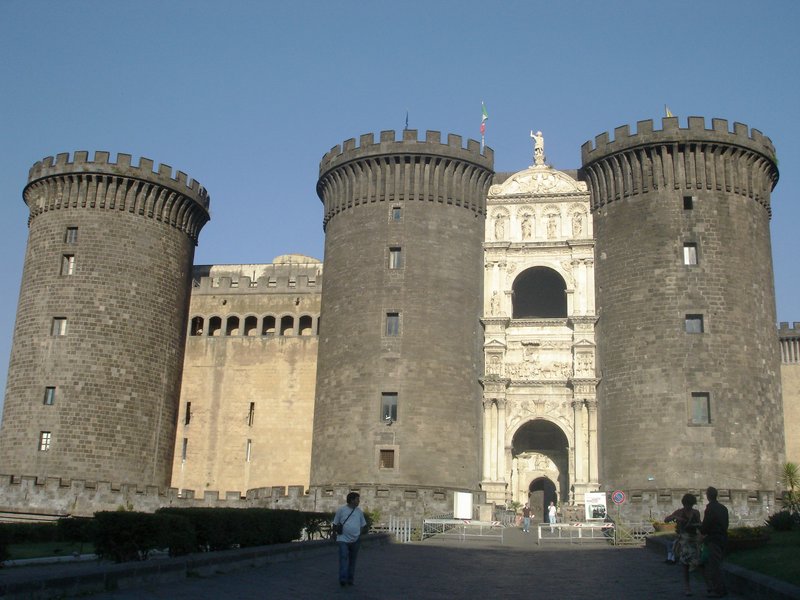
The 13th-century Angevin fortress that dominates the port — five cylindrical towers and a white triumphal Aragonese arch wedged between them as an afterthought from a different dynasty. The Civic Museum inside holds Neapolitan art from the medieval period to the 20th century.
The six-pointed star fortress cut from golden tuff that commands the Vomero summit. The Museum of the Twentieth Century inside traces Neapolitan modernism; the ramparts give a complete 360° panorama — Phlegraean Fields, Vesuvius, and all three islands.
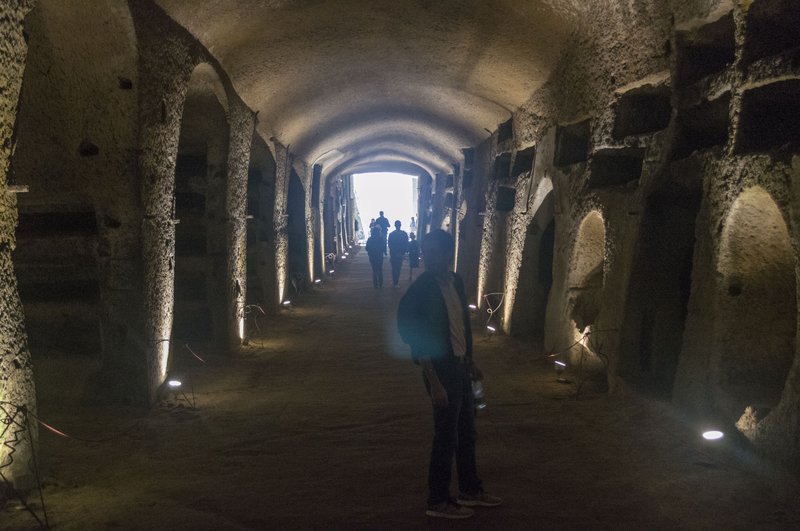
The 2nd-century catacombs beneath Rione Sanità — the largest underground burial site in southern Italy, four levels deep with frescoed chambers and the original tomb of Naples' patron saint. Tours run by a cooperative from the neighborhood above.
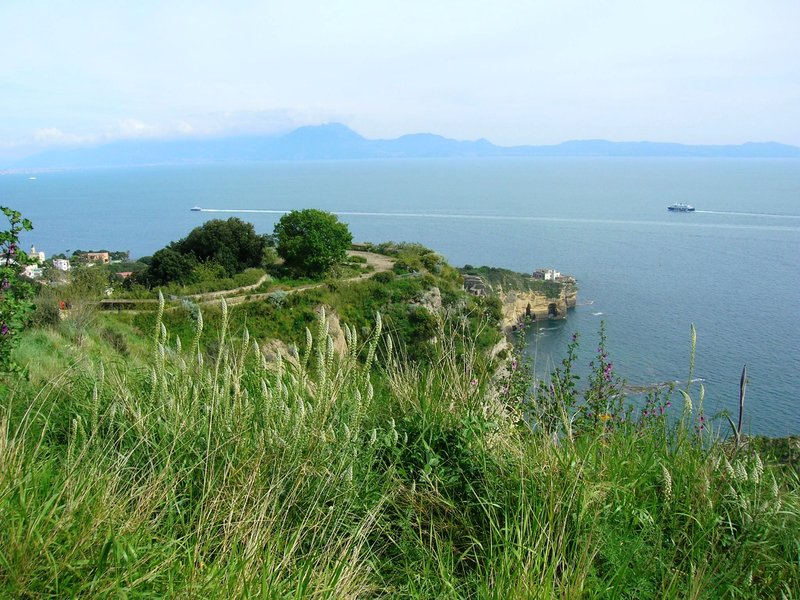
A hilltop park on the Posillipo promontory where the city gives way to the full Gulf of Naples panorama — Vesuvius east, Capri and the volcanic islands south, the hidden lagoon of Trentaremi below the cliffs. The park Neapolitans come to for perspective.
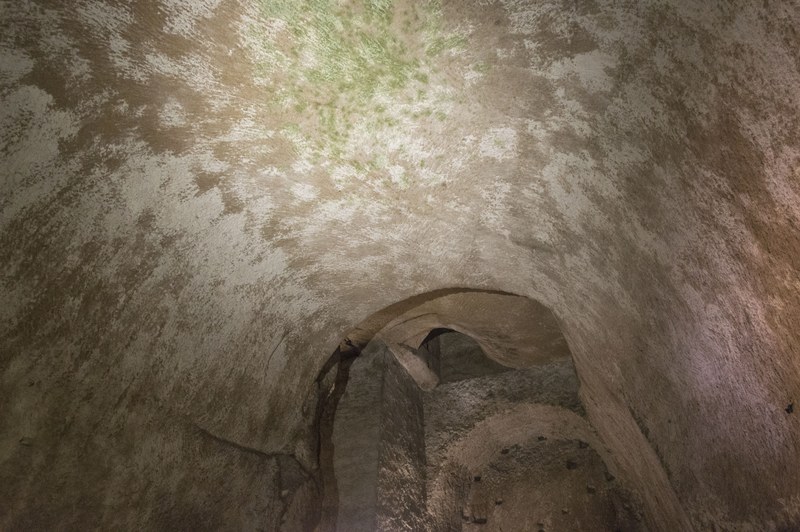
Naples sits on 2,500 years of itself. Descend through Greek cisterns, Roman aqueducts, WWII air-raid shelters, and ancient buried roads — a guided tour through the true depth of the city, accessible from Piazza San Gaetano on the main decumanus.
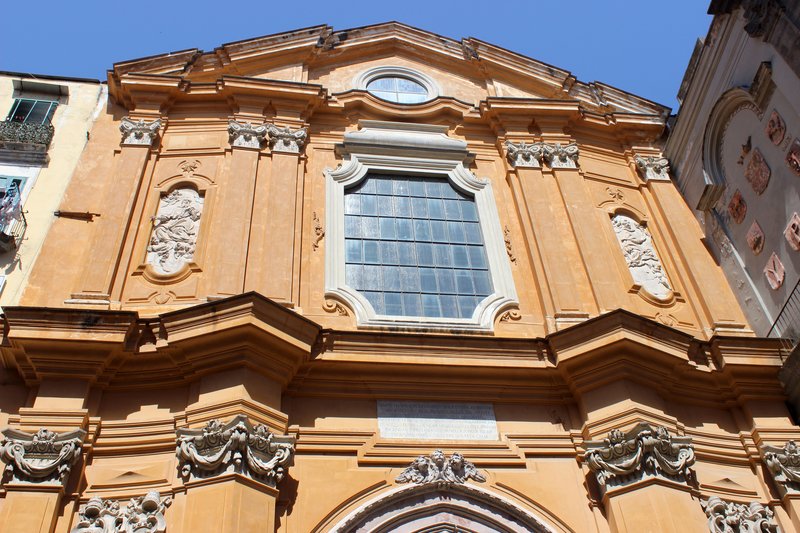
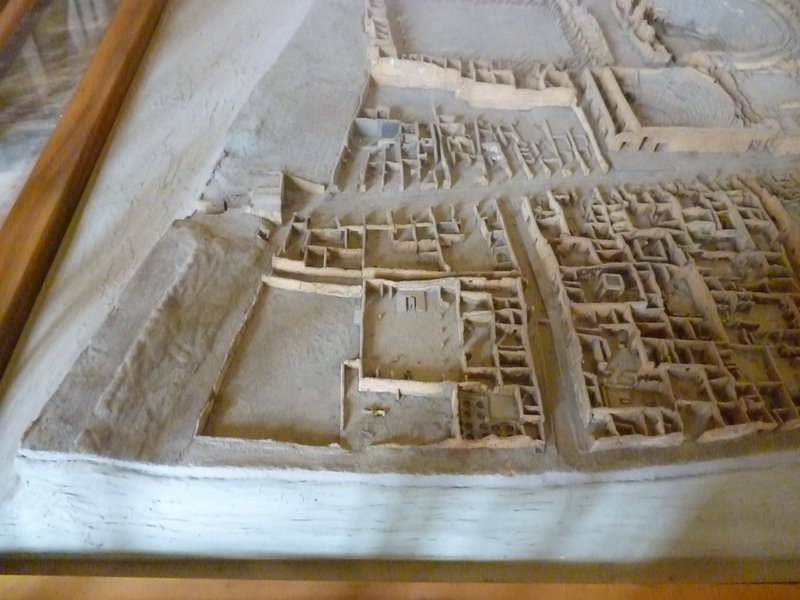
A 13th-century basilica over the ancient Greek agora and Roman macellum of Neapolis — descend below to a preserved Roman street, tabernae, and a bakery identifiable from its ovens. Boccaccio met Fiammetta here in 1336; Petrarch lodged in the convent next door.
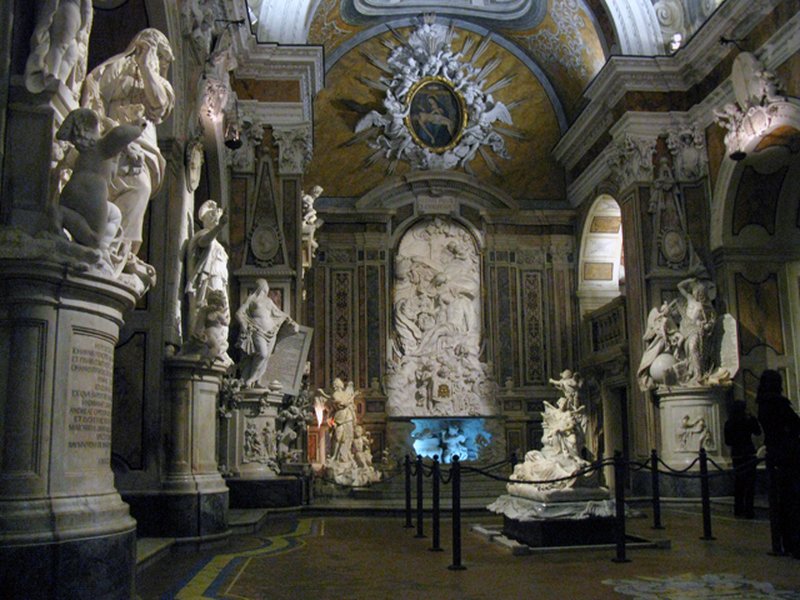
A single chapel holding one of the most astonishing sculptures in existence: the Veiled Christ, carved from a single block of marble with a veil so fine it seems to defy the material entirely. The alchemical machines in the crypt — anatomical studies preserved in wax — make it stranger still.
7 min · 2 min → MANN – Museo Archeologico Nazionale
4.MANN – Museo Archeologico Nazionale~2 hr 30 min
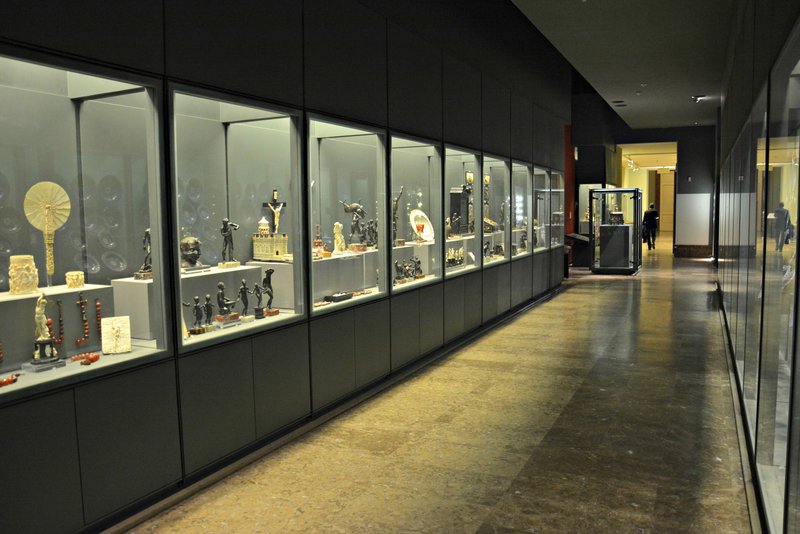
The world's finest collection of Graeco-Roman antiquities — Pompeian frescoes, the Farnese Bull, the Alexander Mosaic, and the Secret Room — all inside a 16th-century palazzo. The treasures of Pompeii and Herculaneum, pulled from the ash and preserved here for centuries.
From Hotel: 26 min · 9 min → Pio Monte della Misericordia
1.Pio Monte della Misericordia~45 min
In 1607 Caravaggio painted "The Seven Works of Mercy" for this small charity chapel — and the work still hangs at the high altar where it was placed over 400 years ago. One of the greatest paintings in Italy in the single room it was made for, surrounded by Caravaggio-influenced Neapolitan Baroque works.
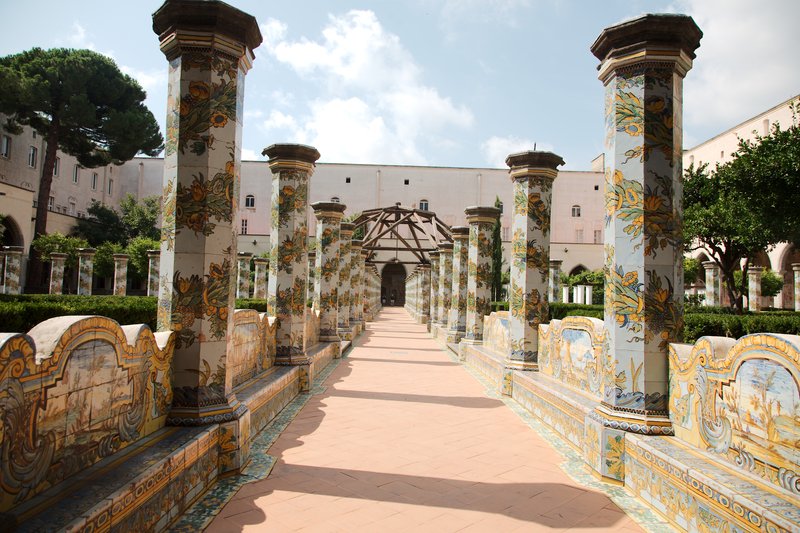
A medieval monastery cloister reborn as one of Europe's most extraordinary decorative spaces — columns and benches sheathed in vivid hand-painted maiolica tiles depicting hunting scenes, village fairs, and mythological tales. Peaceful and utterly unlike anything else in Naples.
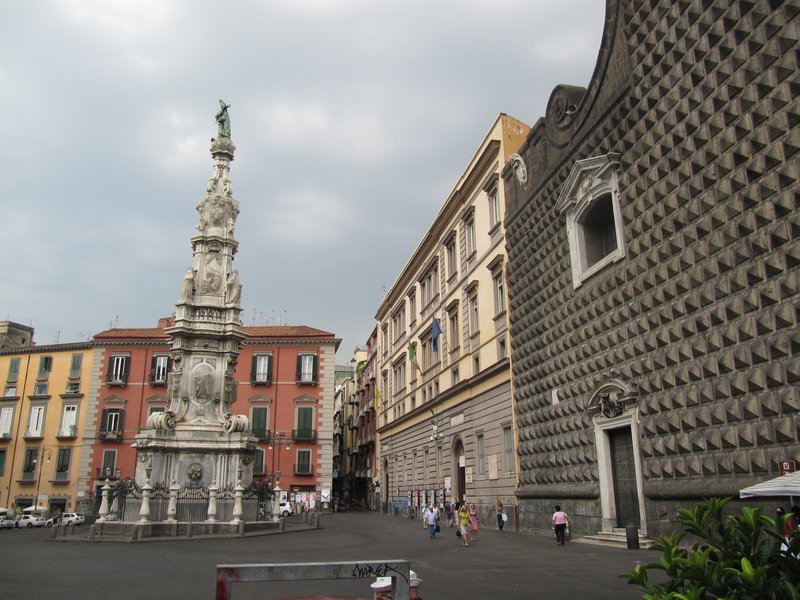
The most architecturally disorienting church in Naples — a grey diamond-pointed piperno-stone facade from a 16th-century palace that Jesuits converted into a Baroque church while leaving the fortress-like exterior entirely intact. Severe volcanic stone on the outside; gold and fresco within.
Italy's greatest Bourbon art collection — Caravaggio, Titian, Raphael, Bellini, Masaccio, and Botticelli fill over a hundred galleries in a royal palace above the city, ringed by a vast free park on the northern hills.
Coffee and sfogliatella to start, then Spaccanapoli, San Gregorio Armeno craftsmen, San Lorenzo Maggiore, and the cult of pezzentelle souls at the Fontanelle Cemetery — the spiritual and street life of Naples in one walk.
Piazza del Plebiscito, the Decumani, Naples Cathedral, and the UNESCO historic centre — a full sweep of the city's layers with an expert local guide who knows which alleys matter.
Knead dough, choose toppings, bake in a wood-fired oven with a local chef — includes appetizer, drink, your own pizza, and a diploma. The Margherita as a UNESCO dish, explained from scratch.
Pompeii excavations with a guide for 2.5 hours, then drive to 1,000m on Vesuvius for a 360° crater view — ancient Roman city meets active volcano in one long day.
Full-day small-group day trip to the three essential Amalfi Coast stops — Sorrento, Positano, and Amalfi — by air-conditioned coach with a licensed guide, hotel pick-up included and free time in each town.
Hidden churches, pagan rites, Greek ruins, and the labyrinthine lanes of the ancient city — a deep dive into the sacred and strange history that makes Naples different from any other Italian city.
A classic walk through the historic centre — Spanish Quarters, Spaccanapoli, and the seafront — starting at the legendary Gambrinus café with a knowledgeable local guide.
Descend below the Spanish Quarters into a hidden underground city — ancient cisterns, WWII tunnels, and centuries of Neapolitan life preserved beneath the street, away from the tourist circuit.
Enter the secret Bourbon Tunnel carved through tufa beneath the Chiaia hill — built as a royal escape route, used as a WWII shelter, one of Naples' most dramatic underground spaces.
Hands-on Neapolitan pizza workshop — roll the dough, choose your toppings, bake in a wood-fired oven, eat your creation with a drink and appetizer at NaplesBay Cooking Lab, steps from the hotel.
Full-day small-group day trip along the Amalfi Coast — Sorrento, Positano, and Amalfi by air-conditioned coach with a licensed guide and hotel pick-up, free time in each town on one of Italy's most dramatic coastlines.
Small-group full-day tour to Pompeii's excavations with a licensed guide, then to the 1,000m crater rim of Vesuvius — lunch at a local restaurant included. Hotel pick-up from Naples.
The two buried cities in one day — archaeologist-guided small group through Pompeii's streets and Herculaneum's better-preserved organic remains, with lunch at a local restaurant and hotel pick-up from Naples.
Greek cisterns, Roman tunnels, WWII shelters, and the city's surface highlights in one 2.5-hour small-group experience — the underground and above-ground layers of Naples read together as a single continuous story.
Full-day small-group tour to Capri by fast ferry — the Blue Grotto by rowboat, Anacapri and Villa San Michele, then free time in Capri town before the hydrofoil return to Naples. Hotel pick-up included.
The original — charred crust, risen cornicione, San Marzano tomatoes, and fior di latte or buffalo mozzarella, baked in a wood-fired oven in 90 seconds. Margherita and Marinara are the canonical versions; UNESCO-listed craft.
Naples' signature pastry in two forms — riccia · flaky shell-shaped · and frolla · smooth shortcrust. Both filled with semolina cream, ricotta, and citrus peel. Best eaten hot from the oven.
Deep-fried pizza folded over ricotta, cicoli · cured pork scraps · and provola — the street food that Neapolitans ate when wood-fired ovens were a luxury. Still sold from counter windows across the city; arrive hot.
The Sunday sauce — beef braised for six to eight hours in tomato and wine until it collapses into a deep, sweet ragù. Served over rigatoni or ziti spezzati. Nothing like Bolognese; a different logic entirely.
A light, yeast-risen cake soaked in rum syrup until it glistens — the French baba arrived in Naples via the Bourbon court and never left. Sold in every pasticceria, from pocket-size to pillar-shaped display versions.
Made from water buffalo milk in the Campania plain south of the city, with a thin skin that splits to release a milky whey. The DOP version from Caserta or Battipaglia is a different thing from anything sold outside this region.
Foreign number: not required. — the account is made with Google, Facebook or an email address — there is no phone field, so no code has to arrive.
The primary food delivery platform in Italy, with wide restaurant coverage in Naples including local pizzerias, trattorias, and seafood restaurants. Most orders arrive within 30–45 minutes.
Foreign number: not required. — sign-up runs on Google, Apple, Facebook or email with no phone field at all, so no verification code has to arrive.
Solid restaurant selection in Naples, particularly for upmarket dining and international cuisine. Coverage is concentrated in the central neighbourhoods around Chiaia and Mergellina.
Foreign number: accepted — the verification code reaches most foreign carriers.
Italy's official licensed taxi booking app — connects to Naples' metered taxi fleet at fixed rates. The cleaner alternative to hailing at the street, and avoids the unlicensed drivers that operate near the port and railway station.
Foreign number: accepted — the verification code reaches most foreign carriers.
Uber operates in Naples in taxi-partnership mode, connecting to the metered taxi fleet at regulated fares — the same rates as street taxis, bookable without flagging one down. Wait times can be longer near the port and train station during busy periods.
Frecciarossa and Italo high-speed to Rome · Florence · Milan · regional trains throughout Campania · Circumvesuviana — Napoli Porta Nolana — to Pompeii · Herculaneum · Sorrento.
Pompeii's smaller, better-preserved sibling — buried under 20m of volcanic rock rather than ash, which kept organic matter intact. Fewer crowds and more to see per square metre.
The preserved Roman city buried by Vesuvius in 79 AD — streets, bakeries, thermopolia, and frescoed villas frozen in time. The most visited archaeological site in the world, and still the most affecting.
The Royal Palace of Caserta — a Versailles-scale Bourbon palace with 1,200 rooms, Europe's longest garden, and a waterfall cascade that stretches 3km uphill. Dramatically undervisited.
The clifftop resort town at the southern end of the Bay of Naples — the launch point for Capri, Positano, and the Amalfi Coast. The Circumvesuviana passes through Pompeii and Herculaneum on the way.
The capital — Colosseum, Vatican, and Pantheon a high-speed train ride away. Frecciarossa and Italo run frequently through the day with the fastest connection just over an hour.
Every city has layers. Naples has more of them than anywhere — and they refuse to be neatly separated. The Via dei Tribunali you walk along today is the ancient Greek Decumanus Maximus of Neapolis, unchanged in its course for 2,500 years. The cistern you descend into at Napoli Sotterranea is the same cistern that fed water to a Greek settlement in 470 BC, then to a Roman port, then to a medieval capital, then to a Spanish colony. The tufa stone beneath the streets is volcanic material that Vesuvius has been depositing here for tens of thousands of years — the same geology that made Naples fragile and Naples great.
What makes this city unusual is that nothing was ever properly razed and rebuilt. New rulers arrived — Greek, Roman, Norman, Angevin, Aragonese, Spanish, Bourbon, French — and each one built on top of or next to what was already there, rather than clearing it. Baroque churches sit over Roman temples. Medieval streets follow Greek grids. The Cappella Sansevero is a family chapel above a Mithraic altar. Castel Nuovo was built in 1279 and still has its 15th-century triumphal arch slotted between the towers like an afterthought from a different dynasty. MANN holds the art that Pompeii hid under ash for 1,700 years. The hotel address — Via Duomo 319 — is on a Roman street grid drawn in the 4th century BC. One day is not enough. But one day aimed in the right direction shows you more of human time than most cities reveal in a week.