From Hotel: 5 min · 4 min → Galleria Doria Pamphilj
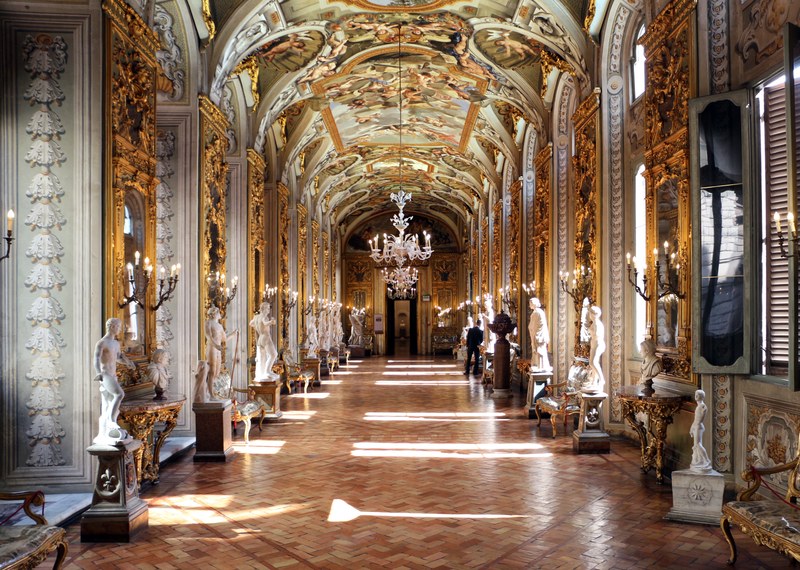
1.Galleria Doria Pamphilj~1 hr 30 min
A private family palace gallery with one of Rome's richest art collections — four gilded corridors hung floor to ceiling with Old Masters. Velázquez painted his portrait of Pope Innocent X here in 1650; it's considered one of the finest portraits in Western art, and this is the only place to see the original.
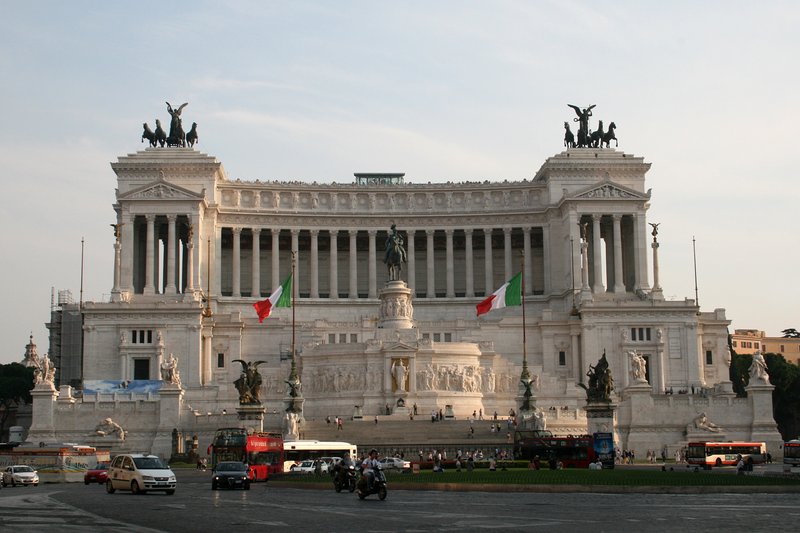
Known to Romans as the Vittoriano, this vast white-marble monument to Victor Emmanuel II, first king of a united Italy, towering over Piazza Venezia with colonnades, fountains and bronze quadrigas. The Altare della Patria and its terraces are free; a glass lift climbs to a panoramic rooftop over the historic centre.
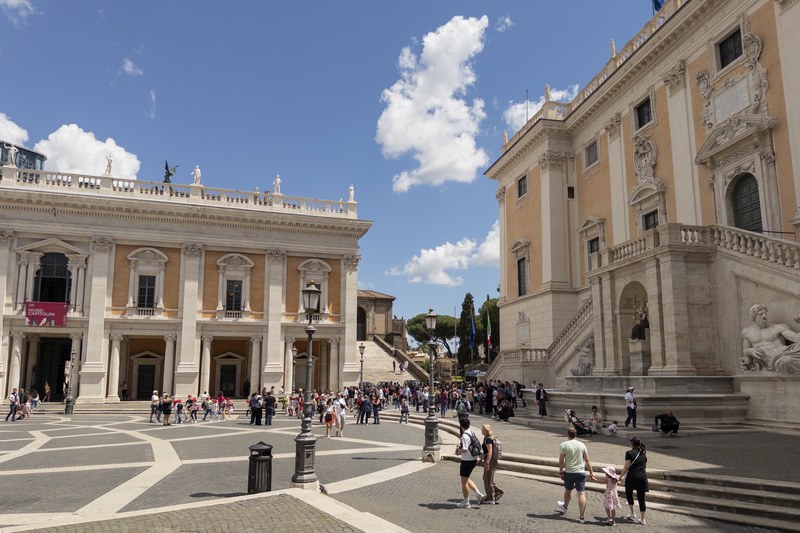
The smallest of Rome's seven hills and its ancient citadel, crowned by Piazza del Campidoglio — the geometric square Michelangelo designed in the 1530s, with its star-patterned pavement and a replica of the bronze equestrian Marcus Aurelius at the centre. The flanking palaces house the Capitoline Museums.
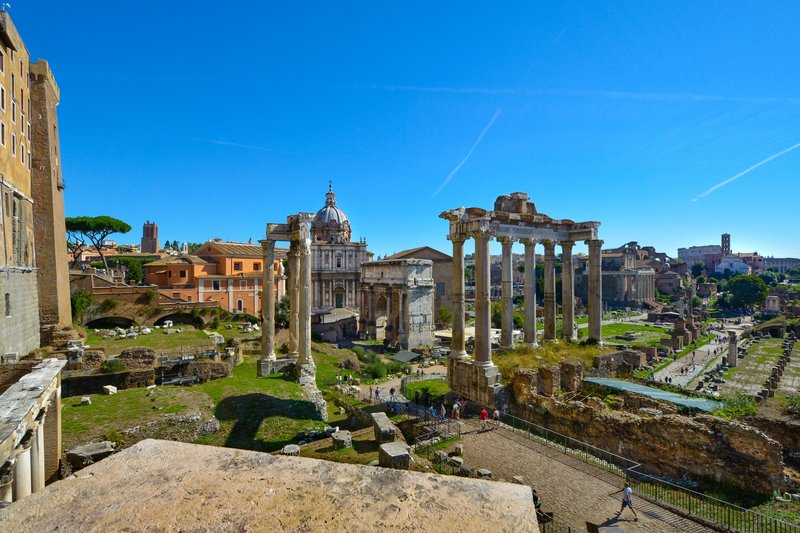
The political and religious heart of ancient Rome — temples, basilicas, triumphal arches and the Senate house spread along the Sacra Via. The adjoining Palatine Hill holds the ruins of imperial palaces and looks down over the whole Forum. Entry is included with the Colosseum combined ticket.
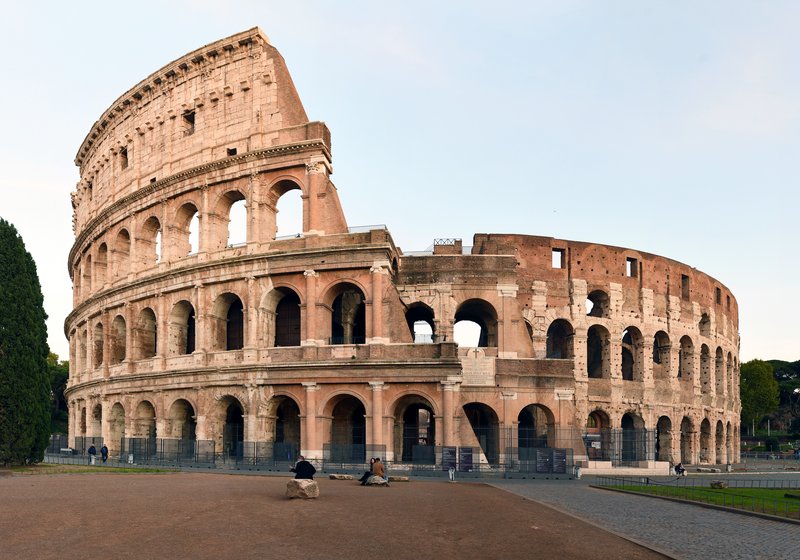
The largest amphitheatre ever built, opened in 80 AD and once seating roughly 50,000 spectators for gladiatorial games. Its travertine arches and partly restored arena floor remain the defining image of imperial Rome. The skip-the-line ticket also covers the Roman Forum and Palatine Hill within 24 hours.
From Hotel: 33 min · 10 min → St. Peter's Basilica
1.St. Peter's Basilica~1 hr 30 min
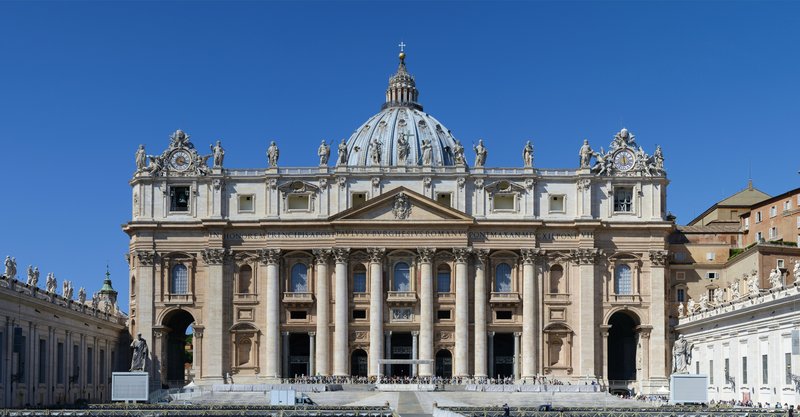
The largest church in the world and the centre of Catholicism, raised over the tomb of St. Peter. Inside are Michelangelo's Pietà, Bernini's bronze baldachin and the soaring dome Michelangelo engineered. A separate ticket climbs the cupola for one of Rome's finest panoramas over St. Peter's Square.
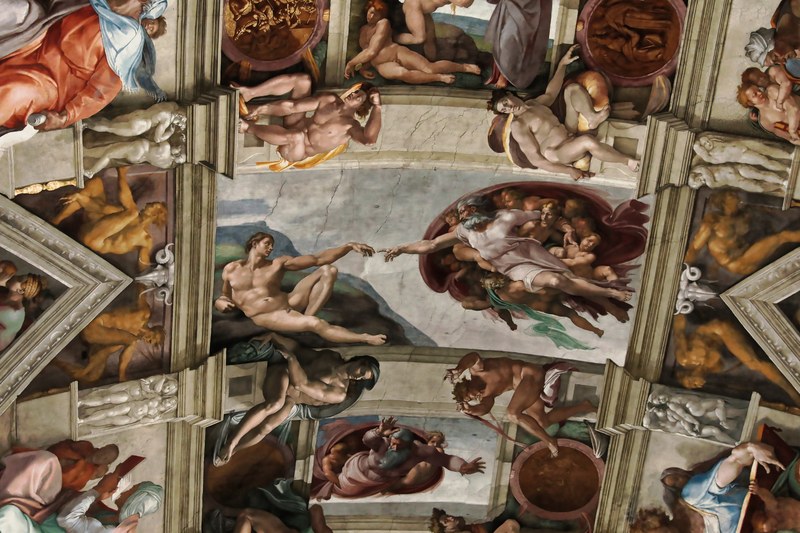
One of the world's greatest museum complexes — kilometres of galleries holding the Raphael Rooms, the painted halls and classical sculpture amassed by the popes. The route ends in the Sistine Chapel beneath Michelangelo's ceiling and Last Judgment. Book a timed entry; lines without one can run for hours.
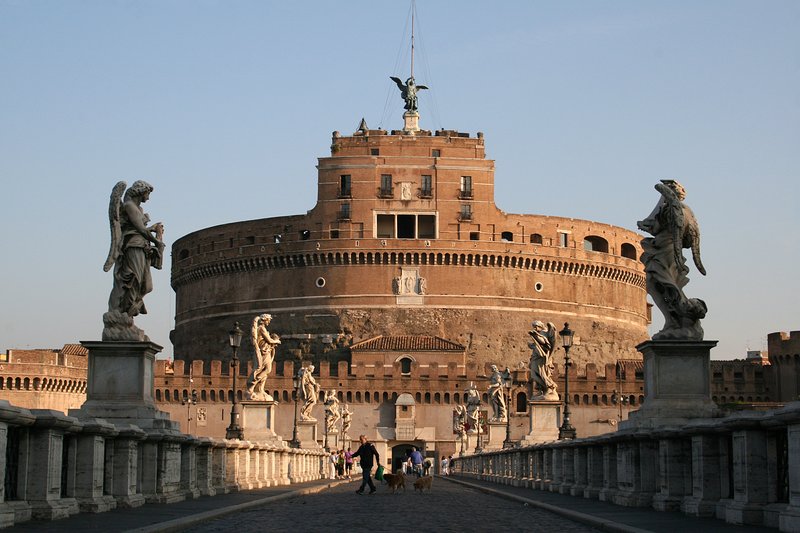
Built as Emperor Hadrian's mausoleum in the 2nd century, then turned into a papal fortress, prison and refuge linked to the Vatican by an elevated passage. A spiral ramp winds up past papal apartments and the armoury to the Angel's Terrace, crowned by a bronze archangel and wide views over the Tiber.
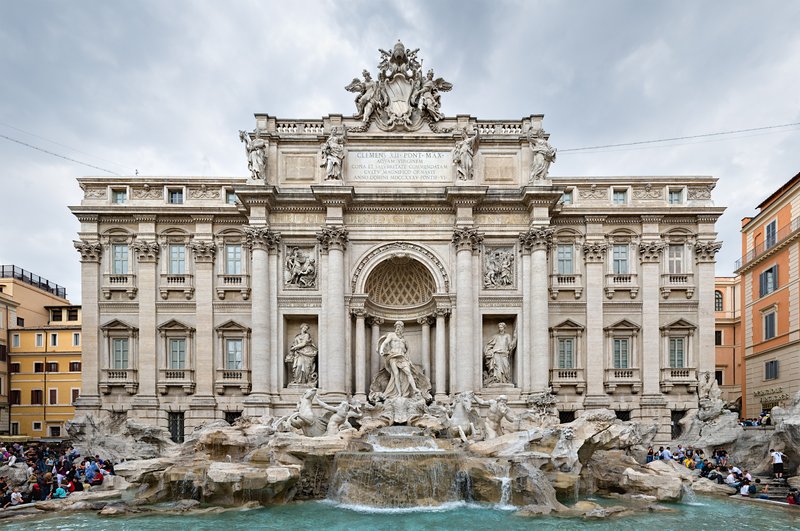
The most theatrical fountain in Rome, completed in 1762 where three roads meet. Nicola Salvi's design sends Ocean on his shell chariot bursting from the façade of Palazzo Poli over crashing travertine reefs. Tradition says a coin tossed over the shoulder guarantees a return to Rome.
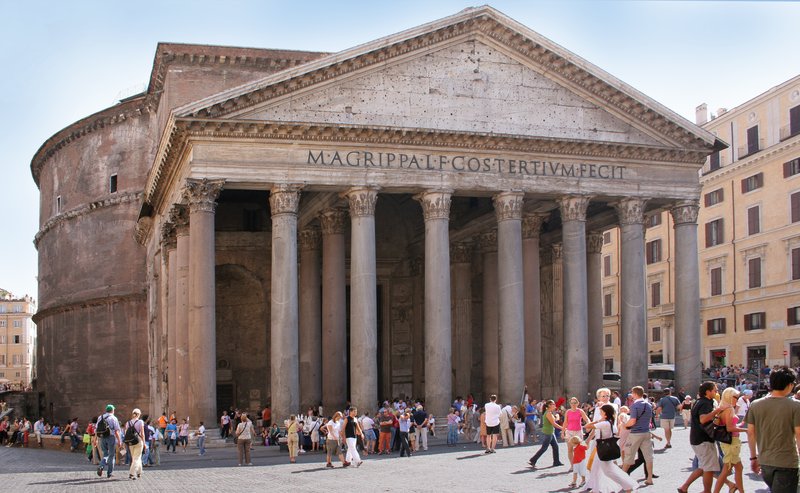
The best-preserved building of ancient Rome, rebuilt by Hadrian around 126 AD as a temple to all the gods and later a church. Its coffered concrete dome — still the largest unreinforced concrete dome on earth — is open at the centre through a 9-metre oculus that lights the marble interior.
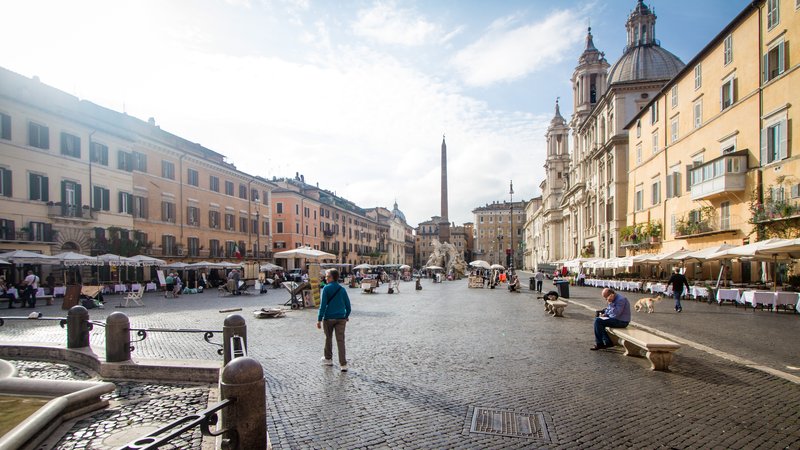
Rome's grandest Baroque square, laid out over the oval of Domitian's ancient stadium. At its centre stands Bernini's Fountain of the Four Rivers, framed by Borromini's church of Sant'Agnese in Agone and ringed by café terraces, street artists and palaces.
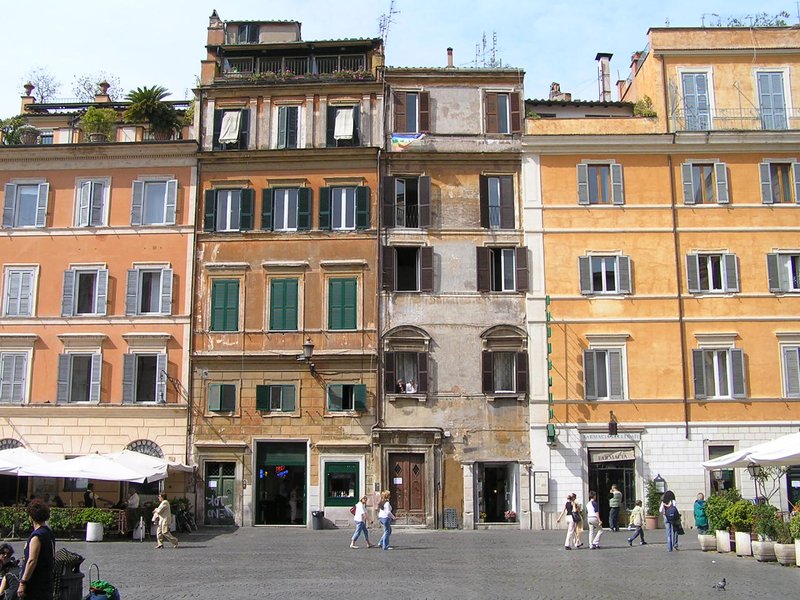
Rome's most intact medieval quarter on the right bank of the Tiber — cobblestone lanes, golden churches, ivy-covered facades. The center is Piazza di Santa Maria in Trastevere, anchored by a 12th-century basilica with gilded mosaics that light the square at night.
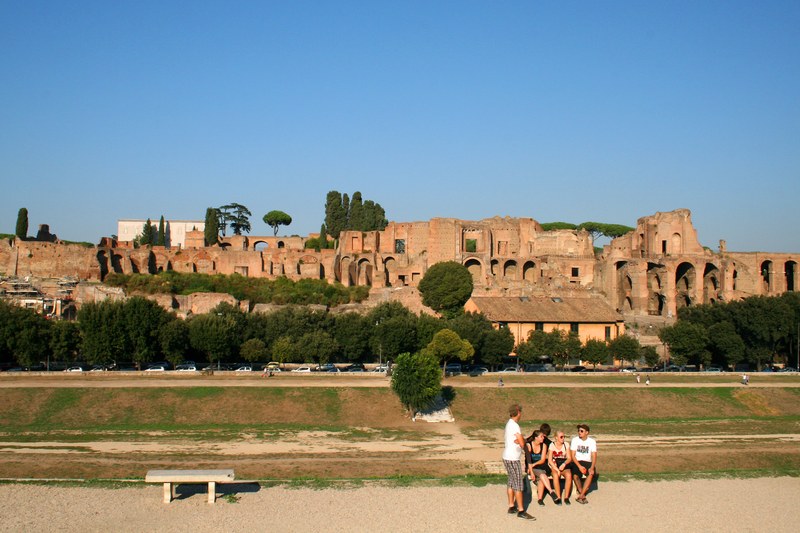
The largest chariot-racing track ever built — 620 meters long and once holding 250,000 spectators. The full oval between the Palatine and Aventine hills is still legible as a free open-air park; best understood by standing at the far end and looking back at the Palatine looming above.
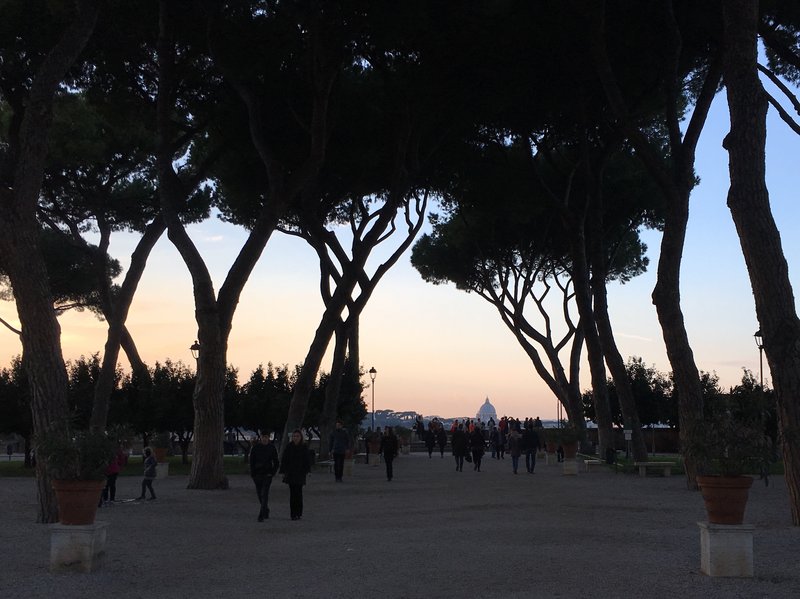
A terraced park on the crest of Aventine Hill planted with bitter orange trees and centered on a Pietro Lombardi fountain. The north terrace delivers an unbroken panorama over the Tiber, the dome of St. Peter's, and the sweep of Rome's rooftops — one of the city's finest views, almost never crowded.
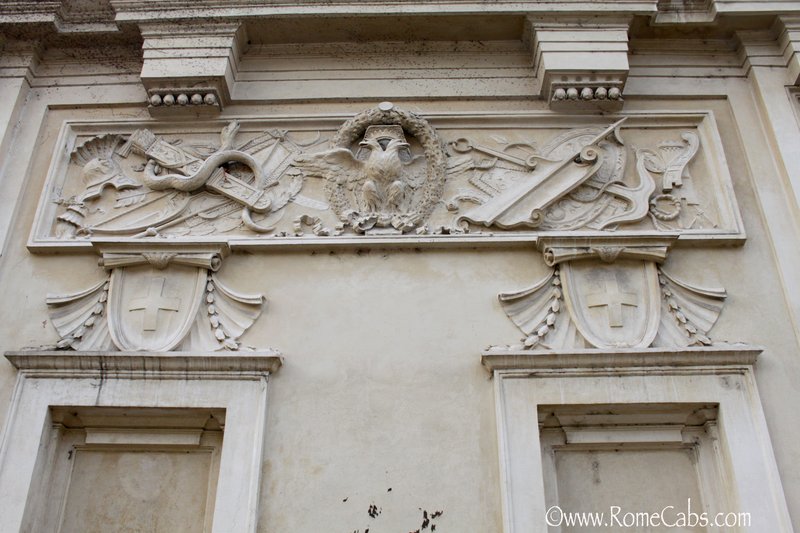
Through the keyhole of the Knights of Malta priory gate, St. Peter's Basilica appears perfectly centered at the end of a hedge-lined avenue — a composition staged by Piranesi in the 18th century. The bronze gate stands in Piazza dei Cavalieri di Malta; free to see, costs nothing and takes a minute.
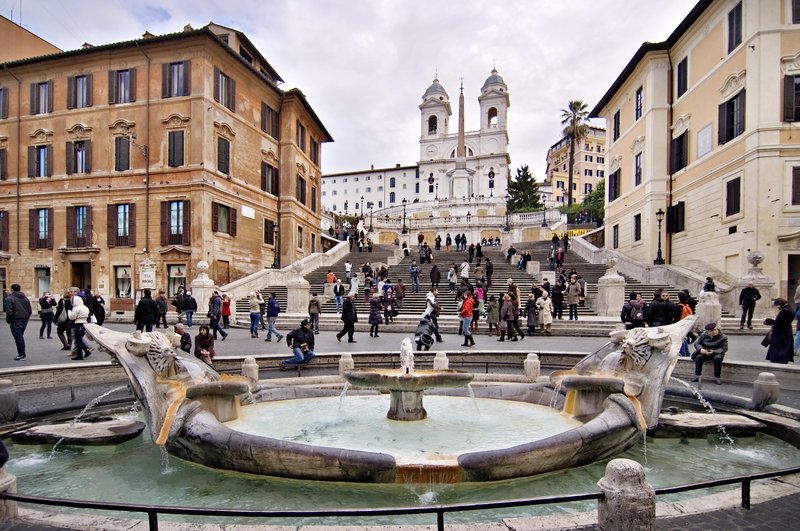
A sweeping 135-step staircase of 1725 rising from Piazza di Spagna to the twin-towered church of Trinità dei Monti. At the foot sits Bernini's boat-shaped Barcaccia fountain; the terraces are a classic spot to sit and watch the city, especially at sunset.
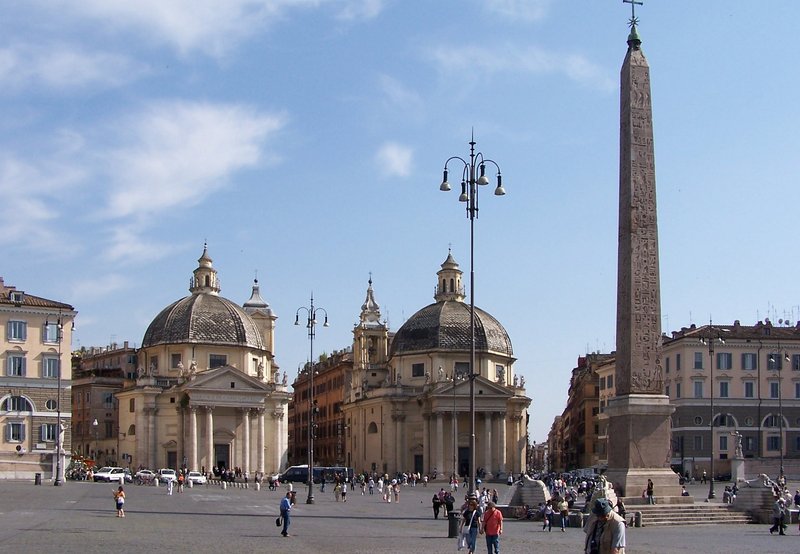
Rome's grandest civic piazza, redesigned by Valadier between 1811 and 1822, anchored by a 24-meter Egyptian obelisk brought from Heliopolis in 10 BC. Twin near-identical Baroque churches face each other at the entrance to Via del Corso, with a winding path from the Pincian Hill leading directly into the square.
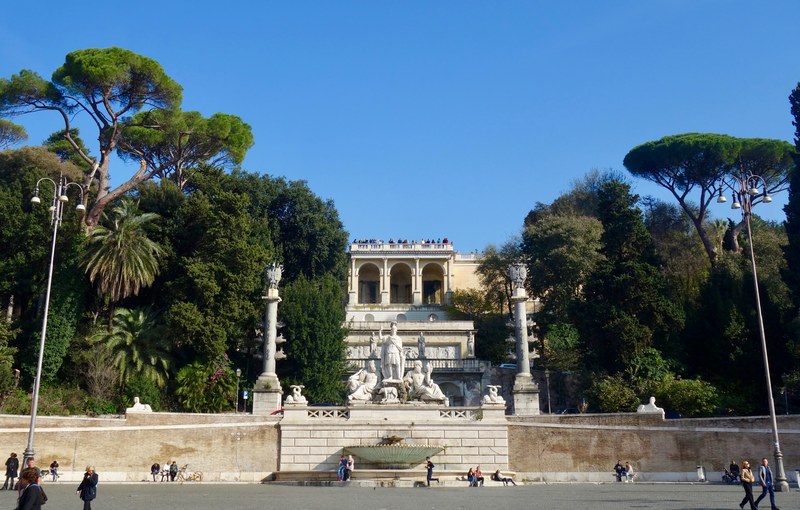
A wide esplanade at the edge of Villa Borghese designed by Giuseppe Valadier in 1814, overlooking Piazza del Popolo and the rooftops all the way to the dome of St. Peter's. Shaded paths through the park connect it to the Borghese Gallery.
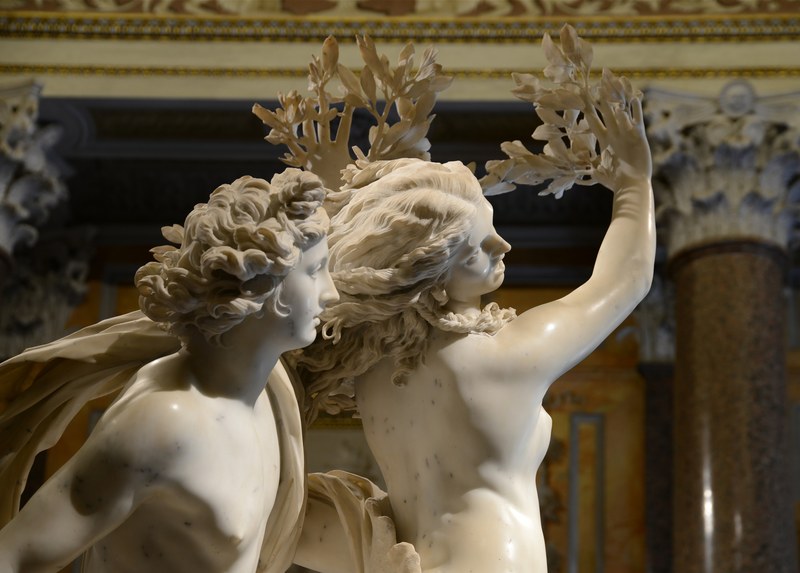
A Baroque villa housing one of the world's great art collections — six Bernini sculptures, six Caravaggio paintings, and works by Raphael, Titian, and Canova. Timed entry is mandatory in two-hour windows. Apollo and Daphne in the ground-floor sculpture room is Bernini's most celebrated marble.
ARRIVE Orvieto: 15 min · 8 min → Orvieto Cathedral
1.Orvieto Cathedral~1 hr 30 min
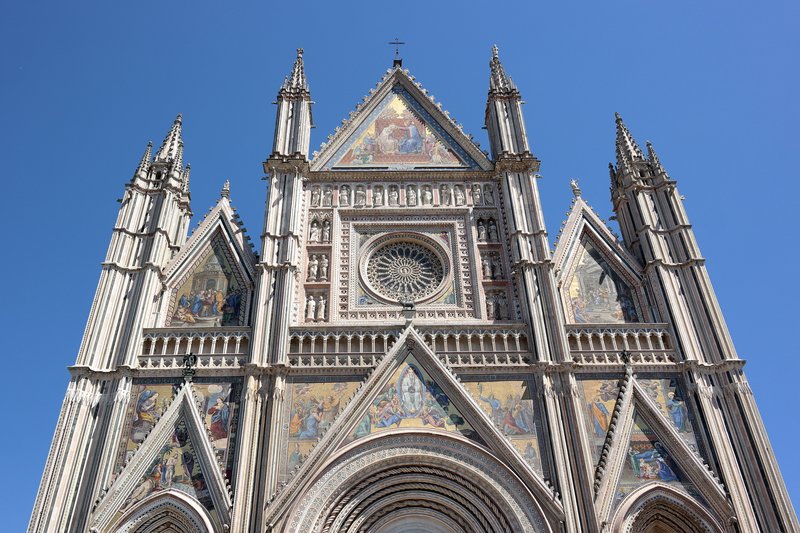
One of Italy's most dramatic Gothic buildings — a golden facade of mosaics, reliefs, and carved marble built over three centuries. The interior holds the Cappella di San Brizio, frescoed by Signorelli in the 1490s; his Last Judgment directly influenced Michelangelo's Sistine ceiling a generation later.
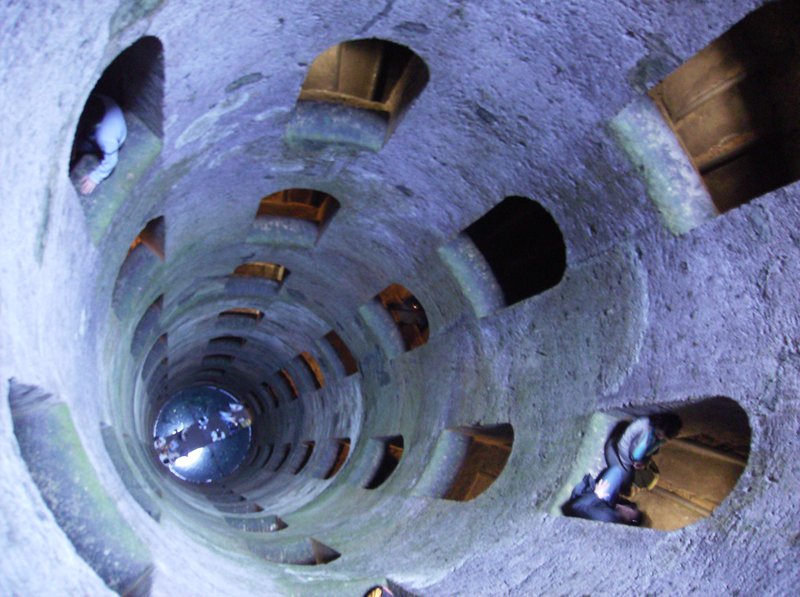
A 53-meter well commissioned by Pope Clement VII after the 1527 Sack of Rome. Sangallo engineered a double-helix staircase — two spiral ramps never crossing — so donkeys with full and empty water jugs could ascend and descend without meeting. The descent is 248 steps.
Skip the line and walk the three great ancient sites with an archaeologist guide — the arena the Forum's temples and the imperial palaces of the Palatine — in one loop.
A guided route through the Vatican's galleries to the Sistine Chapel and on into St. Peter's Basilica with skip-the-line entry and context on the art along the way.
An evening storytelling walk linking the Pantheon Trevi Fountain and Piazza Navona with the history and local detail behind the centro storico's most famous monuments.
A small-group amble through the old centre tying together the headline squares and fountains with lesser-known lanes courtyards and stories in between.
A full day south to the buried Roman city of Pompeii with skip-the-line entry and a guided walk through its streets and houses with the option to add Mount Vesuvius and lunch.
A guided loop of the three great ancient sites with skip-the-line access — the arena of the Colosseum the temples of the Forum and the imperial palaces of the Palatine.
Follow the cobbled Appian Way past towering aqueducts and descend into one of Rome's catacombs at closing time with transport included for a crowd-free visit underground.
A day trip into the Sabine hills to two UNESCO sites in Tivoli — the imperial ruins of Hadrian's Villa and the terraced Renaissance fountains and gardens of Villa d'Este.
A vintage Vespa sidecar ride past the Colosseum the Gianicolo and St Peter's Square with a gelato stop by the Pantheon and live commentary from your driver along the way.
A streamlined day trip to Pompeii by high-speed train from Rome — a guide gets you onto the train to Naples and on to the ruins for a guided walk through the buried Roman city.
Skip the line and explore the Colosseum the Roman Forum and Palatine Hill with a guide tracing the world of gladiators emperors and everyday life in ancient Rome.
Venture along the ancient Appian Way beneath towering aqueducts and into the underground tunnels of the Catacombs of San Sebastiano on a guided look at Rome below ground.
A day trip to Tivoli's two UNESCO World Heritage sites — the sprawling imperial ruins of Hadrian's Villa and the Renaissance terraces and fountains of Villa d'Este.
A driver-guided ride through Rome in a classic Vespa sidecar past the city's landmarks with a gelato stop along the way and live commentary on the sights you pass.
Foreign number: not required. — the account is made with Google, Facebook or an email address — there is no phone field, so no code has to arrive.
Rome's strongest selection of neighbourhood trattorias and pizzerias on one platform. Covers the historic centre and outer residential areas; international number registration works without issue.
Foreign number: not required. — it signs in with Google, Facebook or email, and a phone sign-up takes any prefix with the code by SMS or WhatsApp.
Fast delivery of groceries, pharmacy items and restaurant orders across central Rome. Better coverage in the historic centre than Just Eat, and it is the pharmacy and late-night grocery side rather than the restaurants that makes it worth keeping.
Foreign number: not required. — sign-up runs on Google, Apple, Facebook or email with no phone field at all, so no verification code has to arrive.
Focuses on sit-down restaurants willing to deliver — a slightly smaller selection than Just Eat but includes several trattoria-style options around Trastevere and the centro storico.
Foreign number: accepted. — the SMS verification code arrives on international numbers.
Rome's main taxi-booking app, hailing licensed metered taxis directly. More reliable than street-hailing during busy evenings; the meter runs from pickup so there are no surge prices.
Foreign number: accepted. — the SMS verification code arrives on international numbers.
Available across central Rome in Comfort and Black tiers only — UberX does not operate. Fares are quoted upfront and the app shows wait times before confirming.
The most famous of the Castelli Romani hill towns — villas, vineyards and the broad panorama of Rome and the Campagna below. The local white wine is drunk at source; the Villa Aldobrandini gardens are free to visit.
Two UNESCO sites in the hills east of the city: Villa d'Este's terraced Renaissance fountains and the sprawling ruins of Hadrian's imperial Villa Adriana. Regional trains run through the day.
Vibrant southern port — the National Archaeological Museum the birthplace of pizza and the gateway to Pompeii and the Amalfi Coast. Reached by fast train in just over an hour.
Medieval Tuscany at its most complete — the shell-shaped Piazza del Campo, the striped marble Duomo, and the narrow contrada lanes little changed since the 13th century. Regional trains connect via Chiusi or Empoli.
Two names quietly tie the first three days together. Hadrian: the emperor who rebuilt the Pantheon on Day 3 also raised, across the river, the drum-shaped mausoleum that became Castel Sant'Angelo on Day 2 — two of the same man's buildings, eighteen centuries apart. Michelangelo: his hand appears on all three days without ever being the headline — the geometry of the Capitoline square on Day 1, the dome of St. Peter's on Day 2, and the Sistine ceiling closing the Vatican galleries.
Day 4 adds a third thread: Piranesi. The 18th-century engraver who obsessively documented ancient Rome also designed the hedge-lined alley that makes the Aventine Keyhole work — a framed view so precisely composed it feels like a stage set. He drew the ruins on Day 1 and engineered a sight on Day 4, the same mind straddling antiquity and the Enlightenment.
On Day 5, Orvieto adds one more: Luca Signorelli, whose Last Judgment frescoes in the Cappella di San Brizio are the direct source Michelangelo studied before painting the Sistine ceiling. The ceiling that anchors Day 2 has a prequel an hour from Rome, waiting in a Gothic cathedral on a tuff-rock cliff. Rome rarely tears down — and the things it exported keep turning up just around the corner.