From Hotel: 11 min · 3 min → Ayia Kyriaki Chrysopolitissa
1.Ayia Kyriaki Chrysopolitissa~20 min
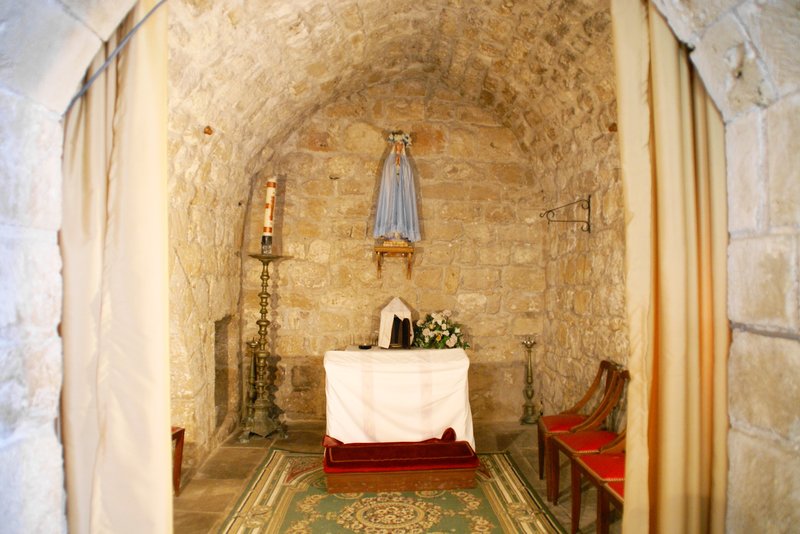
A 13th-century church standing inside the ruins of Cyprus's largest Early Christian basilica, built over the spot where tradition holds that Saint Paul was tied to a marble column and flogged before the Roman governor Sergius Paulus converted to Christianity.
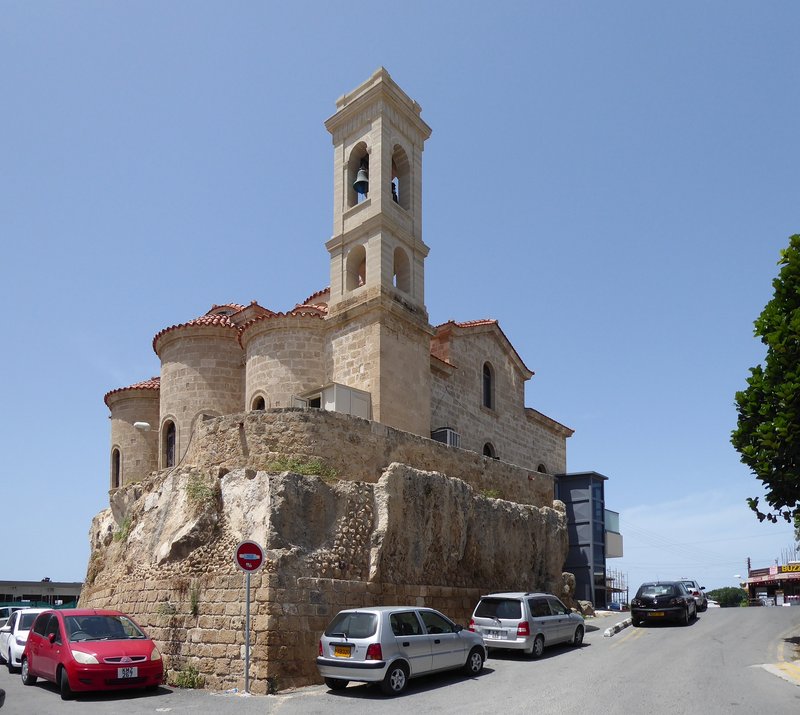
A Byzantine church rebuilt in 1926 on a protruding rock a few steps from the harbour, said to take its name — "veiled by God" — from a legend that fog hid it from raiding Saracens. Best appreciated from outside; the small interior keeps irregular hours around services.
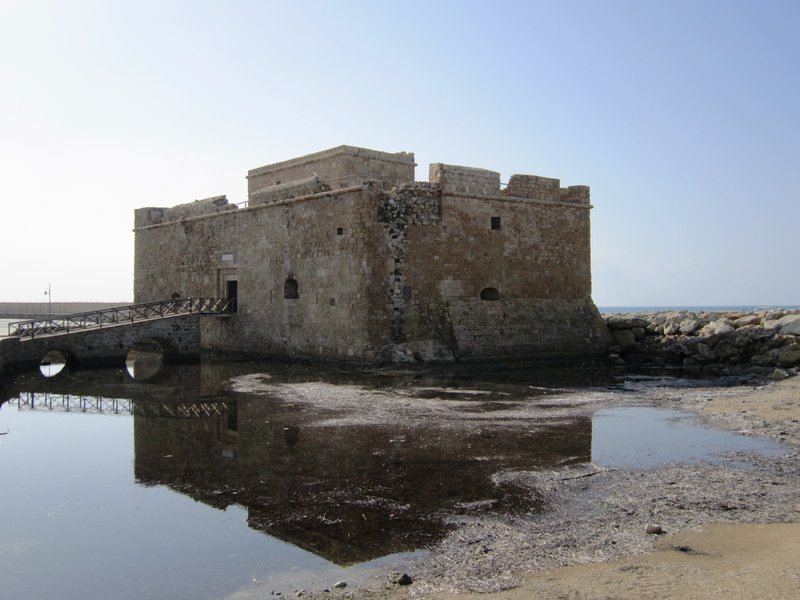
A squat medieval fort at the harbour mouth, rebuilt by the Lusignans after the 1222 earthquake destroyed the earlier Byzantine fortress of Saranta Kolones nearby, then refortified in turn by Genoese, Venetian and Ottoman garrisons. Climb to the roof terrace for the classic harbour panorama.
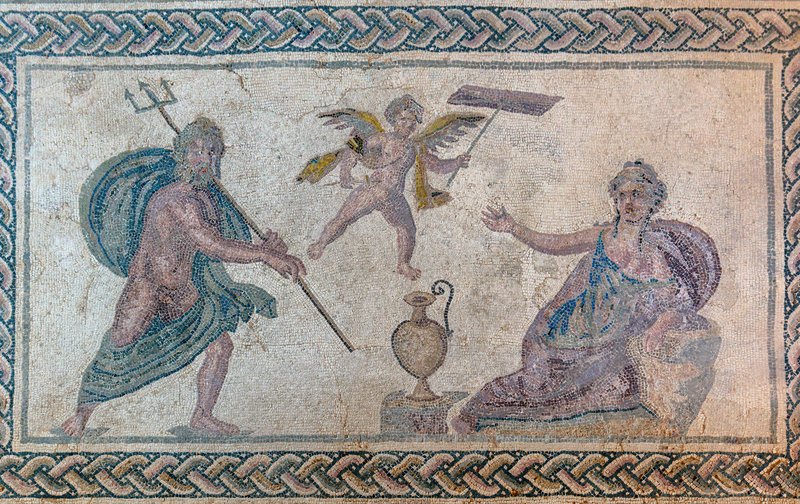
The excavated core of ancient Nea Paphos, capital of Cyprus under the Ptolemies and Rome, where the House of Dionysos, House of Theseus, House of Aion and House of Orpheus preserve floor mosaics rated among the finest in the Mediterranean world, alongside a Roman odeon, agora and the ruined Lusignan fortress of Saranta Kolones.
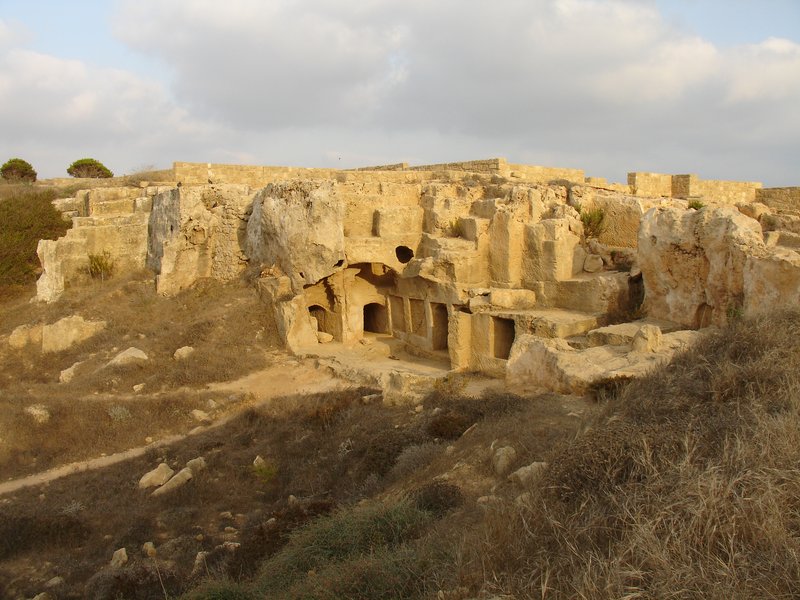
An underground necropolis of monumental rock-cut tombs from the 3rd century BC, carved deep enough that some open onto columned atria cut straight into the bedrock. No king was ever buried here — the name comes from the sheer scale of the tombs, built for Ptolemaic-era aristocrats and high officials.
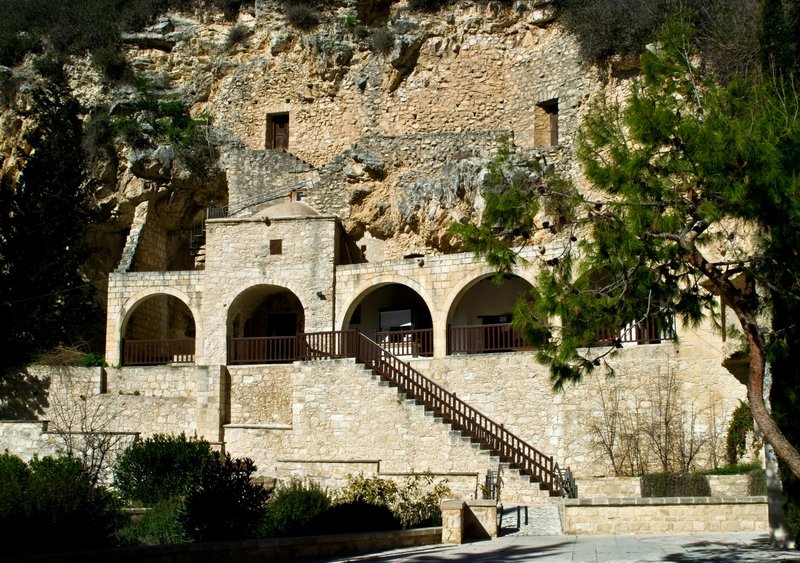
In 1159 the hermit-monk Neophytos carved a cell and chapel — the Enkleistra, "place of seclusion" — into a cliff above Tala, then decorated it with Byzantine frescoes painted between the 12th and 15th centuries. The working monastery below holds an ecclesiastical museum of icons and manuscripts.
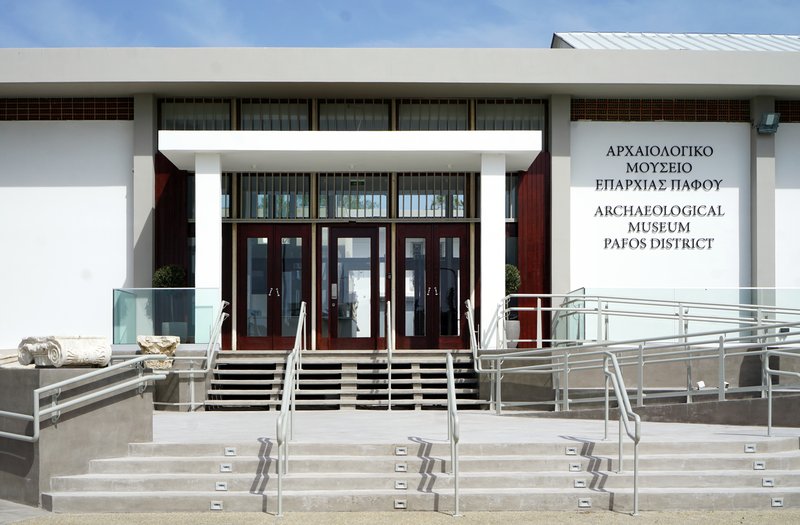
The district's finds under one roof in Ktima, the upper town: Chalcolithic pottery, Bronze Age tools, Roman-era statuary including an Aphrodite Anadyomene, and household objects spanning roughly 12,500 years, from the Epipalaeolithic to 1700 AD.
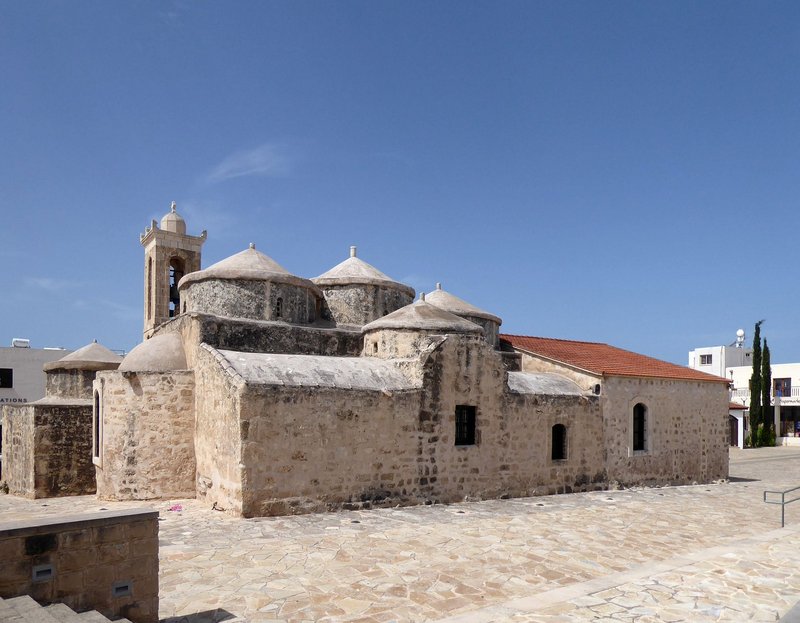
A coastal town just east of Kato Paphos, built around the five-domed Byzantine church of Agia Paraskevi — one of the oldest and most unusual church roof-lines on the island — with a small Folk Art Museum next door displaying 19th- and early 20th-century Cypriot weaving, costume and rural craft.
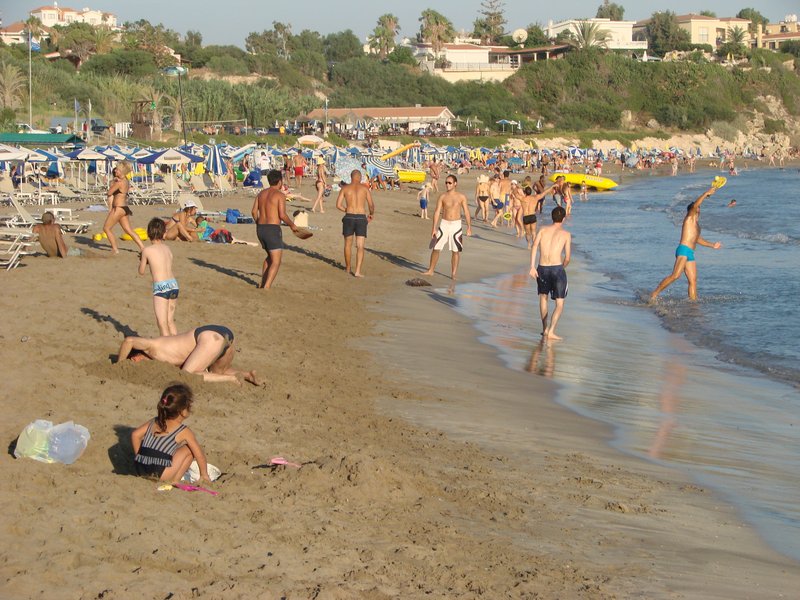
A 600-metre crescent of soft white sand enclosed by a pair of limestone headlands, 11 km north of Paphos in the Peyia municipality — the coast's most swum-at beach, with sunbeds, watersports and tavernas along the promenade behind it.
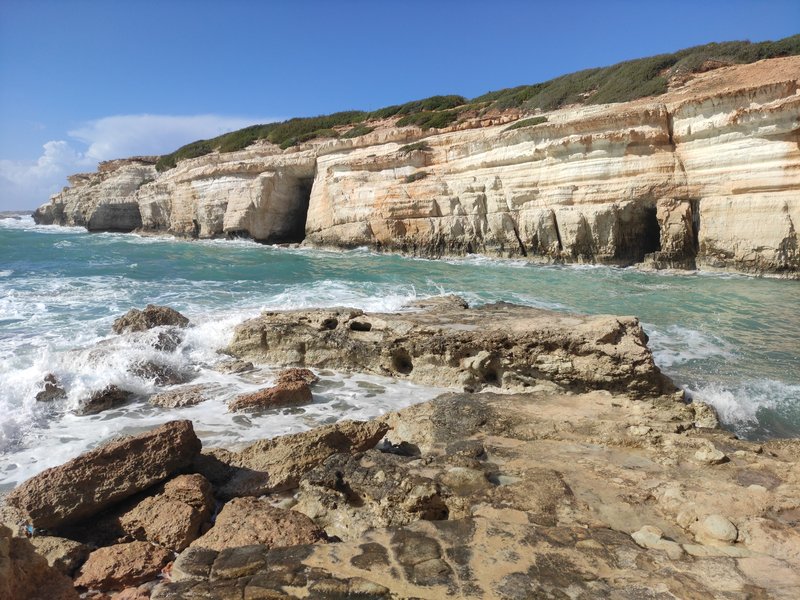
A clifftop hill village 14 km northwest of Paphos, best known for the honeycomb of wave-cut sea caves and arches along the coast below it, near the small fishing harbour of Agios Georgios — a favourite sunset and cliff-jumping spot for locals.
A roadless, mountainous cape at Cyprus's northwest tip, protected for its loggerhead turtle nesting beaches and near-untouched maquis. A short path leads to the shaded grotto of the Baths of Aphrodite; a separate detour inland reaches Avakas Gorge, where sheer cliffs close to a narrow limestone tunnel around a streambed.
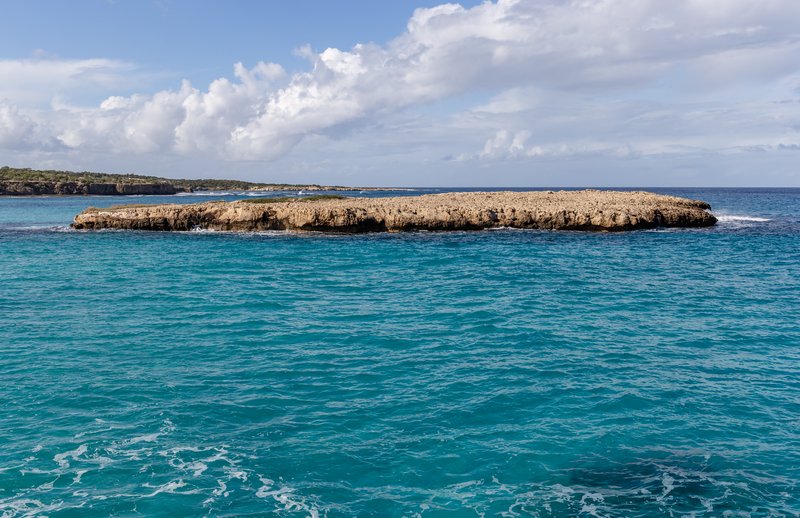
The Blue Lagoon's turquoise, reef-sheltered water sits at the very tip of Akamas and has no road access — the only way in is by boat from the fishing harbour of Latchi, part of the town of Polis Chrysochous. Boats anchor for swimming and snorkelling before the run back along the coast.
From Hotel: 22 min → Sanctuary of Aphrodite at Palaipaphos · Kouklia
1.Sanctuary of Aphrodite at Palaipaphos · Kouklia~1 hr
The ruins of Cyprus's most important ancient sanctuary, founded around the 12th century BC in what was then the island's leading city and worshipped at continuously into the Roman era — one of three locations, alongside Nea Paphos and the Tombs of the Kings, that make up the UNESCO listing for Paphos. The on-site museum, in a Lusignan manor house, includes the sanctuary's sacred conical stone.
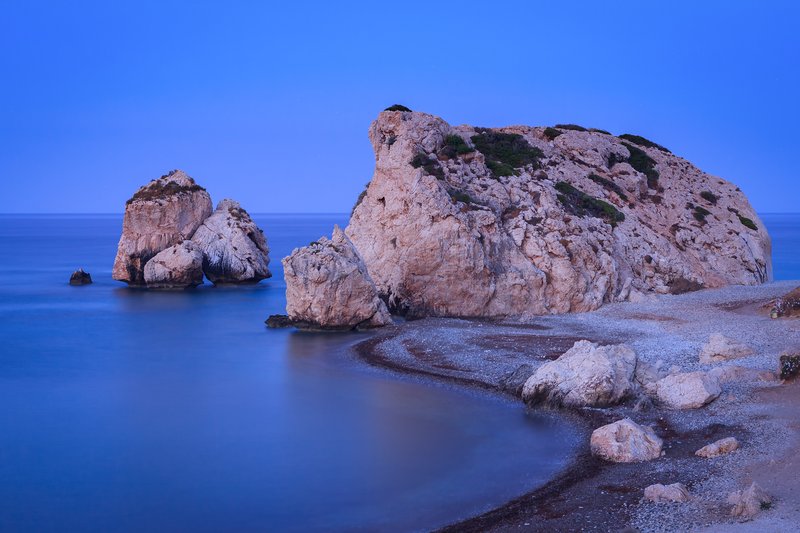
A sea stack rising from turquoise water where the Paphos and Limassol coastal roads meet — legend holds it as the spot where Aphrodite rose from the sea foam. A viewpoint above the road and steps down to the pebble beach both frame the rock; sunset is the classic hour.
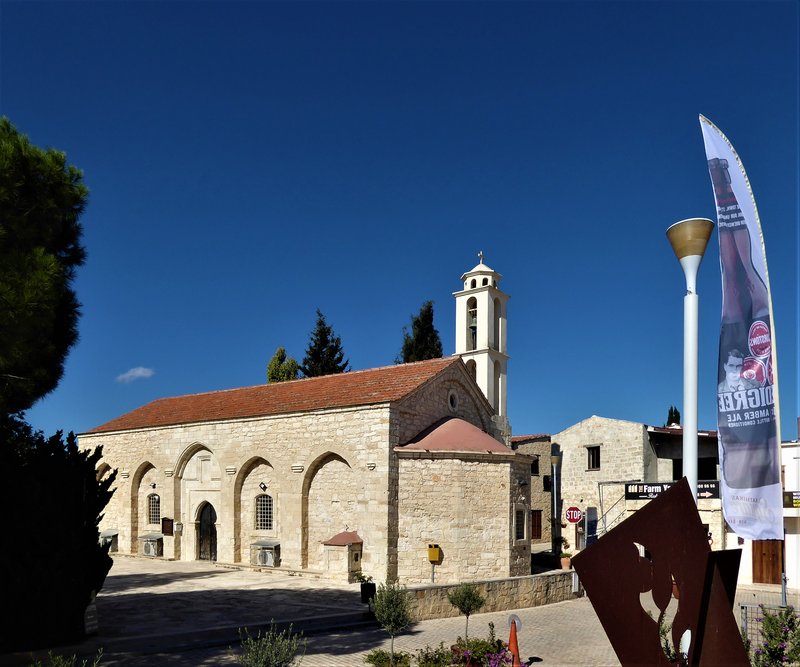
A village on a plateau 23 km north of Paphos, at the centre of the Laona wine country and known for the crisp white xynisteri grape grown at altitude. A cluster of family wineries around the square offer tastings, and the domed church of Panagia Evangelistria anchors the old centre.
Two villages merged into one community at 950 m in the Paphos mountains, the highest vineyards in the district and among the last to ripen each year — xynisteri, cabernet and the rarer mavro grape terraced against wild, pine-covered ridgelines.
A mountain village at 900 m on the edge of Paphos Forest, best known as the birthplace of Archbishop Makarios III, Cyprus's first president — his childhood home and a small museum sit beside the village church of Panagia Eleousa. The Vouni Panayia wine zone below it is rated among the island's finest.
Founded in 1152 by the monk Ignatius and rebuilt in 1770, this working monastery at 820 m keeps its own commercial winery, reopened in the 1980s, using grapes from the surrounding Vouni Panayia vineyards. The terrace in front looks out over the whole valley toward the coast.
A guided walk through Kato Paphos's old lanes tasting halloumi, souvla, loukoumades and local wine at family-run tavernas and producers, with a guide explaining each dish's place in Cypriot life.
A tasting and cellar tour at Fikardos, a family-run winery outside Paphos, working through the estate's xynisteri whites and mavro reds with an explanation of Cyprus's indigenous grape varieties.
A semi-submarine cruise out of Paphos Harbour past the Vera K shipwreck, with a swim stop off Atlantis Beach for turtle spotting and an open bar on the return leg into a harbour sunset.
A beginner-friendly introduction to scuba diving off the Paphos coast with a certified instructor, no certification required — pool-style briefing followed by a shallow open-water dive.
A full-day coach tour into the Troodos Mountains, well outside this guide's Paphos-district itinerary, stopping at hillside villages for wine and halloumi tastings and mountain scenery unlike the coast.
Pickup-included coach day out to Lofou and Omodos, with a stop at Petra tou Romiou en route and a family winery tasting — a full change of scenery from Paphos's coast and archaeology.
Shared sea scooters and snorkel gear for a guided swim among wild loggerhead turtles off the Paphos coast, in groups capped small enough that everyone gets real time near the animals.
An evening cruise on the largest coastal cruiser working out of Paphos, with a cooked dinner, a live singing and dance show, and a fireworks display over the water before the return to harbour.
A small-group, no-certification-required introductory dive off Paphos with a PADI instructor, covering the basics in shallow water before the open-water portion of the dive.
A guided convoy of quads and buggies over dirt tracks in the hills outside Paphos, stopping at viewpoints over the coast — noisier and dustier than the archaeological sites, and a different kind of morning.
A bus-and-boat combination covering the Baths of Aphrodite grotto, the village of Latchi and a Blue Lagoon swim stop by boat — the same Akamas ground this guide's Day 3 covers, run as one guided day.
The same Troodos mountain-village day trip as the Viator listing above, sold under a TripAdvisor booking page — wine and halloumi tastings in hillside villages, a cooler, greener contrast to the coast.
A jeep-based run through the widest version of the Akamas program on offer, adding the Adonis Baths waterfalls to the Blue Lagoon stop other operators leave out.
Sea-scooter-assisted snorkelling with a small, family-run outfit that knows the resident turtles individually — most reliable between May and November, when turtle activity peaks.
A large seafront terrace restaurant on the Poseidonos Avenue promenade doing Cypriot meze, grilled fish and gluten-free options with a reliably good sea view over dinner.
A big, breezy taverna directly on the water along Poseidonos Avenue, known for generous portions, sunset views and prices that stay reasonable for a seafront address.
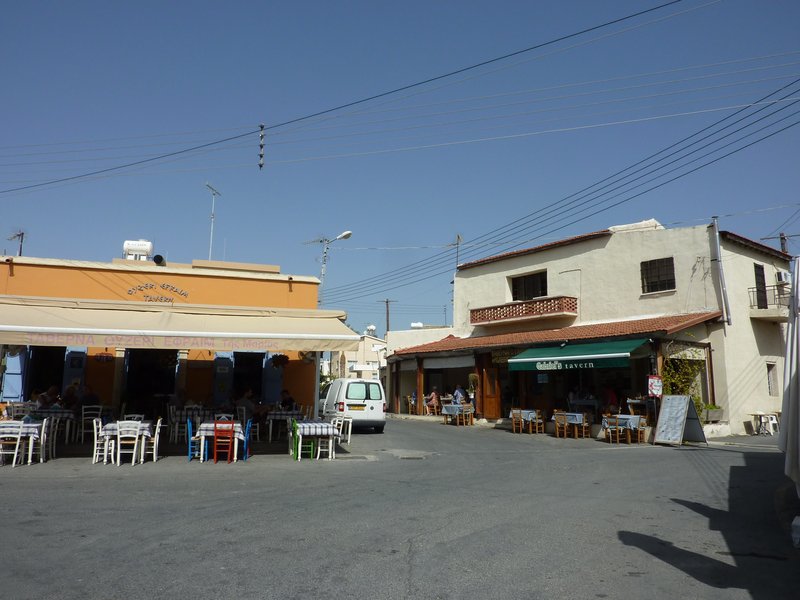
A family-run taverna in the Kato Paphos tourist quarter, running over 30 years, known for kleftiko and moussaka in large, home-style portions at fair prices.
Cyprus's semi-hard, high-melting-point cheese, traditionally made from goat and sheep milk and grilled or fried until it browns without collapsing — the island's defining table food, eaten plain, with lemon, or folded into a sandwich.
Lamb or goat slow-cooked for hours in a sealed clay oven until it falls off the bone — the name means "stolen," from a story of shepherds cooking meat in covered pits to hide the smoke.
A sweet, amber dessert wine made from sun-dried xynisteri and mavro grapes in the villages above Paphos and Limassol — one of the oldest named wines still produced anywhere, documented in continuous production since medieval times.
Small yeasted dough balls, deep-fried to a crisp shell and soaked in honey syrup, usually finished with cinnamon and crushed walnut — Cyprus's standard sweet-street-food, sold hot from harbour-front stalls.
Foreign number: accepted — the sign-up form takes any international number in full country-code format and the OTP arrives by SMS on foreign carriers.
The wider of the two catalogues in Paphos, covering restaurants, bakeries and a Wolt Market grocery-delivery option across Kato Paphos and the town centre; real-time courier tracking, though a small-basket fee applies under the minimum order.
Foreign number: accepted — a European number gets the SMS code reliably; non-European numbers should use a local eSIM instead.
Runs on the same account as Bolt's ride-hailing app, which is convenient if already installed, but the restaurant list in Paphos is noticeably shorter than Wolt's and coverage thins out past the town centre.
Foreign number: accepted — a European number gets the verification SMS reliably; non-European numbers should use a local eSIM.
Uber does not operate anywhere in Cyprus, which makes Bolt the only ride-hailing option; coverage in Paphos itself is real but thin, with far fewer signed-up drivers than in Limassol or Nicosia, so waits can run long outside the harbour area.
The €4.50 Archaeological Park ticket and the €2.50 Paphos Castle ticket are sold separately, at separate gates, even though the two sit a seven-minute walk apart on the same harbour — buy both on the same pass day rather than assuming one covers the other.
Sunset at Petra tou Romiou draws a real crowd on clear evenings; the pull-off viewpoint above the road fills first, so the pebble beach steps down from it are the better bet for an unobstructed photo.
Kato Paphos closes for no one at lunch, but the archaeological sites do shrink their hours outside the Apr–Sep season — check the season before planning a tight afternoon around the Tombs of the Kings or the Sanctuary of Aphrodite.
There is no passenger railway anywhere in Cyprus, on either side of the island — every day trip in this guide beyond Kato Paphos assumes a rental car, a taxi, or a booked tour transfer.
Restaurants along the Poseidonos Avenue seafront price for the view; walking two streets inland in Kato Paphos usually finds the same Cypriot meze for noticeably less.