From Hotel: 6 min · 3 min → Fortifications of Québec
1.Fortifications of Québec~1 hr
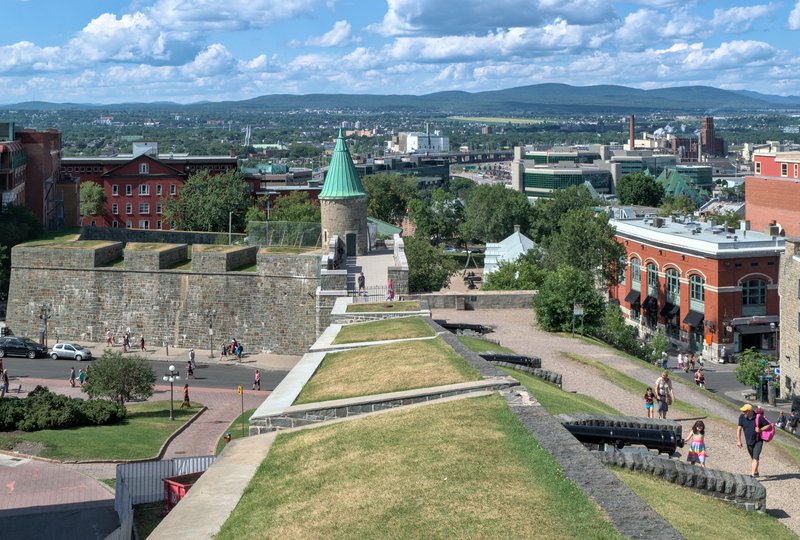
The only remaining intact fortified city north of Mexico — 4.6 km of walls and gates enclosing Old Quebec, a UNESCO World Heritage Site. The four main gates — Saint-Louis, Saint-Jean, Kent, and Prescott — remain standing. The promenade along the walls connects all four gates with views over Upper and Lower Town.
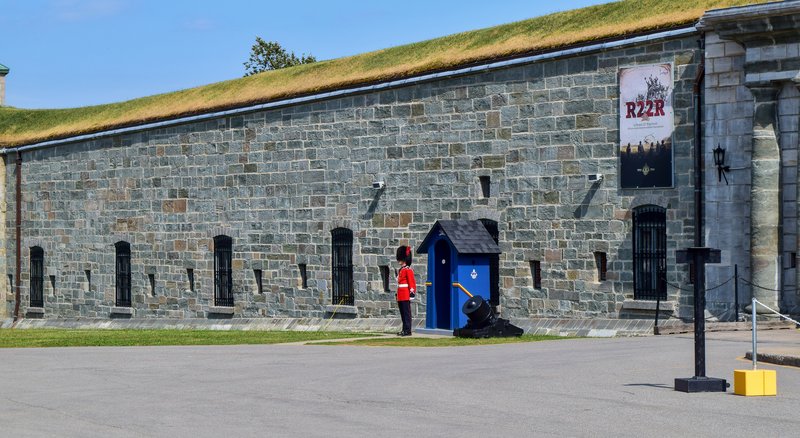
An active Canadian Forces garrison — the largest British fortification ever built in North America. Construction began in 1820 on fortifications dating to 1693. The summer Changing of the Guard runs daily at 10:00am with the Royal 22nd Regiment. The museum holds regimental history and 18th-century military artifacts.
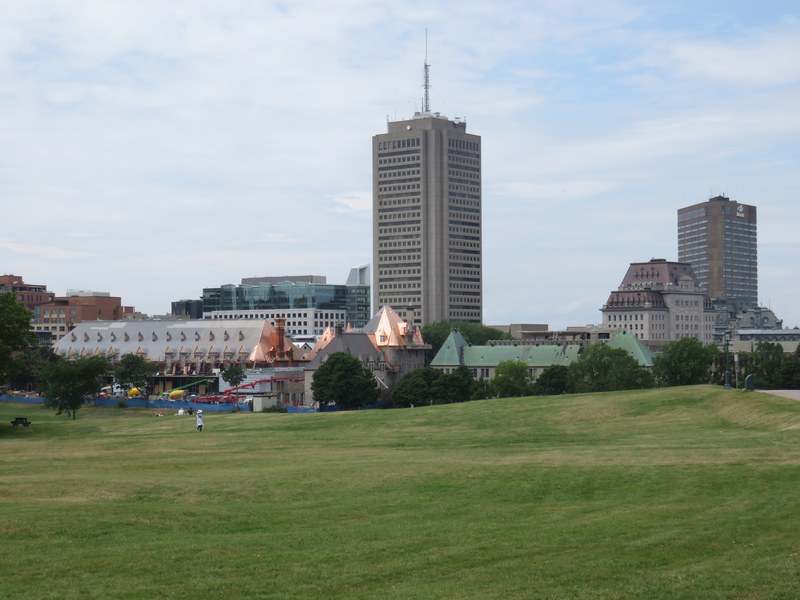
A 360° observation deck on the 31st floor of the Marie-Guyart building — the tallest building in Québec City. Panoramic views reach from Old Quebec and the St. Lawrence to the Laurentian Mountains. The Parliament Building, the walled city, and the Lévis ferry terminal are all visible.
From Hotel: 17 min · 10 min → Funiculaire du Vieux-Québec
1.Funiculaire du Vieux-Québec~15 min
A cable-operated incline railway linking Terrasse Dufferin at the top of the Cap-Diamant cliff with rue du Petit-Champlain in the Lower Town — a 64-metre descent. In operation since 1879, the glass-walled cabin descends in two minutes with views across the Lower Town rooftops.
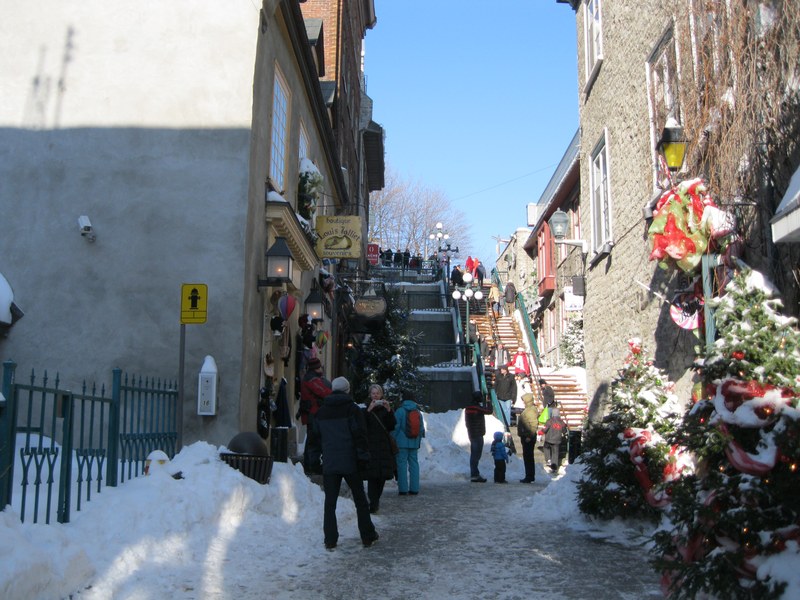
The oldest stairway in Canada, connecting Terrasse Dufferin to Rue du Petit-Champlain since 1635. The name refers to the dangerously steep pitch of the original steps. The 59-step stone descent features market stalls and public art at each landing. The Funiculaire runs parallel one minute away.
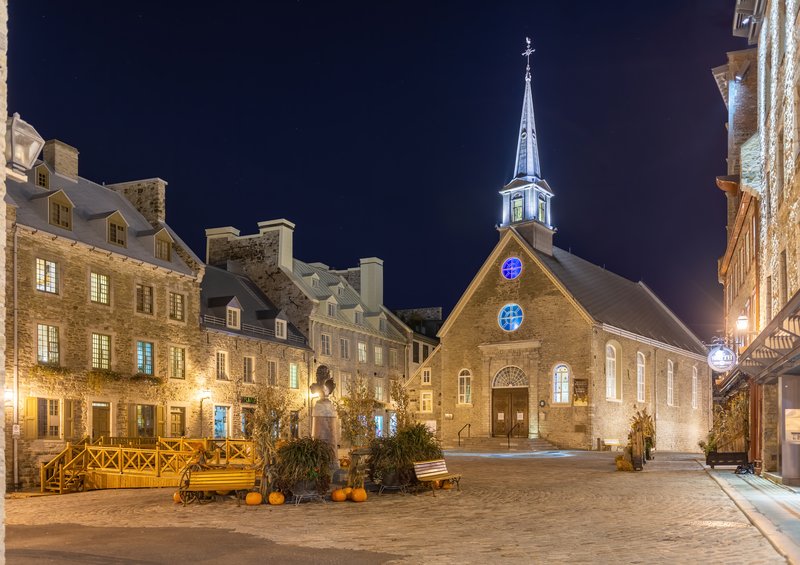
The spot where Samuel de Champlain built his first trading post in 1608 — the birthplace of French civilization in North America. Notre-Dame-des-Victoires Church, built in 1688, anchors the south side of the square. The surrounding stone buildings are among the oldest on the continent.
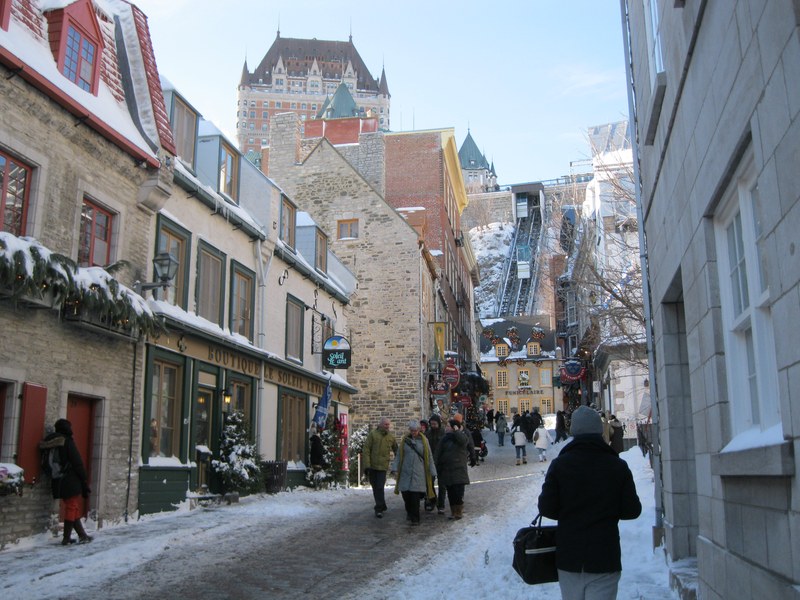
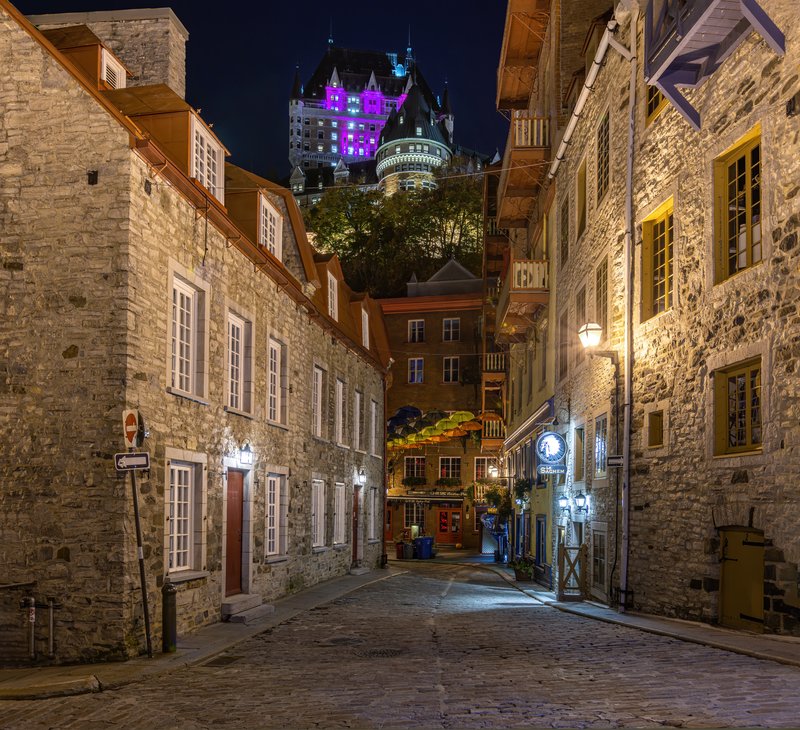
The oldest commercial street in North America — a pedestrianized cobblestone lane at the foot of the Cap-Diamant cliff. Artisan boutiques, glassblowers, and restaurants line the narrow street beneath trompe-l'œil murals on the clifftop walls. The street connects directly to Place Royale at its southern end.
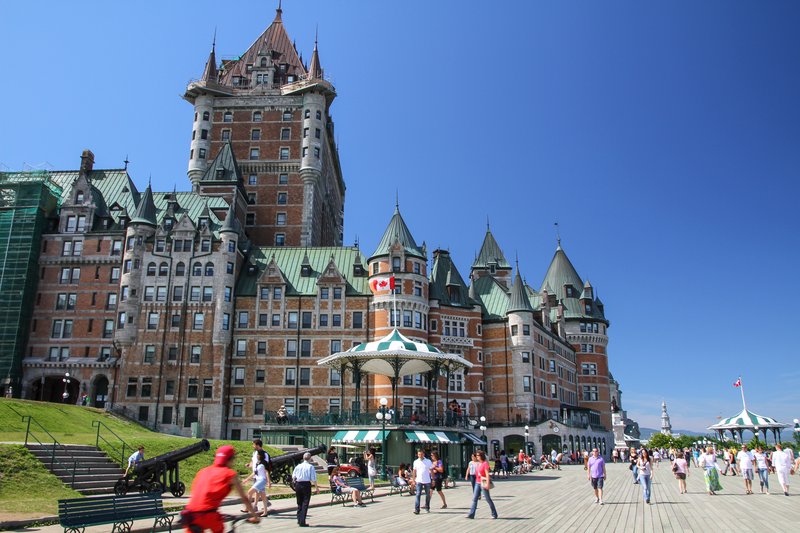
The 671-metre boardwalk promenade along the St. Lawrence clifftop, built in 1879 on the foundations of the Cape Diamond Redoubt. Named after the Governor General who championed Quebec City's walls, it offers panoramic views over the Lower Town, the St. Lawrence, and the city of Lévis on the opposite shore.
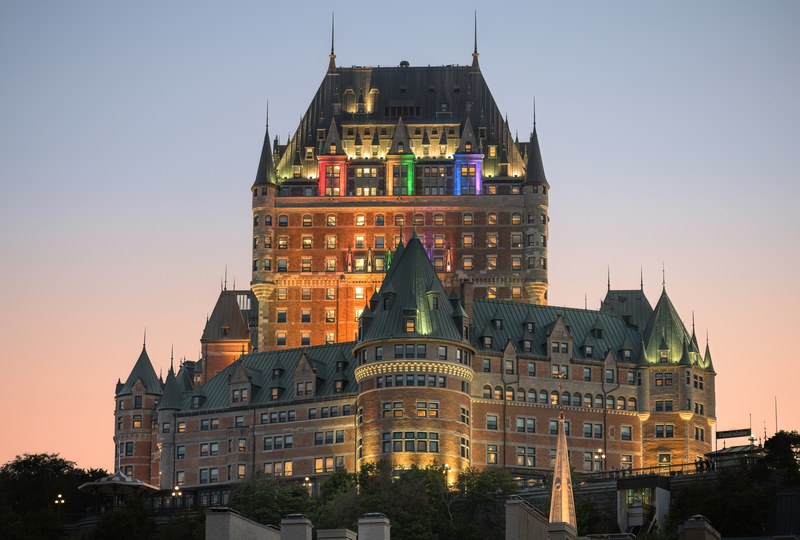
According to Guinness World Records, the most photographed hotel in the world. Built between 1893 and 1924, the château-style towers have defined the Québec City skyline. The hotel hosted the 1943 and 1944 Québec Conferences between Churchill, Roosevelt, and Mackenzie King. Lobby open to the public.
An 18-km island in the St. Lawrence, 10 minutes from Québec City by bridge. First mapped by Cartier in 1535, the island's six villages retain 17th-century stone farmhouses among the oldest rural architecture in North America. Roadside stands sell strawberries, cider, and maple products along the 67-km circuit road.
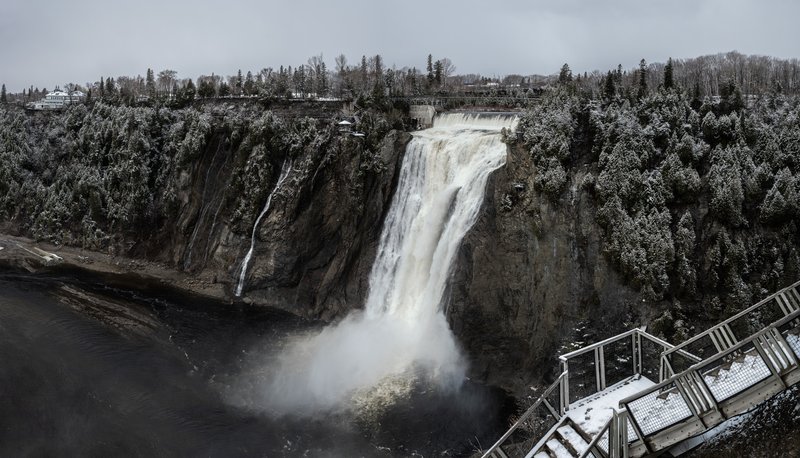
At 83 metres, the highest waterfall in the province — 30 metres taller than Niagara Falls. The park includes a suspension bridge above the falls, a cable car to the summit, and cliff-edge walking paths. In winter, the mist freezes into a massive ice cone — the sugarloaf — used for traditional ice climbing.
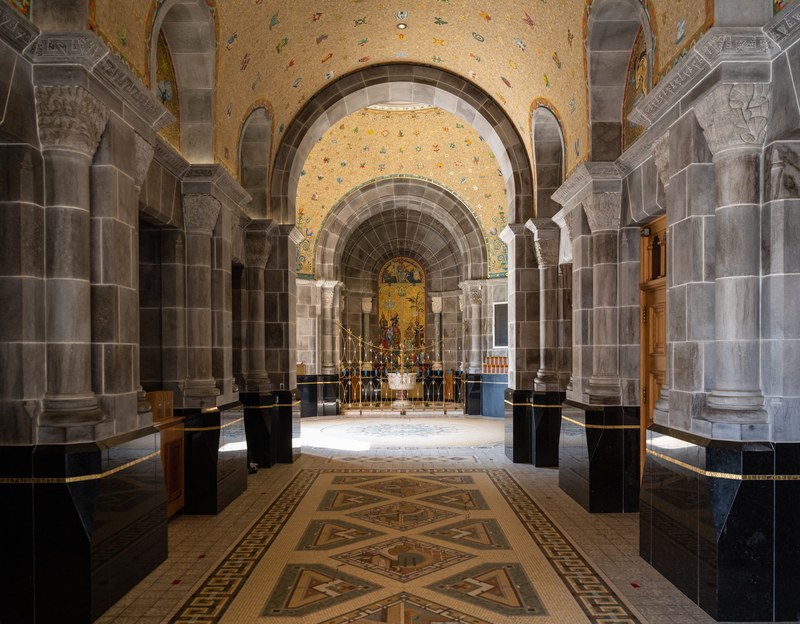
The most visited pilgrimage site in Canada — 1.5 million pilgrims annually. The Romano-Byzantine basilica was completed in 1976, the fifth church on this site since 1658. The twin granite towers and richly decorated interior house hundreds of ex-votos — crutches and braces left by pilgrims claiming miraculous cures.
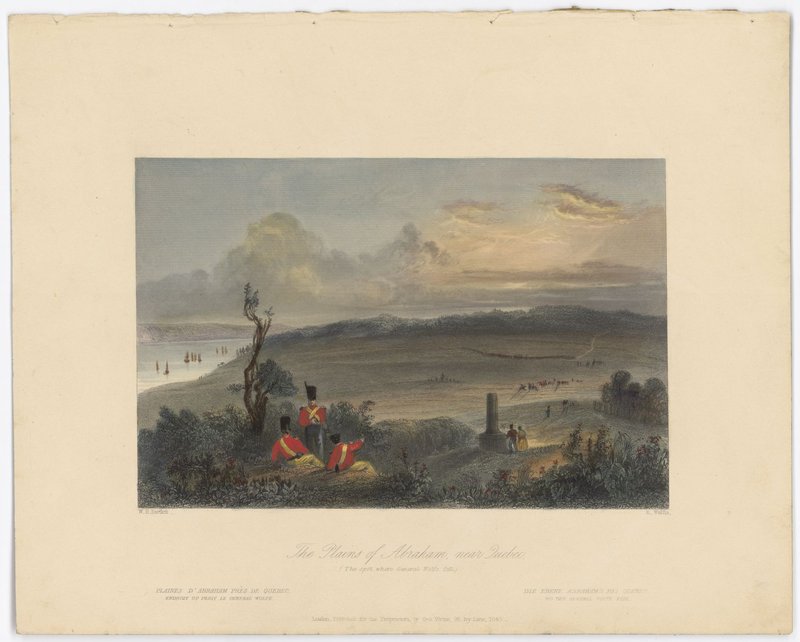
Site of the 1759 battle between Wolfe and Montcalm that shaped the future of Canada. Today 103 hectares of parkland in the heart of Québec City, part of the Parc des Champs-de-Bataille — the most visited national historic site in Québec. The Martello towers and interpretive centre explain the military history.
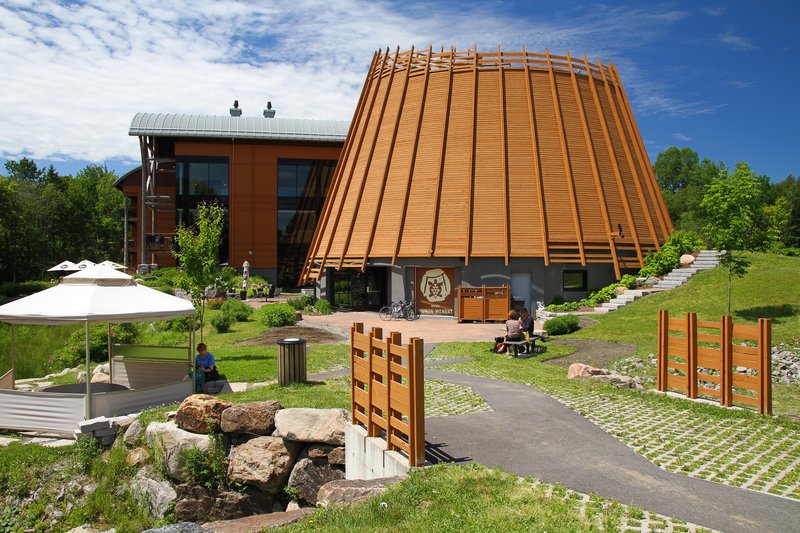
The only Huron-Wendat nation community in North America open to visitors. The Onhoüa Chetek8e site demonstrates pre-contact Wendat life — bark longhouses, canoe-building, and traditional cooking led by community members. The adjacent Saint-Charles-Borromée Church, built in 1730, holds 18th-century Wendat art.
2-hour small-group walking tour following a gentle downhill route through Haute-Ville and Basse-Ville — the Fortifications, Château Frontenac, Dufferin Terrace, Escalier Casse-Cou, and Place Royale — with historical and cultural commentary from Tours Voir Québec's certified guides. Max 15 guests.
Small-group van tour · max 24 to Île d'Orléans with tastings at locally owned producers — handmade chocolate, ice cider, nougat, blackcurrant cassis, and a vineyard wine tasting with views over the Beaupré coast. A half-day food and drink discovery just 15 minutes from Old Québec.
1-hour guided tour led by a costumed historical character through the Château Frontenac's historic rooms, ceremonial corridors, and reception halls — bringing to life the hotel's 1893 construction and its role as host to Roosevelt, Churchill, and the Duke of Windsor. Small group.
Small-group minibus tour covering the Plaines d'Abraham, Parliament Building, National Assembly, fortification walls, Château Frontenac, and Dufferin Terrace — followed by a full stop at Montmorency Falls with cliff-path and suspension bridge access. Smaller vehicle allows access to narrow streets.
2-hour narrated bus tour of Québec City's essential sites — the ramparts, Château Frontenac, National Assembly, Basilica of Notre-Dame de Québec, Plaines d'Abraham, and Place Royale. Morning and afternoon departures, with commentary in English and French.
2-hour guided walk through the Haute-Ville and Basse-Ville — Château Frontenac, Dufferin Terrace, the Fortifications, Escalier Casse-Cou, and Place Royale — with in-depth cultural and historical commentary from certified Tours Voir Québec guides. Upper and lower town covered on one downhill route.
1-hour guided tour of the iconic Château Frontenac led by a costumed historical character — ceremonial corridors, historic reception halls, and the stories behind the 1893 construction and its role hosting Churchill, Roosevelt, and the Duke of Windsor. Exclusive access to areas not open to the public.
Half-day coach tour to the Côte-de-Beaupré: Montmorency Falls, Basilica of Sainte-Anne-de-Beaupré, a copper art studio, and Île d'Orléans chocolate shop. Morning or afternoon departure. Knowledgeable guide with running onboard commentary throughout.
2-hour guided bus tour of Québec City's major landmarks — the ramparts, Château Frontenac, Parliament Building, National Assembly, Basilica, Plaines d'Abraham, and Place Royale — with live English commentary. A comprehensive city overview covering both Haute-Ville and Basse-Ville.
2-hour narrated bus circuit of Québec City's essential landmarks: ramparts, Château Frontenac, Parliament, Basilica of Notre-Dame de Québec, Plaines d'Abraham, and Place Royale. Available morning and afternoon. Guide provides English and French commentary throughout the route.
Half-day coach tour to the Côte-de-Beaupré: Montmorency Falls with cable car and suspension bridge, the Basilica of Sainte-Anne-de-Beaupré, a copper art studio, and a stop at the Île d'Orléans chocolate shop. Morning and afternoon departures, knowledgeable bilingual guide throughout.
3-hour small-group minibus tour combining the highlights of Old Quebec City — Château Frontenac, Parliament, Plaines d'Abraham, fortifications — with a full stop at Montmorency Falls. Expert bilingual guide; smaller vehicle allows access to narrow streets and tighter viewpoints.
Small-group van tour · max 24 to Île d'Orléans visiting locally owned producers for tastings — handmade chocolate, ice cider, nougat, artisan cassis, and a wine tasting at a vineyard with views over the Beaupré coast. Bilingual guide; round-trip from Old Québec included.
French fries topped with fresh cheese curds and brown gravy — curds must squeak when bitten. Born in rural Québec in the late 1950s, now omnipresent from street counters to fine dining. Chez Ashton serves the canonical version since 1969.
Québécois meat pie — ground pork, veal, and beef spiced with cloves, cinnamon, and allspice under a double-crust flaky pastry. A Christmas Eve staple across Québec for generations, it appears year-round on traditional menus.
A multi-layered meat pie with moose, deer, rabbit, and partridge alternated with pastry layers and slow-cooked in a deep casserole. The dish traces to 17th-century New France and is one of the defining dishes of traditional Québec cuisine.
Maple taffy pulled on snow — boiled maple syrup poured onto packed snow in a thin ribbon, then rolled onto a popsicle stick before it sets. The definitive sugar shack experience, enjoyed alongside maple-glazed ham and cretons.
A smooth, spreadable pork pâté — ground pork slow-cooked with onions, spices, and lard until it sets into a rustic spread. Served cold on toast as part of a traditional Québécois breakfast alongside baked beans and maple syrup.
Foreign number: accepted — a US or Canadian number avoids occasional verification delays, but any SMS-capable number works to sign up.
The most widely used delivery app in Quebec City, with strong coverage across Old Quebec, Saint-Roch and Montcalm. Most local and chain restaurants partner here first.
Foreign number: accepted — it uses the same Uber account and number as the ride app.
Strong overlap with DoorDash but often adds exclusive restaurant deals and faster pickup options. Good fallback when a specific restaurant isn't listed on DoorDash.
Foreign number: accepted. — the SMS verification code arrives on international numbers.
Available and reliable across the main visitor areas. Upfront pricing and app-based booking make it the easiest choice for visitors unfamiliar with local taxi stands.
Foreign number: accepted. — the SMS verification code arrives on international numbers.
The local taxi cooperative, bookable by phone or app. Often faster than Uber during peak evenings in Old Quebec when Uber surges; drivers know the narrow streets of the walled city well.
Montréal is Québec City's urban counterpart — the Cathedral of Notre-Dame Basilica, the cobblestone streets of Old Montréal, the Mount Royal summit lookout, and the Plateau Mont-Royal's bohemian Saint-Laurent boulevard. A long but rewarding same-day excursion by VIA Rail.
A Staircase's Undramatic Name, and a Souvenir That Held D-Day
Escalier Casse-Cou sounds like it should have a body count behind it — "breakneck" isn't a name you'd expect for something harmless. But city archives from the 17th century don't record a single death or serious injury on the stairs themselves; the actual danger back then came from reckless young men racing horsecarts down the adjoining hill at speed. The staircase carried gentler names for centuries — Champlain Stairs, even Beggars' Stairs — before "breakneck" stuck sometime in the 1800s, more evocative nickname than accurate history.
In 1943, Churchill and Roosevelt met inside the Château Frontenac to plan the invasion of Normandy, and the operation's complete outline briefly went missing in the most ordinary way imaginable. A Canadian sergeant major named Émile Couture found a leather portfolio stamped with both leaders' names and, not grasping what it held, simply kept it as a souvenir. It turned out to contain nearly the entire D-Day plan — troop counts, ship numbers, aircraft totals. He handed it in the next morning and never spoke of it publicly, and was quietly awarded a medal for his silence the following year.