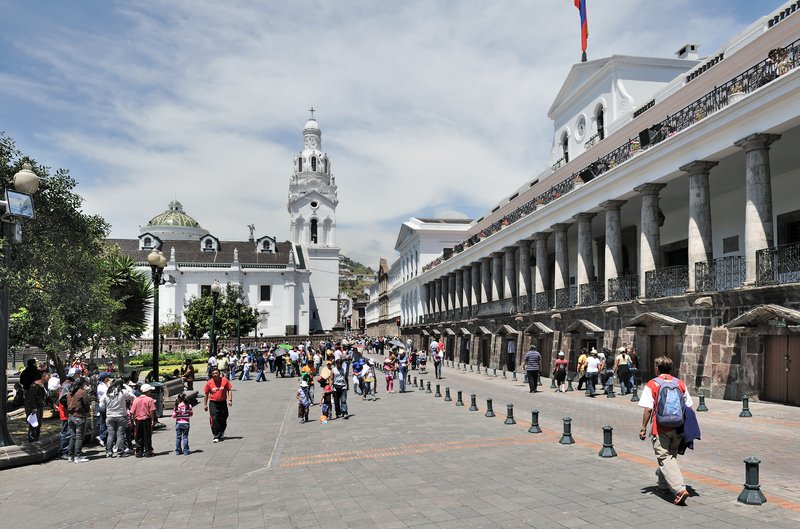
Quito’s central square since the 16th century, ringed by the Carondelet Palace — seat of government — the Metropolitan Cathedral, the Archbishop’s Palace and the Municipal Palace. A French-cast Independence Monument at the center marks the 1809 uprising against Spanish rule — one of the first in South America.
South America’s oldest cathedral foundation, begun in 1535 and completed in 1799, blending Baroque, Gothic-Mudéjar and Neoclassical styles on the southwest side of Plaza Grande. A narrow colonial staircase climbs to a rooftop walkway with views over the historic center; Mariscal Sucre, hero of Ecuadorian independence, is entombed inside.
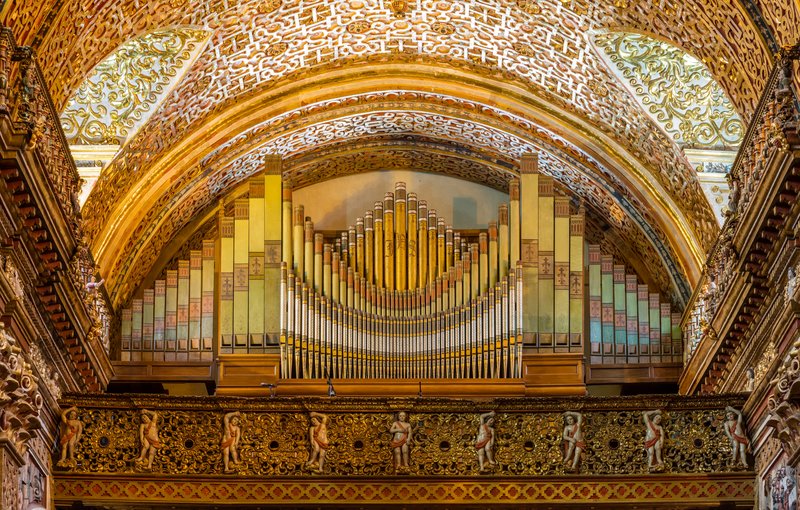
Quito’s Baroque masterpiece, built 1605–1765 by Jesuit architects on a façade of carved volcanic stone. Inside, roughly seven tonnes of gold leaf cover the nave, side altars and central dome — the single most photographed interior in the city’s Historic Center.
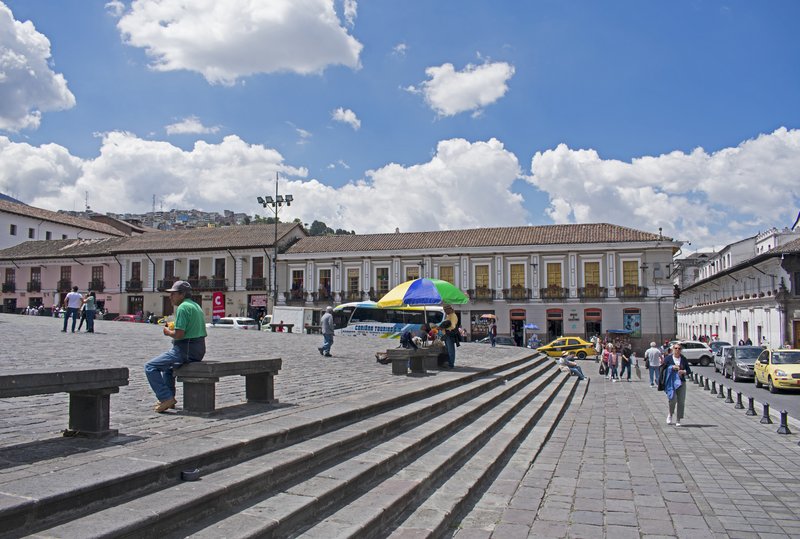
The oldest and largest religious complex in colonial South America, founded in 1534 on the site of an Inca palace. The plaza fronts the whitewashed church and convent; inside, the Museo Fray Pedro Gocial holds 16th–18th-century religious art around a quiet colonial cloister.
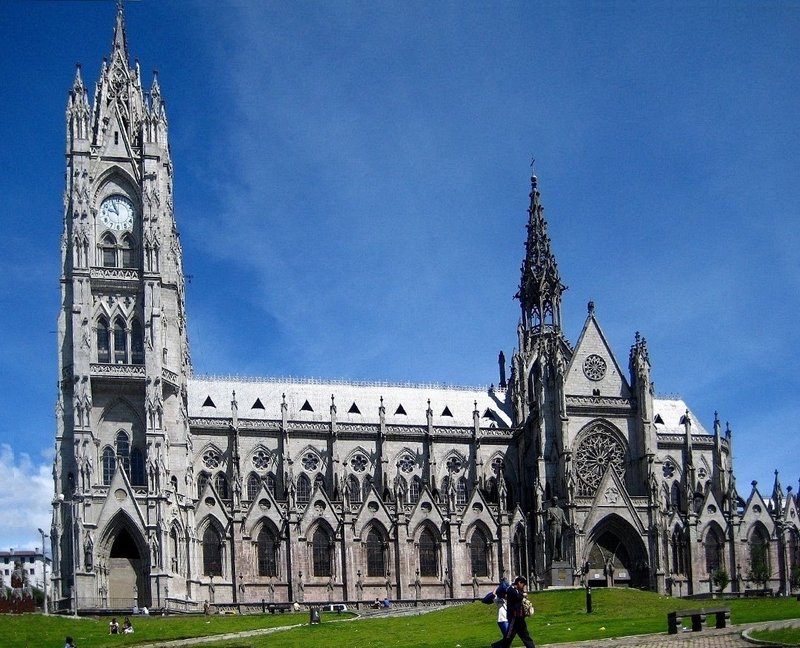
The largest neo-Gothic basilica in the Americas, begun in 1892 and never formally finished — a running joke holds that completing it would trigger the biblical end of the world. Ecuadorian touches replace European gargoyles with carved iguanas, tortoises and armadillos. Steep ladders and a narrow catwalk lead up through the clock tower to the base of the spires.
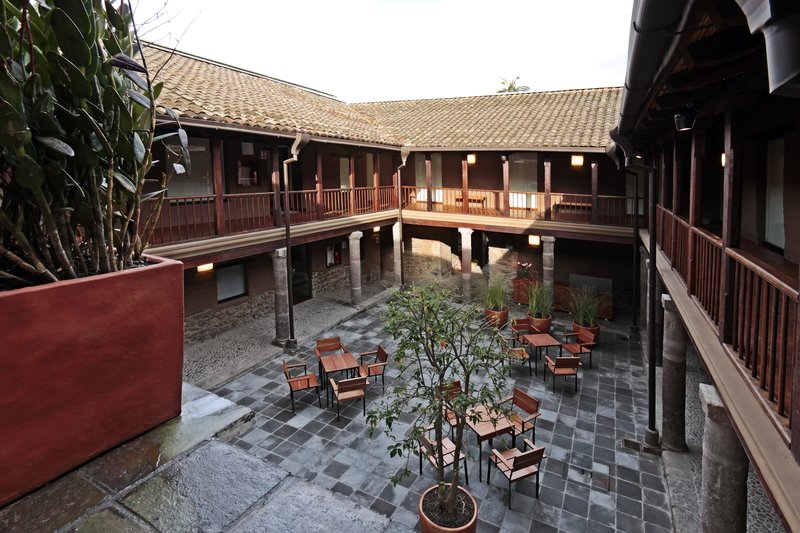
Pre-Columbian art displayed as art rather than artefact, inside a restored 17th-century colonial house near San Francisco. More than 500 pieces from Ecuador’s ancient cultures — ceramics, gold and stone figures spanning 5,000 years — are arranged thematically around candlelit courtyards.
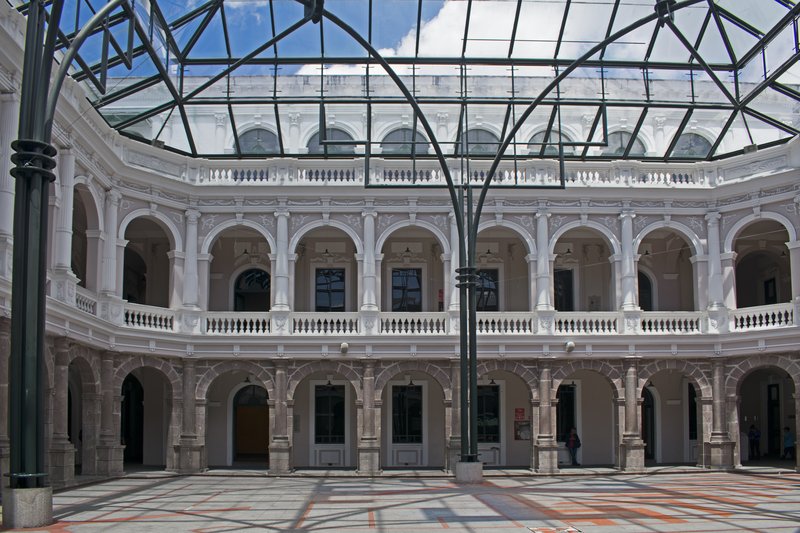
A former Jesuit university and colonial prison, now Quito’s municipal cultural center, one block from Plaza Grande. Free rotating exhibitions of photography and Ecuadorian art fill galleries built around a 1622 courtyard, and the roof terrace looks straight across to El Panecillo.
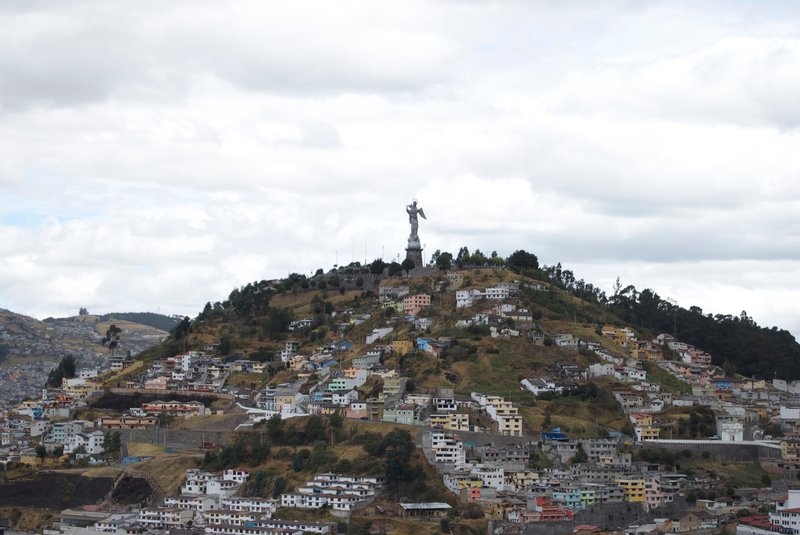
A 200-metre volcanic hill dividing north and south Quito, capped since 1975 by a 41-metre aluminium Virgin of Quito — the world’s only major Marian statue with wings, modelled on Bernardo de Legarda’s 1734 “dancing Virgin.” A narrow internal staircase climbs through the hollow statue to a platform at her feet, with the whole Historic Center laid out below.
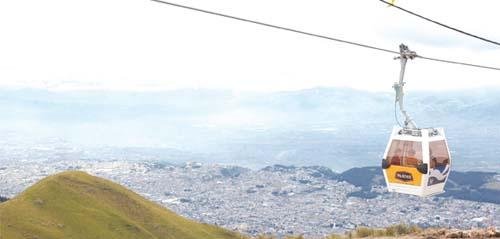
One of the world’s highest cable cars, climbing 1,200 vertical metres up the east flank of Pichincha volcano in 18 minutes. The upper station at Cruz Loma sits at 3,945m, above the cloud line more often than not, with the whole of Quito’s 2,850m valley spread out below and a marked trail continuing toward Rucu Pichincha’s summit for those who want to keep climbing.
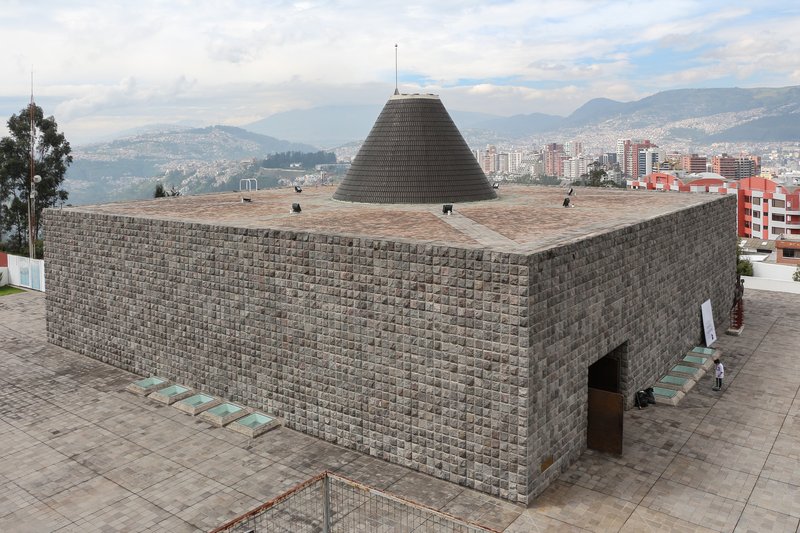
Oswaldo Guayasamín’s final work, a purpose-built chapel-museum overlooking the city, completed in 2002 after the painter’s death. Murals, sculpture and an eternal flame form a memorial to the suffering and resilience of Latin America’s peoples; the adjoining house museum holds his personal collection of pre-Columbian and colonial art.
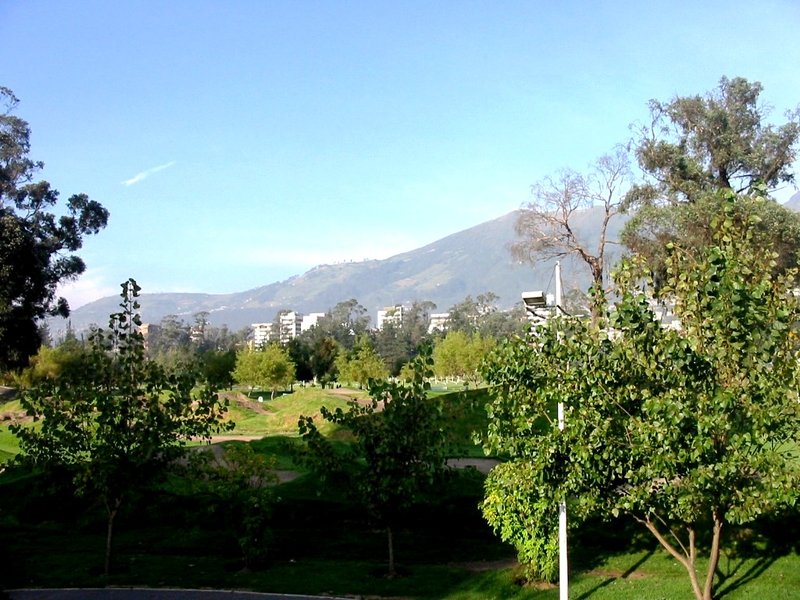
Quito’s central park, 67 hectares of lawns, a boating lake and running paths ringed by the city’s financial district. Created in 1939 from a former hacienda, it’s where Quiteños jog, fly kites and picnic on weekends, with the Jardín Botánico, a vivarium and a natural science museum inside its grounds.
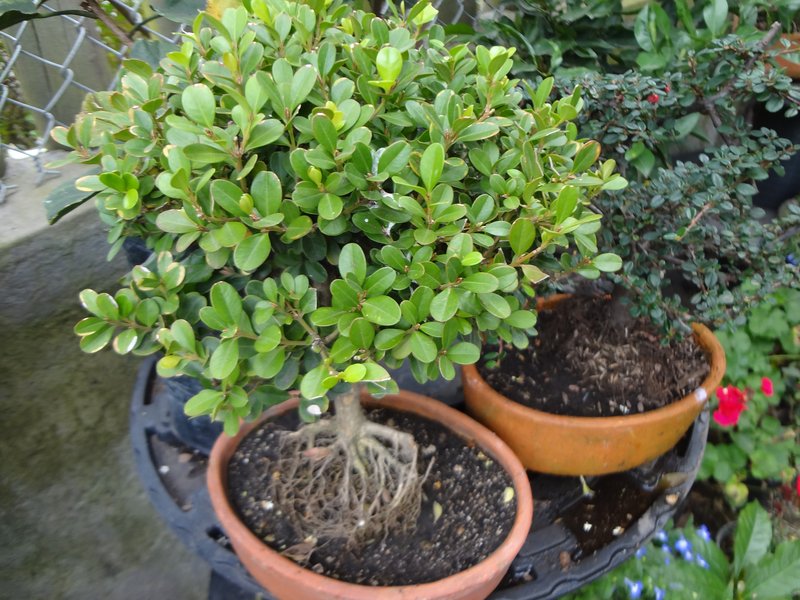
A compact botanical garden inside Parque La Carolina, created in 1989 from the city’s old municipal nursery. Greenhouses recreate Ecuador’s páramo, cloud forest and Amazonian ecosystems in a single walk, alongside an orchid house, a cactus garden and a bonsai collection.
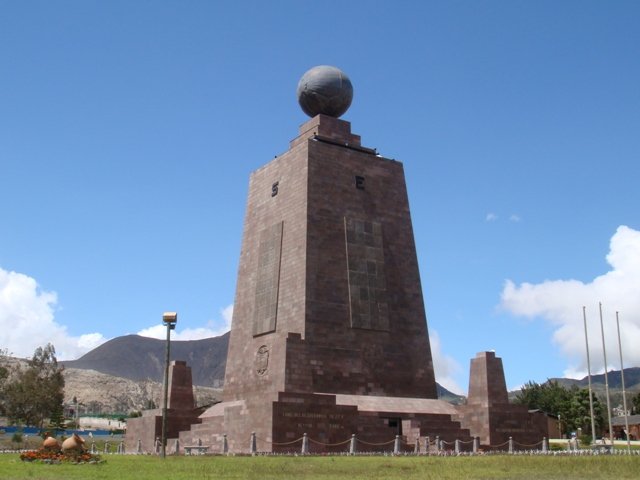
A 30-metre monument built in 1979–1982 to mark the equator, following the 18th-century Franco-Spanish Geodesic Mission that first fixed its location. A yellow line across the plaza draws every visitor for the straddle-the-hemispheres photo, even though GPS puts the true equator 240m to the north. The nine floors hold an ethnographic museum of Ecuador’s indigenous peoples.
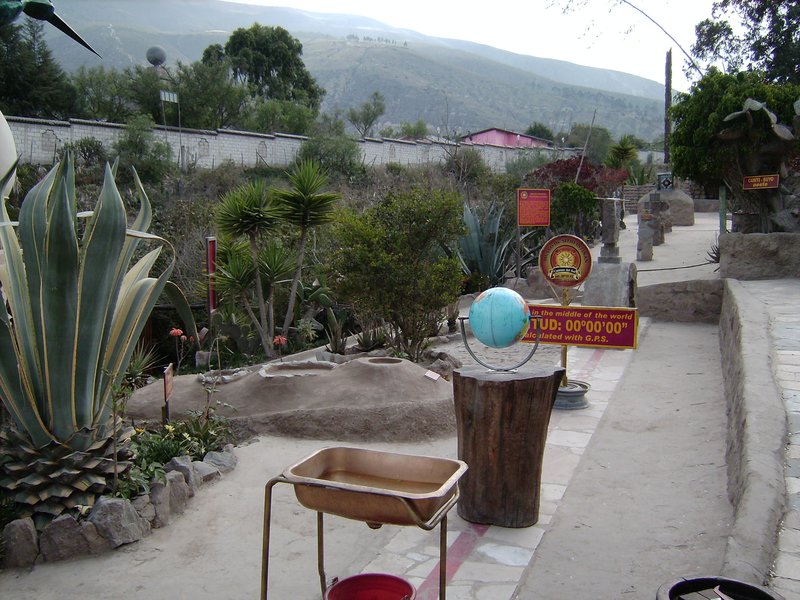
A privately run science-and-culture museum 200m from the official monument, built along a line its owners measured with GPS as the true equator. Guides run hands-on demonstrations along the line — balancing an egg on a nail, water draining from a basin — alongside exhibits on Amazonian and Andean indigenous cultures, including shrunken-head funerary tradition.
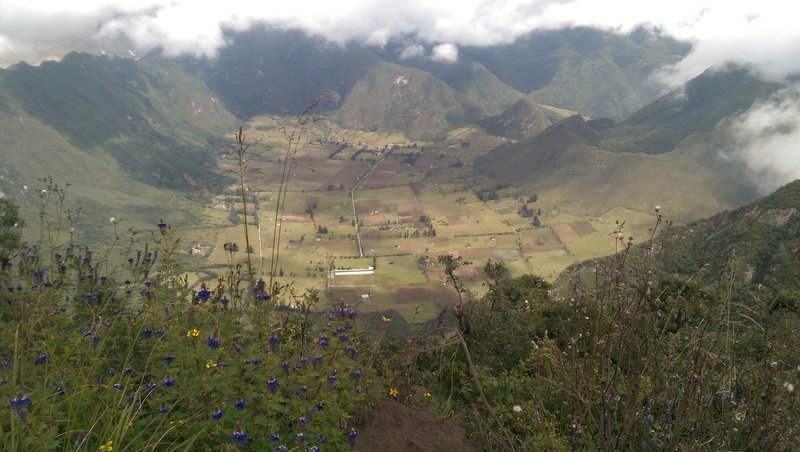
One of only two volcanic craters in the world inhabited and farmed, a few kilometres from the equator monument. From the Ventanillas viewpoint, a 5km-wide caldera opens below — patchwork fields and a scatter of farmhouses on the crater floor, usually wreathed in cloud by early afternoon. The reserve is Ecuador’s only geobotanical protected area.
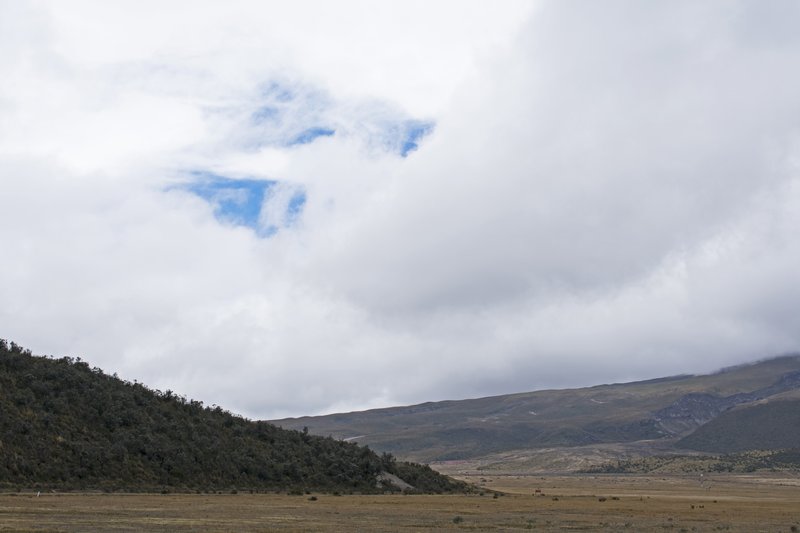
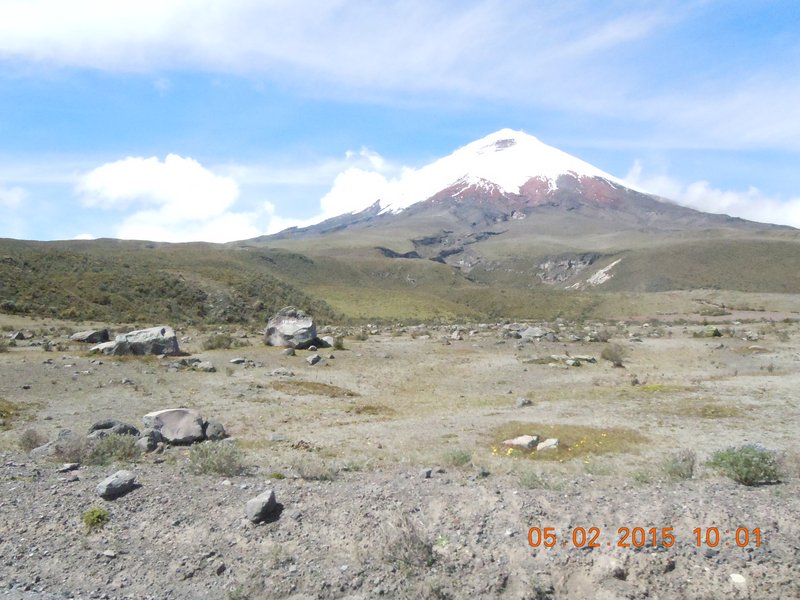
Ecuador’s second-oldest national park, protecting the páramo grassland around Cotopaxi, one of the world’s highest continuously active volcanoes at 5,897m. The flat trail around Laguna de Limpiopungo — a shallow lake at 3,800m ringed by wild horses and the odd Andean gull — gives the park’s clearest reflected view of the snow-capped cone on a still morning.
2.Volcán Cotopaxi — Refugio José Rivas~1 hr 30 min
The mountaineers’ refuge on Cotopaxi’s northern flank, reached by a parking area at 4,600m and a steep climb up loose volcanic scree. The refuge itself sits at 4,864m serving coca tea and hot chocolate to climbers resting before a summit attempt; on a clear day the glacier line is visible just above.
A 3.5-hour walking tour through Old Town pairing Quito's colonial landmarks with tastings of canelazo, local liquor and traditional sweets at the Archbishop's Palace.
A full-day trip to Cotopaxi National Park — the Limpiopungo lagoon, the interpretive center, and a hike up the volcano's flank to the José Rivas climbers' refuge.
A full-day Cotopaxi excursion off the standard bus-tour route — horseback riding across the páramo grassland followed by a guided hike, with lunch at a working hacienda.
A full-day small-group trip to Cotopaxi National Park, taking in the Limpiopungo lagoon views before a guided high-altitude hike to the José Rivas shelter.
A full-day trip to the turquoise crater lake of Quilotoa — a viewpoint stop, a descent to the shore with free time to explore, and a Tigua craft workshop on the way back.
A thick potato-and-cheese soup topped with avocado and a strip of fried pork skin — Andean comfort food and one of the dishes Quiteños miss most when abroad.
Whole roast pig marinated in chicha and Andean spices, slow-cooked until the skin cracks, served with mote, llapingachos and avocado. A market and Sunday-lunch staple across the highlands.
Pan-fried mashed-potato patties stuffed with cheese, served with peanut sauce, fried egg and chorizo. Ecuador's answer to the potato cake, found on nearly every traditional menu.
A hot cocktail of aguardiente — or naranjilla juice for the alcohol-free version — cinnamon and sugar cane, sipped against Quito’s cool Andean evenings, the city’s answer to mulled wine.
Griddled corn-dough empanadas made from ground white morocho corn instead of wheat flour, filled with cheese — an Old Town street-food staple sold from carts around the historic churches.
Foreign number: accepted. — the code goes by SMS to whatever number the account already uses, and Google or Apple sign-in skips the code entirely.
The dominant delivery platform in Quito with the widest restaurant coverage across La Carolina, La Mariscal and the Historic Center; consistently the fastest of the three.
Foreign number: not accepted. — only a mobile number from a Latin American country where Rappi operates can complete sign-up.
Ecuador's most-used delivery super-app, with deep coverage of Quito's central and northern neighborhoods and useful for pharmacy and grocery orders as well as restaurants.
Foreign number: accepted. — any mobile number that can receive an international SMS code works.
Solid coverage across Quito's main dining districts with a good selection of mid-range local restaurants; less dominant than Uber Eats or Rappi but a reliable fallback.
Ecuador's national theater since 1886, a neoclassical hall hosting the national symphony, opera, ballet and the International Festival of Sacred Music.
Foreign number: accepted. — the code goes by SMS to whatever number the account already uses, and Google or Apple sign-in skips the code entirely.
The most reliable ride option across La Carolina, La Mariscal and the Historic Center; surge pricing is common on weekday evenings and around Old Town on weekends.
Foreign number: not accepted. — requires a local Ecuadorian or nearby Latin American number to register.
Bid-based ride-hailing where the passenger names a price and drivers accept or counter; useful for longer cross-town rides where metered apps charge a premium.
The best-preserved colonial center in the Americas sits on the equator, 2,850 meters up
Quito was the first city anywhere to be named a UNESCO World Heritage Site, in 1978, alongside the Galápagos — and the reason is scale, not a single monument. The Historic Center holds roughly 130 blocks of intact 16th-to-18th-century architecture, more than any other capital in Latin America, because Quito was never a major target for the redevelopment booms that erased colonial cores elsewhere. Walking between Plaza Grande, La Compañía and San Francisco covers ground that would take three or four separate old-town visits in most other South American capitals.
The altitude is the one practical fact worth planning around. At 2,850 meters, Quito sits higher than most travelers have ever slept, and the effects — breathlessness on stairs, a fast pulse at rest, an early headache — usually show up the first afternoon, not the first hour. They fade within two or three days as the body adjusts. Alcohol and heavy meals make the first night rougher than the altitude alone would; canelazo tastes like mulled wine but carries a real dose of aguardiente on top of a thinner atmosphere already doing its own work.
The equator itself is a small, honest joke on the whole city. The 1736 French Geodesic Mission fixed its location using the best astronomy of the age, and the resulting monument at Mitad del Mundo is a genuine engineering landmark — just measured about 240 meters south of where GPS now puts the true line. The Intiñan Museum next door built its own line using modern equipment, which is why two equator monuments stand a few minutes' walk apart, both claiming the same latitude with a straight face.