From Hotel: 5 min · 3 min → Ferry Building Marketplace
1.Ferry Building Marketplace~1 hr 30 min
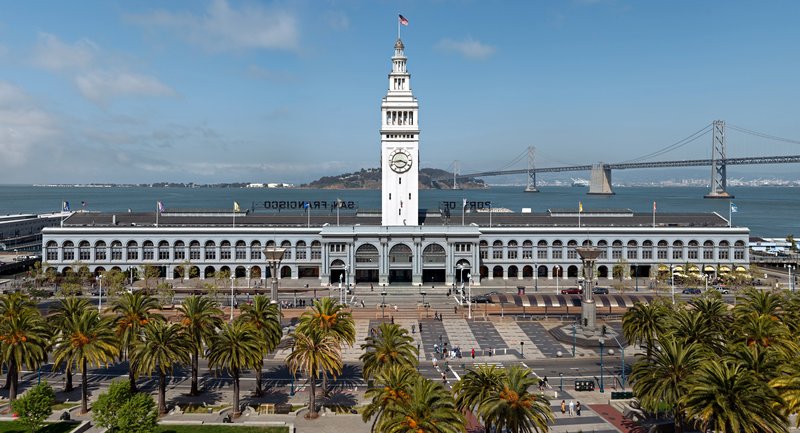
Beaux-Arts ferry terminal opened 1898, restored 2003 as a living food hall — nearly 50 artisan vendors, oyster bars, bread counters, and farmers-market stalls under the 245-foot clock tower. The city's iconic gateway from the Bay.
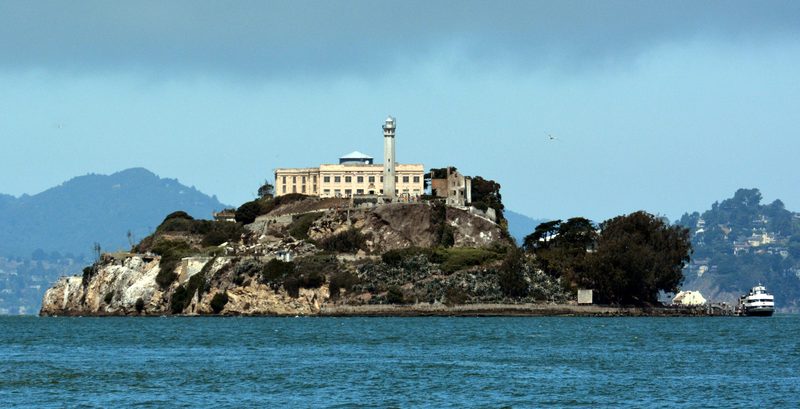
The rock in the middle of the Bay — military fortress, lighthouse, and federal penitentiary that held Al Capone. The cellhouse audio tour, narrated by former guards and inmates, walks D-Block, the dining hall, and the recreation yard.
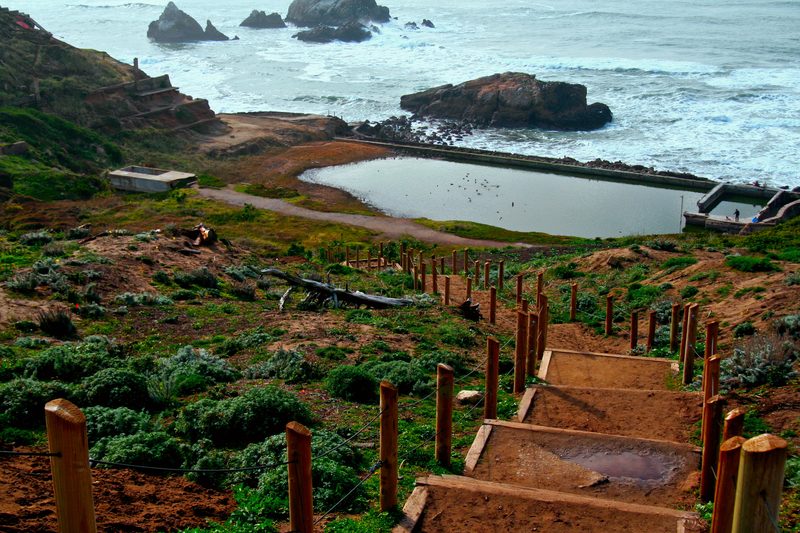
The rocky westernmost edge of the city, where the Coastal Trail traces the cliffs. At its foot lie the concrete bones of the Sutro Baths — once the world's largest indoor saltwater swimming complex, opened 1896, burned 1966.
15 min · 5 min → Golden Gate Bridge Welcome Center
2.Golden Gate Bridge Welcome Center~1 hr 30 min
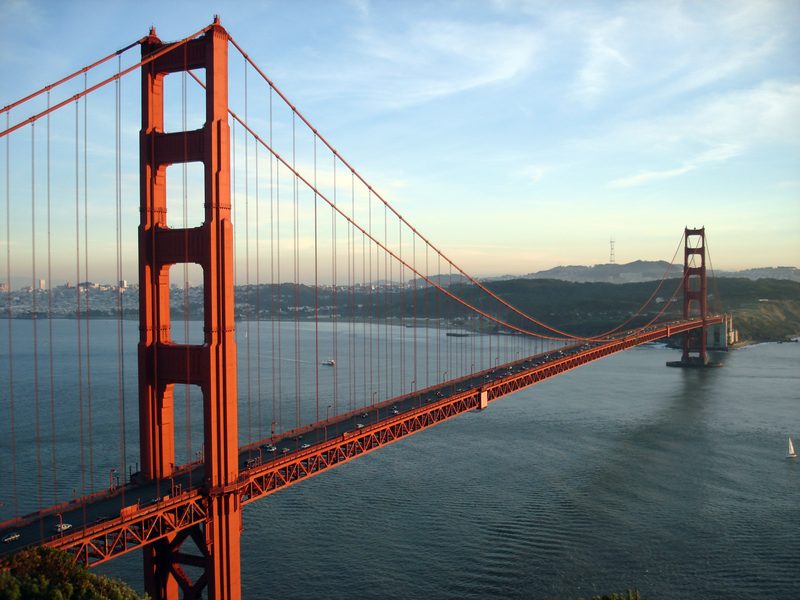
Stand under the south tower of the Art Deco icon — 4,200-foot main span, International Orange paint, opened 1937 and once the world's longest suspension bridge. The pavilion holds a 12-foot test tower and the walkway entrance.
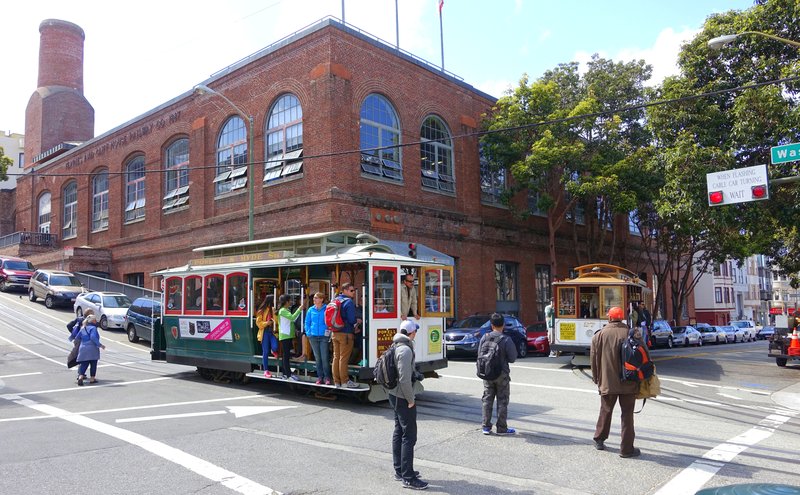
A working powerhouse — the four giant sheaves that pull the cables under every cable-car line in the city spin in the middle of the floor. Inside the same Mason Street barn: vintage 1870s grip cars, ringing bells, and the easy explanation of why those wood-and-steel cars still climb the hills.
A neo-Gothic cathedral rising from the crown of Nob Hill — bronze Ghiberti door replicas, twin labyrinths in tile and stone, and a Keith Haring altarpiece make it one of SF's most quietly extraordinary interiors. The nave seats 1,200 under soaring ribbed vaulting.
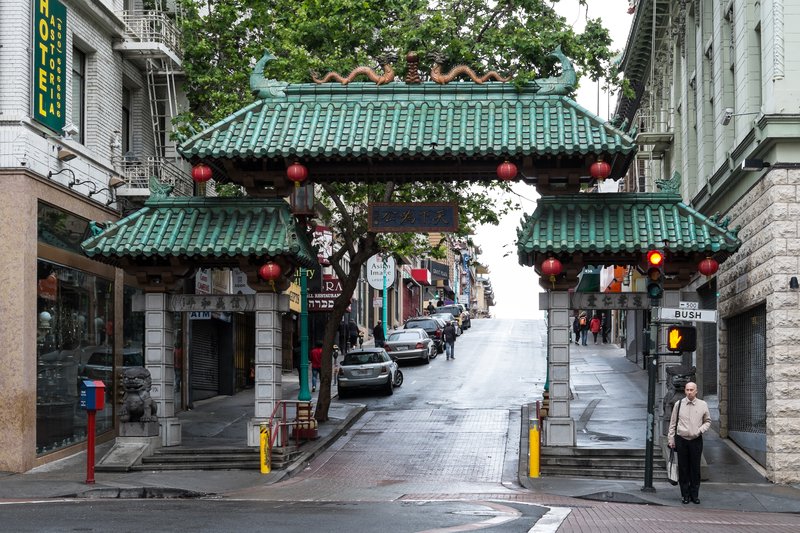
The oldest and largest Chinese enclave in North America, settled in the 1850s and rebuilt after 1906 with the swooping rooflines and lantern-lit alleys you see today. Wander the Dragon Gate, Portsmouth Square, fortune-cookie alleys, and herbal pharmacies on foot.
A 210-foot concrete column on the summit of Telegraph Hill, completed 1933 from a public bequest. Inside, sweeping Depression-era frescoes by 25 muralists circle the lobby; outside, the parapet gives a 360° panorama from Alcatraz to the Bay Bridge.
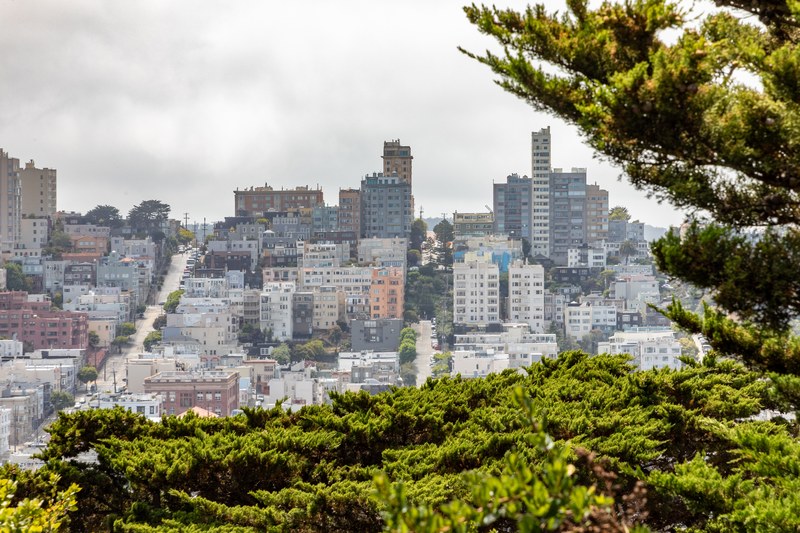
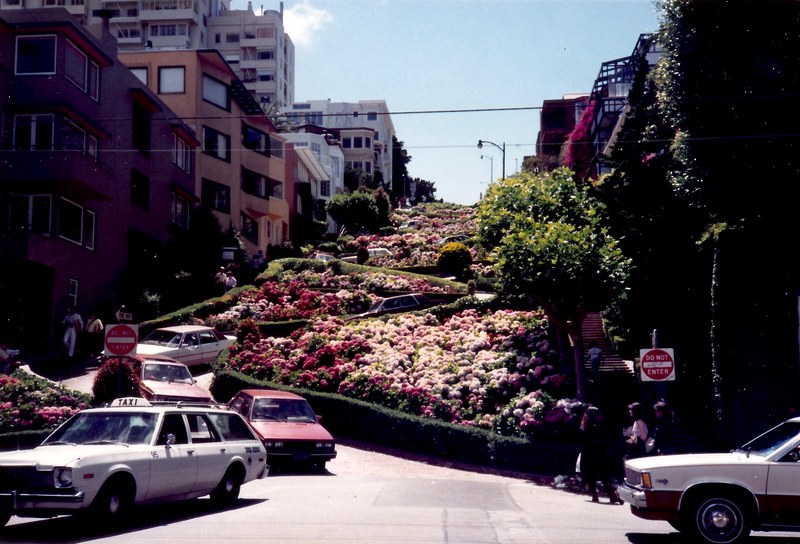
The crookedest street in the world — eight switchbacks built in 1922 to tame a 27% grade down Russian Hill. Walk it from the top for the postcard view of bay, hydrangea beds, and red-brick paving; cars crawl down at five miles per hour beside you.
From Hotel: 22 min → California Academy of Sciences
1.California Academy of Sciences~2 hr 30 min
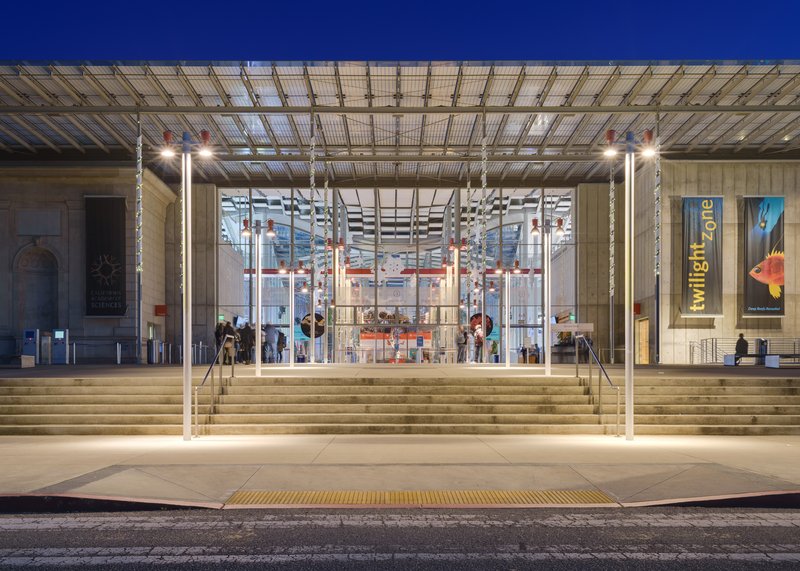
Renzo Piano's 2008 building carries a 2.5-acre living roof of native plants. Inside: the Steinhart Aquarium with a four-story coral-reef tank, the Morrison Planetarium — the world's largest digital dome — and a four-story indoor rainforest atrium with free-flying butterflies, all in Golden Gate Park.
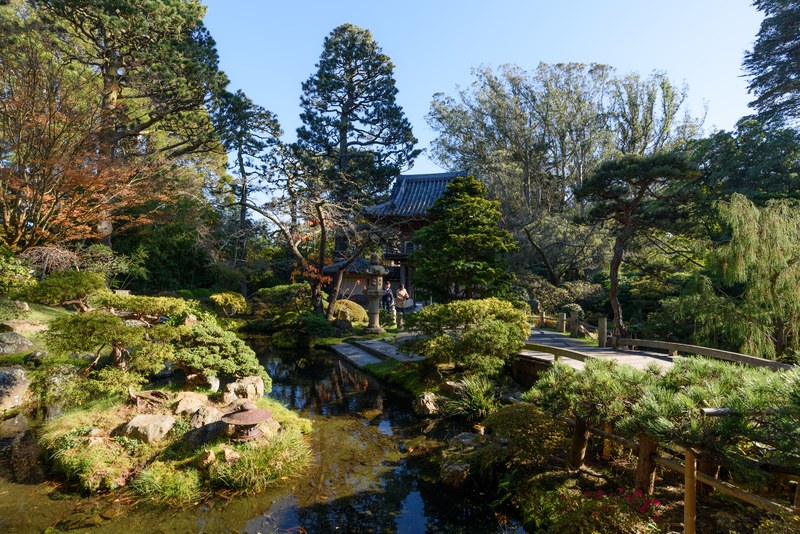
The oldest public Japanese tea garden in the United States, founded 1894 for the California Midwinter International Exposition. Five acres of traditional landscape — pagodas, bronze Buddha, arched drum bridge, koi ponds — centered on a wooden teahouse serving green tea and fortune cookies, invented here.
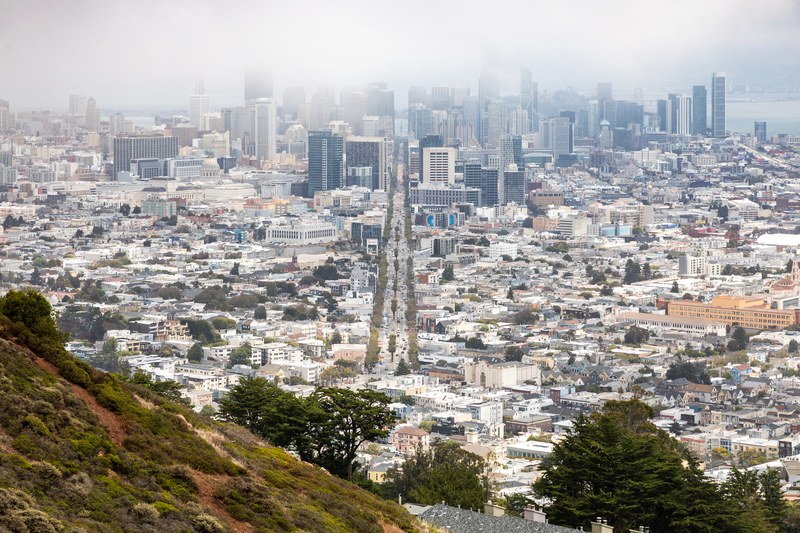
Two conical hills at 922 feet above the city center, connected by a loop road open to walk-up visitors. On clear days the 360° view takes in the Bay Bridge, Alcatraz, the Golden Gate, Marin Headlands, and the full downtown grid — the broadest unobstructed panorama anywhere in San Francisco.
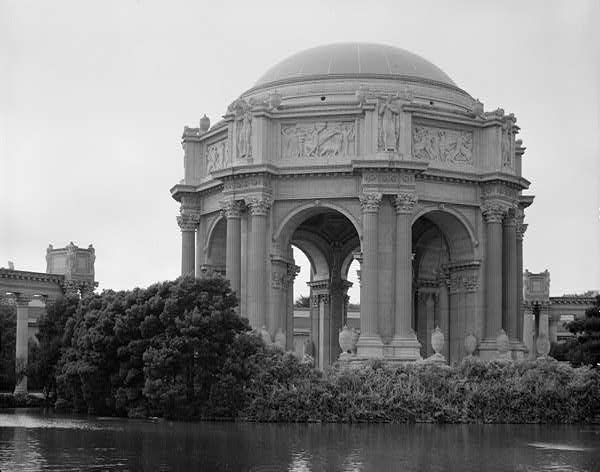
The lone survivor of the 1915 Panama–Pacific International Exposition — Bernard Maybeck's domed Roman rotunda behind a swan-filled lagoon. Recast in concrete in the 1960s, it remains the most photographed structure outside the Bay's bridges.
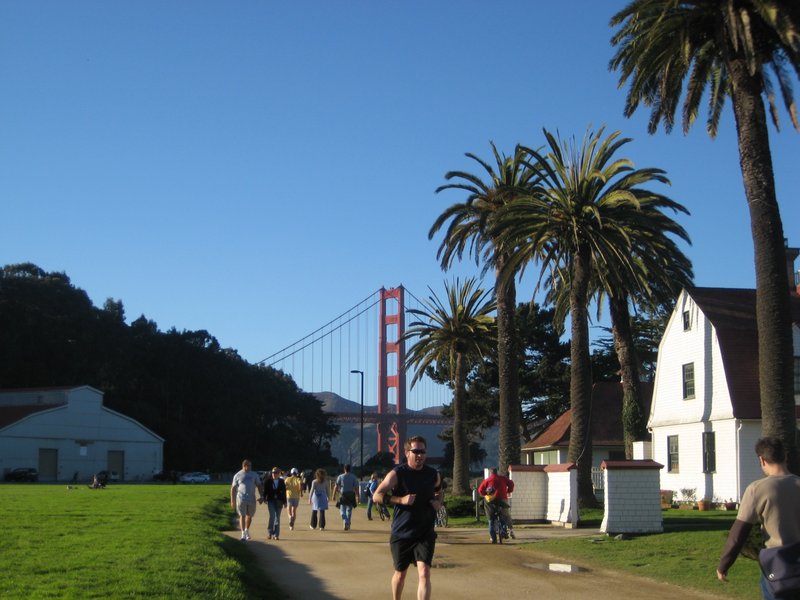
A former military airfield turned waterfront promenade — tidal marsh, dune grasses, and a flat shoreline path with the Golden Gate Bridge looming straight ahead. Locals run, picnic, and watch the kite-surfers.
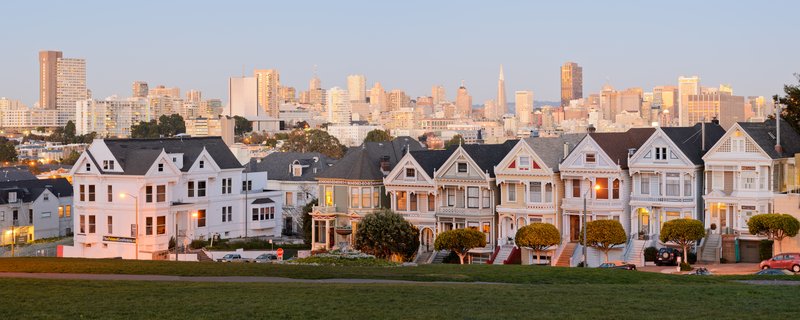
A hilltop Victorian park with the defining San Francisco postcard view: six Italianate houses from the 1890s — the Painted Ladies — lined up along Steiner Street with the downtown skyline behind them. The same view appeared in every episode of Full House; one of the most photographed streetscapes in the country.
ARRIVE Sacramento Valley Station: 10 min · 4 min → Old Sacramento Waterfront
1.Old Sacramento Waterfront~1 hr 30 min
A 28-block National Historic Landmark along the Sacramento River preserving the Gold Rush waterfront from 1849. Wooden boardwalks over the levee pass 19th-century brick storefronts and the California State Railroad Museum — the largest railroad museum in North America.
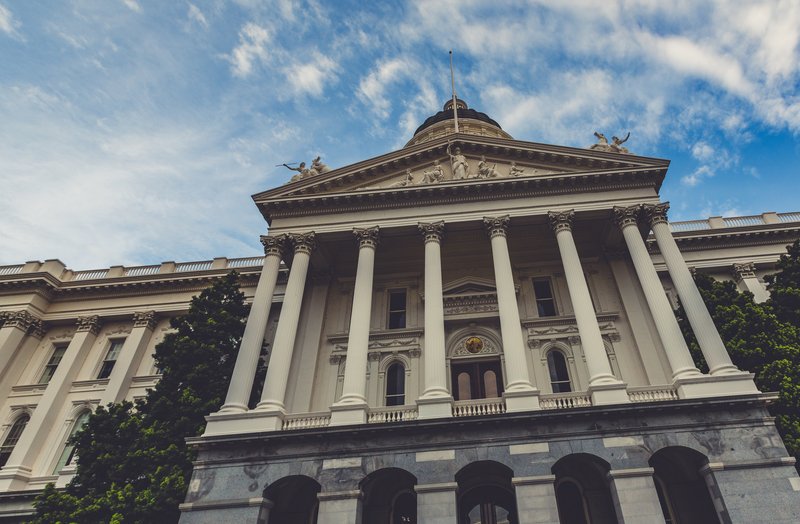
The Neoclassical seat of California government, completed 1874 with a 210-foot gilded dome. Free docent-led tours cover the Senate and Assembly chambers, the Governor's Historic Suite restored to 1906 condition, and the Capitol Museum tracing the state's political history from statehood to the present.
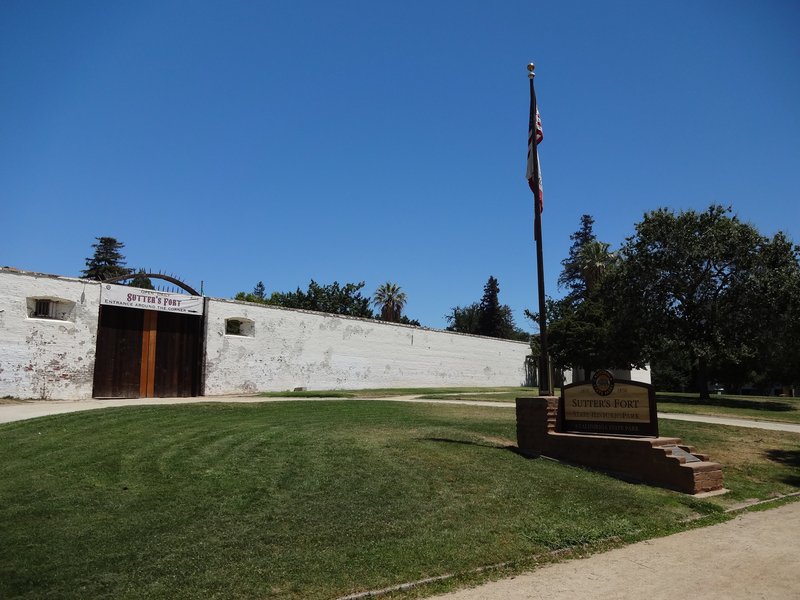
Adobe fort built in 1839 by John Sutter, the first non-Native American settlement in Central Valley. Gold was discovered at Sutter's Mill in 1848, triggering the Gold Rush; the fort served as supply point and hospital for overland emigrants on the California Trail. Restored to 1846 with a self-guided audio tour.
Open-air van loop of the city's top sights — Lombard Street, steep Filbert Street, a Golden Gate Bridge photo stop, Little Italy and Chinatown, with movie-location lore along the way.
Full-day small-group run to Yosemite National Park — Tunnel View, El Capitan, Bridalveil Fall and Yosemite Falls, with a one-mile walk into a giant-sequoia grove.
Full-day wine country tour to Napa and Sonoma — a Treasure Island skyline view, tastings at Artesa Winery, and free time on historic Sonoma Plaza. Capped at twelve.
Historical Chinatown walking tour through a fortune cookie factory, Stockton Street markets, a medicinal herb pharmacy, and Waverly Place's secret-club alley — the cultural and architectural story of Chinese-American immigration.
Actor-led van tour tracing 50+ films shot on SF's streets — car-chase Bullitt scenes, the Painted Ladies from Full House, Mrs. Doubtfire's house in Pacific Heights, the Yoda fountain at LucasArts, and the Golden Gate Bridge.
Half-day escape across the Golden Gate Bridge to Muir Woods National Monument — ninety minutes among ancient coastal redwoods, then free time in the waterfront town of Sausalito.
Culinary walk through the oldest Chinatown in North America — dim sum, tea, and pastries paired with the neighborhood's immigration history from the Dragon Gate inward.
Full-day Mercedes Sprinter van tour combining Alcatraz Island's award-winning cellhouse audio tour, a 75-minute walk among ancient redwoods in Muir Woods National Monument, and free time in waterfront Sausalito.
Half-day small-group driving tour covering the Golden Gate Bridge, Haight-Ashbury, the Castro, Chinatown, and City Hall — a knowledgeable guide narrates the city's history and culture throughout.
Boutique small-group tour crossing the Golden Gate Bridge for a 75-minute redwood walk in Muir Woods National Monument, a photo stop at the bridge's south end with Alcatraz views, and free time in waterfront Sausalito.
Walking tour weaving Chinatown immigration history with handpicked tastings — BBQ pork buns, dim sum, Chinese pastries, and a stop for tea at a family-run shop.
Little Italy walk through North Beach — olive oil, fresh bread, pastries and coffee with the stories behind the neighborhood that nicknamed itself Little Italy.
Half-day tour to Muir Woods with ninety minutes among redwoods up to a thousand years old, a coastal drive, and free time in waterfront Sausalito before crossing the Golden Gate Bridge.
Official ferry to Alcatraz Island with the award-winning cellhouse audio tour narrated by former guards and inmates — D-Block, the dining hall, and the recreation yard.
Afternoon small-group driving tour — Chinatown, North Beach, Twin Peaks panorama, the Golden Gate Bridge, Alamo Square, and Nob Hill, with a knowledgeable guide narrating architecture and city history throughout.
Tangy, chewy loaves leavened by a wild Bay Area yeast — Lactobacillus sanfranciscensis. Bakers here have kept the same mother dough alive since the 1849 Gold Rush.
The oversized foil-wrapped burrito invented in the 1960s on 24th Street — rice, beans, choice of meat, salsa, cheese rolled into a flour tortilla. Long enough to be a meal, dense enough to need two hands.
The Italian-American fisherman's stew born on the Wharf in the late 1800s — Dungeness crab, mussels, clams, shrimp, and white fish simmered in a tomato-wine broth. Crusty sourdough on the side to mop the bowl.
The American debut of Irish coffee — perfected at Buena Vista Café in 1952, where a barman cracked the trick of floating the cream on hot whiskey-coffee. Still made the same way at the same long bar, four glasses at a time.
Foreign number: accepted. — the code arrives by SMS on an international number, though a US number avoids the occasional verification delay.
Born in the Bay Area and still the deepest list in the city — most Financial District, Chinatown and North Beach kitchens are on it, with late-night options past midnight. Fees stack up on small orders; DashPass only pays off if you order more than twice.
Foreign number: accepted. — it runs on the same Uber account, so the code comes by SMS to any international number, with a voice call as the fallback.
Runs on the Uber account you already have, so there is nothing extra to set up, and coverage downtown and along the Embarcadero is close to DoorDash's with slightly fewer independent dim sum and taqueria spots. Delivery to the Hyatt's tower lobby is quick; the hills slow couriers heading up Nob Hill.
Foreign number: accepted. — the code comes by SMS to any international number, and "Call me with code" reads it out if the SMS is blocked.
Uber's home city, and it shows: cars reach the Embarcadero in two or three minutes at any hour, and coverage runs out to Lands End, Twin Peaks and the Presidio without a wait. Surge pricing is steep after Giants games and on weekend nights; the hills make short hops cost more than the distance suggests.
Foreign number: not accepted. — Lyft's own help says the number must be a US, Canadian or Puerto Rican one, and the code is texted only to that number.
Also headquartered here and as dense as Uber across the city, often a few dollars cheaper on the longer runs to Golden Gate Park and the Sunset — worth keeping open to compare fares. Waits stretch in the Outer Richmond after dark, and it cannot be registered without a North American number.
The intellectual heartbeat of the Bay Area — UC Berkeley campus, Telegraph Avenue, the Gourmet Ghetto restaurant row on Shattuck, and the Berkeley Hills above.
Stanford University's sandstone quad and Rodin sculpture garden anchor a downtown of tree-lined streets, wine bars, and the Computer History Museum in nearby Mountain View.
Silicon Valley's urban core — the Tech Interactive museum, Santana Row's open-air restaurants and boutiques, and the San José Museum of Art along the Caltrain corridor. Frequent express trains throughout the day.
Sutro Baths had already been sold to developers with plans for a high-rise, and demolition crews were partway through tearing the building down when a fire broke out on June 26, 1966 and finished the job in a single afternoon — faster than the wrecking crew had managed in months. Investigators suspected arson from the start; insurance fraud and stray fireworks were both floated as explanations, but no one was ever charged and the exact cause was never settled. What's left is the concrete ruin visitors walk through today, burned into its current shape rather than demolished into it.
The bronze triptych behind the altar in Grace Cathedral's AIDS memorial chapel was one of the last things Keith Haring ever made. He completed The Life of Christ only weeks before he died of AIDS-related complications in 1990 — one of the very few religious works in a career built almost entirely on street-art figures and radiant outlines. It wasn't installed and unveiled until 1995, on World AIDS Day, five years after his death.