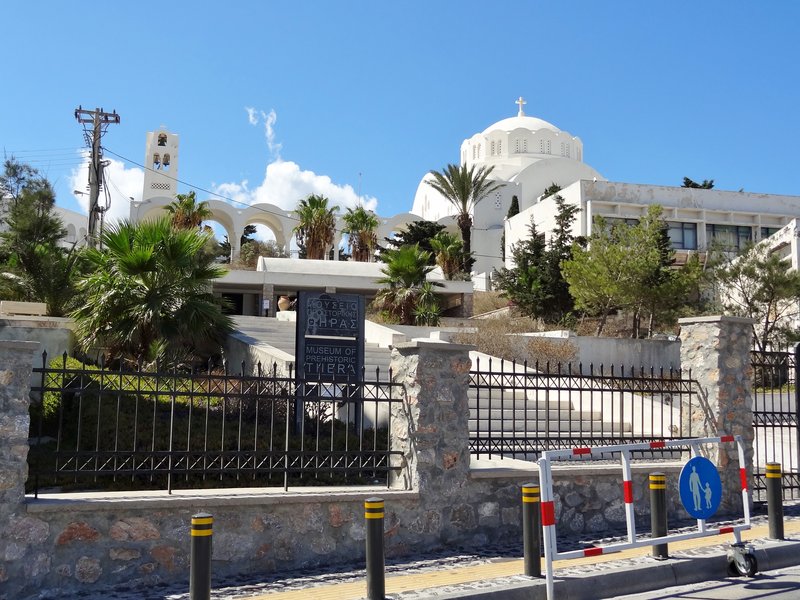
Built on the site of a church destroyed in the 1956 earthquake, this Fira museum holds Akrotiri finds — Cycladic figurines, Minoan pottery, gold jewellery, and Bronze Age wall paintings including the ship-procession fresco. The companion piece to Akrotiri, filling in what the buried city no longer shows.
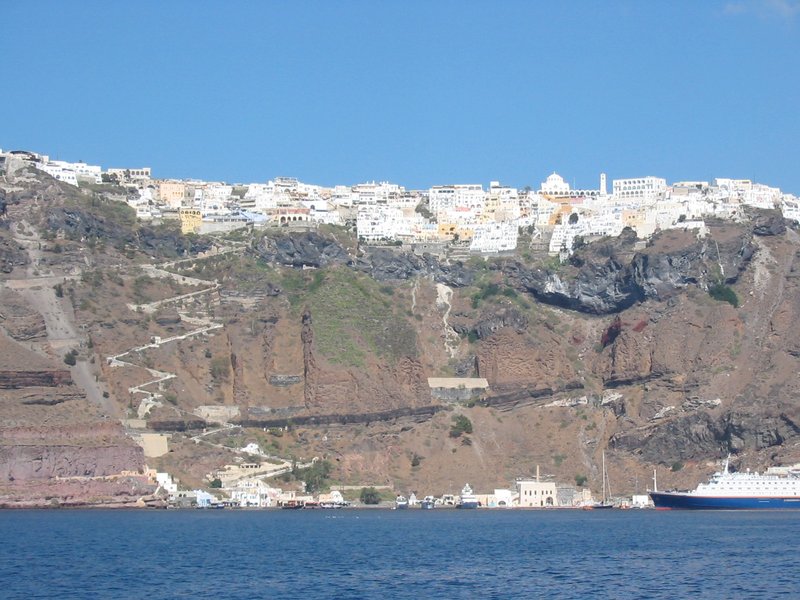
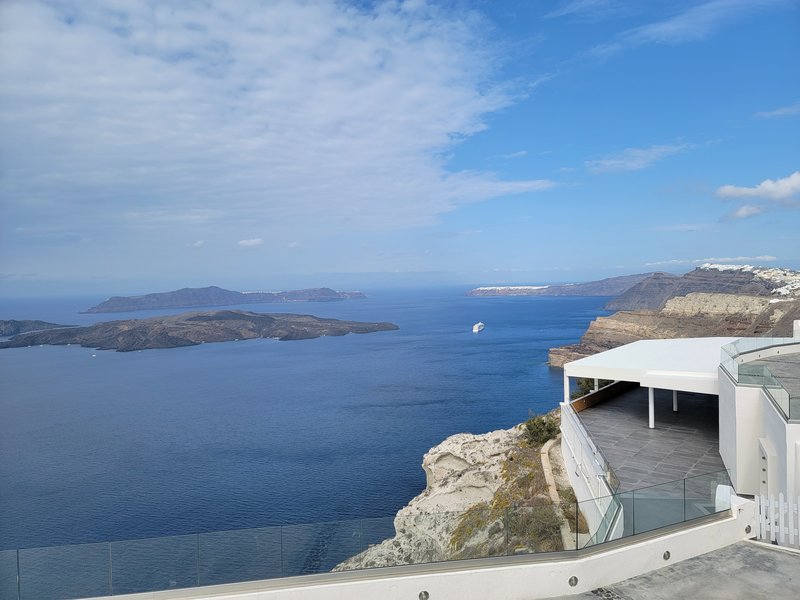
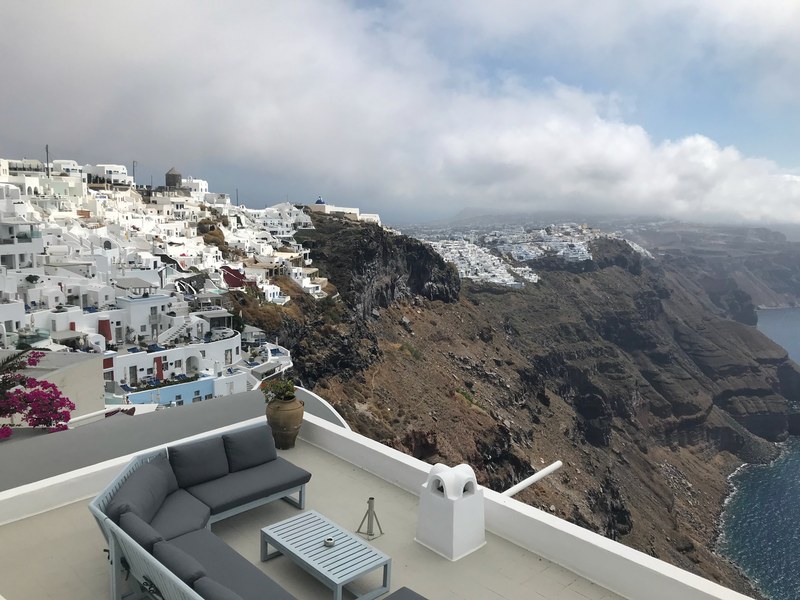
The edge of the caldera in Fira — a sheer 300-metre cliff carved by the eruption — where the island's volcanic origins become fully legible. Whitewashed buildings cascade down terraces toward the submerged crater; the volcanic islands of Nea and Palea Kameni float in the deep-blue water ahead.
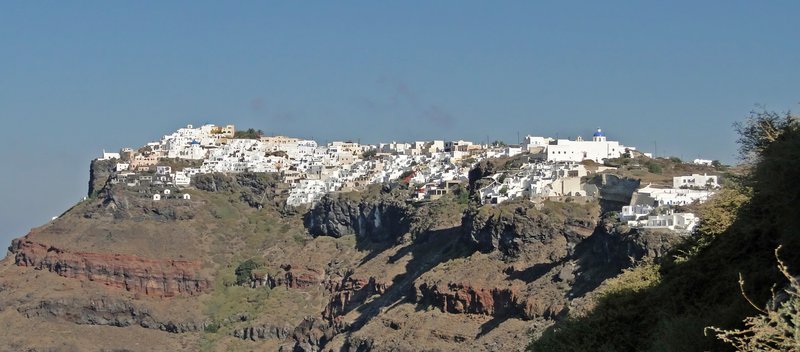
The highest caldera-rim village on Santorini, perched 350 m above the submerged crater and offering the island's widest unobstructed caldera view. Imerovigli gave rise to its name — meaning "day watchtower" — from the medieval lookout kept here for pirate sails; Skaros Rock, the remnant of the former island capital, juts below it into the caldera.
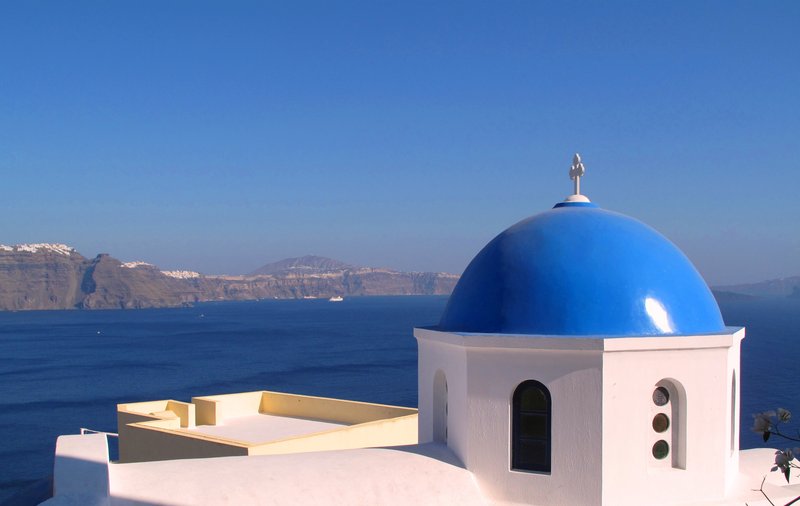
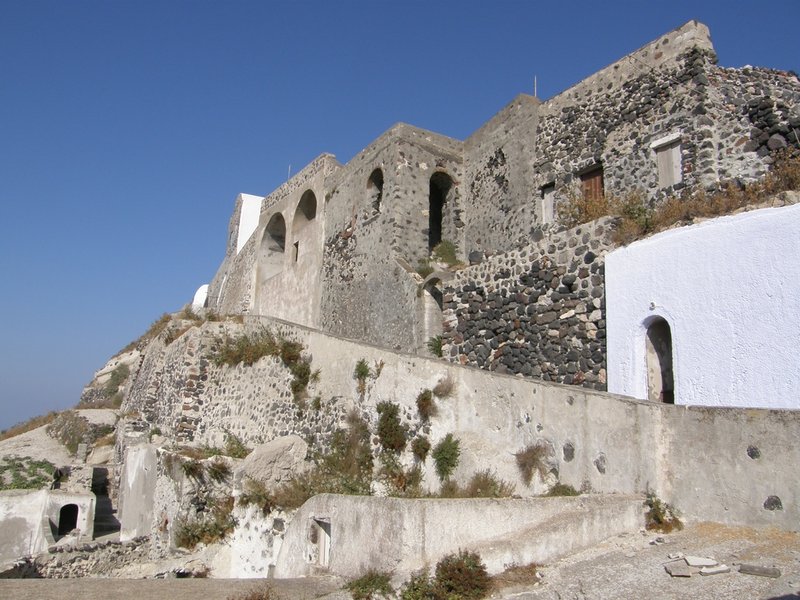
The ruined Byzantine Kasteli fortress at the northern tip of Oia, facing directly west over the caldera — the most celebrated sunset in the Cyclades. The island of Therasia and the volcanic cone of Nea Kameni frame the drop into the Aegean. Arrive 45 minutes before sunset.
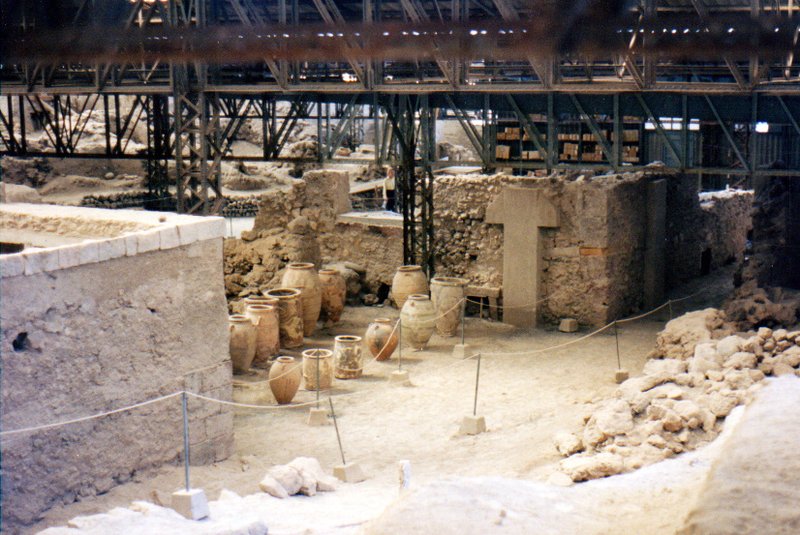
The best-preserved Bronze Age settlement in the Aegean, buried by the Theran eruption around 1613 BC. A purpose-built shelter covers multi-storey buildings and narrow stone streets — a Pompeii-like snapshot of Minoan-influenced civilisation frozen in volcanic ash for 3,600 years.
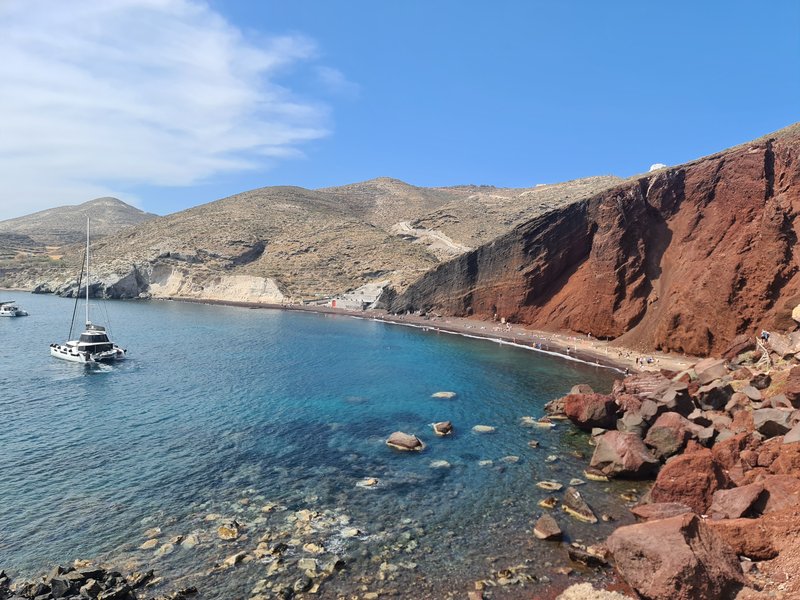
A dramatic crescent of deep-red volcanic sand hemmed by sheer ochre and rust-coloured cliffs — the most visually striking beach on the island, shaped by layers of compressed lava and pumice. The water is cold and clear. Rockfall from the cliffs is an active hazard; the coastal path occasionally restricts access.
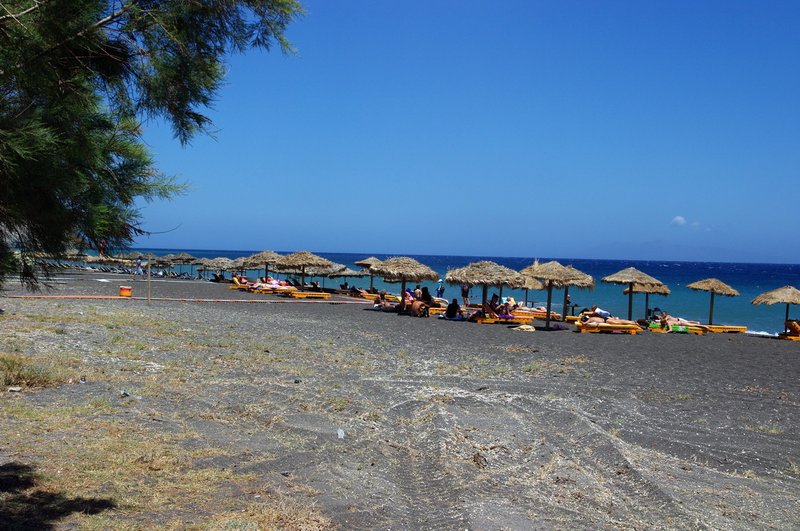
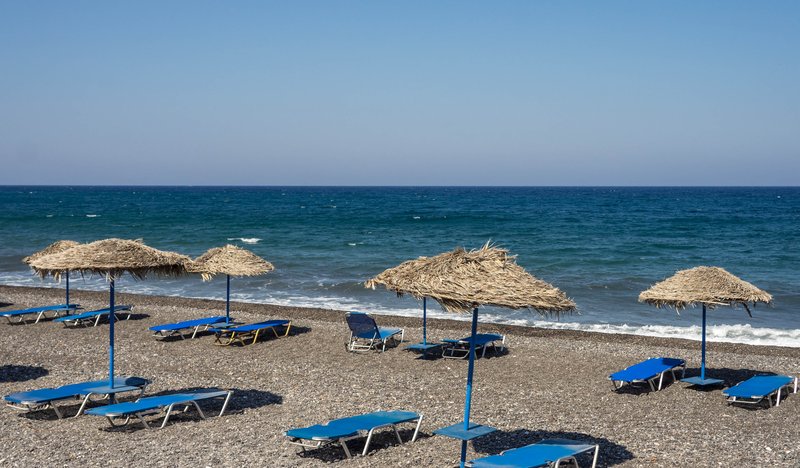
The island's longest black-sand beach, stretching beneath the sheer face of Mesa Vouno on the southeast coast. The sand is coarse volcanic grain from the same Theran eruption that shaped Red Beach — dark and sun-warmed, backed by a long promenade of tavernas and beach bars, with calm, clear water.
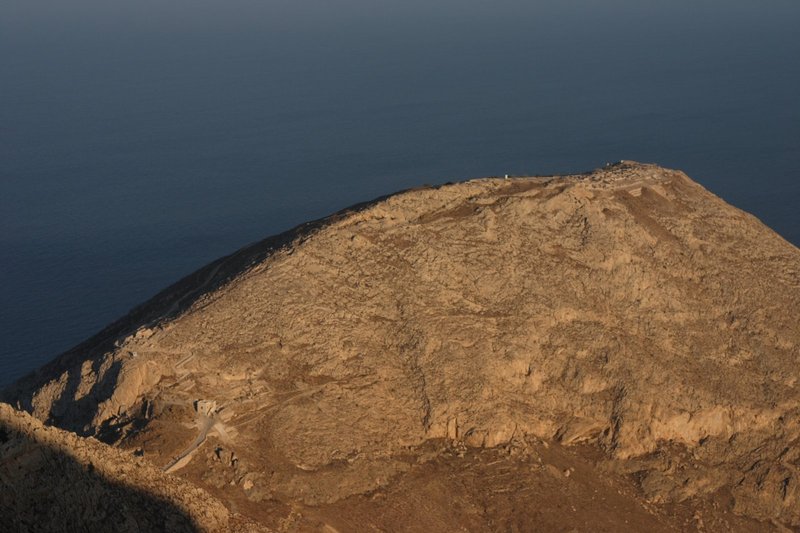
A Dorian city founded in the 9th century BC on the 396-metre summit of Mesa Vouno, between Kamari and Perissa. Excavations begun in 1896 uncovered an agora, temples to Apollo Karneios, a theatre, and a stone road network spanning the Hellenistic and Roman periods.
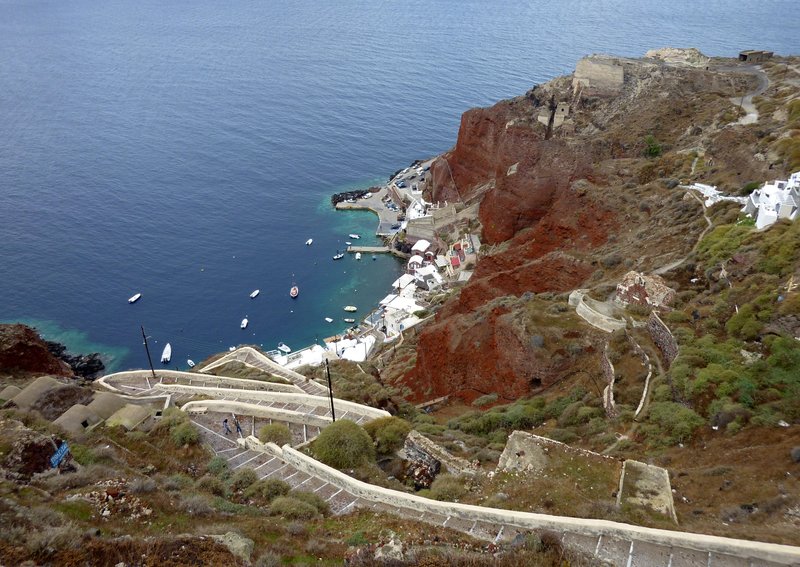
A small working harbour tucked into the volcanic cliffs directly below Oia, reached by roughly 300 stone steps. Fishing boats and a handful of seafood tavernas line the base of the caldera wall — a sea-level counterpoint to Oia's clifftop views, and a well-known sunset spot in its own right.
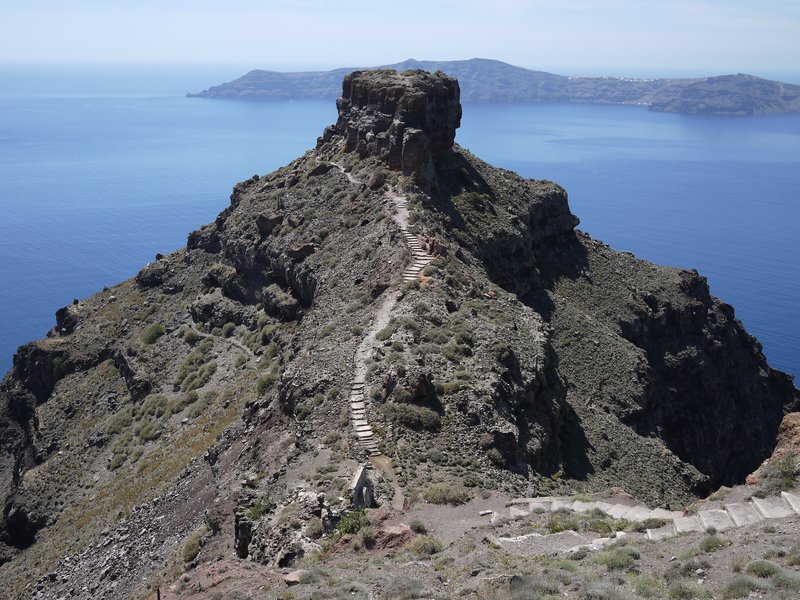
A sheer volcanic promontory jutting from the caldera rim below Imerovigli, once crowned by a 13th-century Venetian fortress that served as the island's capital until eruptions collapsed it into the sea. A short cliffside path leads out past the Theoskepasti chapel to open caldera views on three sides.
A still-inhabited fortified village built around 1450 at the foot of Profitis Ilias — the largest of Santorini's five kastelia. Tightly packed houses form the outer fortress wall; the square Goulas watchtower at the northern edge is the best preserved on the island.
Santorini's former capital, built amphitheatrically on the island's highest hill. Narrow labyrinthine streets climb through a fortified medieval settlement to the ruined Venetian Kasteli at the summit — the best-preserved of the island's five castle villages, and one of the few left largely untouched by tourism.
The most intact of Santorini's winemaking villages, built above a network of kafiria — cave cellars carved into the volcanic pumice — where barrels and amphorae have aged wine for centuries. The arcaded Venetian square at the village centre dates to the 17th century; the surrounding lanes are lined with the distinctive earth-coloured mansions of the island's merchant wine families.
The island's largest wine cooperative, perched on the caldera cliff between Pyrgos and Fira with a terrace looking over the submerged volcano and the islands of Nea and Palea Kameni. Founded in 1947 and drawing grapes from over 1,200 member growers, Santo produces Santorini's two signature wines: dry mineral Assyrtiko from ancient ungrafted vines, and Vinsanto, a sun-dried sweet wine aged in oak.
The longest black-sand beach on Santorini, backed by the sheer 400-metre cliff face of Mesa Vouno — the same rock that carries Ancient Thira above. The sand is not black but a dark volcanic gravel that grows hot in the afternoon sun; a broad promenade runs the full length behind the loungers, lined with cafés, seafood restaurants, and the island's only open-air cinema.
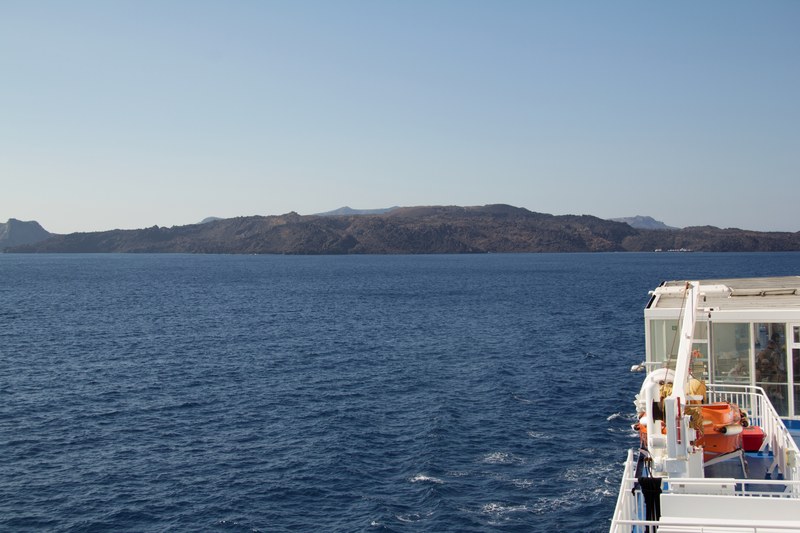
The newest island in the Aegean, formed entirely by eruptions since 1707 and still volcanically active. A path from the boat landing leads to the main crater — yellow sulphur deposits line the rim, and on clear days the caldera walls of Santorini and Thirasia form the full horizon. The island last erupted in 1950 and remains classified as active.
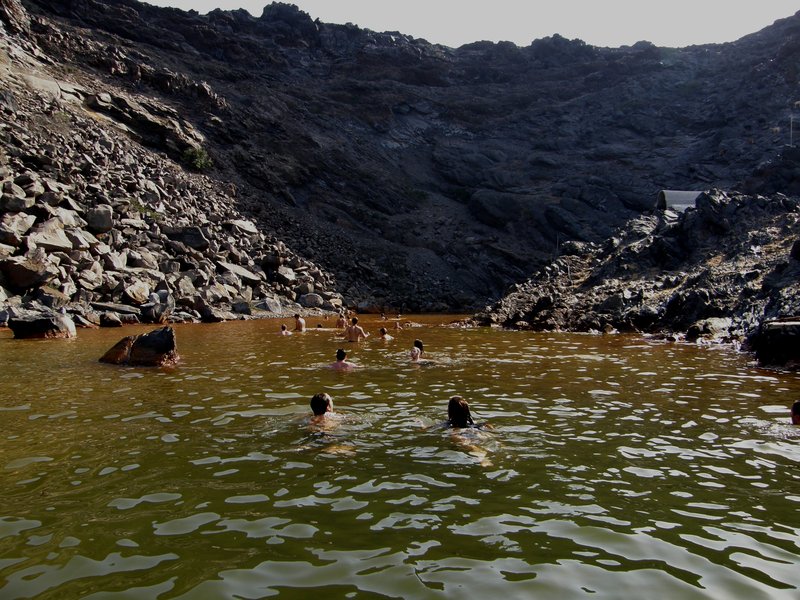
A patch of thermal water rising from the volcanic rock on Palea Kameni's western shore — the spring stains the sea iron-rust orange and warms it noticeably for several metres around the swim zone. Swimmers reach it by jumping from the boat; the site has been documented since antiquity, directly above a hydrothermal vent from the same magma chamber as Nea Kameni.
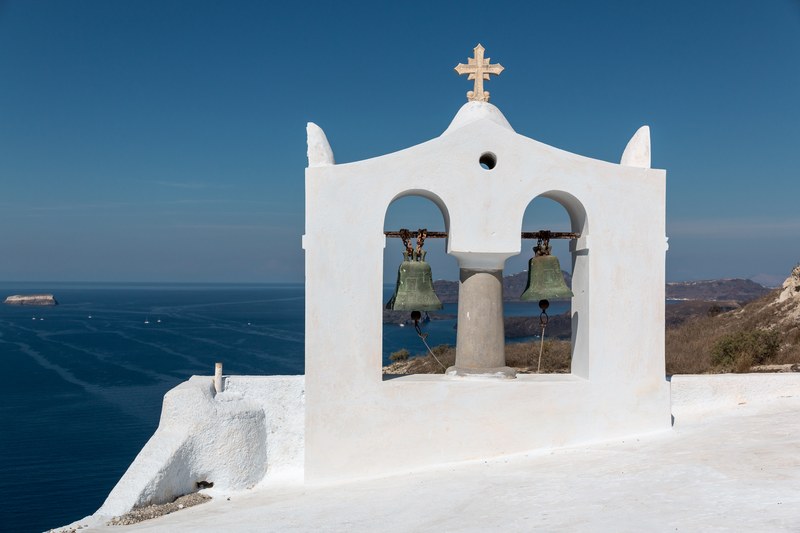
A caldera-rim neighbourhood between Fira and Imerovigli at the midpoint of the island's caldera path. Whitewashed chapels and cave houses perch above the 300-metre drop to the water; the westward view is fully open — no ridge, no promontory, no bell towers — sweeping across to Nea Kameni, Thirasia, and the volcanic rim of Oia.
A 5-hour caldera sailing cruise departing Vlychada Marina — stops at Red Beach for swimming · a volcanic hot springs dip · sail past the Akrotiri Lighthouse · freshly prepared BBQ lunch with Greek wine and soft drinks on deck.
The most-reviewed Santorini catamaran sunset cruise on Viator — a 5-hour sail with swimming stops at Red Beach and hot springs · BBQ dinner and unlimited Greek wine served on board · arriving back at sunset.
A full-island small-group day tour covering Akrotiri excavations · Red Beach · the caldera path through Fira and Imerovigli · the winemaking villages · and Oia at sunset — the most comprehensive overland overview of the island.
A half-day small-group tour through the island's inland villages — Pyrgos · Megalochori · Emporio — up to Oia and along the caldera rim at Imerovigli. Covers the side of Santorini most independent visitors miss.
A focused half-day circuit of Santorini's highlights — Akrotiri site · Red Beach · the vineyards · the caldera viewpoint — led by a small-group guide with a maximum of 8 guests for a genuinely unhurried pace.
The most-reviewed catamaran tour in Santorini on GetYourGuide — a 5-hour sunset sail with swimming at hot springs and Red Beach · a full BBQ dinner cooked on board · unlimited soft drinks and beer · live acoustic music on the return.
A luxury Lagoon 450 catamaran capped at 14 guests — stops at Red Beach for swimming · the volcanic hot springs · and the caldera interior · with a full BBQ meal and unlimited drinks. Reviewers consistently cite the crew and the small group size.
A capped-18-guest premium catamaran from Vlychada Marina with stops at Red Beach · the volcanic hot springs at Nea Kameni · and the caldera — includes a traditional Greek meal with Santorini wine and an open bar.
A 5-hour small-group tour through three of Santorini's acclaimed estate wineries — sampling wines made from the indigenous Assyrtiko grape · with a guide explaining the island's 3,500-year winemaking history and the basket-vine cultivation unique to the volcanic soil.
A 5-hour small-group sailing cruise into the caldera — Red Beach · the hot springs · the lighthouse · and the caldera interior at sunset — with a BBQ dinner cooked by the crew and local white wine served as the sun drops. Reviewers cite the unhurried pace.
The most-reviewed premium catamaran cruise on TripAdvisor for Santorini — a half-day sail from Vlychada Marina with swimming stops at Red Beach and the hot springs · a full Greek mezze and BBQ meal on board · and a direct view of Oia from the water at the end.
A 5-hour sunset catamaran cruise from Vlychada Marina — Red Beach and White Beach swimming · hot springs stop · a traditional Greek BBQ on board with unlimited soft drinks and wine · finishing at the Oia sunset.
A capped-16-guest caldera cruise with organic-ingredient Greek meals · unlimited beer and wine · and snorkelling gear included — visits Red Beach · the volcanic hot springs · and White Beach. Reviewers highlight the quality of the food and the small group atmosphere.
A boutique small-group sailing tour of the Santorini caldera at sunset — a deliberate alternative to the large catamaran fleets · with a maximum of 12 guests on a traditional sailboat · one swimming stop · a light Greek dinner · and a quiet focus on the views.
A traditional wooden boat caldera cruise with a full Greek dinner — chicken fillet · stuffed vine leaves · Greek dips and salads cooked on board — departing Fira. Reviewers specifically praise the freshly prepared food and the crew.
Santorini's signature tomato fritters — the island's cherry tomatoes grown in volcanic soil · mixed with onion · mint · and flour into small crisp cakes. Intensely flavoured and found on nearly every Fira restaurant menu.
A PDO puree of yellow split peas grown in Santorini's volcanic soil since ancient times — silkier and more intensely flavoured than mainland fava · served warm with capers and a drizzle of olive oil.
A pale-skinned eggplant variety cultivated only on Santorini — smaller · sweeter · and less bitter than conventional eggplant · eaten baked · grilled · or in salad. Rarely found off the island.
The indigenous white grape of Santorini · grown in basket-woven vines trained low on the volcanic soil — produces a dry · mineral · high-acid white that is among the most distinctive wines in Greece. Best tasted at source.
A naturally sweet amber wine from sun-dried Assyrtiko grapes — intensely concentrated with apricot and honey notes · aged for years in oak barrels. A PDO product and the island's only dessert wine.
Foreign number: accepted. — registration takes an email, a mobile number and a password, with no country restriction.
efood is Greece's dominant food delivery platform with the widest restaurant selection on Santorini — local tavernas, gyros spots, and bakeries covering Fira and Oia.
Foreign number: accepted. — the verification code arrives by SMS to foreign numbers.
Uber works island-wide on Santorini with solid availability in Oia and Fira; covers the full island including JTR arrivals, the Vlychada marina, and inter-village rides.
The coastal path to Red Beach closes without notice when rockfall from the volcanic cliffs is assessed as a hazard.
Oia Sunset — Kasteli Crowds
The Kasteli viewpoint fills 45-60 minutes before sunset in peak season. Latecomers face blocked sightlines or standing positions on the path.
Akrotiri — Reduced Hours Monday · Thursday
The excavation closes at 3:30pm on Mondays and Thursdays instead of the standard 8:00pm. Visiting in the afternoon on these days will fail.
Worth Knowing
Everything is the Eruption
Almost everything that makes Santorini singular traces back to a single event: the Theran eruption around 1613 BC, one of the largest volcanic explosions in the last 10,000 years. The caldera you look across is the collapsed throat of the volcano. The sheer cliffs the hotels cling to are the eruption's interior wall. The red and black beaches are compressed lava. The whitewashed villages perch on pumice.
Even the wine is the eruption. Santorini's volcanic soil is so nutrient-poor and porous that the Assyrtiko vine has to push its roots metres deep to find moisture — producing a grape of extraordinary mineral concentration that no other terroir in Greece can replicate. The basket-vine training, the white cubes against the caldera, the blue domes, the sunset crowds at Kasteli: they are all just people arranging themselves around the aftermath of a catastrophe.