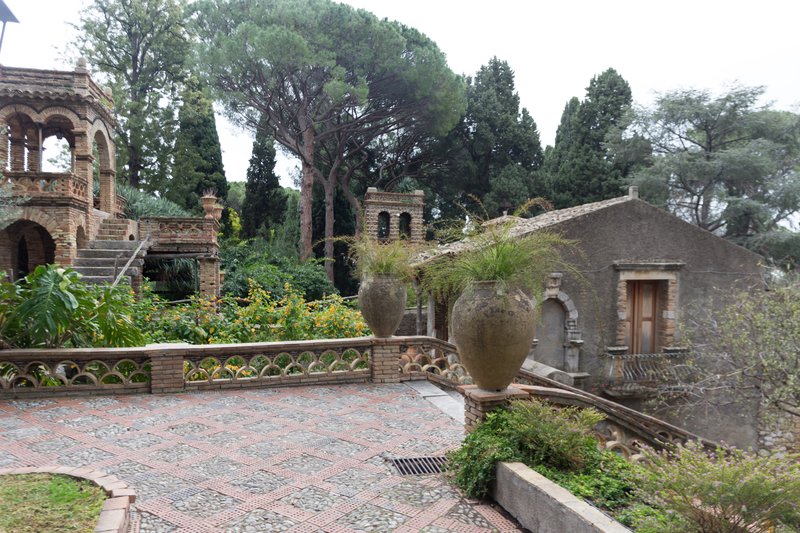
A terraced public garden perched above the coast, built in the 1890s by Florence Trevelyan. Subtropical plants, eccentric Victorian follies called beehives, and unobstructed views across the bay to Calabria. The most tranquil spot in Taormina.
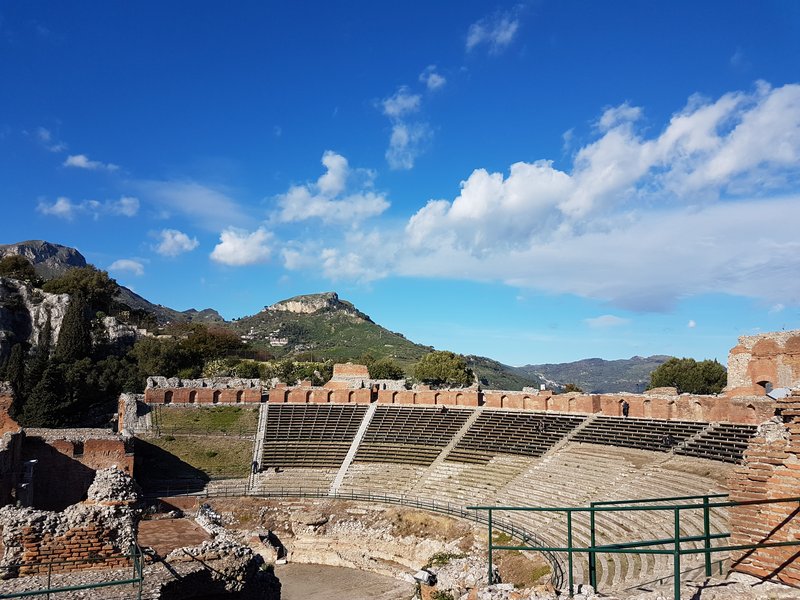
A 3rd-century BC Greco-Roman theatre carved into the hillside, seating 10,000. The tiered stone seats frame Mount Etna and the Ionian Sea through the remains of the ancient stage wall — one of the most dramatic backdrops in the ancient world.
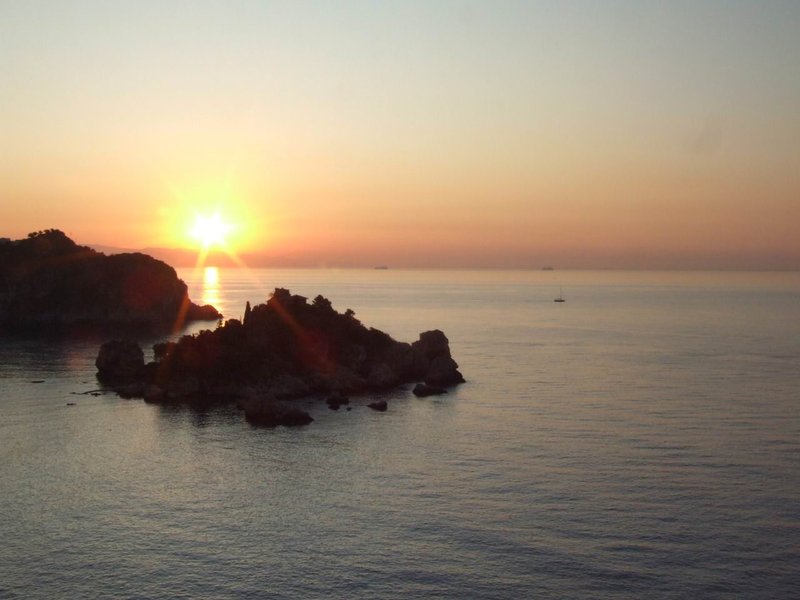
A tiny tidal island connected to the shore by a narrow sand spit, set in a turquoise cove below vertical cliffs. Known as the Pearl of the Ionian Sea, it became a nature reserve in 1990. The interior houses a small museum of Mediterranean plants.
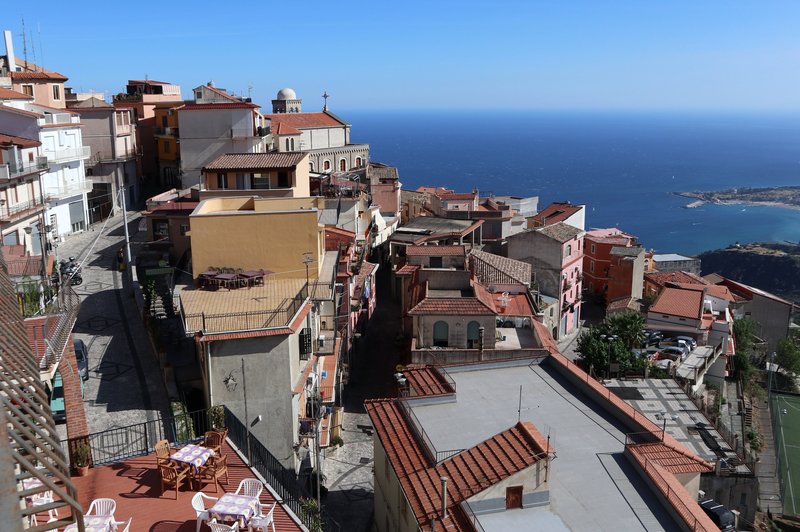
A medieval hilltop village 550 metres above Taormina, perched on a rocky peak with Norman castle ruins. The 78-step climb to the top delivers a 360-degree panorama of Mount Etna, the Ionian coast, and the Strait of Messina. Listed among the Most Beautiful Villages in Italy.
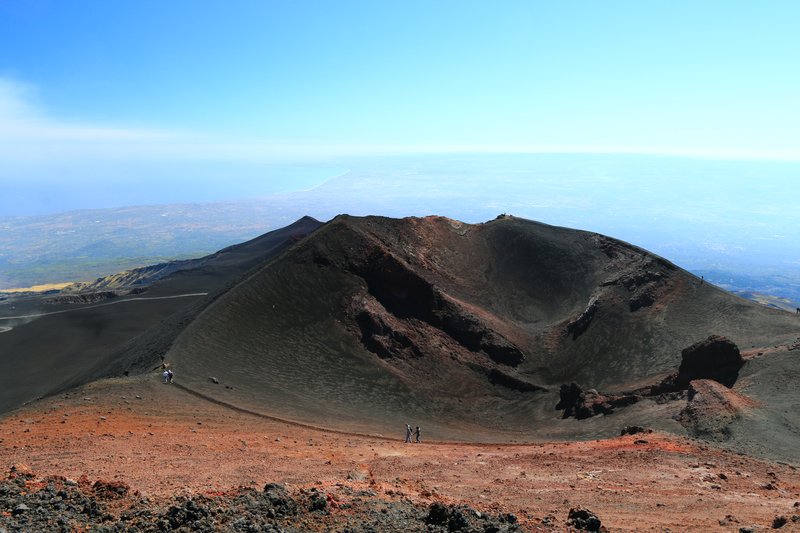
Europe's highest and most active volcano at 3,357 metres. A cable car ascends to 2,500 metres; optional 4x4 vehicles and guides reach the 2,900-metre crater zone. The summit landscape is a lunar terrain of black lava fields, steaming vents, and shifting craters — active eruptions are visible year-round.
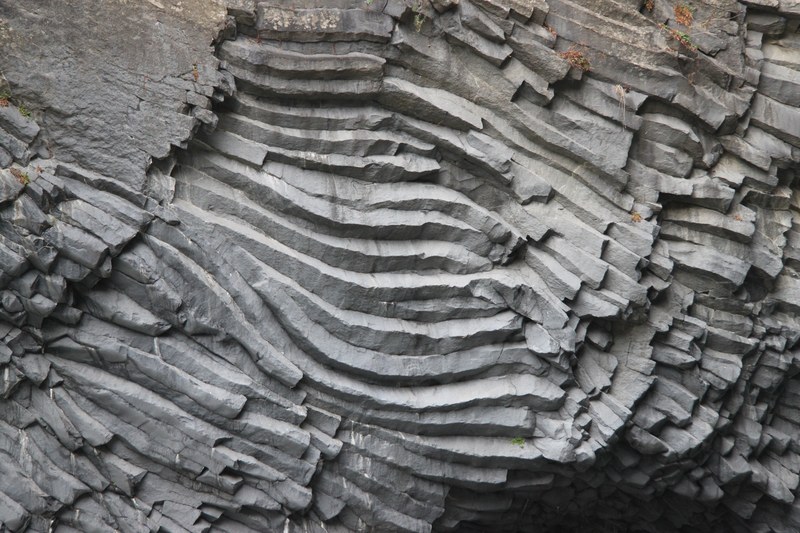
A dramatic volcanic canyon carved by the Alcantara River through ancient Etna lava flows. Walls rise 25 metres in hexagonal basalt columns — the same crystalline geometry as the Giant's Causeway — with cold, clear river water running through the narrows.
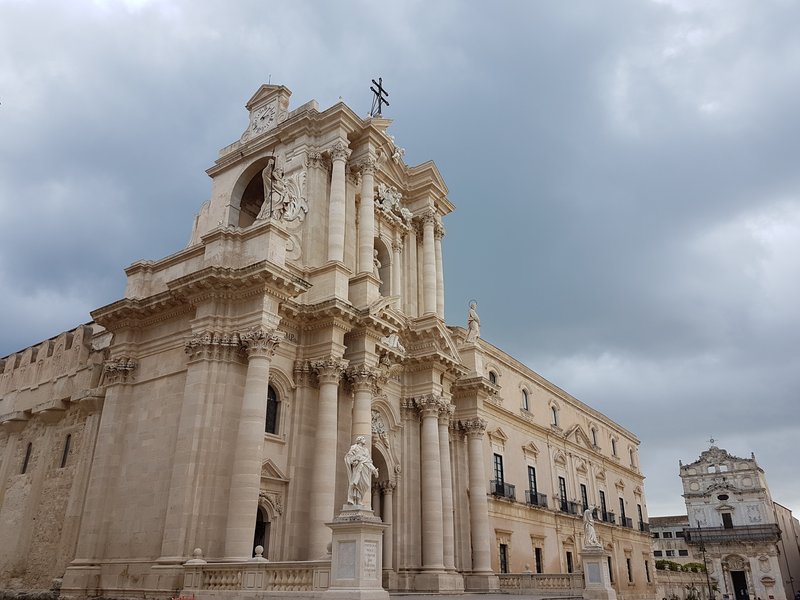
A Baroque cathedral built directly into a 5th-century BC Greek temple — the original Doric columns of the Temple of Athena are still embedded in the nave walls. The ornate 18th-century facade conceals 2,500 years of continuous sacred use. One of the most extraordinary architectural palimpsests in the Mediterranean.
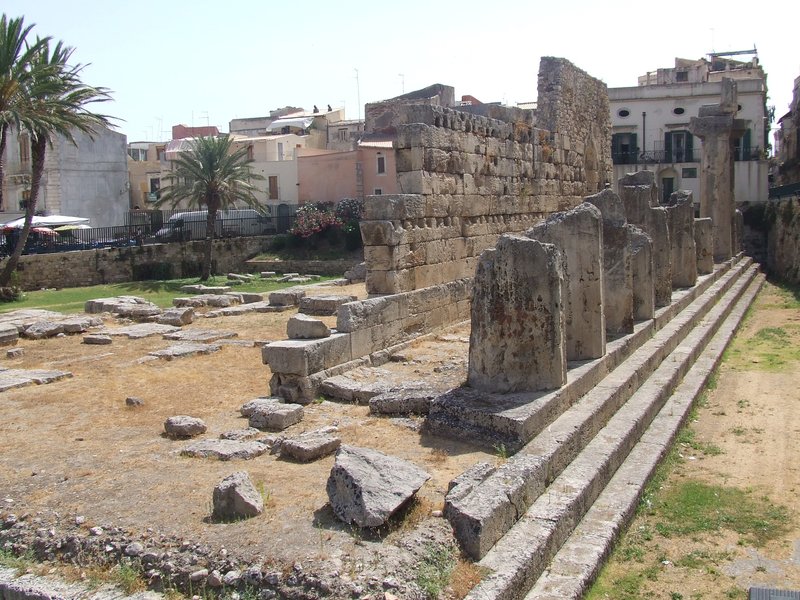
The oldest Doric temple in Sicily, dating to 565 BC. Its massive stone columns mark the entrance to Ortigia island and have survived transformations into a Byzantine church, Islamic mosque, and Norman chapel — 2,600 years of layered history visible in a single structure.
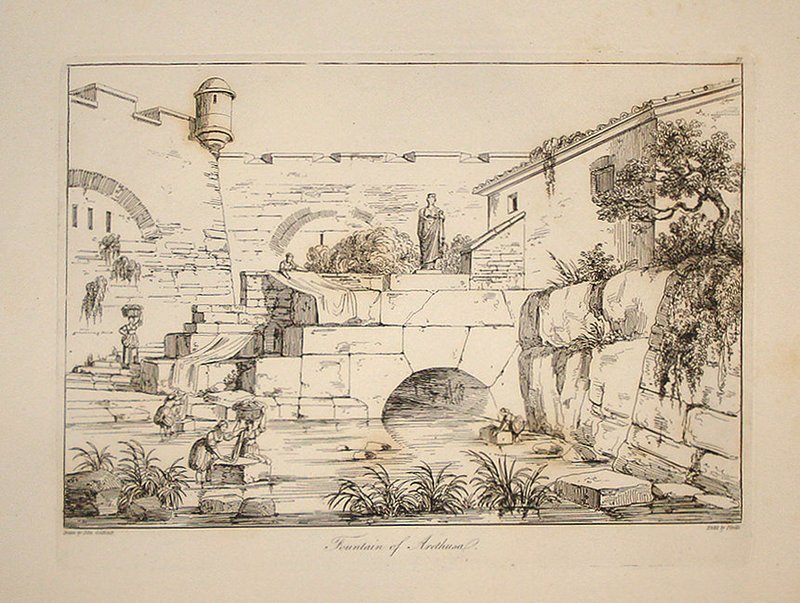
A freshwater spring that flows directly into the sea on Ortigia's western shore, surrounded by papyrus plants — the only place in Europe where papyrus grows naturally outside Egypt. Named for the Greek myth of the nymph Arethusa, who was transformed into this spring by Artemis.
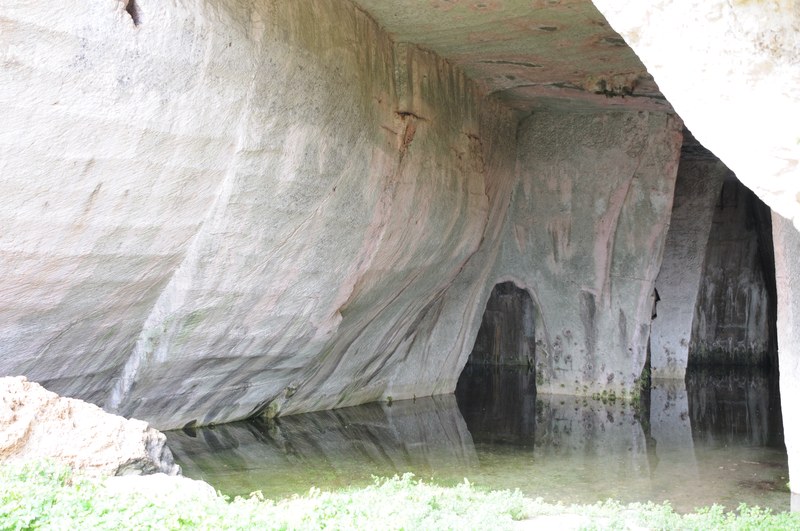
A vast open-air museum containing the 5th-century BC Greek Theatre, the 23-metre-high Ear of Dionysius cave with extraordinary acoustics, and the Latomie quarries. The theatre once held 15,000 spectators and is still used for performances in summer. UNESCO World Heritage.
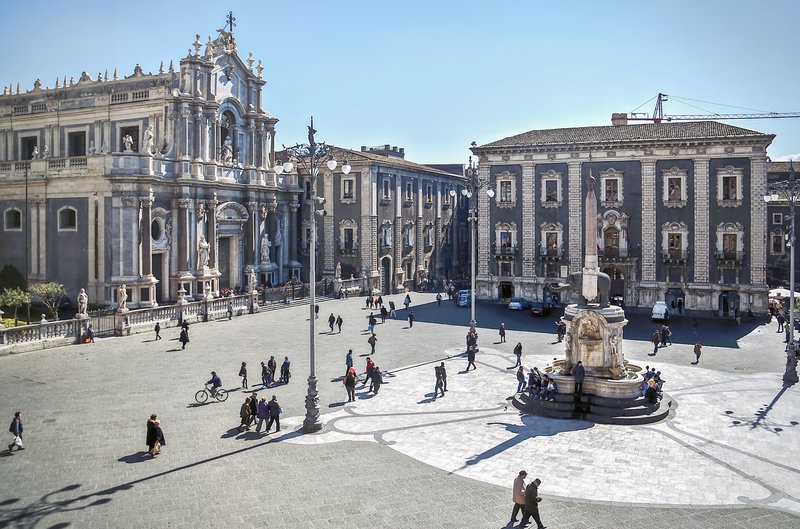
The theatrical heart of Catania's UNESCO Baroque quarter, rebuilt in black volcanic lava stone after the 1693 earthquake. The Elephant Fountain — a lava-stone elephant carrying an Egyptian obelisk — anchors the square, backed by the Cathedral of Sant'Agata's white limestone facade.
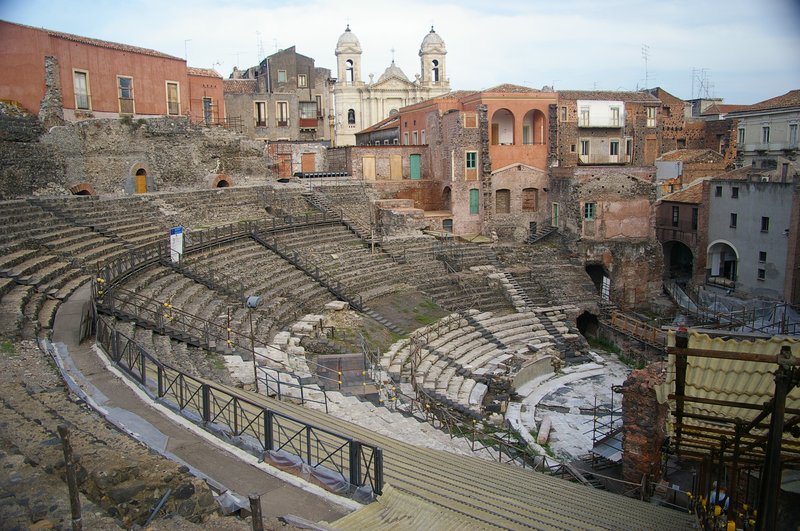
A 2nd-century AD Roman theatre seating 7,000, built in lava stone and partially buried under medieval buildings. Roman arches emerge through apartment basements — a surreal layering where ancient infrastructure and modern life occupy the same walls.
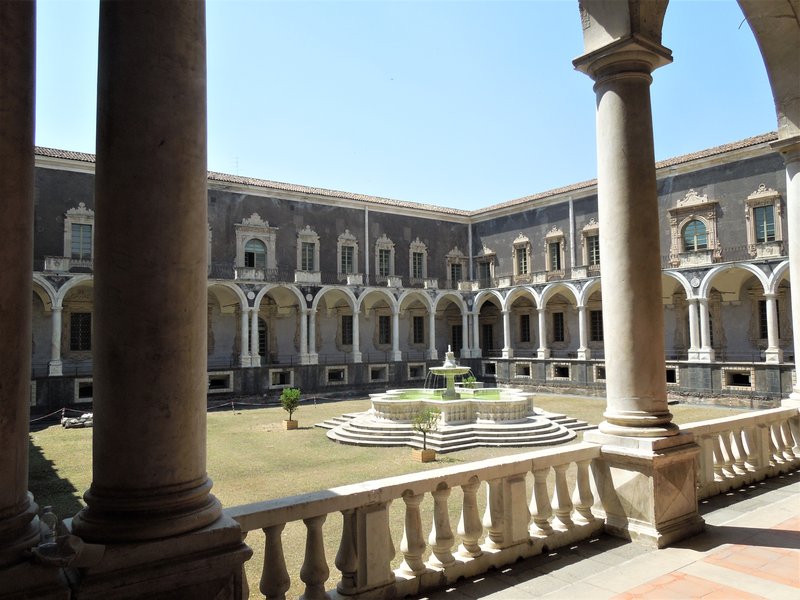
The second-largest Benedictine monastery in Europe. Founded in 1558 and rebuilt after the 1693 earthquake, it now houses the University of Catania. The massive cloister and Roman-era remains beneath the floors are the highlights. UNESCO World Heritage.
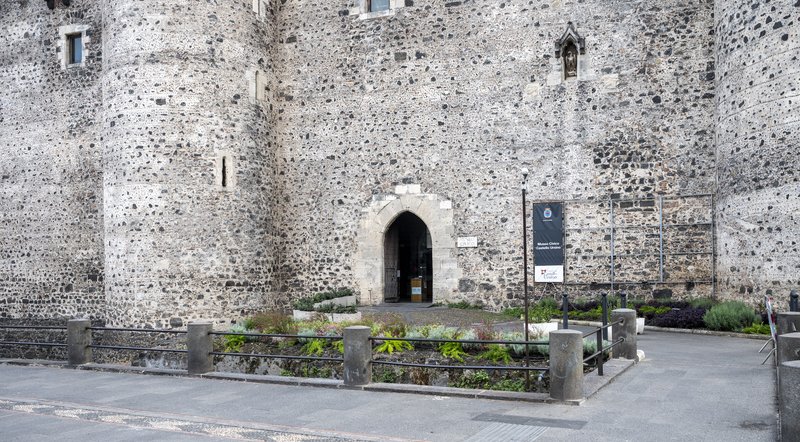
A 13th-century fortress built by Frederick II as a coastal stronghold — the 1669 Etna eruption pushed the shoreline 500 metres out, leaving the castle stranded inland. Its four cylindrical towers and thick walls now house Catania's civic museum, with Greek, Roman, and medieval collections.
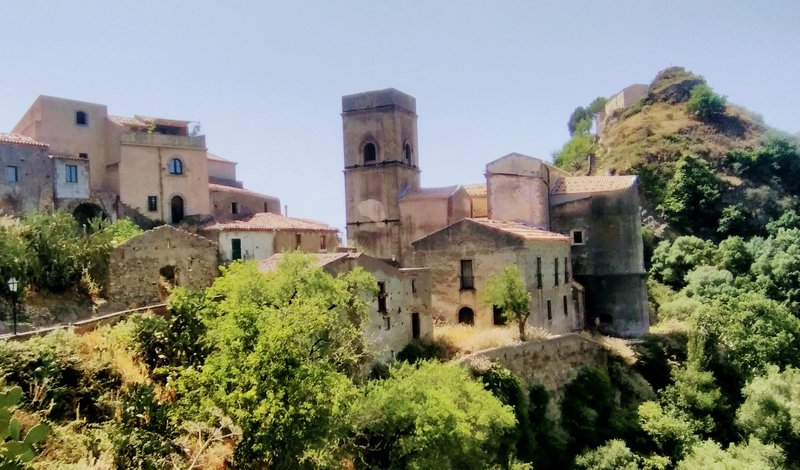
A medieval village frozen on a cliffside ridge, cast by Coppola as Corleone for Michael's wedding in The Godfather. Bar Vitelli, the café where Michael meets Apollonia's father, still serves customers on its vine terrace; the 11th-century Chiesa di San Nicolò up the lane hosted the wedding scene, and the Cappuccini Monastery below holds 32 mummified Savoca notables.
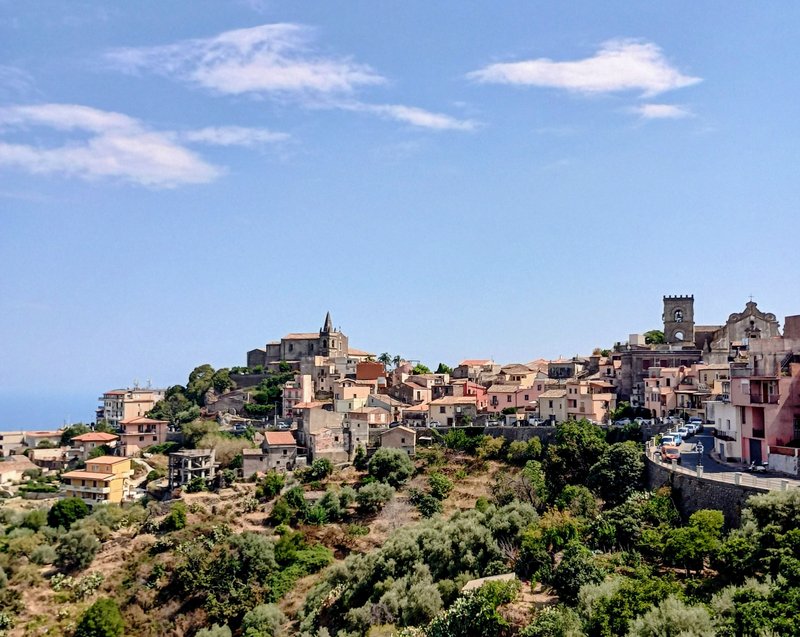
A quiet medieval hill town whose Duomo — Chiesa di Santa Maria Assunta e Annunziata — opens The Godfather Part II. Stone lanes climb past the Church of San Nicolò, where the puppet show played during Michael and Apollonia's wedding reception, to the ruined Castello Normanno on the rocky spur above, with one of the widest views of the Ionian coast and Mount Etna in the area.
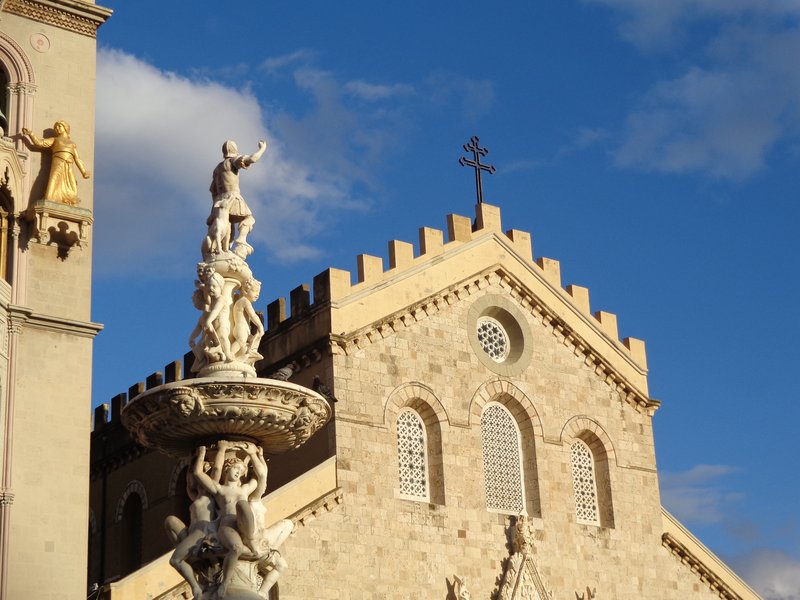
Consecrated by the Normans in 1197, rebuilt almost from scratch after the 1908 earthquake and WWII bombing spared only the Gothic portal and an apse. The bell tower carries the world's largest and most complex astronomical clock: every day at noon, 54 bronze mechanical figures perform a 12-minute show set to Schubert's Ave Maria in front of the Fontana di Orione in the piazza below.
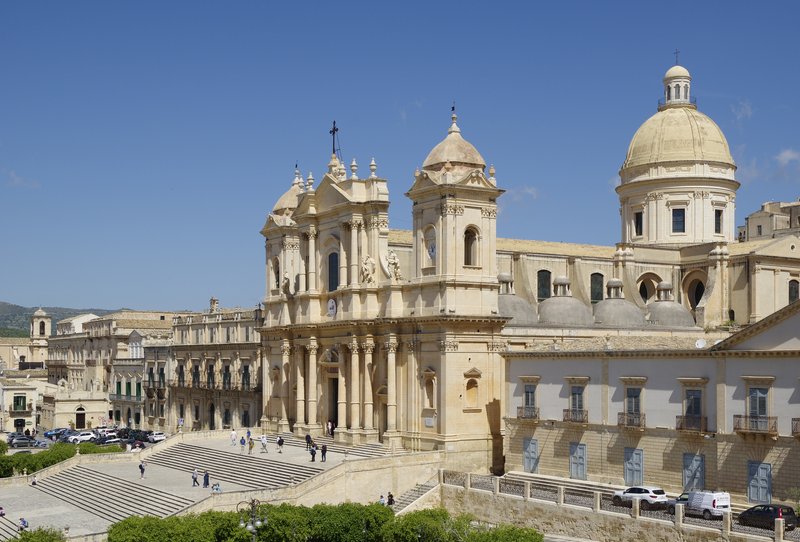
The seminal building of Sicilian Baroque, completed in 1776 atop the steps that close Noto's main square. Its dome collapsed in 1996 from unrepaired earthquake damage; a decade-long restoration reopened it in 2007. Noto itself was rebuilt entirely in golden limestone after the 1693 earthquake, and UNESCO lists the whole centre as the "Late Baroque Towns of the Val di Noto."
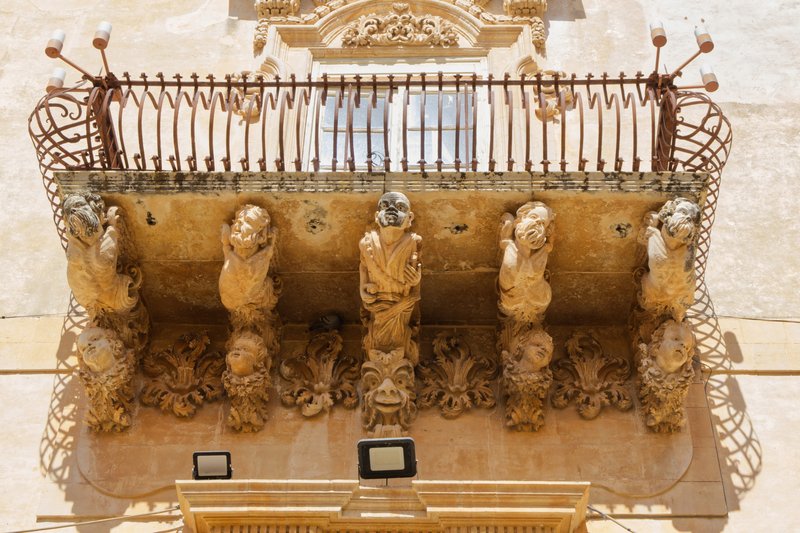
Built between 1720 and 1765 as the town palace of the Nicolaci princes, its six wrought-iron balconies are carried on stone corbels carved with a different fantastical creature each — lions, sirens, centaurs, winged horses, cherubs — the most elaborate Baroque ironwork balconies anywhere in Sicily. The municipality bought the main wing in 1983 and restored it for public visits.
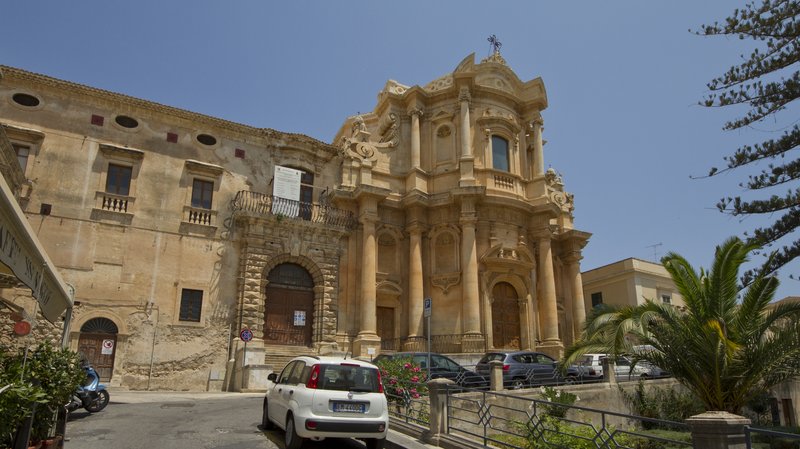
Built between 1703 and 1727 by Rosario Gagliardi, the architect behind much of Baroque Noto, as the Dominican convent church. Its facade bows outward toward the street in a single convex curve — considered the richest and most elaborate of everything Gagliardi built in Noto, and part of the same UNESCO Val di Noto listing as the cathedral two minutes up the Corso.
Small-group excursion to Mount Etna's summit craters with a volcanologist guide. Includes 4x4 transport to the crater zone, volcanic cave visit, and wine tasting at an Etna winery.
Combined excursion to Mount Etna's lava caves and the Alcantara Gorge basalt formations, with a traditional Sicilian lunch included at a local farmhouse.
Visit the Sicilian villages of Savoca and Forza d'Agrò used as filming locations for The Godfather, including Bar Vitelli and the church wedding scene.
Late-afternoon ascent to Mount Etna's summit craters at golden hour. Includes guided crater walk, volcanic cave exploration, and aperitivo with local wines at sunset.
Guided river trek through the basalt canyon of the Alcantara Gorge with wetsuit and helmet provided. Swim through narrow passages between 25-metre volcanic walls.
Visit three boutique wineries on Mount Etna's slopes with guided tastings of Nerello Mascalese, Carricante, and other volcanic terroir wines paired with local food.
Local guide walks through Taormina's medieval core covering the Greek Theatre panorama, Cathedral square, Palazzo Corvaja, and hidden viewpoints off the tourist path.
Guided walk up to Castelmola village with tasting of the local almond wine at the historic Bar Turrisi, followed by panoramic views at the castle ruins.
Semi-frozen dessert made with sugar, water, and fresh fruit or almonds — served for breakfast with a warm brioche bun. Sicily's signature morning ritual, distinct in texture and tradition.
Crisp fried pastry tubes filled with sweet ricotta cream. The shell must be filled to order — a pre-filled cannolo signals a tourist trap. The best use sheep's milk ricotta.
Deep-fried rice balls stuffed with ragù, mozzarella, and peas — a Sicilian street food staple since 10th-century Arab rule. In eastern Sicily, they are conical; in Palermo, round.
Catania's signature pasta: rigatoni with fried aubergine, tomato sauce, and salted ricotta. Named after Bellini's opera Norma — the Catanese word for perfection.
A sweet fortified wine infused with bitter almonds, produced exclusively in the hilltop village of Castelmola above Taormina. Served as an aperitivo or dessert wine.
Foreign number: not required. — it signs in with Google, Facebook or email, and a phone sign-up takes any prefix with the code by SMS or WhatsApp.
Active in Palermo and Catania, covering restaurants, grocery stores and pharmacy orders with same-day delivery. Broad restaurant selection across Palermo's central districts; delivery times are typically 30–45 minutes.
Foreign number: not required. — the account is made with Google, Facebook or an email address — there is no phone field, so no code has to arrive.
Operates in Palermo and Catania, with restaurant delivery spanning local Sicilian kitchens and national chains. Reliable for central-district addresses; minimum order thresholds apply per restaurant.
Foreign number: not required. — sign-up runs on Google, Apple, Facebook or email with no phone field at all, so no verification code has to arrive.
Active in Palermo and Catania, focused on restaurant delivery with a curated selection of local and international menus. Faster average delivery times than competing platforms in central Palermo.
Teatro Antico di Taormina — Summer Festival Season
Live opera · classical concerts · ballet · film screenings in a 3rd-century BC Greek theatre with Mount Etna as the backdrop. Runs June through September.
Foreign number: accepted. — the SMS verification code reaches international numbers.
Available in Palermo via licensed taxi drivers on the Uber platform; covers the historic centre and main transport hubs. Prices are set by the driver's taxi meter rather than dynamic surge pricing.
UNESCO Baroque city rebuilt in black volcanic lava stone after the 1693 earthquake. Piazza del Duomo with its elephant fountain, vibrant fish market, Roman theatre, and the Benedictine Monastery — all in dark volcanic contrast with white limestone facades.
Gateway to Sicily at the narrowest point of the Strait. The Norman Cathedral houses Europe's largest astronomical clock with a daily mechanical show at noon. Views across to mainland Calabria.
Once the most powerful city in the Greek world. The Neapolis Archaeological Park holds a massive Greek Theatre and the Ear of Dionysius cave; Ortigia island has a cathedral built into a Greek temple and the mythological Fountain of Arethusa. UNESCO World Heritage.
Medieval town pressed between a 270-metre rock promontory and the sea. The Norman cathedral contains Sicily's oldest Byzantine mosaics — a monumental Christ Pantocrator predating Monreale. UNESCO World Heritage.
The Baroque capital of Sicily, rebuilt entirely after 1693 in golden limestone. Via Nicolaci's ornate palazzo balconies and the Cathedral represent the apex of Sicilian Baroque. UNESCO World Heritage.
The name "Ear of Dionysius" is younger than it sounds. The limestone quarry-cave had been there for over two thousand years, but it was the painter Caravaggio, touring Syracuse in the early 1600s with a local scholar, who first pointed at the S-shaped grotto and said it looked like a giant ear — then spun the idea that the tyrant Dionysius I had it carved so he could crouch outside and eavesdrop on whispers from prisoners locked inside. The story stuck so well that it's still the cave's official name, even though modern acoustic testing shows the shape amplifies sound but garbles it too badly for eavesdropping to have actually worked.
The lava-stone elephant anchoring Catania's Piazza del Duomo has an even stranger backstory attached to it. Medieval legend credited it to a nobleman-turned-sorcerer named Heliodorus, said to have carved the statue himself and ridden it through the air between Catania and Constantinople before being burned as a heretic. Historians now trace the elephant to a much older, unglamorous origin — an ancient talisman locals believed protected the city from Etna's eruptions — but the sorcerer's name won anyway: Catanese still call the statue "u Liotru," a garbled mispronunciation of Heliodorus that's outlived the true history by centuries.