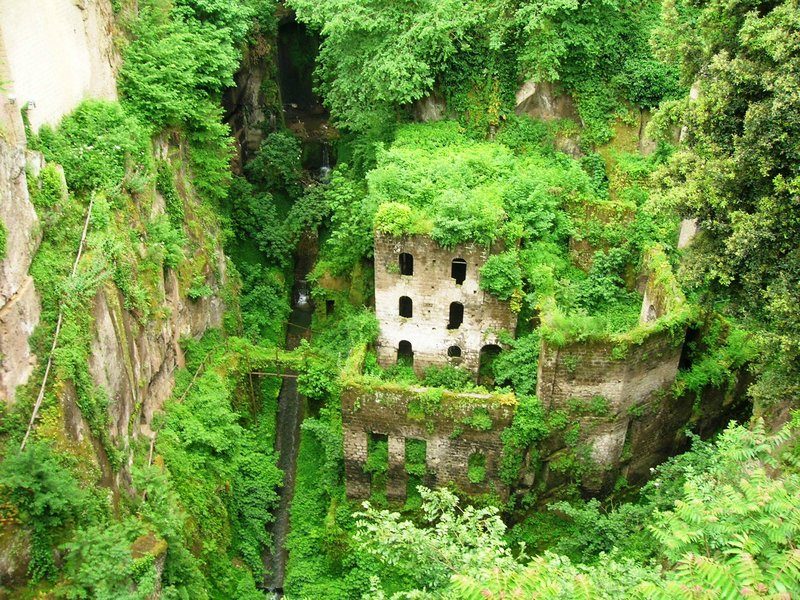
A gorge sealed off when 15th-century road works cut off drainage, trapping the medieval mills inside. Abandoned in 1866, the valley is now a tangle of ferns, moss and fig trees clinging to the ruins — visible only from the iron-rail viewpoint on Via Fuorimura.
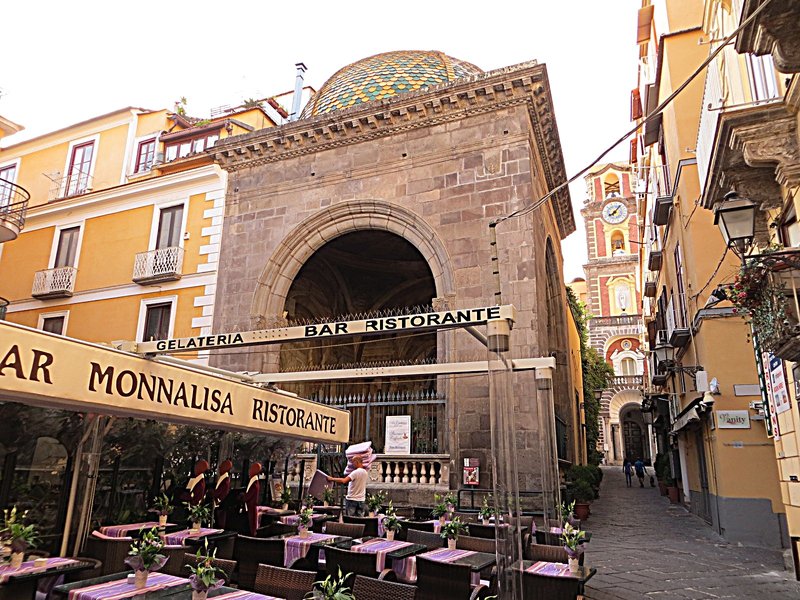
One of two sedili — ancient civic meeting-houses of Neapolitan nobility — still standing in Sorrento. Built in 1319 by the western noble families, the open loggia has semicircular arches on piperno columns and a domed ceiling frescoed in the 18th century. Still actively used today as a cultural association.
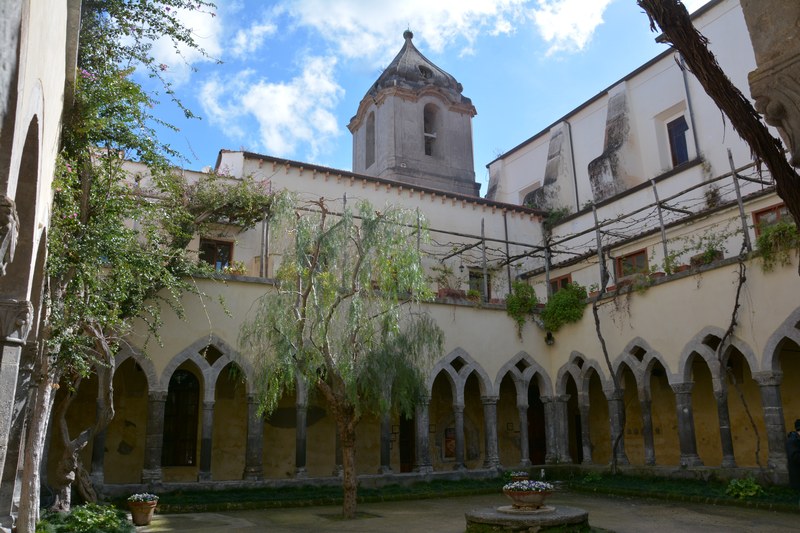
A 14th-century Franciscan cloister with interlaced arches on octagonal pillars and Byzantine capitals — every column slightly different. Draped in bougainvillea in summer, it serves as an open-air concert stage for classical music at dusk, one of the most photogenic spots in town.
A clifftop public park from 1877, perched at the town's western edge above the sea. The terrace delivers the best unobstructed panorama in central Sorrento — Bay of Naples, Vesuvius and Capri on clear days. A lift connects the terrace to Marina Piccola below.
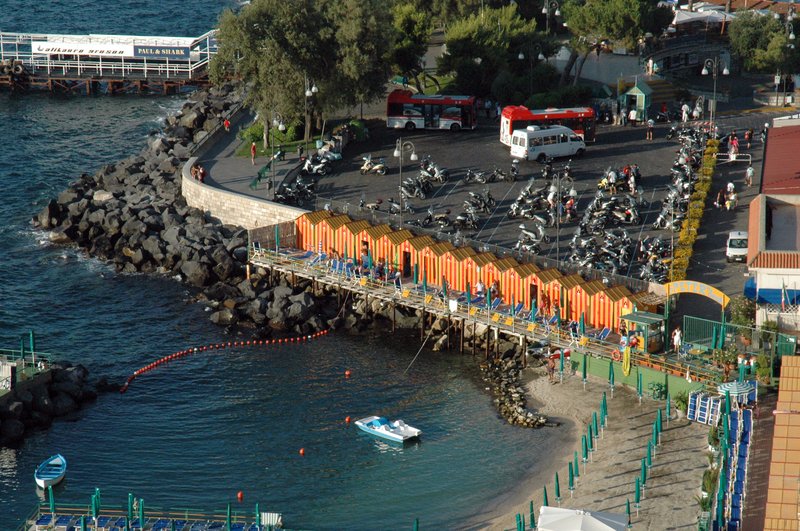
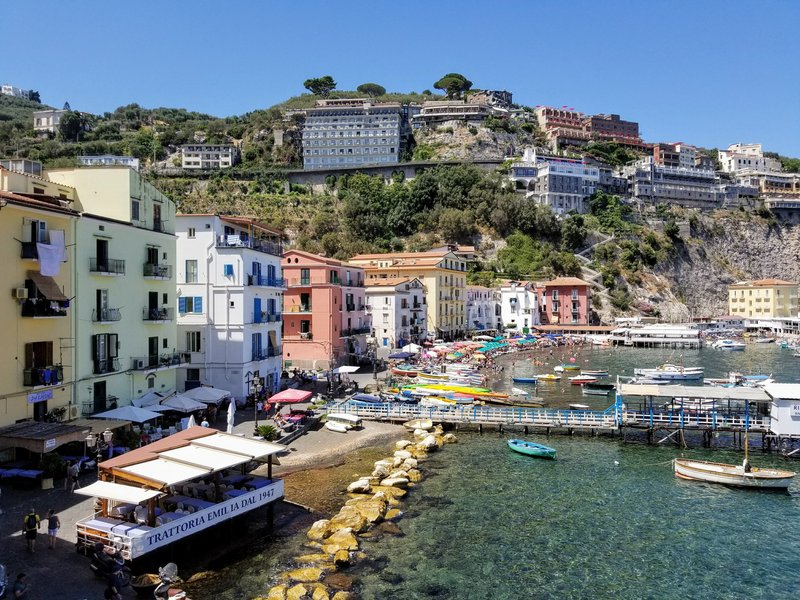
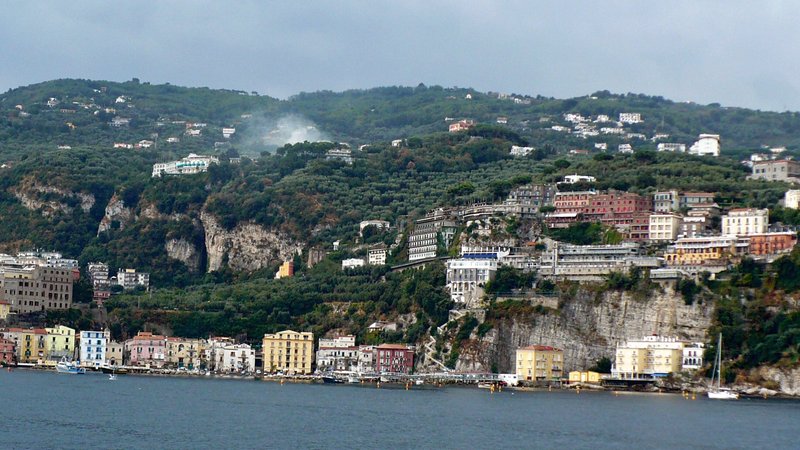
The older of Sorrento's two harbours — colourful fishermen's houses wedged between cliff and sea, wooden boats hauled up on the pebble beach. Sophia Loren filmed her first movies here in the 1950s. Lunch at one of the quayside restaurants before the steep walk or taxi back up.
From Hotel: 22 min · 10 min → Museo Correale di Terranova
1.Museo Correale di Terranova~1 hr 30 min
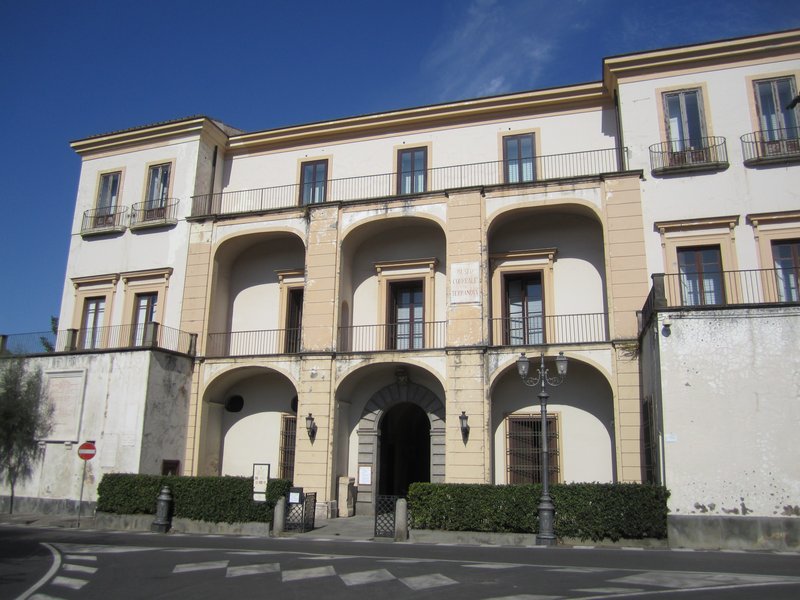
A 19th-century villa turned museum in terraced gardens overlooking the bay. The Correale brothers bequeathed their family home and collection — Neapolitan decorative arts, Capodimonte porcelain, Meissen figurines, Greek and Roman antiquities — to Sorrento in 1924. One of the finest small museums in southern Italy.
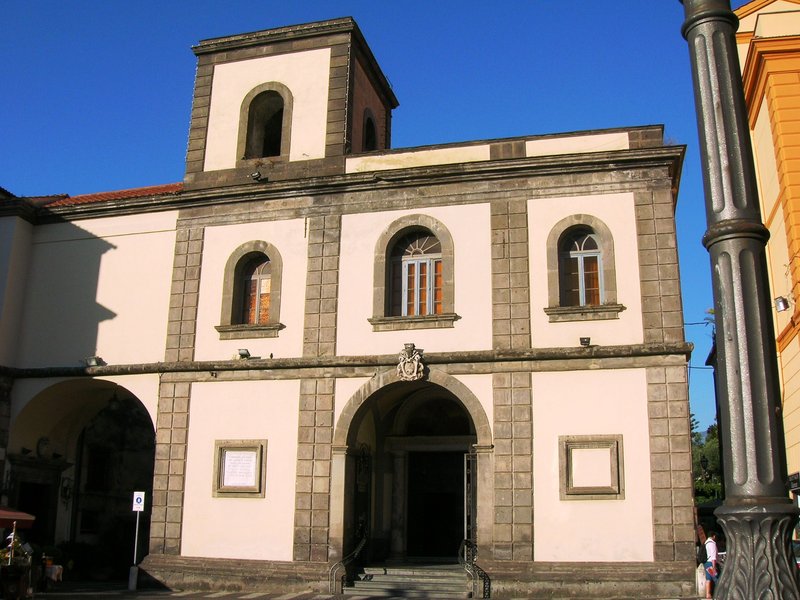
The oldest church in Sorrento, dedicated to the city's patron saint. The 11th-century basilica sits above Roman-era catacombs hung with whale bones — ex-votos left by sailors saved from storms through Sant'Antonino's intercession. The bones are still suspended in the catacombs below.
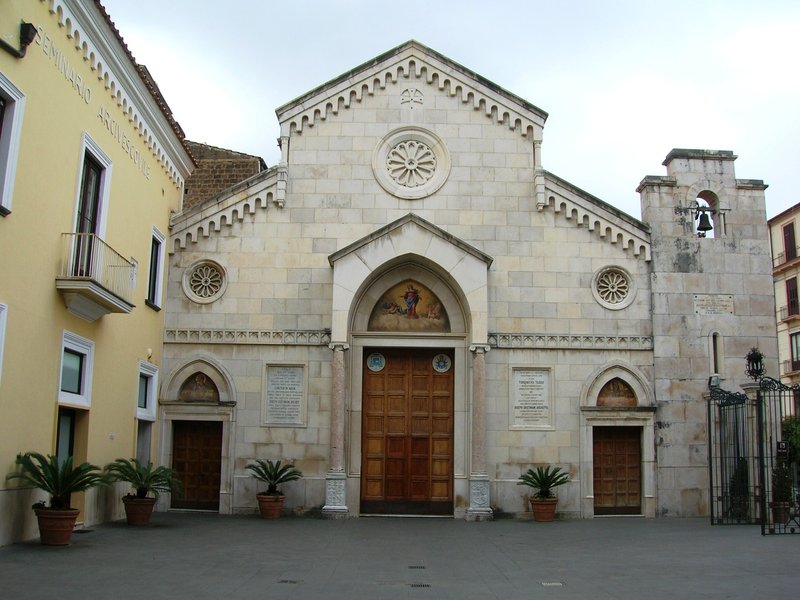
The cathedral rebuilt in the 15th century on ancient foundations, with a Baroque interior and elaborately inlaid wooden choir stalls — prime examples of the intarsia woodwork Sorrento is famous for. The bell tower's clock face repurposes Roman column capitals as its decorative frame.
The beating heart of Sorrento — a clifftop square named after the 16th-century poet Torquato Tasso, who was born here. Ringed by 19th-century hotels and caffè with deep terraces, it divides the old town from the modern corso and is the best vantage point for the evening passeggiata.
From Hotel: 16 min · 6 min → Museo Bottega della Tarsia Lignea
1.Museo Bottega della Tarsia Lignea~1 hr
Sorrento's marquetry tradition — the geometric inlaid-wood craft that fills the town's shops and church choir stalls — gets its definitive showcase here in an 18th-century palazzo. The collection traces intarsia from the 19th century through tools, decorative motifs and finished pieces from the craftsmen's workshops that still line the old town lanes today.
Roman villa ruins at the tip of Punta del Capo — a natural tidal pool connects to the open sea through a limestone arch, one of the few places on this peninsula where you can swim off the rocks in clear water. A 20-minute footpath through olive groves leads down from the road. Named after Queen Giovanna II of Naples, who reputedly bathed here in the 15th century.
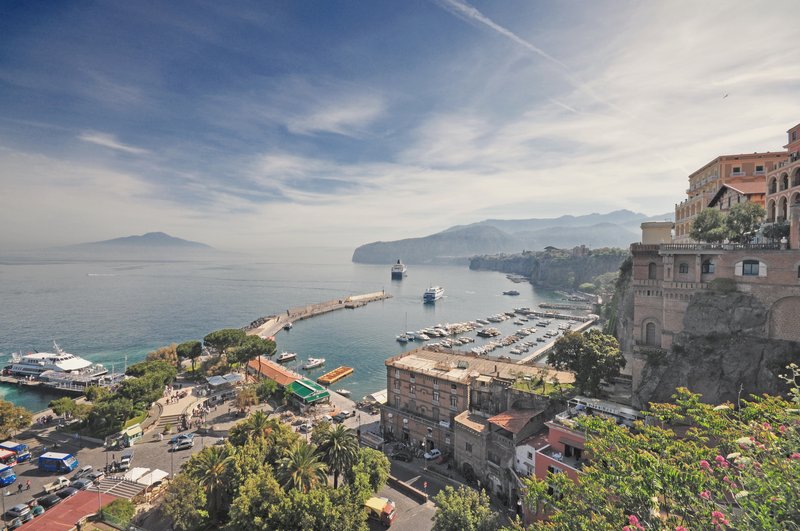
Sorrento's main harbour for ferry and hydrofoil connections to Capri, Naples and the Amalfi Coast. The quayside sits directly beneath the town cliff — reached by a lift from Villa Comunale above or by road via Via Luigi de Maio. A good afternoon spot: grab a table at one of the dockside bars and watch the ferries arrive before the short climb back up.
A small-group walk through Sorrento's historic centre — citrus groves, hidden lanes, market stalls and seven local food tastings including fresh pasta, buffalo mozzarella and limoncello.
A laid-back food crawl led by a local guide — artisan workshops, street food, limoncello distillery, mozzarella tasting and candied-citrus peel, ending at a panoramic bar with a glass of local wine.
Full-day small-group boat excursion to Capri — circumnavigate the island, enter the luminescent Blue Grotto by rowboat, then free time in Capri town and Anacapri before the return sail.
Full-day cruise along the Amalfi Coast — Positano, Praiano sea caves, the Emerald Grotto, Amalfi town and a swimming stop in crystal-clear water before the return trip at sunset.
A two-hour guided walk through Sorrento's historic streets, stopping at an artisan olive-oil producer and a family-run limoncello distillery for a hands-on tasting of the peninsula's two most iconic products.
An evening walk timed for golden-hour light over the bay — hidden courtyards, the cloister, cliff-top viewpoints and the old town lanes, ending with a limoncello tasting as the sun drops below Vesuvius.
A one-hour evening boat ride out of Marina Grande — the sea turns copper as the sun drops behind the peninsula, with a Campari spritz or Aperol on deck as views of the cliff-face town pass behind.
Expert-led small-group day trip to both ancient sites — Pompeii's remarkably intact streets and Herculaneum's fine detail-preserved households, with an archaeologist guide explaining the 79 AD eruption that buried them both.
Make Neapolitan pizza from scratch in a family-run farm above Sorrento — stretch the dough, load your chosen toppings, slide it into a wood-fired oven, then eat what you made with Campanian wine and house limoncello.
Tuk-tuk ride out of town to a hilltop farm — taste fresh mozzarella from the buffalo herd, sample the estate limoncello, and make your own pizza in a wood-fired oven before the return trip to Sorrento.
Two-hour pizza-making class in a working kitchen — learn Neapolitan dough technique, pick your toppings, bake in a real wood-fired oven and wash it all down with a glass of local wine. Central Sorrento location.
Small-group Pompeii excursion combined with a Vesuvius crater hike and a pizza lunch — the buried city with a guide, then the summit for panoramic views across the Bay of Naples, then homemade pizza in a local restaurant.
Expert-guided full-day excursion visiting both Pompeii and the compact, detail-rich ruins of Herculaneum with a light lunch stop between sites — ideal for history lovers who want to contrast the two buried cities in a single day.
Sorrento's signature pasta dish — potato gnocchi baked in a terracotta pot with San Marzano tomato sauce, basil and melted fior di latte; the charred edge is half the point.
A dome of sponge soaked in limoncello syrup and filled with lemon-cream mousse, invented in Sorrento in 1978 by pastry chef Carmine Marzuillo; the authentic version uses only Sorrento IGP lemons.
Made from sfusato amalfitano lemons grown on Sorrento Peninsula terraces — thicker-skinned, more aromatic and less bitter than varieties used elsewhere; served ice-cold in a frosted ceramic glass.
A semi-hard stretched-curd cheese aged 6–18 months in the hills above Sorrento, made from Agerolese cow milk; rich, slightly spicy, best sliced thick; the name comes from the cloaked cheese-sellers of Naples.
A dense flourless chocolate-and-almond cake from nearby Capri — naturally flourless, with a moist truffle-like crumb; the better versions use ground Sicilian almonds and 70% dark chocolate.
Foreign number: not required. — it signs in with Google, Facebook or email, and a phone sign-up takes any prefix with the code by SMS or WhatsApp.
Spanish-founded delivery platform with coverage across Sorrento and the Campania coast; broader selection than Just Eat in some zones, covering restaurants, grocery stores and convenience items. Useful for restocking self-catering accommodation without navigating the town's steep hillside streets.
Foreign number: not required. — the account is made with Google, Facebook or an email address — there is no phone field, so no code has to arrive.
Food delivery aggregator covering restaurants across the Sorrento area and the Campania coast; selection includes local pizzerias, traditional trattorie and casual dining options. A practical option for evenings when returning late from a day trip to Capri or the Amalfi coast.
Foreign number: accepted. — the SMS verification code reaches international numbers.
Ireland-founded taxi-booking platform connecting riders with licensed local taxi drivers across Sorrento and the wider Campania coast; all vehicles operate at official metered rates with no surge pricing. Book through the app for short hops around the centro storico, Piazza Tasso and the Circumvesuviana station.
Ancient Stabiae — Roman villas excavated on the ridge above town, a hillside thermal spa still operating since antiquity, and views across the Bay of Naples to Vesuvius.
The Roman city buried by Vesuvius in 79 AD — amphitheatre, bakery and charred loaves still in the ovens; the most visited archaeological site in the world.
Oplontis — a UNESCO-listed Roman villa of extraordinary scale and fresco quality, buried by Vesuvius and far less crowded than Pompeii. The excavated Villa of Poppaea is a 5-minute walk at street level on exit.
Buried by the same 79 AD eruption in pyroclastic surge — smaller than Pompeii but more richly preserved, with wooden furniture and painted ceilings still readable. Alight at Ercolano.
The birthplace of pizza — Spaccanapoli cutting through the old town, the National Archaeological Museum housing the greatest Pompeii finds, and the best street food in Italy.
Sorrento has a problem that works in its favour: it is a stopping-off point, the place people stay on their way to Capri or the Amalfi coast, and so the energy faces outward — at the ferries, the tour-company windows, the departures board. The town rewards the opposite. The old centre is small enough to cross in fifteen minutes but dense enough that a wrong turn still surprises; the streets inland from Corso Italia empty out almost entirely by 10am when the day-trippers board their boats. The gorge of the mills is the centrepiece — there is nothing else quite like it in southern Italy, a ruined medieval industry the town built a road over and then simply forgot, leaving the ferns and the silence to take over. The walk down to Marina Grande in the late afternoon, when the fishing boats are back and the light is horizontal, is when the town feels most like itself rather than like a postcard. Take the path rather than the road; it deposits you among the coloured houses without the switchbacks.