From Hotel: 🚶 15 min · 🚕 5 min → The Siq
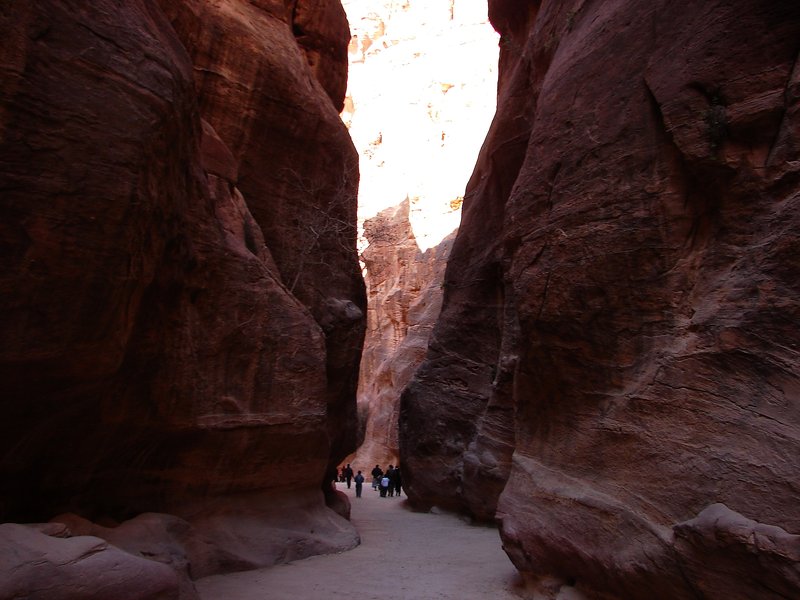
A 1.2km natural gorge with sandstone walls rising to 80m, carved by the Wadi Musa seasonal stream and shaped into a formal entrance by the Nabataeans. The ancient water channel cut along its base supplied the city. The canyon narrows to just 3m in places before opening suddenly to the Treasury facade.
🏛️ Daily 6:00am - 6:00pm
⏰ ~30 min
⚠️ Book before arrival
🚶 5 min · 🚕 3 min → Al-Khazneh
Petra's defining monument — a 40m facade of rose-red sandstone carved into the cliff face in the 1st century BC, attributed to Nabataean king Aretas III. The six Corinthian columns and ornate double pediment are the most intact carved facade in the city, revealed in full at the moment the Siq opens.
🏛️ Daily 6:00am - 6:00pm
⏰ ~45 min
🚶 10 min · 🚕 5 min → Petra Theater
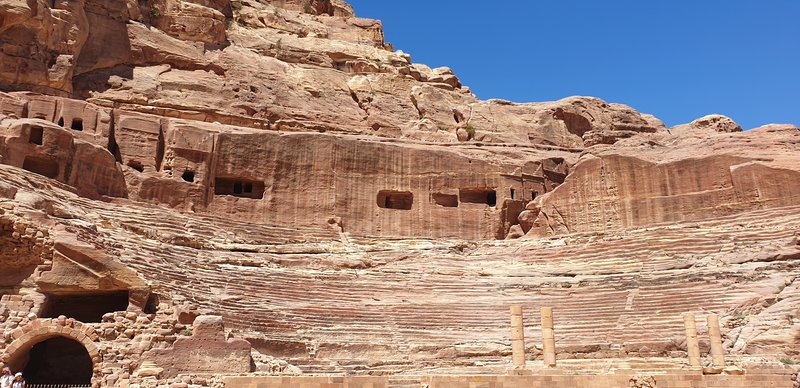
A Nabataean theatre built under Aretas IV in the 1st century AD and later enlarged by the Romans. Carved directly into the cliff face across 45 tiers, it seated 8,500 people. Excavation revealed that the upper rows cut through existing tomb facades — the city's expansion was unsentimental about earlier structures.
🏛️ Daily 6:00am - 6:00pm
⏰ ~30 min
🚶 5 min · 🚕 3 min → Great Temple of Petra
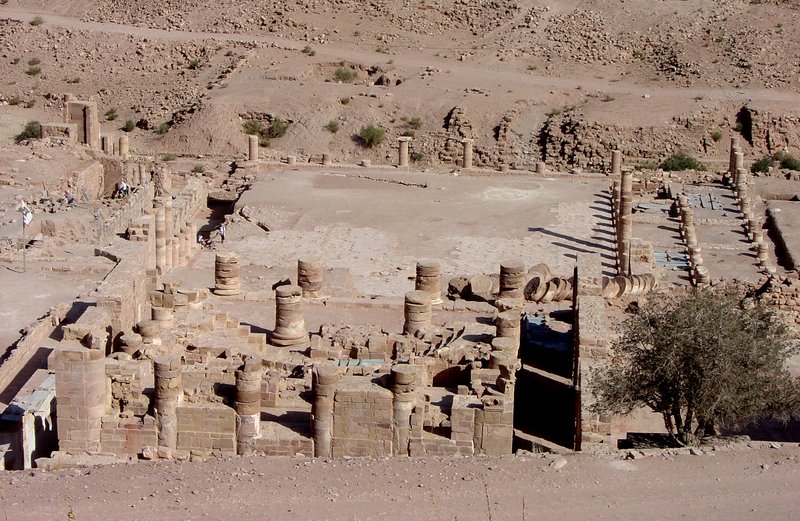
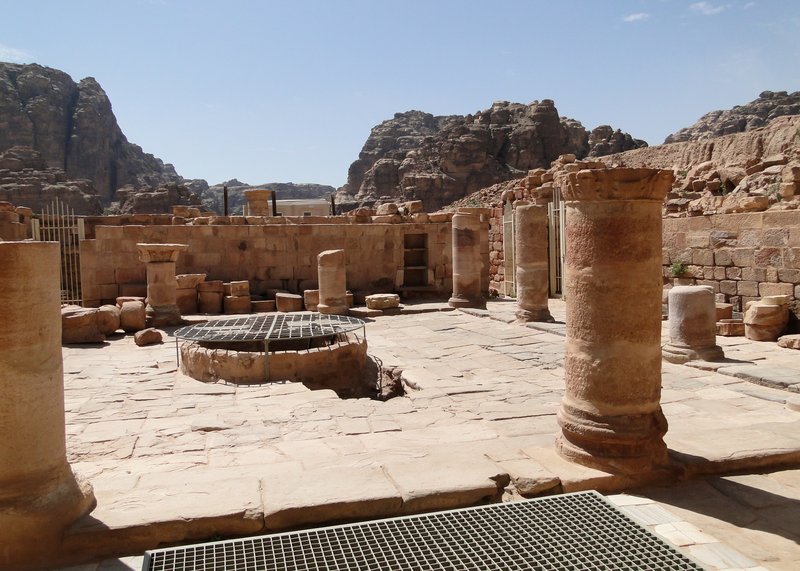
A monumental Nabataean complex covering 7,560 sq m, completed under Aretas IV in the early 1st century AD. The interior theatron — seating 600 — and 328 elephant-head capital fragments recovered in excavation since 1993 make this one of Petra's most archaeologically rich sites.
🏛️ Daily 6:00am - 6:00pm
⏰ ~45 min
🚶 5 min · 🚕 3 min → Qasr al-Bint
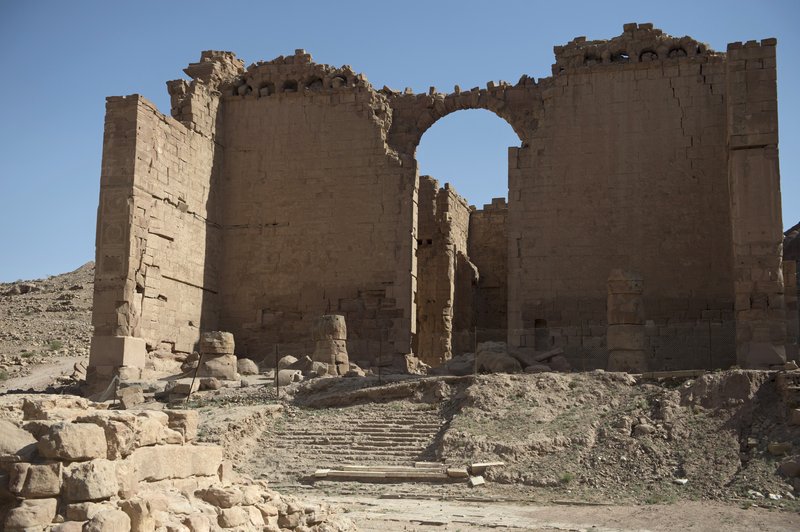
The best-preserved free-standing structure in Petra — a Nabataean religious temple from the 1st century CE with a 27-step marble staircase and a tripartite inner sanctuary. The full Arabic name, Qasr al-Bint Fir'aun · Palace of Pharaoh's Daughter, reflects local legend rather than its actual sacred function.
🏛️ Daily 6:00am - 6:00pm
⏰ ~30 min
🚶 25 min · 🚕 5 min → hotel
From Hotel: 🚕 5 min → High Place of Sacrifice
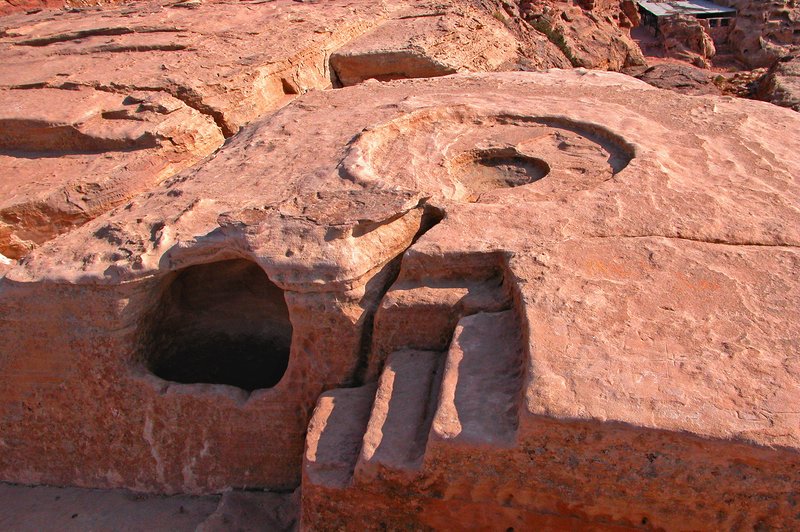
The best-preserved Nabataean open-air sanctuary in Petra — a summit platform on Jebel al-Madhbah with two altars, a ritual obelisk, and a drainage channel, set against panoramic views over the canyon. The main staircase ascent from the Siq takes 40–50 minutes.
🏛️ Daily 6:00am - 6:00pm
⏰ ~1 hr 30 min
🚶 30 min · 🚕 10 min → Byzantine Church of Petra
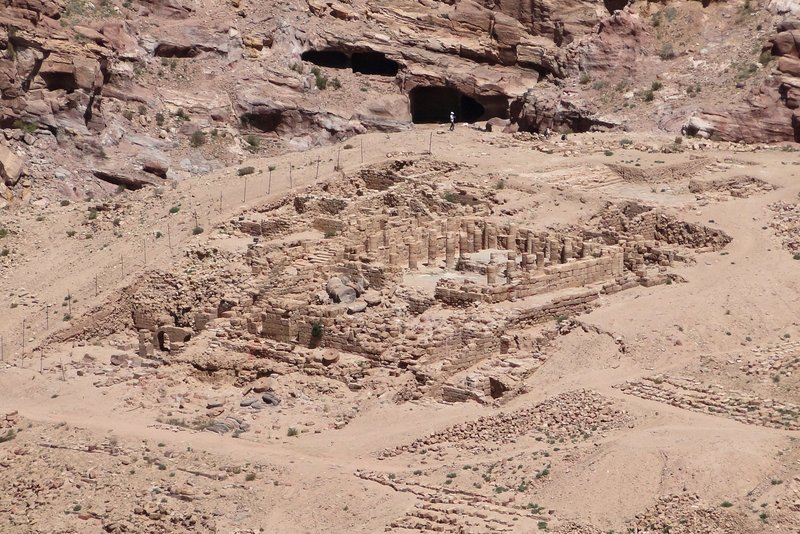
A 5th-century CE church with three aisles of intact floor mosaics — figurative panels of the seasons, local animals, and daily life. A 1993 excavation uncovered the Petra Papyri: 140 carbonized 6th-century documents, now the most important archive from Byzantine Petra.
🏛️ Daily 8:00am - 4:00pm
⏰ ~30 min
🚶 8 min · 🚕 5 min → Temple of the Winged Lions
A Nabataean temple built under Aretas IV, named for the carved lion capitals on its columns. An attached workshop where artisans produced painted plaster decorations and religious objects was uncovered during excavation — the production side of Nabataean sacred culture, visible alongside the architecture.
🏛️ Daily 6:00am - 6:00pm
⏰ ~30 min
🚶 40 min · 🚕 15 min → Ad Deir
Petra's largest monument — 47m high, 48m wide — carved from solid rock in the mid-1st century AD and dedicated to the deified Nabataean king Obodas I. The 800-step path ascends for 40 minutes through a narrow valley before the facade appears at the plateau's edge.
🏛️ Daily 6:00am - 5:00pm
⏰ ~1 hr 30 min
🚕 5 min → hotel
From Hotel: 🚶 25 min · 🚕 5 min → Palace Tomb · Royal Tombs
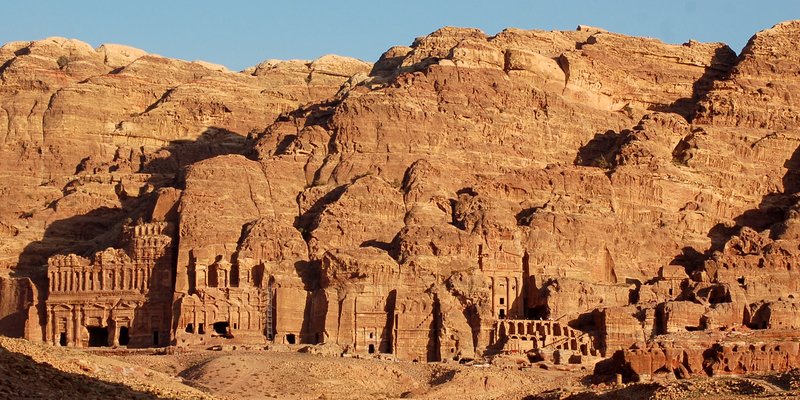
The grandest of Petra's four Royal Tombs — 49m wide, 46m tall — cut into the east cliff face along with the Urn, Silk, and Corinthian Tombs. Reachable via the main visitor path 600m from the park entrance; forms the most dramatic skyline view in the city.
🏛️ Daily 6:00am - 6:00pm
⏰ ~45 min
🚶 20 min · 🚕 8 min → Wu'ayra Castle
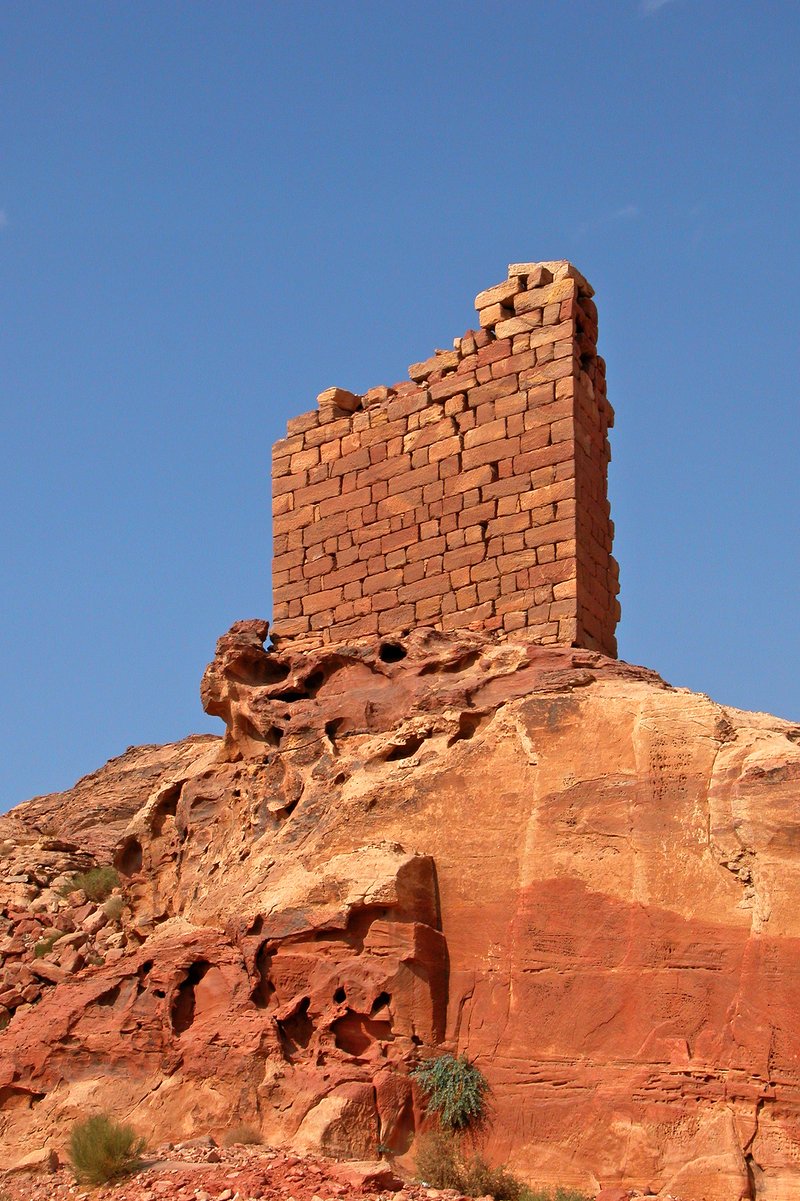
A ruined Crusader fortress built by Baldwin I in 1115, perched on a narrow ridge 1km north of the Petra entrance. It controlled the Wadi Musa valley as an outpost of Shobak Castle. Saladin's forces captured it in 1188 after a short siege; its strength came from its position, not its walls.
🚕 15 min → Little Petra
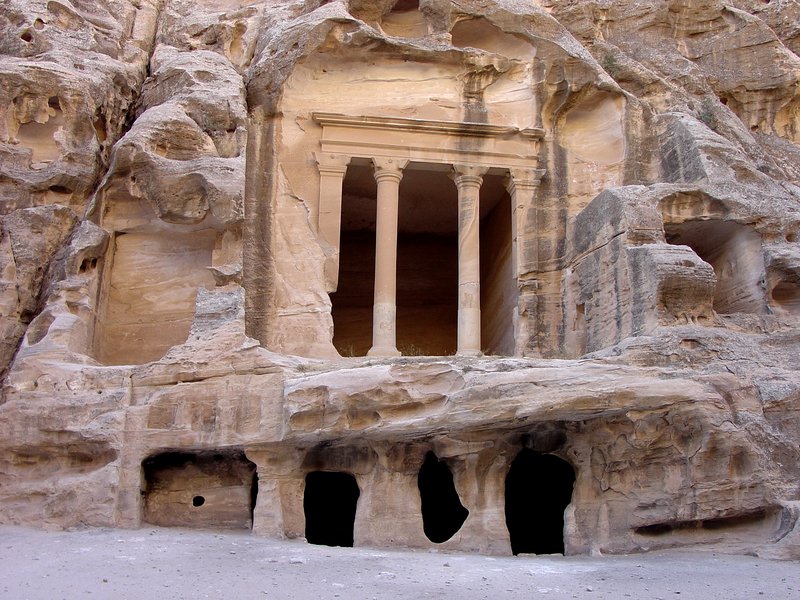
A Nabataean settlement 8km north of Petra with its own carved facades, colonnaded halls, and triclinia. The Painted Biclinium has the only surviving Nabataean painted ceiling in the region — faded scenes of Eros and vine scrolls from the 1st century AD. Used as a caravanserai before the main city.
🏛️ Daily 6:00am - 6:00pm
⏰ ~1 hr
Free
🚕 55 min → Shobak Castle
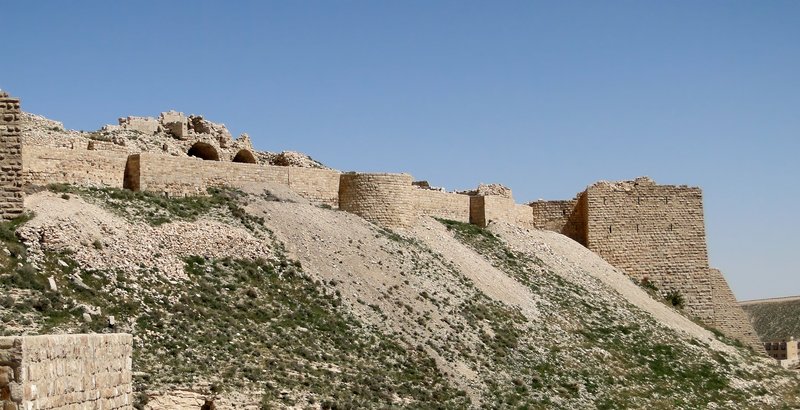
A Crusader fortress built by Baldwin I in 1115 on a steep hill 34km north of Petra, controlling the trade route between Egypt and Syria. Saladin's forces seized it in 1189; the Mamluks enlarged it significantly. Interior tunnels, a church, and inscriptions survive within the walls.
🏛️ Daily 8:00am - 5:00pm
⏰ ~1 hr
🚕 45 min → hotel
🏜️ The City That Ran on Water
Petra sits in one of the most arid landscapes in the Middle East, yet at its height it sustained a city of tens of thousands. The Nabataeans built one of the ancient world's most sophisticated water systems to make this possible — ceramic-lined channels carved into the Siq walls, cisterns hidden in the cliff faces, and gravity-fed pipes running from springs 8km away at Ain Musa. The system collected every drop from the rare winter floods, stored it, and distributed it through the city.
You see remnants of it everywhere on Days 1 and 2: the channel running along the base of the Siq, the dam cut into the rock near the entrance, the cisterns visible from the High Place path. The Nabataeans didn't settle in Petra in spite of the desert — they mastered it, and that mastery built the wealth that carved the Treasury.
_in_Petra.jpg)
,_El_Deir,_Petra,_Jordan.jpg)